Deciding between elevator modernization and repair is one of the most consequential maintenance decisions a building owner or facilities manager can make. The wrong choice costs money either way — over-investing in repairs on aging equipment, or paying for a full modernization when a well-executed repair would have sufficed. This guide walks through every factor that matters: compliance obligations, equipment age, cost-benefit comparisons, and how to read the warning signs before they become emergencies.
What Is the Difference Between Elevator Repair and Modernization?
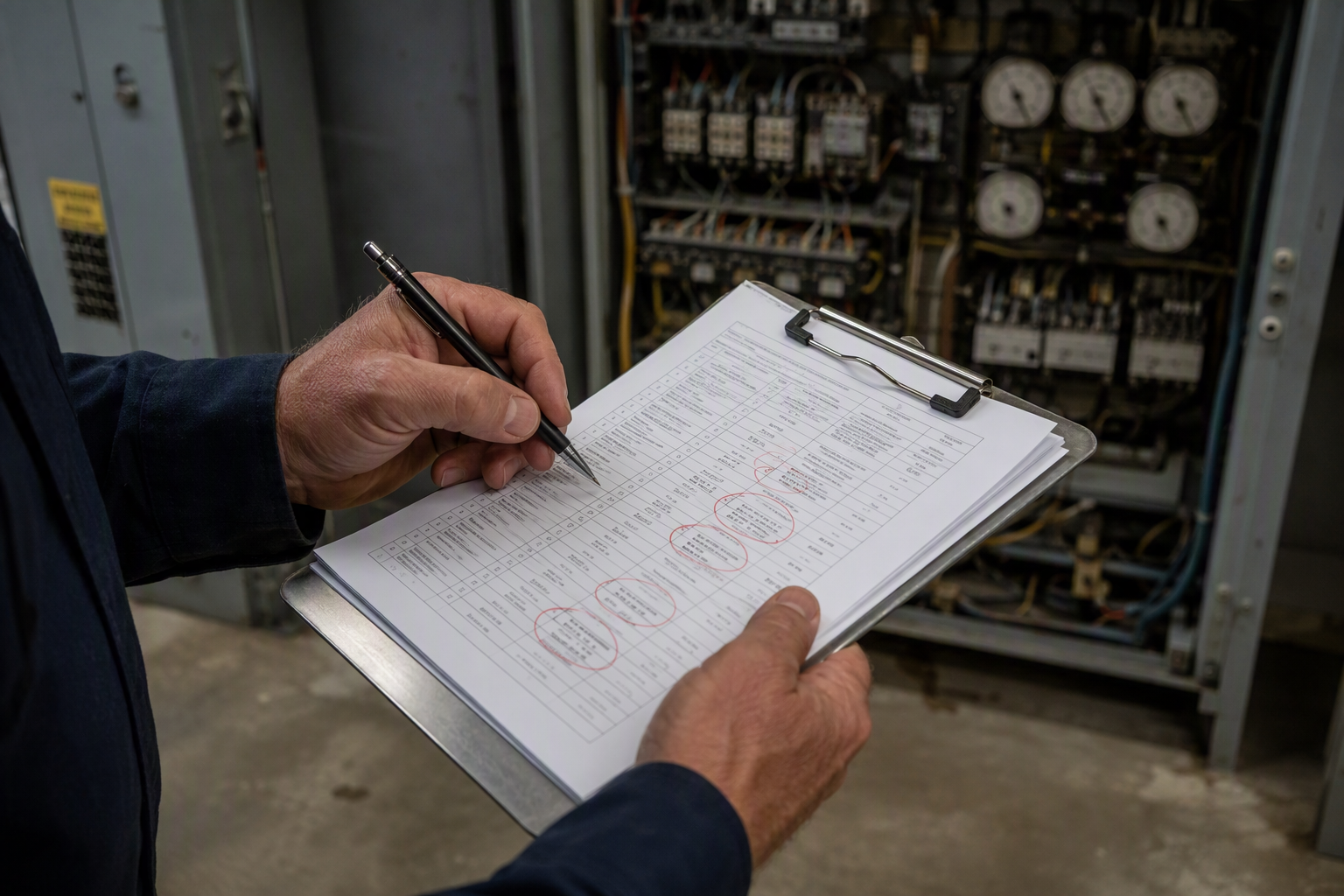
Elevator repair addresses a specific, defined problem — a failed door operator, a worn brake component, a malfunctioning controller relay. The elevator’s core systems remain intact, and the fix restores normal operation without replacing the system architecture.
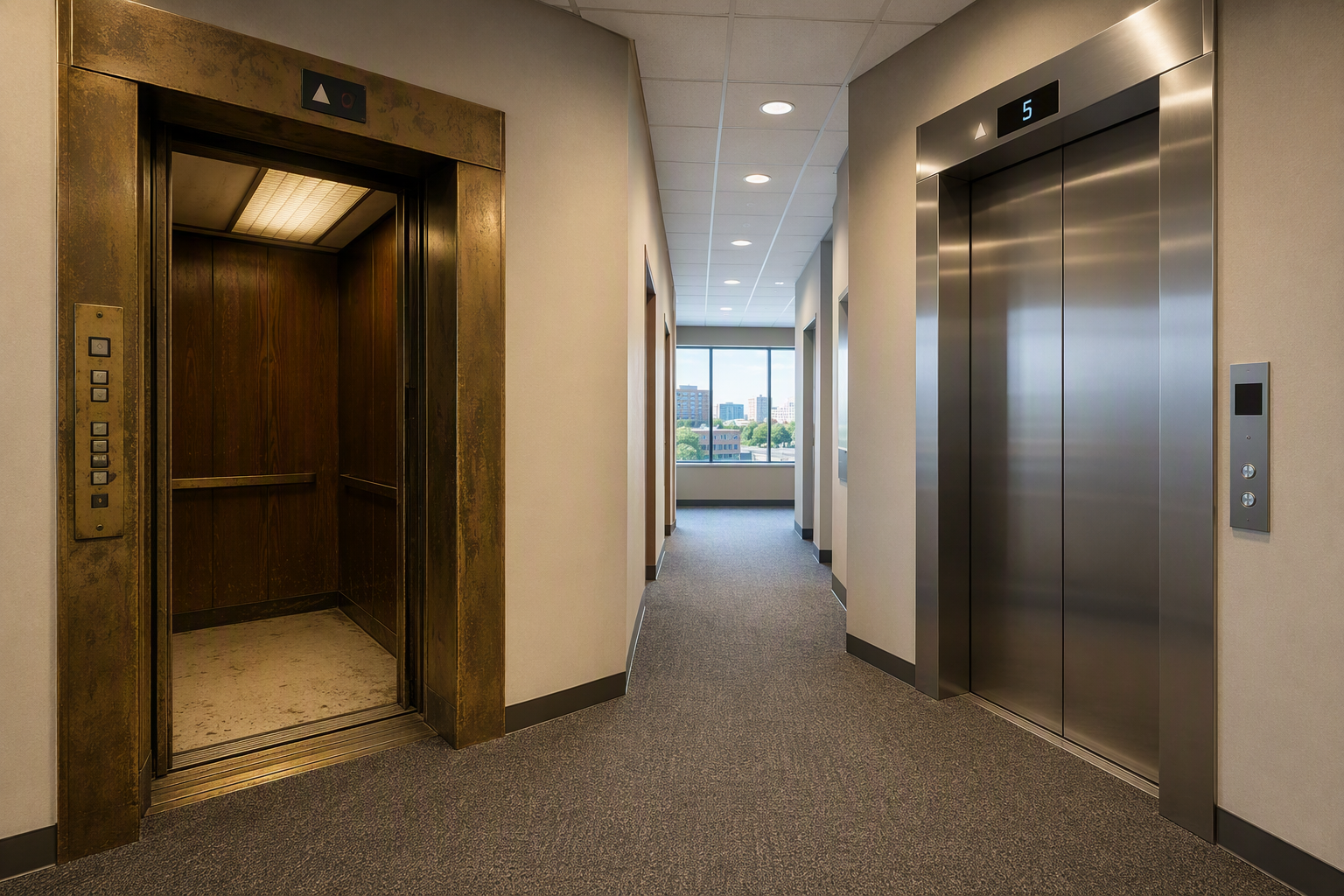
Elevator modernization is a planned, phased, or comprehensive upgrade of major systems — typically the controller, drive machine, door operators, cab interior, or safety components — to bring the unit in line with current technology, energy standards, and code requirements. Modernization does not always mean replacing every component; it means upgrading the systems that are creating recurring problems or compliance exposure.
The distinction matters because modernization triggers a fresh compliance review under ASME A17.1 Safety Code for Elevators and Escalators and ASME A17.3 Safety Code for Existing Elevators and Escalators, which governs retroactive safety requirements on existing installations in South Carolina.
How Do I Know If My Elevator Needs Modernization or Just Repairs?
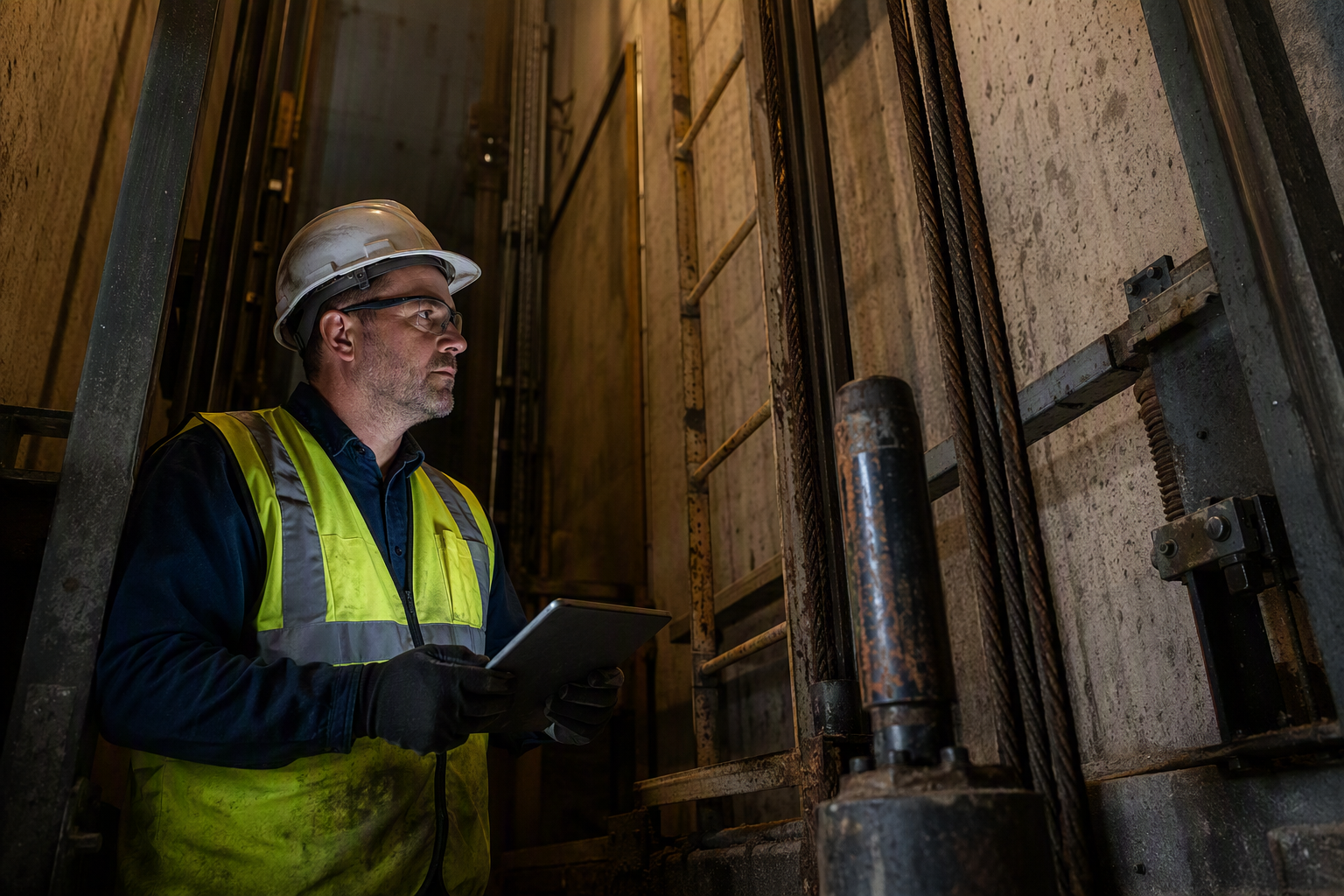
Ask these four diagnostic questions before calling a technician:
- Is the equipment still available? If replacement parts are discontinued or sourced only from specialty salvage suppliers, repairs become increasingly expensive and unreliable over time.
- How often is it breaking down? A single annual service call is normal. Repeated callbacks for the same or different systems within a short window signal systemic decline, not isolated failure.
- Is it passing inspections? South Carolina requires periodic elevator inspections under state authority. Recurring violations or conditional passes indicate the unit is struggling to meet current safety standards.
- Are passengers being affected? Entrapments, door malfunctions, and uneven leveling are not minor inconveniences — they represent liability exposure and signal that safety-critical systems are degrading.
If the answer to two or more of these questions raises concern, an independent elevator assessment is the appropriate next step before committing to either path.
What Are the Warning Signs That Modernization Is Necessary?
The following conditions individually may support repair, but in combination they are strong indicators that modernization delivers better value:
- Obsolete relay-logic controllers that cannot be programmed, diagnosed remotely, or integrated with building management systems
- DC drive systems on traction elevators that are no longer supported by manufacturers
- Repeated entrapments caused by leveling failures or outdated safety circuits
- Non-compliant door timing or force that cannot be corrected within the existing door operator design (relevant under ADA accessibility requirements)
- Absence of emergency lighting, phone, or two-way communication in the cab, which may be required under applicable codes
- Escalating energy consumption from inefficient motors and drive systems without regenerative capability
- Structural cab deterioration that goes beyond cosmetic resurfacing
- Inspection citations that cannot be resolved with component-level repairs
Repair vs. Modernization: Side-by-Side Comparison
| Factor | Targeted Repair | Modernization |
|---|---|---|
| Scope | Single component or system | Major system replacement (controller, drive, doors, cab, or combination) |
| Downtime | Hours to a few days depending on part availability | Weeks to several months for full scope projects |
| Disruption to Tenants/Occupants | Minimal if parts are on hand | Significant; requires advance planning and communication |
| Upfront Cost | Lower per incident | Higher upfront; phased modernization can spread cost |
| Long-Term Cost Trajectory | Increases as additional systems fail | Decreases; fewer callbacks, lower energy use, longer service life |
| Code Compliance | Maintains current status; does not trigger new compliance review | Triggers ASME A17.3 retroactive safety review; brings unit closer to current code |
| Parts Availability Risk | High on legacy systems; may delay repairs | Eliminated — new systems use currently manufactured components |
| Energy Efficiency | No improvement | Modern drives and motors significantly reduce energy consumption |
| Liability Profile | Maintained or worsening if problems recur | Reduced through upgraded safety systems and improved ADA compliance |
| Resale / Property Value | Neutral | Positive signal to buyers, tenants, and lenders |
| Best Suited For | Isolated failures on equipment in otherwise good condition | Aging equipment with recurring issues, compliance gaps, or obsolete components |
What Does Elevator Modernization Typically Include?
Modernization is not an all-or-nothing decision. Projects are commonly scoped in phases based on priority and budget. Typical modernization components include:
- Controller replacement: Transitioning from relay-logic or outdated solid-state controllers to microprocessor-based systems with remote diagnostics
- Drive system upgrade: Replacing DC drives with variable voltage, variable frequency (VVVF) AC drives for smoother operation and energy savings
- Door operator replacement: Modern operators improve door timing, reduce entrapment risk, and support ADA-compliant reopening sensitivity
- Safety device upgrades: Governor, safeties, buffers, and interlocks brought into current compliance under ASME A17.3
- Emergency systems: Two-way communication, emergency lighting, and ARD (Automatic Rescue Device) installation
- Cab interior renovation: Flooring, walls, ceiling, lighting, and fixture updates
- Machine room upgrades: Ventilation, lighting, and accessibility improvements per OSHA workplace standards
How Does ADA Compliance Factor Into This Decision?
The Americans with Disabilities Act (ADA) applies to elevators in buildings covered under Title II (public entities) and Title III (places of public accommodation). South Carolina building owners must ensure that elevator controls, door timing, cab dimensions, and signage meet ADA requirements.
Critically, if a repair scope touches accessibility-relevant components — door operators, call buttons, floor indicators, or cab controls — it may present an opportunity, and in some cases an obligation, to bring those elements into full ADA compliance. Modernization projects are the natural point at which ADA gaps are most efficiently and cost-effectively closed.
An independent elevator service provider can assess which ADA elements require attention and advise whether they can be addressed within a repair scope or require modernization-level changes.
What Role Do ASME A17.1 and A17.3 Play in This Decision?
South Carolina’s elevator safety program enforces requirements grounded in the ASME A17.1 Safety Code for Elevators and Escalators for new installations and alterations, and ASME A17.3 Safety Code for Existing Elevators and Escalators for equipment already in service.
ASME A17.3 is particularly important for the modernization decision because it establishes retroactive safety requirements — meaning that as your elevator ages, certain upgrades may become mandatory regardless of whether you want to modernize. Understanding which A17.3 requirements apply to your unit, and when they must be implemented, is a key input to any repair-versus-modernization analysis.
When a modernization project is classified as an “alteration” under ASME A17.1, it triggers a comprehensive inspection and may require additional safety upgrades beyond the primary scope of work. A qualified, independent service provider will account for these code triggers before finalizing a project scope.
How Long Does Elevator Modernization Take?
Project duration varies significantly based on scope, equipment configuration, parts lead times, and building access constraints. General ranges by scope type:
| Modernization Scope | Typical Duration Range | Key Variable |
|---|---|---|
| Controller replacement only | One to three weeks | Controller lead time; inspection scheduling |
| Controller + drive upgrade | Two to six weeks | Machine room configuration; parts availability |
| Controller + doors + safety devices | Four to ten weeks | Scope complexity; inspector availability |
| Full modernization (all major systems) | Two to six months | Equipment type; building access; permit process |
| Phased modernization over multiple shutdowns | Six to eighteen months total | Budget cycle; operational constraints |
Is Phased Modernization a Viable Option?
Yes — and for many South Carolina building owners, it is the most practical path. Phased modernization sequences upgrades across multiple budget cycles, prioritizing the components with the highest safety impact or compliance urgency first. A common phased sequence:
- Phase 1: Controller replacement — eliminates the most common source of recurring failures and enables remote diagnostics
- Phase 2: Door operator replacement — addresses entrapment risk, ADA door timing, and passenger experience
- Phase 3: Drive system upgrade — improves ride quality, energy efficiency, and leveling accuracy
- Phase 4: Cab interior renovation — addresses appearance, lighting, and passenger-facing accessibility features
- Phase 5: Safety device and machine room upgrades — closes remaining code compliance gaps
The correct phase sequence depends on the specific condition of each system and any code compliance timelines that apply. A thorough assessment by an independent service provider is the appropriate starting point.
What Questions Should I Ask an Elevator Service Provider Before Deciding?
Before committing to either path, ask any provider these questions:
- Is this failure isolated, or is it symptomatic of a broader system decline?
- Are parts for my current controller and drive still manufactured?
- What ASME A17.3 retroactive requirements apply to my unit, and are any approaching a mandatory deadline?
- Will this repair scope trigger an ADA compliance review?
- What is the realistic service life remaining if I repair rather than modernize?
- What would a phased modernization plan look like for my building’s budget cycle?
- Who will perform the required post-modernization inspection, and how long does that process take in South Carolina?
An independent provider — one that is not tied to a single manufacturer’s equipment line — is better positioned to give objective answers to these questions than a manufacturer-aligned service contractor whose recommendations may favor their own product line.
How Do I Evaluate the ROI of Modernization vs. Continued Repairs?
A structured ROI comparison should account for the following factors over a defined horizon (commonly five to ten years):
| ROI Factor | Repair Path Consideration | Modernization Path Consideration |
|---|---|---|
| Cumulative repair costs | Likely to increase as additional systems age | Significantly reduced after modernization; new components under warranty |
| Energy costs | No reduction; older drives consume more power | Modern VVVF drives and LED lighting reduce operating costs |
| Downtime / lost productivity | Unplanned downtime continues; difficult to budget | Planned downtime during project; minimal unplanned downtime afterward |
| Liability exposure | Increases with documented recurring failures | Reduced through upgraded safety systems |
| Tenant satisfaction / lease retention | Declining reliability affects tenant experience | Improved reliability and appearance supports lease renewal and attraction |
| Compliance penalties avoided | Risk of citation costs and forced shutdowns | Reduced compliance risk; documented code conformance |
| Property value | Aging equipment is a disclosed liability in transactions | Modernized elevator is an asset in appraisals and due diligence |
A comprehensive assessment from Carolina Elevator Service can help South Carolina building owners model these factors against their specific equipment and occupancy profile before making a capital commitment.
What Should I Do If My Elevator Fails Inspection in South Carolina?
If your elevator receives a violation notice or fails its periodic inspection in South Carolina, take the following steps:
- Do not ignore the notice. Continued operation of an elevator with open violations creates significant liability exposure and may result in mandatory shutdown by the Authority Having Jurisdiction (AHJ).
- Obtain a copy of the full inspection report. Understand which specific items are cited and their severity classification.
- Contact an independent, qualified elevator service provider. Have them review the inspection report and assess whether cited items can be resolved through repair or require modernization-level work.
- Request a written scope and timeline. For any work required to resolve violations, get documentation that clearly describes what will be done, which code items are being addressed, and when the re-inspection will occur.
- Coordinate re-inspection promptly. South Carolina’s inspection process requires scheduling through the appropriate state office; allow lead time in your project plan.
- Document everything. Maintain records of all service reports, repair invoices, and inspection certificates as part of your building’s compliance file.
Why Choose an Independent Elevator Service Provider Over a Manufacturer-Tied Contractor?
Manufacturer-affiliated contractors have an inherent interest in recommending their proprietary equipment and service agreements. Independent providers — those with no allegiance to a single equipment brand — are better positioned to recommend the solution that genuinely fits the building’s needs, whether that is a targeted repair, a phased modernization, or a full replacement using the most appropriate equipment for the application.
Carolina Elevator Service is a certified, independent elevator service provider operating exclusively in South Carolina. The team works across equipment types and brands, assessing each situation on its own merits without a manufacturer’s sales quota driving the recommendation. For South Carolina property owners, facility managers, and building engineers navigating the repair-versus-modernization decision, Carolina Elevator Service provides objective assessments grounded in current ASME standards, South Carolina regulatory requirements, and the practical realities of building operations.
Repair vs. Modernization: Quick Decision Summary
| Your Situation | Likely Best Path |
|---|---|
| Single component failure, parts available, equipment otherwise sound | Targeted repair |
| Recurring callbacks on multiple systems within a short period | Modernization assessment required |
| Controller is relay-logic and parts are discontinued | Controller modernization |
| Failed inspection with violations that cannot be resolved by component swap | Modernization or targeted upgrade to resolve cited items |
| Door-related entrapments or ADA door timing violations | Door operator modernization |
| Budget constraints but clear need for upgrades | Phased modernization plan |
| Building sale, refinancing, or major tenant turnover anticipated | Modernization to remove liability and improve asset value |
| Isolated cosmetic or cab interior issues only | Cab renovation — does not require full modernization |
Get an Objective Assessment Before You Decide
The repair-versus-modernization decision has long-term financial, compliance, and safety consequences. Do not rely on a single contractor’s recommendation — especially one tied to a manufacturer — before committing to either path.
Contact Carolina Elevator Service for a free elevator assessment. The team will evaluate your equipment’s current condition, identify any open compliance requirements under South Carolina regulations and ASME standards, and provide an honest, no-obligation recommendation tailored to your building’s needs.
Call us today: 803-865-1400
Need elevator service you can rely on? Carolina Elevator Service is ready to help.