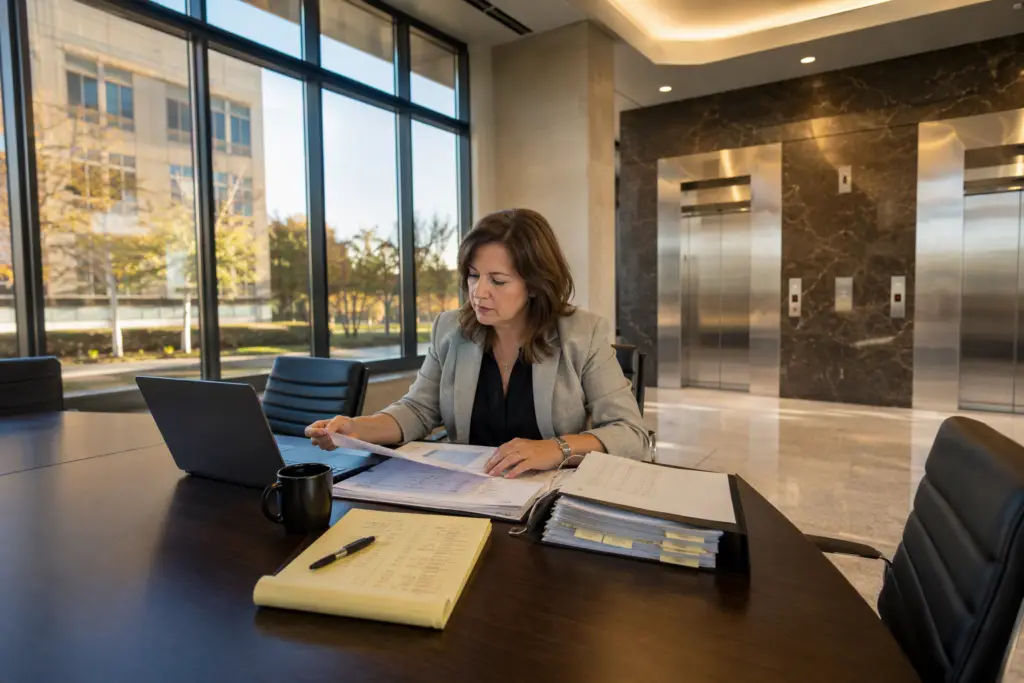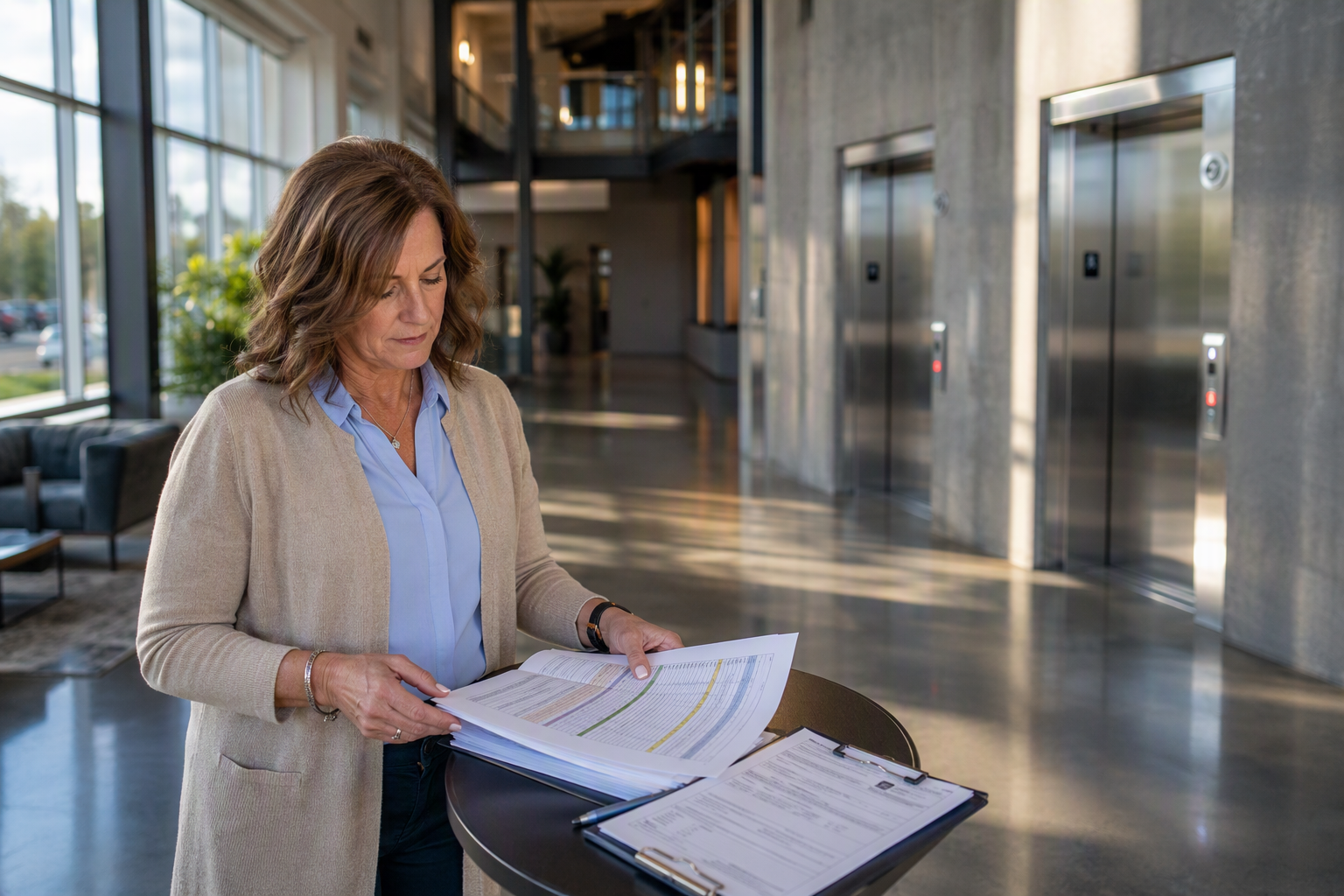
Elevator budgeting is one of the most underestimated line items in facility management. Costs are not limited to a single monthly service fee—they span regulatory compliance, emergency callouts, parts replacement, and long-term capital planning. This guide helps South Carolina facility directors build a realistic, defensible elevator budget for fiscal year 2027.
What Are the Core Budget Categories Every Facility Director Must Plan For?
A complete elevator budget includes four distinct categories. Treating them as a single line item leads to surprise expenditures that disrupt annual plans.
| Budget Category | Frequency | Planning Priority | Notes |
|---|---|---|---|
| Preventive Maintenance (PM) Contract | Monthly / Quarterly | High — recurring, predictable | Covers routine lubrication, adjustments, safety checks |
| Mandatory Inspections & Permits | Annual (minimum) | High — legally required in SC | Third-party or state inspector; certificate of operation required |
| Unplanned Repairs / Emergency Callouts | As needed | Medium — reserve fund essential | Callback costs, parts, after-hours labor; highly variable |
| Modernization / Capital Replacement | Every 20–30 years typical lifecycle | Medium-to-High — age dependent | Controls, cab interiors, hydraulic systems, door operators |
Each category requires a different budgeting method: operational expenses for the first two, a contingency reserve for the third, and a capital expenditure line or depreciation schedule for the fourth.
How Do South Carolina Code Requirements Affect My Annual Budget?
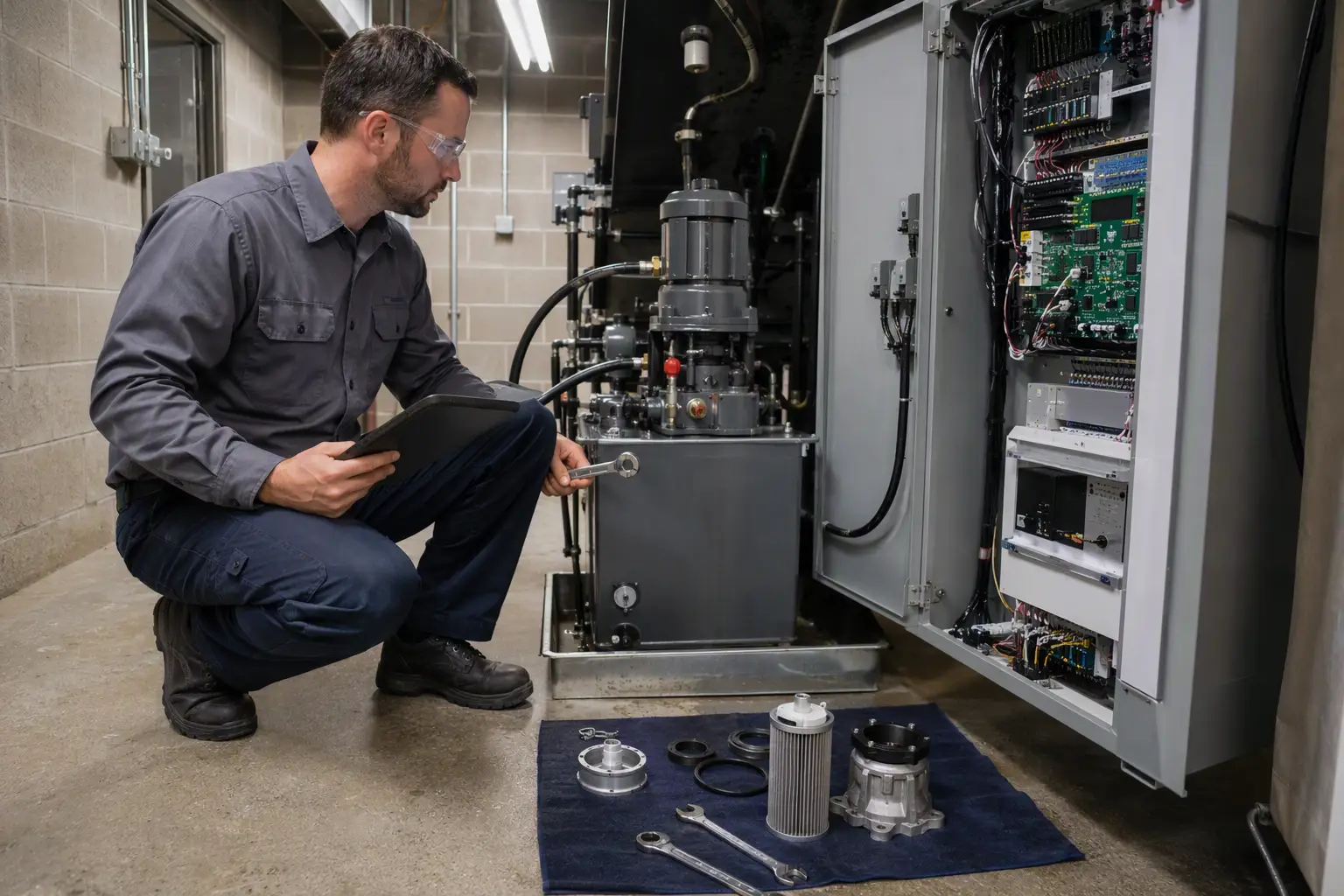
South Carolina elevator safety is governed by both state statute and federal standards. The foundational technical code is the ASME A17.1 Safety Code for Elevators and Escalators, which establishes design, installation, inspection, and testing requirements. Existing installations are also governed by ASME A17.3, the Safety Code for Existing Elevators and Escalators, which mandates retroactive safety upgrades on a defined schedule.
Facilities that serve the public or accommodate employees with disabilities must also meet accessibility standards under the Americans with Disabilities Act (ADA). Elevator controls, door timing, and cab dimensions are among the ADA-covered elements that can generate compliance costs during modernization projects.
Workplace safety during elevator maintenance and repair work falls under OSHA standards, which affect contractor qualification requirements and should inform vendor selection decisions.
Budget implication: Code compliance is not optional. Facilities operating elevators without current certificates of operation in South Carolina face exposure to fines, liability, and forced shutdowns. The inspection fee itself is only one part of compliance cost—any deficiencies identified during inspection must be corrected before a certificate is issued, and those correction costs must be anticipated.
What Factors Drive the Biggest Variation in Elevator Maintenance Costs?
Two facilities with the same number of elevators can have dramatically different annual costs. The variables below explain most of that variation:
| Cost Driver | Lower Cost Scenario | Higher Cost Scenario |
|---|---|---|
| Equipment Age | Under 10 years old, modern controls | 20+ years, outdated relay logic or hydraulic systems |
| Usage Volume | Low-rise, low-traffic facility | Hospital, high-rise, or high-frequency commercial use |
| Equipment Type | Modern traction elevator with solid-state controls | Older hydraulic unit with underground cylinder |
| Maintenance History | Consistent PM, documented service records | Deferred maintenance, gaps in service history |
| Number of Units | Single elevator, single-site | Multiple elevators across multiple buildings or campuses |
| Service Provider Contract Type | Full-service contract (parts and labor included) | Examination-only contract (repairs billed separately) |
| Compliance Status | Current on all ASME A17.3 retroactive requirements | Outstanding deficiencies, approaching upgrade deadlines |
What Types of Maintenance Contracts Are Available and How Do They Compare?
Choosing the right contract structure is one of the most consequential budgeting decisions a facility director makes. The three primary structures differ significantly in cost predictability, coverage scope, and risk transfer.
| Contract Type | What’s Included | Budget Predictability | Best For | Key Risk |
|---|---|---|---|---|
| Examination-Only (Oil & Grease) | Routine lubrication and visual checks only; all repairs extra | Low — repair costs unpredictable | New equipment under OEM warranty | Large unplanned repair bills |
| Parts & Labor (Comprehensive) | PM visits, most parts, labor for covered repairs | High — monthly cost is fixed | Mid-age to older equipment; risk-averse budgets | Exclusions buried in contract language |
| Full Maintenance | All of above plus major component replacements | Highest — maximum cost certainty | High-use facilities, hospitals, high-rises | Higher base premium; exclusions still exist |
Pro tip for budget planners: Read every contract’s exclusion list before signing. Common exclusions include vandalism damage, cab interiors, hydraulic oil remediation, and items not caused by “normal wear.” These exclusions belong in your contingency reserve, not your PM line item.
How Should I Structure a Contingency Reserve for Unplanned Elevator Repairs?
Even the most comprehensive maintenance contract will not cover every repair scenario. A contingency reserve is essential. The appropriate reserve level depends on equipment age and condition, but a general approach is to tier the reserve by risk category:
| Equipment Risk Profile | Reserve Approach | Typical Unplanned Repair Scenarios |
|---|---|---|
| Low Risk — Under 10 years, full-service contract, consistent PM | Minimal reserve; focus on contract exclusion gaps | Door operator adjustments, minor sensor replacements |
| Medium Risk — 10–20 years, parts-and-labor contract | Moderate reserve for mid-life component failures | Controller boards, hydraulic valves, rope replacement |
| High Risk — 20+ years, examination-only contract, deferred PM | Substantial reserve; consider modernization assessment | Full controller replacement, jack replacement, major hydraulic work |
When Does Repair No Longer Make Financial Sense Compared to Modernization?
This is the most consequential question in long-range elevator budgeting. Facilities that keep repairing aging equipment often spend more over a five-year period than a modernization project would have cost—while also accepting greater downtime risk and compliance exposure.
| Factor | Continued Repair | Modernization |
|---|---|---|
| Upfront Cost | Lower in short term | Higher capital outlay; multi-year payback |
| 5-Year Cost Trajectory | Often escalating; parts availability decreasing | Lower ongoing maintenance costs post-modernization |
| Downtime Risk | Increases with age; parts may be obsolete | Significantly reduced after project completion |
| Code Compliance | May require retroactive ASME A17.3 upgrades regardless | New installation meets current ASME A17.1 edition |
| Energy Efficiency | Older hydraulic and relay-logic systems are inefficient | Modern VFD drives and LED lighting reduce operating costs |
| Tenant/Occupant Experience | More frequent outages; older cab appearance | Improved reliability, modern aesthetics, ADA features |
| ADA Compliance | Retrofit costs may be significant | Opportunity to address ADA requirements comprehensively |
As a general planning rule: when annual repair costs begin to approach or exceed a significant fraction of what modernization would cost, and when equipment is beyond its expected service life, a capital replacement analysis is warranted. An independent elevator service provider—not the company selling the modernization—is the appropriate party to conduct that assessment.
What Should I Do Immediately If My Elevator Has Outstanding Inspection Deficiencies?
- Obtain the written inspection report. Request the official deficiency list from the inspector or the South Carolina authority having jurisdiction (AHJ). Understand exactly which items are cited and their severity level.
- Determine if continued operation is permitted. Some deficiencies allow conditional operation; others require the elevator to be taken out of service immediately. Confirm the elevator’s legal operating status before allowing passenger use.
- Engage a qualified elevator contractor promptly. Contact a licensed elevator service company to evaluate each deficiency, confirm the required corrective action, and provide a written scope and estimated cost.
- Prioritize life-safety items first. If the deficiency list is long, work with your contractor to triage: life-safety deficiencies take priority over cosmetic or administrative items.
- Schedule corrective work and document everything. Obtain written confirmation of completed repairs. Keep documentation for the re-inspection file—the AHJ will need evidence that each cited item was corrected.
- Request re-inspection. Once corrections are complete, contact the AHJ to schedule a re-inspection and secure an updated certificate of operation.
- Update your budget. Incorporate the cost of corrections into the current fiscal year and adjust forward-year reserves based on what the deficiency pattern revealed about equipment condition.
How Do I Evaluate and Compare Elevator Service Vendors for My 2027 Contract?
Not all elevator service providers offer the same scope, responsiveness, or contract transparency. Use the following evaluation framework when comparing proposals:
| Evaluation Criterion | What to Ask / Look For | Red Flags |
|---|---|---|
| Licensing & Authority | Verify South Carolina elevator contractor licensing with the relevant SC licensing board | Vague answers; cannot produce license number on request |
| Contract Scope | Request itemized list of inclusions AND exclusions in writing | Broad exclusion language that nullifies most coverage |
| Parts Sourcing | Ask whether OEM, proprietary, or third-party parts are used | Proprietary parts that lock you into one vendor; no disclosure |
| Transparency on Repairs | Do they provide written repair reports after each visit? | Verbal-only communication; no written service records provided to owner |
| Independence | Is the contractor independent or tied to a specific OEM manufacturer? | Pressure to use only their equipment brand; inflated modernization quotes |
| Inspection Familiarity | Are they familiar with South Carolina inspection processes and the local AHJ? | Unfamiliarity with SC-specific requirements or local inspectors |
| Contract Terms | Review cancellation clauses, escalation provisions, and renewal terms | Auto-renewal without notice; steep cancellation penalties; price escalation without cap |
Independent elevator service companies—those not affiliated with a single manufacturer—often provide more objective assessments because they have no financial incentive to recommend one brand’s equipment over another. Carolina Elevator Service is an independent certified elevator service company serving South Carolina facilities, and brings that manufacturer-neutral perspective to every assessment and contract recommendation.
What Are the Pros and Cons of Bundling Elevator Maintenance With a Facilities Management Contract?
| Bundled FM Contract | Dedicated Elevator Contractor | |
|---|---|---|
| Pros | Single point of contact; consolidated invoicing; potential volume discount | Specialized expertise; direct accountability; clearer scope definition |
| Cons | Elevator work subcontracted out anyway; less visibility into actual service; harder to audit | Separate contract to manage; requires proactive coordination with other FM vendors |
| Compliance Risk | Subcontractor credentials harder to verify; responsibility for SC licensing compliance remains with facility | Direct licensing verification easier; accountability is clear |
| Recommended For | Very small facilities with minimal elevator use where simplicity outweighs specialization | Most commercial, institutional, and multi-unit facilities in South Carolina |
How Does Deferred Elevator Maintenance Affect Long-Term Costs and Liability?
Deferred maintenance is a compounding problem in elevator management. When routine PM is skipped or reduced to save money in a given fiscal year, the downstream consequences typically include:
- Accelerated component wear: Parts that should last for years fail prematurely when lubrication, tension adjustment, and minor calibration are skipped.
- Inspection failures: Deferred items accumulate and produce a more severe deficiency list at annual inspection, increasing correction costs and the risk of a forced shutdown.
- Liability exposure: A documented gap in maintenance history is a significant liability factor if a passenger incident occurs and litigation follows. South Carolina facility owners and operators can face claims if records show maintenance was knowingly deferred.
- OSHA exposure: Under OSHA general duty clause requirements, employers must provide a workplace free from recognized hazards. A poorly maintained elevator in an employee-accessible building creates exposure.
- Higher modernization costs: Equipment that has been deferred often arrives at modernization in worse condition, requiring additional preparatory work and increasing project cost.
The consistent finding across elevator industry guidance is that a dollar invested in preventive maintenance avoids multiples of that cost in emergency repairs, downtime, and liability. Facility directors building FY2027 budgets should frame PM investment in those terms when seeking executive approval.
What Is a Practical Step-by-Step Process for Building My FY2027 Elevator Budget?
- Inventory all elevator assets. Document each unit: type (hydraulic, traction, MRL), age, last modernization date, current contract type, and inspection status.
- Obtain or review current service contracts. Note expiration dates, renewal windows, escalation clauses, and what is explicitly excluded from coverage.
- Pull the last three years of inspection reports. Identify recurring deficiencies or trends. Recurring items signal a systemic issue that PM alone may not resolve.
- Request a condition assessment from an independent elevator contractor. A qualified, manufacturer-neutral inspection gives you an unbiased picture of what is likely to need attention in the next 12–24 months.
- Categorize anticipated expenditures into the four budget categories: PM contract, inspections/compliance, repair reserve, and capital/modernization reserve.
- Check ASME A17.3 retroactive upgrade timelines. Consult with your elevator contractor to confirm whether any retroactive safety features required under ASME A17.3 are coming due, and budget accordingly.
- Confirm ADA compliance status. If accessibility features are deficient, factor remediation costs into the capital line. Review requirements under the ADA.
- Build the budget document with supporting rationale. A well-documented elevator budget with inspection reports, condition assessment, and code references is far easier to defend to finance leadership than a line item without backup.
- Set a calendar for contract review and rebidding. If existing contracts expire in FY2027, build in lead time (typically 90–120 days minimum) to solicit competing proposals and evaluate them properly.
Why Should South Carolina Facility Directors Choose Carolina Elevator Service?
Carolina Elevator Service is an independent certified elevator service company operating exclusively in South Carolina. As a manufacturer-neutral provider, Carolina Elevator Service is not incentivized to recommend one brand of equipment over another—every recommendation is based on what is appropriate for the facility’s equipment, usage, and budget. The team is familiar with South Carolina inspection processes, local authorities having jurisdiction, and the federal standards—including ASME A17.1 and A17.3—that govern elevator safety in the state.
For facility directors building an FY2027 budget, an independent assessment from Carolina Elevator Service provides the unbiased baseline data needed to build a credible, defensible budget—before signing or renewing any maintenance contract.
Ready to Build a Smarter Elevator Budget for FY2027?
Don’t base next year’s budget on assumptions. Get the facts from an independent assessment.
Contact Carolina Elevator Service for a free elevator assessment: 803-865-1400
Serving facility directors and property managers across South Carolina.
Need elevator service you can rely on? Carolina Elevator Service is ready to help.