How Hospitals and Healthcare Facilities Manage Elevator Downtime During Repairs or Maintenance
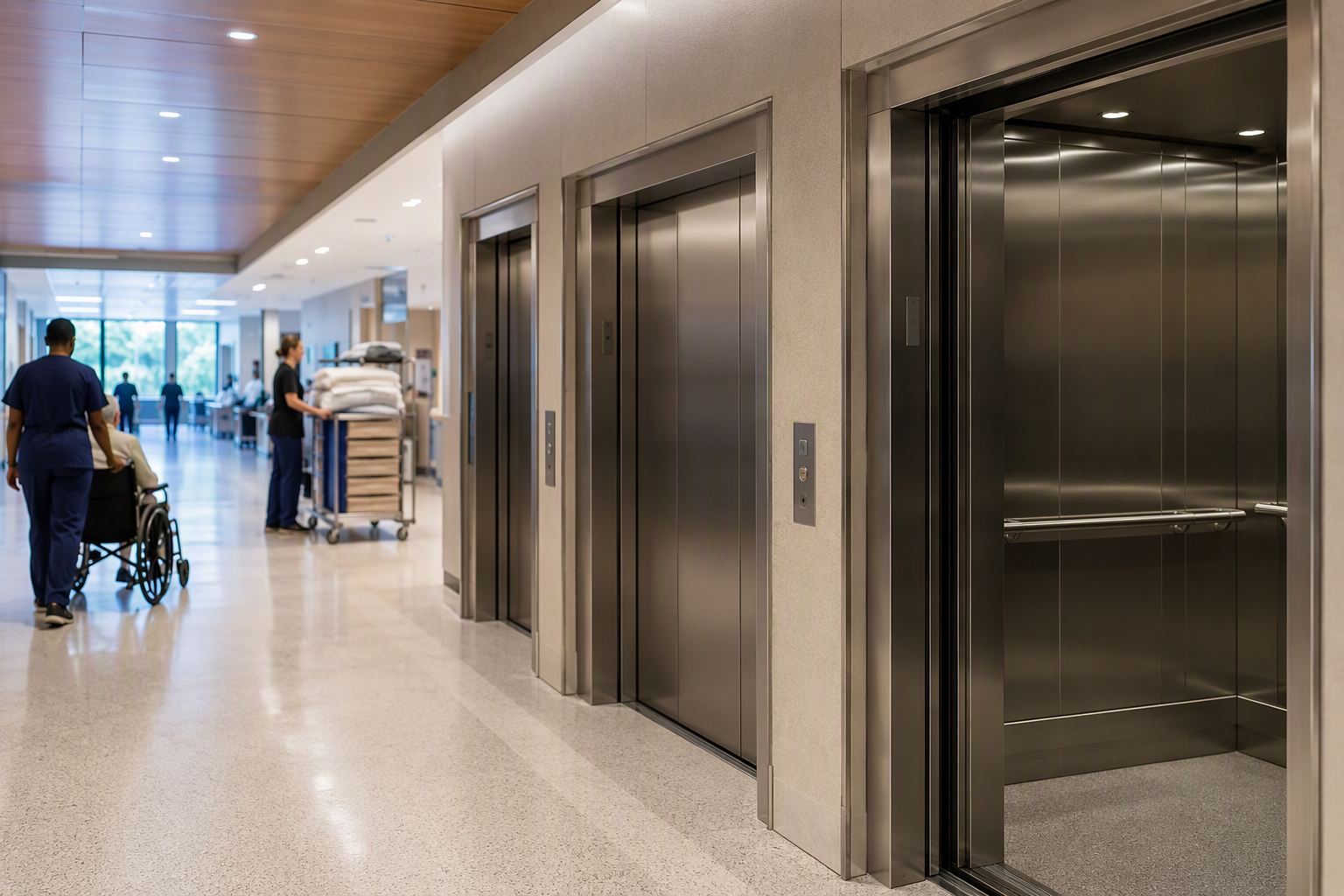
Elevators in hospitals and healthcare facilities are not a convenience — they are critical infrastructure. When a hospital elevator goes out of service for repairs or maintenance, the ripple effect touches patient transport, medical equipment delivery, staff efficiency, and life-safety compliance. For healthcare administrators in Columbia, SC and across South Carolina, understanding how to plan for and manage elevator downtime is an essential operational responsibility.
Carolina Elevator Service works with healthcare facilities to develop proactive maintenance strategies that reduce unplanned outages and keep facilities operating within the requirements established by South Carolina’s elevator regulatory framework.
What Does Elevator Downtime Actually Mean for a Healthcare Facility?
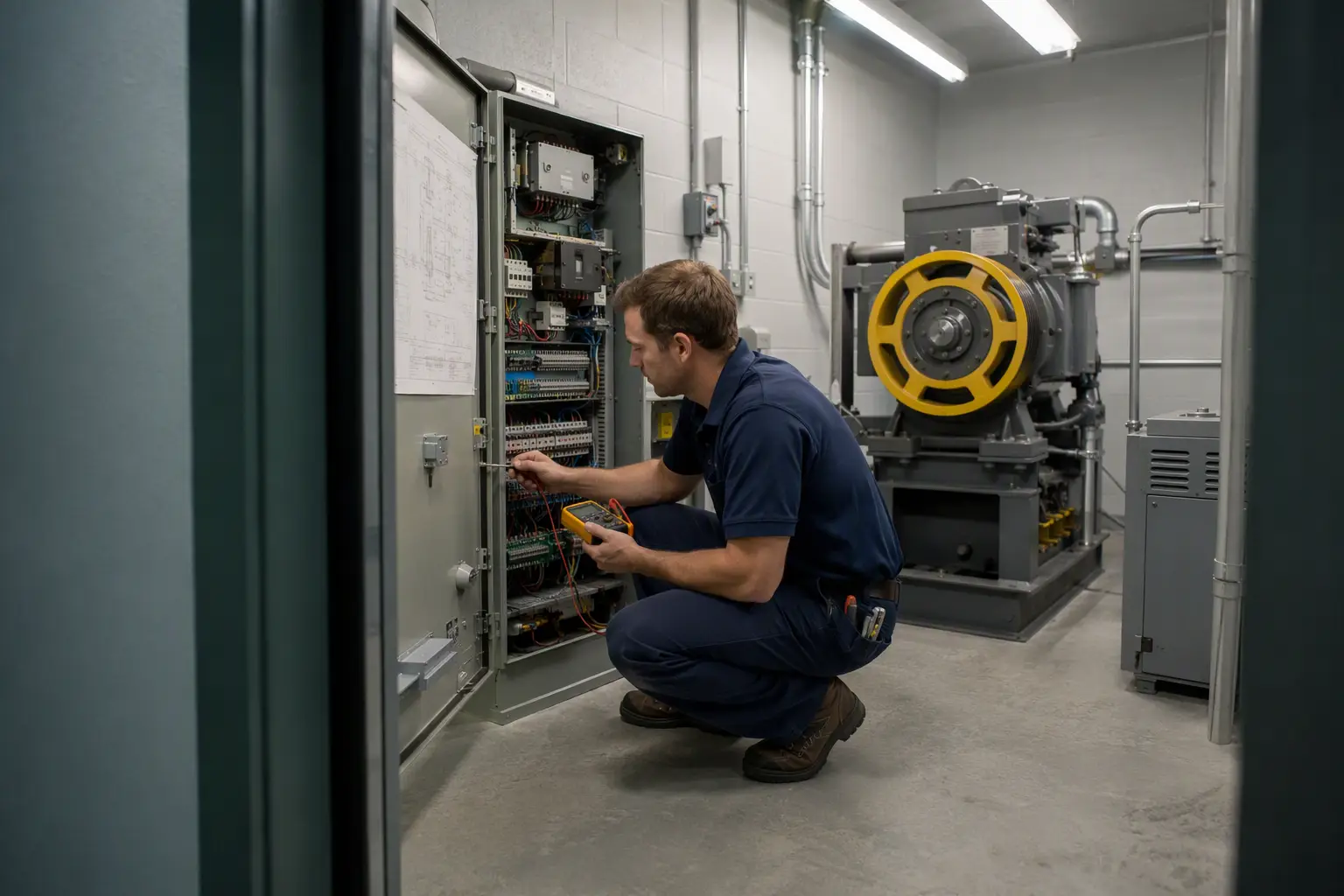
In a residential building, a brief elevator outage is an inconvenience. In a hospital, it can affect patient transport between floors, delay surgical equipment movement, interrupt supply chain logistics within the building, and compromise access for patients with mobility limitations. Healthcare elevators typically operate under far heavier use cycles than commercial elevators, which accelerates component wear and increases the frequency of maintenance interventions.
Downtime generally falls into two categories:
- Planned downtime — scheduled preventive maintenance, inspections, and code-required testing conducted during pre-arranged low-traffic periods.
- Unplanned downtime — unexpected failures caused by worn components, hydraulic issues, control system faults, or deferred maintenance.
Planned downtime is manageable. Unplanned downtime is costly, disruptive, and in a healthcare setting, potentially dangerous. The single most effective way to minimize unplanned outages is a structured preventive maintenance program aligned with the requirements of the ASME A17.1 Safety Code for Elevators and Escalators.
What Are the Legal Maintenance and Inspection Requirements for Hospital Elevators in South Carolina?
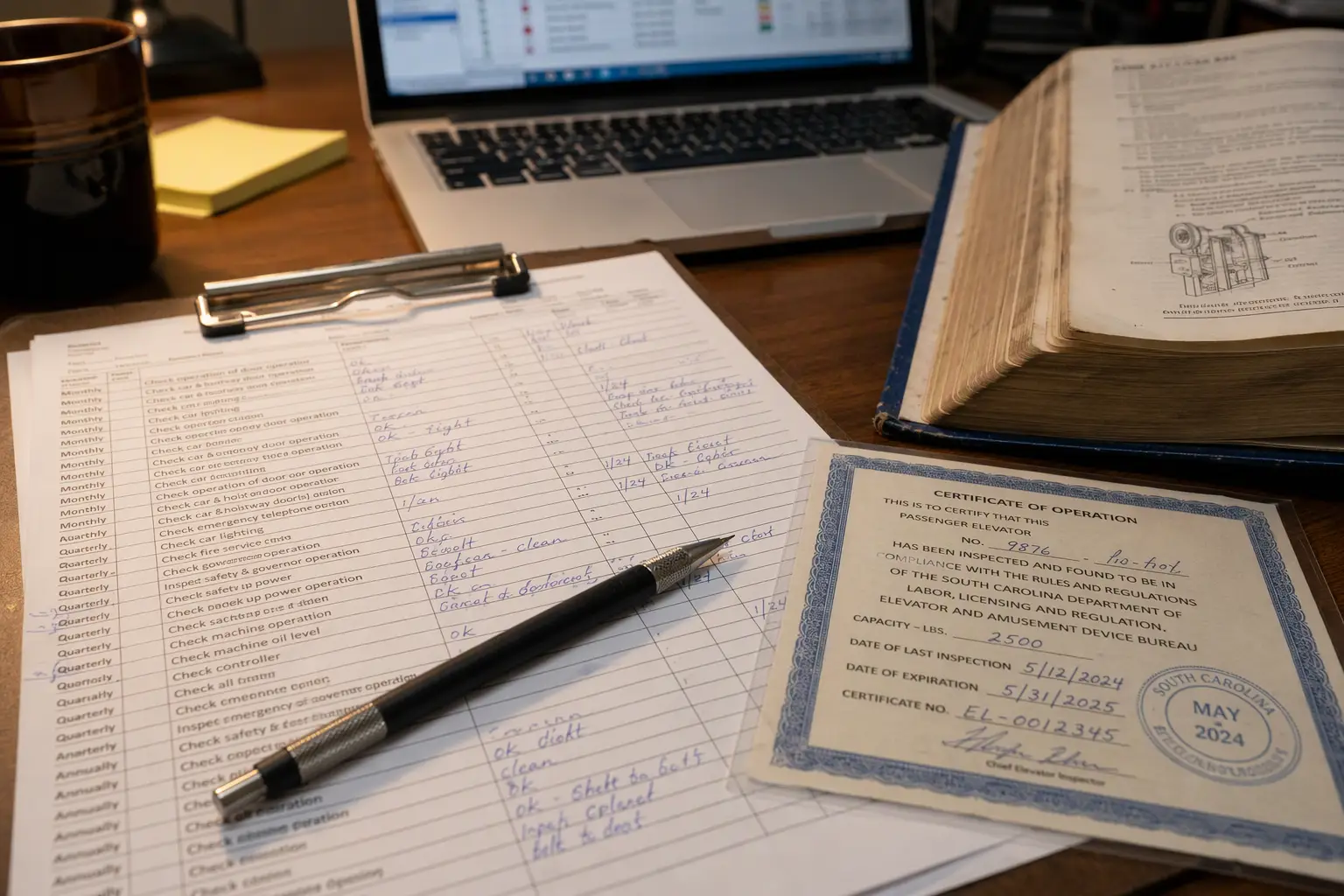
South Carolina elevator law is governed by S.C. Code Title 41, Chapter 16 (South Carolina Elevator Code), administered by the South Carolina Department of Labor, Licensing and Regulation (LLR), Office of Elevators and Amusement Rides. The rules are detailed in S.C. Code of Regulations Chapter 71, Article 5, Regulations 71-5000 through 71-5700.
Key requirements every healthcare facility operator must understand include:
- South Carolina has adopted the ASME A17.1/CSA B44, 2019 edition as its governing standard, effective July 23, 2021, per notice in the S.C. State Register.
- Passenger elevators — including those in hospitals — must be inspected at installation, registration, alteration or repair, and at least once per year before the operating certificate is renewed.
- No elevator may operate without both a certificate of registration and a current operating certificate from the state. The operating certificate, or a copy, must be displayed conspicuously inside each elevator car.
- The facility owner bears legal responsibility for keeping every elevator in safe operating condition and in compliance with state regulations.
- Any accident that seriously injures a person who is not an employee must be reported to the state before the end of the next working day.
- South Carolina passenger elevators must have standby power sufficient to run emergency lighting and the alarm bell for at least four hours if normal power fails — a critical life-safety requirement in any healthcare setting.
- State inspections may be conducted by state inspectors or licensed special inspectors. A special inspector may not inspect an elevator on which that inspector or their employer holds a current service or warranty contract.
Healthcare facilities must also comply with the Americans with Disabilities Act (ADA), which requires that elevators providing access to programs and services remain accessible to individuals with disabilities. Extended or repeated elevator outages that eliminate accessible routes can create ADA compliance exposure.
How Should a Hospital Prepare a Downtime Management Protocol?
A downtime management protocol is a documented operational plan that identifies what happens when each elevator unit goes offline. The following steps represent a sound framework for healthcare facilities:
- Inventory and prioritize all elevator units. Classify each car by function — patient transport, service/freight, visitor access — and identify which units are critical-path for clinical operations.
- Establish minimum operating requirements. Determine the minimum number of cars that must remain in service to maintain patient transport and ADA accessible routes at all times.
- Coordinate scheduled maintenance during off-peak windows. Work with your elevator service provider to schedule preventive maintenance during overnight hours or other low-census periods.
- Notify key departments in advance. Facilities management, nursing leadership, transport teams, and materials management must receive advance notice before any planned outage.
- Post out-of-service signage. Clearly mark all out-of-service cars with compliant signage and direct staff and visitors to operational units and accessible alternatives.
- Activate patient transport contingencies. Coordinate with transport staff to use alternative routes or adjust patient scheduling to avoid elevator-dependent floor transfers during the maintenance window.
- Monitor repair progress and communicate updates. Designate a facilities contact who receives real-time updates from the service technician and communicates status to department leads.
- Document the outage and resolution. Record the date, duration, cause, work performed, and return-to-service time for compliance records and future planning.
What Is the Role of Preventive Maintenance in Reducing Healthcare Elevator Downtime?
Preventive maintenance under the ASME A17.1 Safety Code for Elevators and Escalators involves systematic inspection, lubrication, adjustment, and component testing on a defined schedule. For hospital elevators operating under high-frequency use conditions, a preventive maintenance program catches wear patterns, hydraulic fluid degradation, door mechanism fatigue, and control system anomalies before they cause an in-service failure.
Carolina Elevator Service provides preventive maintenance programs for healthcare facilities in the Columbia, SC area, structured around the ASME A17.1-2019 requirements adopted by South Carolina. A well-maintained elevator is also more likely to pass the state’s annual inspection without deficiency findings that could trigger out-of-service orders.
What Happens If a Hospital Elevator Is Placed Out of Service by an Inspector?
If a state inspector or licensed special inspector identifies a condition that makes an elevator unsafe to operate, the unit may be placed out of service until the deficiency is corrected and the elevator is reinspected. Under South Carolina law, an elevator may not operate without a valid operating certificate. An out-of-service order from the LLR’s Office of Elevators and Amusement Rides is not a discretionary matter — operations must cease until compliance is restored.
This is precisely why healthcare facilities should treat annual inspection preparation as an ongoing process, not a once-a-year event. Addressing minor deficiencies through routine maintenance prevents the more serious consequence of a regulatory out-of-service order on a critical patient transport elevator.
How Does ADA Compliance Factor Into Elevator Downtime Planning?
The Americans with Disabilities Act requires that healthcare facilities maintain accessible routes for patients, visitors, and employees with disabilities. When elevators are the primary means of accessible vertical access in a multi-story facility, extended downtime directly impacts ADA compliance. Facilities should ensure that planned maintenance windows do not simultaneously take offline multiple cars serving the same accessible route, and that alternative accessible routes are identified and communicated when any elevator is out of service.
What Special Considerations Apply to Hydraulic Elevators in Healthcare Facilities?
Many mid-rise healthcare buildings use hydraulic elevator systems. South Carolina has a specific requirement for newer hydraulic installations: underground hydraulic elevator cylinders must be encased in plastic outer containment to limit electrolytic corrosion. For older hydraulic units installed before current standards, periodic cylinder integrity assessment is an important part of any maintenance program. Hydraulic fluid leaks and cylinder failures are among the more common causes of unplanned downtime in hydraulic elevator systems.
Carolina Elevator Service is familiar with hydraulic elevator maintenance requirements specific to South Carolina and can assess the condition of hydraulic systems during routine service visits.
How Long Does a Typical Hospital Elevator Repair Take?
Repair duration varies significantly based on the nature of the problem. Door operator adjustments, minor control board diagnostics, and hydraulic fluid servicing may be completed within hours. Major component replacements — traction machine overhauls, controller replacements, or hydraulic cylinder work — can take days to complete, particularly when specialty parts must be sourced. Healthcare facilities with older elevator systems should discuss parts availability and lead times with their service provider as part of contingency planning, so that any extended outage can be anticipated and managed.
What Are the Consequences of Operating an Elevator Without a Valid Certificate in South Carolina?
Under S.C. Code Title 41, Chapter 16, operating an elevator without a valid certificate of registration and operating certificate is a violation of South Carolina elevator law. For a healthcare facility, this carries regulatory, liability, and accreditation implications beyond the elevator code itself. Joint Commission and CMS survey processes evaluate facility infrastructure maintenance programs, and elevator compliance records are part of that environment-of-care assessment. Maintaining current operating certificates is a non-negotiable component of healthcare facility management in South Carolina.
Questions Your Inspector Will Ask
When a South Carolina LLR inspector or licensed special inspector arrives at a healthcare facility, they are likely to review or inquire about the following:
- Is the current operating certificate displayed conspicuously inside each elevator car?
- Has the facility maintained documentation of all maintenance, repairs, and alterations since the last inspection?
- Were any alterations or repairs made that required a state construction permit — and was that permit obtained?
- Is the standby power system functional and capable of running emergency lighting and the alarm bell for at least four hours?
- For installations with firefighters’ service, does the system use the required South Carolina five-pin S.C. #1000 key?
- Have any accidents or serious injuries been reported to the state as required?
- Are all safety devices — buffers, governors, interlocks, and door operators — tested and functioning per ASME A17.1-2019 requirements?
- For hydraulic elevators, is the underground cylinder properly encased per South Carolina requirements?
How Can Healthcare Facilities in Columbia, SC Work With Carolina Elevator Service?
Carolina Elevator Service supports healthcare facilities in the Columbia, SC area with elevator maintenance, inspection support, and repair services aligned to South Carolina’s regulatory requirements under S.C. Code Title 41, Chapter 16 and the adopted ASME A17.1-2019 standard. The team understands the operational sensitivity of hospital elevator systems and the compliance obligations that healthcare facility managers must meet.
Working with a qualified elevator service provider familiar with South Carolina’s specific code requirements — including the LLR inspection process, certificate requirements, and the adopted 2019 ASME A17.1 edition — gives healthcare administrators a more defensible maintenance record and a more reliable elevator fleet.
For facilities with aging elevator systems, Carolina Elevator Service can evaluate current conditions and help facilities prioritize maintenance investments to reduce the risk of unplanned downtime on critical patient transport units.
Summary: Key Takeaways for Healthcare Elevator Downtime Management
- Planned preventive maintenance under ASME A17.1 is the most effective tool for reducing unplanned outages.
- South Carolina law requires annual inspection and valid operating certificates for all hospital passenger elevators, administered by the South Carolina Department of Labor, Licensing and Regulation (LLR).
- A documented downtime management protocol protects patients, maintains ADA compliance, and supports accreditation readiness.
- Standby power requirements, firefighters’ service standards, and hydraulic cylinder containment rules have specific South Carolina requirements that affect healthcare facility elevator systems.
- Operating an elevator without a valid certificate is a regulatory violation with serious consequences for healthcare facilities.
Get Expert Elevator Support for Your Healthcare Facility
Elevator compliance and uptime in a healthcare setting requires specialized knowledge of both South Carolina regulatory requirements and the operational demands of clinical environments. Contact Carolina Elevator Service for a free elevator assessment and learn how a structured maintenance program can reduce downtime, support annual inspection readiness, and keep your facility in compliance with South Carolina elevator law.
Contact Carolina Elevator Service for a free elevator assessment: 803-865-1400
Need elevator service you can rely on? Carolina Elevator Service is ready to help.