Commercial Elevator Modernization: Complete FAQ Guide for Columbia, SC Building Owners
Commercial elevator modernization is one of the most consequential infrastructure investments a building owner or property manager in Columbia, SC can make. Whether the goal is regulatory compliance, extended equipment life, improved energy efficiency, or enhanced passenger safety, understanding the full timeline — and every factor that influences it — is essential before a single component is ordered. This guide answers the 20 most common questions building owners ask about modernization timelines, process steps, code requirements, and choosing the right service provider.
How Long Does a Commercial Elevator Modernization Project Take from Start to Finish?
Most commercial elevator modernization projects run between 4 and 16 weeks from initial site assessment to final state inspection approval.
The range is wide because “modernization” is not a single, standardized procedure. A targeted control system upgrade may be completed in four to six weeks, while a full-scope project — replacing the drive system, cab interior, door operators, controller, and safety components simultaneously — can extend to 14 or 16 weeks when accounting for equipment fabrication lead times, permit issuance, active construction, and the scheduling of South Carolina’s mandatory final inspection.
Building owners in Columbia, SC should plan conservatively. Supply chain conditions for elevator components, particularly microprocessor-based controllers and traction drive motors, can vary. Scheduling the Authority Having Jurisdiction (AHJ) for South Carolina for a final acceptance inspection also adds time that is outside the contractor’s direct control. A well-organized modernization partner will account for all of these variables in a detailed project timeline before work begins.
What Are the Major Phases of an Elevator Modernization Project?
A commercial elevator modernization moves through six core phases: assessment, engineering and permitting, equipment procurement, construction and installation, testing, and final inspection.
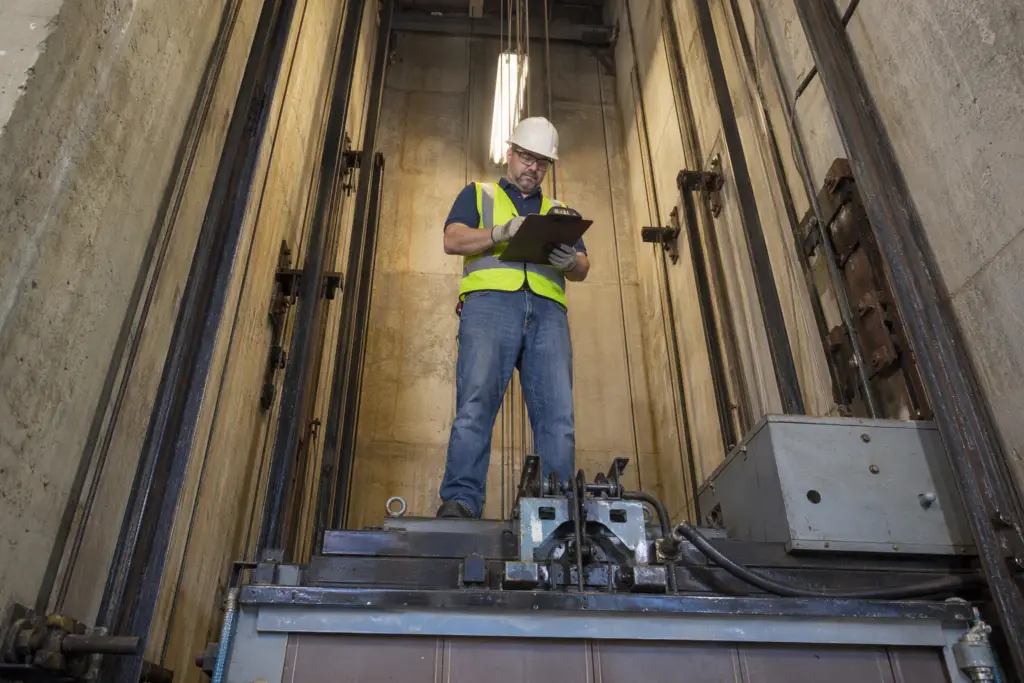
- Initial Site Assessment: A certified elevator technician inspects the existing equipment, documents deficiencies, measures the hoistway, and identifies which components are candidates for replacement versus retention.
- Scope Development and Engineering: The contractor prepares detailed specifications, selects compliant replacement components, and produces engineering drawings where required by South Carolina’s elevator code.
- Permit Application: The contractor submits a modernization permit application to the South Carolina Department of Labor, Licensing and Regulation (SC LLR), which oversees elevator safety in the state. Permit issuance timelines vary and can add one to three weeks to the overall schedule.
- Equipment Procurement: Controllers, motors, door operators, cab materials, and other components are ordered. Custom or specialty components may carry lead times of four to eight weeks or longer.
- Construction and Installation: The physical modernization work is performed in the hoistway, machine room, and cab. Active construction typically takes one to four weeks depending on scope.
- Testing and Final Inspection: The contractor performs internal testing and load tests, then coordinates with the SC LLR-authorized inspector for the mandatory final acceptance inspection before the elevator is returned to service.
Carolina Elevator Service guides Columbia, SC building owners through each of these phases, managing permit coordination and inspection scheduling so that projects stay on track.
What Factors Can Extend a Modernization Timeline Beyond the Typical Range?
Equipment lead times, permit processing delays, hoistway condition surprises, and inspection scheduling availability are the four most common causes of timeline extension.
Equipment lead times are often the largest variable. Microprocessor-based elevator controllers, in particular, are manufactured to order and may take six to ten weeks to arrive after the purchase order is placed. Contractors who begin procurement only after permit approval — rather than in parallel — can inadvertently double their project timeline.
Hidden hoistway conditions also cause delays. Older buildings in Columbia’s commercial core may have non-standard pit dimensions, deteriorated guide rails, or outdated wiring that was never brought into compliance with the ASME A17.1 Safety Code for Elevators and Escalators. When these conditions are discovered mid-project, additional engineering and material orders may be required.
Finally, the availability of SC LLR inspection personnel can add days or weeks to the closeout phase, particularly during periods of high construction activity in the Midlands region.
How Does Project Scope Affect the Modernization Timeline?
Scope is the single greatest determinant of timeline — a targeted control upgrade may close in four weeks, while a full mechanical and aesthetic overhaul can require four months.
| Modernization Scope | Typical Duration (Weeks) | Key Variables | Primary Code Driver |
|---|---|---|---|
| Controller / Control System Replacement Only | 4 – 6 | Controller lead time, permit issuance | ASME A17.1 |
| Door Operator and Safety Device Upgrade | 3 – 5 | Parts availability, hoistway access | ASME A17.1 |
| Cab Interior and Accessibility Renovation | 4 – 7 | Custom cab components, ADA compliance review | ADA Title III |
| Hydraulic System Replacement (pump, jack, fluid) | 6 – 10 | Environmental permitting, jack replacement depth | ASME A17.1 |
| Traction Drive and Motor Replacement | 6 – 12 | Machine room rigging, motor lead time | ASME A17.1 |
| Full Modernization (all systems) | 10 – 16 | All of the above, sequencing complexity | ASME A17.1 / ADA |
What Triggers the Need for Elevator Modernization?
Modernization is typically triggered by one or more of the following: aging equipment, repeated breakdowns, code compliance deficiencies, ADA accessibility requirements, or an insurance or lender mandate.
South Carolina requires that elevators comply with the ASME A17.3 Safety Code for Existing Elevators and Escalators, which governs retrofit and compliance requirements for equipment already in service. When an elevator’s safety devices, door systems, or controls no longer meet code minimums, the AHJ may require modernization as a condition of continued operation.
Insurance carriers and commercial lenders increasingly require documentation of current compliance before issuing or renewing policies and loans. Building owners who have deferred maintenance for multiple inspection cycles may find that a single failed inspection triggers a mandatory modernization notice.
ADA compliance is another common driver. The Americans with Disabilities Act requires that elevators in public accommodations and commercial facilities meet accessibility standards. Buildings undergoing renovation or change of use face heightened ADA scrutiny, and elevator accessibility — including control height, door timing, and audible signals — is frequently out of conformance in older installations.
What Permits Are Required in South Carolina for Elevator Modernization?
South Carolina requires a modernization permit issued through the SC Department of Labor, Licensing and Regulation before any significant elevator alteration work begins.
The SC LLR Elevator and Amusement Ride Safety program is the governing authority for elevator permits, inspections, and certificates of operation in South Carolina. A licensed elevator contractor — one holding the appropriate South Carolina contractor license — must submit permit applications on behalf of the building owner. Work may not legally begin on permitted scope until the permit is issued and posted at the job site.
After installation is complete, the contractor schedules a final acceptance inspection with an SC LLR-authorized inspector. The elevator may not be returned to passenger service until the inspector approves the installation and a new certificate of operation is issued. Building owners should understand that this inspection step is a state-controlled process and cannot be accelerated by the contractor alone.
How Does ADA Compliance Affect the Modernization Scope and Schedule?
ADA requirements can add scope, materials, and one to two weeks to a modernization project when existing cab dimensions, control configurations, or door timing fall outside current accessibility standards.
The ADA establishes specific requirements for elevator accessibility in commercial buildings, including minimum cab dimensions, control button height and braille marking, door reopening device performance, and audible floor announcement systems. In older Columbia, SC commercial buildings, many of these elements are non-compliant because they predate modern ADA interpretations or were never properly upgraded.
When a modernization project triggers ADA review — which typically occurs whenever a building undergoes significant alteration — the elevator must be brought into full conformance. Building owners should request an explicit ADA compliance checklist from their modernization contractor before work begins, so that ADA scope is included in the original permit and timeline rather than discovered as a change order midway through construction.
What Is the Difference Between Elevator Modernization and Elevator Repair?
Repair addresses a specific failed or failing component to restore current functionality, while modernization replaces major systems or subsystems to upgrade the elevator to current codes and performance standards.
The distinction matters for permitting, insurance, and long-term planning. Routine repairs — replacing a worn door hanger roller, for example, or rebuilding a selector — typically do not require a modernization permit. However, replacement of the controller, drive system, safety devices, or hydraulic jack generally constitutes a “major alteration” under ASME A17.1 and triggers the full permit and inspection process.
Building owners who repeatedly fund repairs on aging equipment often find that cumulative repair costs over several years approach or exceed the cost of a planned modernization — without the code compliance, warranty, and reliability benefits that modernization provides. A lifecycle cost analysis at the time of each major repair decision helps clarify when modernization becomes the more economical path.
What Role Does ASME A17.1 Play in a Modernization Project?
ASME A17.1 is the primary safety code that governs the design, construction, installation, and testing of new and modernized elevator components in South Carolina.
The ASME A17.1 Safety Code for Elevators and Escalators is adopted by South Carolina as the basis for elevator safety regulation. When components are replaced during a modernization, the new components must conform to the edition of ASME A17.1 in effect at the time of permitting — which, as of 2026, reflects current code editions adopted by the SC LLR.
ASME A17.3, the companion standard for existing installations, governs which legacy systems must be retroactively upgraded and at what trigger points. A qualified elevator contractor will cross-reference both standards during the scoping phase to ensure the modernized elevator is compliant with both new-component requirements and existing-installation retrofit obligations.
How Should Building Owners Prepare for Elevator Downtime During Modernization?
Building owners should develop a written downtime management plan that addresses tenant communication, temporary accessibility accommodations, and service scheduling before modernization work begins.
- Notify all tenants and building users in writing at least 30 days before work begins, including the expected duration of outage and any phased availability windows.
- Post ADA-compliant signage at all elevator lobbies directing users to accessible alternatives during the outage period.
- Coordinate with the contractor on phased operation where the building has multiple elevators — staggering modernization so that at least one elevator remains operational minimizes disruption.
- Identify and address the needs of mobility-impaired building users proactively; the ADA requires that public accommodations provide equivalent facilitated access during planned accessibility outages where feasible.
- Confirm temporary freight or service access plans with the contractor so that material deliveries and equipment rigging do not conflict with ongoing building operations.
- Establish a contractor communication protocol with a single point of contact for daily progress updates and immediate notification of schedule changes.
Can Modernization Work Be Performed in Phases to Reduce Downtime?
Yes — phased modernization is a recognized strategy for multi-elevator buildings that allows system-by-system upgrades while maintaining partial elevator service throughout the project.
In buildings with two or more elevators, a skilled modernization contractor can sequence work so that the second elevator remains available while the first undergoes active installation. Once the first elevator passes final inspection and is returned to service, work begins on the second. This approach extends the overall project calendar but significantly reduces the operational impact on tenants and building users.
Phased modernization requires careful scheduling because permitting, inspection, and equipment procurement must be managed across multiple active permits simultaneously. Not all contractors have the project management infrastructure to handle this efficiently. Carolina Elevator Service coordinates phased modernization programs in the Columbia area to minimize disruption while maintaining regulatory compliance at each stage.
What Equipment Is Typically Replaced During a Full Elevator Modernization?
A full commercial elevator modernization typically replaces the controller, drive and motor system, door operators, safety devices, wiring, and cab interior — while retaining structural elements like the hoistway, guide rails, and sling that remain in sound condition.
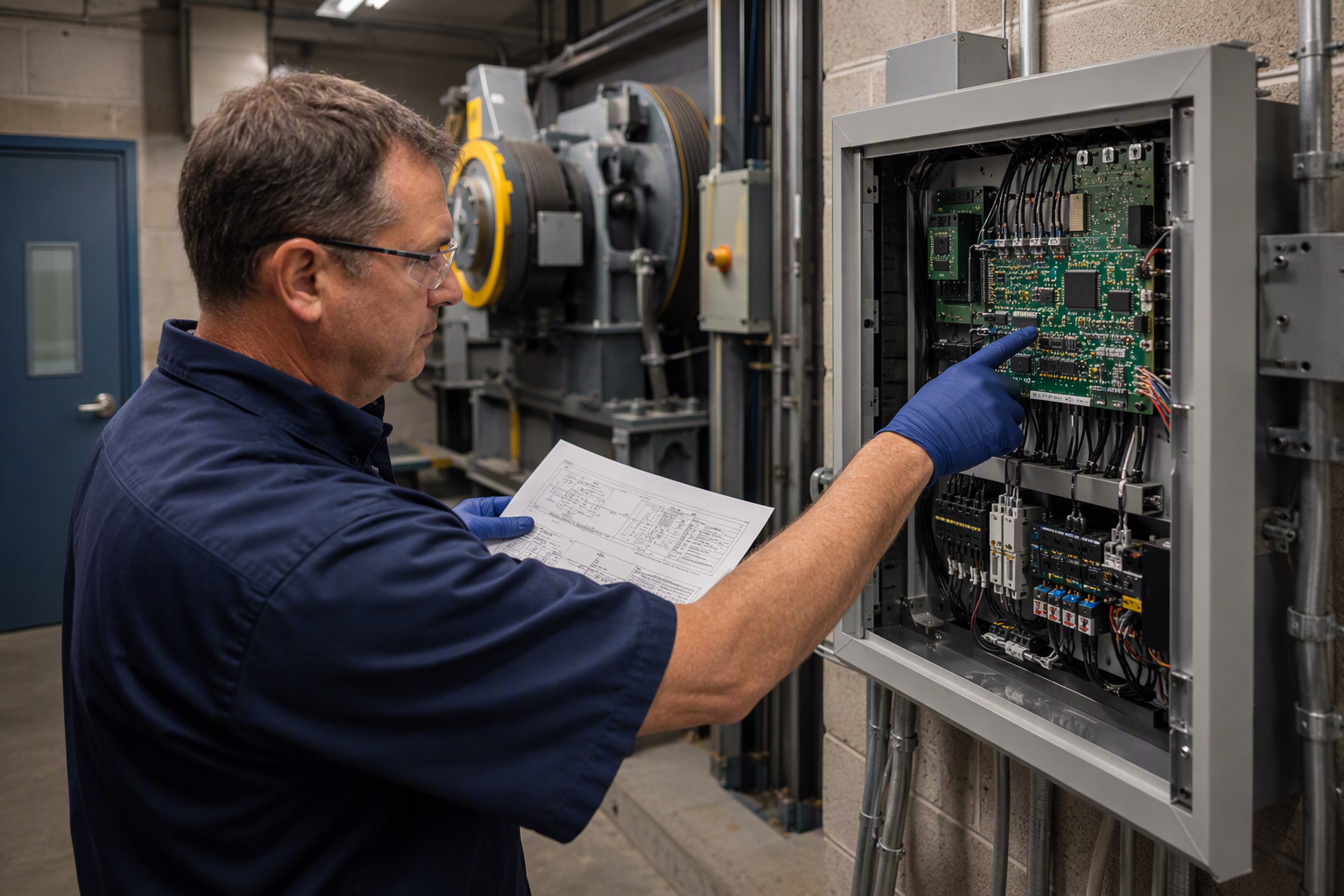
The controller is the nerve center of the elevator and is almost universally replaced in any meaningful modernization because obsolete relay-based or early-generation microprocessor controllers lack the safety logic, diagnostic capability, and parts availability of current equipment. Drive systems — whether AC variable-voltage variable-frequency (VVVF) drives for traction elevators or hydraulic power units for hydraulic machines — are replaced to deliver smoother leveling, improved energy performance, and code-compliant operation.
Door operators and their associated safety devices, including the door reversal mechanism, receive particular attention because door-related incidents represent a significant share of elevator injuries. The ASME A17.1 code specifies performance criteria for door closing force, reopening devices, and door timing that many older installations do not meet without replacement of the operator assembly.
How Do Supply Chain Conditions Affect Modernization Lead Times in 2026?
Global supply chain conditions continue to affect lead times for elevator controllers, drive components, and specialty hydraulic parts, making early procurement planning a critical element of timeline management.
Building owners in Columbia, SC should work with their modernization contractor to identify long-lead-time components as early as the scoping phase — ideally before the permit is even submitted — so that procurement can begin in parallel with permit processing. Controllers and VVVF drives in particular are frequently built-to-order items with lead times that can significantly affect project duration if not ordered promptly.
Experienced elevator contractors maintain relationships with multiple equipment suppliers and can sometimes substitute equivalent code-compliant components when a primary choice is unavailable. Building owners should ask their contractor to identify lead times for each major component during the proposal stage and request a documented procurement schedule as part of the project plan.
What Happens If Modernization Work Fails the Final Inspection?
If a final inspection results in a rejection, the contractor must correct all noted deficiencies and schedule a re-inspection before the elevator can be returned to service — adding days to weeks to the overall timeline.
Final inspection failures most commonly result from installation deficiencies, documentation gaps, or components that do not meet the specifications submitted in the permit application. South Carolina’s authorized inspector will issue a written deficiency notice identifying each item that must be corrected. The contractor is responsible for completing corrections and notifying the AHJ to schedule a follow-up inspection.
The best mitigation for inspection failure is a thorough pre-inspection internal review by the installing contractor, including a complete load test, safety device activation test, and documentation audit, before the state inspector arrives. Contractors who skip internal testing in the interest of schedule frequently encounter inspection rejections that cost more time than the testing would have required.
How Does Modernization Relate to Elevator Safety Inspections in South Carolina?
South Carolina requires periodic elevator inspections by an authorized inspector, and a modernization resets the compliance baseline — meaning the newly modernized elevator begins its inspection cycle fresh against current code standards.
South Carolina’s elevator safety program, administered by the SC LLR, requires that commercial elevators undergo routine periodic inspections to maintain their certificate of operation. When a modernization is completed and the final acceptance inspection is passed, the elevator receives a new certificate of operation reflecting the upgraded equipment and current code compliance status.
Building owners should maintain a complete modernization record — including the permit, inspection reports, engineer drawings where applicable, and equipment documentation — because these records are frequently requested at subsequent routine inspections and may be required for insurance or lender audits. Carolina Elevator Service provides organized documentation packages to building owners at project closeout to simplify records management.
What Questions Should Building Owners Ask When Getting Modernization Proposals?
Building owners should ask prospective contractors about permit handling, component sourcing, phasing options, warranty terms, inspection coordination, and the specific code editions the design will conform to.
A rigorous proposal evaluation protects building owners from scope creep, unexpected downtime, and code compliance gaps. The following are essential questions to include in any modernization RFP process in South Carolina:
- Will you handle the SC LLR permit application, and what is your estimated permit issuance timeline?
- What are the lead times for the major components in this scope, and when will you place purchase orders?
- Which edition of ASME A17.1 will the modernized equipment conform to?
- Does the scope include a formal ADA compliance review, and is ADA remediation included or excluded?
- What warranty terms apply to parts and labor after final inspection?
- How will you manage phasing if the building requires elevator continuity during construction?
- Who will be the primary contact for day-to-day project communication?
- What does your internal pre-inspection testing protocol include before the state inspector arrives?
Is Elevator Modernization Subject to OSHA Requirements During Construction?
Yes — OSHA’s construction safety standards apply to the hoistway and machine room work environment during an elevator modernization, and the installing contractor is responsible for maintaining a compliant jobsite.
The Occupational Safety and Health Administration (OSHA) regulates the safety of workers performing elevator construction and modernization work. Relevant OSHA standards cover fall protection in open hoistways, lockout/tagout procedures for electrical energy isolation, and general construction site safety requirements. Building owners bear a responsibility to ensure that contractors operating in their facilities maintain OSHA-compliant practices, as facility conditions — such as hoistway access, lighting, and pit drainage — can affect worker safety.
Building owners should confirm that their modernization contractor has a documented safety program and that all workers on site have received appropriate safety training. Contractors who cannot produce safety documentation upon request represent an elevated risk for building owners both from a liability standpoint and from a project continuity perspective.
How Does Hydraulic Elevator Modernization Differ in Timeline from Traction Elevator Modernization?
Hydraulic elevator modernization often involves additional environmental considerations — particularly underground cylinder replacement or liner installation — that can extend the timeline beyond a comparable traction elevator project.
Many older hydraulic elevators in Columbia, SC’s commercial building stock have single-bottom cylinders installed underground without secondary containment. Replacement or rehabilitation of these cylinders requires excavation in the pit area, coordination of environmental precautions related to hydraulic fluid, and additional inspection steps. These factors can add two to four weeks to a hydraulic modernization timeline compared to a project that does not involve below-grade cylinder work.
Traction elevator modernizations, by contrast, are primarily concentrated in the machine room and hoistway. While motor and sheave work may require specialized rigging, the timeline is generally more predictable because it does not involve subsurface conditions. Building owners with older hydraulic equipment should request a cylinder condition assessment as part of the initial site evaluation to determine whether cylinder work will be required before an accurate timeline can be established.
What Are the Long-Term Benefits of Elevator Modernization That Justify the Project Timeline and Investment?
Modernization delivers long-term benefits including improved reliability, current code compliance, reduced maintenance costs, energy efficiency gains, enhanced accessibility, and extended equipment service life.
Modernized elevators operating on current controllers with VVVF drives typically deliver smoother floor-to-floor performance and more precise leveling, reducing the risk of tripping incidents at the cab sill. Updated safety devices — including improved door reversal mechanisms, emergency lighting, and communication systems — directly address the safety deficiencies most commonly cited in ASME A17.1 compliance reviews.
From a financial planning perspective, a properly executed modernization resets the maintenance cost curve. Older equipment with obsolete controllers and worn mechanical components drives disproportionately high repair costs as parts become scarce. Modernized equipment, under a structured maintenance agreement with a qualified contractor, typically delivers more predictable annual operating costs and fewer emergency service calls — which translates to reduced tenant disruption and improved building reputation.
Carolina Elevator Service serves commercial building owners across Columbia, SC with modernization planning that accounts for the full lifecycle value of the investment, not just the upfront scope and timeline.
How Can Building Owners in Columbia, SC Find a Qualified Elevator Modernization Contractor?
Building owners should verify that any elevator contractor holds a valid South Carolina elevator contractor license issued through the SC LLR, carries appropriate insurance, and has documented experience with commercial elevator modernization under ASME A17.1 requirements.
South Carolina requires elevator contractors to be licensed through the SC Department of Labor, Licensing and Regulation. Building owners can verify a contractor’s active license status through the SC LLR license verification portal. Licensing confirms that the contractor has met state competency requirements, but building owners should also evaluate the contractor’s familiarity with the specific equipment type being modernized — hydraulic, traction, or MRL — and their track record managing the permit and inspection process with the SC LLR.
Requesting references from comparable commercial modernization projects completed in South Carolina is one of the most reliable ways to assess a contractor’s actual performance. Contractors who have managed full-scope modernizations in occupied commercial buildings, coordinated phased outages, and achieved first-pass final inspection approval demonstrate the project management capability that complex modernization projects require.
Carolina Elevator Service is a certified elevator service company serving the Columbia, SC market, offering commercial elevator modernization assessments, permit coordination, and full-scope installation services aligned with current ASME and ADA standards.
Get a Free Elevator Modernization Assessment from Carolina Elevator Service
If your commercial elevator is showing signs of aging, failing inspections, or falling short of current ASME A17.1 or ADA requirements, the right first step is a professional on-site assessment — not a guess. Carolina Elevator Service evaluates your existing equipment, identifies modernization scope, estimates project timelines, and manages the entire SC LLR permit and inspection process from start to finish.
Contact Carolina Elevator Service for a free elevator assessment: 803-865-1400
Serving commercial building owners throughout Columbia, SC and the surrounding Midlands region.
Need elevator service you can rely on? Carolina Elevator Service is ready to help.