Healthcare Elevator Upgrades: Capital Budget vs. Operating Budget in South Carolina
For hospital CFOs, facility directors, and healthcare administrators in the Columbia, SC area, correctly classifying elevator expenditures is not simply an accounting preference—it directly affects tax treatment, depreciation schedules, Joint Commission survey readiness, and capital planning cycles. This guide clarifies the distinction and covers the compliance landscape that shapes every elevator decision in a South Carolina healthcare setting.
—
What Is the Core Difference Between a Capital and Operating Elevator Expense?
The Internal Revenue Service and generally accepted accounting principles (GAAP) draw the line based on whether a cost maintains current condition or improves, restores, or adapts an asset. For elevators in healthcare facilities, the practical test is:
- Capital expenditure (CapEx): The work materially extends the useful life of the elevator, adds a new capability, increases the unit’s value, or brings it into compliance with a current code edition that requires physical alteration of the equipment.
- Operating expenditure (OpEx): The work keeps the elevator in its existing condition and performance state—routine inspections, lubrication, minor part swaps, and service contracts that do not alter the elevator’s fundamental functionality.
The classification matters enormously in healthcare because capital items are depreciated over time (elevators typically use a multi-year depreciation schedule under IRS asset class rules), while operating costs are expensed in the current fiscal year. Misclassification can trigger audit findings and distort facility financial statements.
—
Which Elevator Projects Typically Qualify as Capital Expenditures?

The following project types are generally capital in nature for South Carolina healthcare facilities. Always confirm final classification with your CFO or external auditor, since individual facts and circumstances matter.
- Full cab modernization — Replacing the cab interior, lighting system, flooring, and ceiling as a single coordinated project that substantially renews the elevator’s condition.
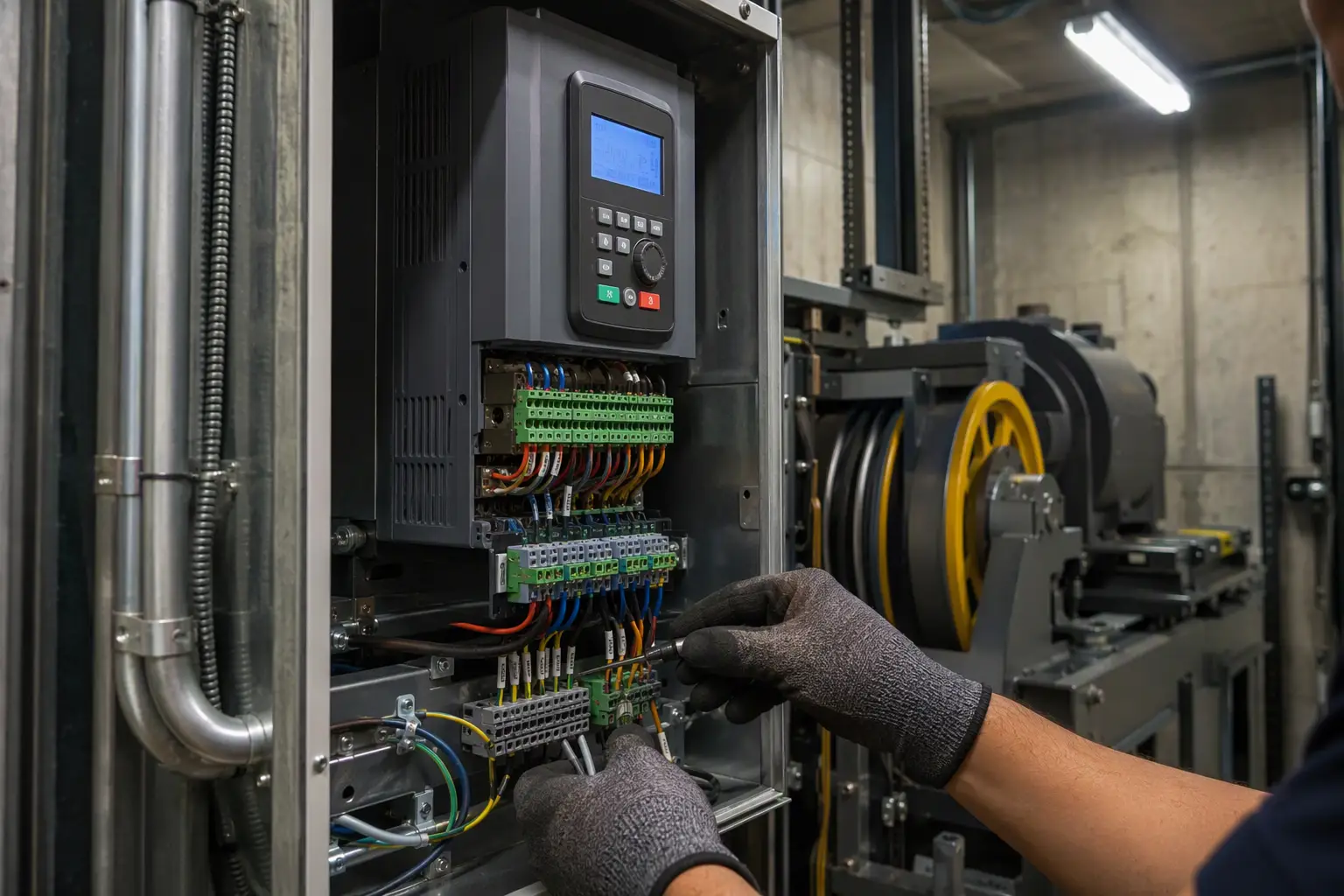
- Drive system replacement — Swapping a hydraulic unit for a machine-room-less (MRL) traction system, or replacing an aging motor-generator set with a modern variable-voltage, variable-frequency (VVVF) drive. This changes the elevator’s fundamental operating system and materially extends its service life.
- Control system modernization — Replacing relay-based or early microprocessor controls with current digital controllers, often required to support new safety features or ADA-compliant dispatch systems.
- ADA compliance modifications — Installing raised and Braille characters on control panels, adding audible signals, widening hoistway doors, or reconfiguring cab dimensions to meet requirements under the Americans with Disabilities Act (ADA). When these changes require structural or mechanical alteration rather than a simple fixture swap, they are capital in character.
- Seismic or structural upgrades — Adding seismic switches or guide rail reinforcements when mandated by a new code adoption cycle.
- Hydraulic system replacement or re-piping — Full replacement of an aging hydraulic cylinder, jack, or underground piping to eliminate leak risk and meet current environmental standards.
- Adding a new elevator — Construction of a new hoistway or installation of a platform lift where none previously existed.
- Emergency power and firefighter service upgrades — Installing or substantially upgrading Phase I and Phase II firefighter’s emergency operation systems when the scope goes beyond a minor component replacement.
—
Which Elevator Costs Belong in the Operating Budget?
- Annual or periodic safety inspections required under South Carolina’s elevator safety program.
- Preventive maintenance contracts covering lubrication, adjustment, cleaning, and minor part replacement.
- Replacement of individual worn components—brake shoes, door rollers, light bulbs, floor buttons—where the repair restores but does not improve the existing system.
- Oil replenishment in hydraulic units (not a full system replacement).
- Annual load testing fees.
- Callback labor costs for isolated service interruptions.
- Firefighter service testing per routine inspection protocols.
Carolina Elevator Service helps Columbia-area healthcare facility managers document the scope of every project clearly, so the records support whichever budget classification the facility’s finance team determines is appropriate.
—
What Compliance Codes Govern Healthcare Elevator Upgrades in South Carolina?
Healthcare facilities face a layered compliance environment. Every upgrade project must be evaluated against the following:
- ASME A17.1 Safety Code for Elevators and Escalators — The primary technical standard governing new installations and alterations. When a modernization project constitutes an “alteration” under ASME A17.1, the altered portions must comply with the current edition of the code. South Carolina’s Authority Having Jurisdiction (AHJ) enforces this standard through the state’s elevator safety program.
- ASME A17.3 Safety Code for Existing Elevators and Escalators — Applies to elevators already in service. It establishes minimum safety requirements for existing equipment and is what inspectors reference when evaluating an older elevator that has not been fully modernized.
- Americans with Disabilities Act (ADA) — Requires elevators in multi-story healthcare buildings to be accessible. Scoping and technical requirements cover door width, cab dimensions, control reach ranges, Braille signage, and audible signals. Alterations to an elevator trigger accessibility requirements for the altered elements.
- The Joint Commission (TJC) Environment of Care Standards — Joint Commission-accredited hospitals must demonstrate that life safety equipment, including vertical transportation, is maintained and inspected per applicable codes. TJC surveyors review inspection records and may cite deficiencies tied to ASME non-compliance.
- OSHA General Industry Standards — Construction and maintenance activities around elevators involve fall protection, lockout/tagout, and confined space considerations that affect project planning and cost.
- South Carolina State Elevator Safety Program — The South Carolina Department of Labor, Licensing and Regulation (LLR) oversees elevator safety in the state. Permits are required for new installations and alterations, and certificates of operation must be maintained. All work must be performed by licensed elevator contractors operating in South Carolina.
—
How Do ADA Requirements Trigger Capital Spending in Healthcare Settings?
When a healthcare facility undertakes a “path of travel” renovation—expanding a wing, relocating a nursing station, or reconfiguring an emergency department—ADA regulations require that the path of travel to the altered area, including elevators serving that path, be made accessible up to a defined cost threshold. This regulatory trigger can convert what was budgeted as a minor renovation into a capital elevator project. Facilities in Columbia, SC that are planning major facility upgrades should engage Carolina Elevator Service early in the design phase to assess which elevator elements will require alteration and what that scope means for the capital budget.
—
What Is the Typical Useful Life of an Elevator for Depreciation Purposes?
Depreciation schedules are determined by IRS asset class rules and GAAP guidance—not by elevator contractors. Facility finance teams and external auditors make these determinations. From an engineering standpoint, elevator manufacturers and the elevator industry broadly recognize that major mechanical and electrical components have service lives measured in decades, and that a comprehensive modernization can meaningfully extend an elevator’s functional life. Your CFO and auditor will use these engineering facts as inputs to the depreciation analysis, but Carolina Elevator Service does not make depreciation or tax determinations on behalf of clients.
—
How Should a Healthcare Facility Prioritize Elevator Upgrade Projects?
- Conduct a condition assessment. Have a qualified elevator contractor inspect all units and document the age, condition, and compliance status of mechanical, electrical, and safety components.
- Identify code deficiencies. Compare current equipment against ASME A17.3 requirements enforced by South Carolina LLR. Deficiencies that affect certificate of operation renewal are highest priority.
- Assess ADA gaps. Identify any accessibility shortfalls that create legal exposure under the ADA, particularly for elevators on a path of travel to recently altered spaces.
- Evaluate reliability history. Review callback frequency, downtime records, and parts availability for aging components. High callback rates signal an elevator approaching end of practical service life.
- Classify each project as CapEx or OpEx. Work with finance and the elevator contractor to document scope clearly so accounting treatment is supportable.
- Sequence projects against capital planning cycles. Align major modernizations with the facility’s annual and multi-year capital budget calendars to avoid emergency spending outside the planned cycle.
- Obtain permits and contractor bids. South Carolina LLR requires permits for alterations. Ensure bidding contractors are licensed to perform elevator work in South Carolina.
- Schedule work to minimize patient and operational disruption. In healthcare settings, elevator downtime affects patient transport, supply delivery, and emergency response. Plan shutdowns during low-census periods or nights and weekends where possible.
—
What Documentation Should a Healthcare Facility Maintain for Elevator Capital Projects?
Strong documentation serves audit defense, Joint Commission surveys, and South Carolina LLR compliance simultaneously. Maintain the following:
- South Carolina LLR permits for each alteration project.
- Certificates of operation for each elevator unit.
- Annual inspection reports with inspector findings and corrective action records.
- Contractor invoices and scope-of-work descriptions that clearly distinguish capital improvements from maintenance labor.
- Modernization specifications and as-built drawings.
- Load test certificates.
- Firefighter service and Phase I/Phase II test records.
- ADA compliance documentation for altered elements.
—
Questions Your Inspector Will Ask
South Carolina LLR inspectors and Joint Commission surveyors will probe the following areas. Healthcare facility teams should be prepared to produce documentation on each point:
- Is the certificate of operation current? Inspectors verify that the elevator is operating under a valid, unexpired certificate issued by South Carolina LLR.
- Has the annual inspection been completed and documented? Inspection records must be available and must reflect the current inspection cycle.
- Were permits obtained for any alterations performed since the last inspection? Unpermitted alteration work is a serious code violation in South Carolina.
- Is the firefighter’s emergency operation (Phase I and Phase II) functional? Inspectors will test recall and in-car operation. In healthcare facilities, this is a life safety critical item.
- Are door reopening devices operational? Door safety edges and light curtains must function correctly; this is especially critical in patient transport environments where stretchers and wheelchairs are common.
- Is the machine room secured and environmentally conditioned? Excessive heat or unauthorized access to machine rooms is a code compliance issue.
- Are load capacity and inspection certificates posted in the cab? South Carolina code requires posting of the current certificate of operation.
- Have any alterations changed the original design in a way that requires ASME A17.1 compliance for the altered elements? Inspectors will ask what work was performed and whether it constitutes an alteration under the code definition.
—
How Can a Healthcare Facility Avoid Emergency Capital Spending on Elevators?
Unplanned elevator failures in a hospital or medical office building are operationally disruptive and financially costly—emergency repair work is nearly always more expensive than planned modernization, and emergency downtime affects patient care. The most reliable strategy is a multi-year capital elevator plan built on a current condition assessment. Carolina Elevator Service provides condition assessments for Columbia, SC healthcare facilities that identify which components are approaching end of service life, which projects qualify as capital replacements, and what a realistic multi-year spend trajectory looks like. This type of proactive planning allows facility directors to present a defensible capital request to their board or executive team rather than responding to unexpected failures.
—
Does Energy Efficiency Factor Into Capital Budget Justification for Elevator Upgrades?
Yes. Modern drive systems, LED cab lighting, and standby mode controls reduce energy consumption compared to older equipment. While Carolina Elevator Service does not make specific energy savings projections on behalf of clients, facility engineers can quantify projected consumption reductions as part of a capital project business case. For Joint Commission-accredited hospitals and health systems with sustainability commitments, energy efficiency improvements can strengthen the justification for capital allocation alongside compliance and reliability rationale.
—
How Does the Bidding and Vendor Selection Process Work for Healthcare Elevator Capital Projects?
South Carolina healthcare facilities subject to public procurement rules or health system purchasing policies typically require competitive bids for capital projects above defined thresholds. When evaluating elevator contractors, facility procurement teams should confirm:
- The contractor holds a current South Carolina elevator contractor license issued by LLR.
- The contractor has documented experience with healthcare facility projects, including managing patient and operational disruption during elevator outages.
- The contractor can provide project management support for the permitting process with South Carolina LLR.
- The contractor carries appropriate insurance coverage for work in a healthcare environment.
Carolina Elevator Service serves healthcare facilities throughout Columbia, SC and the surrounding region, offering licensed elevator modernization and maintenance services with a working understanding of the compliance requirements healthcare clients face.
—
What Are the Risks of Deferring Elevator Capital Investment in a Healthcare Setting?
Deferred elevator capital investment in healthcare creates compounding risk across several dimensions:
- Regulatory: South Carolina LLR can restrict operation of an elevator that fails to meet applicable safety requirements. A pulled certificate of operation on a patient transport elevator creates immediate operational crisis.
- Accreditation: Joint Commission Environment of Care deficiencies related to elevator safety can affect accreditation status.
- Liability: Elevator malfunctions that cause patient injury in a healthcare setting carry significant liability exposure.
- Operational: Aging elevators generate more callbacks, longer downtime events, and parts sourcing delays as components become obsolete—directly affecting patient flow.
- Financial: Emergency repairs and forced modernizations that cannot be planned into a capital cycle are consistently more costly than scheduled projects.
—
Get a Professional Elevator Assessment for Your Healthcare Facility
Healthcare facility directors in Columbia, SC rely on accurate, documented elevator condition assessments to build credible capital budget requests and stay ahead of compliance requirements. Carolina Elevator Service provides thorough elevator assessments that identify current code deficiencies, document component condition, and help facility teams distinguish capital improvement projects from routine operating maintenance—giving finance and compliance teams the information they need.
Contact Carolina Elevator Service for a free elevator assessment: 803-865-1400
Need elevator service you can rely on? Carolina Elevator Service is ready to help.