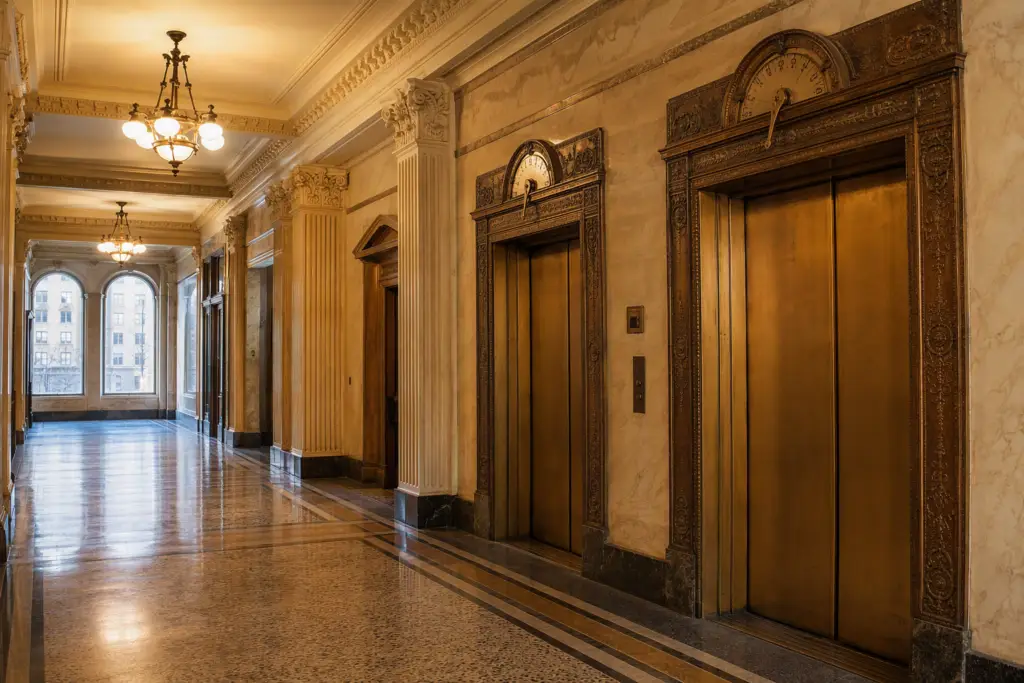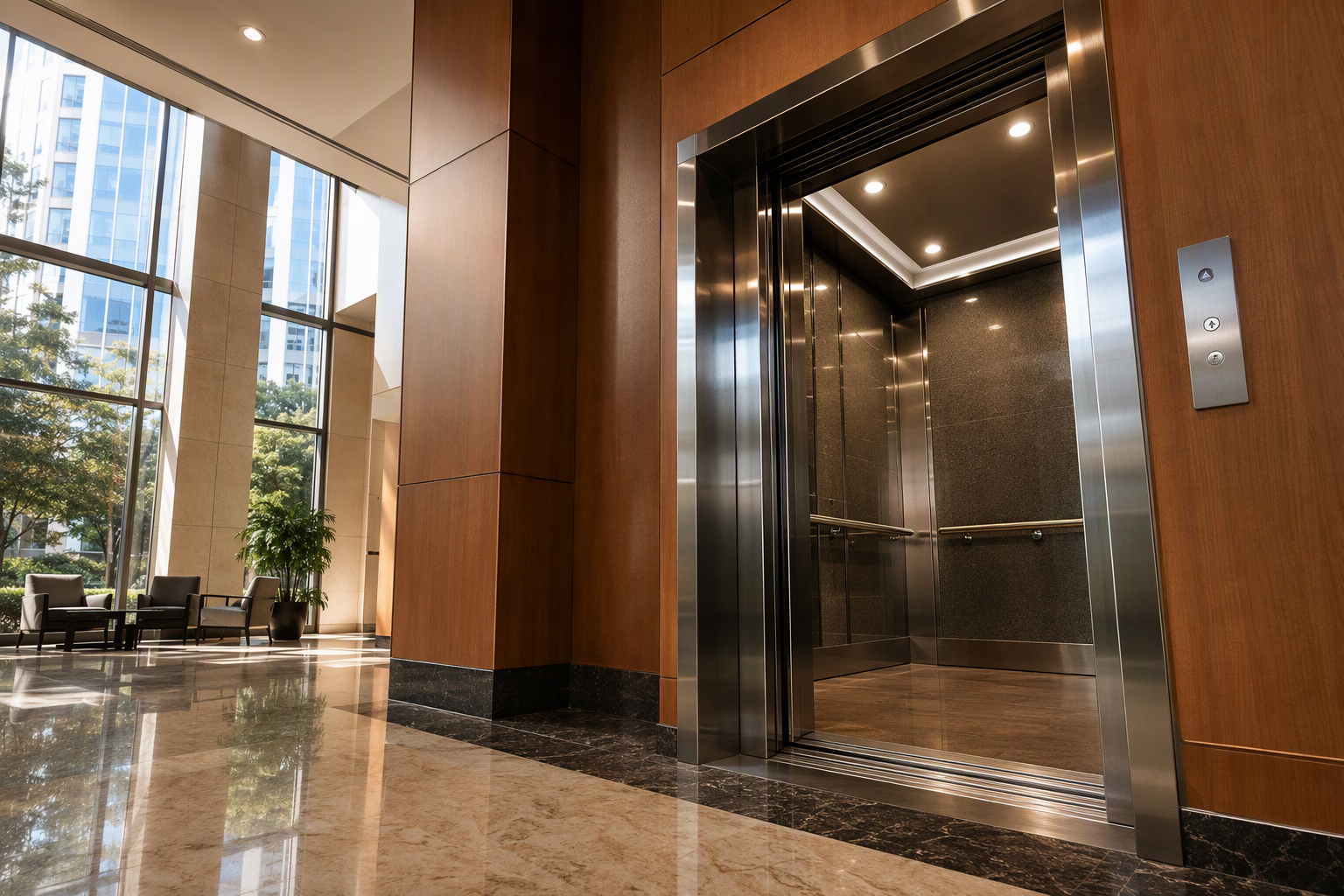
Commercial elevators are long-lived assets, but they are not indefinite ones. Understanding the full lifecycle — from installation through modernization to full replacement — helps Columbia SC building owners and facility managers protect occupants, control costs, and stay on the right side of state and federal requirements. This FAQ hub covers every dimension of commercial elevator lifespan, drawing on ASME A17.1 Safety Code for Elevators and Escalators, S.C. Code Title 41, Chapter 16, and the practical guidance that the team at Carolina Elevator Service applies every day in the Columbia market.
How Long Does a Commercial Elevator Last Before It Needs to Be Replaced?
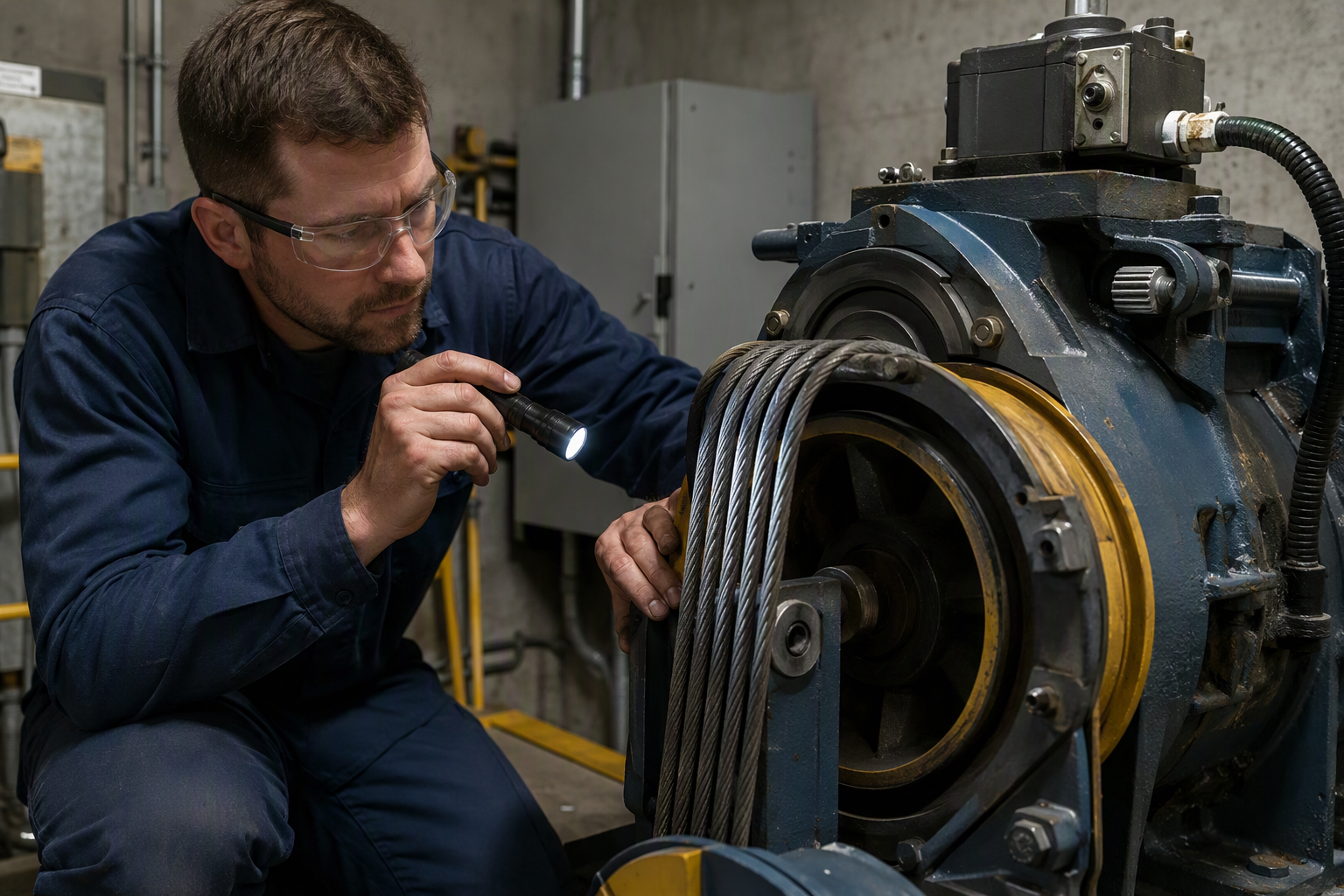
A well-maintained commercial elevator generally lasts 20 to 25 years, with modernized units often reaching 30 years or more before full replacement is warranted.
That range is not arbitrary. It reflects the useful life of core mechanical and electrical components — hydraulic cylinders, traction machines, control systems, door operators, and safety devices — all of which degrade at different rates depending on usage volume, environment, and maintenance quality. A high-rise office elevator running hundreds of cycles per day in a humid Columbia SC climate will approach the lower end of that range faster than a low-traffic residential-style commercial lift in a small professional building.
Full replacement is typically triggered not by a single catastrophic failure but by the convergence of several factors: rising repair frequency, discontinued parts, energy inefficiency, and the cost of bringing aging equipment into compliance with current editions of ASME A17.1 and South Carolina’s adopted safety standards. When those factors align, replacement almost always delivers better long-term value than continued patching.
What Are the Key Factors That Determine How Long a Commercial Elevator Will Last?
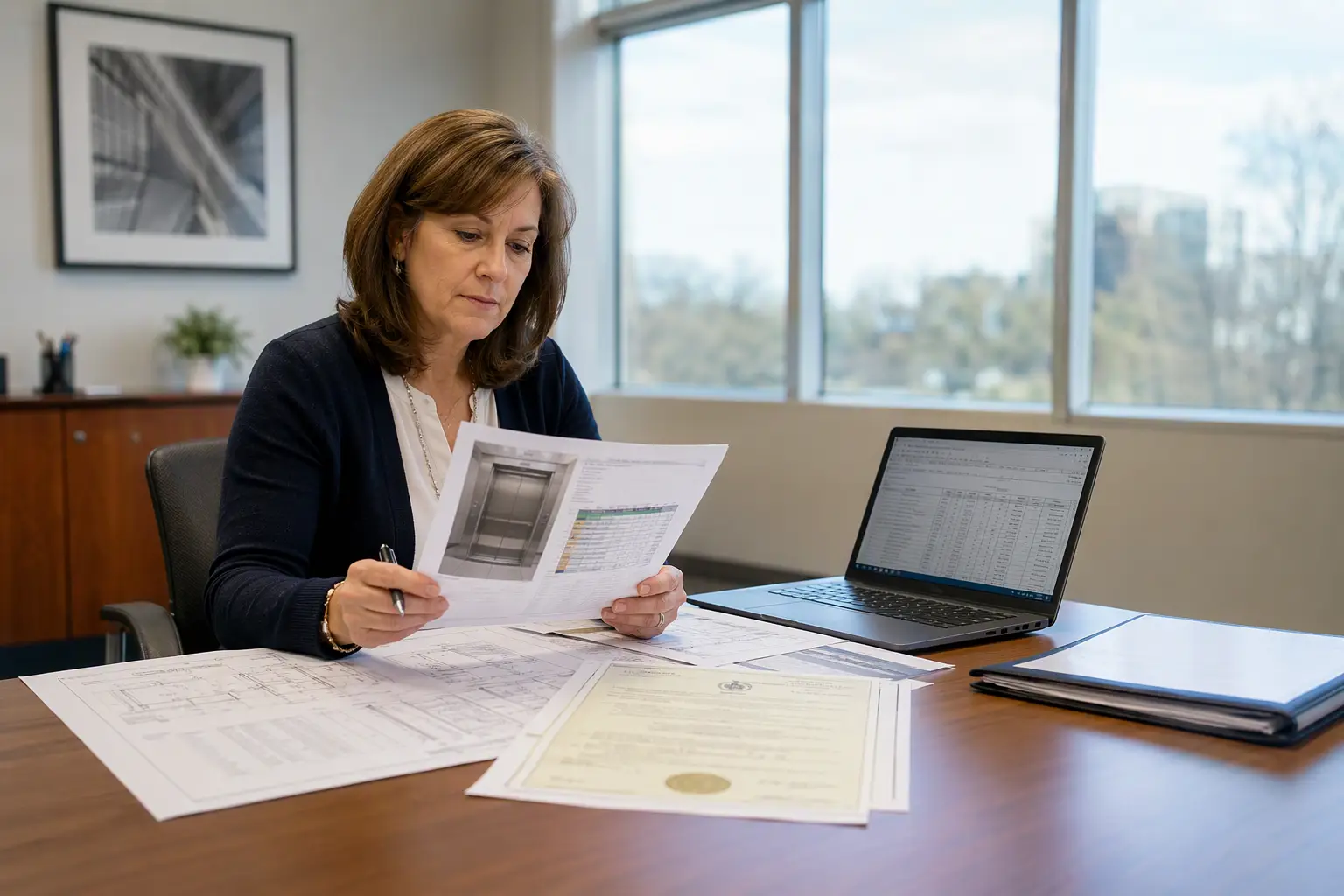
Maintenance quality, usage intensity, installation quality, component age, and regulatory compliance are the five primary variables that determine a commercial elevator’s functional lifespan.
Maintenance quality is arguably the most controllable variable. Elevators that receive scheduled lubrication, adjustment, safety testing, and proactive parts replacement consistently outlast units that are serviced only when something breaks. Usage intensity — measured in cycles per day — directly accelerates mechanical wear on guide shoes, rollers, ropes or hydraulic seals, and door components.
Installation quality matters because a system that was engineered, permitted, and installed to code from day one starts its life without latent defects. In South Carolina, a state construction permit is required before any elevator facility is erected, constructed, altered, or installed under S.C. Code Title 41, Chapter 16. Elevators installed without proper permitting may have hidden non-conformances that shorten service life and complicate future modernization.
Finally, regulatory compliance shapes lifespan decisions. South Carolina elevators installed before July 1, 1986 must comply with the 1986 edition of ANSI A17.3, while newer installations are governed by the ASME A17.1-2019/CSA B44:19 edition adopted by the state effective July 23, 2021. Bringing older units up to current standards sometimes triggers a cost-benefit analysis that tips toward replacement.
What Is the Difference Between Elevator Modernization and Full Replacement?
Modernization updates specific systems — controls, drives, doors, or cab finishes — while the original structure remains; full replacement removes all equipment and installs a completely new system from the hoistway up.
Modernization is the more common mid-life intervention. A typical modernization project might replace an aging relay-logic controller with a modern microprocessor control, upgrade the door operator to improve reliability, and retrofit LED lighting to reduce energy consumption. Modernization generally costs less than full replacement, causes less construction disruption, and can extend useful life by a significant number of years.
Full replacement becomes the preferred path when the hoistway itself needs structural remediation, when the drive machine is beyond economical repair, when parts for the existing system are no longer manufactured, or when the cumulative cost of modernization approaches the cost of a new installation. Carolina Elevator Service evaluates both paths during comprehensive assessments so Columbia SC building owners receive an objective recommendation rather than a default toward the more expensive option.
How Does Elevator Type Affect Expected Lifespan?
Hydraulic elevators and traction elevators have different wear profiles, meaning type significantly influences how long a unit will last and which components will fail first.
| Elevator Type | Typical Lifespan Range | Primary Wear Components | Common Mid-Life Intervention |
|---|---|---|---|
| Hydraulic (underground cylinder) | 20–25 years | Hydraulic cylinder, seals, pump unit, valve | Cylinder replacement or liner; pump/valve rebuild |
| Hydraulic (above-ground/holeless) | 20–25 years | Jack assembly, seals, pump unit | Jack replacement; control modernization |
| Geared traction | 20–30 years | Gearbox, wire ropes, sheaves, brake | Gearbox rebuild; rope replacement; controller upgrade |
| Gearless traction (MRL) | 25–35 years | Motor windings, brake, encoder, ropes | Drive modernization; brake adjustment |
| Hydraulic (commercial low-rise) | 20–25 years | Cylinder, fluid lines, door operator | Fluid system overhaul; door operator replacement |
One South Carolina-specific factor for underground hydraulic elevators: state regulations require that newly installed underground hydraulic elevator cylinders be encased in plastic outer containment to limit electrolytic corrosion. Older installations without this protection may experience premature cylinder degradation, which is a frequent driver of earlier-than-expected replacement decisions for legacy hydraulic units in the Columbia area.
What Are the Warning Signs That a Commercial Elevator Needs to Be Replaced Rather Than Repaired?
Replacement becomes the practical choice when repair costs consistently exceed the value delivered, parts are no longer available, the unit fails inspections repeatedly, or bringing the elevator into current code compliance would require rebuilding it essentially from scratch.
Specific warning signs include: increasing frequency of entrapments or door malfunctions; excessive vibration or noise during travel; slow, unreliable leveling at floor landings; visible corrosion on structural components; hydraulic fluid leaks that recur despite seal replacement; and a pattern of failed annual inspections requiring multiple correction orders from state inspectors.
From a regulatory standpoint, if the South Carolina Department of Labor, Licensing and Regulation (LLR) Office of Elevators and Amusement Rides issues repeated violations that require alterations bringing the elevator into compliance with current ASME A17.1-2019 standards, the alteration scope can grow until it functionally equals a new installation — at which point a planned replacement on the owner’s schedule is more economical than reactive compliance work.
How Does South Carolina’s Annual Inspection Requirement Affect Elevator Lifespan Decisions?
South Carolina’s mandatory annual inspection creates a structured, recurring opportunity to benchmark an elevator’s condition against current safety standards, making it the natural trigger point for lifespan and replacement discussions.
Under S.C. Code Title 41, Chapter 16 and S.C. Code of Regulations Chapter 71, Article 5, South Carolina requires elevators to be inspected at installation, registration, alteration or repair, and at least once a year before the operating certificate is renewed. No elevator facility may be operated without a valid certificate of registration and an operating certificate from the state, and that certificate — or a copy — must be displayed conspicuously inside each elevator car.
Required inspections may only be performed by state inspectors or licensed special inspectors who hold qualifications meeting the 2018 edition of QEI-1, the American National Standard for Qualification of Elevator Inspectors. Importantly, a special inspector may not inspect an elevator on which the inspector or the inspector’s employer has a current service or warranty contract, which is why building owners benefit from working with a service provider whose inspection relationships are independent and transparent.
Each annual inspection produces a documented record of the elevator’s condition. Reviewing those records over five or more consecutive years reveals trends — increasing deficiency counts, recurring violations on the same components, escalating correction timelines — that inform the modernization-versus-replacement decision far more reliably than any single-year snapshot.
What South Carolina Regulations Apply to Aging Elevators Specifically?
South Carolina imposes compliance requirements that vary by installation date, meaning older elevators face a distinct regulatory framework that shapes whether modernization or replacement is the more practical path.
South Carolina elevator facilities in operation before July 1, 1986 must comply with the 1986 edition of ANSI A17.3, the safety code for existing elevators and escalators. Facilities installed on or after the relevant permit dates must meet the ASME A17.1-2019/CSA B44:19 edition adopted by the state and effective July 23, 2021. When alterations or repairs are performed on older equipment, those alterations must comply with the edition of ASME A17.1 in effect when the new permit is issued.
This creates a ratchet effect: every significant repair on a pre-1986 elevator can trigger requirements to bring touched systems up to 2019 code standards, potentially increasing project scope well beyond the original repair. Under S.C. Code Title 41, Chapter 16, the owner bears responsibility for keeping every elevator facility in safe operating condition and in line with state regulations. That ownership responsibility makes proactive lifecycle planning — rather than reactive repair — the financially prudent approach.
How Does ADA Compliance Factor Into Elevator Replacement Decisions?
Buildings subject to the Americans with Disabilities Act must maintain elevators that meet current ADA accessibility standards, and aging elevators that fall out of compliance can accelerate the timeline for modernization or replacement.
The ADA requires that elevators providing access to programs, services, and facilities be maintained in operable working condition. Recurring outages, door malfunctions, or control panel failures that render an elevator inaccessible are not merely inconveniences — they are potential ADA compliance violations that expose building owners to legal liability.
ADA-related concerns that commonly accompany aging elevator assessments include: outdated or non-compliant car controls lacking Braille or raised characters; insufficient door dwell times for mobility device users; car leveling inaccuracies that create floor-to-threshold height differences; and outdated audio or visual signals. Modernization or replacement projects should incorporate a full ADA audit so that the upgraded system meets current ADA standards from day one.
What Does a Commercial Elevator Replacement Project Involve Step by Step?
A commercial elevator replacement follows a structured sequence from assessment through permitting, removal, installation, inspection, and return to service.
- Lifecycle and needs assessment: A qualified service company evaluates existing equipment condition, usage data, compliance status, and building requirements to determine whether modernization or full replacement is warranted.
- Specification and design: The replacement system is specified — type, capacity, speed, finishes, and control features — to meet current building needs and code requirements.
- State construction permit application: Under South Carolina law, a state construction permit must be obtained from the LLR Office of Elevators and Amusement Rides before any elevator facility is erected, constructed, altered, or installed. Skipping this step is a statutory violation.
- Existing equipment removal: The old cab, machine, controls, and associated components are safely removed and properly disposed of or recycled.
- Hoistway inspection and remediation: The hoistway is inspected for structural integrity, and any pit, overhead, or structural deficiencies are corrected before new equipment is installed.
- New equipment installation: The new elevator system is installed per the approved design and the requirements of ASME A17.1-2019 as adopted by South Carolina.
- Pre-inspection testing: The installing contractor performs internal tests of all safety devices, controls, and operational parameters.
- State inspection: A state inspector or licensed special inspector performs the required installation inspection. Only after passing this inspection may the elevator receive its certificate of registration and operating certificate.
- Certificate posting and return to service: The operating certificate is posted conspicuously inside the elevator car, and the unit is returned to service for building occupants.
How Should Building Owners Plan Financially for Elevator Replacement?
Elevator replacement is a significant capital expense that should be anticipated in long-term building reserve studies rather than funded reactively after equipment failure.
Building owners and property managers in Columbia SC benefit from incorporating elevator replacement into capital reserve planning from the time a unit reaches the midpoint of its expected lifespan. Waiting for a failure event forces emergency procurement timelines, may leave a building without elevator service for an extended period, and typically results in less favorable pricing than a planned procurement.
Reserve planning should account for the full replacement scope: new equipment procurement, removal and disposal of existing equipment, any necessary hoistway or pit remediation, permit fees, inspection fees, and project management. Carolina Elevator Service provides documented condition assessments that give building owners the data they need to build accurate capital reserve projections — an important service for condominium associations, commercial landlords, and institutional facilities in the Columbia area.
How Often Should a Commercial Elevator Be Serviced to Maximize Its Lifespan?
Commercial elevators should receive preventive maintenance on a regular scheduled basis — typically monthly or quarterly depending on usage and equipment type — in addition to the annual state inspection required by South Carolina law.
Preventive maintenance tasks include lubrication of guide rails, rollers, and moving parts; adjustment of door operators and safety edges; inspection and testing of buffers, safeties, and limit switches; verification of emergency lighting and alarm systems; and review of control system error logs. South Carolina requires that passenger elevators have standby power capable of running emergency lighting and the alarm bell for at least four hours if normal power fails — a requirement that must be verified during routine maintenance, not only at annual inspection.
The relationship between maintenance frequency and lifespan is not speculative: deferred maintenance allows minor wear to compound into major component failures. A door operator that is not adjusted when it begins showing marginal timing will eventually damage the door tracks, which in turn damages the sill, which ultimately affects leveling accuracy. Catching the problem at the door operator stage costs a fraction of the cascading repair. Carolina Elevator Service structures maintenance programs around this preventive philosophy for commercial clients throughout Columbia SC.
What Role Does Energy Efficiency Play in the Decision to Replace an Elevator?
Older elevator systems consume significantly more energy than modern equivalents, and the cumulative operating cost difference often contributes meaningfully to the financial case for replacement.
Legacy hydraulic systems using older pump-motor units and relay-logic controls operate less efficiently than modern variable-voltage, variable-frequency (VVVF) drive systems or regenerative drive traction elevators. Beyond motor efficiency, older systems often rely on incandescent or fluorescent cab lighting rather than LED, and may keep pumps running in standby modes that newer designs eliminate.
For Columbia SC commercial buildings seeking LEED points, energy benchmarking compliance, or simply reduced operating costs, the energy performance of the elevator system is a legitimate line item in the replacement justification. A qualified elevator service company can model current versus projected energy consumption as part of a replacement feasibility analysis.
What Happens If a Building Operates an Elevator Without a Valid South Carolina Operating Certificate?
Operating an elevator without a valid certificate is a violation of South Carolina law under S.C. Code Title 41, Chapter 16, exposing the building owner to enforcement action by the LLR and creating significant liability exposure.
South Carolina law requires that no elevator facility be operated without both a certificate of registration and a current operating certificate from the state. The operating certificate must be displayed conspicuously inside each elevator car. When an annual inspection reveals deficiencies, the owner must correct those deficiencies and pass a follow-up inspection before the operating certificate is renewed and the elevator may legally return to service.
Beyond regulatory enforcement, operating a non-certificated elevator creates substantial civil liability exposure. If an occupant is injured in an elevator that was operating without a valid certificate — or operating with known uncorrected deficiencies — the building owner’s legal position is significantly compromised. South Carolina law also requires that any accident that seriously injures anyone other than an employee must be reported to the state before the end of the next working day. Proactive maintenance and timely compliance are the most effective risk management tools available to building owners.
How Does Elevator Usage Volume Affect Replacement Timeline?
Higher daily cycle counts accelerate wear on mechanical components and shorten the interval between major maintenance events, effectively compressing the replacement timeline for high-traffic installations.
An elevator in a busy Columbia SC hospital, multi-tenant commercial tower, or high-volume retail building completes far more cycles per day than an elevator in a small professional office. Mechanical wear on wire ropes, sheaves, door rollers, guide shoes, and brake linings is directly proportional to cycle count rather than calendar time. This means a heavily used elevator may approach end-of-life in 15 to 18 years, while a lightly used unit in the same building could realistically serve 25 or more years before replacement is warranted.
Usage volume data — captured from modern controller logs or estimated from occupancy patterns — should be a primary input in any lifecycle assessment. Carolina Elevator Service incorporates usage analysis into its elevator assessments for Columbia SC commercial clients to provide realistic, data-informed replacement forecasts rather than generic calendar estimates.
What Is the Difference Between Routine Repairs and Alterations Under South Carolina Law?
South Carolina treats alterations — changes that affect safety, capacity, speed, or operational characteristics — differently from routine repairs, requiring a state construction permit for alterations but not for standard maintenance repairs.
Under S.C. Code Title 41, Chapter 16, a state construction permit is required before any elevator facility is altered. Alterations trigger the requirement that the altered system comply with the edition of ASME A17.1 in effect when the permit is issued — currently the 2019 edition as adopted by South Carolina effective July 23, 2021. This distinction matters enormously for aging elevator lifecycle decisions because a component swap that crosses the line from repair to alteration can trigger a cascade of compliance upgrades.
Building owners planning significant work on older elevators should have the scope reviewed by a knowledgeable service company before work begins, so that the permit and compliance implications are understood in advance. Proceeding without this analysis can result in unexpected scope expansion mid-project.
How Does OSHA Apply to Commercial Elevators in South Carolina Buildings?
OSHA standards apply to elevators insofar as they relate to workplace safety for employees who use or work on elevators, and compliance with OSHA requirements runs parallel to — not instead of — South Carolina’s state elevator code.
The Occupational Safety and Health Administration (OSHA) addresses elevator-related hazards in the context of employee safety, including requirements for lockout/tagout procedures during elevator maintenance, safe access to pits and machine rooms, and protection of employees working in or near hoistways. These requirements apply to the service technicians and building maintenance personnel who interact with elevator equipment in a workplace setting.
OSHA requirements do not replace or supersede South Carolina’s elevator safety statute or the ASME A17.1-2019 standard adopted by the state. A commercial elevator in Columbia SC must comply with both frameworks simultaneously. Building owners are responsible for ensuring that their facilities provide safe conditions for maintenance personnel, and that service contracts are awarded to companies whose technicians work in compliance with applicable OSHA standards.
What Should Building Owners Ask When Evaluating Elevator Replacement Proposals?
A thorough replacement proposal should address equipment specifications, permit responsibility, inspection coordination, warranty terms, downtime duration, ADA compliance, and the service provider’s approach to post-installation maintenance.
Specific questions building owners in Columbia SC should ask any prospective elevator replacement vendor include: Who is responsible for obtaining the required South Carolina state construction permit? How will the installation be inspected and by whom? What edition of ASME A17.1 does the proposed equipment comply with? Does the new installation include provisions for the required four-hour emergency standby power for lighting and alarm? How will the new system’s underground hydraulic cylinder (if applicable) be protected with the required plastic outer containment? What is the projected timeline from removal to return-to-service, and what provisions are made for building access during that period?
Carolina Elevator Service addresses each of these questions transparently in its replacement assessments and proposals for Columbia SC commercial clients, ensuring that owners understand both the technical scope and the regulatory obligations before any contract is signed.
Can a Very Old Elevator Ever Be Kept in Service Safely?
Yes — an older elevator can remain in safe service if it passes annual state inspections, its owner maintains it in compliance with applicable South Carolina regulations and ASME standards, and critical safety components are functioning within specification.
South Carolina law establishes that the owner must keep every elevator facility in safe operating condition and in line with state regulations. Age alone does not mandate replacement; compliance and condition do. South Carolina elevator facilities in operation before July 1, 1986 operate under the 1986 edition of ANSI A17.3, which sets specific safety requirements for existing installations that differ from the current 2019 edition applied to new work.
The practical challenge with very old elevators is that maintaining them in genuinely safe condition becomes progressively more difficult as original parts become unavailable, as the gap between their design standards and current best practices widens, and as the cost of keeping them compliant escalates. There is a point — different for every unit — where the resources required to maintain safe operation exceed the value of continued service. A disciplined annual review of inspection records, repair history, parts availability, and compliance cost is the most reliable way to identify that inflection point before it becomes a crisis.
How Does a Building Owner Choose Between Elevator Service Companies in Columbia SC?
Building owners should evaluate elevator service companies on their familiarity with South Carolina’s specific regulatory requirements, their ability to coordinate with state inspectors, the transparency of their assessment process, and their track record with comparable commercial properties.
South Carolina’s elevator regulatory framework — administered by the LLR Office of Elevators and Amusement Rides under S.C. Code Title 41, Chapter 16 — has specific requirements around permitting, inspection coordination, special inspector independence, and accident reporting that a service company must navigate competently on behalf of building owners. A company unfamiliar with the nuances of South Carolina’s adopted ASME A17.1-2019 standards or with the state’s permit process for alterations can inadvertently create compliance gaps that expose building owners to liability.
Carolina Elevator Service focuses exclusively on the South Carolina market, with Columbia SC as its primary service area. That geographic focus means the company’s team works routinely within the state’s specific regulatory environment, coordinates with LLR on permitting and inspections, and understands the practical compliance questions that Columbia building owners face. For building owners comparing service providers, that local regulatory familiarity is a material differentiator.
What Are the Most Common Mistakes Building Owners Make Regarding Elevator Lifespan?
The most common and costly mistakes are deferring maintenance until failure, failing to plan financially for replacement, and attempting significant repairs without verifying whether a state construction permit is required.
Deferred maintenance is the single largest accelerator of premature elevator failure. Buildings that reduce maintenance frequency to cut costs in the short term consistently face larger, more expensive repairs within a few years — and an accelerated replacement timeline that consumes any savings many times over.
Failure to plan for replacement financially is the second most common mistake. Elevator replacement is a predictable capital event for any building where the elevator is more than 15 years old. Building managers who treat it as an unforeseen emergency rather than a planned capital project end up managing the project under time pressure, which typically results in less thorough vendor selection, reduced scope control, and higher total cost.
The third mistake — proceeding with significant alteration work without securing the required South Carolina construction permit — creates regulatory violations that must be resolved before the elevator can receive an operating certificate, sometimes requiring portions of work to be redone. Working with an experienced, South Carolina-focused service company like Carolina Elevator Service from the planning stage prevents all three of these costly errors.
Get a Professional Elevator Assessment in Columbia SC
Whether a commercial elevator is approaching mid-life or showing signs that replacement may be on the horizon, an objective, documented condition assessment is the essential first step toward making the right decision. Carolina Elevator Service provides comprehensive elevator assessments for commercial properties throughout Columbia SC, covering equipment condition, compliance status under South Carolina law and ASME A17.1, and lifecycle cost analysis to support sound capital planning.
Contact Carolina Elevator Service for a free elevator assessment — call 803-865-1400 today.
Need elevator service you can rely on? Carolina Elevator Service is ready to help.