What Happens to My Elevator Warranty If I Switch to a Third-Party Maintenance Company?
Building owners and facility managers in South Carolina often weigh the cost and service flexibility of third-party elevator maintenance against the perceived security of an OEM service contract. The warranty question sits at the center of that decision. Understanding what the law actually requires, what your warranty document says, and what South Carolina regulations demand regardless of who services your elevator is the foundation for making a confident, compliant choice.
Does Federal Law Protect My Warranty When I Switch Elevator Maintenance Providers?
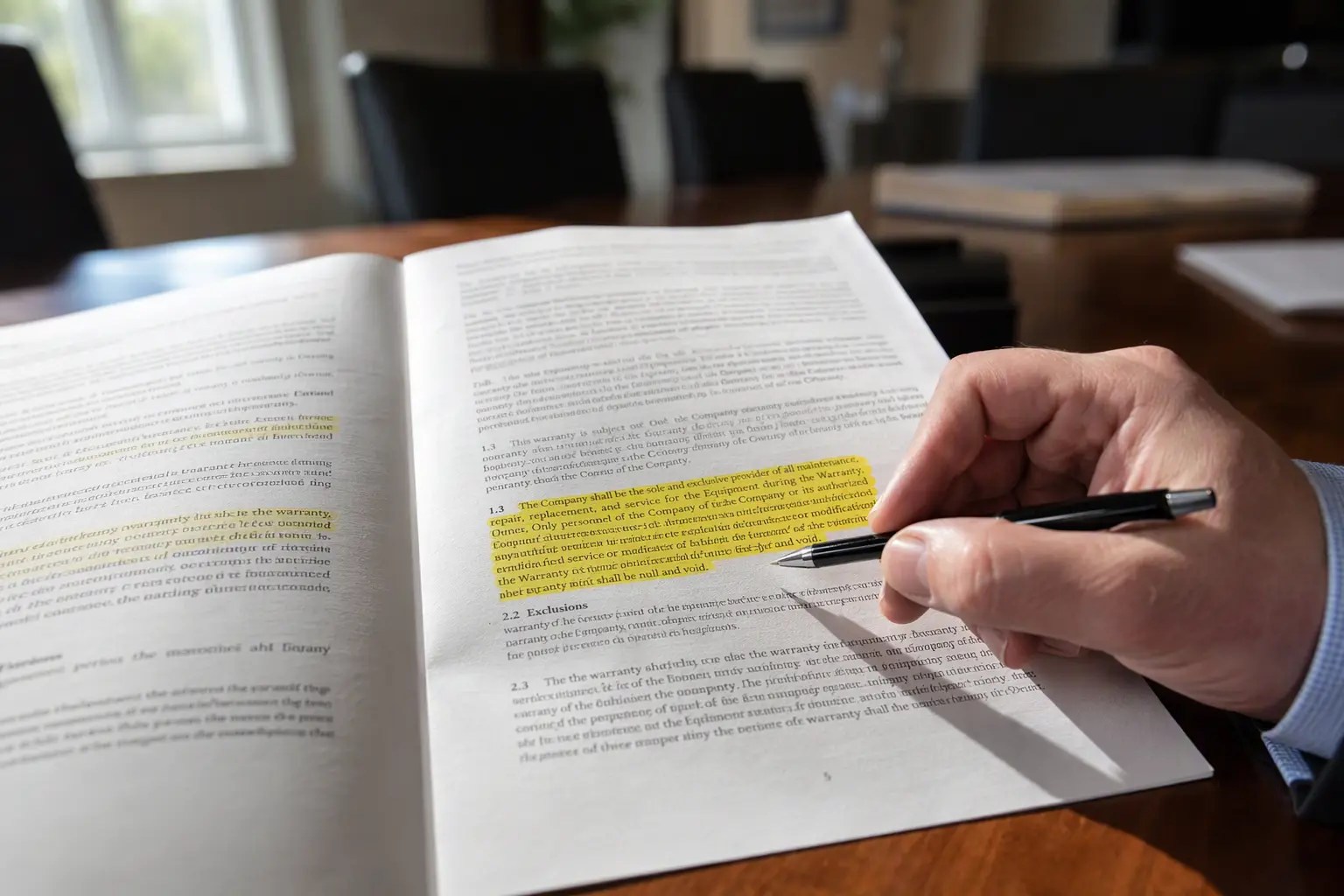
Yes — with important nuances. The Magnuson-Moss Warranty Act, the primary federal statute governing consumer product warranties, generally prohibits a warrantor from conditioning a written warranty on the consumer’s use of any article or service identified by brand, trade, or corporate name unless the warrantor provides that article or service without charge. The Federal Trade Commission enforces these provisions and has historically taken the position that “you must use our service technicians or your warranty is void” clauses can be unlawful in consumer contexts.
However, commercial elevator warranties — covering equipment installed in office buildings, multifamily residential properties, and industrial facilities — often fall outside the direct consumer protections of Magnuson-Moss. Commercial contracts are governed primarily by their written terms and general contract law. This means the warranty document itself is the decisive text. If that document contains a maintenance exclusivity clause, the OEM may have legal grounds to deny warranty claims when a third-party provider has been involved in servicing the unit.
The practical takeaway: federal law creates a framework of protection that is stronger for residential equipment and more limited for commercial installations. Building owners should obtain a copy of the full warranty document, not just the summary sheet, before switching providers.
What Does My Elevator Warranty Agreement Actually Say About Third-Party Service?
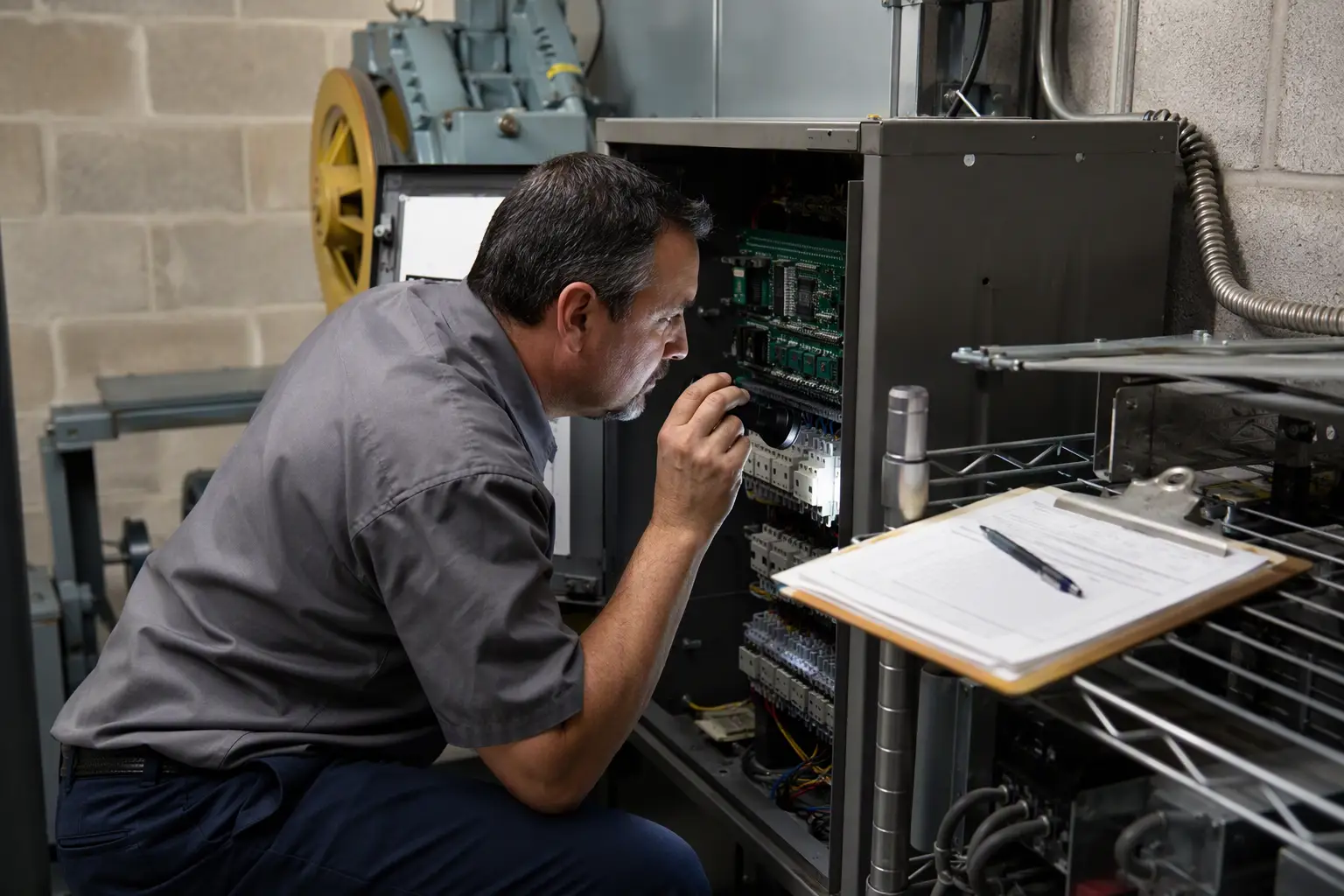
Elevator warranty documents vary widely between manufacturers, but several clauses appear with regularity and deserve close attention:
- Maintenance exclusivity clauses: Some OEM warranties explicitly state that warranty coverage is contingent on the owner maintaining a service contract with the manufacturer’s own technicians for the duration of the warranty period.
- Approved parts requirements: Even when a warranty allows third-party labor, it may require that only OEM-specified or OEM-supplied parts be used. Installation of non-OEM parts can trigger a warranty limitation or exclusion.
- Documentation and notification requirements: Many warranties require that the owner provide written notice before changing service providers and that all service records be maintained in a specific format. A gap in documentation can be used by an OEM to deny a claim.
- Consequential damage exclusions: If third-party maintenance is alleged to have caused or contributed to a component failure, consequential damages — including downtime costs and secondary repairs — may be excluded even if the warranty is otherwise in force.
- Warranty transfer language: If a property changes ownership, the transferability of the warranty may be conditioned on the original service contract remaining intact.
The safest approach is to have legal counsel or an experienced elevator service consultant review the full warranty document before terminating any OEM maintenance agreement.
Does South Carolina Law Require Me to Use the Original Manufacturer for Elevator Maintenance?
No. South Carolina law does not require building owners to use the original equipment manufacturer for ongoing maintenance. Under S.C. Code Title 41, Chapter 16 (the South Carolina Elevator Code), the owner bears the legal responsibility for keeping every elevator facility in safe operating condition and in compliance with state regulations. The law is silent on which service provider must perform that maintenance — the obligation is on the owner, not on any particular contractor.
What the law does specify is the inspection process. In South Carolina, required periodic inspections may only be conducted by state inspectors employed by the South Carolina Department of Labor, Licensing and Regulation (LLR), Office of Elevators and Amusement Rides, or by licensed special inspectors. Critically, a special inspector may not inspect an elevator on which the inspector or the inspector’s employer has a current service or warranty contract. This rule structurally separates the inspection function from the maintenance function and is part of why third-party maintenance is viable in South Carolina’s regulatory framework.
What Are South Carolina’s Ongoing Inspection Requirements Regardless of Who Maintains My Elevator?
South Carolina’s inspection schedule applies to all elevators in the state, regardless of which company holds the maintenance contract. Under the South Carolina Elevator Code and the supporting regulations found in S.C. Code of Regulations Chapter 71, Article 5 (Regulations 71-5000 through 71-5700), the following intervals apply:
| Equipment Type | Required Inspection Frequency | Authority |
|---|---|---|
| Standard passenger and freight elevators | At least once per year (before operating certificate renewal) | S.C. Code Title 41, Ch. 16 |
| Handicap lifts | Every five years | S.C. Code Title 41, Ch. 16 |
| Manlifts, television tower elevators, and special purpose elevators | Every seven years | S.C. Code Title 41, Ch. 16 |
| Dumbwaiters | At installation or alteration | S.C. Code Title 41, Ch. 16 |
Additionally, elevators are inspected at installation, registration, and at any alteration or repair. No elevator in South Carolina may be operated without a valid certificate of registration and an operating certificate issued by the state. The operating certificate must be displayed conspicuously inside each elevator car. These obligations are the owner’s responsibility regardless of the service arrangement in place.
South Carolina adopted the ASME A17.1/CSA B44, 2019 edition, effective July 23, 2021, as its standard for new elevator installations. Elevators in operation before July 1, 1986 must comply with the 1986 edition of ANSI A17.3, the safety code for existing elevators and escalators.
What Steps Should I Take Before Switching to a Third-Party Elevator Maintenance Company?
- Obtain and read the full warranty document. Request the complete warranty agreement from the manufacturer, not just a summary. Look specifically for maintenance exclusivity clauses, approved parts requirements, and notification obligations.
- Identify the warranty expiration date. If the warranty expires within six to twelve months, the financial risk of a potential warranty limitation may be minimal compared to the long-term savings of a competitive maintenance contract.
- Consult legal counsel if necessary. For elevators still under a long-term OEM warranty, have an attorney review whether the exclusivity clause is enforceable under applicable contract law and whether Magnuson-Moss principles apply to your specific installation context.
- Compile complete service records. Gather all maintenance logs, inspection reports, repair orders, and operating certificates. A well-documented history protects you in any future warranty dispute and is required under South Carolina regulatory standards.
- Notify the OEM in writing. If your warranty requires notification before a service provider change, send written notice and retain a copy. Failure to notify can itself constitute grounds for a warranty limitation.
- Confirm the new provider’s familiarity with your equipment. Verify that the third-party company is familiar with your elevator’s make, model, and control system. Unfamiliarity with proprietary systems can lead to maintenance gaps that — even if they don’t trigger a warranty clause — create safety and compliance risks.
- Verify that the provider works with your inspection schedule. Confirm that the new maintenance provider can coordinate with the South Carolina LLR’s Office of Elevators and Amusement Rides and with licensed special inspectors to ensure annual inspections and certificate renewals proceed without disruption.
- Review your maintenance contract terms carefully. Ensure the new contract specifies the scope of preventive maintenance, response protocols for reported issues, and which components and parts are covered.
Can Switching Maintenance Providers Affect My Elevator’s Safety Compliance in South Carolina?
A change in maintenance provider does not by itself affect compliance, but a poorly managed transition can create compliance gaps. The South Carolina Elevator Code places the duty of safe operation squarely on the owner. If a new maintenance provider is unfamiliar with the elevator’s specific requirements under the ASME A17.1-2019/CSA B44:19 standard, or if service records are not properly transferred, the owner may face difficulties at the next annual inspection.
South Carolina also requires that any accident seriously injuring a person other than an employee be reported to the state before the end of the next working day. A maintenance transition that leaves documentation gaps can complicate incident reporting and regulatory response. Maintaining continuous, organized records through any provider transition is not just good practice — it is a core part of the owner’s statutory duty.
Will a Third-Party Maintenance Company Use Compatible Parts for My Elevator?
This is one of the most practical concerns when switching providers and is frequently the mechanism through which warranty limitations are triggered. Many OEM warranties require that only manufacturer-specified parts be installed. When a third-party provider installs aftermarket or equivalent components, the OEM may assert that the warranty is voided on the affected systems or on the unit as a whole.
A reputable third-party provider will disclose which parts they use, whether those parts are OEM-sourced, OEM-equivalent, or aftermarket, and how that choice may interact with existing warranty terms. Building owners should ask this question directly and get the answer in writing before the first maintenance visit under a new contract. For elevators still within the warranty period, some third-party providers will source OEM parts specifically to preserve warranty coverage — this is worth requesting explicitly.
How Does the OEM’s Proprietary Technology Affect My Ability to Switch Providers?
Modern elevator systems increasingly incorporate proprietary control systems, diagnostic software, and remote monitoring platforms that are accessible only to the OEM or its authorized service network. This creates a practical barrier to switching providers that is separate from the warranty question. A third-party provider without access to the OEM’s diagnostic tools may be limited in their ability to troubleshoot certain faults, update firmware, or interpret error codes.
Building owners should ask prospective third-party providers specifically whether they have access to the diagnostic tools required for their elevator’s control system. For some older or more standardized systems, third-party tools are adequate. For newer installations with deeply proprietary software, the practical limitations of switching providers may be significant regardless of what the warranty document says.
This is an area where industry trends are moving in a direction that increasingly favors OEM lock-in through software and connectivity features. As of 2026, elevator manufacturers continue to expand remote monitoring and predictive maintenance offerings that are tied to proprietary platforms, which is a consideration any building owner evaluating a long-term service strategy should weigh carefully.
What Are the ADA Implications When Changing Elevator Maintenance Providers?
The Americans with Disabilities Act (ADA) requires that elevators serving multiple floors in covered facilities be maintained in operable working condition. A change in maintenance provider does not alter this obligation. However, if the transition results in a period of reduced maintenance quality or delayed repairs, the building owner could face ADA compliance exposure if the elevator becomes inoperable and no accessible alternative is available.
When evaluating a third-party provider, confirm that the company has documented processes for prioritizing repairs that affect ADA-required accessibility. The ADA’s elevator maintenance obligation is ongoing and is not suspended by a warranty dispute or a provider transition period.
What OSHA Requirements Apply to Elevator Maintenance Regardless of the Provider?
The Occupational Safety and Health Administration (OSHA) sets workplace safety requirements that apply to the conditions under which elevator maintenance is performed. These include lockout/tagout procedures, working at height requirements, and machine guarding standards. These obligations apply to the maintenance technician’s employer — whether that is the OEM’s service division or a third-party provider.
Building owners bear a general duty to maintain a safe workplace and to ensure that contractors working on their property operate safely. Selecting a maintenance provider means selecting a company whose safety practices will be exercised in your building. Reviewing a prospective provider’s safety record and OSHA compliance history is a reasonable part of due diligence during a provider transition.
What Happens to My Warranty During an Elevator Modernization or Major Repair?
Modernization projects — replacing control systems, drive units, cab interiors, or door operators — typically reset or modify the warranty picture. New components installed during a modernization carry their own warranty, often from the component manufacturer rather than the original elevator OEM. A third-party provider who performs a modernization will typically provide a warranty on their workmanship and on the specific components installed.
Under South Carolina law, any alteration to an elevator facility requires a state construction permit before work begins, and the elevator must be inspected before it returns to service. The South Carolina LLR’s Office of Elevators and Amusement Rides must be notified, and the operating certificate must be renewed. These requirements apply regardless of whether the modernization is performed by the OEM or a third-party company.
What Industry Trends Should South Carolina Building Owners Watch in 2025–2026?
Several developments are shaping the elevator maintenance market and the warranty landscape in ways that building owners should monitor:
- Predictive maintenance and IoT integration: Elevator manufacturers are expanding sensor-based monitoring that feeds data to OEM platforms. Building owners who have agreed to data-sharing terms in their service contracts should understand how switching providers affects access to that data and whether historical performance data is portable.
- Increased regulatory scrutiny: State elevator regulatory agencies across the country have been updating inspection requirements to reflect the complexity of modern elevator systems. South Carolina’s adoption of the ASME A17.1-2019 standard positions the state’s regulatory framework to address newer technologies, and further code development is ongoing at the ASME level.
- Workforce and parts availability: Supply chain constraints affecting elevator components have been a factor in maintenance timelines and repair costs in recent years. Third-party providers who have established parts sourcing relationships may offer faster turnaround than OEM service networks experiencing internal allocation constraints.
- Contract transparency pressure: Building owners and property management associations have increasingly pushed back against opaque OEM warranty clauses. Some manufacturers have responded by making their warranty terms more explicit about what third-party service does and does not affect, though exclusivity clauses remain common.
How Does Carolina Elevator Service Approach the Warranty and Compliance Question?
Carolina Elevator Service approaches elevator maintenance as a data-driven discipline rooted in South Carolina’s regulatory requirements. The company’s service process is grounded in the requirements of the South Carolina Elevator Code and the ASME A17.1-2019/CSA B44:19 standard adopted by the state. When a building owner is considering a provider transition, the relevant questions — What does the warranty document require? What does South Carolina law require? What does the equipment’s technical history show? — are the starting points for a sound evaluation.
Carolina Elevator Service works with building owners throughout South Carolina to assess elevator condition, review maintenance histories, and develop service strategies that keep equipment in compliance with state inspection and certificate requirements. The company’s approach treats regulatory compliance and equipment reliability as inseparable, which is particularly important during any provider transition when documentation continuity is at risk.
Quick-Reference Summary: Key Points on Warranty and Third-Party Maintenance
- Federal law (Magnuson-Moss) provides warranty protections that are stronger for consumer products and more limited for commercial elevator installations.
- The warranty document itself is the most important text — exclusivity clauses, approved parts requirements, and notification obligations are common and enforceable in commercial contracts.
- South Carolina law does not require owners to use the OEM for maintenance; owner responsibility for safe operation exists regardless of the service arrangement.
- Annual inspections, operating certificates, and registration are required by South Carolina regardless of who maintains the elevator.
- The special inspector conflict-of-interest rule in South Carolina structurally separates inspection from maintenance, supporting the viability of third-party providers.
- ADA and OSHA obligations are continuous and unaffected by a warranty dispute or provider change.
- Proprietary diagnostic systems can create practical barriers to switching providers that are independent of warranty terms.
- Documentation continuity through a provider transition is legally important and protects against future warranty disputes and regulatory complications.
Get Expert Guidance Before You Switch Elevator Maintenance Providers
Navigating warranty terms, South Carolina regulatory requirements, and equipment compatibility questions before changing elevator maintenance providers is complex. Carolina Elevator Service provides thorough, compliance-focused assessments that give South Carolina building owners a clear picture of their elevator’s current status and what any service transition will require.
Contact Carolina Elevator Service for a free elevator assessment: 803-865-1400
Need elevator service you can rely on? Carolina Elevator Service is ready to help.