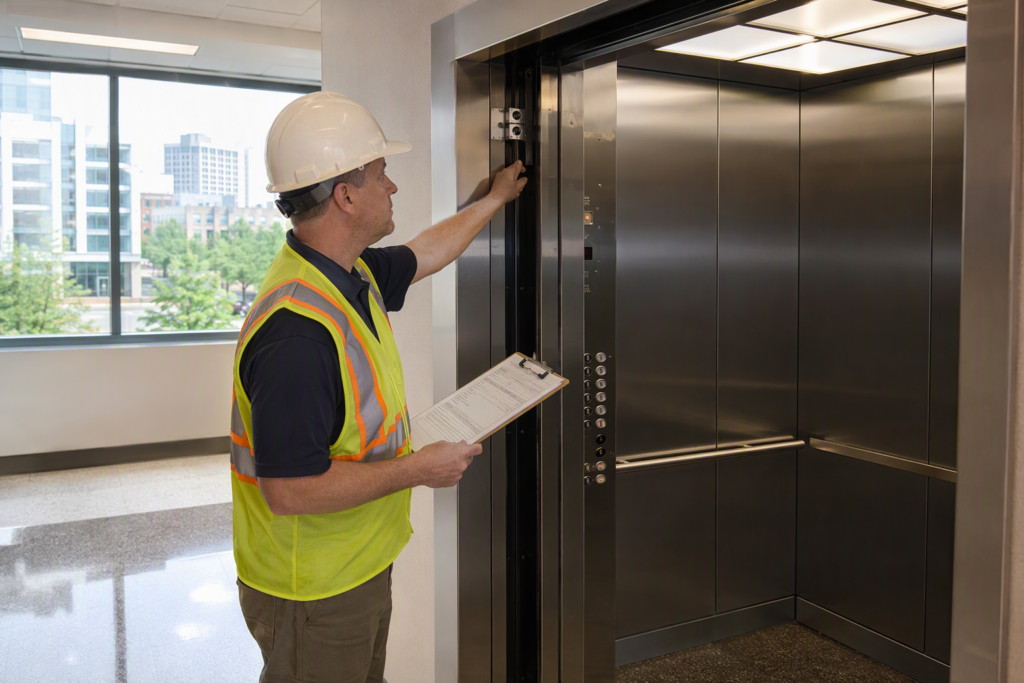
What Elevator Maintenance Tasks Should Be Done Before Winter to Prevent Breakdowns?
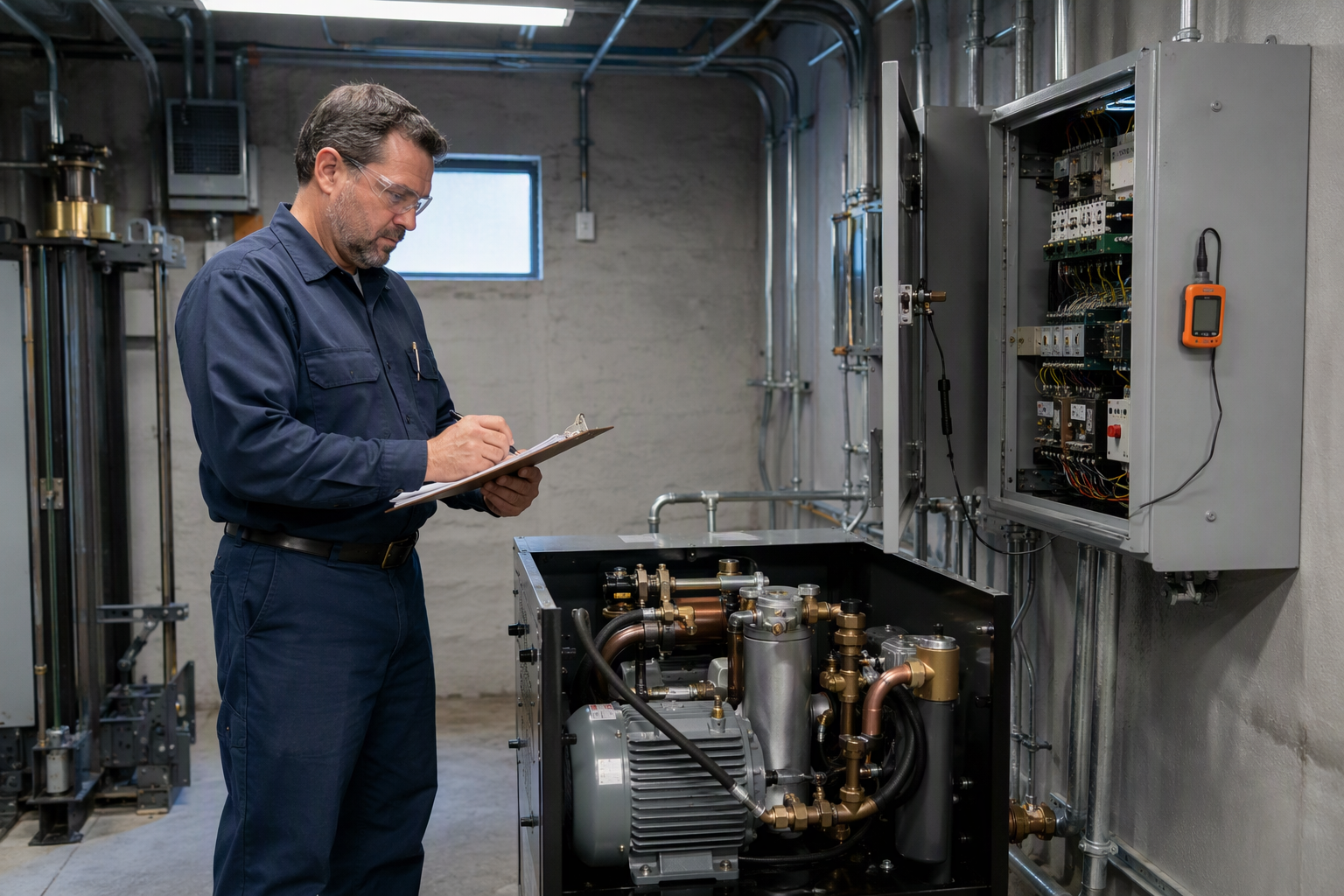
Elevator breakdowns spike during cold months. Temperature drops affect hydraulic fluid viscosity, cause metal components to contract, and strain electrical systems that may already be operating near tolerance. For building owners in South Carolina, a winter breakdown is not just a convenience issue — it is a compliance issue. Under S.C. Code Title 41, Chapter 16 (the South Carolina Elevator Code), the owner of an elevator facility bears legal responsibility for keeping every unit in safe operating condition in accordance with state regulations. Pre-winter maintenance is one of the most practical ways to meet that obligation and protect tenants, visitors, and the building’s operating certificate.
Carolina Elevator Service works with building owners and property managers across South Carolina to conduct data-driven pre-winter maintenance assessments, helping facilities stay compliant with state requirements and avoid costly cold-weather service interruptions.
Why Does Winter Weather Stress Elevator Systems?
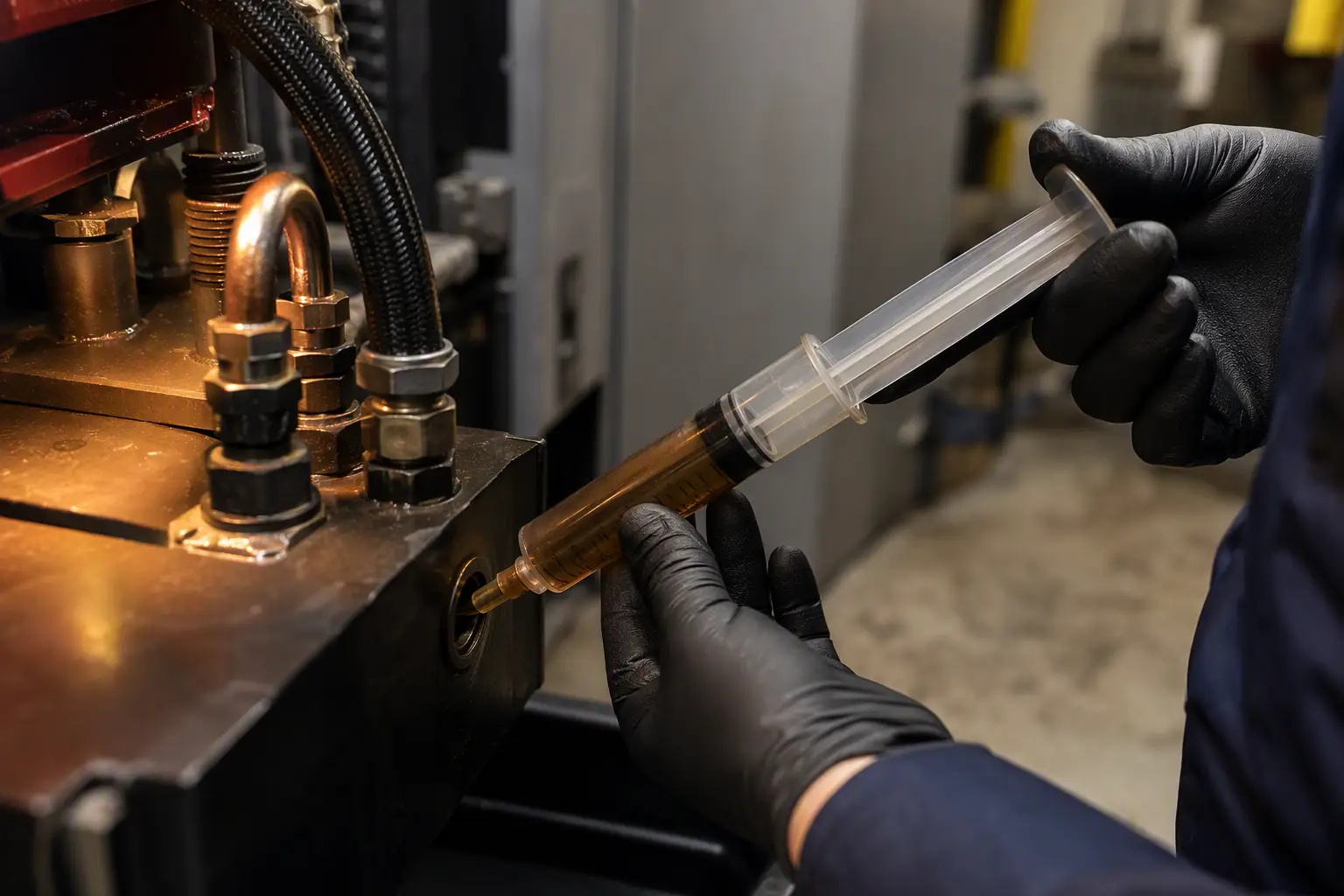
South Carolina’s winters are milder than those of northern states, but temperature swings — particularly the drop between a warm afternoon and a cold overnight low — create real mechanical stress. Hydraulic systems are especially sensitive: as ambient temperature falls, hydraulic fluid thickens, increasing the resistance that the pump must overcome to move the car. If fluid is already degraded or contaminated, the added viscosity can push a marginal pump past its operating limit.
Metal components throughout the hoistway and machine room expand and contract with temperature changes. Over many cycles, this thermal movement can loosen fasteners, cause guide rail alignment to shift slightly, and accelerate wear on components that were already approaching service intervals. Door operator mechanisms — which rely on precise calibration — can fall out of tolerance as ambient conditions change.
Electrical control systems are affected as well. Cold, damp air increases the likelihood of condensation inside control cabinets, which can cause shorts, erratic behavior, or false fault codes. Batteries used for emergency lighting and alarm systems lose capacity in cold conditions, making pre-winter battery testing especially important in light of South Carolina’s standby power requirement.
What Are the Core Pre-Winter Elevator Maintenance Tasks?
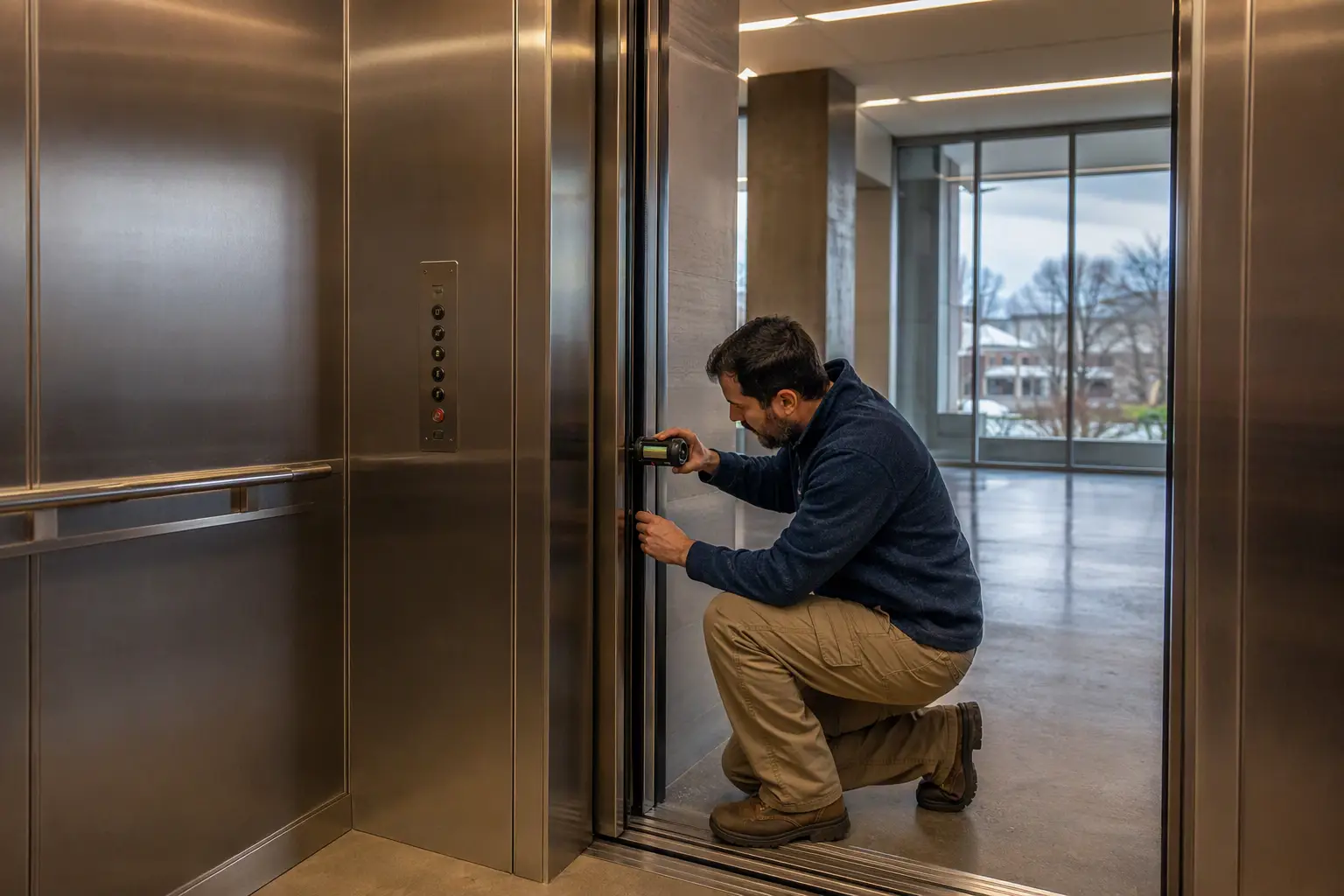
A thorough pre-winter maintenance visit should address all of the following systems. The tasks below reflect the categories of maintenance work that are consistent with the requirements of the ASME A17.1/CSA B44 Safety Code for Elevators and Escalators, the 2019 edition of which South Carolina adopted effective July 23, 2021, and which governs the safety standards applicable to elevator facilities in this state under S.C. Code of Regulations Chapter 71, Article 5.
1. Machine Room Heating and Environmental Controls
The machine room must remain within a temperature range that keeps hydraulic fluid, motor windings, and control electronics operating within their design parameters. Technicians should inspect any dedicated machine room heating unit, verify that thermostats are functioning, and ensure that ventilation openings are not blocked in ways that would allow cold air intrusion to concentrate near sensitive components. A machine room that is too cold is a predictable cause of sluggish starts and hydraulic pump failures.
2. Hydraulic Fluid Inspection and Exchange
For hydraulic elevators, fluid condition is the single most important pre-winter check. Technicians should test fluid for contamination, water intrusion, and viscosity rating. If the fluid grade is not appropriate for the expected ambient temperature range in the machine room, it should be exchanged before the cold season begins. South Carolina’s underground hydraulic elevator cylinder requirements also mean that any external containment systems should be inspected as part of this visit, since water infiltration around the cylinder can worsen during wet winter months.
3. Lubrication of Guide Rails, Rollers, and Moving Components
Rail guides, roller guides, safety devices, and the overhead sheave or drive sheave all require proper lubrication to operate quietly and reliably. Cold temperatures cause lubricants to stiffen. Before winter, technicians should remove degraded lubricant, inspect rail surfaces for wear or corrosion, and apply manufacturer-specified lubricants appropriate for the operating environment. Guide shoe pads and rollers should be inspected for wear and replaced if they are approaching the end of their service life.
4. Door Operator and Door Contact System Inspection
Door malfunctions are among the most common reasons for elevator outages in any season, and thermal contraction during cold weather can tip a marginally adjusted door system into a fault condition. Pre-winter door work should include inspection and adjustment of the door operator clutch and drive belt or chain, testing of all door safety edges and light curtains, verification of door reversal response, and lubrication of door hanger rollers and tracks. Door contacts and interlocks should be cleaned and tested for proper engagement across every landing.
5. Emergency Lighting and Standby Power Testing
South Carolina law requires passenger elevators to have standby power capable of running emergency lighting and the alarm bell for at least four hours if normal power fails. Before winter — when power outages from ice storms and wind events become more probable — technicians should test standby batteries or the standby power system under load to confirm that the four-hour minimum will be met. Batteries that test marginal should be replaced before the season begins, not after a failure has occurred.
6. Control System and Safety Circuit Inspection
Cold and damp conditions increase the risk of condensation and corrosion inside control cabinets. Technicians should visually inspect control panels for signs of moisture intrusion, corrosion on terminals, and any wiring that shows insulation cracking. Safety circuit relays, contactors, and the controller software or firmware should be verified against the manufacturer’s maintenance schedule. Any fault codes stored in the controller memory should be reviewed and addressed.
7. Motor and Drive System Checks
For traction elevators, motor windings, brake linings, and the drive sheave should be inspected. Brake linings are especially important: a brake that is worn or improperly adjusted may function acceptably in warm conditions but fail to hold under the added strain of a cold start. Drive belt or rope tension should be verified and adjusted as needed. For machine-room-less (MRL) systems, the compact motor and drive unit should be inspected according to the manufacturer’s specifications.
8. Pit Inspection and Sump Pump Verification
Winter rain and snowmelt can raise groundwater levels, increasing the risk of water entering the elevator pit. A wet pit creates conditions for corrosion of buffers, pit switches, and traveling cables, and standing water can become a safety hazard. Technicians should inspect the pit for existing moisture, verify that pit lighting functions, test any sump pump present, and ensure that pit access doors seal properly.
9. Traveling Cable and Wiring Inspection
Traveling cables carry electrical power and signal connections between the fixed wiring and the moving car. Cold temperatures make cable jackets less flexible and more prone to cracking, especially if the cable has aged. Technicians should visually inspect the full run of the traveling cable for jacket damage, proper hanging, and adequate clearance at all positions of car travel.
10. Firefighters’ Service and Key Switch Function Test
South Carolina requires new installations to use the five-pin S.C. #1000 key for firefighters’ service. Pre-winter is an appropriate time to test Phase I and Phase II firefighters’ service operation in full, verify that the key switch is functioning correctly, and confirm that signage is current. This is also a good opportunity to confirm that the operating certificate, or a copy, is displayed conspicuously inside the car as required by South Carolina law.
How Should Pre-Winter Maintenance Be Scheduled as a Step-by-Step Process?
- Review the elevator’s maintenance log and last inspection report. Identify any items that were deferred, noted as approaching service intervals, or flagged during the most recent annual inspection by a state or special inspector.
- Schedule the pre-winter maintenance visit at least four to six weeks before the coldest months. This provides time to source replacement parts if any are found to be needed during the assessment.
- Conduct a full pre-winter inspection across all systems listed in the section above, documenting the condition of each component.
- Prioritize any findings that affect life safety or compliance — standby power, safety devices, door interlocks, and brake systems — and address these before scheduling non-critical cosmetic or convenience items.
- Replace or service any components that are at or past recommended service intervals, rather than waiting for them to fail in cold conditions.
- Test all safety devices under operating conditions after any repairs or adjustments, and document the results.
- Confirm that the operating certificate is current and that the annual inspection required under South Carolina law has been completed. If a certificate renewal is approaching, coordinate with the South Carolina Department of Labor, Licensing and Regulation (LLR), Office of Elevators and Amusement Rides to avoid lapses.
- Provide a written summary of work completed to the building owner or property manager for inclusion in the facility’s maintenance records.
What South Carolina Regulations Govern Elevator Maintenance Obligations?
In South Carolina, elevator maintenance obligations are set by the South Carolina Elevator Code, S.C. Code Title 41, Chapter 16, along with S.C. Code of Regulations Chapter 71, Article 5 (Safety Standards for Elevator Facilities), Regulations 71-5000 through 71-5700. The state has adopted the ASME A17.1/CSA B44, 2019 edition as its governing technical standard, effective July 23, 2021.
South Carolina law places the maintenance obligation squarely on the owner: the owner must keep every elevator facility in safe operating condition and in compliance with state regulations. No elevator facility may operate without both a certificate of registration and a current operating certificate from the state. Annual inspections — conducted by state inspectors or licensed special inspectors who hold qualifications consistent with the 2018 edition of QEI-1 — are required before each operating certificate renewal. A special inspector may not inspect an elevator on which the inspector or the inspector’s employer holds a current service or warranty contract, which is an important consideration when building owners are selecting both service providers and inspection services.
Facilities that have been in operation since before July 1, 1986, must also comply with the 1986 edition of ANSI A17.3, the safety code for existing elevators and escalators, in addition to current requirements. The South Carolina Elevator Code does not apply to equipment located in a single private dwelling.
What Is the Difference Between Preventive Maintenance and an Annual State Inspection?
Pre-winter maintenance is preventive work performed by a service technician to keep the elevator operating reliably and to reduce the likelihood of cold-weather breakdowns. It is not a substitute for the annual inspection required by the state of South Carolina before the operating certificate is renewed.
The annual inspection in South Carolina must be performed by a state inspector or by a licensed special inspector who meets the qualifications in the 2018 edition of QEI-1. The special inspector’s inspection may be accepted in place of a state inspection, but the inspector may not have a service or warranty relationship with the elevator being inspected. Pre-winter maintenance, by contrast, is performed by the elevator’s service contractor and is focused on condition, adjustment, lubrication, and parts replacement — not on issuing certificates or compliance findings.
Building owners benefit from completing pre-winter maintenance before the annual inspection, because systems that are in good condition and properly adjusted are more likely to pass inspection without deferred deficiency items. Carolina Elevator Service helps clients understand the distinction and coordinates pre-winter service visits in ways that complement rather than duplicate the inspection process.
What Types of Elevators Have Different Winter Maintenance Considerations?
Different elevator types have different cold-weather vulnerabilities. Hydraulic elevators — the most common type in low-rise commercial buildings across South Carolina — are particularly sensitive to machine room temperature and fluid condition, as described above. Traction elevators, used in mid- and high-rise buildings, are more dependent on proper rope tension, sheave groove condition, and brake adjustment, all of which can be affected by temperature-driven component movement.
Wheelchair lifts and limited-use/limited-application (LULA) elevators, often found in churches, small commercial spaces, and historic buildings, have smaller mechanical assemblies that can be affected by infrequent use during colder months when foot traffic may change. South Carolina inspects handicap lifts on a five-year cycle rather than annually, which means pre-winter maintenance visits may represent the primary systematic check these units receive in any given year.
Dumbwaiters and special-purpose elevators — including manlift and television tower elevators, which South Carolina inspects on a seven-year cycle — should also have pre-winter maintenance that addresses their specific drive systems, load components, and environmental exposure.
How Does Cold Weather Affect Door System Reliability?
Door systems are the most frequently serviced elevator subsystem in any season because they involve the most mechanical activity per trip. In cold conditions, the following issues become more common and more likely to trigger outages.
Thermal contraction of door panels and tracks can change the clearances that were set during warm-weather calibration. A door that closes within tolerance at 75°F may generate a door fault at 45°F because the effective gap at the interlock has shifted. Lubricants on hanger rollers and sill grooves can stiffen, increasing the motor load on the door operator and causing the operator to interpret the added resistance as an obstruction. Light curtain and safety edge devices should be tested specifically in the cold, because temperature can affect the response time and sensitivity of these safety components.
Under the ASME A17.1/CSA B44 Safety Code for Elevators and Escalators, door reopening devices and door interlocks are safety-critical components with specific performance requirements. Pre-winter door work is the practical means of ensuring these requirements continue to be met as conditions change.
What Happens if an Elevator Breaks Down During Winter?
A winter breakdown has both operational and legal consequences. Operationally, tenants, customers, or residents who depend on elevator access — including people with mobility limitations who have rights under the Americans with Disabilities Act — may be unable to access upper floors. Legally, the building owner remains responsible for the condition of the elevator under South Carolina law regardless of the cause of the breakdown.
If the breakdown involves an accident that seriously injures anyone other than an employee, South Carolina law requires the owner to report the accident to the state before the end of the next working day. A breakdown that forces an elevator out of service also means that a unit previously covered by an operating certificate is no longer safely operable, which has compliance implications that the owner must manage in coordination with the South Carolina Department of Labor, Licensing and Regulation (LLR), Office of Elevators and Amusement Rides.
Pre-winter maintenance does not guarantee that no breakdown will occur, but it substantially reduces the probability of the most common cold-weather failure modes. Carolina Elevator Service structures its pre-winter assessments around exactly the failure patterns that are most likely to produce winter outages in South Carolina’s climate.
What Are the Industry Trends for Elevator Maintenance in 2025 and 2026?
The elevator maintenance industry is moving toward predictive and condition-based maintenance models, which use sensors and remote monitoring to identify degrading components before they fail. In 2025 and 2026, building owners are increasingly asking service providers about remote diagnostics capabilities that can flag door cycle count anomalies, motor temperature drift, or hydraulic pressure irregularities between scheduled visits. This approach is particularly relevant for winter maintenance, because remote monitoring can detect the early signs of cold-weather stress — such as extended door close times or increased pump start time — before they become outages.
Regulatory awareness is also increasing. South Carolina building owners and property managers are asking more detailed questions about the specific requirements of the South Carolina Elevator Code and how the 2019 edition of ASME A17.1, adopted in 2021, affects their specific equipment. Pre-winter maintenance visits are becoming a natural occasion to review code compliance status, particularly for buildings with older equipment that may have open modernization or alteration considerations.
Sustainability considerations are also influencing maintenance practices. Building owners seeking to reduce energy consumption are asking about hydraulic fluid types, lighting upgrades, and drive modernization options that may have the secondary benefit of improving cold-weather reliability. Carolina Elevator Service incorporates current industry guidance into its pre-winter maintenance assessments to ensure that owners have the information they need to make informed decisions.
How Far in Advance Should Pre-Winter Elevator Maintenance Be Scheduled?
Pre-winter maintenance is most effective when it is scheduled with enough lead time to address any parts needs that emerge during the assessment. For most South Carolina commercial properties, scheduling a pre-winter maintenance visit in September or October — before sustained cold weather arrives — provides adequate time to complete the work, source any needed parts, and still have time for a follow-up verification visit if required. Waiting until the first cold snap of the season to schedule maintenance means competing for service availability at the same time that other building owners are responding to early-season breakdowns.
If a South Carolina elevator is also approaching its annual inspection window, coordinating the pre-winter maintenance visit to precede the inspection is a practical approach. Systems that are well-maintained and freshly serviced are more likely to complete an inspection without deferred items.
How Does Pre-Winter Maintenance Relate to ADA Compliance?
Under the Americans with Disabilities Act, elevators in buildings covered by the ADA must be maintained in operable working condition. A winter breakdown that renders an elevator unavailable can create ADA compliance exposure for building owners if the elevator is the primary accessible means of vertical access for people with disabilities. Pre-winter maintenance reduces the risk of cold-weather outages and is therefore directly relevant to maintaining the continuity of accessible service that ADA-covered buildings are required to provide.
This is particularly relevant in South Carolina’s commercial, healthcare, hospitality, and government facility sectors, where elevators in multi-story buildings serve as required accessible routes. Building owners should view pre-winter maintenance not only as equipment protection but also as part of their broader accessibility compliance posture.
What Should Building Owners Ask When Evaluating an Elevator Service Provider for Pre-Winter Maintenance?
When selecting a service provider for pre-winter elevator maintenance in South Carolina, building owners should ask whether the provider’s maintenance scope covers all of the system categories described in this guide, including hydraulic fluid analysis, standby power testing, door system calibration, pit inspection, and control system review. Owners should ask whether the provider documents findings in writing and provides a maintenance log entry that can be used to support the next annual inspection.
It is also important to understand the distinction between a maintenance contractor and a special inspector. Under South Carolina law, a special inspector cannot inspect an elevator on which the inspector or the inspector’s employer has a current service or warranty contract. Building owners who are planning their annual inspection should be aware of this requirement when structuring their service relationships.
Carolina Elevator Service provides documented pre-winter maintenance assessments designed to serve South Carolina building owners across the full range of elevator types and occupancy categories, with a focus on compliance with the applicable requirements of the South Carolina Elevator Code and the ASME A17.1/CSA B44 Safety Code for Elevators and Escalators.
Quick-Reference: Pre-Winter Elevator Maintenance Checklist
| System | Key Winter Risk | Pre-Winter Action |
|---|---|---|
| Machine Room Heat | Cold causes fluid thickening, control condensation | Test and service heating unit and thermostat |
| Hydraulic Fluid | Increased viscosity strains pump | Test, replace, or adjust fluid grade for season |
| Guide Rails and Rollers | Lubricant stiffens; wear accelerates | Clean, inspect, and lubricate with appropriate product |
| Door Operator System | Thermal contraction shifts calibration | Adjust, lubricate, and test door safety devices |
| Standby Power / Batteries | Batteries lose capacity in cold; required SC 4-hour standard | Load-test batteries; replace if marginal |
| Control System | Condensation causes shorts and faults | Inspect for moisture, corrosion, and stored fault codes |
| Motor / Brake | Brake margin reduced by cold-start strain | Inspect brake lining, tension, and drive components |
| Pit / Sump Pump | Winter rain raises groundwater; wet pit risk | Inspect pit, test sump pump, check pit door seals |
| Traveling Cable | Cold stiffens jacket; cracking risk increases | Visual inspection of full cable run |
| Firefighters’ Service | Winter power events increase Phase I/II demand | Full Phase I and II functional test; verify SC #1000 key |
Note: This table summarizes maintenance categories consistent with ASME A17.1/CSA B44 Safety Code for Elevators and Escalators requirements and South Carolina regulatory obligations. It is a reference guide, not a complete maintenance specification. Always follow manufacturer documentation and applicable code requirements for each specific elevator installation.
Contact Carolina Elevator Service for a free elevator assessment at 803-865-1400.
Need elevator service you can rely on? Carolina Elevator Service is ready to help.