Elevator Upgrades Healthcare Facilities Should Budget for in 2027
Hospitals, outpatient surgery centers, medical office buildings, long-term care facilities, and rehabilitation campuses depend on elevators around the clock. A single unplanned outage can disrupt patient transport, delay surgical schedules, and create compliance exposure. Proactive capital planning—grounded in current code requirements and realistic equipment life cycles—reduces emergency spend, protects operating certificates, and keeps patients and staff moving safely.
The guidance below is written specifically for healthcare property managers and facility directors operating in Columbia, SC and across South Carolina, where the South Carolina Department of Labor, Licensing and Regulation (LLR), Office of Elevators and Amusement Rides, enforces S.C. Code Title 41, Chapter 16 and the ASME A17.1-2019/CSA B44:19 safety code adopted by the state in 2021.
What Does South Carolina Require Before a Healthcare Elevator Can Keep Running?
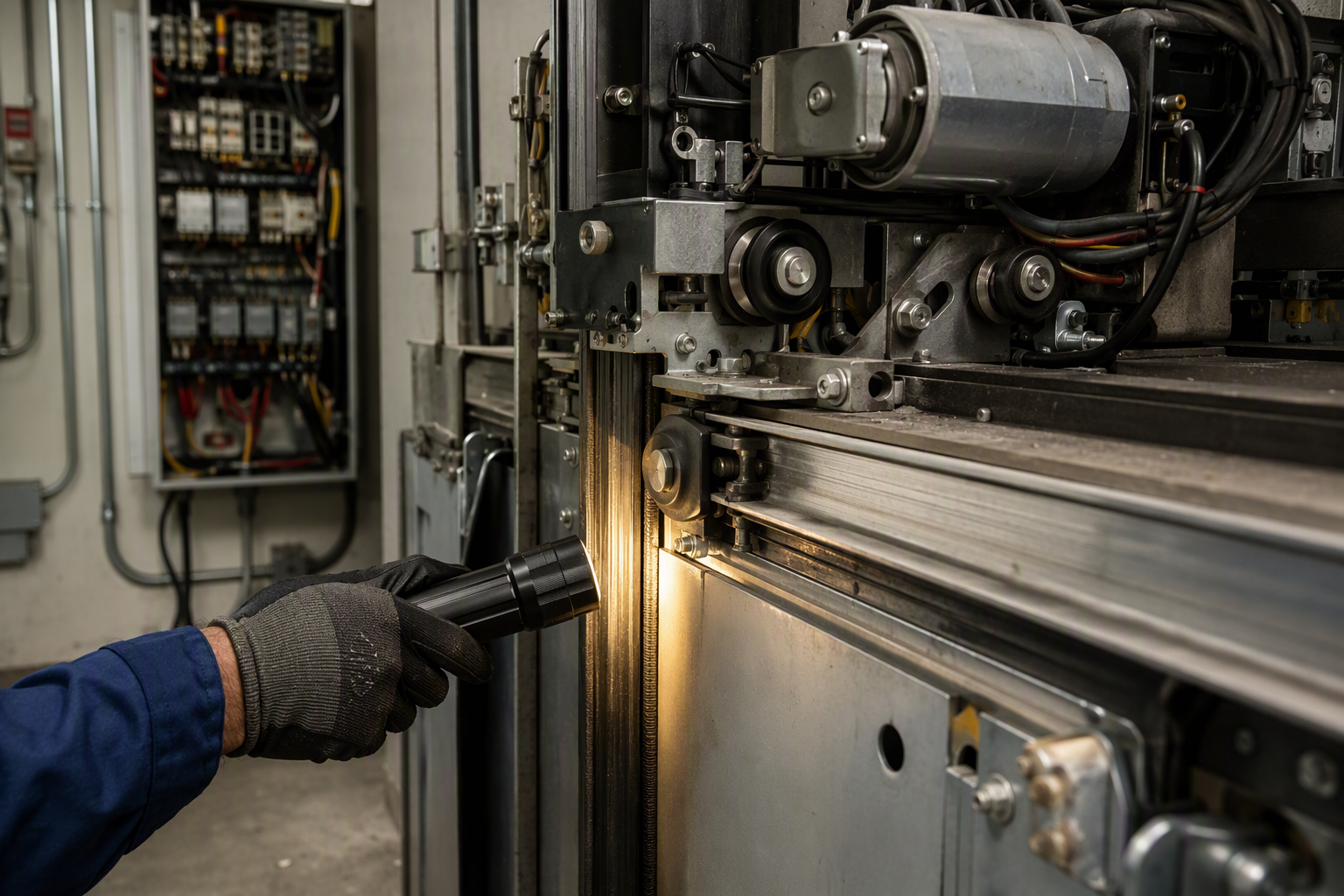
Under South Carolina law, no elevator facility may be operated without both a certificate of registration and a valid operating certificate issued through the LLR’s Office of Elevators and Amusement Rides. That operating certificate—or a conspicuous copy—must be displayed inside each elevator car at all times.
Passenger elevators in healthcare settings must be inspected at least once a year before the operating certificate is renewed. Inspections may only be performed by state inspectors or licensed special inspectors who hold qualifications conforming to the 2018 edition of QEI-1, the American National Standard for Qualification of Elevator Inspectors. Critically, a special inspector may not inspect an elevator on which the inspector or the inspector’s employer currently holds a service or warranty contract—a conflict-of-interest rule that affects how healthcare facilities structure their service agreements.
Before any alteration or modernization work begins, a state construction permit must be obtained from the LLR. Skipping this step puts the facility’s operating certificate at risk and can result in equipment being taken out of service until compliance is achieved.
Which Elevator Components Have the Highest Failure Risk in a Hospital Setting?
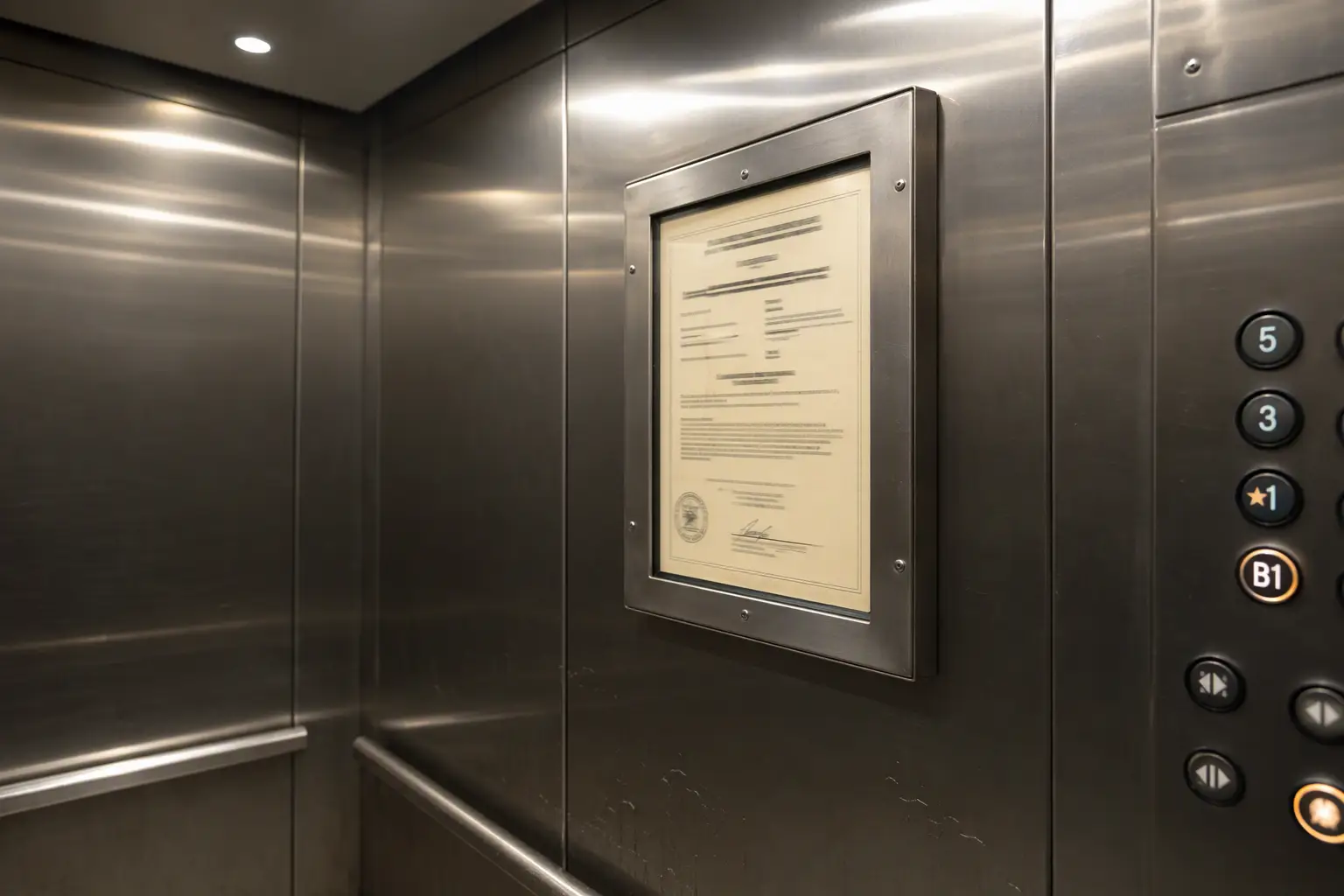
Healthcare elevators log significantly more cycles per day than a comparable commercial office building. High-cycle operation accelerates wear on several key systems:
- Door operators and door contacts — The leading cause of nuisance shutdowns and passenger entrapments. Worn rollers, misaligned tracks, and degraded safety edges trigger door-fault codes that lock cars out of service.
- Hydraulic cylinders (single-bottom) — Older underground cylinders in pre-2000 hydraulic elevators present corrosion and leakage risk. South Carolina regulations require newly installed underground hydraulic elevator cylinders to be encased in plastic outer containment to limit electrolytic corrosion. Facilities with aging hydraulic systems should assess cylinder condition before 2027 budget submission.
- Control systems and relay logic panels — Relay-based controls manufactured before the late 1990s are increasingly difficult to source parts for. A microprocessor modernization improves diagnostics, reduces callback rates, and enables remote monitoring.
- Emergency power systems — South Carolina requires passenger elevators to have standby power capable of running emergency lighting and the alarm bell for at least four hours if normal power fails. Healthcare facilities operating under emergency generator protocols should verify this requirement is met and documented for inspectors.
- Cab finishes and handrails — Infection control standards in healthcare environments place higher demands on surfaces. Stainless steel, antimicrobial laminates, and sealed flooring that can withstand repeated disinfection cycles are considerations beyond basic code compliance.
What ADA Compliance Upgrades Are Relevant to Healthcare Elevators in 2027?
The Americans with Disabilities Act applies to all places of public accommodation and commercial facilities, which includes every patient-accessible elevator in a healthcare building. Common compliance gaps found during assessments include:
- Tactile and Braille floor designations on hoistway jambs that are worn or missing
- Visual and audible floor-arrival signals that no longer function reliably
- Car control panel button height and reach-range compliance for wheelchair users
- Door open times that do not accommodate patients using walkers, wheelchairs, or hospital beds
- Inadequate cab interior dimensions for bariatric transport or large medical equipment
ADA upgrades are not always cost-prohibitive when bundled with a broader modernization project. Carolina Elevator Service recommends that facility directors evaluate ADA conformance as part of any cab or control modernization scope so that work is permitted and performed as a single coordinated alteration rather than a series of reactive repairs.
How Should a Facility Director Prioritize Upgrades Across Multiple Elevator Units?
Prioritization should be driven by three factors: equipment age and condition, annual inspection findings, and operational criticality within the facility. A structured approach helps make the case to administration and financial leadership:
- Conduct a condition assessment — Request a written assessment from a qualified elevator service provider that documents the current state of each unit’s mechanical, electrical, and cab components. Carolina Elevator Service offers free elevator assessments for facilities in the Columbia, SC market.
- Review the last three annual inspection reports — Recurring deficiencies signal systemic problems, not one-time events. Patterns in door fault codes, hydraulic pressure readings, or brake adjustment notes are early indicators of system-level replacement needs.
- Map elevators to patient-care workflows — Identify which cars serve surgical floors, intensive care units, emergency departments, and loading docks. Assign a criticality tier to each. Cars in the highest-criticality tier should receive capital attention first.
- Stage multi-unit modernizations — Hospitals rarely have the downtime to modernize every elevator at once. A phased schedule—one unit at a time—maintains operational continuity while spreading capital expenditure across fiscal years 2026–2028.
- Obtain construction permits before work begins — Confirm that all planned alterations are covered by a South Carolina state construction permit issued through the LLR before contractors arrive on site.
What Firefighters’ Service and Emergency Operation Upgrades Does South Carolina Require?
South Carolina requires that firefighters’ service on new installations use the five-pin S.C. #1000 key. Healthcare facilities that have recently added elevator units or completed modernizations should verify that the correct key switch hardware is installed and documented. Facilities undergoing fire alarm system upgrades in 2026 or 2027 should also confirm that elevator recall functions are integrated correctly with the updated fire alarm panel, as this is a common deficiency found during inspections following fire system work.
What Is the Difference Between Modernization and Routine Maintenance for Budget Purposes?
This distinction matters for capital versus operating expense classification. Routine maintenance—lubrication, adjustments, minor part replacements, and callback response—is typically covered under a service agreement and expensed as an operating cost. Modernization projects that replace major components—control systems, door operators, hydraulic units, cab interiors, or machine room equipment—generally qualify as capital expenditures and require a South Carolina state construction permit before work begins.
Facility directors should work with their finance teams and elevator service provider early in the budget cycle to correctly classify planned work, because the permit requirement alone can affect project timelines by several weeks if not anticipated.
Questions Your Inspector Will Ask
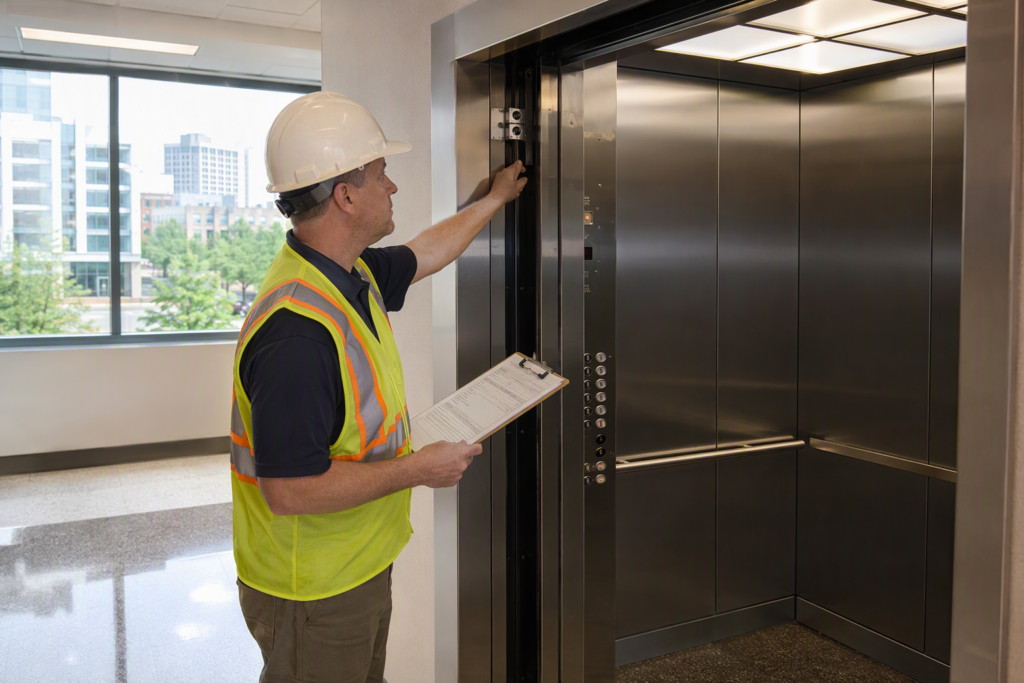
South Carolina LLR inspectors and licensed special inspectors conducting annual inspections at healthcare facilities typically examine the following areas. Facility directors should be prepared to answer or provide documentation on each point before the inspection date:
- Is the current operating certificate conspicuously displayed inside each elevator car?
- Has any alteration or repair work been performed since the last inspection, and was a state construction permit obtained beforehand?
- Is standby emergency power tested and documented to demonstrate at least four hours of runtime for emergency lighting and the alarm bell?
- Are firefighters’ service key switches present, functional, and using the correct South Carolina key standard on applicable units?
- Has the underground hydraulic cylinder (if applicable) been assessed for corrosion or leakage, and is outer containment in place on any cylinder installed or replaced after the current regulations took effect?
- Are all door safety devices—safety edges, light curtains, door contacts—functioning correctly on every landing?
- Is machine room access controlled, clean, and maintained at appropriate temperature?
- Have any accidents or incidents involving the elevator been reported to the LLR before the end of the next working day following the event, as required by South Carolina law?
- Are maintenance logs current and available for review?
- Does the service contractor currently holding a contract have any conflict-of-interest relationship with the special inspector scheduled to perform the inspection?
What Are the Consequences of Failing an Annual Inspection in a Healthcare Facility?
An elevator that fails inspection and cannot be brought into compliance before the operating certificate lapses must be taken out of service. In a hospital or outpatient center, that can mean rerouting patients, delaying procedures, or triggering accreditation concerns if patient transport capabilities fall below required standards. South Carolina law places the obligation to keep every elevator in safe operating condition squarely on the owner—meaning the healthcare organization or property manager, not the service contractor, bears ultimate legal responsibility for compliance status.
Scheduling a pre-inspection walkthrough with Carolina Elevator Service before the annual inspection date allows the facility team to identify and correct deficiencies under a planned timeline rather than an emergency one.
How Far in Advance Should a 2027 Modernization Project Be Planned?
For healthcare facilities in the Columbia, SC market, planning should begin no later than the third quarter of 2026. Major modernization components—microprocessor controllers, hydraulic power units, door operator assemblies—can carry lead times that vary with manufacturer and supply chain conditions. The South Carolina LLR permit review process also adds time before work can legally commence. Facilities that wait until the 2027 fiscal year begins to initiate planning frequently encounter schedule compression that forces compromises in scope or execution quality.
A pre-budget assessment from Carolina Elevator Service, conducted in mid-2026, provides the condition data and scope estimates needed to submit a well-supported capital request through the organization’s normal budget approval cycle.
Does South Carolina Have Special Requirements for Elevators in Existing Healthcare Buildings?
South Carolina elevator facilities that were in operation before July 1, 1986 must comply with the 1986 edition of ANSI A17.3, the safety code for existing elevators and escalators. Newer installations and any alterations are governed by the ASME A17.1-2019/CSA B44:19 edition adopted by South Carolina in 2021. When an alteration is made to an existing elevator, the altered components must conform to the currently adopted edition of ASME A17.1 in effect when the permit is issued—which means even a targeted modernization of one system can trigger broader compliance review of the unit as a whole. Healthcare facility directors should factor this into scope planning with their service provider.
What Should a Healthcare Facility Look for When Evaluating an Elevator Service Provider?
In South Carolina, the owner is legally responsible for maintaining elevators in safe operating condition and in conformance with state regulations. Choosing a service provider who understands the specific compliance environment—the LLR’s inspection process, the conflict-of-interest rules governing special inspectors, the permit requirements for alterations—reduces compliance risk materially. Facilities should request evidence that the provider’s technicians are familiar with the ASME A17.1-2019 code adopted by South Carolina and that the company can support the permit application process for modernization work.
Carolina Elevator Service works with healthcare property managers and facility directors across Columbia, SC to navigate annual inspection preparation, alteration permitting, and multi-year capital planning. The team understands the operational constraints of healthcare environments and coordinates modernization scheduling to minimize impact on patient transport workflows.
Contact Carolina Elevator Service for a free elevator assessment at 803-865-1400.
Need elevator service you can rely on? Carolina Elevator Service is ready to help.