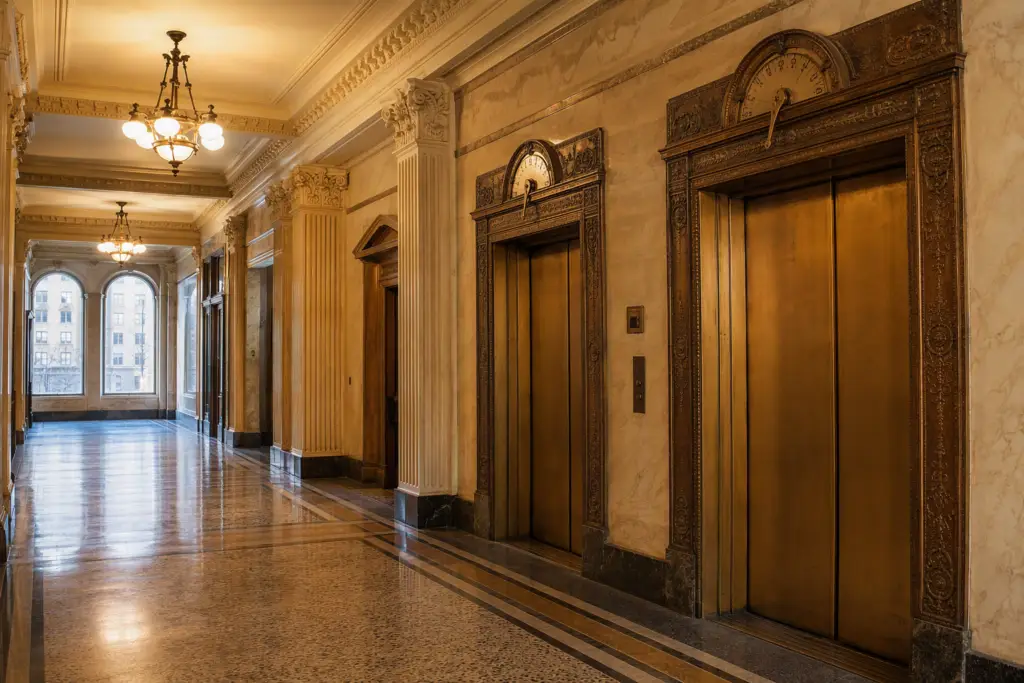
In South Carolina, building elevators must be inspected at least once per year by a state-licensed elevator inspector, in accordance with state law adopting the ASME A17.1 Safety Code for Elevators and Escalators, with a valid Certificate of Operation required to legally operate any elevator.
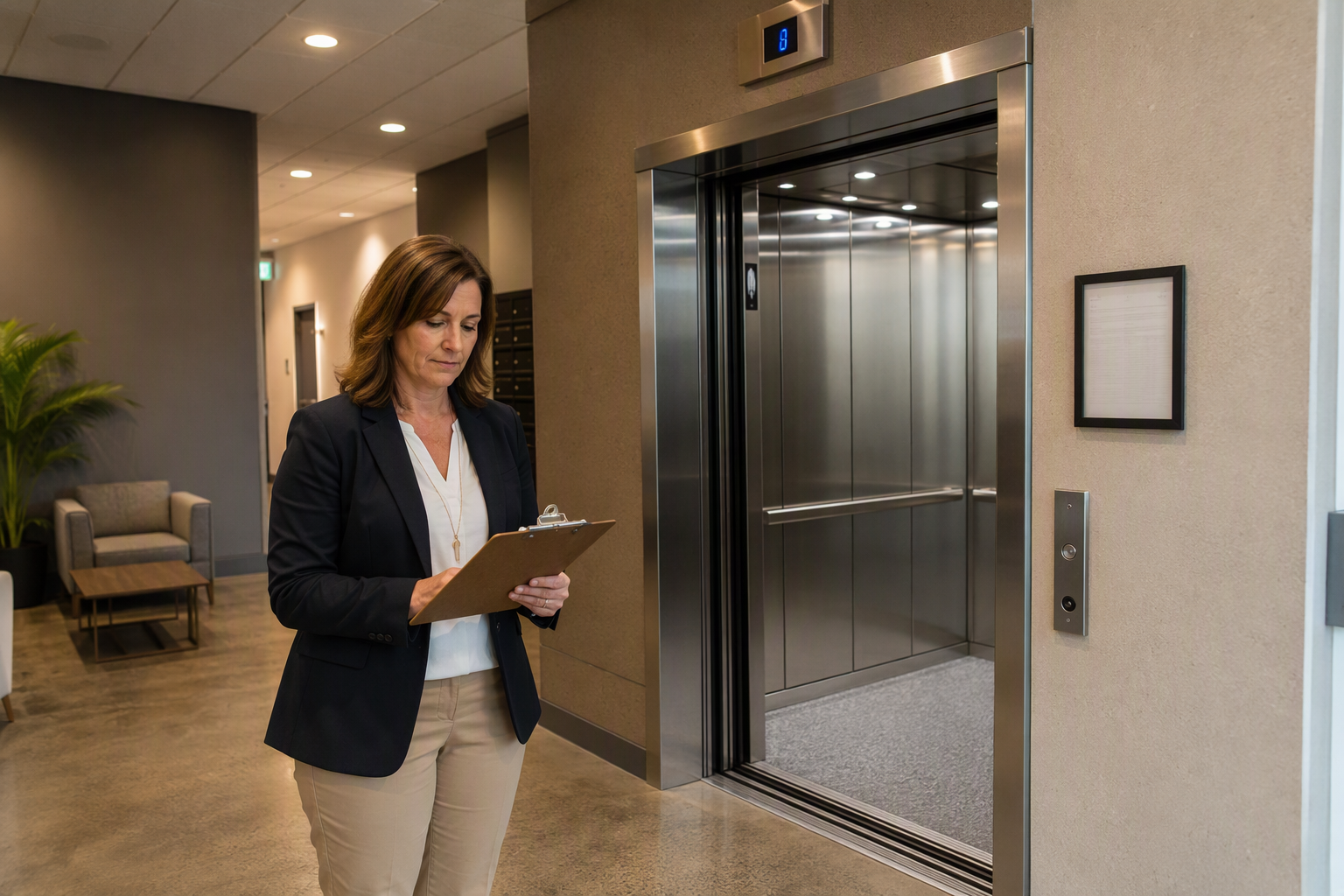
Elevator Inspection Requirements in South Carolina: Complete FAQ Guide
South Carolina building owners and property managers face real legal exposure when elevator inspections lapse. This guide covers every dimension of the state’s inspection requirements, compliance timelines, enforcement consequences, and best practices — drawn from applicable federal codes and South Carolina statutes — so that building owners in Columbia and across the state can keep their elevators legal, safe, and operational.
How Often Does a Building Elevator Need to Be Inspected in South Carolina?
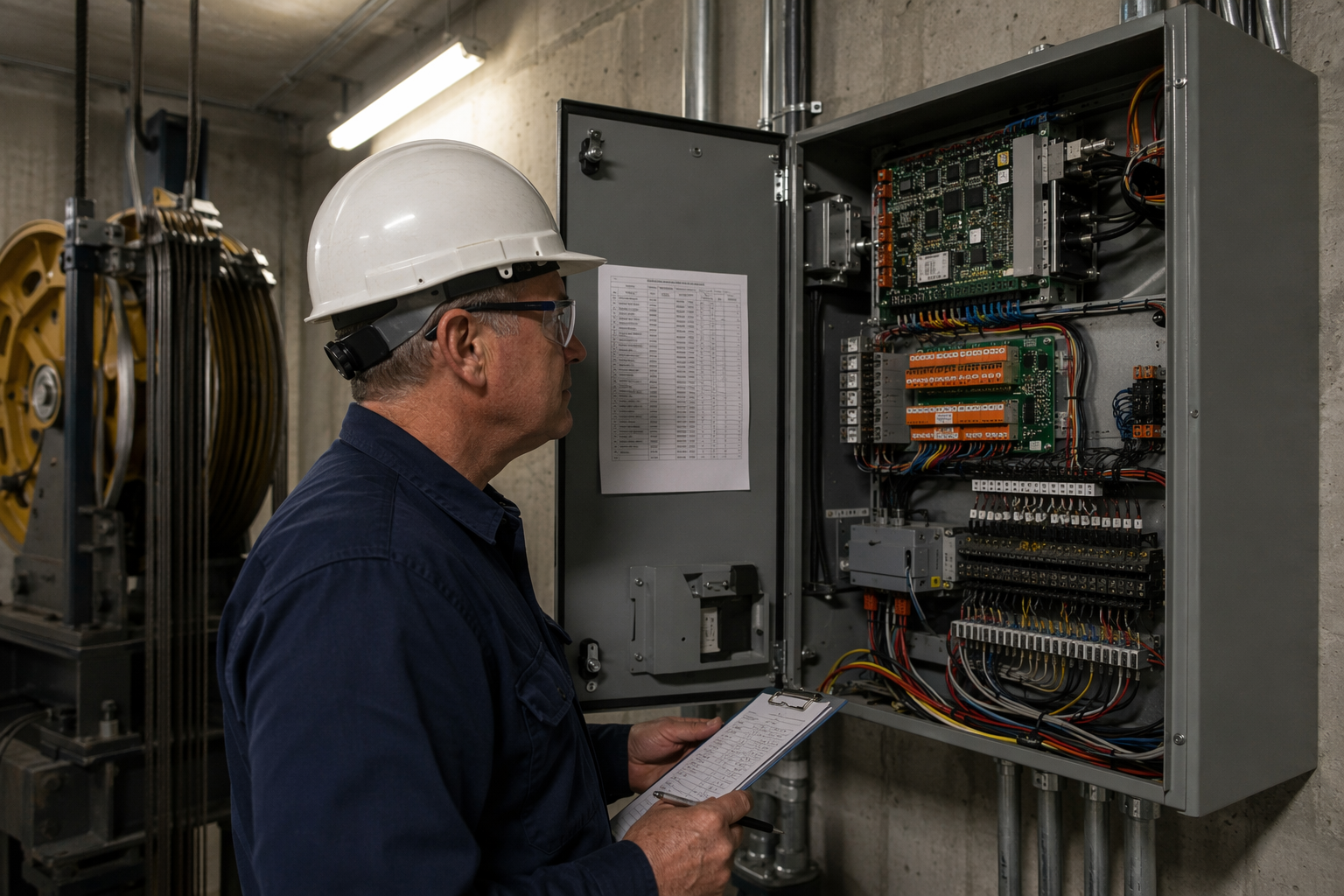
South Carolina requires a full periodic inspection of most passenger and freight elevators at least once every 12 months.
This annual inspection interval is rooted in the ASME A17.1 Safety Code for Elevators and Escalators, which South Carolina has adopted as its foundational elevator safety standard. The inspection must be performed by or witnessed by a qualified, state-licensed elevator inspector, and it must be completed before the current Certificate of Operation expires. Building owners should schedule inspections well in advance of the expiration date — waiting until the final weeks creates risk if any violations are found that require corrective work before re-certification.
What Is the Legal Authority That Governs Elevator Inspections in South Carolina?
The South Carolina Office of Elevators and Amusement Rides, operating under the Department of Labor, Licensing and Regulation (LLR), is the state authority responsible for elevator inspection oversight and Certificate of Operation issuance.
South Carolina statute establishes that no elevator, escalator, or related conveyance may be operated in a public or commercial building without a valid Certificate of Operation issued by the state. The LLR enforces compliance, investigates complaints, and has authority to order an elevator taken out of service if it poses a safety risk or if its certificate has lapsed. The underlying technical standard referenced by the state is the ASME A17.1 Safety Code for Elevators and Escalators for new installations and ASME A17.3 for existing elevators in service.
What Types of Elevators Are Required to Be Inspected?
South Carolina’s inspection requirements apply to virtually all mechanically powered vertical conveyances in public or commercial use, including passenger elevators, freight elevators, escalators, moving walks, dumbwaiters, wheelchair lifts, and platform lifts.
Privately owned residential elevators in single-family homes are generally exempt from mandatory state inspections, though installation must still meet applicable codes. However, any conveyance accessible to the general public, tenants, employees, or customers in a commercial, multi-family residential, retail, healthcare, or institutional building falls under the state’s jurisdiction. Building owners who are uncertain whether a specific conveyance is subject to inspection requirements should consult directly with the South Carolina LLR or contact a qualified service provider such as Carolina Elevator Service for guidance.
What Happens During an Annual Elevator Inspection?
A state-required annual elevator inspection is a comprehensive technical evaluation of all safety-critical systems, structural components, and operational functions of the conveyance.
Inspectors examine the following areas during a routine annual inspection:
- Machine room equipment, including drive systems, controllers, and motor condition
- Hoistway components — guide rails, buffers, safeties, and pit conditions
- Car structure, door operation, interlocks, and leveling accuracy
- Emergency lighting, communication systems, and alarm functionality
- Rope or belt condition, tension, and suspension integrity
- Overload protection, governor function, and safety device operability
- Compliance with applicable ASME A17.1 and A17.3 requirements
Any deficiencies found during inspection are documented in a written report. Minor violations may allow continued operation pending correction, while serious safety violations can result in an immediate order to take the elevator out of service.
What Is a Periodic Test, and How Does It Differ from an Annual Inspection?
A periodic test is a scheduled, comprehensive load and safety-device test required under ASME A17.1 that goes beyond the scope of a standard annual inspection and must be conducted at defined intervals based on elevator type.
Under the ASME A17.1 Safety Code for Elevators and Escalators, different test categories apply at different intervals. The table below summarizes common test types and their general intervals as defined in the code:
| Test Type | Applies To | General Interval | Key Focus |
|---|---|---|---|
| Periodic Inspection | All elevators in service | Annual (every 12 months) | Overall safety and operational compliance |
| Category 1 Test | Hydraulic elevators | Every 12 months | No-load safety device operation |
| Category 1 Test | Traction elevators | Every 12 months | Governor, safeties, buffers — no load |
| Category 5 Test | Traction elevators | Every 5 years | Full-load, full-speed safety device test |
| Hydraulic Pressure Test | Hydraulic elevators | Every 5 years | Cylinder and pressure system integrity |
| Firefighters’ Emergency Operation Test | Applicable elevators | Annual | Phase I and Phase II operation verification |
Building owners should note that five-year Category 5 tests and hydraulic pressure tests require advance planning, as they involve significant labor and temporary elevator downtime. Carolina Elevator Service helps Columbia-area building owners track and schedule these tests so compliance deadlines are never missed.
What Is a Certificate of Operation and When Must It Be Renewed?
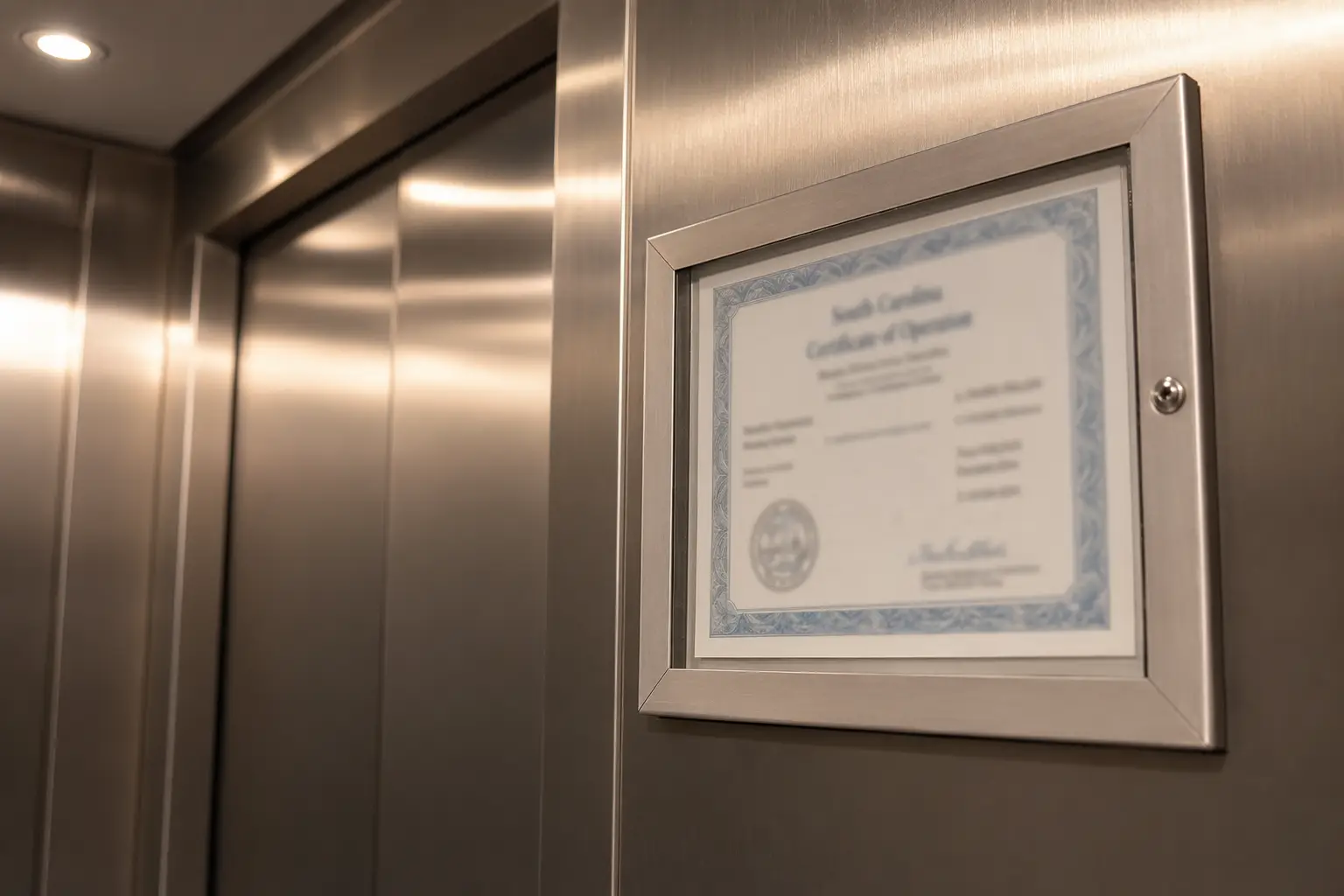
A Certificate of Operation is the state-issued document confirming that an elevator has passed inspection and is legally authorized to operate — it must be renewed annually and must be posted or available on-site at all times.
South Carolina law requires that the Certificate of Operation be current at all times the elevator is in use. When an inspection is completed and passed, the state issues a new certificate valid for the next 12-month period. If a building owner fails to schedule an inspection before the certificate expires, the elevator is technically operating outside the law — even if no mechanical problems exist. This creates liability exposure for the building owner in the event of an incident. The certificate expiration date should be tracked on a building maintenance calendar with a reminder set at least 60 days in advance.
Who Is Qualified to Inspect an Elevator in South Carolina?
In South Carolina, elevator inspections must be performed by a state-licensed elevator inspector — either a state employee through the LLR or a licensed third-party inspector authorized by the state.
The inspector must hold a valid South Carolina elevator inspector license, which requires passing applicable examinations and demonstrating competency in elevator codes and safety standards. Many building owners work with their elevator service contractor to coordinate the inspection, since the elevator company’s mechanics are often present to operate the equipment and address any immediate minor deficiencies during the inspection visit. Carolina Elevator Service works directly with licensed inspectors on behalf of building owners throughout the Columbia area to streamline this coordination process.
What Are the ADA Requirements Related to Elevator Inspections?
The Americans with Disabilities Act requires that elevators in multi-story buildings accessible to the public remain operational and meet accessibility standards — making elevator maintenance and inspection compliance directly tied to ADA obligations.
Under the ADA, buildings with three or more stories (or more than 3,000 square feet per floor in most commercial settings) are generally required to have elevator access between floors. Beyond installation requirements, the ADA mandates that accessible routes — including elevators — remain operational. Repeated or extended elevator outages in ADA-covered buildings can constitute an ADA violation. Regular inspections and prompt maintenance are therefore not only a state licensing requirement but also a federal accessibility compliance obligation. Building owners should document all maintenance, inspection, and repair activities as part of their ADA compliance record.
What Happens If an Elevator Fails Inspection in South Carolina?
If an elevator fails a state inspection in South Carolina, the building owner receives a written notice of violation and must complete all required corrections within the timeframe specified before the elevator can be re-inspected and returned to legal service.
The severity of the violation determines the outcome. Minor deficiencies — such as a burnt-out machine room light or a missing inspection record — are typically given a correction deadline with the elevator allowed to continue operating. Serious safety deficiencies — such as failed safeties, compromised ropes, or non-functioning door interlocks — can result in an immediate out-of-service order, meaning the elevator must be shut down until repairs are completed and a follow-up inspection is passed. The cost and disruption of an unplanned shutdown far exceed the cost of proactive maintenance, which is why routine service agreements are strongly recommended for any commercial building.
What Are the Penalties for Operating an Elevator Without a Valid Certificate in South Carolina?
Operating an elevator in South Carolina without a valid Certificate of Operation exposes building owners to civil penalties, mandatory shutdown orders, and potential liability in the event of an injury.
South Carolina LLR has authority to assess fines for operating without a valid certificate and can issue cease-and-desist orders requiring immediate shutdown. Beyond regulatory penalties, the legal exposure in a personal injury lawsuit is significantly greater when a building owner cannot demonstrate that the elevator was current on all state-required inspections. Courts and insurance carriers both view lapsed certificates as evidence of negligence. For commercial property owners, elevator compliance is ultimately a risk management issue as much as a regulatory one.
How Much Does an Elevator Inspection Cost in South Carolina?
Elevator inspection fees in South Carolina include a state fee assessed by the LLR as well as any fees charged by the elevator service company for inspection coordination, preparation, and follow-up work.
State inspection fees vary based on equipment type and are set by the LLR fee schedule. In addition to the state fee, building owners should anticipate costs associated with having a service technician present during the inspection to operate the elevator and access equipment. If deficiencies are found, repair costs vary widely depending on the nature of the violation. Buildings on a planned maintenance agreement often find that inspection-related repair costs are lower because issues are identified and corrected proactively rather than discovered at inspection time. Specific pricing for inspection coordination and maintenance services is best discussed directly with a qualified elevator contractor.
What Is ASME A17.3 and Does It Apply to Existing Elevators in South Carolina?
ASME A17.3, the Safety Code for Existing Elevators and Escalators, establishes the minimum safety standards that existing in-service elevators must meet — and South Carolina’s adoption of this code means that older elevators are subject to ongoing retroactive safety requirements.
Many building owners assume that an elevator installed under an older code edition is permanently grandfathered. The ASME A17.3 standard establishes baseline requirements that existing equipment must meet regardless of age, and as editions of the code are updated and adopted by the state, some of those requirements become retroactively applicable. This means that an elevator installed decades ago may require safety upgrades — such as door restrictors, emergency lighting improvements, or updated firefighters’ service operation — to remain compliant. A thorough maintenance provider will flag these evolving requirements and advise on necessary upgrades.
What Should a Building Owner Do If an Elevator Breaks Down Between Inspections?
If an elevator breaks down between scheduled inspections, the building owner should immediately take the unit out of service, notify occupants, contact a licensed elevator service company for repair, and document all actions taken.
- Place the elevator out of service immediately and post clear signage on all affected floors.
- Contact a licensed elevator service company to diagnose and repair the malfunction.
- Notify building management and, if applicable, ADA-dependent tenants of the outage and anticipated timeline.
- Do not return the elevator to service until the licensed technician confirms it is safe to operate.
- If the repair involves a safety-critical component, confirm with the service company whether a follow-up inspection or state notification is required before resuming operation.
- Document the breakdown, repair actions, parts replaced, and return-to-service date in the building’s elevator maintenance log.
- Review the maintenance program to determine whether the failure was preventable and whether any inspection intervals or service schedules should be adjusted.
Prompt, documented response to breakdowns demonstrates good-faith compliance and is essential for both safety and liability protection. Carolina Elevator Service provides responsive repair services throughout the Columbia, SC area for exactly these situations.
How Does Preventive Maintenance Affect Elevator Inspection Outcomes?
Elevators that are on a regular preventive maintenance program consistently demonstrate better inspection outcomes because ongoing service catches and corrects minor issues before they become inspection violations or safety failures.
Preventive maintenance visits allow trained technicians to lubricate moving parts, test safety devices, check rope and belt condition, inspect door operation, verify controller performance, and address wear before it progresses to failure. Buildings that neglect routine maintenance between annual inspections often arrive at inspection day with accumulations of deferred issues that can trigger multiple deficiency notices — or, in serious cases, out-of-service orders. A structured maintenance agreement, aligned with the requirements of the ASME A17.1 Safety Code for Elevators and Escalators, is the most effective strategy for maintaining compliance and minimizing unplanned downtime.
Are New Elevator Installations Subject to Inspection Before Being Placed in Service?
Yes — in South Carolina, all newly installed elevators must pass a state acceptance inspection before they may be placed in service, and the installer must obtain an initial Certificate of Operation.
A new elevator installation requires plan approval and permit issuance by the state before construction begins, followed by a full acceptance inspection upon completion. The acceptance inspection verifies that the installation conforms to the approved plans and meets all applicable requirements of the ASME A17.1 Safety Code for Elevators and Escalators. Only after passing this inspection and receiving the initial Certificate of Operation may the elevator be used by building occupants. The annual inspection cycle then begins from the date of initial certification.
What Records Must a Building Owner Maintain for Elevator Compliance?
South Carolina building owners must maintain a current Certificate of Operation on the premises, along with records of all inspections, tests, and maintenance activities — these records are subject to review by state inspectors at any time.
Best practice for record-keeping includes maintaining the following documentation:
- Current and prior Certificates of Operation
- All state inspection reports and deficiency notices
- Records of all Category 1 and Category 5 tests, including test dates and results
- Maintenance visit logs from the service contractor
- Records of all repairs, including date, work performed, and parts replaced
- Firefighters’ emergency operation test records
- Any state correspondence, violation notices, or correction confirmations
Organized, complete records protect building owners in regulatory audits, legal proceedings, and insurance reviews. Electronic record systems maintained by elevator service contractors can significantly reduce the administrative burden on building management teams.
Do Workplace Safety Regulations from OSHA Affect Elevator Inspections?
OSHA standards apply to elevator maintenance and repair work, governing worker safety during service activities — while OSHA does not conduct the periodic elevator inspections required by state law, its standards are directly relevant to how maintenance and inspection work is performed.
OSHA regulations require that elevator service technicians follow lockout/tagout procedures, confined space protocols (for elevator pits in applicable circumstances), and fall protection requirements during hoistway work. Building owners have a responsibility to ensure that the elevator service companies they hire maintain OSHA compliance in all service activities performed on their property. A properly credentialed elevator service company will have documented safety protocols aligned with OSHA requirements to protect both its workers and the building owner from occupational safety liability.
What Is the Role of the Authority Having Jurisdiction (AHJ) in South Carolina Elevator Inspections?
In South Carolina, the Authority Having Jurisdiction (AHJ) for elevator inspections is the state’s Office of Elevators and Amusement Rides under the LLR — this office has final authority over inspection standards, certificate issuance, and enforcement actions.
The AHJ concept is defined in the ASME A17.1 Safety Code for Elevators and Escalators as the organization or individual responsible for enforcing code requirements and approving equipment and procedures. In South Carolina, the LLR’s elevator office serves this function statewide, meaning there is a consistent, centralized authority rather than a patchwork of county or municipal requirements. Building owners in Columbia, SC deal with the same state-level AHJ as those anywhere else in South Carolina. Local municipalities may have building departments that are involved in the permitting of new installations, but ongoing operational compliance runs through the state LLR.
How Far in Advance Should a Building Owner Schedule an Elevator Inspection?
Building owners should schedule their annual elevator inspection at least 60 to 90 days before the current Certificate of Operation expires, allowing adequate time to complete any required pre-inspection maintenance and address deficiencies found during the inspection before the certificate lapses.
Scheduling too close to the expiration date leaves no margin for correction. If an inspector finds a deficiency requiring parts replacement or specialized repair, obtaining parts and completing work can take several weeks — a window that may not exist if the inspection is conducted in the final days of the certificate period. Carolina Elevator Service assists Columbia-area building owners with inspection scheduling and pre-inspection readiness reviews to maximize the likelihood of a clean first-attempt pass and ensure certificates are renewed without gaps.
What Are Common Reasons Elevators Fail Inspection in South Carolina?
The most common reasons elevators fail state inspection involve deferred maintenance issues, outdated safety devices, documentation deficiencies, and code-required features that have been bypassed or have degraded over time.
Frequently cited deficiencies in elevator inspections include:
- Door reopening device failures or worn door operator components
- Pit conditions — standing water, inadequate lighting, or debris accumulation
- Governor or safety device issues identified during Category 1 testing
- Firefighters’ Phase I or Phase II emergency operation malfunctions
- Missing, expired, or illegible Certificate of Operation posting
- Machine room deficiencies — improper storage, inadequate lighting, or temperature issues
- Rope or hydraulic fluid condition violations
- Car lighting or emergency communication system failures
Most of these issues are entirely preventable through consistent preventive maintenance. Buildings that maintain a regular service relationship with a qualified contractor such as Carolina Elevator Service typically arrive at annual inspections with far fewer deficiencies than those relying on reactive-only service models.
Ready to Confirm Your Elevator Is Fully Compliant?
Elevator inspection compliance in South Carolina is not optional — it is a legal requirement backed by real enforcement authority, and the consequences of lapsed certificates or failed inspections extend well beyond regulatory fines to insurance, liability, and occupant safety. Whether a building’s current certificate is approaching expiration, a five-year Category 5 test is coming due, or there are concerns about a unit’s readiness to pass inspection, the right time to act is before the deadline, not after.
Contact Carolina Elevator Service for a free elevator assessment. The team works with commercial building owners, property managers, healthcare facilities, and multi-family properties throughout the Columbia, SC area to keep elevators compliant, safe, and operational year-round.
Call today: 803-865-1400
Need elevator service you can rely on? Carolina Elevator Service is ready to help.