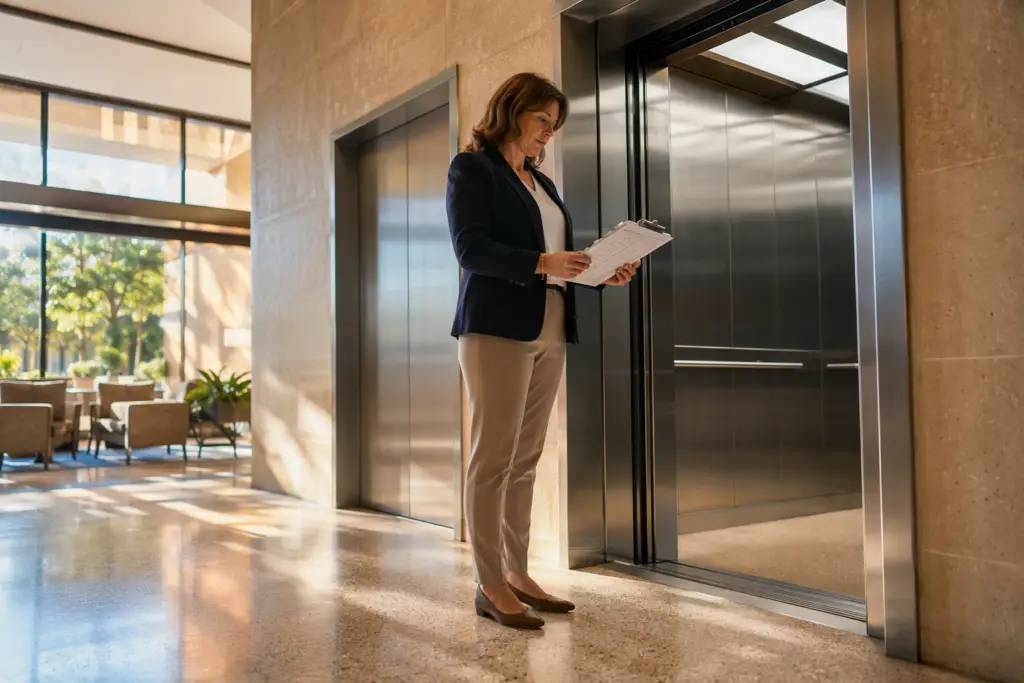
Multifamily Elevator Modernization for Healthcare Facilities in Columbia, SC
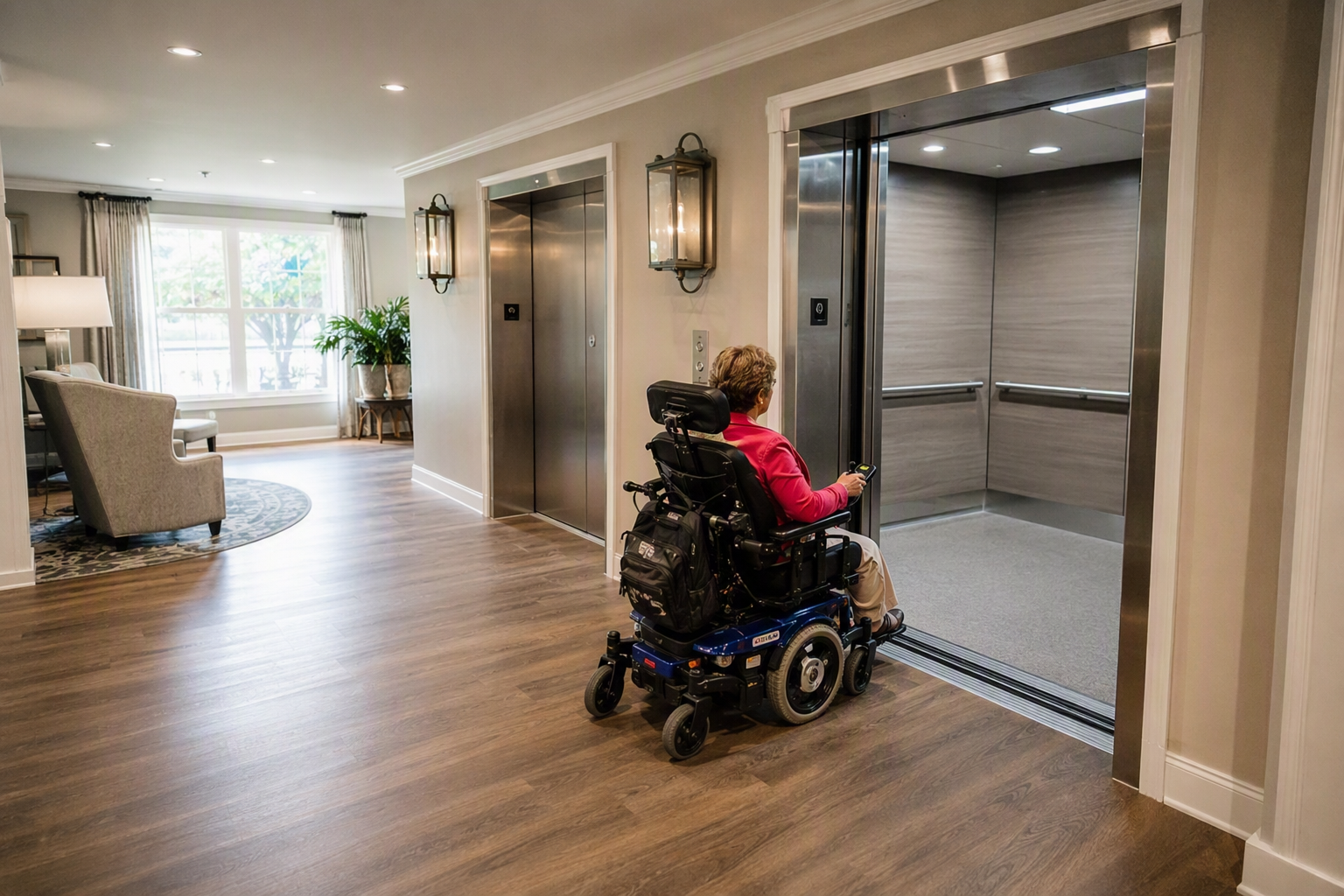
Healthcare-adjacent multifamily properties — including assisted living communities, independent senior housing, and continuing care retirement communities — depend on elevators in ways that go far beyond simple convenience. When a lift fails in a building where residents may use wheelchairs, walkers, or medical equipment, the impact on safety and care delivery is immediate. Modernization is not simply an upgrade; for many Columbia, SC properties, it is a compliance obligation and a patient-safety imperative.
Carolina Elevator Service works with multifamily healthcare property owners and facility managers throughout Columbia and the surrounding Midlands region to assess aging elevator systems, develop modernization scopes, and shepherd projects through South Carolina’s inspection and permitting process.
What Does Multifamily Elevator Modernization Mean in a Healthcare Context?
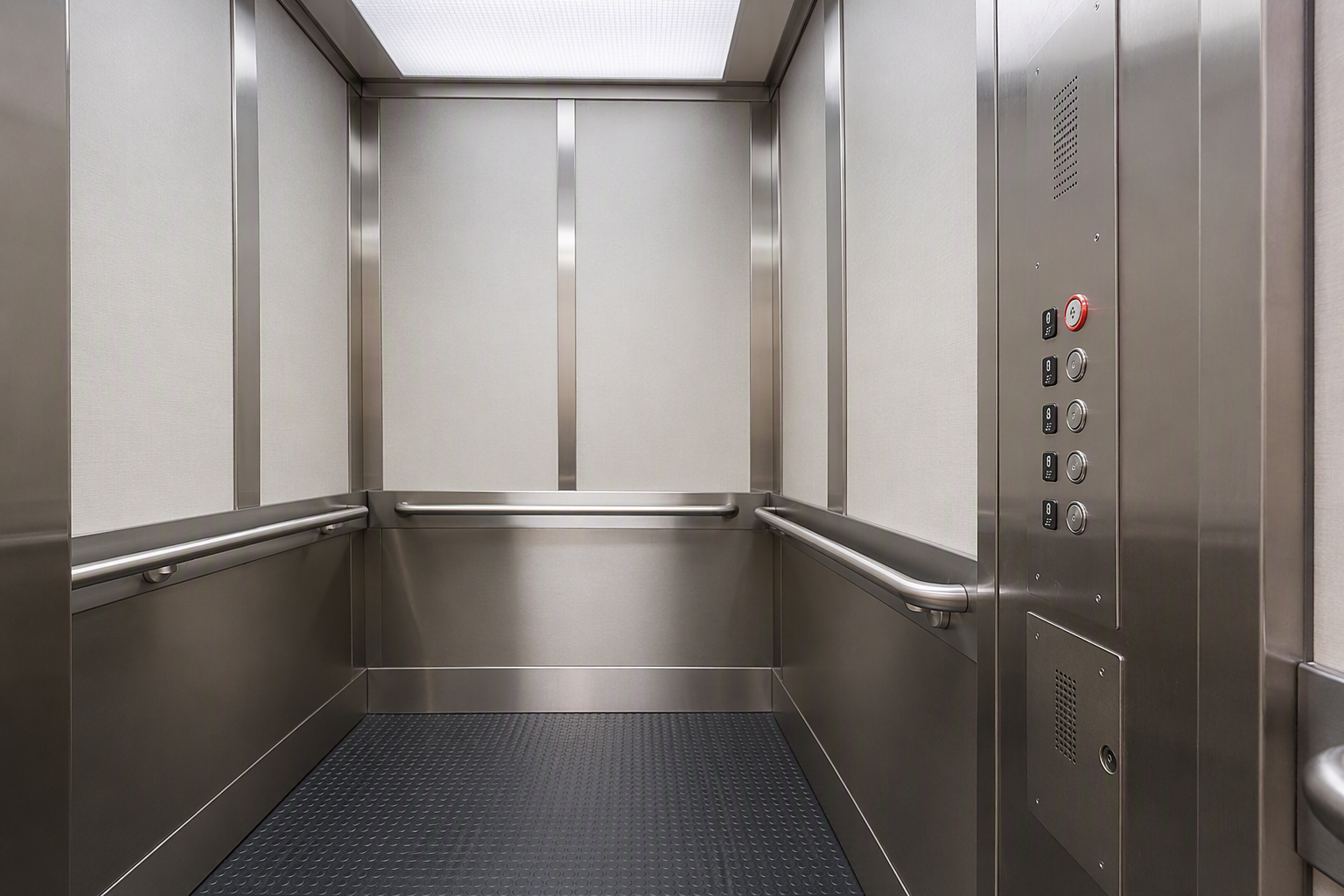
In a standard apartment building, modernization typically focuses on energy efficiency and aesthetics. In a healthcare-adjacent multifamily setting, the scope expands to include:
- Reliability and uptime: Residents who depend on the elevator for daily mobility, medical appointments, and emergency evacuation cannot tolerate frequent outages.
- Door timing and sensitivity: Slower closing cycles and enhanced door-reversal sensitivity accommodate residents using mobility aids, IV poles, and medical transport equipment.
- Cab size and clearance: Modernization may require cab enlargement or door-width upgrades to meet ADA accessibility standards for turning radius and clear floor space.
- Emergency communication systems: Two-way communication systems must connect to a location staffed around the clock, a critical consideration in assisted living environments.
- Smooth leveling: Precise floor leveling reduces trip hazards for residents with balance impairments — a direct fall-prevention measure in senior housing.
What Compliance Codes Apply to Elevator Modernization in South Carolina Healthcare Multifamily Buildings?
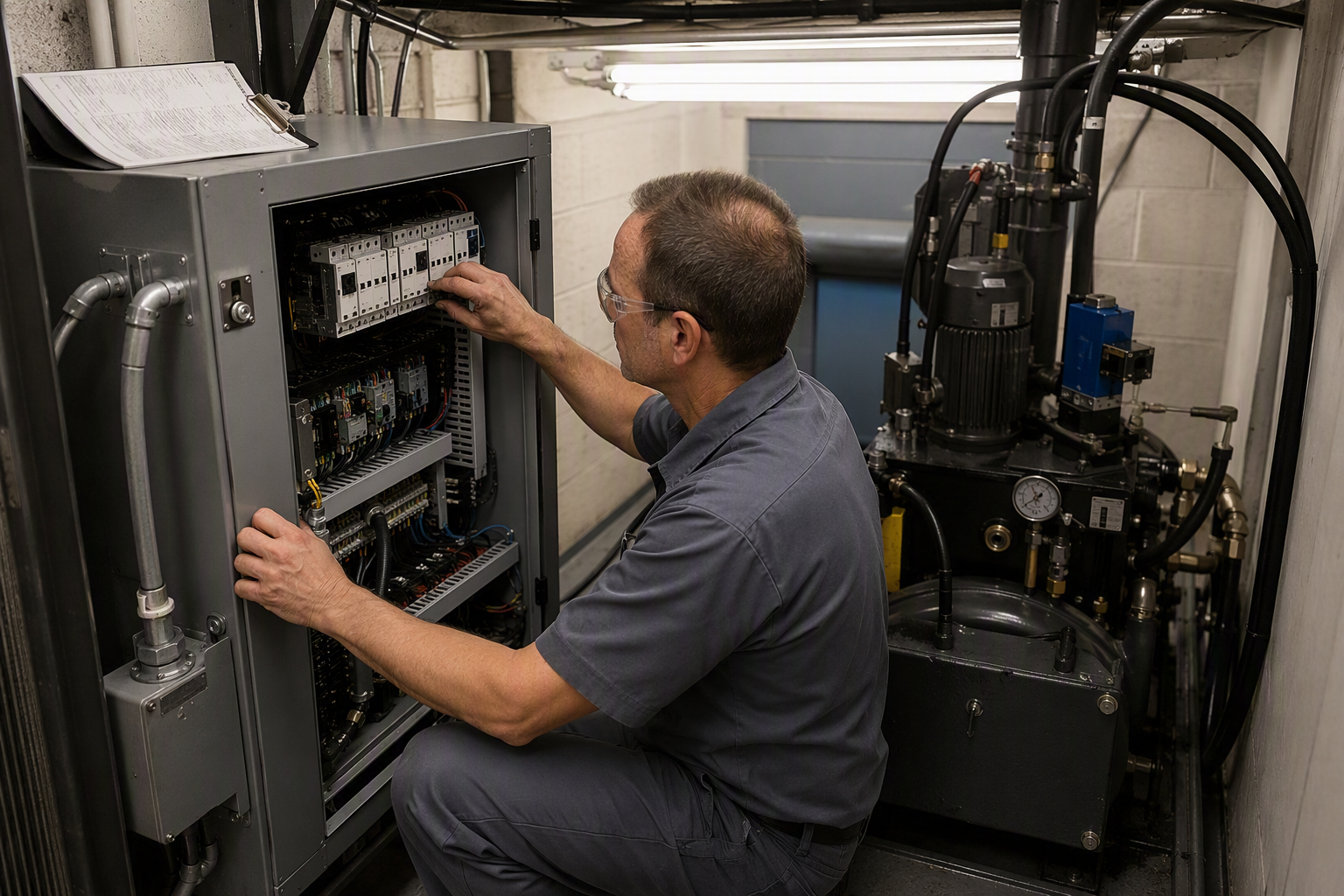
Property owners and facility managers in Columbia, SC must navigate several overlapping regulatory frameworks when modernizing elevators in healthcare-adjacent multifamily buildings.
ASME A17.1 and A17.3
The ASME A17.1 Safety Code for Elevators and Escalators governs new installations and the modernization scope of existing equipment. When components are replaced or upgraded, those components — and often adjacent systems — must conform to the current edition of A17.1. ASME A17.3, the Safety Code for Existing Elevators and Escalators, establishes minimum retrofit requirements for equipment already in service. South Carolina’s elevator safety program references these ASME standards as the baseline for inspection and permitting.
ADA Accessibility Requirements
The Americans with Disabilities Act sets accessibility standards that are especially consequential in senior and healthcare housing. Elevators serving multistory properties must meet ADA requirements for cab dimensions, door clear width, reach ranges for controls, Braille and tactile signage, and audible floor announcements. Modernization is frequently the most practical opportunity to bring a non-compliant cab into full ADA conformance.
South Carolina Elevator Safety Program
The South Carolina Department of Labor, Licensing and Regulation (SC LLR) administers elevator safety within the state. Any modernization project requires a permit from SC LLR before work begins, and a state-licensed elevator inspector must conduct a final inspection and issue a new Certificate of Operation before the modernized elevator returns to public use. Failure to obtain the certificate exposes property owners to enforcement action and potential liability.
Fire Code and Emergency Operation
South Carolina’s adoption of the International Building Code and NFPA standards affects elevator requirements in buildings with fire suppression systems. Phase I and Phase II firefighter emergency operation — governed by ASME A17.1 — must be verified as part of any modernization scope.
How Do You Know When a Multifamily Healthcare Elevator Needs Modernization Instead of Repair?
Not every aging elevator needs a full modernization. However, several indicators suggest that a repair-only strategy is no longer cost-effective or safe in a healthcare multifamily context:
- Replacement parts for the existing controller or drive are obsolete or no longer manufactured
- The elevator experiences repeated callback visits for the same recurring faults
- Door-related incidents — residents being struck or caught — are occurring with greater frequency
- The leveling accuracy has degraded, creating floor gaps that present fall risks
- Energy consumption from the hydraulic or traction drive is significantly higher than modern equivalents
- The cab does not meet current ADA dimensional requirements for the resident population served
- The existing emergency communication system cannot reach a 24-hour staffed location as required
Carolina Elevator Service provides assessments that evaluate current equipment condition against these benchmarks, helping property managers in Columbia make data-supported modernization decisions rather than reactive repair investments.
What Is the Typical Scope of a Multifamily Healthcare Elevator Modernization Project?
Modernization scope varies by building type, elevator age, and specific compliance gaps. Common scope elements in healthcare multifamily settings include:
- Controller replacement: Modern microprocessor controllers improve dispatching efficiency, fault logging, and remote monitoring capability.
- Drive system upgrade: Variable-voltage, variable-frequency (VVVF) drives replace older relay-logic or single-speed systems, delivering smoother starts and stops — a meaningful quality-of-life improvement for residents with mobility limitations.
- Door operator and safety edge replacement: New operators with light curtain or multi-beam safety edges provide more reliable door reversal for residents using assistive devices.
- Cab renovation: Handrails, flooring, lighting, and control panel reconfiguration to meet ADA standards and support fall prevention.
- Emergency lighting and communication: Upgraded two-way communication systems and battery-backed lighting to satisfy both ASME A17.1 and building fire codes.
- Hydraulic system conversion (if applicable): Older single-bottom hydraulic systems may require unit replacement or conversion to meet current environmental and safety standards.
How Long Does a Multifamily Healthcare Elevator Modernization Take?
Project duration depends on scope, parts lead times, and the permitting schedule with SC LLR. A targeted controller and drive modernization may take days, while a full cab and mechanical overhaul spanning multiple elevators in a healthcare campus may extend over several weeks. For buildings where a single elevator serves all floors, phased scheduling and temporary access planning are critical components of project management.
Carolina Elevator Service coordinates with SC LLR for permit issuance and final inspection scheduling, helping Columbia-area property managers anticipate the full project timeline before construction begins.
What Questions Should Facility Managers Ask When Selecting an Elevator Modernization Contractor?
Choosing the right contractor for a healthcare multifamily modernization project affects both compliance outcomes and resident safety. Key questions to ask include:
- Is the contractor licensed by the South Carolina Department of Labor, Licensing and Regulation to perform elevator work in SC?
- Does the contractor have documented experience with healthcare-adjacent multifamily properties?
- Will the contractor manage the full permit and inspection process with SC LLR?
- How will the contractor minimize disruption to residents during modernization?
- What warranty terms apply to modernized components?
- Does the contractor offer post-modernization maintenance programs?
Questions Your Inspector Will Ask
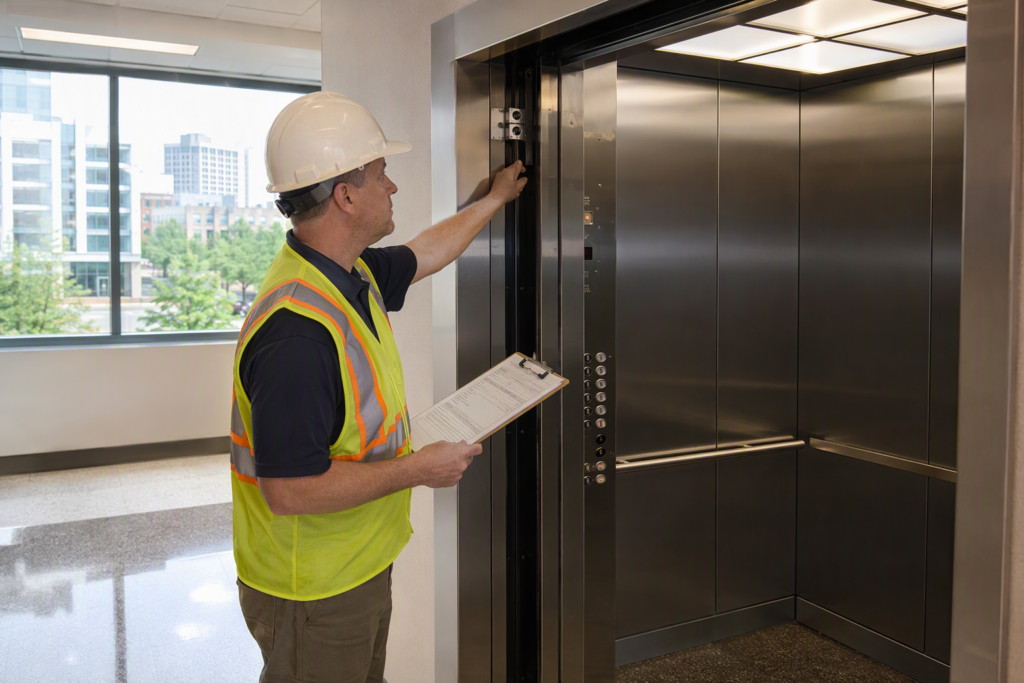
When a South Carolina elevator inspector arrives for the post-modernization final inspection, facility managers should be prepared to address the following:
- Is the permit posted at the job site? SC LLR requires the permit to be visible at the work location throughout the project.
- Are all replaced components identified in the permit application? The scope of work documented in the permit must match the work performed.
- Does the two-way emergency communication system reach a 24-hour staffed location? This is a direct ASME A17.1 requirement and particularly scrutinized in healthcare settings.
- Do firefighter emergency operation (Phase I and Phase II) functions test correctly? The inspector will conduct a functional test of both phases.
- Are door safety devices — light curtains or safety edges — functioning within specification? Door-related safety is a primary inspection focus.
- Is the leveling accuracy within the tolerance required by ASME A17.1? Inspectors measure floor gap to verify fall hazard compliance.
- Are all ADA-required cab features installed correctly, including tactile controls and audible signals?
- Is the machine room or controller space clean, properly lit, and free of stored materials? ASME A17.1 specifies machine room conditions.
- Has the load test been completed and documented? Post-modernization load testing is required before a new Certificate of Operation is issued.
How Do You Minimize Resident Disruption During Healthcare Elevator Modernization?
Disruption planning is a core project management discipline in healthcare multifamily modernization. The following steps help reduce impact on residents:
- Assess the building’s vertical transportation inventory. Confirm whether any secondary elevator, lift, or service elevator can remain operational throughout the modernization period.
- Notify residents and care staff in advance. Written notice should include the work schedule, alternate access routes, and an emergency contact for questions.
- Schedule work during lower-traffic periods where feasible. Medical appointment times, meal service schedules, and shift-change patterns in healthcare facilities affect optimal work windows.
- Coordinate with the building’s care team. In assisted living and continuing care settings, the care coordinator should be informed so that transport for medical appointments can be planned around elevator downtime.
- Establish a daily status communication protocol. The contractor should provide daily updates to facility management on progress, any schedule changes, and the expected return-to-service date.
- Confirm SC LLR inspection is scheduled before the planned completion date. Inspection delays extend downtime; scheduling the inspection early in the project process reduces this risk.
What Are the Long-Term Benefits of Modernizing Elevators in Healthcare Multifamily Properties?
Beyond immediate compliance, modernization delivers sustained operational and financial value in healthcare multifamily settings:
- Reduced maintenance costs: Modern controllers and drive systems generate detailed fault logs that support predictive maintenance, reducing emergency service calls.
- Energy efficiency: VVVF drive technology and LED cab lighting reduce energy consumption compared to older equipment.
- Improved resident satisfaction and safety: Smoother rides, reliable doors, and accurate leveling directly reduce fall risk and improve quality of life for residents with mobility challenges.
- Regulatory confidence: A modernized elevator with a current SC LLR Certificate of Operation reduces liability exposure and simplifies future inspections.
- Property value and marketability: Updated, compliant elevator systems are a competitive advantage in the Columbia, SC senior housing market.
Does ADA Apply to Existing Elevators in Multifamily Healthcare Buildings?
Yes. The Americans with Disabilities Act requires that barriers to accessibility in existing buildings be removed when removal is readily achievable. In multifamily healthcare properties undergoing modernization, ADA compliance is not optional — it is a legal obligation. Modernization provides the practical window to address cab dimensions, control panel heights, door clear widths, tactile and Braille signage, and audible floor indicators. Properties that modernize without addressing ADA gaps remain exposed to complaint and enforcement action.
Why Work With Carolina Elevator Service for Healthcare Multifamily Modernization in Columbia, SC?
Carolina Elevator Service is a South Carolina-based elevator company serving the Columbia metropolitan area. The team is equipped to manage the full modernization process — from initial equipment assessment and permit application through SC LLR, through construction and commissioning, to final inspection and Certificate of Operation issuance. For healthcare-adjacent multifamily properties where resident safety and regulatory compliance are non-negotiable, Carolina Elevator Service provides the local knowledge and technical capability to execute modernization projects correctly.
Schedule Your Free Elevator Assessment Today
If your Columbia, SC assisted living community, senior housing property, or continuing care retirement community has elevators that are aging, non-compliant, or experiencing increased downtime, the time to act is before a failure — not after. Contact Carolina Elevator Service for a free elevator assessment at 803-865-1400. A thorough assessment will identify compliance gaps, modernization priorities, and a clear path to a safer, more reliable vertical transportation system for your residents.
Need elevator service you can rely on? Carolina Elevator Service is ready to help.