Elevator Emergency Phone Number: Complete FAQ Guide for Building Owners & Passengers
Every elevator cab must have a working emergency communication system — not just a button, but a verified, code-compliant connection to live assistance. Whether you are a building owner in Columbia, SC trying to stay compliant, or a passenger who wants to know what happens when you press that button, the questions below cover every angle of elevator emergency phone requirements, maintenance, compliance, and local service.
What Is an Elevator Emergency Phone Number and What Does It Do?
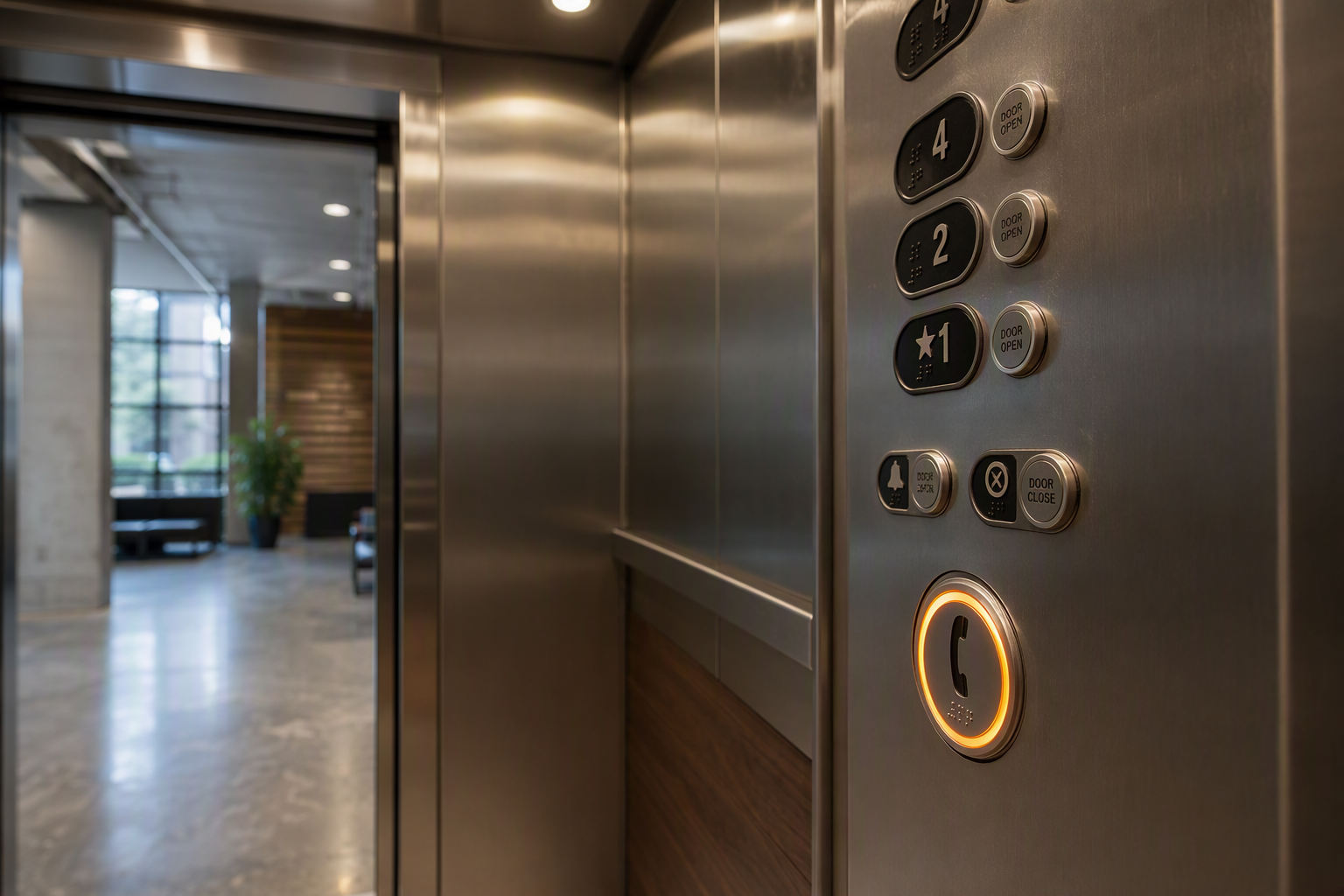
An elevator emergency phone is a two-way communication device mounted inside an elevator cab that, when activated, automatically dials a pre-programmed number connecting the passenger to a live attendant who can dispatch help.
Unlike a standard intercom, the emergency phone must function without the passenger dialing any number manually. The passenger presses a button — typically marked with a telephone or bell symbol — and the system automatically connects to a monitoring center, building management office, or answering service. The attendant on the other end can then coordinate emergency responders, building staff, or an elevator service technician.
The purpose is twofold: to prevent panic in passengers who are trapped and to ensure that qualified help is dispatched without delay. A working, tested emergency phone is the single most important safety feature inside an elevator cab.
What Code Requires an Emergency Phone in Every Elevator?
The ASME A17.1 Safety Code for Elevators and Escalators mandates that every passenger elevator be equipped with a means of two-way communication that connects to a location staffed by a person capable of taking emergency action.
Specifically, ASME A17.1 Section 2.27.1.5 addresses the in-car emergency communication requirement. The code requires that the system connect to a point outside the hoistway, within the building or at a remote monitoring location, where a qualified person is available to respond. The system must operate on building power with a battery backup so it functions during a power outage.
Additionally, the Americans with Disabilities Act (ADA) imposes accessibility requirements on elevator communication systems. The ADA requires that emergency two-way communication systems be usable by people who are deaf or hard of hearing, which in practice means the system must also provide a visual or tactile signal confirming the call has been placed. ADA Standards for Accessible Design, Section 407.4.9, addresses this requirement directly.
South Carolina adopts ASME A17.1 as the basis for its elevator safety regulations, administered through the South Carolina Department of Labor, Licensing and Regulation (LLR). Building owners in Columbia, SC must comply with both the state-adopted edition of ASME A17.1 and the ADA overlay requirements.
What Happens When a Passenger Presses the Elevator Emergency Button?
When a passenger activates the emergency communication button, the elevator’s phone system automatically dials the pre-programmed monitoring number and connects the passenger to a live attendant who assesses the situation and coordinates the appropriate response.
The sequence of events typically unfolds as follows:
- The passenger presses the emergency call button inside the cab.
- The elevator’s communication unit automatically dials the monitoring center or building management line — no manual dialing is required.
- A live attendant answers and identifies the location of the elevator based on the caller ID or the building’s registered information.
- The attendant verbally confirms the nature of the situation — entrapment, medical emergency, or other issue.
- The attendant contacts the appropriate party: building security, property management, or emergency services (911).
- If the situation involves entrapment, a licensed elevator mechanic is dispatched for safe passenger retrieval.
- The attendant remains on the line or calls back periodically until the situation is resolved.
It is critical that the number programmed into the system reaches a live person at all hours. A voicemail box or unanswered line does not satisfy ASME A17.1 or ADA requirements.
What Number Does an Elevator Emergency Phone Call?
The elevator emergency phone calls a pre-programmed number set during installation or maintenance — this is typically a 24/7 elevator monitoring center, a building management office, or a designated emergency answering service, not 911 directly.
The phone does not typically dial 911 by default, because not every activation is a life-threatening emergency. Many activations are accidental or involve minor entrapments that an elevator technician, not a fire department, is best equipped to handle. However, the monitoring attendant who answers has the authority and responsibility to contact 911 when the situation warrants it.
Building owners and property managers should verify the programmed number annually and confirm it reaches a live person at all times. This verification should be documented as part of the elevator’s maintenance log. Carolina Elevator Service assists Columbia, SC building owners in verifying and updating emergency phone programming as part of routine maintenance visits.
Does the Elevator Emergency Phone Need to Work During a Power Outage?
Yes — ASME A17.1 requires that the two-way emergency communication system operate on battery backup power so that it remains functional when the building loses main electrical power.
Power outages are among the most common causes of elevator entrapment. If the emergency phone lost power at the same moment as the elevator, passengers would have no way to call for help during the exact scenario where help is most needed. The battery backup requirement directly addresses this risk.
Battery backup systems must be tested periodically to ensure they hold sufficient charge. A battery that appears functional under normal conditions may fail to power the communication system for the required duration during an actual outage. Maintenance programs should include scheduled battery load testing, not just a visual inspection of the backup unit.
How Often Should the Elevator Emergency Phone Be Tested?
ASME A17.1 and standard industry maintenance protocols call for the elevator emergency communication system to be tested regularly — at a minimum during each scheduled maintenance visit — with documented results retained in the elevator’s maintenance log.
Testing involves more than pressing the button and hearing a dial tone. A proper test confirms that the call connects to a live attendant, that the attendant can hear the passenger clearly, and that the system correctly transmits the elevator’s location information. Battery backup function should also be verified during periodic testing cycles.
South Carolina’s LLR requires annual inspections of elevators by a licensed elevator inspector. The emergency communication system is a standard inspection checkpoint. A failed or non-functional emergency phone can result in inspection failures and required shutdowns until the deficiency is corrected. Carolina Elevator Service documents emergency phone test results on every maintenance visit to help building owners maintain a complete compliance record.
What Are the ADA Requirements for Elevator Emergency Phones?
The ADA requires elevator emergency communication systems to be accessible to individuals who are deaf or hard of hearing, which means the system must provide a non-verbal means of confirming that an emergency call has been placed and received.
In practical terms, this requirement is most commonly met by incorporating a visual indicator — such as a flashing light or an illuminated display — that confirms the call has connected. Some systems use a two-way TTY (text telephone) capability, though visual confirmation is the more widely implemented solution.
The ADA also governs the physical placement and operability of the call button itself. Controls must be within reach ranges specified in ADA Standards for Accessible Design, and the button must be operable with one hand without tight grasping, pinching, or twisting of the wrist. Building owners retrofitting older elevators should consult with a qualified elevator service provider to confirm that both ASME A17.1 and ADA requirements are satisfied simultaneously.
What Should Building Owners Do If the Elevator Emergency Phone Is Not Working?
If an elevator’s emergency phone is found to be non-functional, the building owner should immediately take the elevator out of service and contact a licensed elevator service company for repair before returning the unit to passenger use.
Operating an elevator with a non-functional emergency communication system exposes the building owner to significant liability and places passengers at risk. Under ASME A17.1, a code-required safety device that is out of service renders the elevator itself non-compliant for operation.
Steps a building owner should take immediately:
- Post an “Out of Service” notice on the elevator and physically prevent passenger use if possible.
- Contact a licensed elevator maintenance company to diagnose the communication system failure.
- Document the date and time the malfunction was discovered and reported.
- Obtain written confirmation from the service provider when the repair is completed and tested.
- Retain repair records in the elevator’s maintenance file for inspection purposes.
Common causes of emergency phone failure include expired phone line subscriptions, outdated analog lines converted to VoIP without compatible equipment, dead backup batteries, and wiring faults. A licensed technician can identify the root cause and restore compliance efficiently.
Can an Elevator Emergency Phone Use a VoIP or Cellular Line?
Yes, elevator emergency phones can operate over VoIP or cellular connections, but the system must be specifically designed and tested for elevator emergency use — standard consumer VoIP or cellular devices do not inherently meet ASME A17.1 reliability standards.
Traditional elevator emergency phones used analog POTS (Plain Old Telephone Service) lines. As analog infrastructure has been retired across the country, elevator communication systems have transitioned to VoIP, cellular, and IP-based platforms. The transition introduces new risks: VoIP systems may lose function during internet outages, and cellular systems depend on signal availability.
ASME A17.1 does not prohibit VoIP or cellular communication, but it does require that the system be reliable and meet the code’s performance requirements regardless of the underlying technology. Elevator-specific communication units designed for VoIP and cellular applications include features such as enhanced battery backup, network monitoring, and automatic failover. Building owners should confirm with their elevator service provider that any upgraded communication system has been properly tested and documented for code compliance.
What Is the Difference Between an Elevator Emergency Phone and an Elevator Monitoring Service?
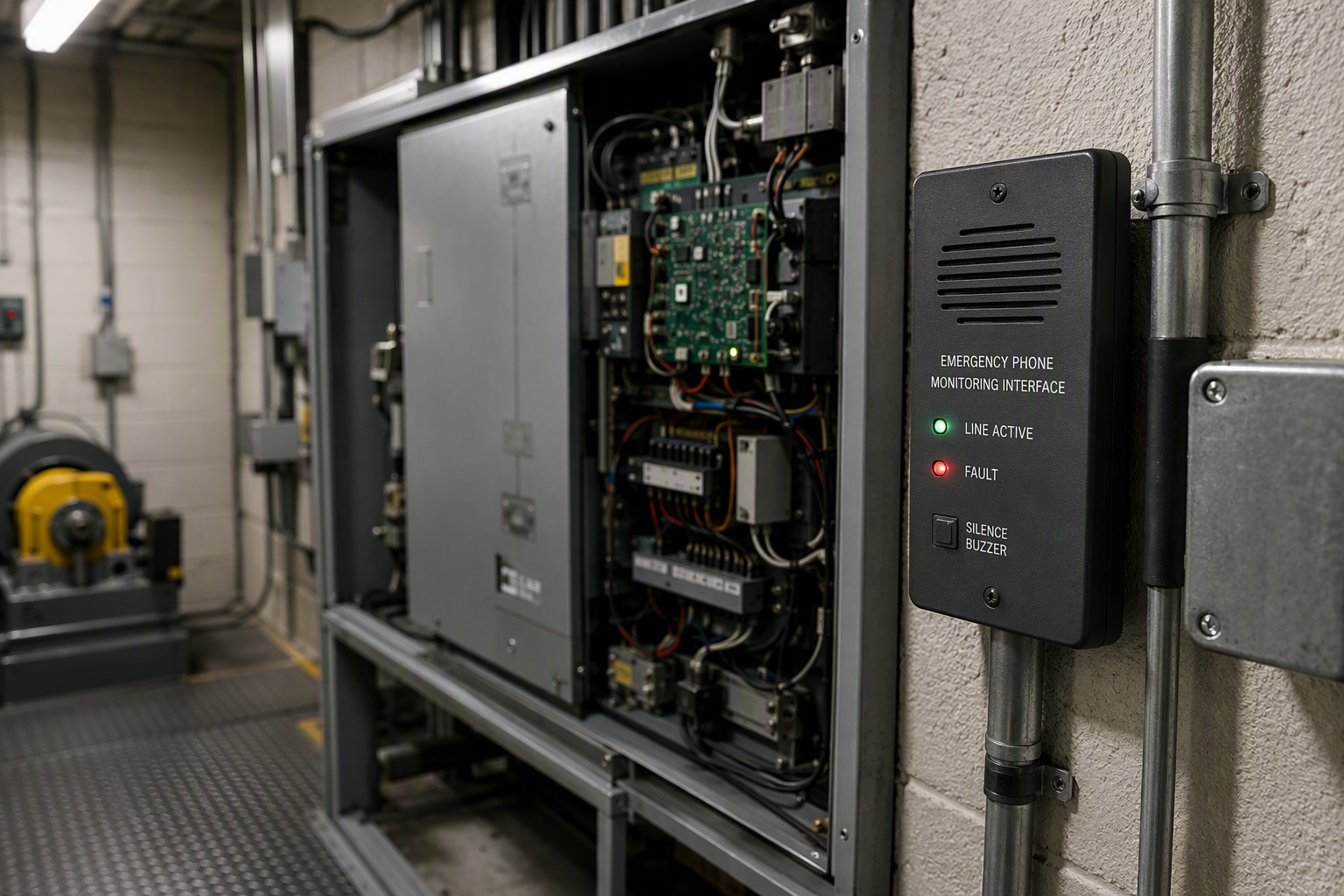
The elevator emergency phone is the hardware device inside the cab that places the call, while an elevator monitoring service is the remote center staffed by live attendants who receive and respond to those calls around the clock.
Both components are necessary for a complete, code-compliant emergency communication system. The hardware can be fully functional, but if it dials a number that is not answered by a live person, the system fails its core purpose. Conversely, even the most sophisticated monitoring service cannot help a trapped passenger if the in-cab phone hardware is defective.
| Component | Location | Code Requirement | Common Failure Modes | Maintenance Action |
|---|---|---|---|---|
| In-Cab Emergency Phone Unit | Inside elevator cab | ASME A17.1 Section 2.27.1.5 | Dead battery, wiring fault, analog-to-VoIP incompatibility | Test on each maintenance visit; battery load test periodically |
| Phone Line / Network Connection | Building infrastructure | ASME A17.1 (functional requirement) | Disconnected line, VoIP dropout, unpaid subscription | Verify active service monthly; confirm elevator-compatible VoIP settings |
| Battery Backup System | Machine room or cab | ASME A17.1 (power outage requirement) | Battery age/degradation, failed charger circuit | Load test annually; replace batteries per manufacturer schedule |
| Monitoring Center / Answering Service | Remote (off-site) | ASME A17.1 (live attendant requirement) | Unanswered calls, incorrect location data, after-hours gaps | Verify 24/7 coverage annually; confirm location data is current |
| ADA Visual Confirmation Signal | Inside elevator cab | ADA Standards for Accessible Design Section 407.4.9 | Burned-out indicator light, failed display unit | Visually inspect and test on each maintenance visit |
What Information Does the Monitoring Center Need to Have on File?
The monitoring center receiving elevator emergency calls must have current information on file including the building address, elevator location within the building, property management contact information, and the preferred emergency response protocol for that building.
When a call comes in from an elevator emergency phone, the monitoring attendant must be able to identify immediately which building and which elevator is involved. Modern monitoring systems often use automatic number identification (ANI) or location data transmitted with the call. However, this data is only accurate if the building owner has provided and maintained current information with the monitoring service.
Building owners should review and update monitoring center records whenever there is a change in property management, contact numbers, or preferred service providers. An outdated record can delay emergency response at a critical moment.
What Should a Passenger Do If Trapped in an Elevator?
A passenger trapped in an elevator should press the emergency call button, remain calm, and wait for confirmation that help is on the way — attempting to force open doors or exit an elevator between floors is dangerous and should never be attempted.
The correct procedure for a passenger who becomes trapped:
- Press the emergency call button and wait for a live attendant to answer.
- Clearly state your situation — that you are trapped — and confirm the building address if you know it.
- Follow the attendant’s instructions and remain on the line if asked to do so.
- Stay away from elevator doors and do not attempt to force them open.
- Do not attempt to exit through the top hatch — this should only be done by trained elevator personnel under safe conditions.
- If the cab is hot, contact the attendant and ask them to expedite response; stay hydrated if possible and remain calm.
- Wait for a licensed elevator mechanic or emergency responder to facilitate safe exit.
Building staff and security personnel should also be trained on their role in an entrapment scenario: contacting the elevator service company, keeping the affected passenger informed of progress, and ensuring that unauthorized persons do not attempt DIY rescue procedures.
How Does an Elevator Inspector Check the Emergency Phone During an Annual Inspection?
During a South Carolina annual elevator inspection, the licensed inspector physically activates the emergency communication system, verifies that a live attendant answers within the required timeframe, and confirms the system correctly identifies the building location.
The inspection of the emergency communication system is a pass/fail checkpoint. If the phone fails to connect to a live attendant during the inspection test, the elevator may be cited for a violation and required to be taken out of service pending repair. The inspector will also examine the physical condition of the in-cab phone unit, check for visible damage, and confirm that required signage — such as the telephone symbol and any required text — is present and legible.
Building owners should not wait for an annual inspection to discover a communication failure. Monthly self-testing, combined with documented maintenance visits from a licensed elevator company, provides a much stronger compliance posture and reduces the risk of an unexpected inspection failure.
What Are the Consequences of Having a Non-Compliant Elevator Emergency Phone in South Carolina?
A non-compliant elevator emergency phone in South Carolina can result in the elevator being ordered out of service by the state’s LLR, exposure to civil liability if a passenger is harmed during an entrapment, and potential fines or enforcement action against the building owner.
South Carolina’s elevator safety program, administered through the LLR, has the authority to issue violation notices and require that non-compliant elevators be taken out of service until deficiencies are corrected. The emergency communication system is one of the most directly safety-critical components of an elevator, and inspectors treat its failure seriously.
Beyond regulatory consequences, a building owner whose elevator emergency phone failed to connect during a passenger entrapment faces significant tort liability exposure. Plaintiffs’ attorneys in personal injury cases examine maintenance records carefully, and documentation gaps compound liability risk. Maintaining a complete, accurate maintenance record — including documented emergency phone tests — is a sound risk management practice for any Columbia, SC property owner.
How Much Does It Cost to Repair or Upgrade an Elevator Emergency Phone?
The cost of repairing or upgrading an elevator emergency communication system varies based on the nature of the failure, the technology platform involved, and whether the existing infrastructure supports the replacement unit — a licensed elevator service provider can assess and quote the specific scope after inspection.
Common repair scenarios include replacing a failed in-cab phone unit, converting a legacy analog system to a VoIP or cellular platform, replacing degraded backup batteries, and reactivating a disconnected phone line subscription. Each scenario has a different cost profile, and a site assessment is the only reliable way to determine what is needed for a specific elevator.
Building owners should request itemized quotes that separately identify parts, labor, and any ongoing monitoring service fees. An elevator emergency phone system is not a one-time cost — there may be recurring monthly or annual fees associated with the monitoring service contract and phone line or data service. These ongoing costs should be factored into building operating budgets.
What Is the Difference Between an Emergency Phone and an Alarm Bell in an Elevator?
The alarm bell is a simple audible signal device that alerts nearby people that a passenger is in distress, while the emergency phone is a two-way communication system that connects the passenger with a remote attendant who can actively coordinate a response.
ASME A17.1 historically required an alarm bell in elevators, and many elevator cabs still have both a bell button and an emergency phone button. The alarm bell is only useful if someone within earshot is available to hear it and respond — it provides no communication capability and cannot summon help from outside the building. The two-way emergency phone requirement exists precisely because the alarm bell alone is insufficient, particularly in after-hours or low-occupancy scenarios.
Both devices should be functional and tested. The presence of a working alarm bell does not excuse a non-functional emergency phone, and vice versa.
How Should Building Management Train Staff on Elevator Emergency Procedures?
Building management should train staff to recognize an elevator entrapment situation, know the correct emergency contact number to call, understand that only licensed elevator mechanics should physically retrieve trapped passengers, and document all incidents in writing.
A practical staff training program for elevator emergencies should address the following areas:
- Identify the elevator monitoring service contact number and confirm it is posted at the building management office and security desk.
- Instruct staff to speak calmly with a trapped passenger through the door if audible contact is possible, reassuring them that help is coming.
- Prohibit untrained staff from attempting to manually open elevator doors or assist passengers in exiting between floors.
- Establish a protocol for contacting the elevator service company and, when appropriate, emergency services.
- Document every entrapment incident including time of occurrence, duration, response steps taken, and resolution.
- Review incident documentation with the elevator service company to identify any recurring issues warranting maintenance attention.
Regular tabletop drills — even brief, informal ones — help ensure that staff respond effectively under the stress of an actual entrapment rather than reading procedures for the first time during an emergency.
How Does Carolina Elevator Service Help Columbia SC Buildings Maintain Emergency Phone Compliance?
Carolina Elevator Service provides licensed elevator maintenance and inspection support to building owners in Columbia, SC, including documented emergency phone testing, system upgrades, and compliance guidance aligned with ASME A17.1 and ADA requirements.
Maintaining a code-compliant emergency communication system requires more than an annual inspection. It requires a maintenance partner who tests the system consistently, documents results, identifies degradation before it becomes a failure, and understands the interaction between the hardware, the phone line, and the monitoring service.
Carolina Elevator Service works with building owners across Columbia, SC to ensure that elevator emergency communication systems are functional, documented, and compliant. Whether a building needs a legacy analog system converted to a modern platform, a monitoring service referral, or routine test documentation for inspection readiness, Carolina Elevator Service provides the technical expertise and local presence to support those needs.
What Records Should Building Owners Keep Related to the Elevator Emergency Phone?
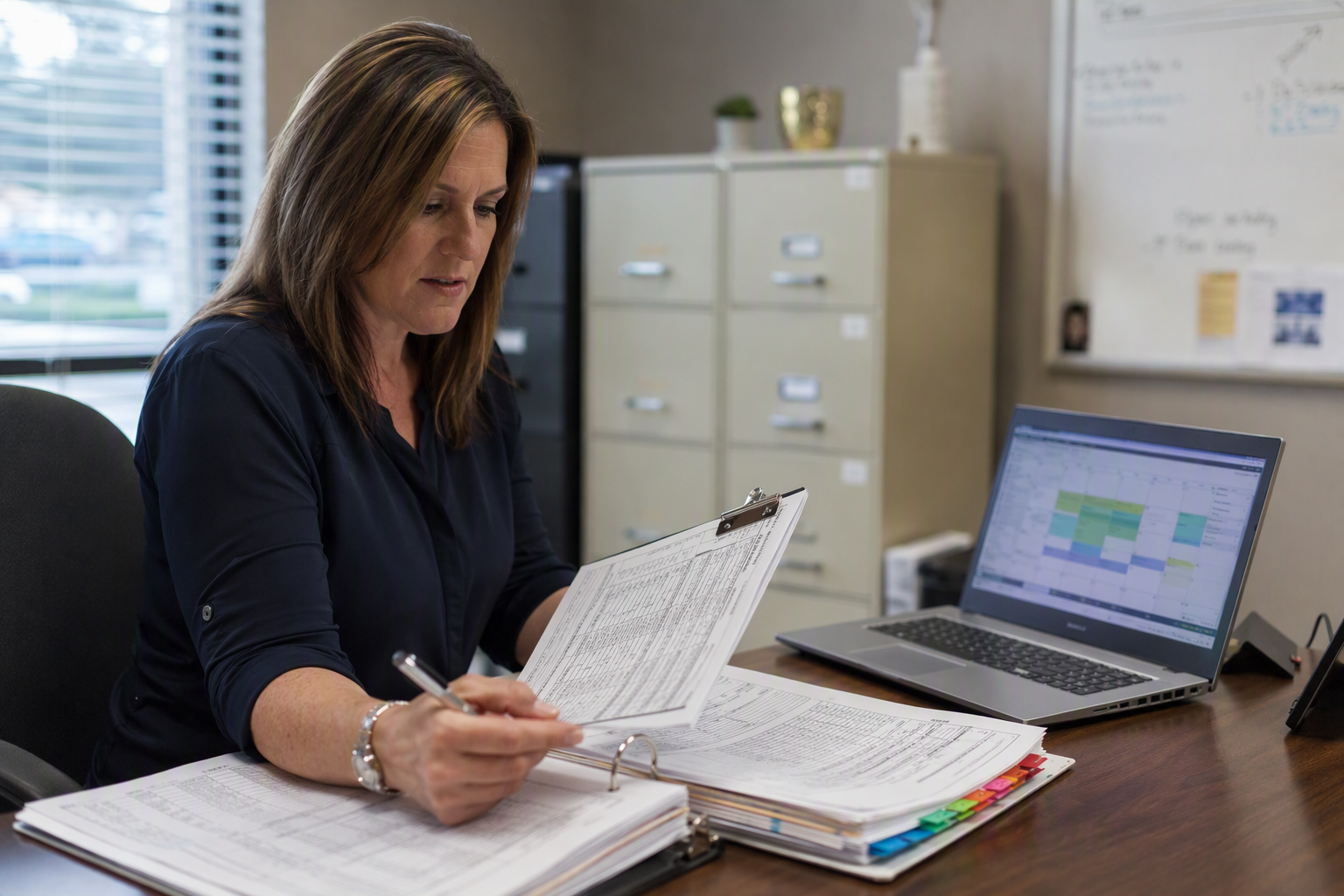
Building owners should maintain a written maintenance log documenting every emergency phone test, including the date, the result, the name of the technician or staff member who performed the test, and any corrective actions taken.
Required and recommended records include:
- Maintenance visit reports from the licensed elevator service company, with emergency phone test results noted for each visit
- Annual inspection certificates issued by the South Carolina LLR
- Records of any repairs to the emergency communication system, including parts replaced and labor performed
- Documentation of the monitoring service contract, including the monitored phone number and coverage hours
- Battery replacement records for the backup power system
- Incident reports for any entrapment events, including emergency phone performance during the event
These records should be retained for a minimum period consistent with South Carolina’s requirements and the building owner’s risk management policies. Having complete, organized records is the strongest defense against both regulatory action and civil liability claims. Carolina Elevator Service provides written maintenance documentation on every service visit, making it straightforward for building owners to maintain a complete compliance file.
What Should Property Managers Look for When Choosing an Elevator Emergency Monitoring Service?
Property managers selecting an elevator emergency monitoring service should verify that the service provides live attendant coverage at all hours without exception, has a documented protocol for dispatching emergency responders, and can accurately transmit building location data when calls are received.
Key evaluation criteria for a monitoring service include:
- Coverage hours: The monitoring center must be staffed by a live person twenty-four hours a day, seven days a week, including holidays. A service that routes calls to voicemail after hours does not meet ASME A17.1 requirements.
- Response protocol: The service should have a documented, written protocol for escalating calls to emergency services when a medical emergency or dangerous situation is reported.
- Location data accuracy: Confirm that the monitoring center has current building address and elevator identification information on file.
- Compatibility testing: The monitoring service and the in-cab phone hardware should be tested together to confirm reliable connection before the service is considered active.
- Documentation: Some monitoring services provide call logs that building owners can use for compliance records.
An elevator service company with deep local knowledge, such as Carolina Elevator Service serving Columbia, SC, can provide guidance on compatible monitoring services and help coordinate the hardware-to-monitoring integration.
Are There OSHA Requirements Related to Elevator Emergency Phones?
While OSHA does not have a specific elevator emergency phone standard for commercial passenger elevators, OSHA regulations governing workplace safety require that employers provide employees with a safe working environment, which includes ensuring that building equipment — including elevators — is maintained in safe operating condition.
OSHA’s General Duty Clause (Section 5(a)(1) of the Occupational Safety and Health Act) can be invoked in situations where an employer knowingly allows employees to use equipment with known safety deficiencies. A non-functional elevator emergency phone in a workplace setting is a documented safety deficiency that could fall within the scope of a General Duty Clause citation if an incident occurs.
For elevator mechanics and technicians performing maintenance work in and around elevator equipment, OSHA’s construction and general industry standards contain specific provisions governing work in confined spaces and hoistway environments. Building owners should ensure that any elevator service company they retain operates in compliance with applicable OSHA standards.
Get Expert Help With Your Elevator Emergency Phone Compliance
A non-functional or non-compliant elevator emergency phone is not a minor maintenance item — it is a life-safety deficiency that exposes passengers to risk and building owners to regulatory and legal consequences. Whether your elevator needs a new communication unit, a legacy-to-digital conversion, battery backup testing, or simply documented monthly testing as part of a comprehensive maintenance program, qualified local expertise makes the difference.
Contact Carolina Elevator Service for a free elevator assessment. Carolina Elevator Service serves building owners and property managers throughout Columbia, SC, providing licensed elevator maintenance, compliance documentation, and emergency communication system support aligned with ASME A17.1 and ADA requirements.
Call today: 803-865-1400
Need elevator service you can rely on? Carolina Elevator Service is ready to help.