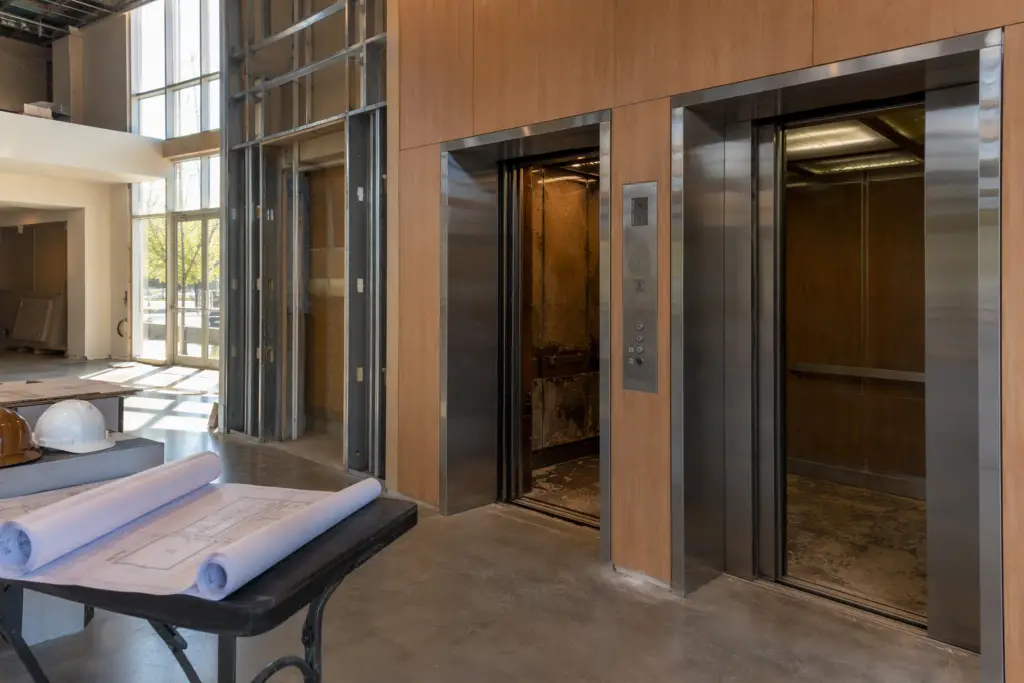
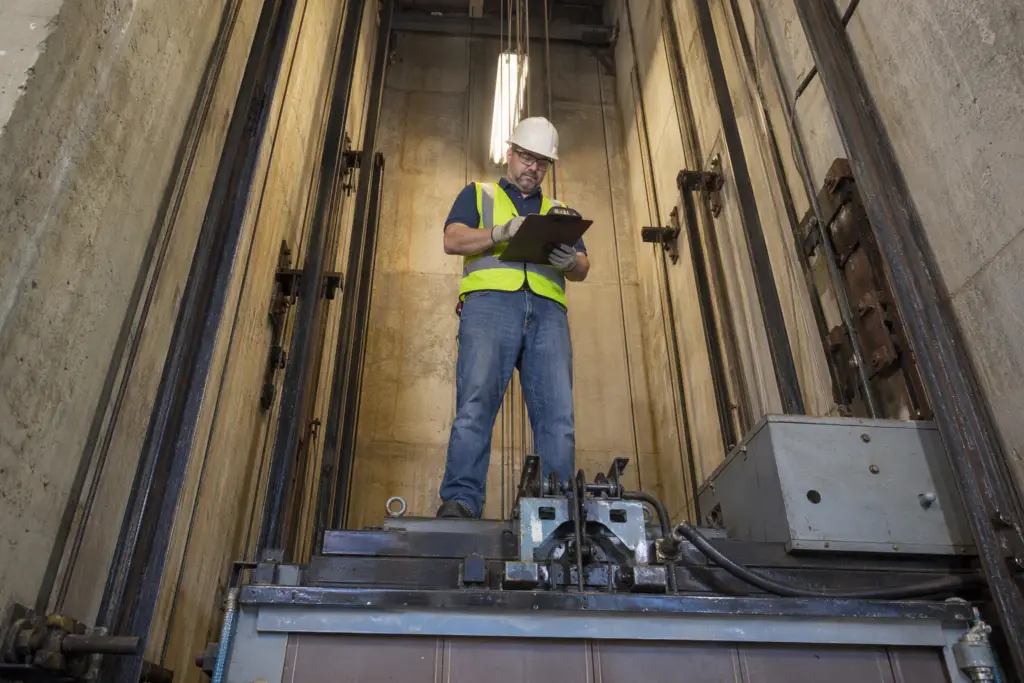
How School Buildings Handle Elevator Compliance and Maintenance for Students with Disabilities
For K–12 schools and university campuses across South Carolina, elevator compliance is not optional — it is a legal obligation and a matter of student safety. When a student uses a wheelchair, has a mobility impairment, or relies on vertical transportation to reach classrooms, labs, or administrative offices, a malfunctioning or non-compliant elevator is more than an inconvenience. It is a barrier to education. Understanding the specific compliance framework, inspection timelines, and maintenance protocols that apply to school elevators is essential for facility directors, principals, and campus administrators in Columbia, SC and throughout the state.
What Federal Laws Govern Elevator Accessibility in Schools?
Two federal frameworks establish the baseline for elevator accessibility in educational facilities: the Americans with Disabilities Act (ADA) and the ASME A17.1 Safety Code for Elevators and Escalators.
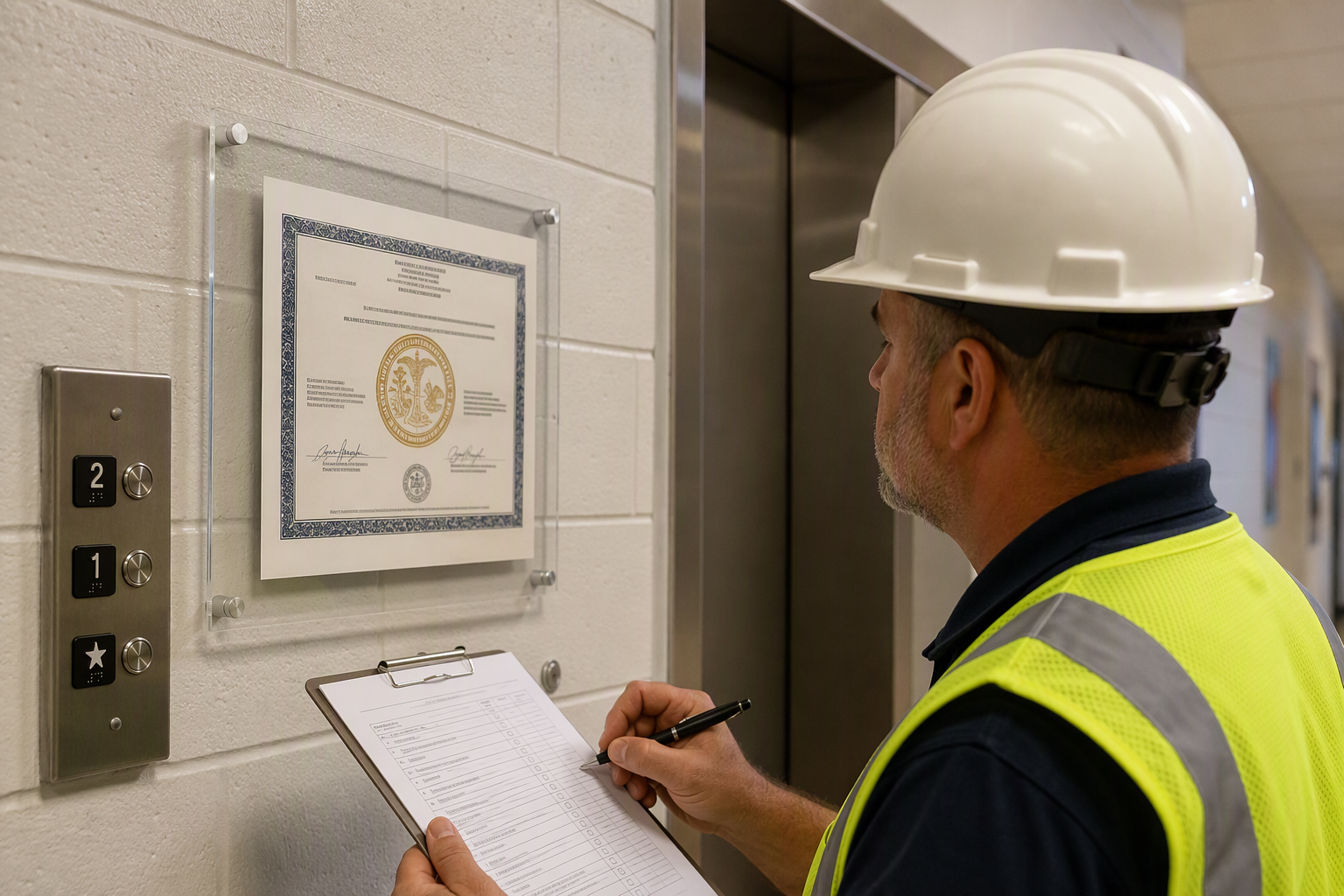
The ADA requires that public entities — including public school districts — provide accessible routes throughout their facilities. For multi-story school buildings, this typically means a compliant elevator must be available whenever the building serves the public. ADA compliance covers door width clearances, call button heights, interior car dimensions, audible and visual signals, and Braille markings on control panels.
ASME A17.1 establishes the engineering and safety standards for elevator design, construction, and operation. Its companion standard, ASME A17.3, addresses existing installations and sets the safety requirements that older school elevators must meet when being modernized or re-inspected. Together, these codes form the technical backbone of any school elevator compliance program.
What Does South Carolina Require for School Elevator Inspections?
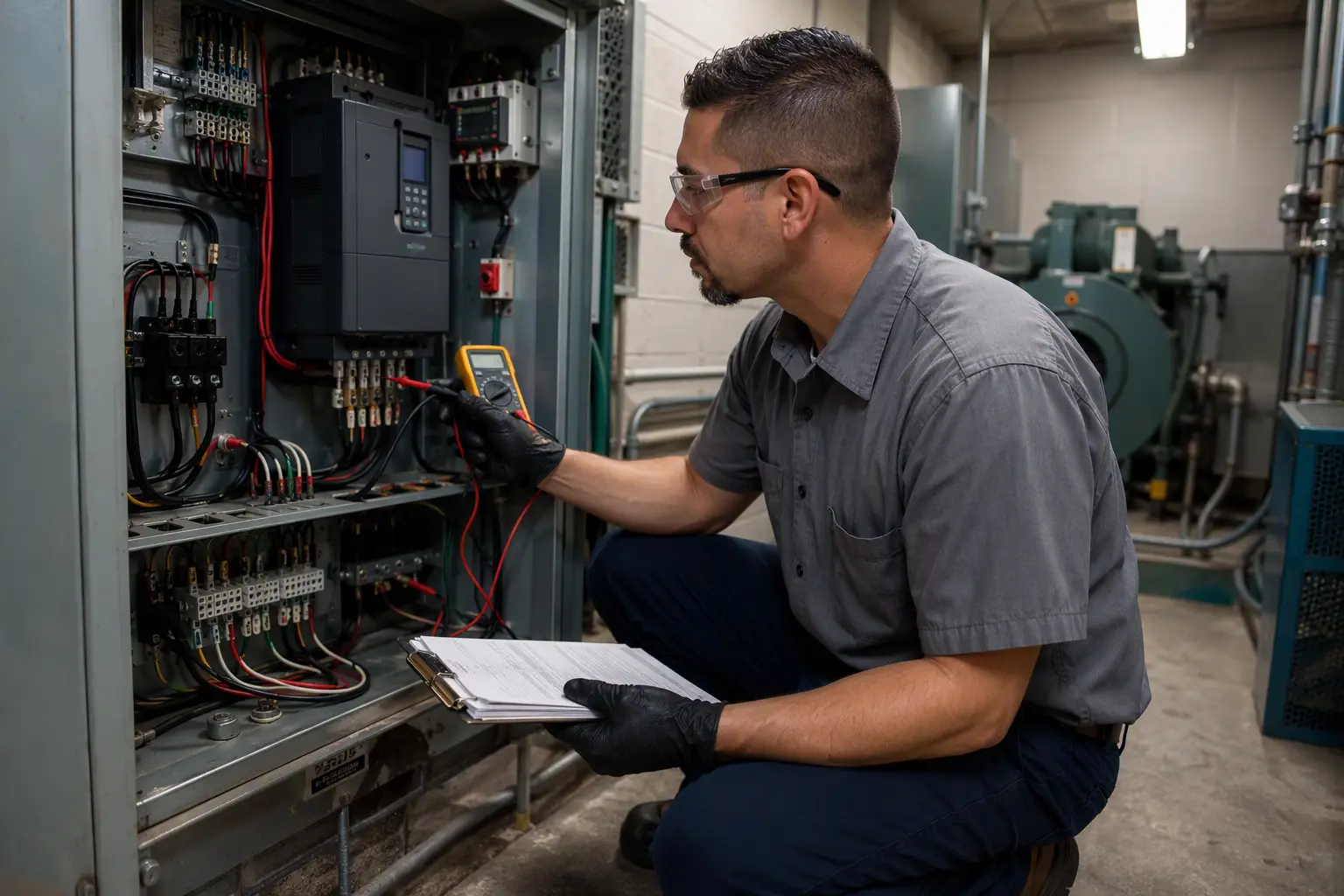
In South Carolina, elevator inspections are overseen by the South Carolina Department of Labor, Licensing and Regulation (SC LLR) under the Elevator Safety Program. All elevators in public and private school buildings are subject to periodic inspections performed by state-licensed inspectors or third-party inspection agencies approved by SC LLR.
Inspections verify that elevator equipment meets applicable ASME standards, that safety devices function correctly, and that the installation is maintained in accordance with manufacturer specifications. A valid certificate of operation must be posted in or near the elevator cab at all times. Schools that cannot produce a current certificate — or that have equipment that fails inspection — risk being ordered to take the elevator out of service, which can immediately affect students who depend on it for daily access.
Carolina Elevator Service works directly with school facility teams in Columbia, SC to schedule and prepare for SC LLR inspections, helping administrators understand what inspectors will check and what corrective actions may be needed before a formal visit.
How Often Must School Elevators Be Inspected in South Carolina?
South Carolina’s elevator safety regulations require periodic inspections at intervals defined by SC LLR, aligned with the inspection categories in ASME A17.1 and A17.3. The specific interval depends on the type of equipment — traction elevators, hydraulic elevators, and limited-use/limited-application (LULA) elevators each carry different inspection cycles. Schools should confirm the current required interval for their specific equipment type directly with SC LLR or through a licensed elevator service provider.
In addition to state-mandated inspections, best practice calls for a scheduled preventive maintenance program between formal inspections. This ongoing maintenance — covering lubrication, safety device testing, hydraulic fluid checks, and door operator adjustments — is what keeps school elevators running reliably between inspection cycles.
What Is a LULA Elevator and Why Do Many Schools Use Them?
A Limited-Use/Limited-Application (LULA) elevator is a type of slow-speed, smaller-capacity elevator designed specifically for buildings where a full commercial elevator is not practical due to space or budget constraints. Many older school buildings in South Carolina — particularly those undergoing ADA-compliance retrofits — install LULA elevators to provide accessible vertical travel without the structural changes required for a full-size elevator hoistway.
LULA elevators are governed by ASME A17.1 and must meet ADA dimensional requirements to serve as part of an accessible route. They require the same state inspection and maintenance oversight as standard commercial elevators. Schools choosing LULA units should verify that the equipment meets both ADA cab dimension standards and South Carolina’s safety inspection requirements before installation.
What Are the Most Common Elevator Compliance Violations Found in School Buildings?
Facility managers should watch for these frequently cited deficiencies in school elevator inspections:
- Expired or missing certificate of operation — The certificate must be current and posted in the cab.
- Non-functioning door safety devices — Door reopening devices and door restrictors must operate correctly on every cycle.
- Inoperable or missing emergency lighting — Required for passenger safety during power interruptions.
- Non-compliant emergency communications — ADA requires a two-way communication system accessible to individuals who are deaf or hard of hearing, including visual signals.
- Worn or missing Braille signage — ADA mandates tactile characters and Braille on elevator call buttons and floor designations.
- Leveling issues — Elevator cars that do not level accurately at floor landings create a trip hazard and an ADA barrier for wheelchair users.
- Deferred hydraulic fluid maintenance — Hydraulic elevators with degraded fluid or leaking cylinders can face immediate out-of-service orders.
Carolina Elevator Service performs comprehensive compliance assessments for Columbia, SC school facilities, identifying these issues before they become inspection failures or safety incidents.
What Steps Should a School Take After an Elevator Fails Inspection?
- Post the out-of-service notice immediately and restrict access to the elevator cab.
- Notify the school principal and disability services coordinator so that alternative accessible routes or accommodations can be arranged for affected students.
- Contact a licensed elevator service company to diagnose the deficiency and obtain a written scope of corrective work.
- Document all communications with SC LLR and retain copies of work orders, parts records, and inspector reports.
- Schedule the corrective repair with a licensed elevator contractor and confirm parts availability to minimize downtime.
- Request a reinspection through SC LLR once corrective work is complete and verified by the service provider.
- Update the maintenance log with the repair details, parts replaced, and reinspection outcome.
- Review the preventive maintenance schedule to determine whether the failure could have been avoided with more frequent service intervals.
How Does Preventive Maintenance Reduce Compliance Risk for Schools?
Reactive maintenance — waiting until something breaks — is the highest-risk approach a school facility can take. For a student who relies on an elevator to reach a second-floor classroom, an unexpected outage is not a minor disruption; it may prevent participation in school entirely.
A documented preventive maintenance program creates a written record that the school has taken reasonable steps to maintain the equipment in safe working condition. This documentation is valuable both for SC LLR inspections and in the context of ADA compliance, where schools may be asked to demonstrate that accessible facilities are kept operational.
Preventive maintenance tasks for school elevators typically include monthly safety checks, lubrication of mechanical components, testing of emergency stop and door safety circuits, hydraulic system inspections, and annual load testing. The specific scope should align with ASME A17.1 maintenance requirements and the manufacturer’s service specifications for the installed equipment.
What Should Schools Budget for Elevator Maintenance and Compliance?
Elevator maintenance costs vary based on equipment type, age, number of units, usage volume, and whether the school is in a retrofit or new-construction scenario. Rather than providing figures that may not apply to a specific installation, school facility directors are encouraged to request a site-specific assessment and written proposal from a licensed elevator service provider.
What is consistent across all school elevator budgets is the cost of deferred maintenance. Emergency repairs, parts expediting fees, and extended student accessibility disruptions all carry costs — financial and reputational — that exceed the cost of a structured preventive maintenance contract. Schools should also budget for periodic modernization cycles, as ASME A17.3 safety requirements for existing elevators may trigger mandatory upgrades when equipment reaches certain age thresholds.
What Is the Difference Between Elevator Modernization and Repair for Compliance Purposes?
A repair restores an existing component to its intended operating condition. A modernization replaces or upgrades elevator systems — controllers, drives, door operators, safety components — to bring the installation into alignment with current ASME A17.1 or A17.3 standards. In South Carolina, modernization work triggers a permit and inspection process through SC LLR, and the modernized equipment must meet current code requirements.
For older school buildings, modernization is often the most cost-effective path to long-term ADA and safety compliance, especially when legacy components are no longer supported by manufacturers or are failing repeatedly. Carolina Elevator Service assists Columbia, SC school districts in evaluating whether repair or modernization is the appropriate solution for aging equipment.
Questions Your Inspector Will Ask
When an SC LLR inspector arrives at a school facility, the following questions and documentation requests are typical. Facility managers should be prepared to respond to each:
- Is the current certificate of operation posted in the elevator cab?
- Can you provide the maintenance log for the past 12 months?
- When was the last annual or periodic inspection performed, and by whom?
- Has any repair or modification work been performed since the last inspection? If so, were permits pulled?
- Is emergency lighting functional, and when was it last tested?
- Is the two-way emergency communication system operational and ADA-compliant?
- Have there been any entrapments, door malfunctions, or leveling complaints since the last inspection?
- Is the hydraulic fluid level within specification, and is there any evidence of leaks?
- Are all Braille and tactile signage elements intact and legible?
- Is the elevator machine room secured and free of unauthorized storage?
Preparing written answers and organized documentation for each of these points before inspection day significantly reduces the likelihood of a compliance citation.
How Can Schools Verify That Their Elevator Contractor Is Qualified?
In South Carolina, elevator contractors must hold a license issued by SC LLR to perform elevator installation, repair, or maintenance work. Schools should always verify that their service provider holds a current South Carolina elevator contractor license before signing a maintenance agreement or authorizing repair work. Unlicensed work can result in the elevator being removed from service and may expose the school to liability.
Carolina Elevator Service is a licensed elevator service company serving school and educational facilities throughout the Columbia, SC area, providing maintenance, repair, inspection preparation, and modernization services in full compliance with South Carolina’s elevator safety requirements.
What Documentation Should Schools Keep on File?
Organized records protect schools during inspections, ADA compliance reviews, and insurance audits. Essential documents include:
- Current certificate of operation (original or certified copy)
- All previous inspection reports and corrective action records
- Preventive maintenance logs with technician sign-offs and dates
- Repair work orders and parts invoices
- Modernization permits and final inspection sign-offs
- Emergency communications test records
- Any written directives received from SC LLR
These records should be maintained in a dedicated file accessible to the facility manager and available for immediate production upon inspector request.
Why Is Elevator Compliance Especially Critical During the School Year?
Unlike a commercial office building where after-hours repairs can occur without disrupting operations, school elevators are needed on a fixed daily schedule. A student who requires elevator access to reach a classroom cannot simply wait for repairs to be completed at a convenient time. Outages during the academic year create immediate ADA accommodation obligations and may require emergency alternative arrangements — temporary room reassignments, schedule changes, or direct staff assistance — all of which place burdens on school administration.
Scheduling major maintenance and any anticipated modernization work during summer breaks or other extended school closures is a best practice that minimizes student impact. Working with Carolina Elevator Service to plan maintenance windows around the school calendar helps Columbia, SC facility teams maintain compliance without disrupting the educational environment.
Get a Free Elevator Assessment for Your School Facility
Elevator compliance for students with disabilities is too important to leave to chance. Whether your school needs an inspection preparation review, a preventive maintenance program, or guidance on modernizing aging equipment, Carolina Elevator Service is ready to help.
Contact Carolina Elevator Service for a free elevator assessment: 803-865-1400
Need elevator service you can rely on? Carolina Elevator Service is ready to help.