Elevator Service in Columbia, SC | Carolina Elevator Service
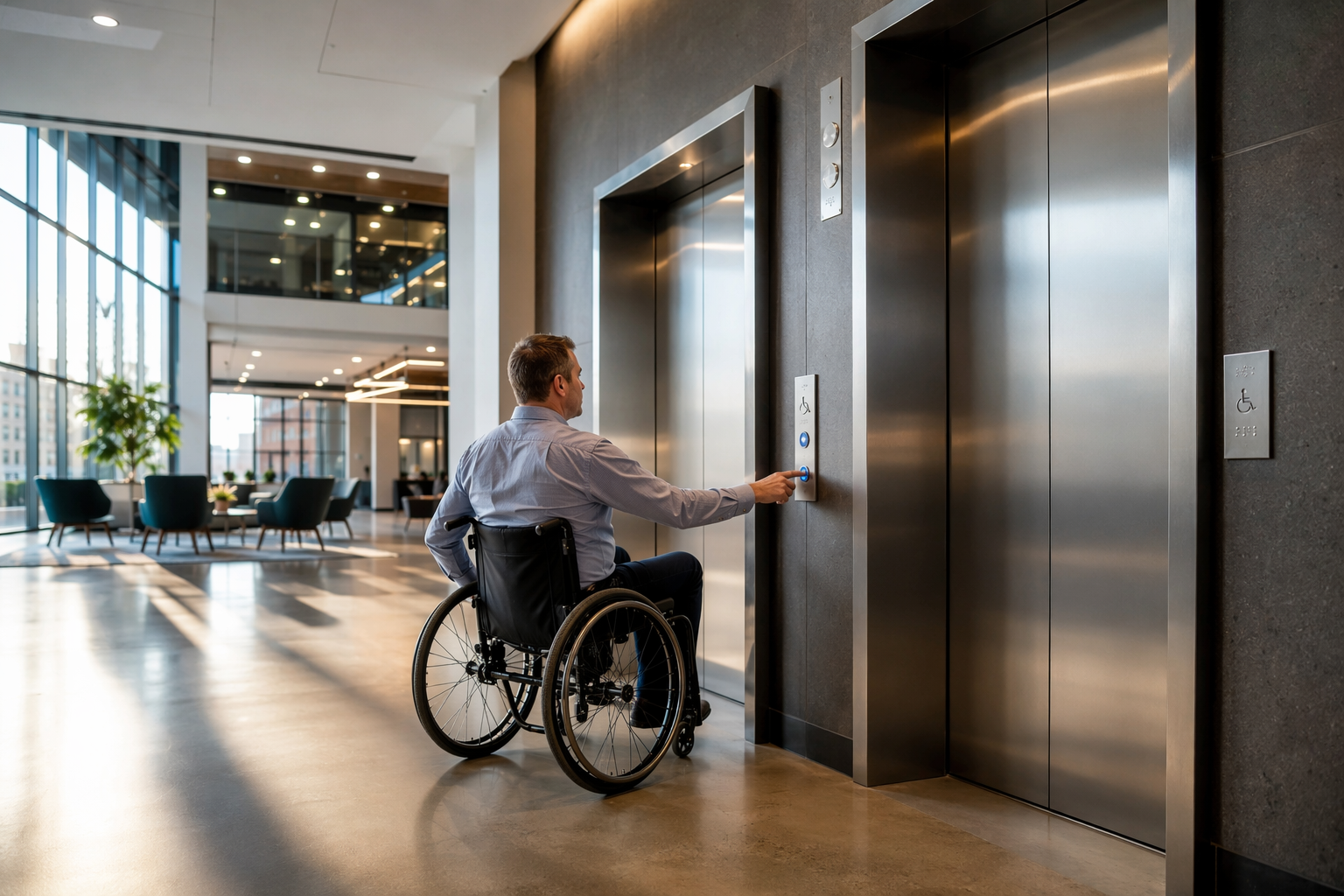
Commercial office buildings in Columbia, SC must meet ADA elevator requirements covering accessible cab dimensions, door widths, control panel heights, Braille signage, and audible signals. Buildings that are required to provide vertical access under the ADA must ensure their elevators meet these standards, and South Carolina properties are also subject to state-level inspection and compliance oversight enforced through the South Carolina Department of Labor, Licensing and Regulation (SC LLR). Carolina Elevator Service helps Columbia-area building owners navigate every layer of these requirements.
What Are the Core ADA Elevator Requirements for Commercial Office Buildings?
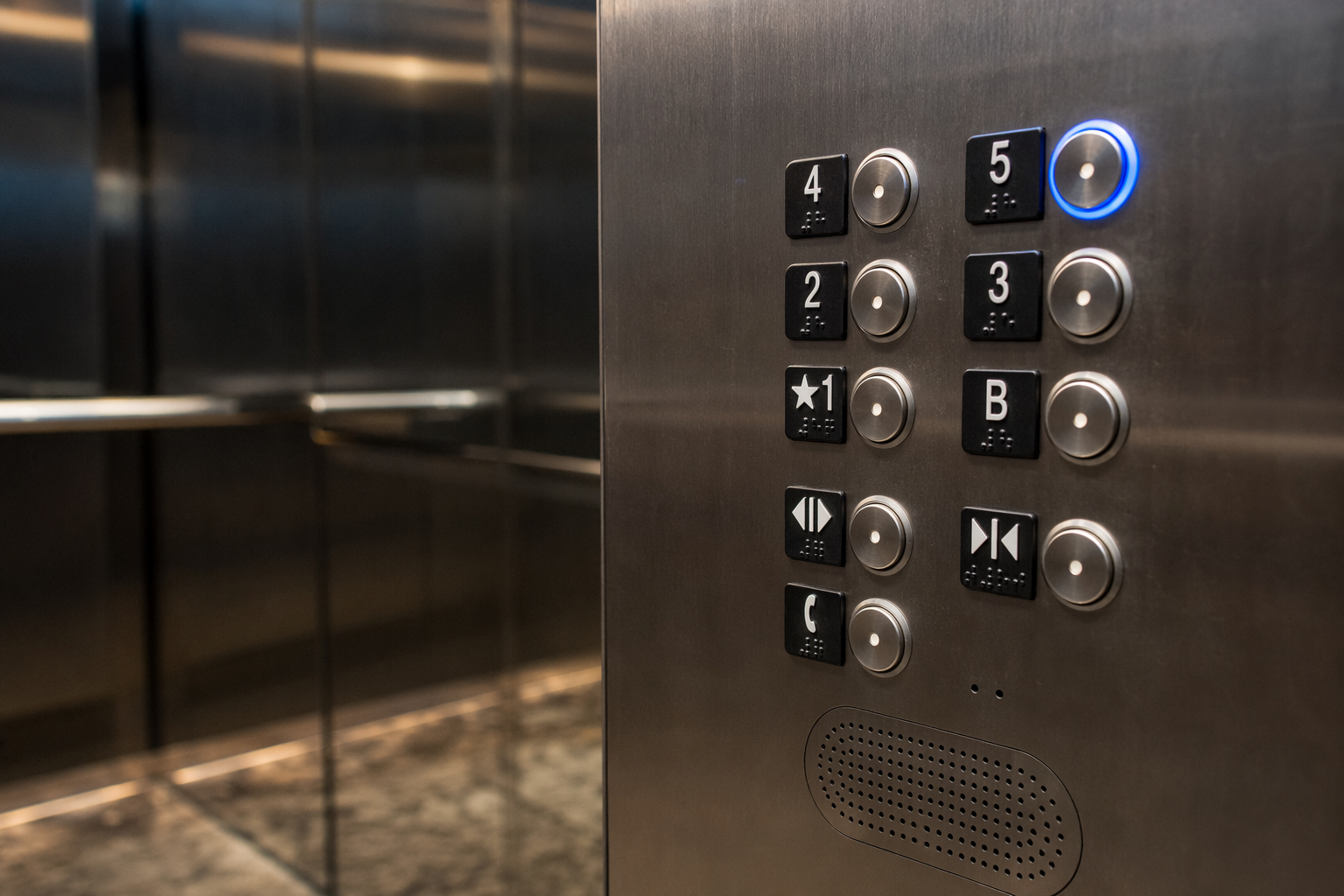
The ADA establishes accessibility standards for elevators in commercial buildings through the ADA Standards for Accessible Design. For office buildings, key requirements include:
- Door clear width: Elevator doors must provide a minimum clear opening width that allows wheelchair access. The ADA Standards specify a minimum clear width that accommodates standard mobility devices.
- Car dimensions: The elevator cab interior must be large enough to allow a wheelchair user to enter, maneuver, and exit independently.
- Control panel height: All floor buttons, emergency controls, and call buttons must be mounted within a reach range accessible to people using wheelchairs — both forward and side reach ranges are governed by the Standards.
- Braille and raised characters: Floor designations must include raised characters and Braille on both jambs of elevator hoistway entrances at a height compliant with the Standards.
- Audible and visual signals: Elevators must include audible signals at each floor stop and visible indicators — such as illuminated floor numbers — so that users with visual or hearing impairments can orient themselves.
- Call button requirements: Lobby call buttons must be a minimum size and must illuminate when activated.
- Door timing: Doors must remain open long enough for a person using a mobility device to board or exit safely, with reopening devices required to prevent doors from closing on passengers.
- Emergency communication: A two-way communication system must be present inside the cab and must be usable by individuals with speech and hearing disabilities.
The ADA elevator exemption applies primarily to buildings with fewer than three stories or fewer than a specified square footage per floor — but this exemption does not apply to shopping centers, shopping malls, professional offices of health care providers, or transportation facilities. Most multi-story commercial office buildings in Columbia are required to provide accessible elevator service.
How Do South Carolina State Requirements Interact with ADA Standards?
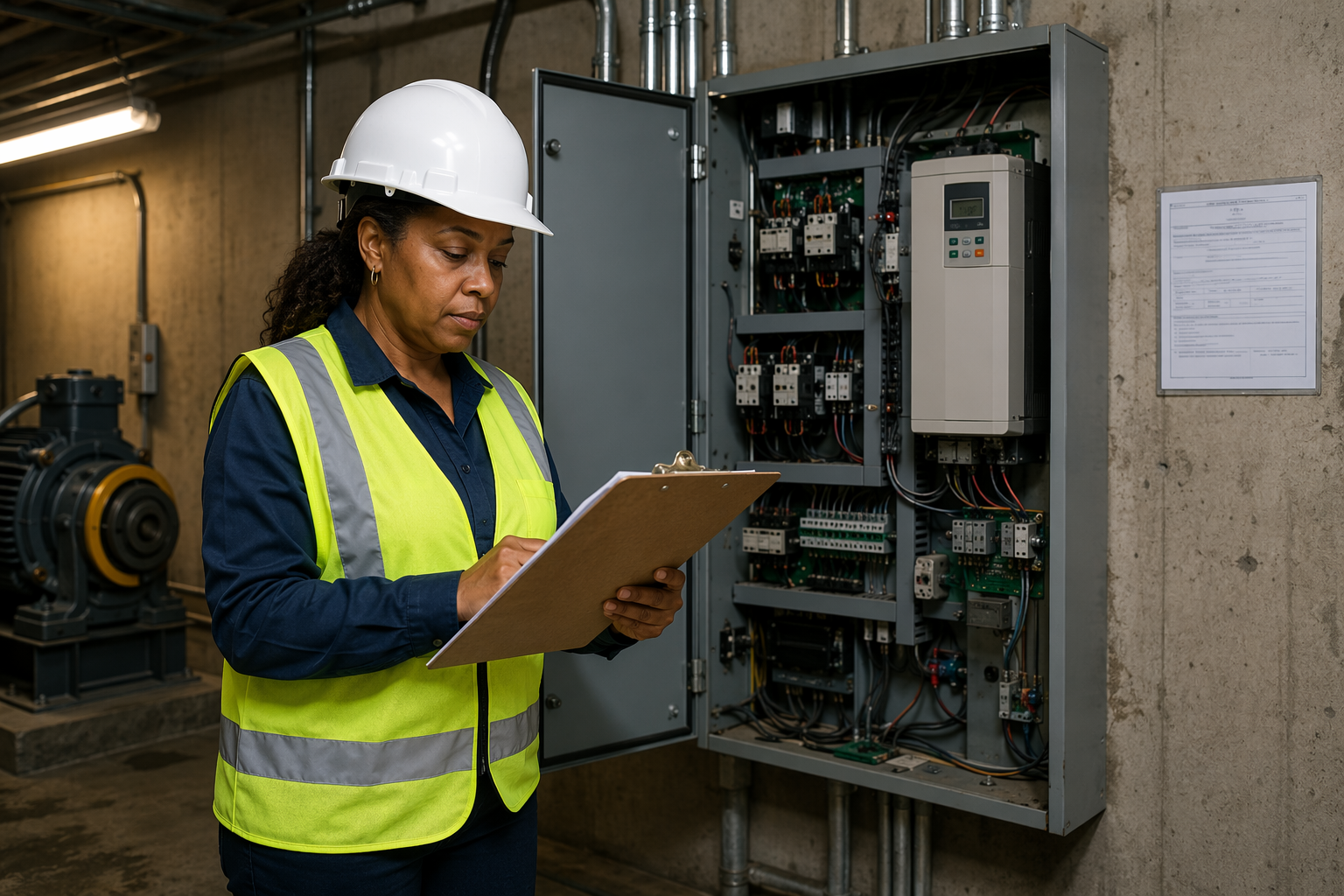
South Carolina enforces elevator safety through the SC Department of Labor, Licensing and Regulation (SC LLR), which adopts and enforces the ASME A17.1 Safety Code for Elevators and Escalators for new installations and the ASME A17.3 Safety Code for Existing Elevators and Escalators for equipment already in service. These mechanical and structural safety codes run parallel to ADA accessibility requirements — satisfying one does not automatically satisfy the other.
Building owners in Columbia must coordinate compliance with both frameworks:
- ASME A17.1 / A17.3 governs the mechanical integrity, safety devices, load ratings, machine room conditions, and inspection intervals of the elevator equipment itself.
- ADA Standards govern the usability and accessibility of that equipment for people with disabilities.
- SC LLR inspections are required at regular intervals for elevators operating in South Carolina. Certificates of operation must be current, and inspections are conducted by state-licensed inspectors or third-party inspectors approved by SC LLR.
Building owners who fail either set of requirements may face operational shutdowns, fines, or ADA complaints filed with the U.S. Department of Justice.
Which Commercial Buildings in Columbia, SC Are Required to Have Accessible Elevators?
Multi-story commercial office buildings generally cannot rely on the ADA’s elevator exemption. The exemption is narrow and specifically excludes professional office environments that serve the public. Any office building that provides goods or services to the public — or that houses tenants who do — and has more than one story is very likely required to provide accessible vertical access.
New construction must meet current ADA Standards from the ground up. Existing buildings undergoing alterations must bring altered portions into compliance to the maximum extent feasible. Even without a renovation project, commercial buildings have ongoing obligations to remove accessibility barriers when doing so is readily achievable.
What Steps Should a Columbia Office Building Owner Take to Achieve ADA Elevator Compliance?
- Conduct an accessibility audit. Have a qualified elevator service company evaluate the existing cab dimensions, door widths, control heights, signage, and communication systems against current ADA Standards.
- Review ASME compliance status. Confirm that the elevator holds a current certificate of operation from SC LLR and that no open violations exist under ASME A17.1 or A17.3.
- Identify required modifications. Document which ADA elements are deficient — whether that is control panel height, Braille signage, door timing, or emergency communication.
- Obtain necessary permits. Any alteration to an elevator in South Carolina requires permits through SC LLR before work begins.
- Schedule the modification work. Work with a licensed elevator contractor to complete modifications, which may include retrofitting control panels, updating door operators, or installing new in-cab communication systems.
- Schedule a post-modification inspection. Once work is complete, a new inspection through SC LLR is required before the elevator is returned to full service.
- Document everything. Maintain records of inspections, permits, and modifications. Documentation is critical if an ADA complaint is filed against the property.
What Happens If an Elevator in Columbia Fails an ADA or SC LLR Inspection?
A failed SC LLR inspection can result in an elevator being taken out of service until deficiencies are corrected and a follow-up inspection is passed. For commercial office buildings, an out-of-service elevator may trigger immediate ADA compliance concerns if it is the only accessible means of vertical access. Building owners should treat inspection failures as urgent — not only for operational continuity but to avoid compounding liability under both state elevator law and federal accessibility law.
ADA violations identified through a complaint or Department of Justice review can result in civil penalties, required remediation under a court order, and reputational consequences. Proactive compliance is significantly less costly than reactive remediation.
Does ADA Compliance Apply to Elevator Modernization Projects?
Yes. When a commercial elevator undergoes modernization — whether that involves new controls, cab interiors, door systems, or other components — the altered elements must meet current ADA Standards. Modernization is also an opportunity to address pre-existing accessibility gaps that may not have triggered a mandatory upgrade before the project began.
Under the principle of “path of travel” obligations in the ADA, a significant alteration to a building’s primary function area may also require improvements to the accessible path leading to and from the elevator, not just the elevator itself.
How Does Emergency Communication Compliance Work for Elevators Under the ADA?
The ADA requires that two-way emergency communication systems inside elevator cabs be accessible to individuals who are deaf or hard of hearing. This means the system cannot rely solely on voice communication — it must also provide a non-voice signaling method, such as a visual or text-based alternative, so that a passenger with a hearing or speech disability can summon help effectively.
SC LLR inspections also verify that emergency communication devices are functional as part of standard elevator safety inspections under ASME standards. Buildings should verify that their emergency communication systems satisfy both the ADA accessibility requirement and the ASME mechanical functionality requirement simultaneously.
What Markets Does Carolina Elevator Service Serve in South Carolina?
Carolina Elevator Service provides elevator installation, maintenance, modernization, and compliance consultation throughout the Columbia, SC metropolitan area and the broader South Carolina market. The team works with commercial office buildings, government facilities, healthcare campuses, educational institutions, and multi-family residential properties across the state. Local expertise in South Carolina’s regulatory environment — including SC LLR inspection requirements and the adoption of ASME standards at the state level — positions Carolina Elevator Service to help building owners achieve and maintain full compliance.
Emergency service is available for situations where elevator failures create immediate safety or accessibility concerns, ensuring that building owners have support when they need it most.
Schedule a Free Consultation
If your Columbia, SC commercial office building needs an ADA elevator compliance audit, routine maintenance, modernization, or guidance on SC LLR inspection requirements, Carolina Elevator Service is ready to help. Contact the team today to schedule a free consultation and take the first step toward full elevator compliance.
Call Carolina Elevator Service: 803-865-1400
Need elevator service you can rely on? Carolina Elevator Service is ready to help.