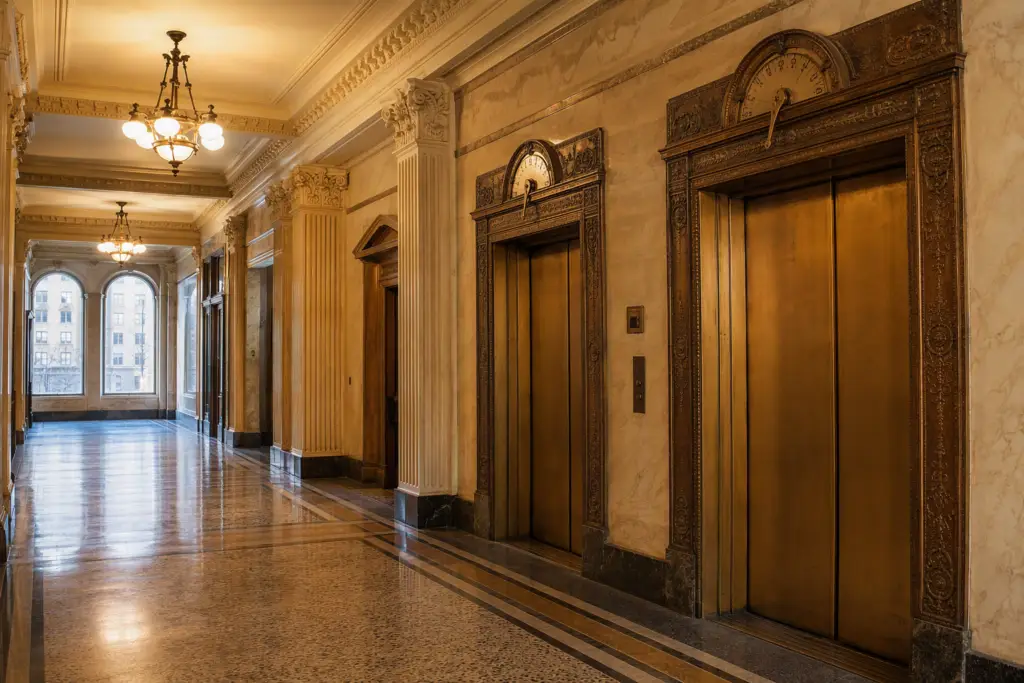
Elevator Features & Upgrades Hotel Guests and Apartment Tenants Expect in 2026
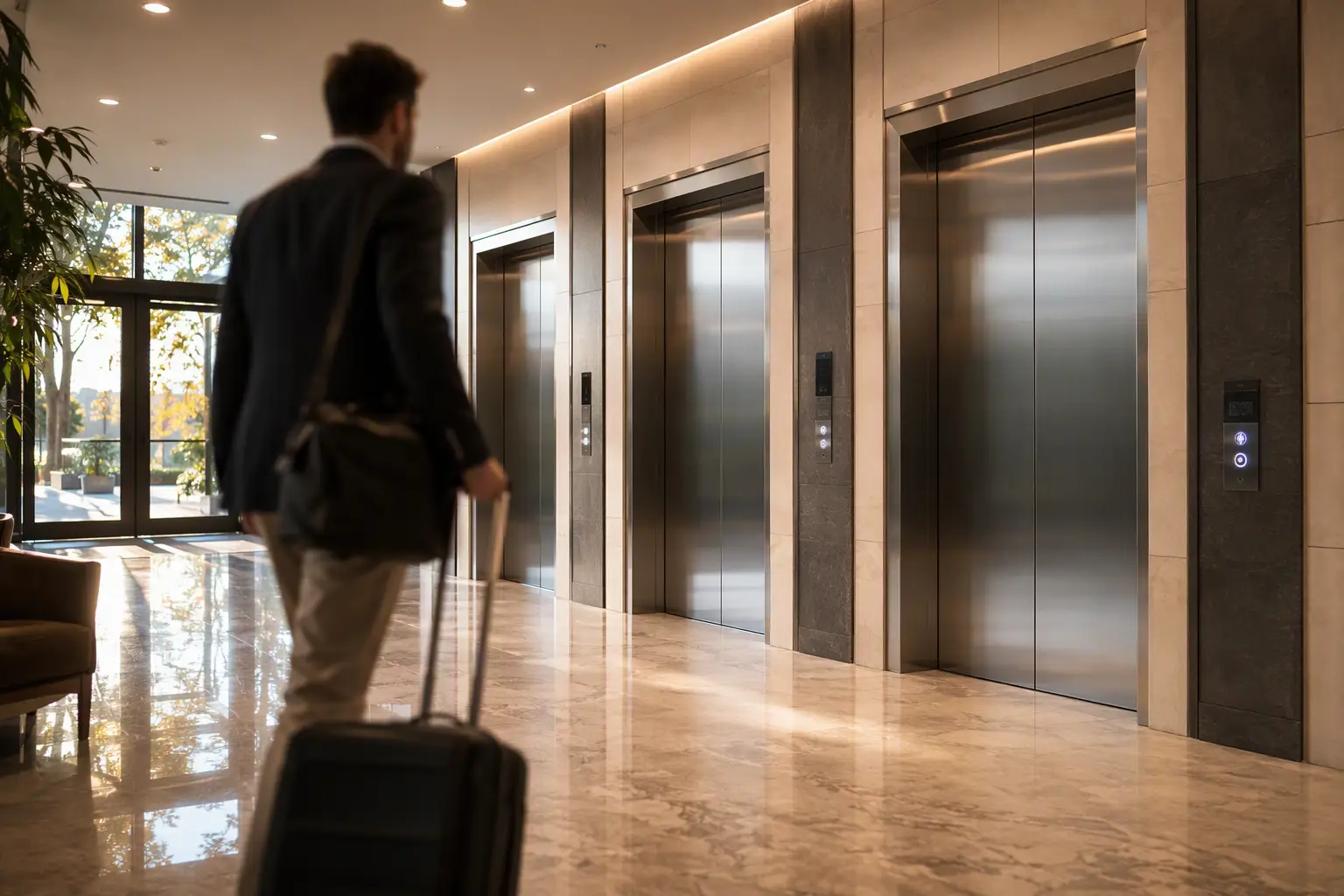
Elevator expectations have shifted dramatically. Guests checking into a Columbia, SC hotel and tenants signing apartment leases in 2026 evaluate elevators the way they once evaluated lobbies — as a direct signal of property quality, safety, and management professionalism. An outdated, slow, or poorly maintained elevator can drive negative reviews, increase vacancy, and create compliance liability. This guide covers every feature the modern hospitality and multifamily resident actually expects, the South Carolina regulatory requirements that underpin safe operation, and how building owners can close the gap.
—
What Touchless and Contactless Controls Do Guests and Tenants Expect?
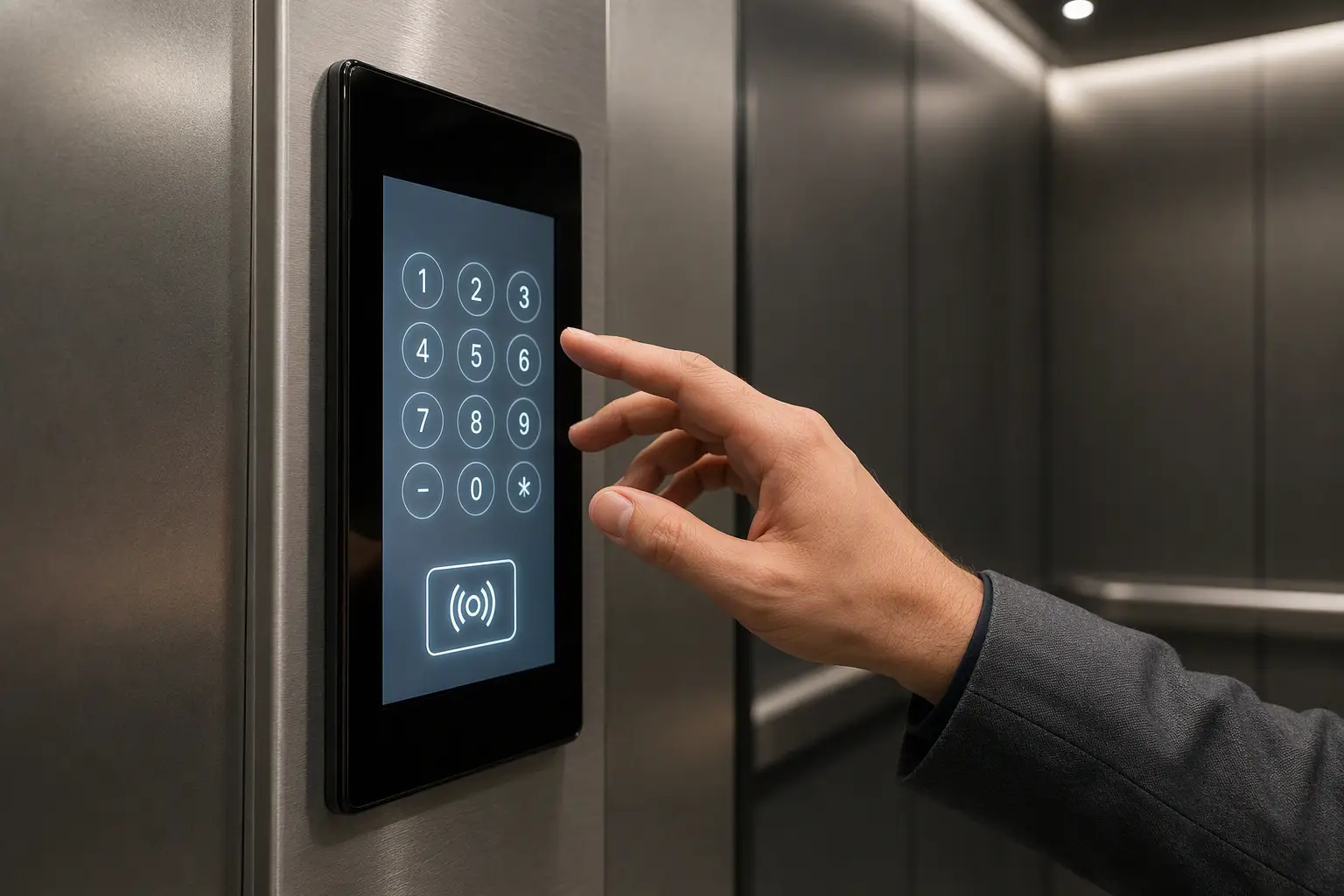
The demand for touchless elevator interaction is now a baseline expectation rather than a luxury amenity. Tenants and guests expect at minimum one or more of the following:
- Proximity or wave-to-call hall buttons that register without physical contact
- Smartphone app dispatching that lets residents call a car from their phone before leaving their unit
- Voice-activated floor selection integrated with in-building smart systems
- QR-code or key-fob access for secured residential floors
Properties that have not yet integrated these features are increasingly perceived as dated, regardless of how new the surrounding renovation may be. Carolina Elevator Service helps Columbia-area property owners evaluate which touchless retrofit is compatible with existing elevator control systems before investing in a full replacement.
—
Is Destination Dispatch Worth the Investment for Hotels and Apartments?
Destination-dispatch systems group passengers traveling to the same floor into the same car, reducing average wait times and the number of stops per trip. For hotels with significant vertical traffic during check-in peaks, and for multifamily buildings with morning rush patterns, the efficiency gain is meaningful. The systems also allow access control to be embedded at the point of dispatch — residents select their floor and only authorized floors illuminate — which addresses security concerns that rank consistently high in tenant surveys.
For buildings with a single elevator shaft, destination dispatch offers fewer benefits than in multi-car configurations. Carolina Elevator Service recommends a traffic analysis before specifying this upgrade so owners invest where the return is genuine.
—
What Air Quality and Cabin Environment Features Are Guests Looking For?
Post-pandemic consciousness about shared enclosed spaces has made cabin air quality a visible differentiator. In 2026, guests and tenants notice — and comment on — the following:
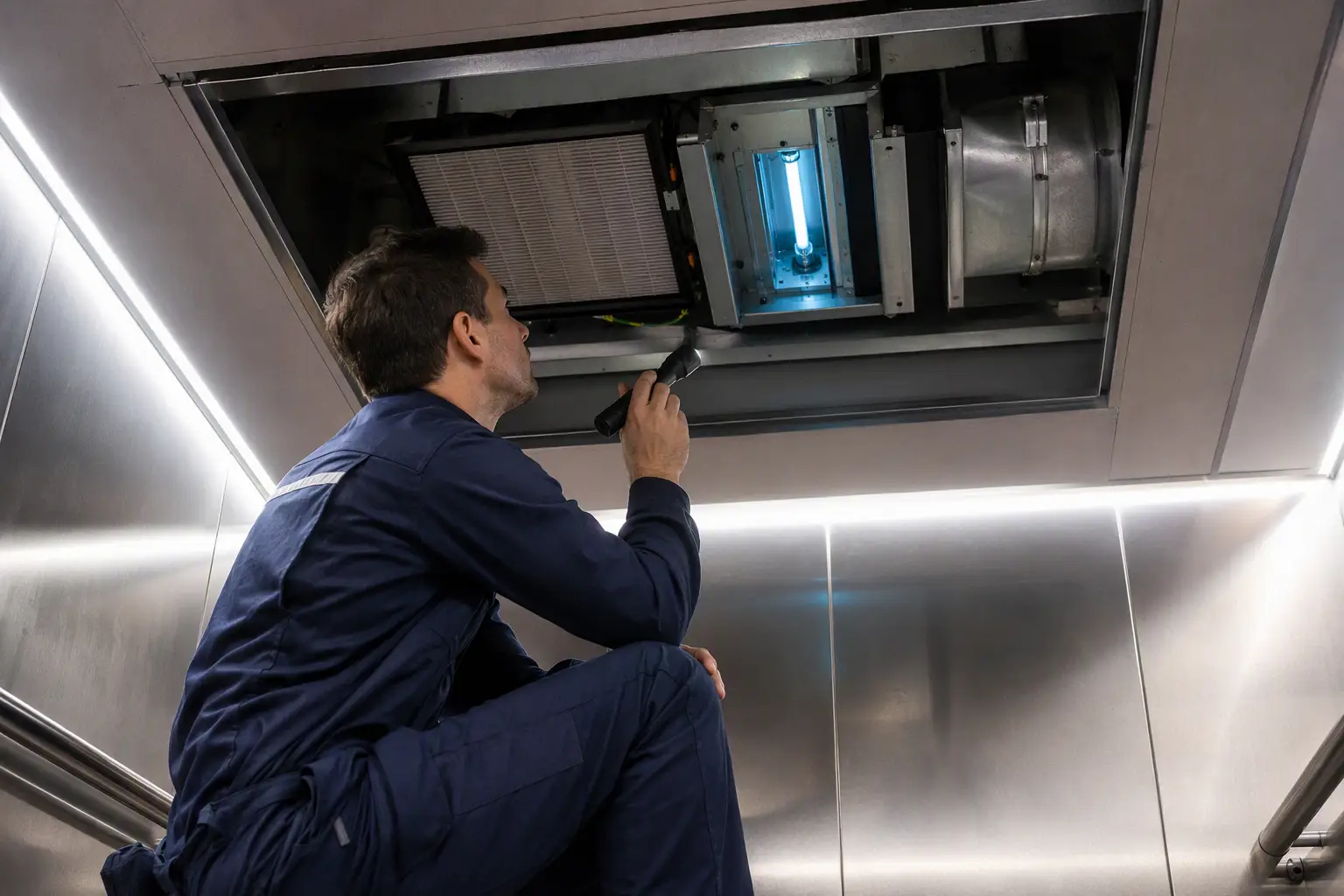
- MERV-rated or HEPA-grade filtration integrated into elevator HVAC systems
- UV-C or bipolar ionization air purification units mounted within the cab
- Antimicrobial surface treatments on handrails, button panels, and door edges
- Adequate ventilation meeting the requirements of the adopted ASME A17.1-2019/CSA B44:19 code, which South Carolina adopted effective July 23, 2021
Cabin odor, stale air, and visible grime are among the most frequently cited elevator complaints in online hospitality reviews. Regular cleaning protocols paired with air quality hardware address both the perception and the reality.
—
What ADA Accessibility Features Do Tenants and Guests Require by Law?
Accessibility is not optional. Under the Americans with Disabilities Act, hotels and multifamily residential buildings with elevator service must meet ADA Standards for Accessible Design. Required features include:
- Door openings of at least 36 inches clear width
- Car interior dimensions sufficient for wheelchair turning
- Raised and Braille characters on all control buttons
- Audible signals and visual indicators at each floor
- Hall call buttons mounted at accessible heights
- Handrails on at least one side wall of the cab where space permits
South Carolina elevator facilities are also governed by S.C. Code Title 41, Chapter 16 (South Carolina Elevator Code) and the associated regulations under S.C. Code of Regulations Chapter 71, Article 5. The South Carolina Department of Labor, Licensing and Regulation (LLR), Office of Elevators and Amusement Rides, enforces these requirements and issues the operating certificates that must be displayed conspicuously inside every elevator car.
ADA compliance failures expose property owners to federal civil rights complaints and can block hotel flag approvals or financing. Carolina Elevator Service conducts thorough accessibility audits as part of its assessment process for Columbia-area properties.
—
How Important Are Aesthetic Cabin Upgrades to Guest Satisfaction?
Cabin aesthetics directly influence the perception of an entire property. In hospitality settings, the elevator is often the first enclosed space a guest occupies after the lobby, and first impressions compound. Tenants in competitive multifamily markets use social media to share images of their building’s amenities — including elevators. Features that resonate in 2026 include:
- Brushed stainless steel or custom wood-veneer interior panels
- LED accent lighting with adjustable color temperature
- Digital display walls or tenant information screens
- Scuff-resistant flooring with modern tile or luxury vinyl options
- Mirror panels that open up perceived cab space
Aesthetic upgrades can often be completed without a full elevator replacement, which reduces cost and minimizes downtime — a key consideration for occupied hotel and residential buildings.
—
What Safety and Security Features Do Modern Tenants Expect?
Security in vertical transportation has moved beyond a basic door-close button. Tenants and guests in 2026 expect:
- In-cab security cameras with monitored or recorded feeds
- Two-way emergency communication that connects to a live monitoring center, as required under ASME A17.1
- Floor-restricted key card or fob access for residential levels in mixed-use or hotel properties
- Emergency lighting and alarm reliability — South Carolina specifically requires passenger elevators to have standby power capable of running emergency lighting and the alarm bell for at least four hours if normal power fails
Tenants increasingly read building reviews before signing leases. Documented elevator incidents — entrapments, malfunctions, or safety failures — surface in reviews and affect occupancy rates.
—
What Real-Time Information Displays Are Becoming Standard?
Passive elevator rides are giving way to connected cab experiences. Digital displays now serve multiple functions that guests and tenants actively value:
- Floor position and direction indicators with smooth digital graphics
- Wait time estimates for destination-dispatch systems
- Property news, amenity hours, or local event information
- Emergency alerts and building notifications
- Advertising or concierge content that generates ancillary revenue for hotel operators
These systems are increasingly low-cost relative to the perceived quality improvement they deliver, and they can be installed without structural modification to the cab in most cases.
—
What Are the South Carolina Inspection Requirements for Hotel and Apartment Elevators?
Under S.C. Code Title 41, Chapter 16 and S.C. Code of Regulations Chapter 71, Article 5:
- Elevators in hotels and apartment buildings must be inspected at installation, at any alteration or repair, and at least once per year before the operating certificate is renewed.
- No elevator may operate without a current certificate of registration and an operating certificate issued by the South Carolina Department of Labor, Licensing and Regulation (LLR), Office of Elevators and Amusement Rides.
- The operating certificate or a copy must be displayed conspicuously inside the elevator car at all times.
- Inspections may be conducted only by state inspectors or licensed special inspectors; a special inspector’s report may be accepted in place of a state inspection.
- Special inspectors must meet the qualifications set out in the 2018 edition of QEI-1, American National Standard for Qualification of Elevator Inspectors.
- A special inspector may not inspect an elevator on which the inspector or the inspector’s employer has a current service or warranty contract — ensuring independence.
- A state construction permit is required before any elevator is erected, constructed, altered, or installed.
- Any accident that seriously injures a non-employee must be reported to the state before the end of the next working day.
- The building owner bears ongoing responsibility to keep every elevator facility in safe operating condition in accordance with state regulations.
Carolina Elevator Service helps Columbia-area hotel and apartment owners maintain continuous compliance by tracking inspection schedules and coordinating with qualified inspectors.
—
How Should a Property Owner Prioritize Elevator Upgrades When Budget Is Limited?
Not every property can fund a full modernization at once. A practical prioritization sequence for hotel and apartment elevator upgrades looks like this:
- Address any open compliance issues first. Ensure the annual inspection is current, the operating certificate is displayed, and any deficiencies from the last inspection report are resolved. Non-compliant elevators in South Carolina cannot legally operate.
- Upgrade safety-critical systems. Emergency communication, standby power, and door safety sensors affect liability exposure and guest safety directly.
- Improve accessibility compliance. ADA deficiencies carry federal enforcement risk and should be corrected before cosmetic upgrades are made.
- Install touchless controls or access control. These upgrades address tenant expectations and security simultaneously, often at a moderate cost.
- Modernize cab aesthetics. Interior panel, lighting, and flooring upgrades deliver the highest visible impact per dollar once the above are addressed.
- Add destination dispatch or digital displays. These premium upgrades are most justified in high-traffic or competitive luxury market properties.
—
Questions Your Inspector Will Ask
When the South Carolina Department of Labor, Licensing and Regulation (LLR), Office of Elevators and Amusement Rides sends an inspector — or when a licensed special inspector conducts the annual inspection — property owners and facility managers should be prepared to answer the following:
- Is the current operating certificate displayed inside the elevator car? This is a statutory requirement and is among the first items checked.
- Has a state construction permit been obtained for any recent alteration or installation? Work without a permit creates compliance and liability exposure.
- When was the last inspection completed, and are the records available on-site? Documentation of inspection history supports certificate renewal.
- Is the emergency two-way communication system functional? The inspector will test the in-cab phone or intercom against the monitoring center.
- Does the standby power system sustain emergency lighting and the alarm bell for at least four hours? South Carolina’s code requires this capability for passenger elevators.
- Are any deficiencies noted from the prior inspection corrected and documented? Open items from prior reports trigger focused scrutiny.
- For hydraulic elevators installed after the applicable code date: is the underground cylinder encased in plastic outer containment? South Carolina requires this to limit electrolytic corrosion on newly installed underground hydraulic cylinders.
- Is firefighters’ service operational and keyed to the S.C. #1000 five-pin key? New installations in South Carolina must use this specific key for firefighters’ service.
- Have any reportable accidents or serious injuries occurred since the last inspection? Owners are required to report serious non-employee injuries before the end of the next working day.
Carolina Elevator Service recommends that hotel and apartment managers conduct an internal pre-inspection walkthrough using this question list before any scheduled annual inspection. Addressing gaps proactively avoids citations, operating certificate delays, and the disruption of taking a car out of service during peak occupancy periods.
—
How Do Elevator Upgrades Affect Hotel Ratings and Apartment Lease Rates?
Hotel flag agreements and third-party brand standards often include elevator performance and condition requirements as part of quality assurance audits. An elevator that triggers a brand deficiency notice can jeopardize a property’s flag status. For independent hotels, online review platforms surface elevator complaints prominently — a pattern of negative comments directly influences booking conversion.
In the multifamily sector, properties competing for renters in Columbia’s growth corridors find that building condition — including elevators — is a visible differentiator in a market where prospective tenants often tour multiple properties in a single afternoon. An elevator that is slow, noisy, or visibly worn creates an impression that persists through the leasing conversation.
Conversely, a well-maintained, modern elevator signals operational discipline and justifies premium positioning. The investment case for elevator upgrades in hospitality and multifamily is ultimately a revenue and retention argument as much as a compliance one.
—
How Can Carolina Elevator Service Help Columbia, SC Properties?
Carolina Elevator Service works with hotel and apartment property owners and managers across the Columbia, South Carolina market to assess current elevator condition, identify compliance gaps under South Carolina’s adopted ASME A17.1-2019/CSA B44:19 standards and ADA requirements, and develop upgrade plans matched to the property’s budget cycle and occupancy schedule. From touchless control retrofits and cab aesthetic modernization to full compliance remediation, Carolina Elevator Service provides the technical assessment needed to move from a reactive posture to a planned, compliant, and guest-ready vertical transportation program.
—
Ready to Bring Your Elevators Up to 2026 Guest and Tenant Expectations?
Contact Carolina Elevator Service for a free elevator assessment and find out exactly where your Columbia, SC property stands on compliance, accessibility, and the features today’s guests and tenants actually expect.
Call Carolina Elevator Service at 803-865-1400
Need elevator service you can rely on? Carolina Elevator Service is ready to help.