How Hotels and Hospitality Properties Handle Elevator Downtime Without Losing Guests
Elevator downtime in a hotel is never just a mechanical inconvenience — it is a guest experience crisis. A family hauling luggage to the fifth floor, a wheelchair user stranded in the lobby, or a conference group delayed between floors can each translate to negative reviews, refunds, and lost repeat bookings. Understanding how to plan for, respond to, and prevent unplanned outages is essential for any Columbia, SC hospitality operator committed to delivering consistent service.
What Are the Immediate Steps a Hotel Should Take When an Elevator Goes Out of Service?
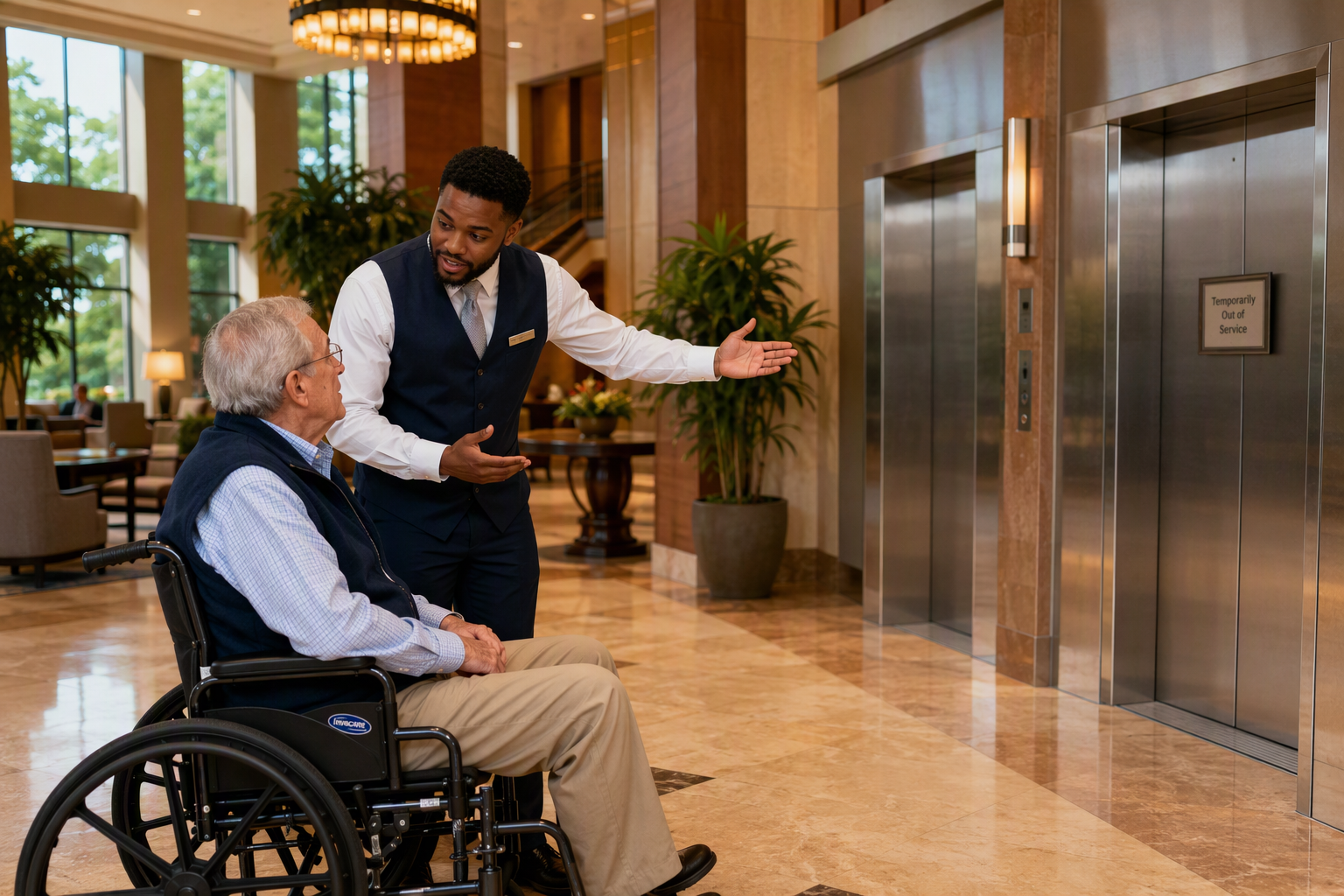
- Post clear, professional signage at every elevator landing indicating the unit is temporarily out of service and directing guests to an alternate car or stairwell.
- Alert the front desk and concierge team so staff can proactively intercept arriving guests and offer luggage assistance before frustration builds.
- Identify and contact guests with mobility needs — check reservation notes and ADA room assignments immediately, and arrange personal escort or ground-floor room reassignment.
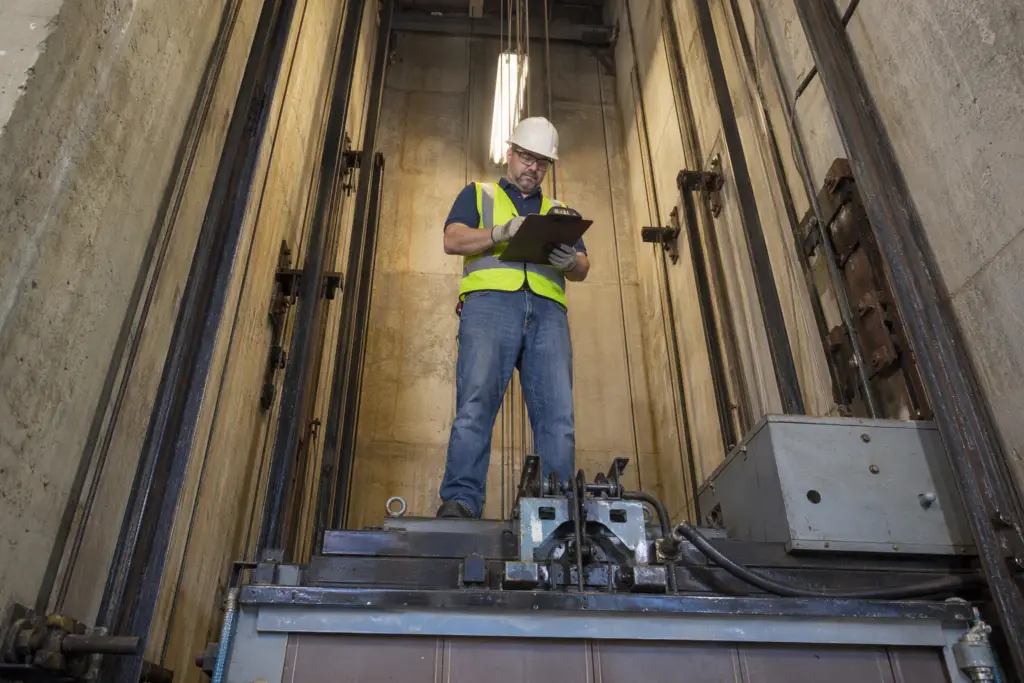
- Contact a certified elevator service provider to dispatch a qualified technician. In South Carolina, the equipment owner bears legal responsibility under S.C. Code Title 41, Chapter 16 to keep every elevator in safe operating condition.
- Document the outage with a timestamped log noting what failed, which guests were affected, and what accommodations were made — this record matters if an insurance or regulatory question arises later.
- Notify the South Carolina Department of Labor, Licensing and Regulation (LLR), Office of Elevators and Amusement Rides if the outage involved an incident that seriously injured anyone other than an employee; state law requires that report before the end of the next working day.
- Arrange interim staffing coverage at stairwells and service elevators to keep guest flow moving until the primary car returns to service.
- Communicate proactively with in-house guests via door notices, in-room messaging systems, or text alerts explaining the situation and the expected resolution timeline.
What South Carolina Compliance Requirements Apply to Hotel Elevators in 2026?
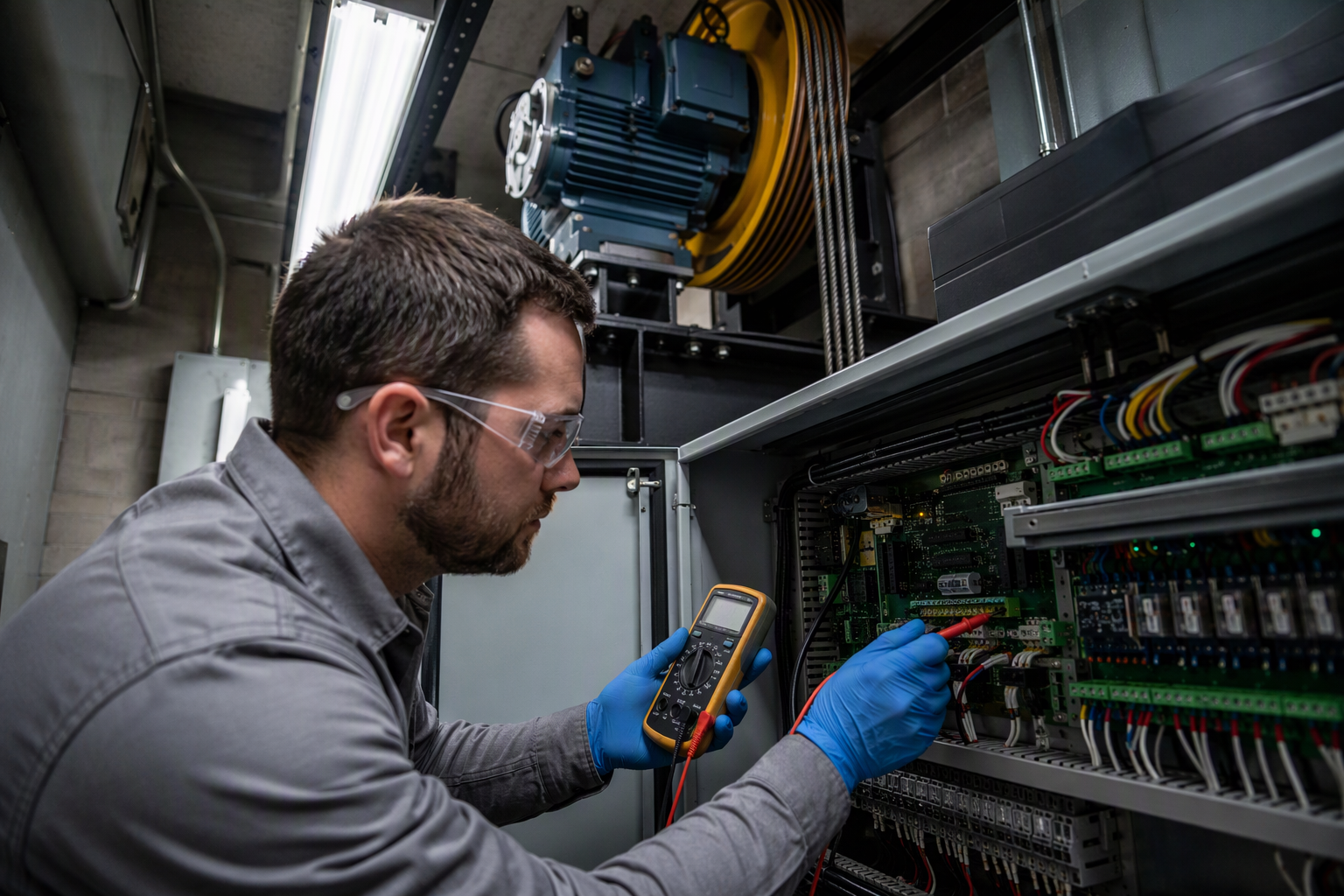
Every hotel elevator operating in South Carolina falls under S.C. Code Title 41, Chapter 16 and the associated rules found in S.C. Code of Regulations Chapter 71, Article 5, Regulations 71-5000 through 71-5700. The state has adopted the ASME A17.1/CSA B44, 2019 edition as its current safety standard, effective by notice in the S.C. State Register on July 23, 2021.
Key obligations every Columbia-area hospitality property owner must meet include:
- Annual inspections: South Carolina requires passenger elevators to be inspected at installation and at least once a year before the operating certificate is renewed.
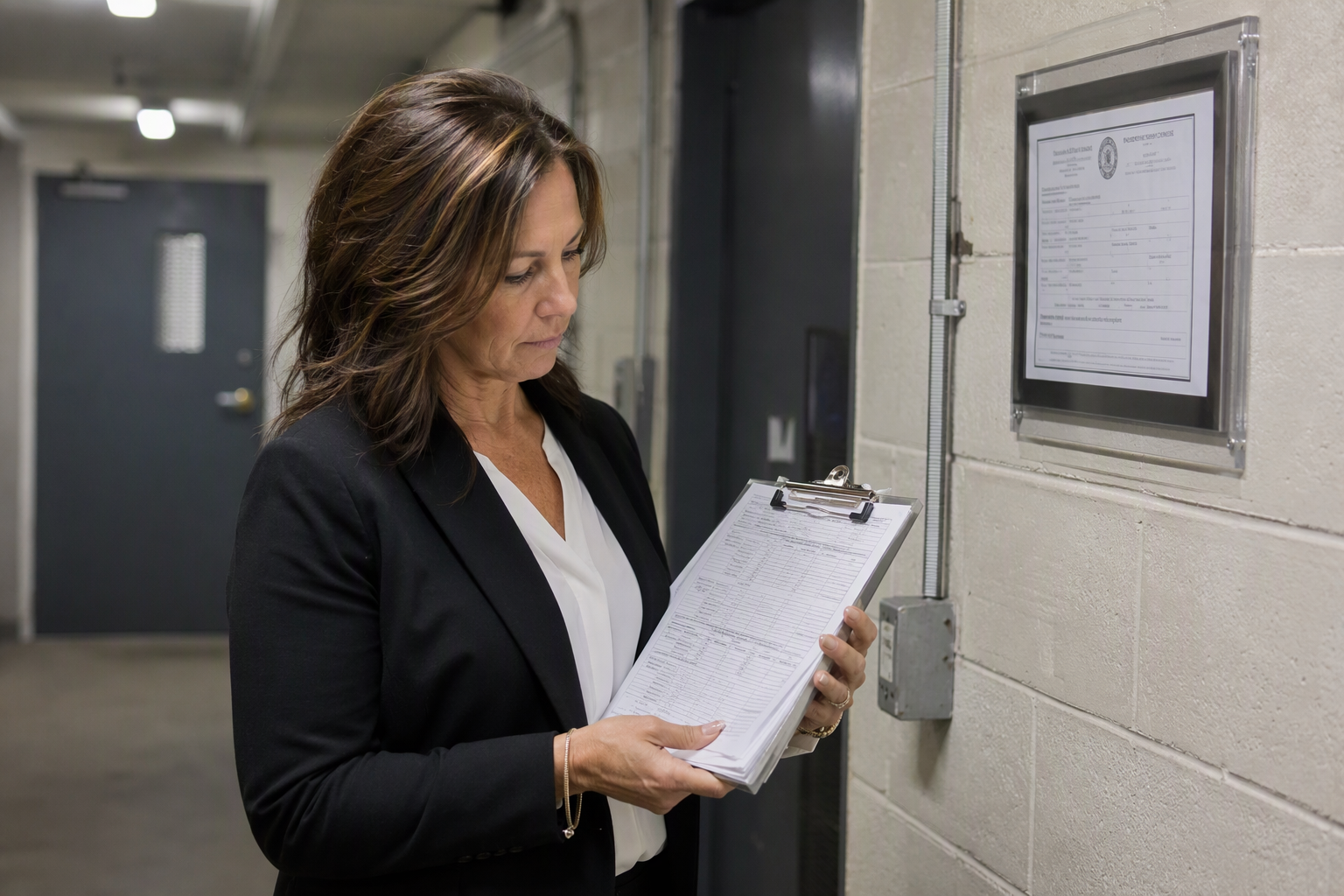
- Operating certificate display: The operating certificate — or a copy — must be posted conspicuously inside every elevator car. Guests and inspectors can and do check for it.
- Certificate of registration: No elevator may operate without both a certificate of registration and a valid operating certificate from the state.
- Standby power: South Carolina passenger elevators must have standby power capable of running emergency lighting and the alarm bell for at least four hours when normal power fails — a critical detail for hotels during storm-related outages.
- Construction permits: Any alteration or new installation requires a state construction permit before work begins.
- Inspector independence: A special inspector may not inspect an elevator on which the inspector or the inspector’s employer holds a current service or warranty contract — hotel owners should verify this when scheduling compliance inspections.
Federal ADA requirements layer on top of state code, mandating that accessible elevator features — including door timing, Braille controls, and audible signals — remain fully functional. An outage that leaves a mobility-impaired guest without access to upper floors can constitute an ADA access failure, not merely an equipment inconvenience.
How Does Proactive Maintenance Reduce Guest-Facing Downtime?
Unplanned outages almost always follow a period of deferred warning signs — unusual noises, slower door response, intermittent leveling errors. A structured preventive maintenance program, aligned with the inspection intervals required under South Carolina regulations and the ASME A17.1 Safety Code for Elevators and Escalators, catches these signals before they become full outages. Carolina Elevator Service works with Columbia-area hospitality clients to schedule maintenance visits that align with low-occupancy windows — early mornings or mid-week periods — so that planned service interruptions cause the least possible disruption to guests.
What Should a Hotel Include in Its Elevator Downtime Communication Plan?
A communication plan built before an outage happens is far more effective than improvising under guest pressure. An effective hospitality elevator communication plan should address:
- A chain of contact: who calls the service provider, who notifies management, and who handles guest-facing communication simultaneously
- Pre-approved guest messaging templates for door cards, in-room TV banners, and text or email notifications
- A protocol for ADA-accessible room reassignments and the authority level required to approve complimentary upgrades
- A log template that captures outage start time, affected floors, guest incidents, technician arrival, and resolution time
- Escalation triggers — for example, when to involve hotel ownership, legal counsel, or state regulators
How Does ADA Compliance Factor Into Hospitality Elevator Downtime?
Under the Americans with Disabilities Act, hotels are required to provide accessible routes to all public spaces and guest rooms. When an elevator serving those routes goes out of service, the property must make reasonable accommodations — typically a same-category accessible room reassignment on a reachable floor. Failure to have a documented accommodation process exposes a property to ADA complaints and potential civil liability. Carolina Elevator Service recommends that hospitality operators include ADA contingency planning as a standing item in any elevator maintenance agreement review.
What Role Does Emergency Power Play in Keeping Hotel Guests Safe During an Outage?
South Carolina code mandates standby power that sustains emergency lighting and the alarm bell for a minimum of four hours when normal power is interrupted. For hospitality properties, this baseline requirement deserves a higher standard of attention: a hotel full of guests during a power failure needs every elevator either safely evacuated or reliably held at a floor with functional lighting and communication. Properties should verify with their elevator service provider that standby power systems are tested regularly and that test records are available for state inspectors.
Questions Your Inspector Will Ask
When a South Carolina Department of Labor, Licensing and Regulation (LLR) inspector or a qualified special inspector arrives at a Columbia hotel, they typically want to verify the following — and so should hotel management in advance:
- Is the current operating certificate posted visibly inside each elevator car?
- Is the certificate of registration current and on file?
- Has the elevator been inspected within the required annual interval?
- Are maintenance logs available and up to date?
- Does the standby power system meet the four-hour minimum for emergency lighting and the alarm bell?
- Were any alterations or repairs made since the last inspection, and if so, was a state construction permit obtained beforehand?
- Were any incidents involving non-employee injuries reported to the state before the end of the next working day following the incident?
- Are firefighters’ service features on new installations using the required S.C. #1000 five-pin key?
- Do ADA-required features — door timing, Braille floor designations, audible signals — function correctly?
- Is the special inspector who conducted any recent inspection independent of the elevator’s current service or warranty contractor?
Carolina Elevator Service recommends that hotel facilities managers walk through this checklist quarterly rather than waiting for the annual inspection to surface a deficiency that forces an unplanned shutdown.
How Long Does It Typically Take to Return a Hotel Elevator to Service After an Unplanned Outage?
Resolution time depends on the nature of the failure. Minor issues — a tripped circuit, a door obstruction sensor fault, or a worn-out door contact — may be resolved in hours. Major component failures involving hydraulic systems, motors, or control boards may require parts that are not immediately available. The best way to shorten every outage is to maintain a current service relationship with a certified elevator provider so that equipment history, wiring diagrams, and parts preferences are already on file when an emergency call comes in. Properties that engage Carolina Elevator Service for ongoing maintenance benefit from technicians who already know the specific units in their buildings.
What Should Hotels Look for When Selecting an Elevator Service Provider in Columbia, SC?
Hospitality operators evaluating elevator service providers in the Columbia market should consider:
- South Carolina compliance knowledge: The provider should be fluent in S.C. Code Title 41, Chapter 16, the current ASME A17.1-2019 adoption, and LLR inspection protocols — not just general elevator knowledge.
- Inspector independence: Under South Carolina rules, a special inspector cannot inspect a unit their employer services. A provider who understands this boundary will help the property schedule compliance inspections correctly.
- Documentation practices: The provider should supply maintenance logs in a format that satisfies LLR recordkeeping expectations and can be produced on short notice during an inspection.
- ADA familiarity: Hospitality elevators have specific ADA feature requirements. The service provider should flag ADA-related wear items during routine maintenance visits.
- Local presence: A provider based in South Carolina and familiar with the Columbia market is better positioned to respond to emerging issues and coordinate with state regulators when needed.
Can a Hotel Be Fined or Penalized for Operating an Elevator Without a Current Certificate?
Yes. Under S.C. Code Title 41, Chapter 16, no elevator facility may operate without both a certificate of registration and a valid operating certificate. Operating without these documents places the property owner in violation of state law. Beyond regulatory penalties, an uncertified elevator creates significant liability exposure if a guest is injured while the equipment is operating outside legal compliance. The operating certificate is also a visible document — required to be posted inside the car — meaning guests, staff, and inspectors can identify a lapsed certificate immediately.
How Should a Hotel Handle a Guest Injured During an Elevator Malfunction?
- Ensure the guest’s immediate safety and summon emergency medical assistance if needed.
- Take the elevator out of service immediately and secure it to prevent further use.
- If the injury is serious and the injured party is not an employee, notify the South Carolina Department of Labor, Licensing and Regulation (LLR), Office of Elevators and Amusement Rides, before the end of the next working day — this is a statutory requirement under South Carolina law.
- Preserve all maintenance logs, inspection certificates, and surveillance footage as potential evidence.
- Notify the property’s insurance carrier and legal counsel.
- Contact a certified elevator service provider to conduct a full mechanical inspection before the unit is returned to service.
- Prepare a written incident report documenting the sequence of events, guest information, and all actions taken.
What Preventive Maintenance Schedule Is Recommended for Hotel Elevators in South Carolina?
South Carolina requires at minimum an annual inspection for most passenger elevators before operating certificates are renewed. However, annual inspections are a compliance floor — not a maintenance ceiling. High-traffic hospitality installations benefit from more frequent professional attention. Carolina Elevator Service designs maintenance programs based on factors including equipment age, daily trip volume, and whether the property operates 24 hours, ensuring that each Columbia hotel’s schedule reflects actual wear patterns rather than a one-size-fits-all calendar.
How Do Hotels Communicate Elevator Status to Guests Without Damaging the Brand?
Tone and transparency matter. Guests respond better to honest, proactive communication than to discovering a problem on their own. Effective hospitality communication during an outage uses calm, professional language — for example, “We are completing scheduled maintenance on Elevator 2. Elevator 1 is fully operational. Our team is happy to assist with your luggage.” Framing unavoidable service interruptions as evidence of the property’s commitment to safety — rather than a failure — preserves brand perception while the technical resolution proceeds.
Protect Your Guests and Your Reputation — Start With a Free Assessment
Elevator downtime in a hospitality setting is a preventable brand risk. South Carolina compliance requirements under S.C. Code Title 41, Chapter 16 and the adopted ASME A17.1-2019 Safety Code set the legal baseline — but protecting guests and preserving five-star reviews requires a proactive maintenance and emergency response strategy that goes further. Carolina Elevator Service brings certified expertise to Columbia-area hotels and hospitality properties, helping operators stay compliant, reduce unplanned outages, and respond effectively when the unexpected happens.
Contact Carolina Elevator Service for a free elevator assessment: 803-865-1400
Need elevator service you can rely on? Carolina Elevator Service is ready to help.