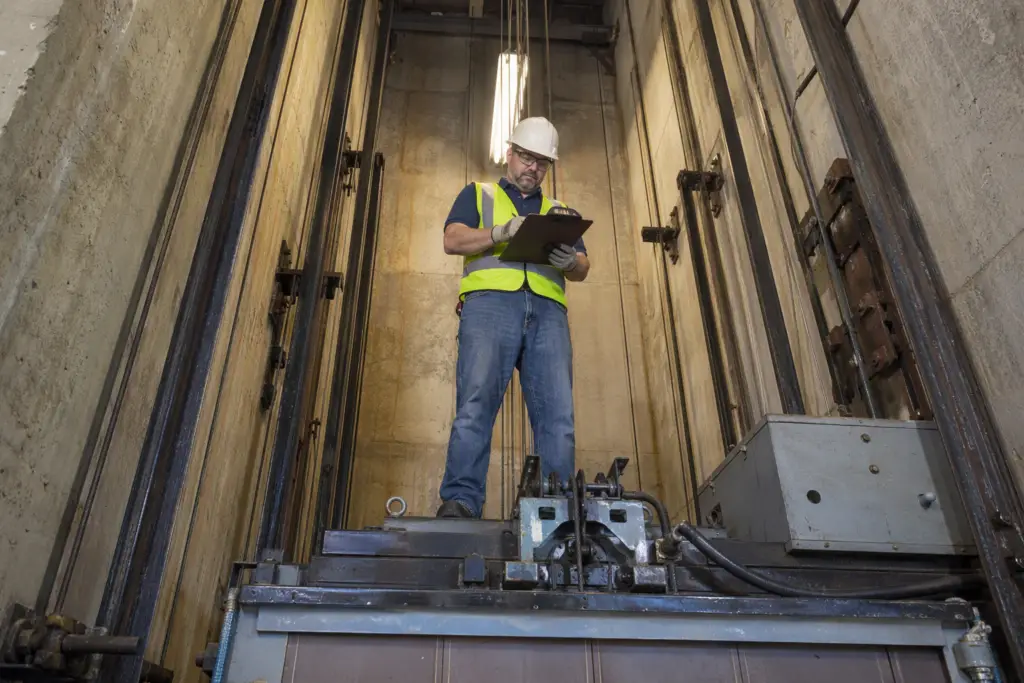
Elevator Modernization vs. Full Replacement: A Complete Decision Guide
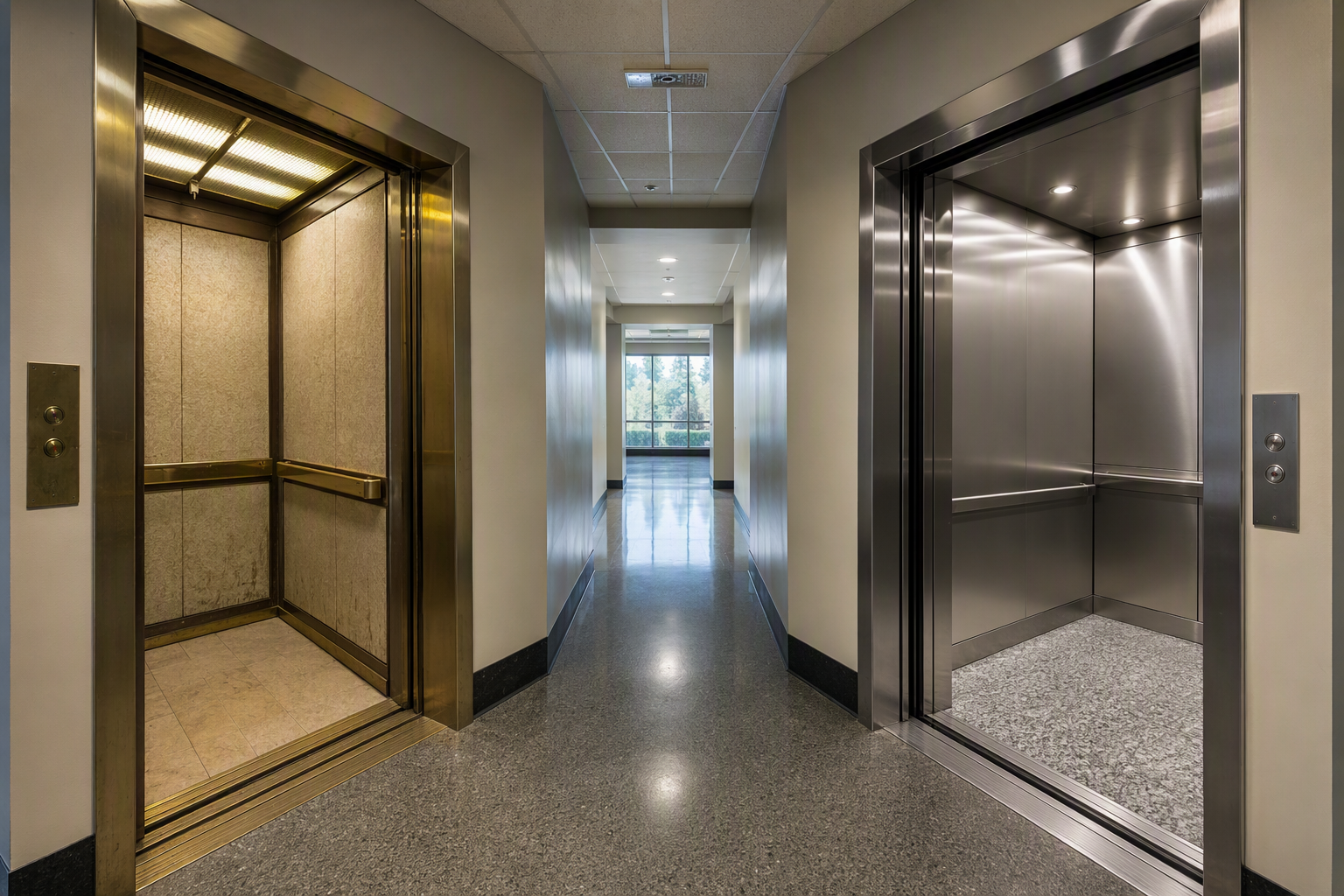
Deciding between elevator modernization and full replacement is one of the most significant capital decisions a building owner or facilities manager will face. The right answer depends on equipment age, structural condition, code compliance status, budget cycles, and long-term operational goals. This guide breaks down every factor so decision-makers can move forward with confidence.
—
What Is Elevator Modernization?
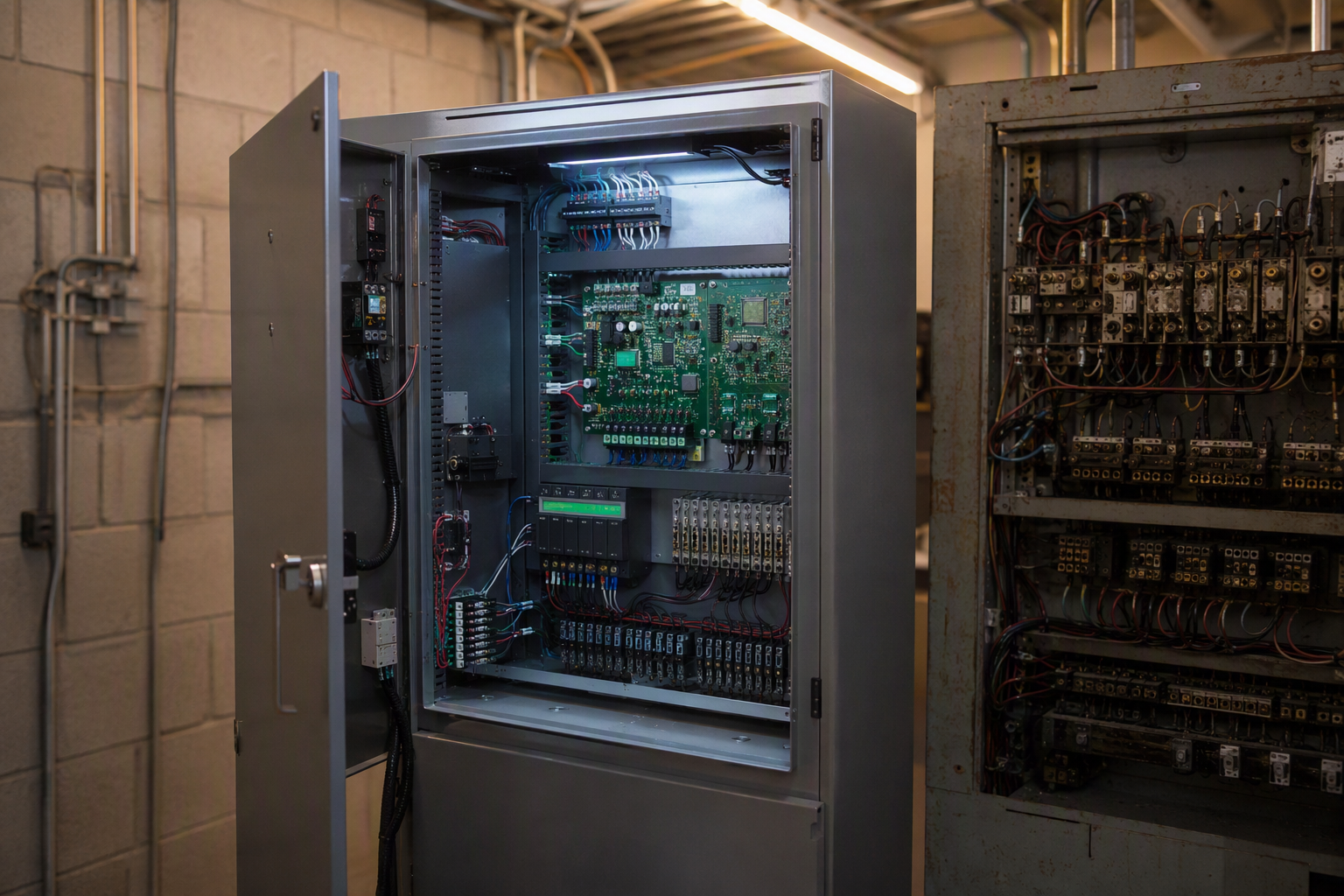
Elevator modernization — sometimes called a retrofit or upgrade — replaces specific worn or outdated subsystems while retaining the existing hoistway, structural sill, and guide rails. Common modernization scopes include:
- Replacing the controller and relay logic with a modern solid-state or microprocessor-based control system
- Upgrading the drive system (e.g., replacing DC motors with AC variable-voltage, variable-frequency drives)
- Installing new door operators, hangers, and safety edges
- Refreshing the cab interior: flooring, lighting, wall panels, and fixtures
- Adding or updating emergency communication systems and lighting to meet current codes
- Upgrading the machine room for energy efficiency
Modernization is a phased, targeted process. Building operators often sequence work across multiple budget years, replacing the highest-risk components first.
What Does Full Elevator Replacement Involve?

Full replacement removes all existing equipment — including the drive machine, rails, buffers, cab, and controls — and installs an entirely new system within the existing hoistway. In some cases, hoistway modifications or pit extensions are required to meet current clearance requirements under the ASME A17.1 Safety Code for Elevators and Escalators.
Full replacement is a single, coordinated project that typically results in longer downtime but delivers a fully warranted system with a fresh service life.
—
How Do Modernization and Full Replacement Compare in Cost?
| Factor | Modernization | Full Replacement |
|---|---|---|
| Relative Capital Outlay | Lower — retains existing structure and machine room | Higher — all-new equipment and installation labor |
| Budget Flexibility | Can be phased across multiple fiscal years | Single large capital commitment |
| Hidden Cost Risk | Moderate — aging hidden components may surface during work | Lower — everything is new and under warranty |
| Energy Savings Potential | Significant when drive and lighting are upgraded | Maximum — new regenerative drives and LED systems |
| Long-Term Maintenance Cost | May remain higher if legacy components are retained | Lower over the new service life |
| Financing Options | Often treated as OpEx or phased CapEx | Typically requires CapEx budget or financing |
Key insight: When structural components are sound, modernization generally delivers a stronger short-term return on investment. When multiple major systems are failing simultaneously, the cumulative cost of staged modernization can approach or exceed replacement, tipping the financial case toward full replacement.
—
How Long Does Each Option Take?
| Scope | Typical Project Duration | Elevator Downtime |
|---|---|---|
| Controls-only modernization | Days to a few weeks | Minimal; often nights and weekends |
| Comprehensive modernization (controls + drive + doors + cab) | Several weeks to a few months | Moderate; can be staged to keep partial service |
| Full replacement — single elevator | Several months | Extended; unit is out of service for majority of project |
| Full replacement — multi-elevator building | Months; phased sequencing required | Managed by rotating units out of service one at a time |
—
What Are the Pros and Cons of Each Approach?
| Modernization | Full Replacement | |
|---|---|---|
| Pros |
|
|
| Cons |
|
|
—
When Should Building Owners Choose Modernization?
Modernization is typically the right choice when:
- The hoistway, guide rails, and structural sill are in sound condition
- Only one or two subsystems — such as controls or doors — are causing frequent failures
- Budget constraints require phasing capital expenditure over multiple years
- The elevator is in an occupied building where extended downtime is not operationally feasible
- The equipment is in a mid-life stage where a targeted upgrade can extend service life significantly
- Energy efficiency improvements are desired without the cost of full replacement
When Does Full Replacement Make More Sense?
Full replacement is typically warranted when:
- The drive machine, rails, or structural components are beyond economical repair
- The elevator is at or near the end of its expected service life and multiple systems require attention simultaneously
- The cumulative cost of a comprehensive modernization approaches the cost of new equipment
- Current hoistway geometry does not meet the pit and overhead clearances required by the current edition of the ASME A17.1 Safety Code for Elevators and Escalators, making structural modification unavoidable regardless of approach
- ADA compliance requires physical alterations that are incompatible with the existing cab or entrance configuration
- Building use has changed, requiring different capacity, speed, or travel height
—
How Do Code Requirements Affect This Decision?
Code compliance is a critical and often misunderstood factor in the modernization versus replacement decision. The ASME A17.1 Safety Code for Elevators and Escalators establishes retroactivity requirements — meaning that certain safety features must be added to existing elevators regardless of whether a full modernization or replacement is performed.
When a modernization project triggers retroactive requirements, the cost of achieving compliance can increase substantially. A qualified independent elevator service provider will assess which code requirements apply before any scope is finalized.
Accessibility requirements under the Americans with Disabilities Act (ADA) also apply to alterations. Any modification that affects usability may trigger the obligation to bring the elevator into compliance with current accessibility standards — a factor that must be budgeted before committing to either path.
Workplace safety obligations under OSHA apply to elevator work environments and must be addressed in the contractor selection and project planning process.
—
What Is the Step-by-Step Process for Evaluating Which Option Is Right?
- Commission a comprehensive condition assessment. A qualified elevator service provider should inspect all mechanical, electrical, and structural components and document deficiencies. This is the factual foundation for every subsequent decision.
- Identify current and future code obligations. Determine which retroactive requirements under the ASME A17.1 and ADA apply to the existing installation and to any planned alteration.
- Obtain itemized scopes for both paths. Request a detailed modernization scope and a full replacement scope from independent service providers so costs can be compared on an apples-to-apples basis.
- Model the total cost of ownership. Factor in projected maintenance costs, energy costs, expected service life extension, and the cost of future compliance work for each option over a defined horizon (typically ten to twenty years).
- Assess downtime tolerance. Evaluate the operational impact of elevator downtime on tenants, residents, or customers, and determine whether the building can absorb the longer outage associated with full replacement.
- Evaluate financing and budget structure. Determine whether the project should be treated as capital expenditure, operating expenditure, or a combination — and which option aligns with available budget cycles.
- Select a qualified, independent contractor. Choose a provider who is not tied to a single equipment manufacturer and who can deliver transparent recommendations based on the building’s actual needs rather than product sales targets.
- Finalize the scope, timeline, and downtime mitigation plan. Document phasing, temporary service provisions, tenant communications, and inspection milestones before work begins.
—
Does Elevator Modernization Extend Equipment Life?
Yes — a well-scoped modernization that addresses the highest-risk components can meaningfully extend the operational service life of an elevator. The degree of extension depends on which components are replaced, the condition of retained components, and the quality of ongoing maintenance after the modernization is complete. A modernization that replaces controls and the drive system while leaving aged mechanical components in place will deliver a shorter extension than a comprehensive scope that addresses all major subsystems.
Can a Modernized Elevator Achieve Full Code Compliance?
In most cases, yes — a comprehensive modernization can achieve compliance with the current edition of the ASME A17.1 Safety Code for Elevators and Escalators and applicable ADA standards, provided the hoistway geometry meets clearance requirements. Where the hoistway requires structural modification to meet current clearance standards, the cost difference between modernization and replacement narrows significantly.
What Role Does Energy Efficiency Play in the Decision?
Energy efficiency is a meaningful factor in both options. Modernizing the drive system with a variable-voltage, variable-frequency (VVVF) drive and upgrading cab and machine room lighting to LED can reduce elevator energy consumption substantially compared to older relay-logic and DC motor systems. Full replacement with regenerative drive technology offers the highest potential efficiency, capturing energy during descent and braking and returning it to the building’s electrical system. Facilities pursuing LEED certification or other green building standards should model energy outcomes for both paths.
How Does Equipment Age Factor Into the Decision?
Equipment age is a signal, not a verdict. An older elevator with well-maintained structural components and a failing control system may be an excellent modernization candidate. Conversely, a younger elevator that experienced water intrusion, structural damage, or fire may warrant replacement regardless of age. The condition assessment described in the step-by-step process above provides the objective data needed to evaluate age in context.
What Should Building Owners Ask a Potential Service Provider?
Before engaging any elevator contractor for a modernization or replacement project, building owners should ask:
- Is the provider independent, or are they aligned with a specific equipment manufacturer?
- Will the provider supply a detailed written condition assessment, or only a replacement proposal?
- Can the provider clearly explain which code requirements will be triggered by the proposed scope?
- Does the provider carry appropriate insurance and operate under applicable state elevator contractor licensing requirements?
- What is the provider’s approach to minimizing building disruption and managing downtime?
- How will the provider handle the discovery of hidden deficiencies during the project?
Why Work With Carolina Elevator Service?
Carolina Elevator Service is an independent, certified elevator service company operating across the Carolinas. Because Carolina Elevator Service is not aligned with any single equipment manufacturer, the company’s assessments and recommendations are driven by the specific needs of each building rather than by product sales incentives. Whether a building needs a targeted modernization, a phased upgrade program, or a full replacement, Carolina Elevator Service provides transparent, code-informed guidance at every stage of the process — from initial assessment through project completion and ongoing maintenance.
—
Summary: Modernization vs. Full Replacement at a Glance
| Decision Criteria | Points Toward Modernization | Points Toward Replacement |
|---|---|---|
| Structural condition | Sound hoistway, rails, and sill | Structural deterioration or non-conforming geometry |
| Number of failing systems | One or two targeted subsystems | Multiple major systems failing simultaneously |
| Budget structure | Phased or constrained capital budget | Single capital commitment is feasible |
| Downtime tolerance | Low tolerance; occupied building | Higher tolerance; replacement managed during low-use period |
| Code compliance gap | Achievable through targeted upgrades | Requires structural alteration regardless of approach |
| Service life objective | Extend existing equipment life | Reset to a full new service life |
| Long-term maintenance cost | Acceptable if legacy components are sound | New warranty and lower maintenance cost is a priority |
—
Get a Free Elevator Assessment From Carolina Elevator Service
Making the right decision between elevator modernization and full replacement starts with an objective, detailed condition assessment from a qualified independent provider. Carolina Elevator Service offers a free elevator assessment to help building owners and facilities managers understand exactly what their equipment needs — and what it will take to meet current code, improve reliability, and protect the value of their building.
Contact Carolina Elevator Service for a free elevator assessment: 803-865-1400
Need elevator service you can rely on? Carolina Elevator Service is ready to help.