What Is Included in an Elevator Maintenance Contract?
Choosing the right elevator maintenance contract protects building occupants, keeps equipment code-compliant, and controls long-term operating costs. This guide breaks down every element commonly found in these agreements, compares contract types side by side, and helps property managers and building owners make an informed decision in 2026.
What Are the Core Services Covered in Every Elevator Maintenance Contract?
Regardless of contract tier, reputable elevator maintenance agreements address the following baseline services:
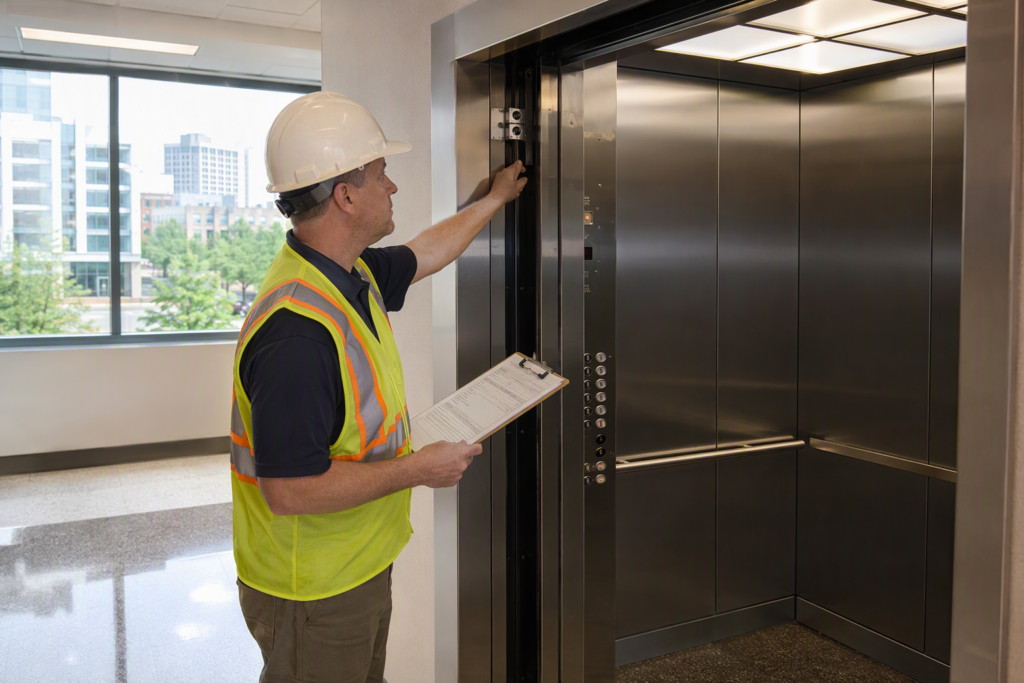
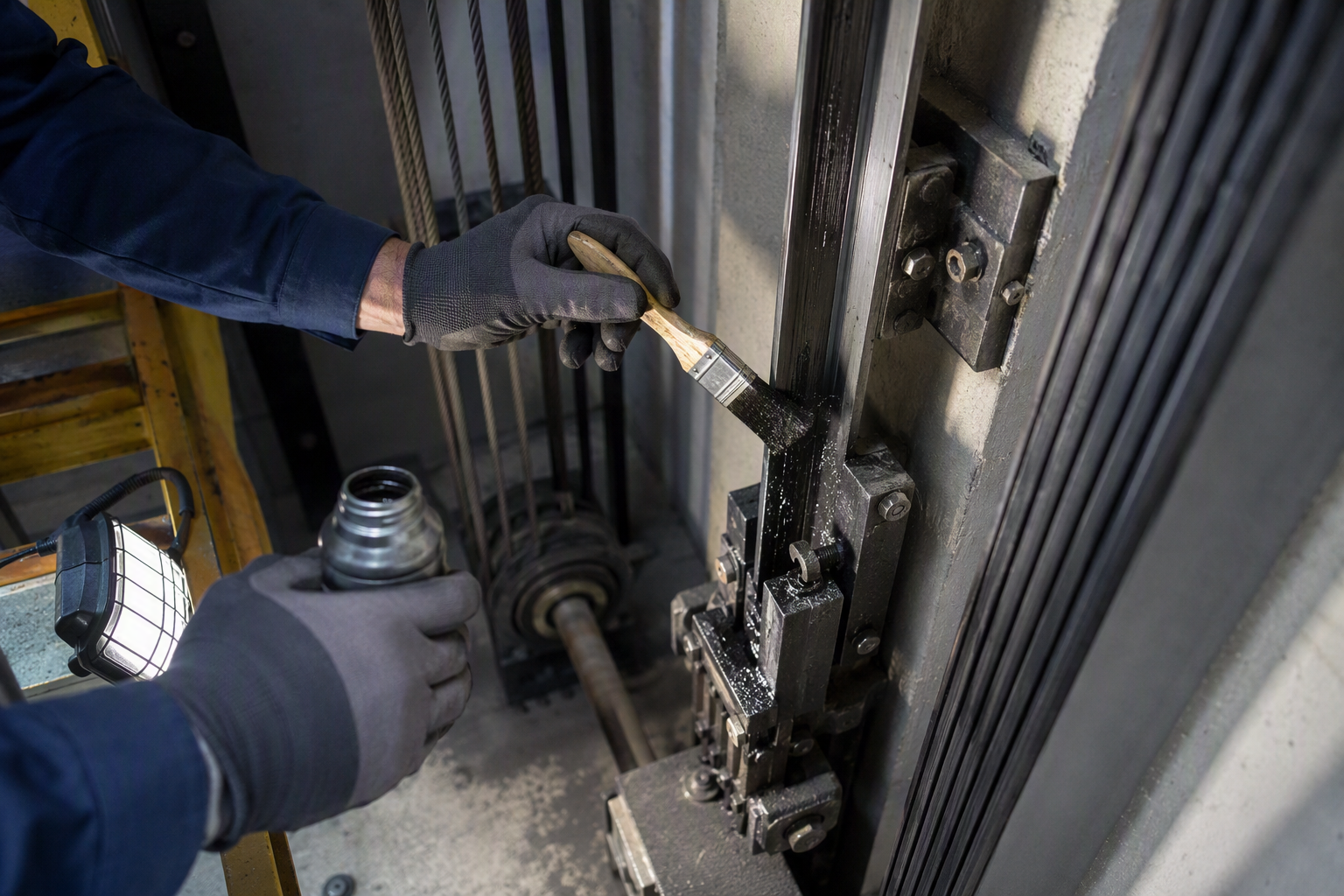
- Preventive Maintenance Visits: Scheduled technician visits to inspect, clean, lubricate, and adjust mechanical and electrical components before failures occur.
- Lubrication: Application of manufacturer-specified lubricants to guide rails, cables, bearings, and other friction points.
- Safety Device Testing: Verification that door safety edges, interlocks, buffers, safeties, and governors function within code-required parameters.
- Adjustment and Alignment: Leveling adjustments, door timing calibration, and speed governor checks to ensure smooth, accurate operation.
- Emergency Callback Service: Response to unplanned outages or entrapments outside of scheduled visits.
- Compliance Documentation: Maintenance logs and inspection records required by state and local authorities having jurisdiction (AHJ).
- Minor Parts Replacement: Routine consumables such as light bulbs, fuses, and small hardware items (scope varies by contract).
Under the ASME A17.1 Safety Code for Elevators and Escalators, owners are responsible for ensuring that maintenance is performed by qualified personnel and that records are kept on-site. The contract structure determines how that obligation is fulfilled.
What Are the Different Types of Elevator Maintenance Contracts?
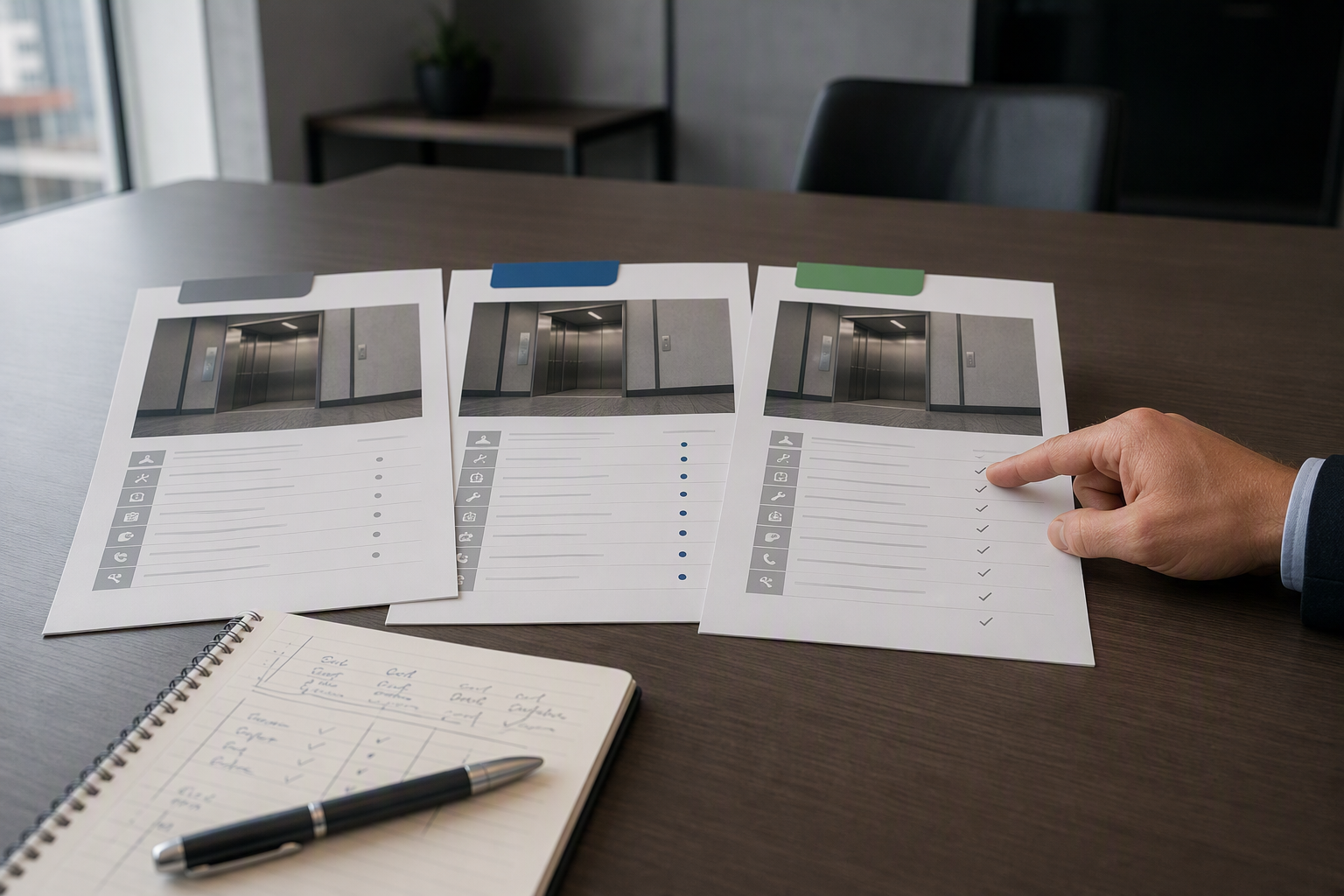
Elevator maintenance agreements fall into three primary categories. Understanding the differences helps buyers match contract scope to budget and risk tolerance.
1. Oil-and-Grease (Basic Lubrication) Contract
The most limited agreement. Technicians visit on a scheduled basis to lubricate and perform minor adjustments. Parts, major repairs, and callbacks beyond a set number may be billed separately. Best suited for newer equipment still under manufacturer warranty or buildings with very low traffic.
2. Parts-and-Labor Contract
A mid-tier agreement that covers both labor and a defined list of replacement parts. This reduces surprise invoices for common failures while still excluding major components such as motors, controllers, or hydraulic cylinders. Suitable for mid-age equipment with predictable wear patterns.
3. Full-Maintenance (Comprehensive) Contract
The broadest coverage. Labor, parts, callbacks, and — depending on the specific agreement — major component replacements are all included. Some full-maintenance contracts explicitly list exclusions (vandalism, code upgrades mandated by new legislation). Preferred for high-traffic buildings, older equipment, and properties where budget predictability is a priority.
Elevator Maintenance Contract Comparison Table
| Feature | Oil-and-Grease | Parts-and-Labor | Full-Maintenance |
|---|---|---|---|
| Scheduled Preventive Visits | ✔ | ✔ | ✔ |
| Lubrication & Minor Adjustments | ✔ | ✔ | ✔ |
| Labor for Repairs | ✘ (billed extra) | ✔ | ✔ |
| Common Replacement Parts | ✘ (billed extra) | ✔ (listed parts) | ✔ (most parts) |
| Major Components (Motor, Controller) | ✘ | ✘ or partial | Often ✔ (check exclusions) |
| Emergency Callback Coverage | Limited / extra charge | ✔ (within hours) | ✔ (included) |
| Compliance Documentation | Basic logs | ✔ | ✔ Comprehensive |
| Budget Predictability | Low | Medium | High |
| Best For | New / low-traffic units | Mid-age equipment | High-traffic / older units |
What Safety and Compliance Standards Must an Elevator Maintenance Contract Address?
Maintenance contracts exist within a regulatory framework that building owners cannot ignore. Key standards include:
- ASME A17.1 Safety Code for Elevators and Escalators: The primary national standard governing elevator construction, installation, inspection, testing, and maintenance in the United States and Canada. The 2019 edition (and state adoptions as of 2026) outlines specific maintenance intervals and record-keeping requirements.
- Americans with Disabilities Act (ADA): Requires that vertical accessibility equipment remain operational and accessible. A maintenance contract that reduces downtime directly supports ADA compliance obligations for building owners.
- OSHA Regulations: OSHA standards address elevator-related workplace safety, particularly for maintenance technicians working in machine rooms and hoistways. A qualified provider will follow OSHA lockout/tagout and confined space protocols during every service visit.
- State and Local Authority Having Jurisdiction (AHJ): Many states require periodic third-party inspections and certificates of operation. A comprehensive maintenance contract should include coordination support for these inspections.
What Is Typically Excluded from an Elevator Maintenance Contract?
Reading the exclusions section of any contract is as important as reviewing the inclusions. Common exclusions include:
- Damage caused by vandalism, misuse, or acts of nature
- Code-mandated upgrades required by newly adopted legislation (e.g., new seismic codes or firefighters’ operation requirements)
- Structural building work (hoistway walls, pit waterproofing)
- Modernization or full component replacement for end-of-life equipment
- Aesthetic components (cab finishes, flooring, lighting fixtures beyond basic bulbs)
- Hydraulic oil disposal fees (sometimes excluded)
Always request a written exclusion list before signing. If a provider cannot furnish one, that is a red flag.
How Often Should Elevator Maintenance Visits Be Scheduled?
Maintenance visit frequency depends on equipment type, age, and usage intensity. While specific intervals vary by jurisdiction and AHJ requirements, the ASME A17.1 Safety Code for Elevators and Escalators provides the foundational framework for maintenance intervals that state codes typically adopt or reference.
General industry practice organizes visits as follows:
- Monthly: High-rise, high-traffic commercial and residential buildings
- Quarterly: Mid-rise and moderate-traffic commercial properties
- Semi-annually: Low-traffic residential or light commercial settings
A qualified service provider will recommend a visit frequency based on a site assessment rather than a one-size-fits-all schedule. Carolina Elevator Service conducts individual equipment evaluations to recommend the appropriate service cadence for each property.
What Should Property Managers Look for When Comparing Elevator Service Providers?
Provider Comparison Checklist
| Evaluation Factor | What to Look For | Red Flags |
|---|---|---|
| Contract Transparency | Clear inclusions, exclusions, and escalation clauses | Vague language, no exclusions list |
| Technician Qualifications | Industry-trained personnel following ASME and OSHA standards | No documentation of training or certifications |
| Callback Provisions | Defined callback scope included in contract | All callbacks billed separately |
| Parts Sourcing | OEM or equivalent approved parts | Unspecified aftermarket parts without approval |
| Compliance Support | Coordination with AHJ inspections, documentation provided | No documentation or compliance reporting |
| Independent vs. OEM Manufacturer | Independent providers offer multi-brand expertise and competitive pricing | Proprietary lock-in clauses preventing equipment access |
| Contract Term & Exit Clauses | Reasonable notice periods, no punitive early termination | Auto-renewal with 90+ day cancellation windows and large penalties |
Carolina Elevator Service operates as a certified independent elevator service provider, offering multi-brand expertise without manufacturer lock-in. Independent providers can service equipment across major brands and often provide more flexible contract structures than OEM-tied companies.
What Are the Pros and Cons of Choosing an Independent Elevator Service Provider?
| Independent Provider (e.g., Carolina Elevator Service) | OEM / Manufacturer-Tied Provider | |
|---|---|---|
| Pros |
|
|
| Cons |
|
|
How Do You Evaluate Whether Your Current Contract Provides Adequate Coverage?
Use the following step-by-step process to audit an existing elevator maintenance agreement:
- Pull the current contract and identify the coverage category. Determine whether it is oil-and-grease, parts-and-labor, or full-maintenance.
- Review the inclusions list. Confirm that safety devices, door operators, controllers, and drive systems are explicitly mentioned.
- Read the exclusions section. Flag any component that has failed or been repaired at additional cost in the past two years.
- Check callback terms. Verify what qualifies as an emergency callback, how many are covered annually, and what the after-hours billing rate is for additional calls.
- Confirm compliance documentation obligations. Ensure the provider is contractually required to maintain logs acceptable to your state AHJ and in alignment with ASME A17.1 record-keeping requirements.
- Review the escalation clause. Note whether annual price increases are capped and how they are calculated.
- Assess the cancellation terms. Confirm the notice period required and whether penalties apply for early termination.
- Schedule a third-party assessment. Contact an independent certified provider such as Carolina Elevator Service to compare current coverage against what a competitive agreement would include.
What Records and Documentation Should a Maintenance Contract Require?
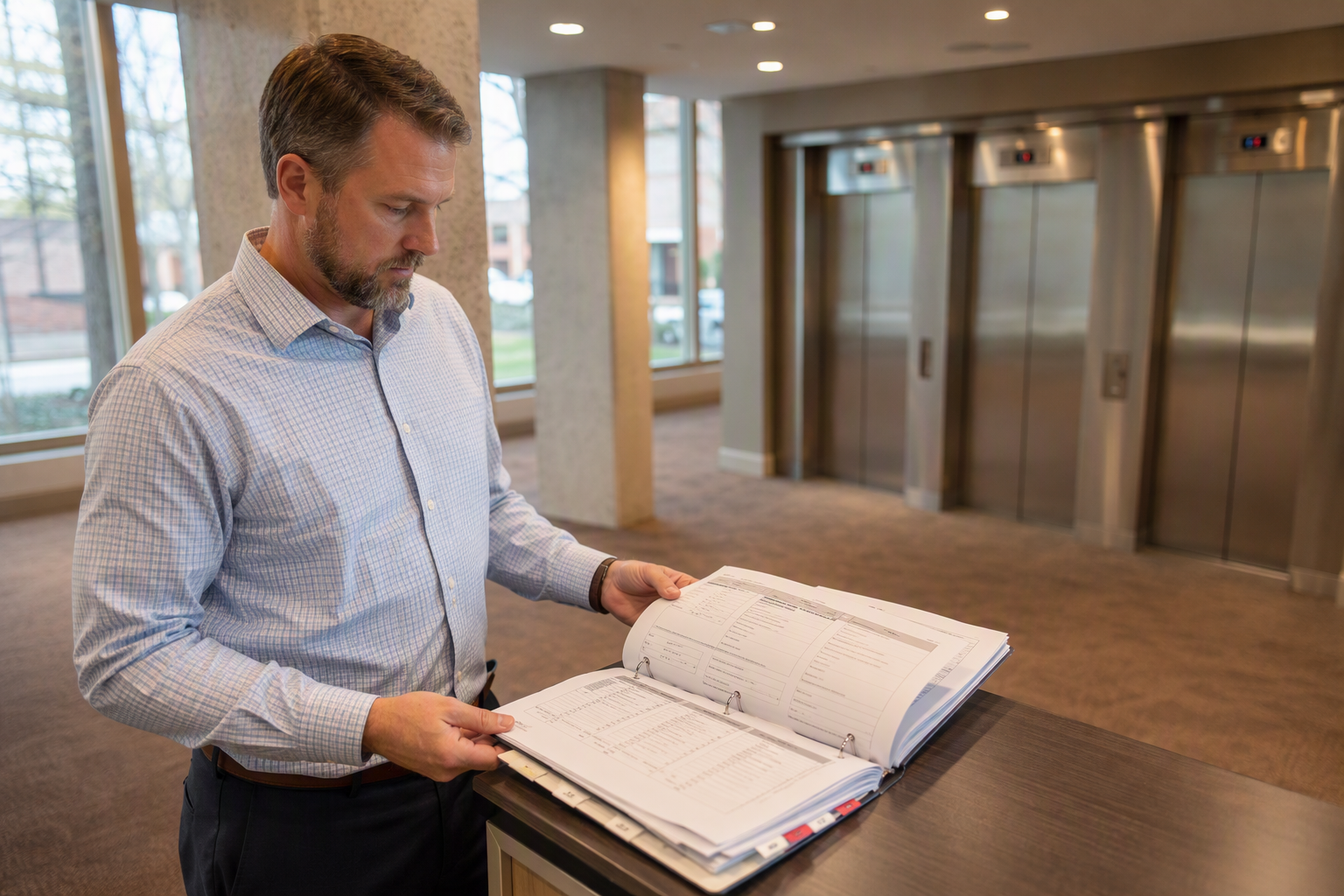
Proper documentation is not optional — it is a code requirement. Under ASME A17.1 Safety Code for Elevators and Escalators, maintenance records must be kept accessible on site for review by the AHJ.
A compliant maintenance contract should obligate the provider to supply:
- Dated maintenance visit logs listing work performed and technician identification
- Parts replacement records with part descriptions and installation dates
- Safety test results (governor, safety device, and door force testing)
- Callback and repair records detailing cause, corrective action, and resolution time
- Copies of annual or periodic inspection certificates
- Written notification of any deficiencies found that require owner action
What Happens If an Elevator Is Not Properly Maintained Under Contract?
Deferred maintenance carries compounding risks across multiple dimensions:
- Safety Risk: Failures in safety devices, door interlocks, or rope systems can result in entrapments or injuries. Under OSHA standards, employers have general duty obligations to maintain safe working environments, which extends to elevator access in workplaces.
- ADA Compliance Risk: An out-of-service elevator in a multi-story building may create accessibility barriers that violate obligations under the Americans with Disabilities Act.
- Code Violation and Permit Risk: AHJs can issue notices of violation, require immediate equipment shutdown, or revoke operating permits when maintenance records are incomplete or inspections are failed.
- Accelerated Equipment Deterioration: Unlubricated rails, misaligned doors, and untreated wear accelerate component failure, increasing modernization costs and shortening equipment lifespan.
- Liability Exposure: Property owners bear legal responsibility for elevator safety. A lapsed or inadequate maintenance contract weakens the documentation defense in the event of an incident.
Is Carolina Elevator Service the Right Provider for Your Building?
Carolina Elevator Service is a certified independent elevator service company serving building owners and property managers who want transparent contracts, qualified technicians, and compliance-focused maintenance. As an independent provider, Carolina Elevator Service services multiple equipment brands without proprietary lock-in, and structures agreements around each building’s specific equipment age, traffic volume, and compliance requirements.
For buildings currently under an OEM contract with escalating costs, unclear exclusions, or inadequate callback coverage, a comparison assessment with Carolina Elevator Service can identify gaps and alternatives without obligation.
Ready to Review Your Elevator Maintenance Coverage?
An outdated or inadequate elevator maintenance contract puts your building’s safety, compliance, and budget at risk. Let a certified professional evaluate your current agreement and equipment condition — at no cost.
Contact Carolina Elevator Service for a free elevator assessment: 803-865-1400
Need elevator service you can rely on? Carolina Elevator Service is ready to help.