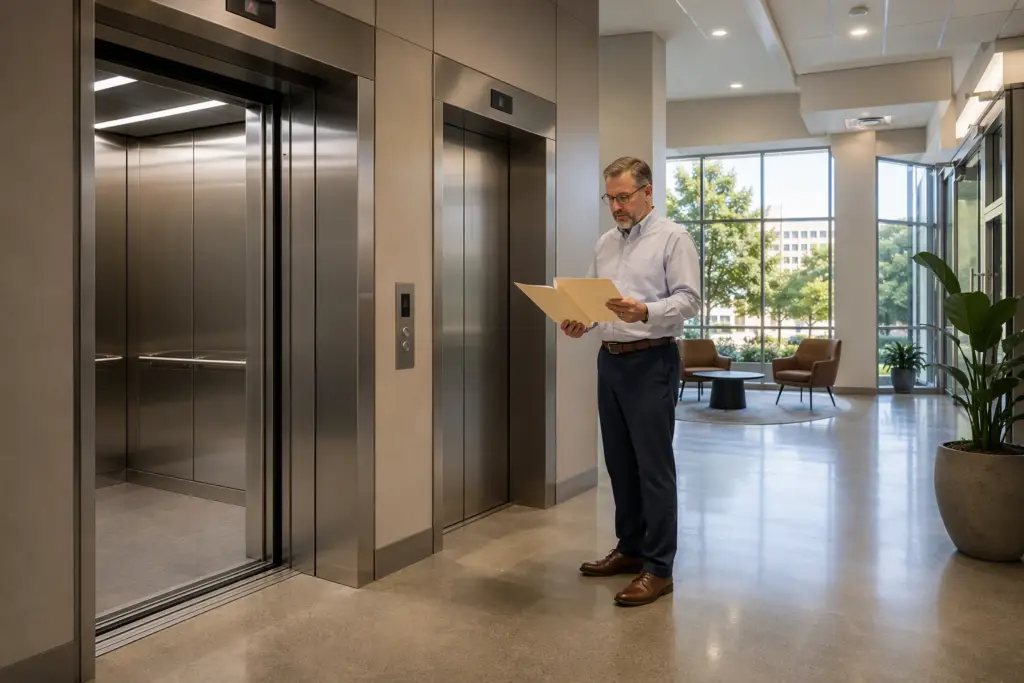
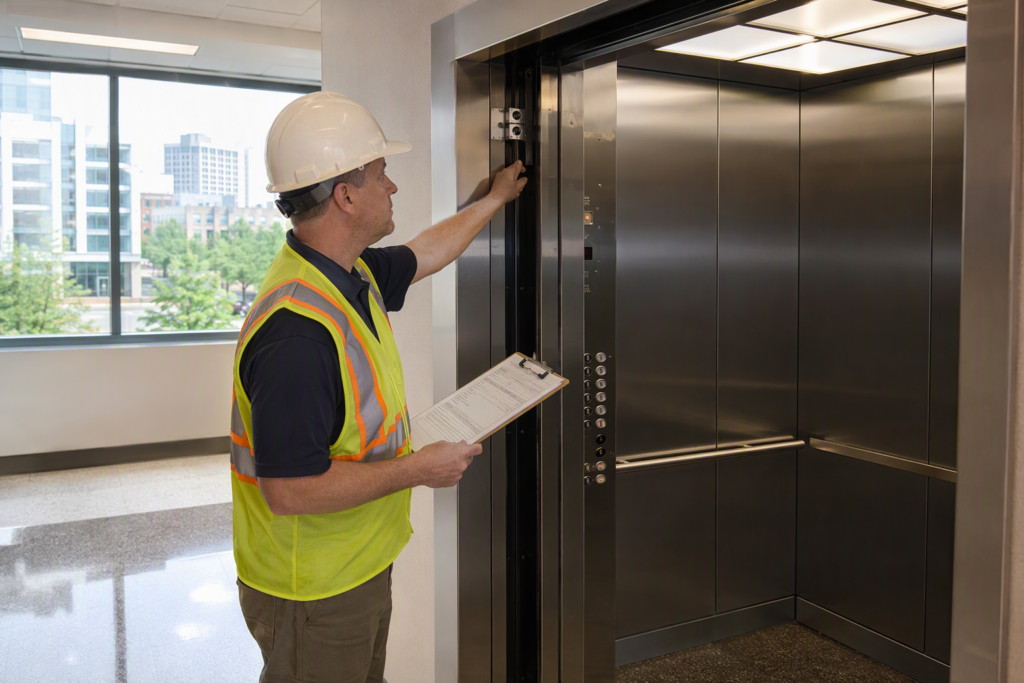
To budget for elevator repairs and maintenance in a 2027 fiscal year capital plan, building owners in Columbia, SC should account for annual inspection and operating certificate renewal costs, a preventive maintenance contract, a dedicated reserve for code-driven modernization, and a contingency fund for unplanned component failures — all benchmarked against the equipment type, age, and South Carolina Department of Labor, Licensing and Regulation (LLR) compliance requirements under S.C. Code Title 41, Chapter 16.

How to Budget for Elevator Repairs and Maintenance in Your 2027 Fiscal Year Capital Plan
Building owners and facility managers in Columbia, SC face competing capital priorities every budget cycle. Elevator systems are among the most compliance-sensitive and mechanically complex assets in any commercial, multifamily, or institutional property. Underfunding elevator maintenance does not simply create discomfort — it creates statutory liability under S.C. Code Title 41, Chapter 16 (South Carolina Elevator Code) and exposes property owners to operating certificate suspension, regulatory fines, and personal injury claims. This FAQ hub addresses every dimension of elevator capital planning that finance teams, property managers, and facilities directors need to build a defensible 2027 budget.
What is the single most important first step in building an elevator capital budget for fiscal year 2027?
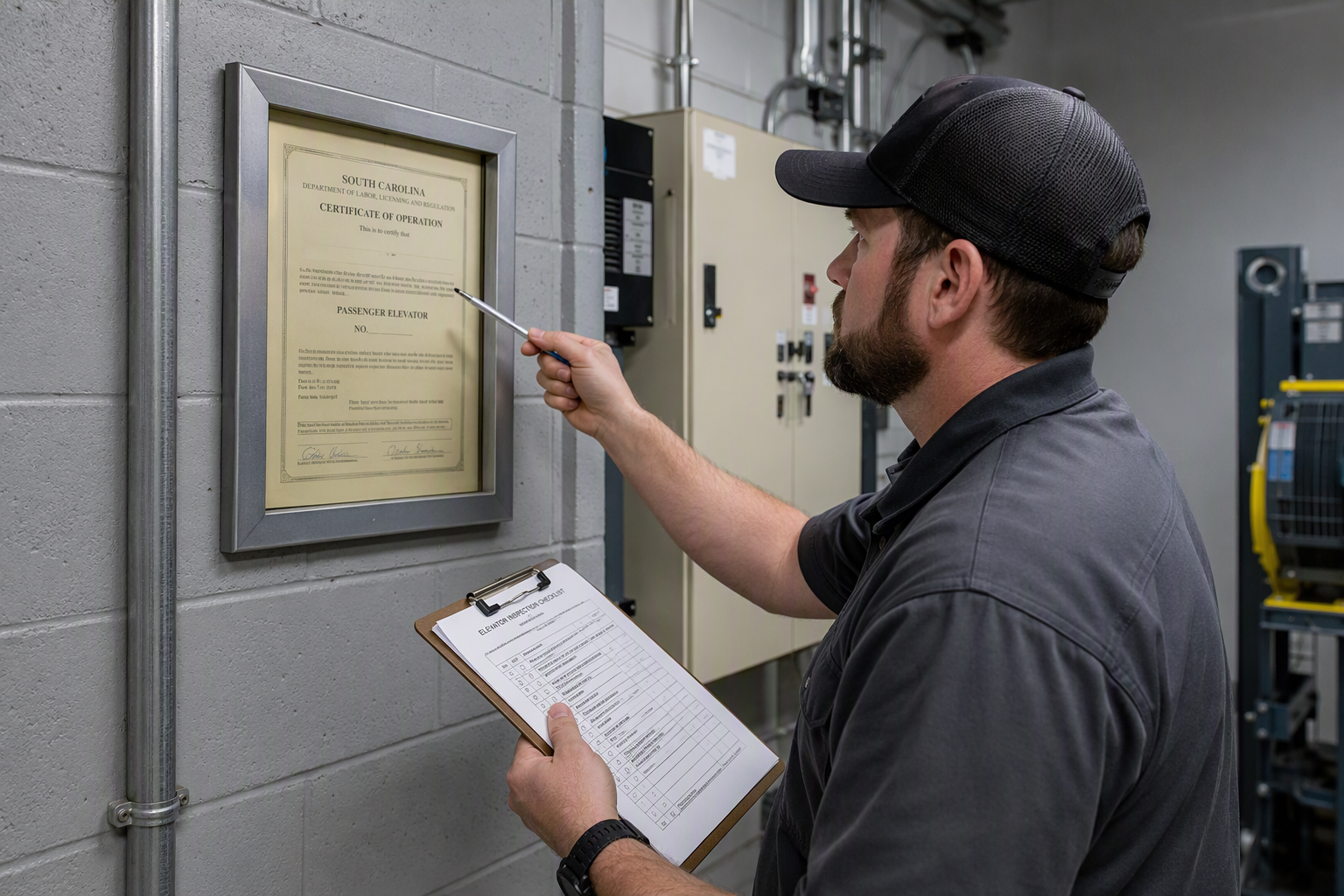
The single most important first step is conducting a documented condition assessment of every elevator asset on the property before the budget is drafted.
A condition assessment captures the current mechanical state of traction or hydraulic drive systems, control panels, door operators, safeties, buffers, roping, and cab interiors. Without this baseline, budget estimates are speculative and almost always under-resourced. The assessment should be completed no later than mid-2026 so that findings can be priced, prioritized, and submitted to finance teams before the typical Q3 capital planning window closes.
Carolina Elevator Service offers free elevator assessments for Columbia-area building owners. An assessment report translates physical conditions into budget line items — distinguishing routine maintenance costs from deferred repairs and from code-driven modernization projects that may require a state construction permit before work begins.
What categories of elevator costs belong in a 2027 capital plan?
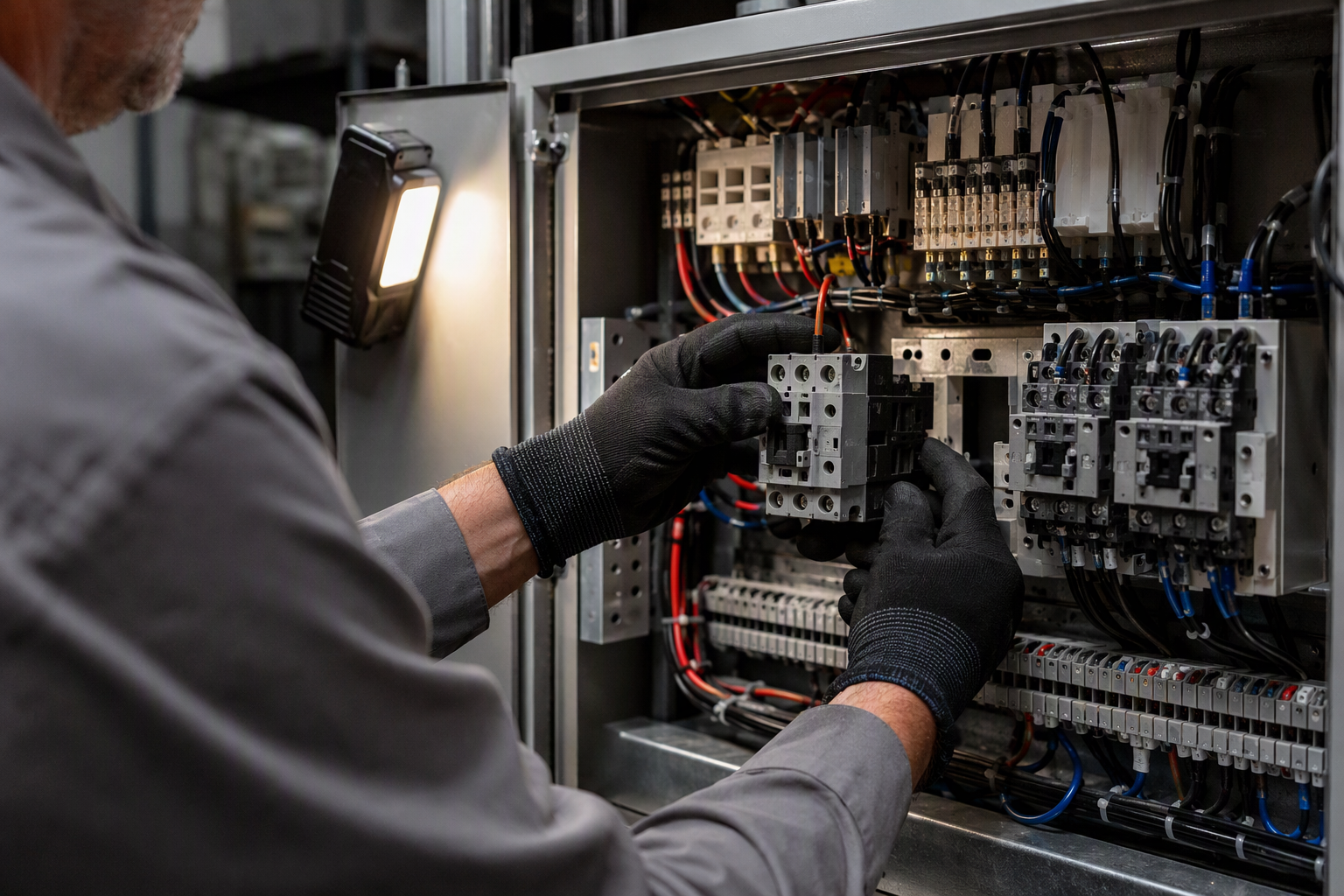
A complete elevator capital budget contains four distinct cost categories: planned preventive maintenance, regulatory compliance costs, repair and parts replacement, and capital modernization or replacement.
Planned preventive maintenance covers the recurring labor and materials under a maintenance contract — lubrication, adjustments, cleaning, safety device testing, and minor replacements. This is typically an operating expense, but the annual contract cost must still be projected and confirmed before the fiscal year begins.
Regulatory compliance costs include the annual inspection required by S.C. Code Title 41, Chapter 16 before the operating certificate is renewed, any special inspector fees if a third-party inspection is used in lieu of a state inspection, and construction permit fees for any alteration or repair projects. South Carolina requires a state construction permit before any elevator facility is erected, constructed, altered, or installed.
Repair and parts replacement covers mid-cycle failures — door operators, hydraulic seals, motor contactors, and rope replacement — that fall outside the maintenance contract scope. A contingency reserve for unplanned repairs is a standard capital planning tool.
Capital modernization or replacement addresses equipment that no longer meets the ASME A17.1/CSA B44, 2019 edition (adopted in South Carolina effective July 23, 2021) or the existing-elevator safety requirements under the 1986 edition of ANSI A17.3 applicable to South Carolina installations in operation before July 1, 1986. Modernization projects are capital expenditures and should be depreciated accordingly.
What does South Carolina law require, and how do those requirements drive budget line items?
South Carolina law requires that every elevator facility hold a valid certificate of registration and a current operating certificate, that the operating certificate be displayed conspicuously inside the elevator car, and that the owner keep every elevator in safe operating condition in compliance with state regulations.
Under S.C. Code Title 41, Chapter 16 and S.C. Code of Regulations Chapter 71, Article 5 (Regulations 71-5000 through 71-5700), South Carolina requires elevators to be inspected at installation, registration, alteration or repair, and at least once a year after that before the operating certificate is renewed. Each of these regulatory touchpoints generates a direct budget item: inspector fees (state or licensed special inspector), any corrective work orders required to pass inspection, and the certificate renewal itself.
Because a special inspector in South Carolina may not inspect an elevator on which the inspector’s employer holds a current service or warranty contract, building owners who use one company for both maintenance and inspection should plan for an independent inspection cost as a separate line item. Budget planners should confirm the applicable fee schedule with the South Carolina Department of Labor, Licensing and Regulation (LLR), Office of Elevators and Amusement Rides, well before the fiscal year begins.
What are the inspection intervals for different elevator types in South Carolina, and how should each be budgeted?
Inspection intervals vary by equipment type: standard passenger and freight elevators require annual inspection, handicap lifts require inspection every five years, and manlifts, television tower elevators, and special purpose elevators require inspection every seven years.
The table below summarizes South Carolina inspection intervals and their capital planning implications for a 2027 budget cycle.
| Equipment Type | SC Inspection Interval | 2027 Budget Trigger? | Permit Required for Alterations? | Applicable Code Reference |
|---|---|---|---|---|
| Passenger / Freight Elevator | Annual (before operating certificate renewal) | Yes — every year | Yes | S.C. Code Title 41, Ch. 16; ASME A17.1-2019/CSA B44:19 |
| Handicap Lift (Platform Lift) | Every 5 years | Depends on last inspection date | Yes (for alterations) | S.C. Code Title 41, Ch. 16 |
| Manlift / Special Purpose Elevator | Every 7 years | Depends on last inspection date | Yes (for alterations) | S.C. Code Title 41, Ch. 16 |
| Television Tower Elevator | Every 7 years | Depends on last inspection date | Yes (for alterations) | S.C. Code Title 41, Ch. 16 |
| Dumbwaiter | At installation or alteration only | Only if work is planned in 2027 | Yes (for new or altered installations) | S.C. Code Title 41, Ch. 16 |
Facility managers should pull the last inspection date and certificate renewal date for every piece of vertical transportation on the property and map those dates against the 2027 fiscal calendar. Any inspection due within fiscal year 2027 must have a budget line for both the inspection fee and the potential corrective work that could result.
How does ADA compliance factor into an elevator capital budget?
ADA compliance obligations can generate significant capital expenditures when alterations trigger accessibility upgrade requirements, and those costs must be anticipated in the capital plan.
Under the Americans with Disabilities Act (ADA), when an alteration is made to a facility’s primary function area, the path of travel — including vertical transportation — must be made accessible to the extent it is readily achievable. This means that a lobby renovation or tenant improvement planned for fiscal year 2027 could require simultaneous elevator cab, control, or signage upgrades to maintain ADA conformance. Building owners should review any planned 2027 renovation projects alongside their elevator condition assessment and budget for ADA-related elevator modifications as a contingency line item. Accessible features commonly evaluated include cab control button height and Braille markings, door timing, leveling accuracy, and audible floor indicators.
What is a preventive maintenance contract, and why is it the foundation of any elevator budget?
A preventive maintenance contract is a scheduled service agreement that covers routine inspections, lubrication, adjustments, safety device testing, and minor repairs at defined intervals throughout the year — and it is the single most effective tool for reducing unplanned repair costs.
Without a maintenance contract, minor mechanical degradation goes undetected until it produces a failure that generates emergency service calls, passenger entrapments, or regulatory violations. South Carolina law places the obligation on the owner to keep every elevator facility in safe operating condition, which makes a documented maintenance program both a practical necessity and a legal risk-management tool. When evaluating service contract proposals for the 2027 budget, facility managers should compare the scope of covered components, exclusions, response provisions, and whether the contract includes or excludes load testing and safety device testing required before annual inspections.
How should building owners plan for unplanned elevator repairs in fiscal year 2027?
Unplanned elevator repairs should be addressed through a dedicated contingency reserve, sized based on equipment age, type, and the findings from a condition assessment.
Hydraulic elevator systems, for example, may require cylinder, seal, or hydraulic fluid replacement. Older traction elevators may experience rope wear, governor failures, or control relay failures between scheduled maintenance visits. Because the timing of these failures cannot be predicted with precision, a contingency reserve — treated as a capital reserve line item rather than an operating budget item — protects the organization from mid-year budget disruptions. The appropriate reserve level is best determined by a qualified elevator service company after reviewing equipment records. Carolina Elevator Service provides written condition assessments that help Columbia-area building managers justify contingency reserve amounts to finance committees and boards.
What modernization projects might be necessary for fiscal year 2027, and how should they be identified?
Modernization projects that may need to be funded in fiscal year 2027 include control system upgrades, drive system replacement, door operator modernization, and safety device updates required to bring aging equipment into compliance with the adopted edition of ASME A17.1.
South Carolina adopted the ASME A17.1/CSA B44, 2019 edition effective July 23, 2021. Any alteration to an existing elevator triggers a compliance review against the adopted code. For elevators installed in South Carolina before July 1, 1986, the applicable standard for existing equipment is the 1986 edition of ANSI A17.3. When the LLR or a special inspector issues a correction notice following an annual inspection, the listed items become mandatory budget expenditures — they cannot be deferred without risking operating certificate suspension. Proactive owners commission a modernization needs assessment well before the budget cycle so that costs can be quantified, prioritized, and phased across multiple fiscal years where the code permits.
How does equipment age affect capital planning assumptions for elevators?
Equipment age is the primary driver of repair frequency, parts availability, and the likelihood that a routine inspection will generate code-compliance correction notices — all of which directly increase the budget required.
Older relay-logic control systems, for example, rely on components that are no longer manufactured in volume, making repairs both slower and more expensive than repairs to modern solid-state systems. Hydraulic cylinders installed before corrosion-protection standards were adopted present a different risk profile than newer cylinders. In South Carolina, newly installed underground hydraulic elevator cylinders must be encased in plastic outer containment to limit electrolytic corrosion — a requirement that signals the regulatory awareness of corrosion risk in older installations. Budget planners should flag elevators that are beyond the manufacturer’s recommended service life and treat them as candidates for modernization cost modeling in the 2027 plan.
What is standby power, and does it create a budget obligation for South Carolina properties?
Standby power is an emergency electrical system that keeps elevator safety functions operational during a main power failure, and South Carolina law requires it on passenger elevators.
Under South Carolina regulations, passenger elevators must have standby power that runs emergency lighting and the alarm bell for at least four hours if normal power fails. If a property’s standby power system is aging, undersized, or has not been load-tested recently, the 2027 capital plan should include battery replacement, transfer switch servicing, or generator capacity evaluation as a line item. This requirement applies to all passenger elevators and is verified during the annual inspection process — a failed standby power test can prevent operating certificate renewal.
What permit costs should be included in the 2027 elevator capital budget?
Any elevator project involving erection, construction, alteration, or installation requires a state construction permit from the South Carolina Department of Labor, Licensing and Regulation (LLR) before work begins, and the associated permit fees must be included as a budget line item.
Permit costs vary based on the scope of work and must be confirmed with the LLR, Office of Elevators and Amusement Rides, at the time of project scoping. Budget planners should note that permit applications require detailed plans and specifications, which may themselves carry design or engineering costs. Failing to obtain a permit before starting work is a statutory violation under S.C. Code Title 41, Chapter 16 and can result in stop-work orders, fines, and mandatory re-inspection. No alteration project should be budgeted without including the permit fee as a discrete line item.
How should a property with multiple elevators structure its capital plan differently from a single-elevator property?
Multi-elevator properties should use a staggered modernization schedule to avoid concentrating large capital expenditures in a single fiscal year and to maintain vertical transportation capacity during phased work.
A property with four or more elevators can typically phase cab modernizations, control system upgrades, or door operator replacements across two to four fiscal years without operational disruption, provided at least one elevator remains in service during each phase. The 2027 capital plan should identify which unit is in the worst condition and prioritize it for the first phase of work. A condition assessment from Carolina Elevator Service can provide a ranked equipment list that supports phased capital planning and helps justify the sequence to finance and asset management leadership. For multi-elevator properties, annual maintenance contract costs, inspection fees, and certificate renewal costs multiply per unit and must each appear as discrete line items.
How do firefighters’ service requirements affect the elevator capital budget?
South Carolina requires new elevator installations to use the five-pin S.C. #1000 key for firefighters’ service, and any alteration that involves firefighters’ service systems will require compatibility with this standard.
Budget planners should confirm whether any planned 2027 alteration projects involve the firefighters’ service phase 1 or phase 2 recall systems. If an older elevator’s firefighters’ service is being upgraded as part of a modernization, the work must conform to current requirements including the South Carolina-specific key standard. Including this detail in the project scope before soliciting contractor bids ensures that proposals are complete and that budget estimates are not revised upward after contract award.
What role does OSHA play in elevator capital planning for South Carolina employers?
OSHA regulations govern the safety of workers who perform elevator maintenance, inspection, and repair — and compliance with those standards affects how service contracts are written and how maintenance work is scheduled.
Under OSHA standards, employers and building owners share responsibility for ensuring that contracted elevator work is performed safely, including the use of lockout/tagout procedures, proper fall protection in hoistways, and electrical safety protocols. Budget planners should verify that any elevator service company selected for the 2027 contract year maintains current OSHA compliance programs. While OSHA compliance costs are typically embedded in a qualified contractor’s pricing rather than billed as a separate line item, selecting an unqualified vendor to reduce cost can expose the building owner to co-employer liability in the event of a workplace incident.
How should accident reporting obligations affect risk planning in the elevator capital budget?
South Carolina law requires that any elevator accident that seriously injures anyone other than an employee must be reported to the state before the end of the next working day — a requirement that underscores the legal and financial risk of deferred maintenance.
The financial exposure associated with an elevator-related serious injury extends far beyond repair costs to include regulatory investigation, potential certificate suspension, and civil liability. Budget planners should treat the preventive maintenance contract and condition-based repair reserve not merely as mechanical expenses but as risk management expenditures. Risk management and legal counsel should be consulted when setting contingency reserves for properties with aging equipment or a history of repeat inspection deficiencies. Documenting all maintenance activity, inspection reports, and corrective work orders is essential for demonstrating due diligence.
How should a budget plan account for the timeline from assessment to completed elevator work?
Elevator repair and modernization projects follow a multi-step sequence — assessment, scope development, permitting, parts procurement, and installation — and each phase has a lead time that must be mapped against the fiscal year calendar.
- Commission a condition assessment of all elevator assets — ideally by mid-2026 — to identify repair and modernization needs before the 2027 budget is finalized.
- Obtain written proposals from qualified elevator service companies for each identified scope of work, including separate pricing for the preventive maintenance contract, inspection support, and any capital projects.
- Confirm which projects require a South Carolina state construction permit and request permit timeline estimates from the LLR, Office of Elevators and Amusement Rides, before finalizing the project schedule.
- Factor parts procurement lead times into the project schedule — some drive system components, controllers, and hydraulic cylinders have extended lead times that can affect construction start dates.
- Submit capital budget requests with supporting documentation — condition assessment reports, contractor proposals, permit requirements, and code references — to ensure finance committee approval is based on documented need rather than estimates.
- Build schedule float into the project timeline to account for inspection scheduling delays, permit review periods, and contractor availability, particularly for work planned in the second half of fiscal year 2027.
- Confirm that operating certificates are current for all units before any alteration work begins, and coordinate inspection scheduling for post-alteration inspections required before equipment is returned to service.
What questions should facility managers ask when selecting an elevator service company for the 2027 contract year?
The right questions focus on regulatory compliance capability, inspection independence, documented maintenance practices, and the company’s familiarity with South Carolina-specific requirements.
Facility managers evaluating elevator service providers for a 2027 contract should ask whether the company is familiar with the requirements of S.C. Code Title 41, Chapter 16 and the adopted ASME A17.1-2019/CSA B44:19 standard. They should ask how the company documents maintenance visits and provides records that support annual inspection and operating certificate renewal. They should also clarify the inspection independence requirement — because a special inspector in South Carolina may not inspect an elevator on which the inspector’s employer holds a current service or warranty contract, building owners must understand whether the service provider also offers inspection services and how conflicts of interest are managed. Carolina Elevator Service works with Columbia-area property managers to structure service agreements that maintain clear regulatory compliance and documentation standards.
How should properties with handicap lifts or platform lifts budget differently from properties with passenger elevators?
Properties with handicap lifts benefit from a longer five-year inspection cycle under South Carolina law, but those units still require ongoing preventive maintenance, ADA compliance evaluation, and a capital reserve for component replacement.
The five-year inspection interval for handicap lifts does not reduce the maintenance requirement — it reduces the mandatory state inspection frequency. Preventive maintenance on platform lifts should include drive system lubrication, safety device testing, electrical system checks, and platform surface and barrier inspection. Budget planners should identify the last inspection date and calculate whether a mandatory inspection falls within fiscal year 2027. If a handicap lift also serves as the primary accessible route under ADA, any period of out-of-service time for repair or inspection carries additional legal risk and should be managed with a clear service restoration schedule.
What documentation should be maintained to support the elevator capital budget and demonstrate regulatory compliance?
A complete elevator documentation file includes the current operating certificate, maintenance visit records, inspection reports, correction notices and their close-out documentation, permit records, and equipment specifications.
South Carolina law requires that the operating certificate, or a copy, be displayed conspicuously inside each elevator car — but the supporting documentation file should be maintained in the facilities management office as well. During the budget planning process, reviewing this file reveals the history of correction notices, deferred repairs, and inspection findings that should inform the contingency reserve and capital project list. Finance teams and boards are more likely to approve adequately funded elevator budgets when requests are supported by regulatory correspondence, inspection reports, and documented maintenance history rather than verbal estimates. Carolina Elevator Service provides clients with detailed service documentation that supports both regulatory compliance and capital planning processes.
What should a completed 2027 elevator capital budget summary include?
A complete 2027 elevator capital budget summary should include a line-by-line breakdown of all maintenance, compliance, repair, modernization, and contingency costs organized by equipment unit and project type.
The budget summary should identify each elevator unit by type and installation year, list the applicable inspection interval and next required inspection date, itemize the annual preventive maintenance contract cost per unit, include permit and inspection fees for any planned alteration or repair projects, quantify the modernization or replacement capital for each project with supporting documentation, and state the contingency reserve as a percentage of the total repair and modernization budget. This format allows finance leadership to understand which costs are recurring operating expenditures and which are one-time capital investments, supports depreciation and reserve fund accounting, and provides a clear baseline for comparing actual expenditures against budget at fiscal year end.
How can building owners in Columbia, SC get professional help building their 2027 elevator capital plan?
Building owners in the Columbia, SC area can work directly with Carolina Elevator Service to obtain a documented elevator condition assessment that forms the foundation of a defensible 2027 capital budget.
Carolina Elevator Service serves commercial, multifamily, institutional, and government building owners throughout the Columbia, SC market. The team’s working knowledge of South Carolina Department of Labor, Licensing and Regulation requirements, the adopted ASME A17.1-2019/CSA B44:19 standard, and the practical realities of permit processing and inspection scheduling in South Carolina positions them to provide budget-ready assessments that finance teams can use directly. Engaging a service partner early — before the budget cycle closes — is the most reliable way to avoid the mid-year budget amendments that result from unbudgeted inspection deficiencies, emergency repairs, or deferred modernization projects that become unavoidable compliance obligations.
Ready to Build a Defensible 2027 Elevator Capital Plan?
Contact Carolina Elevator Service for a free elevator assessment. A written condition report covering equipment status, South Carolina compliance standing, and recommended capital actions gives finance teams and building owners the documentation they need to budget confidently for fiscal year 2027.
Call Carolina Elevator Service today: 803-865-1400
Serving commercial, multifamily, institutional, and government properties throughout Columbia, SC and the surrounding area.
Need elevator service you can rely on? Carolina Elevator Service is ready to help.