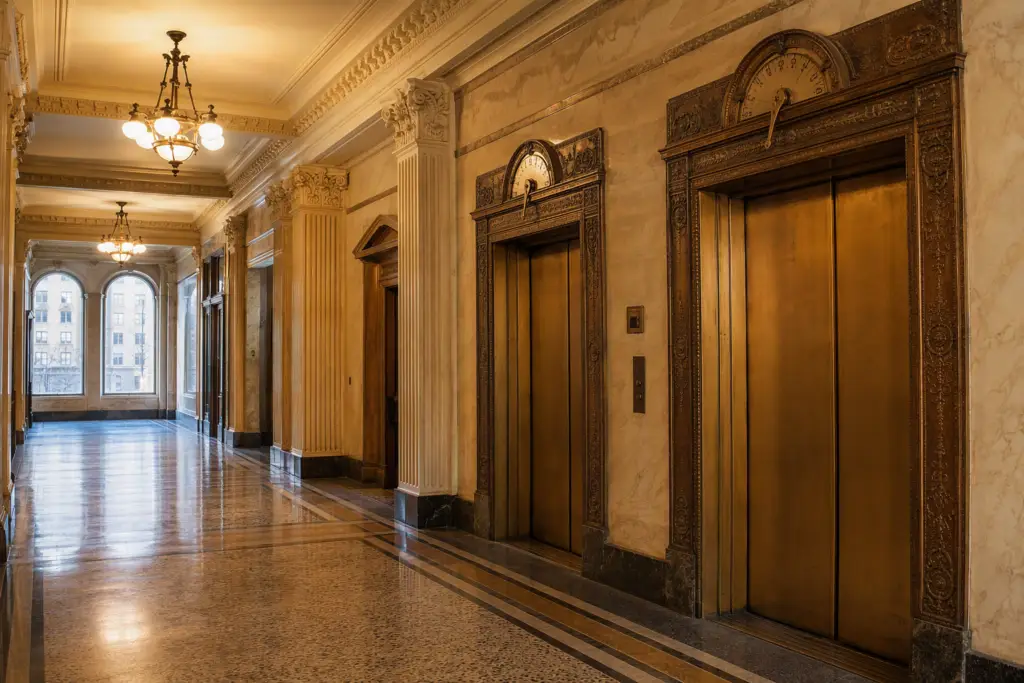
What Happens to an Elevator When a Building Sits Vacant or Has Low Traffic for an Extended Period
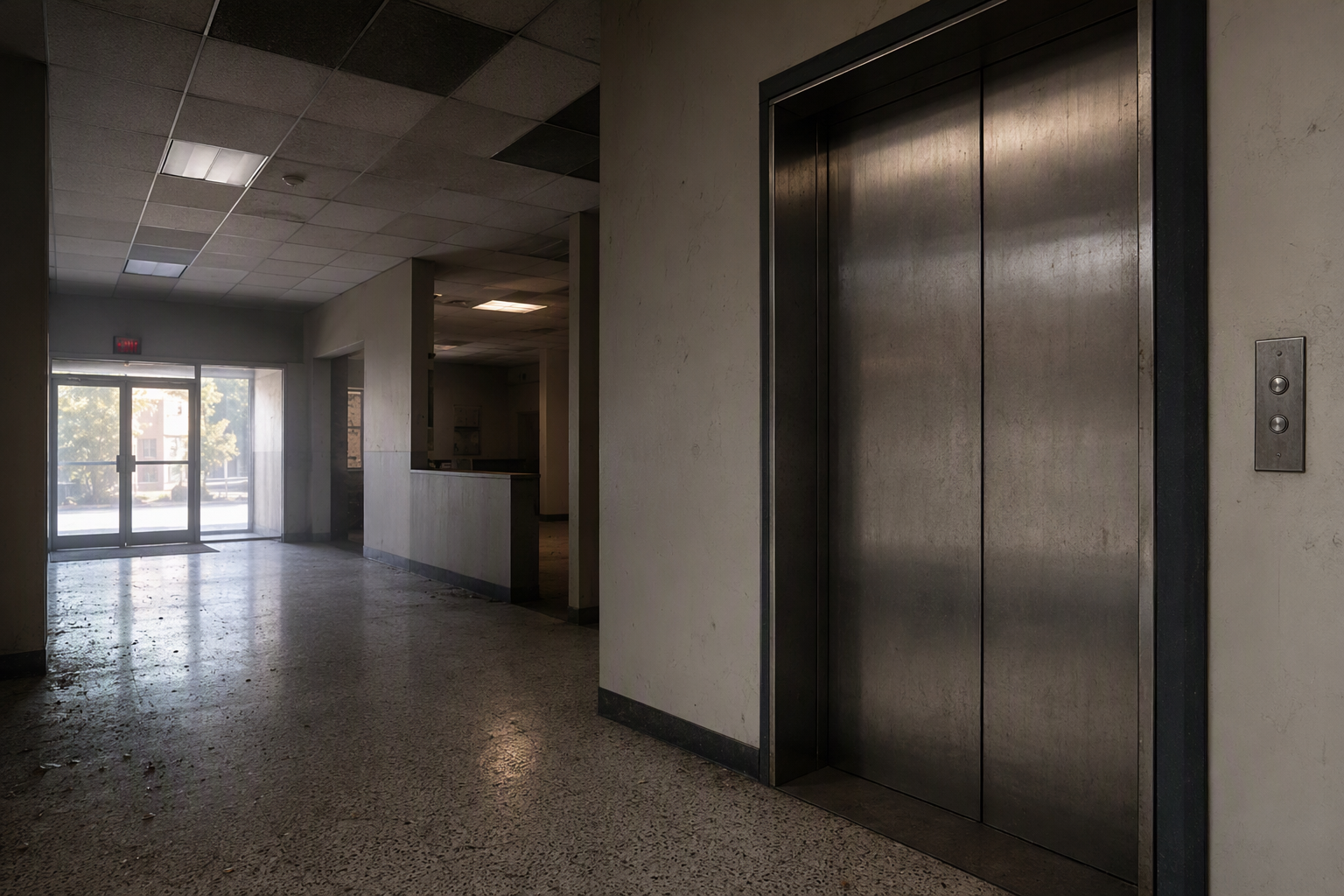
Property owners, building managers, and real estate investors sometimes assume that an idle elevator is a safe elevator — that without passengers, nothing can go wrong. The reality is the opposite. Elevator systems are engineered for regular, cyclic use, and extended inactivity introduces a distinct category of mechanical, hydraulic, electrical, and regulatory problems that active service simply does not. This page explains exactly what those problems are, why they develop, what South Carolina law requires during a period of vacancy, and what building owners must do before returning an idle elevator to service.
Why Does Elevator Inactivity Cause Damage?
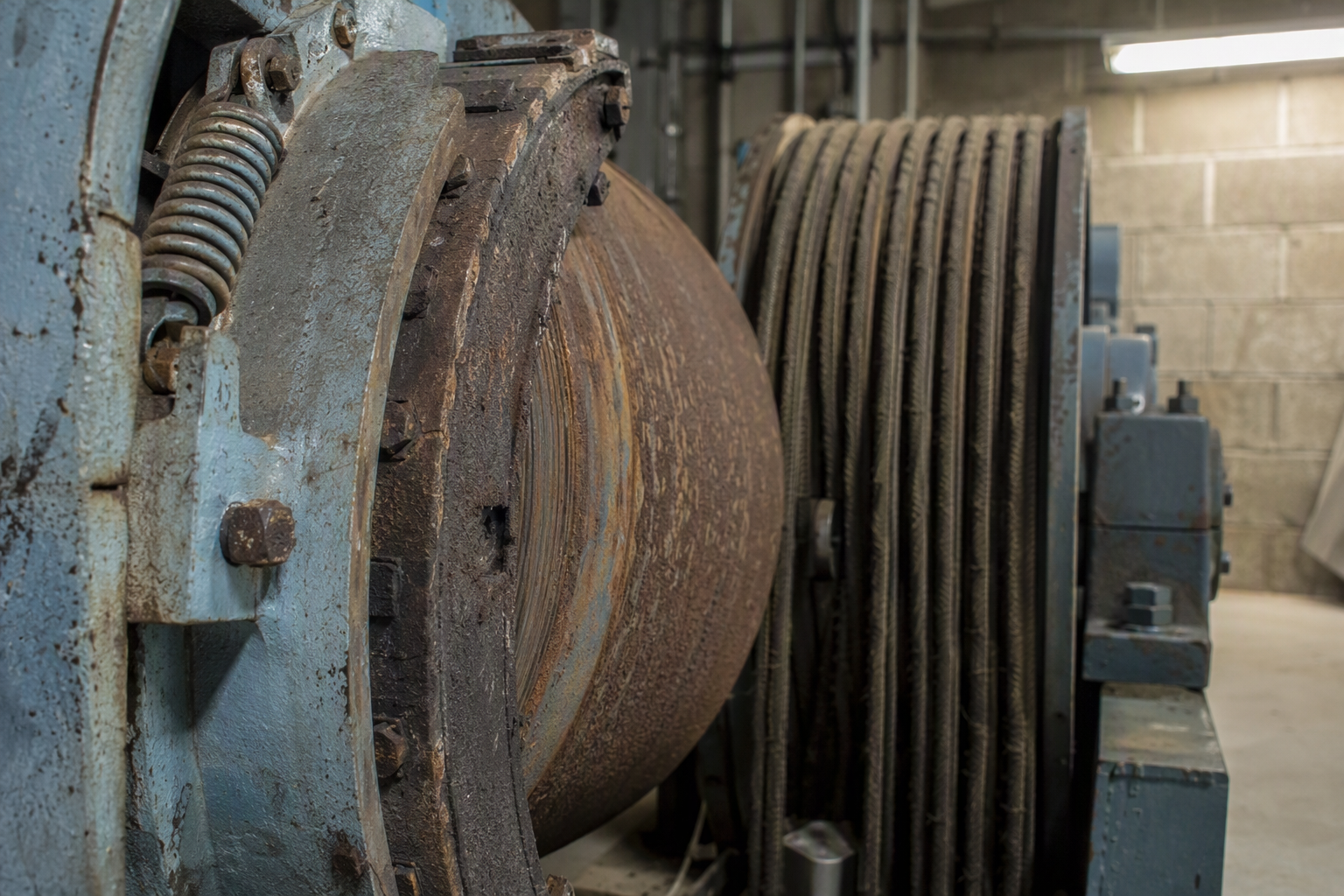
Elevator systems rely on the same basic principle as many mechanical systems: movement prevents stagnation. Hydraulic fluid circulates and maintains its chemical properties. Lubricants coat moving parts. Electrical contacts cycle open and closed, preventing oxidation. Ropes and cables flex, preserving their structural integrity. When a building sits vacant or experiences dramatically reduced traffic — whether due to renovation, economic downturn, a long-term lease gap, or a public health event — all of these processes slow or stop entirely. The consequences accumulate gradually, often invisibly, until the system is needed again.
What Mechanical Problems Develop in an Idle Elevator?
The mechanical components most at risk during extended inactivity include:
- Brake assemblies: Electromagnetic and spring-set brakes can seize when they remain in a fixed position for months. Brake shoes bond to drum surfaces or disc faces, and releasing a seized brake without proper inspection can cause abrupt, uncontrolled movement.
- Guide shoes and roller guides: These components ride along the guide rails throughout the hoistway. When stationary, guide shoes develop flat spots where they rest against the rail. Roller guide wheels can develop flat spots or crack if left under static load without rotation.
- Sheaves and rope grooves: Wire ropes that sit in the same groove position for extended periods can develop groove impressions in cast-iron or polyurethane sheave faces, accelerating wear once the system resumes operation.
- Door operator mechanisms: Door hangers, rollers, tracks, and clutch mechanisms accumulate corrosion and debris. Automatic door operators that sit idle can experience motor brush wear and contactor oxidation.
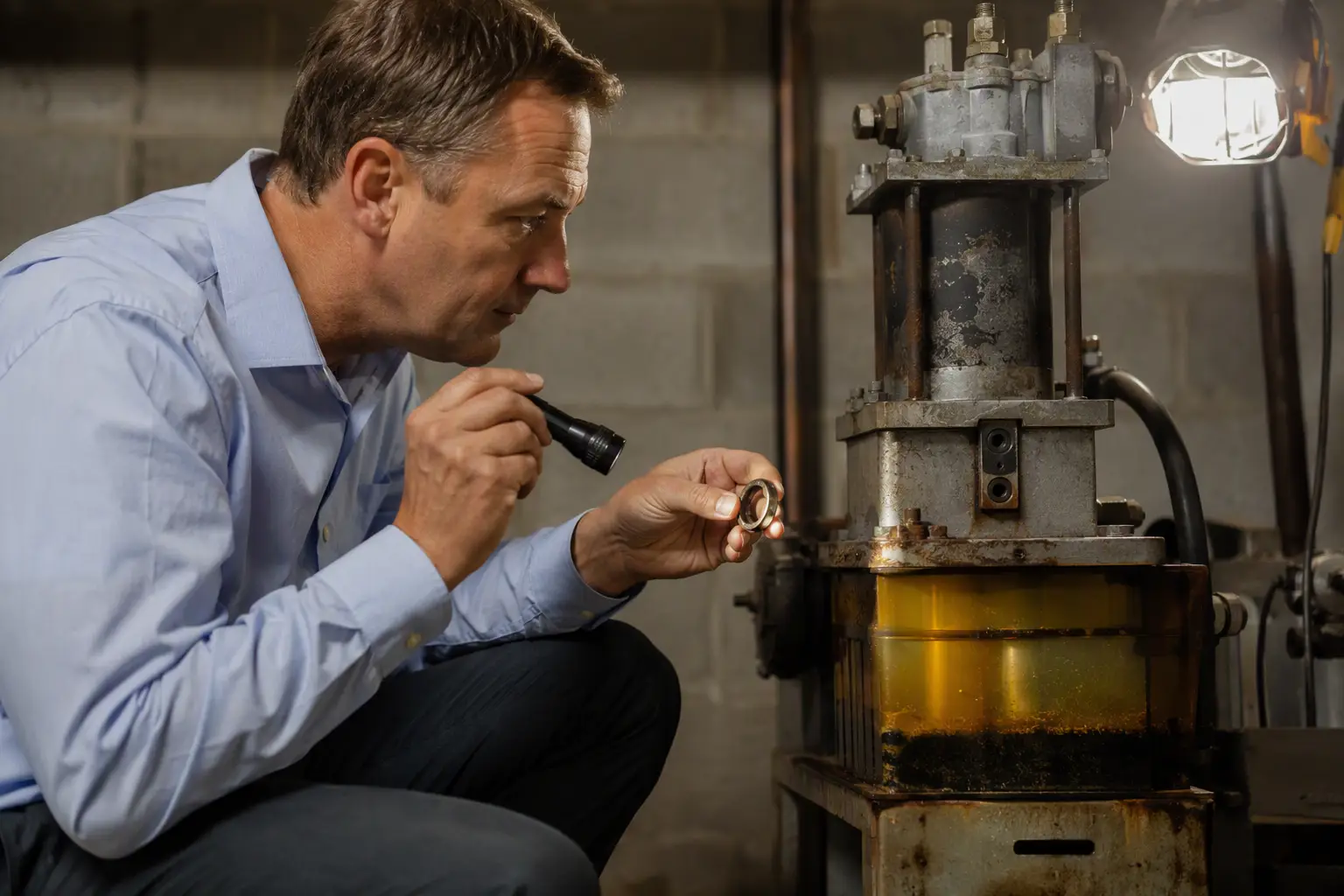
- Hydraulic cylinders and plungers: In hydraulic elevators — which are common in low- and mid-rise commercial buildings throughout South Carolina — the plunger seal degrades when the plunger is stationary. The seal relies on the constant lubrication film that comes with normal cycling. A static seal can dry out and lose its sealing properties, leading to fluid bypass and gradual car drift.
What Happens to Hydraulic Fluid During Vacancy?
Hydraulic elevator fluid is a petroleum- or synthetic-based product designed to transmit force with minimal compressibility. Under normal operating conditions, the fluid circulates regularly through the power unit, maintaining a consistent temperature and chemical composition. During prolonged inactivity, several things happen:
- Water contamination: Condensation can introduce water into the hydraulic reservoir, particularly in humid climates. South Carolina’s coastal and inland humidity levels make this a meaningful concern. Water in hydraulic fluid causes emulsification, promotes microbial growth, accelerates corrosion inside the cylinder, and reduces the fluid’s lubricity.
- Fluid separation and sedimentation: Hydraulic fluid additives can stratify over time, leaving heavier compounds at the bottom of the tank. When the pump starts after a long idle period, it may draw a non-uniform mixture through the system.
- Seal degradation: The petroleum compounds in some hydraulic fluids interact with rubber seals and O-rings over time. A seal that has been compressed against a dry plunger without cyclic movement can harden, crack, or take a permanent set, creating leak pathways the moment pressure is applied.
- Underground cylinder corrosion: South Carolina specifically addresses this risk in its regulatory framework. Under S.C. Code Title 41, Chapter 16 and associated regulations, newly installed underground hydraulic elevator cylinders must be encased in a plastic outer containment to limit electrolytic corrosion. In older buildings where this protection is absent, a long idle period with a compromised seal can allow hydraulic fluid to migrate into surrounding soil — an environmental liability that compounds the mechanical problem.
What Electrical and Control System Problems Emerge?
Modern elevators are managed by programmable logic controllers (PLCs) or microprocessor-based relay logic systems. Legacy elevators may use relay-based control panels. Both are vulnerable to extended inactivity in different ways:
- Relay contact oxidation: Relay contacts that carry low-level control signals develop a thin oxide film when unused. This film increases contact resistance and can cause intermittent or failed signal transmission when power is restored.
- Capacitor degradation: Electrolytic capacitors in motor drives and control boards lose their charge capacity when not energized for extended periods. A capacitor that has been dormant may fail immediately or shortly after startup, causing drive faults.
- Battery backup failure: South Carolina requires that passenger elevators have standby power capable of running emergency lighting and the alarm bell for at least four hours if normal power fails. Emergency lighting batteries and the batteries in telephone or emergency communication systems lose charge capacity over months of disuse and may no longer meet this requirement when the building reopens.
- Motor insulation degradation: Hoist motors and pump motors can absorb ambient moisture into winding insulation when they are unpowered. Insulation resistance drops, increasing the risk of winding faults and ground faults on startup.
- Variable frequency drive (VFD) failures: VFDs in traction elevator systems require periodic energization to maintain their internal components in proper condition. Long idle periods can cause capacitor and bus failures, requiring drive reconditioning or replacement before the system is safe to operate.
What Are the South Carolina Compliance Consequences of a Vacant Building?
This is where building owners face their most immediate legal exposure. Under S.C. Code Title 41, Chapter 16 and the rules in S.C. Code of Regulations Chapter 71, Article 5:
- No elevator facility may be operated in South Carolina without a valid certificate of registration and an operating certificate issued by the state.
- The operating certificate — or a copy — must be displayed conspicuously inside each elevator car at all times when the elevator is in service.
- South Carolina requires elevators to be inspected at least once a year before the operating certificate is renewed. A building that has been vacant and has not had its elevator inspected may be operating on an expired certificate without the owner realizing it.
- The South Carolina Department of Labor, Licensing and Regulation (LLR), Office of Elevators and Amusement Rides, is the state agency responsible for enforcement. The owner — not the tenant, not the property manager — bears the legal obligation to keep every elevator facility in safe operating condition and in compliance with state regulations.
- South Carolina adopted the ASME A17.1/CSA B44, 2019 edition, effective July 23, 2021. Any elevator returned to service after vacancy must meet the applicable requirements of this edition — or, for elevators that were in operation before July 1, 1986, the 1986 edition of ANSI A17.3.
- If an alteration or repair is required to bring the elevator back to safe operating condition after a long vacancy, a state construction permit is required before that work begins.
Building owners who reopen a property and operate an elevator without verifying certificate status and current inspection compliance are exposed to enforcement action, liability in the event of an incident, and potential inability to obtain or renew the operating certificate.
What Should a Building Owner Do Before Returning an Idle Elevator to Service?
- Verify current operating certificate status. Confirm with the South Carolina Department of Labor, Licensing and Regulation (LLR), Office of Elevators and Amusement Rides that the elevator’s operating certificate is current. If it has lapsed, schedule the required inspection immediately — the elevator cannot legally operate until a valid certificate is in place.
- Engage a qualified elevator service provider for a full recommissioning inspection. This is distinct from the state inspection. A thorough mechanical, hydraulic, and electrical inspection by a qualified elevator contractor should occur before the state inspection so that any deficiencies can be corrected without the elevator failing a state inspection.
- Test the hydraulic system. This includes checking fluid condition and level, pressure testing the cylinder and valve assembly for leaks, inspecting seals, and examining the underground cylinder if applicable. In South Carolina, the underground containment requirement applies to newly installed cylinders, but older systems without containment require heightened attention.
- Inspect and test all safety devices. Under ASME A17.1, elevators are required to have functioning safeties, buffers, interlocks, and governor systems. All of these must be verified prior to returning passengers to the car.
- Test emergency power and communications. Verify that the standby power system can sustain emergency lighting and the alarm bell for at least four hours as required under South Carolina regulations. Test the emergency telephone or two-way communication system for proper operation.
- Lubricate all components per manufacturer specifications. Guide rails, sheaves, roller guides, door operator hardware, and other moving parts must be properly lubricated after an idle period — particularly if the manufacturer’s recommended service intervals have elapsed.
- Run the elevator through a full operational test sequence. Before opening the building to occupants, the elevator should complete multiple full-travel trips, door cycles, and landing stops under observation. Any anomalies — unusual noise, uneven leveling, door hesitation — should be investigated before occupant use.
- Confirm ADA accessibility requirements are met. Under the Americans with Disabilities Act, elevators in public accommodations and commercial facilities must meet accessibility standards. A building returning from vacancy should confirm that call buttons, floor indicators, audible signals, and car dimensions continue to comply.
- Document everything. Maintain records of the recommissioning inspection, all work performed, parts replaced, and the state inspection outcome. These records support certificate renewal and provide a defense record in the event of a future incident.
How Long Does Recommissioning an Idle Elevator Typically Take?
The timeline depends on the condition of the equipment, the duration of inactivity, and whether replacement parts are required. An elevator that has been idle for a few months with a current certificate in a climate-controlled building may need only a thorough inspection and lubrication before returning to service. An elevator that has been idle for a year or more in an unconditioned space — exposed to South Carolina’s humidity cycles and temperature extremes — may require seal replacement, hydraulic fluid exchange, drive component reconditioning, and safety device recertification, which could extend the timeline meaningfully. Building owners planning a property reopening should factor elevator recommissioning into their project schedule rather than treating it as a same-day task.
Does Low Traffic — But Not Full Vacancy — Also Cause Problems?
Yes. A building that remains occupied but experiences dramatically reduced traffic — a partially leased office tower, a hotel operating at low occupancy, or a retail center with anchor tenant departures — can experience many of the same problems on a slower timeline. The elevator may cycle only a handful of times per day instead of hundreds. Lubricants do not distribute properly. Door operators that cycle infrequently develop the same oxidation problems as fully idle units. Hydraulic seals that do not cycle regularly begin to lose their lubricity film. The difference from full vacancy is one of degree and timeline, not of mechanism. Regular preventive maintenance by a qualified elevator service provider is the most effective way to offset the effects of low-cycle operation.
What Are the Safety Risks to the First Passengers After Vacancy?
The most significant safety risks associated with returning a poorly maintained idle elevator to service include:
- Uncontrolled movement: A seized brake that releases unevenly, a hydraulic valve that does not seat properly, or a safety circuit that has degraded can allow unexpected car movement — the central hazard that elevator safety codes are designed to prevent.
- Door entrapment: Door operator components that have seized or degraded may not detect an obstruction properly, creating entrapment or strike hazards.
- Emergency system failure: If the emergency lighting battery has failed and the elevator stops between floors, passengers may be trapped in darkness without a working communication system — a serious life-safety concern.
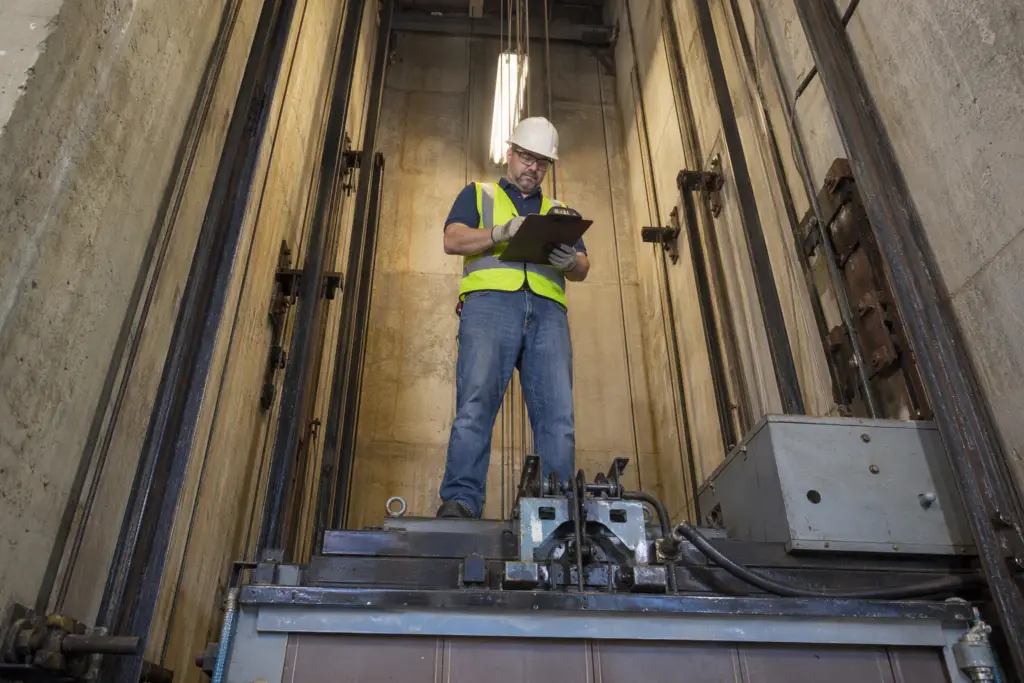
- Falls in the hoistway: Maintenance personnel conducting the recommissioning inspection face OSHA-regulated fall and electrical hazards that are heightened in a system that has not been regularly maintained. Proper lockout/tagout procedures are required before any mechanical work is performed.
What Does South Carolina Require If the Elevator Needs Repairs Before It Can Pass Inspection?
If the recommissioning inspection reveals deficiencies significant enough to require alteration or repair, South Carolina law requires that a state construction permit be obtained before that work begins. This applies whether the work involves replacing components, modifying the control system, or addressing structural deficiencies in the hoistway. Work performed without a permit is a violation of S.C. Code Title 41, Chapter 16 and may complicate or delay the issuance of the operating certificate.
Can the Building Owner Keep the Elevator Tagged Out of Service During Vacancy?
A building owner who removes an elevator from service during a vacancy period — properly locking it out and posting it as out of service — can reduce the mechanical deterioration that comes from unauthorized use or environmental cycling of an unattended car. However, this does not suspend the annual inspection and certificate renewal requirement. South Carolina requires annual inspection before operating certificate renewal regardless of whether the elevator has been used during the preceding period. Owners who plan an extended vacancy should consult with a qualified elevator service provider and confirm compliance obligations with the South Carolina Department of Labor, Licensing and Regulation (LLR), Office of Elevators and Amusement Rides before assuming that an idle elevator requires no regulatory attention.
What Industry Trends Are Shaping How Vacant-Building Elevators Are Managed in 2025–2026?
Several qualitative trends are influencing how property owners and elevator service providers approach vacancy-related elevator maintenance:
- Remote monitoring technology: Elevator modernization projects increasingly incorporate IoT-based monitoring systems that report operational data — run counts, door cycles, fault codes, temperature readings — to a cloud platform accessible by the service provider. For a building that transitions from low to zero occupancy, remote monitoring allows a service provider to detect system anomalies (such as a slow hydraulic leak or an unexpected fault code) without a technician being physically present, enabling proactive intervention before serious damage develops.
- Hydraulic fluid environmental standards: Growing regulatory and lender sensitivity to underground petroleum contamination is pushing property owners toward biodegradable hydraulic fluid alternatives in older hydraulic elevator installations. This is particularly relevant in South Carolina where underground cylinder corrosion is specifically addressed in the regulatory framework.
- Commercial real estate vacancy patterns: Shifts in how commercial office and retail space is used — with more hybrid work arrangements and anchor tenant consolidation — mean that partial-vacancy conditions are increasingly common in mid-rise buildings that rely on hydraulic or older traction elevators. Elevator service providers are adapting maintenance programs to account for lower-cycle operating environments.
- Code modernization pressure: As South Carolina operates under the ASME A17.1-2019 edition, buildings returning from extended vacancy that require significant alteration work may face modernization requirements that bring older systems into compliance with current code editions — a meaningful cost and planning consideration for property owners.
How Does Carolina Elevator Service Approach Vacant-Building Elevator Assessments?
Carolina Elevator Service provides data-driven elevator assessments for commercial property owners, building managers, and real estate investors across South Carolina. Rather than applying a one-size-fits-all checklist, Carolina Elevator Service evaluates each system based on its specific equipment type, age, control system generation, hoistway environment, and duration of inactivity. Assessments document the mechanical, hydraulic, electrical, and compliance status of the elevator and provide a prioritized scope of work that distinguishes between items required for safe operation, items required for regulatory compliance under South Carolina law, and items that represent best-practice recommendations for long-term reliability. This approach allows building owners to make informed decisions about recommissioning timelines and capital requirements before a property reopens.
What Are the Cost Drivers for Recommissioning an Idle Elevator?
While specific pricing depends on equipment type, age, and condition, the factors that most significantly drive recommissioning cost include:
- Duration of inactivity: A longer idle period typically means more degraded seals, more oxidized contacts, and more lubrication deficit — all of which increase labor and parts requirements.
- Equipment age and parts availability: Older relay-logic control systems and discontinued hydraulic power units may require custom-sourced or fabricated replacement parts, increasing cost and lead time.
- Hydraulic cylinder condition: If an underground cylinder has experienced corrosion or seal failure during vacancy, assessment and remediation — potentially including cylinder replacement — represent the most significant cost variable in hydraulic elevator recommissioning.
- Modernization triggers: If repair work rises to the level of “alteration” under the applicable code, South Carolina’s permitting and inspection requirements apply, and the scope of required upgrades may expand to address current code compliance.
- Emergency system replacement: Battery backup systems, emergency phones, and lighting components that have failed during vacancy require replacement before the elevator can pass a South Carolina annual inspection.
Summary: Key Facts About Elevator Vacancy Risk
| Requirement | Authority |
|---|---|
| Annual inspection required before operating certificate renewal | S.C. Code Title 41, Chapter 16 |
| No elevator may operate without a valid operating certificate | S.C. Code Title 41, Chapter 16 |
| State construction permit required before alteration or repair work | S.C. Code Title 41, Chapter 16 |
| Emergency lighting and alarm bell standby power: minimum four hours | S.C. Code Title 41, Chapter 16 / ASME A17.1-2019 |
| Underground hydraulic cylinders: plastic outer containment required (new installations) | S.C. Code Title 41, Chapter 16 |
| Owner responsible for keeping elevator in safe operating condition | S.C. Code Title 41, Chapter 16 |
| Adopted safety code: ASME A17.1/CSA B44, 2019 edition | ASME A17.1-2019, effective S.C. July 23, 2021 |
Get a Professional Assessment Before Your Building Reopens
An elevator that has sat idle is not a safe elevator until a qualified professional says otherwise. South Carolina law places the responsibility for safe, compliant elevator operation squarely on the building owner — regardless of how long the building has been vacant or how few people have ridden the elevator in recent months. The mechanical, hydraulic, electrical, and regulatory risks described on this page are preventable with proper recommissioning and ongoing maintenance.
Contact Carolina Elevator Service for a free elevator assessment at 803-865-1400. Carolina Elevator Service serves commercial property owners and building managers throughout South Carolina, delivering detailed, code-referenced assessments that give owners the information they need to reopen confidently and in compliance with S.C. Code Title 41, Chapter 16 and ASME A17.1-2019.
Need elevator service you can rely on? Carolina Elevator Service is ready to help.