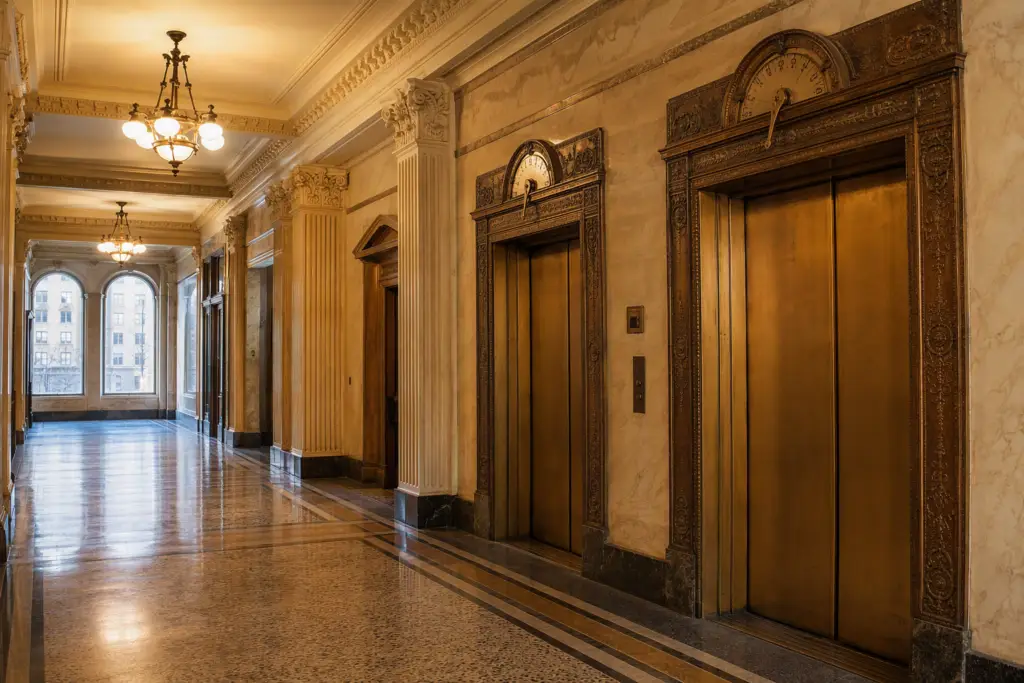
An elevator maintenance log should include the date and type of every inspection, test, and repair; the name and license status of the inspector or technician; any deficiencies found and corrective actions taken; part replacements with serial numbers; and the current operating certificate number — and during inspections or insurance claims, this record serves as the primary evidence that the elevator has been maintained in compliance with applicable codes.

Elevator Maintenance Log: What to Include and How to Use It During Inspections and Insurance Claims
An elevator maintenance log is the single most important document an elevator owner or building manager can maintain. It records every inspection, test, service visit, repair, and part replacement performed on an elevator — and it provides the traceable, time-stamped evidence that regulators, insurers, and courts require when a question arises about an elevator’s condition or compliance history. Without a complete, accurate log, building owners in Columbia, SC face potential certificate violations, denied insurance claims, and significant liability exposure.
What exactly should be included in an elevator maintenance log?
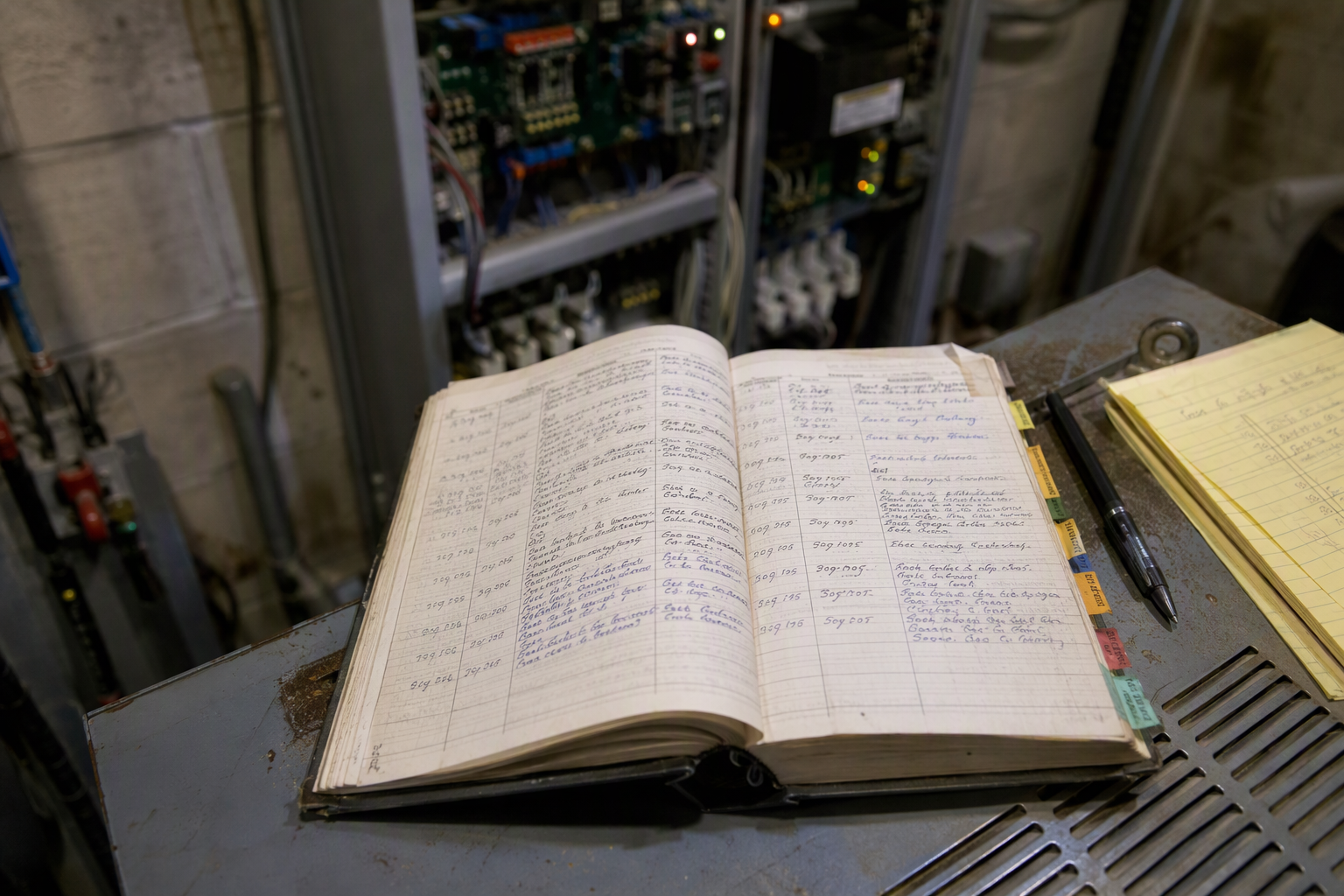
A complete elevator maintenance log must capture seven core categories of information: inspection records, test results, service and repair entries, parts documentation, deficiency tracking, regulatory certificate data, and incident or accident reports.
Each entry should begin with the date and time of the activity, the type of service performed (routine maintenance, annual inspection, category test, emergency call, etc.), and the full name and license or certification status of every person who worked on the unit. In South Carolina, inspections must be performed either by a state inspector or a licensed special inspector who meets the qualifications set out in the QEI-1 standard; logging their credentials directly in the record creates an immediately verifiable chain of custody.
Beyond personnel data, every log entry should describe the specific components examined or serviced — door operators, safeties, buffers, governor, hydraulic system, electrical controls, cab interior, lighting, and emergency systems. Observations should be recorded in objective, factual language: not “looks okay” but “door operator clutch clearance measured and within tolerance per ASME A17.1-2019/CSA B44:19 specifications.” Any deviation from acceptable parameters becomes a deficiency entry, which must then carry a follow-up field tracking the corrective action, the date it was completed, and who completed it.
Part replacements deserve their own sub-section within each entry. Recording the part name, manufacturer, part number, and serial number — along with the serial number of the component being replaced — gives insurers and inspectors a verifiable audit trail that cannot be reconstructed after the fact from memory.
Which regulatory requirements govern elevator record-keeping in South Carolina?
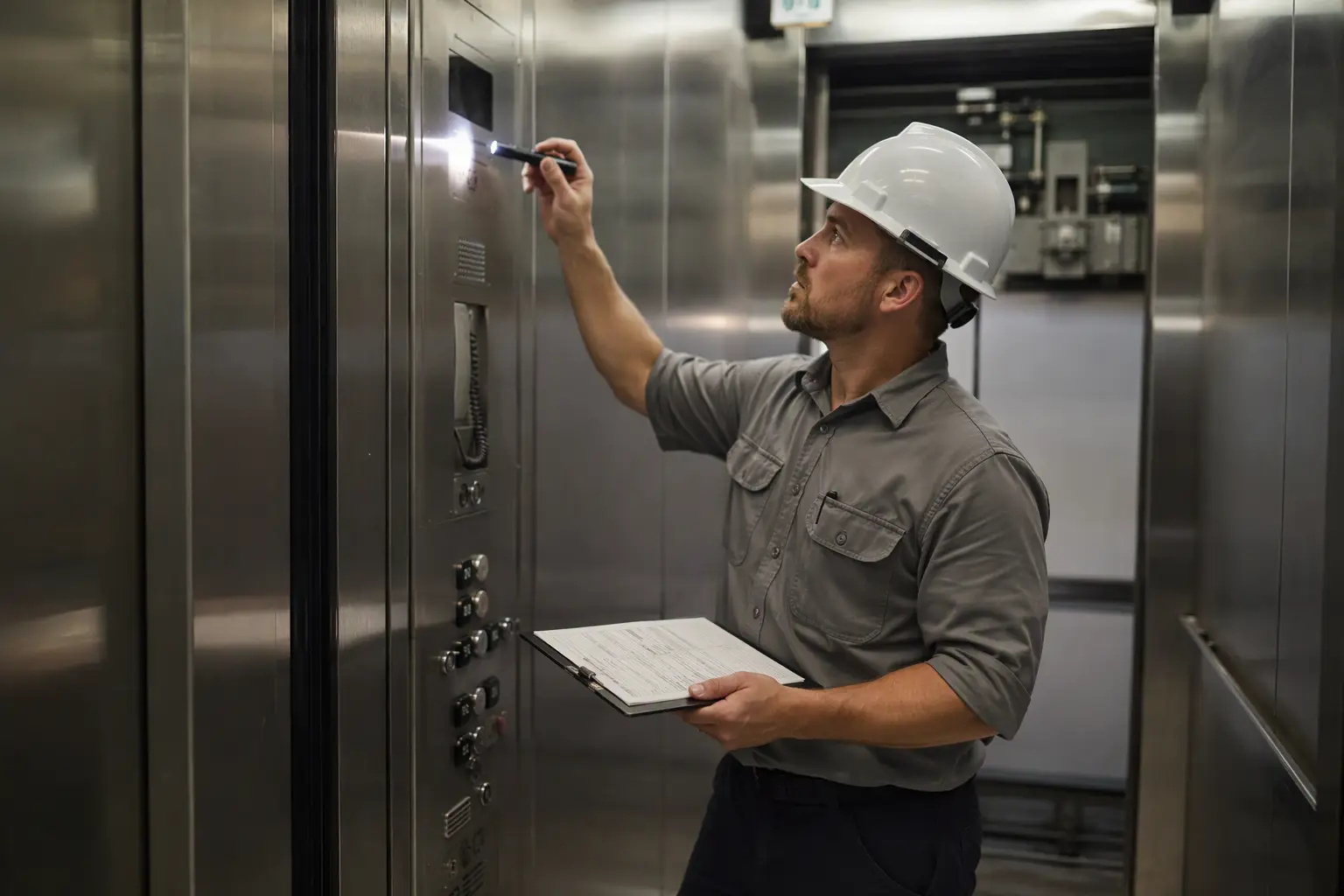
South Carolina elevator record-keeping is governed by S.C. Code Title 41, Chapter 16, which establishes the South Carolina Elevator Code, along with S.C. Code of Regulations Chapter 71, Article 5, Regulations 71-5000 through 71-5700, and the state’s adopted code, ASME A17.1-2019/CSA B44:19.
South Carolina law places responsibility for maintaining every elevator in safe operating condition squarely on the owner. This duty of care includes keeping records that demonstrate ongoing compliance. South Carolina also requires that no elevator operate without a valid certificate of registration and a current operating certificate, and that the operating certificate — or a legible copy — be displayed conspicuously inside every elevator car. The log should record the certificate number, its issue date, and its expiration date so that renewal deadlines are never missed. The South Carolina Department of Labor, Licensing and Regulation (LLR), Office of Elevators and Amusement Rides, administers these requirements and may request log documentation during any inspection.
How often must elevators be inspected in South Carolina, and how does the log reflect those intervals?
South Carolina requires most passenger elevators to be inspected at least once a year before the operating certificate is renewed, with additional inspections required at installation, registration, and after any alteration or repair.
The log should contain a dedicated section — or clearly marked entries — for each required inspection interval. For standard passenger elevators, the log should show an annual inspection entry every twelve months at minimum. For handicap lifts, South Carolina law requires inspection every five years; for manlifts, television tower elevators, and special purpose elevators, the interval is every seven years; dumbwaiters require inspection when installed or altered. Each of these entries should cross-reference the operating certificate issued after the inspection, creating a seamless compliance timeline that any regulator or insurer can follow at a glance.
Carolina Elevator Service recommends that building managers in Columbia set calendar reminders at least sixty days before each inspection deadline so that any deficiencies uncovered during a pre-inspection service visit can be corrected before the official state inspection, avoiding certificate delays.
What format works best for an elevator maintenance log — paper or digital?
Both paper and digital formats are acceptable under South Carolina regulations, but a hybrid approach — digital primary records with printed copies stored in or near the machine room — provides the strongest practical protection during unannounced inspections and emergency situations.
A digital log stored in a cloud-based or building management system offers searchability, automatic timestamping, and the ability to generate reports quickly for an insurer or attorney. Paper logs kept in a locked, fire-resistant cabinet in the machine room ensure that the record is physically accessible when an inspector arrives and electronic systems are unavailable. Regardless of format, the log must be legible, organized chronologically, and complete — entries should never be whited out, erased, or deleted, because alterations to a maintenance record can undermine its credibility in a legal or insurance proceeding.
What is the minimum data each log entry should capture?
Each log entry must capture, at minimum: date and time, service type, technician identity and qualifications, components examined or serviced, findings, deficiencies noted, corrective actions taken, and parts used.
| Entry Type | Minimum Required Fields | Recommended Additional Fields | Applicable Standard / Requirement |
|---|---|---|---|
| Routine Maintenance Visit | Date, technician name, components serviced, observations | Lubrication type/quantity, adjustment measurements, time on site | ASME A17.1-2019 |
| Annual State Inspection | Date, inspector name and QEI credential number, certificate number issued or renewed, pass/fail status | Category test results, governor reset data, car leveling accuracy | S.C. Code Title 41, Ch. 16 |
| Repair or Alteration | Date, work description, parts replaced (with part and serial numbers), state construction permit number if required | Before/after measurements, post-repair test results | S.C. Code Title 41, Ch. 16 |
| Incident or Accident Report | Date/time of incident, description, persons involved, injuries, actions taken, state notification date | Photos referenced, witness names, insurance claim number | S.C. Code Title 41, Ch. 16 |
| Emergency Service Call | Date, time of call, time of arrival, problem description, resolution, parts used | Entrapment duration if applicable, first responder involvement | ASME A17.1-2019 |
| Periodic Categorical Test (e.g. Safety Test) | Date, test category and type, test results, inspector name, pass/fail | Load used in test, counterweight data, hydraulic pressure readings | ASME A17.1-2019 |
How should the log be used during a South Carolina state elevator inspection?
During a South Carolina state inspection, the maintenance log functions as the primary evidence document, and presenting it proactively to the inspector demonstrates the owner’s commitment to compliance and often accelerates the inspection process.
Before the inspector arrives, the building manager or elevator contractor should review the log for completeness, confirm that the most recent operating certificate entry is current, and flag any open deficiency items with a clear note on the corrective action taken. The inspector will typically review the log alongside the physical examination of the elevator, cross-referencing service dates with observed component conditions. A well-maintained log that shows consistent, documented service history can support a smoother inspection outcome. Conversely, gaps, illegible entries, or missing deficiency follow-ups are red flags that may prompt closer scrutiny or a conditional certificate.
Carolina Elevator Service routinely assists Columbia, SC building owners in preparing their log documentation before scheduled state inspections, helping identify gaps and organize records so that the inspection proceeds efficiently.
What role does the maintenance log play in an insurance claim after an elevator incident?
In an elevator insurance claim, the maintenance log is the central evidentiary document that establishes whether the owner fulfilled the duty of care — and a complete, consistent log is often the difference between a covered claim and a denied one.
When an injury or property damage incident occurs, insurers and their investigators will request the complete maintenance history of the elevator as one of their first steps. They are looking for evidence that the elevator was regularly serviced, that known deficiencies were addressed promptly, that required inspections and tests were current, and that no condition that could have caused the incident was left unresolved. A log showing regular service visits, timely deficiency closures, and a valid operating certificate establishes the owner’s reasonable care. A log showing missed inspections, open deficiencies, or no entries for extended periods creates significant exposure — it suggests neglect rather than care.
Additionally, incident and accident entries themselves must be handled carefully. South Carolina law requires that any accident seriously injuring a person other than an employee must be reported to the state before the end of the next working day. The log entry for the incident should record the date and time of the occurrence, the date and time of state notification, and the claim number once assigned, creating a complete regulatory and insurance audit trail in a single location.
What steps should a building owner take immediately after an elevator incident to protect the log’s evidentiary value?
After an elevator incident, the building owner or manager should take the following steps immediately to preserve the maintenance log’s integrity and evidentiary value:
- Secure the elevator and restrict access — do not operate the unit until it has been examined by a qualified service provider and cleared.
- Photograph or digitally capture the current state of the log before any new entries are made, creating a timestamped snapshot of the record at the moment of the incident.
- Make a complete photocopy or digital export of all log records and store them separately from the original in a secure location.
- Write a factual incident entry in the log immediately: date, time, description of what occurred, persons present, and apparent injuries — in objective, non-speculative language.
- Notify the South Carolina Department of Labor, Licensing and Regulation (LLR), Office of Elevators and Amusement Rides, before the end of the next working day if any person other than an employee was seriously injured, as required by South Carolina law.
- Notify the building’s insurer and forward a copy of the log as requested, working with legal counsel before providing originals.
- Contact a certified elevator service company to inspect and document the mechanical condition of the elevator before any repairs are made, so that the pre-repair condition is independently documented.
How does the maintenance log interact with ADA compliance documentation?
The maintenance log should include entries specific to accessibility features, because ADA compliance is a distinct legal obligation that runs parallel to state safety regulations and carries its own liability exposure.
ADA-covered elevators must maintain operational door timing, leveling accuracy within a specified tolerance at each floor, accessible cab controls at proper heights, and working emergency communication systems. When a service visit addresses any of these elements — adjusting door hold-open time, calibrating leveling, testing the emergency phone — the log entry should specifically reference the accessibility function being maintained, not just the mechanical component. If an ADA-related deficiency is identified and corrected, the log should record the before-and-after condition. This creates a defensible record that the building owner actively monitors and maintains accessibility compliance, which is important in any ADA complaint investigation.
What emergency system components must be documented in the log?
Every log must include documented testing and maintenance of emergency systems, because these components are both life-safety critical and specifically scrutinized during state inspections and insurance reviews.
South Carolina passenger elevators must have standby power capable of running emergency lighting and the alarm bell for at least four hours in the event of a normal power failure. The log should record periodic tests of this standby power system, including the date of the test, the duration of the power-outage simulation, and the result. Emergency lighting function, the two-way emergency communication system, firefighters’ service (which must use the five-pin S.C. #1000 key on new installations), and door reopening devices should each have their own recurring entries. Skipping these entries — even if the tests were performed — leaves no record that the life-safety systems were verified to function.
How should deficiencies be tracked and closed in the log?
Every deficiency identified during any inspection or service visit must be entered as an open item with a target correction date, and the log must contain a corresponding closure entry with the date corrective action was completed and who performed it.
A clear deficiency tracking system — whether a separate deficiency register or a flagged section within the main log — prevents items from being overlooked and provides an organized view of the elevator’s condition history. Insurers examining a log want to see that deficiencies discovered during one visit were addressed promptly before the next. A pattern of open deficiencies that remain unresolved for extended periods is one of the most common findings that leads to adverse insurance outcomes. Carolina Elevator Service helps Columbia, SC clients establish deficiency tracking systems that integrate with their service records, so nothing falls through the cracks between visits.
What permits and certificate numbers should be recorded in the log?
The log should contain a permanent reference section recording the elevator’s registration number, each operating certificate number with its issue and expiration dates, and the permit number for any construction, alteration, or repair work requiring a South Carolina state construction permit.
In South Carolina, a state construction permit is required before any elevator facility is erected, constructed, altered, or installed. When alterations or significant repairs trigger the permit requirement, the permit number should be recorded in the log alongside the work description and inspection results. This creates a continuous documentary link between the physical changes made to the elevator and the regulatory approvals that authorized them — a chain of documentation that both state inspectors and insurers rely on when evaluating the elevator’s history.
How should the log address older elevators built before current code editions?
For elevators that predated the current South Carolina code adoption, the log should contain a notation of the applicable standard governing that unit, because different rules may apply and inspectors need to know which edition of the code controls.
South Carolina elevator facilities in operation before July 1, 1986, must comply with the 1986 edition of ANSI A17.3, the safety code for existing elevators and escalators. New elevator facilities must comply with the ASME A17.1-2019/CSA B44:19 edition adopted by South Carolina, which became effective by notice in the S.C. State Register on July 23, 2021. Recording which edition governs the specific unit at the front of the log eliminates ambiguity during inspections and helps service technicians apply the correct standards when documenting their work.
Who is legally responsible for maintaining the elevator log in South Carolina?
Under South Carolina law, the owner of the elevator facility is legally responsible for maintaining the elevator in safe operating condition and in compliance with state regulations — which by extension means the owner is responsible for ensuring that adequate maintenance records exist.
In practice, the owner may delegate day-to-day log management to a building manager or elevator service contractor, but the legal obligation remains with the owner. This distinction matters because, in the event of a regulatory violation or insurance dispute, it is the owner who faces potential liability if records are incomplete. Building owners in Columbia, SC should ensure that any service contract with an elevator maintenance provider explicitly addresses record-keeping — including what records will be created, in what format, and how they will be delivered to the owner for retention.
Can a special inspector’s report substitute for state inspection documentation in the log?
Yes — in South Carolina, a special inspector’s inspection may be accepted in place of a state inspection, and the corresponding report should be recorded in the log with the same completeness as a state inspection entry.
However, South Carolina law specifies that a special inspector may not inspect an elevator on which the inspector or the inspector’s employer has a current service or warranty contract. This independence requirement must be reflected in the log: the entry for a special inspection should confirm that the inspector had no conflicting service or warranty relationship with the unit being inspected. Special inspectors must also be licensed and demonstrate qualifications in accordance with the 2018 edition of QEI-1, the American National Standard for Qualification of Elevator Inspectors. The inspector’s QEI credential number and license status should appear in every inspection entry they author.
What should the log contain for hydraulic elevator systems specifically?
Hydraulic elevator logs should contain additional entries specific to fluid levels, cylinder condition, pressure test results, and — for underground cylinders — documentation of the containment system required under South Carolina law.
South Carolina requires that newly installed underground hydraulic elevator cylinders be encased in plastic outer containment to limit electrolytic corrosion. The installation log for any qualifying hydraulic elevator should record the installation of this containment system, including the material type and installer. Ongoing service logs should document fluid level checks, any evidence of leakage, pressure test results, and the condition of the outer containment on inspection. Hydraulic system failures can cause rapid and significant damage, and a detailed fluid and pressure history is often the first thing an insurer examines when evaluating a hydraulic elevator incident claim.
How long should elevator maintenance logs be retained?
Elevator maintenance logs should be retained for the life of the equipment at minimum, with practical guidance suggesting that records be kept for as long as the building operates the elevator and for a reasonable period — typically several years — after the elevator is retired or replaced.
South Carolina’s elevator statutes do not specify a precise retention period in the verified regulatory facts available, so building owners should consult with their legal counsel and insurer to establish a retention policy aligned with the applicable statute of limitations for premises liability claims in South Carolina. From a practical standpoint, longer retention is always safer: a claim or regulatory inquiry can arise years after an incident, and having complete historical records available protects the owner far more than a partial file.
How does the maintenance log support renewal of the South Carolina operating certificate?
South Carolina requires annual inspection before the operating certificate is renewed, and the maintenance log provides the service history context that demonstrates the elevator has been properly maintained between certificate cycles.
The state inspector reviewing the elevator for certificate renewal will examine the physical unit, but the log provides the background that explains the current condition of the equipment. A log showing regular maintenance, timely deficiency resolution, and current emergency system tests signals to the inspector that the owner takes the legal obligation seriously. Any gaps in service history — periods with no log entries — invite additional scrutiny. Keeping the log current and complete between inspections is, in effect, continuous preparation for the next certificate renewal. Carolina Elevator Service provides scheduled maintenance programs for elevators in the Columbia, SC area, with documentation practices designed to support smooth annual certificate renewal.
What is the difference between a maintenance log and an inspection report, and should both be kept?
A maintenance log is the ongoing, owner-maintained record of all service activities; an inspection report is the formal document produced by the state inspector or special inspector after a required inspection — and both must be retained and cross-referenced with each other.
The inspection report generated by the state or a special inspector is an official regulatory document that captures the inspector’s independent findings, any conditions cited, and the certification basis for issuing or withholding an operating certificate. The maintenance log is the owner’s cumulative service history that provides the context within which the inspection report sits. Together, they create a complete picture: the log shows what was done between inspections, and the report shows what the independent inspector found. Storing both in the same organized file — physical or digital — ensures that anyone reviewing the elevator’s history has access to both the owner’s perspective and the regulator’s findings in a single location.
How can building owners in Columbia, SC get help establishing or improving their elevator maintenance log practices?
Building owners and managers in Columbia, SC can work with a qualified elevator service company to audit their existing records, identify gaps, and establish standardized log formats that meet South Carolina regulatory requirements and insurance best practices.
Carolina Elevator Service works with commercial building owners, property managers, and facility directors throughout the Columbia area to establish maintenance documentation programs that align with S.C. Code Title 41, Chapter 16, the ASME A17.1-2019/CSA B44:19 safety code, and the practical expectations of insurers and state inspectors. A systematic, well-organized maintenance log is not a bureaucratic formality — it is the most powerful tool a building owner has to demonstrate due diligence, protect occupants, and defend against regulatory or liability exposure when it matters most.
Ready to get your elevator records in order?
Contact Carolina Elevator Service for a free elevator assessment. Whether you need to establish a new maintenance log, audit your existing records before an inspection, or document your elevator’s history for an insurance review, the Carolina Elevator Service team is ready to help Columbia, SC building owners protect their assets and their occupants.
Call Carolina Elevator Service today: 803-865-1400
Need elevator service you can rely on? Carolina Elevator Service is ready to help.