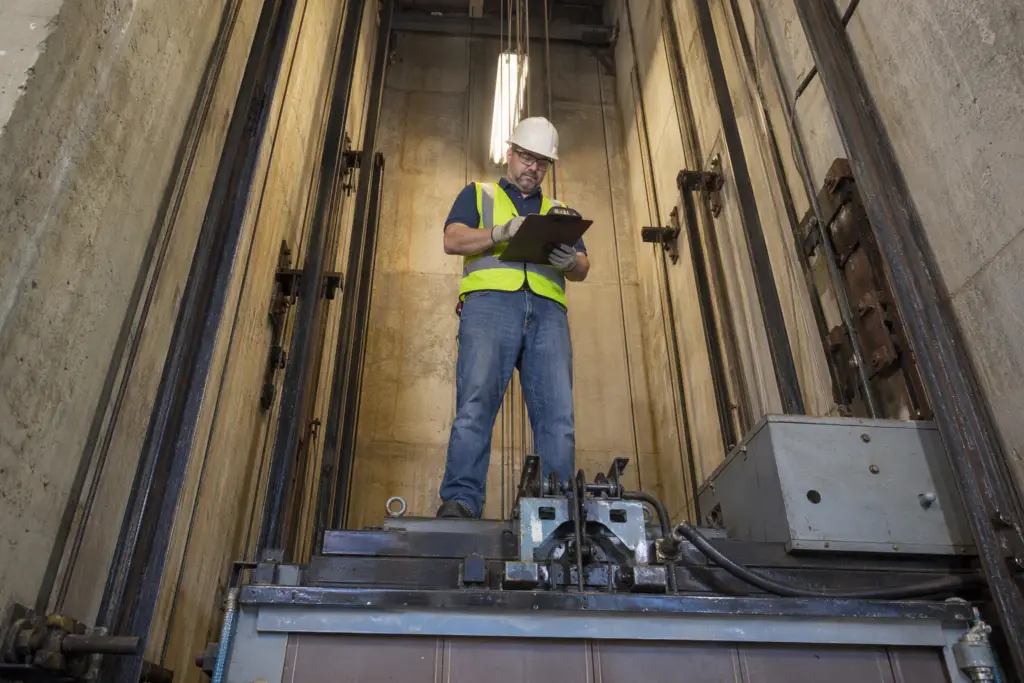
An elevator is likely too old to repair economically when replacement parts are obsolete, repair costs approach or exceed modernization costs, the unit no longer meets current ASME A17.1 Safety Code for Elevators and Escalators or ADA requirements, or recurring failures create unacceptable safety and liability risk — typically a combination of age, component condition, and compliance gaps determines whether repair, modernization, or full replacement is the right path.
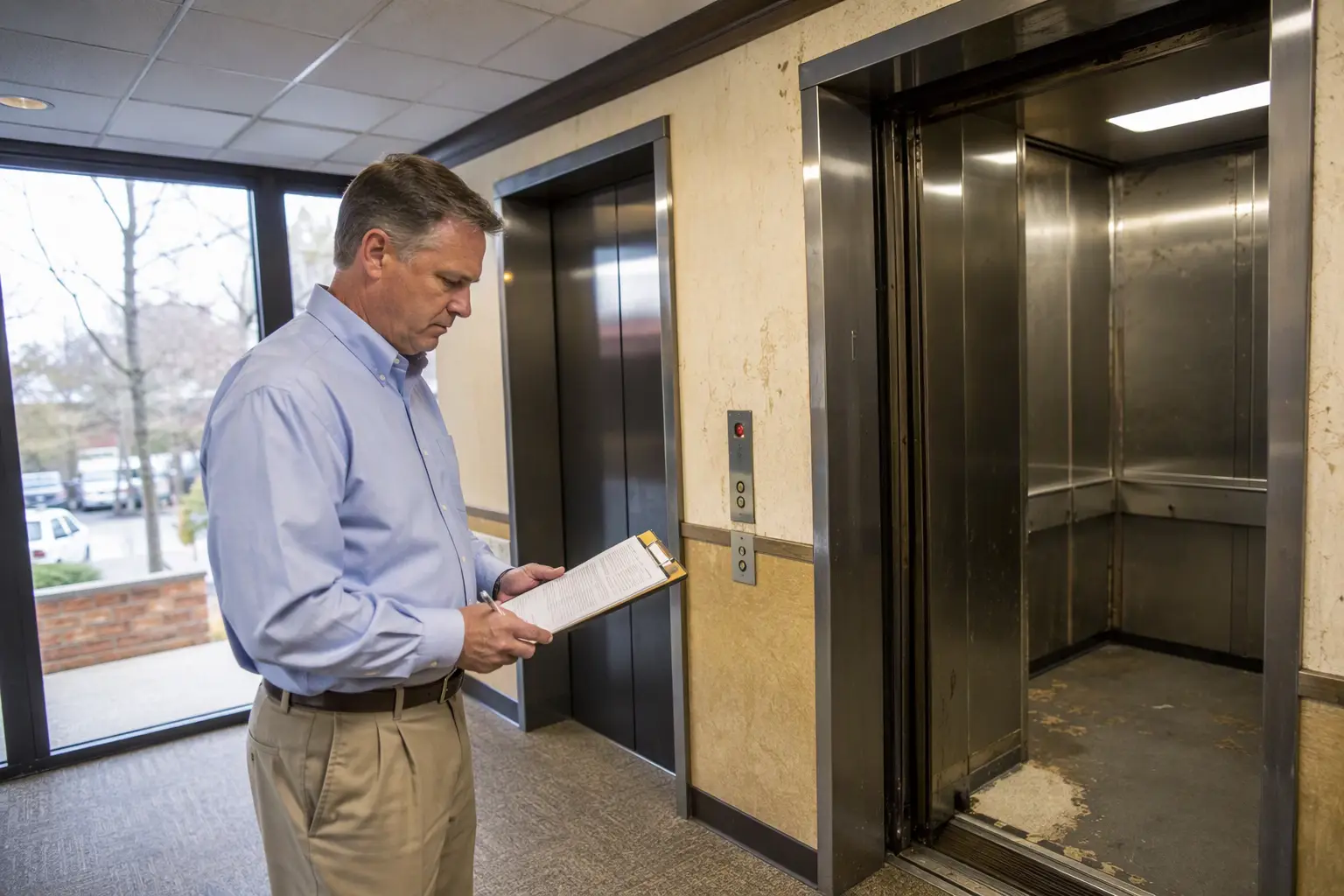
How Do I Know If My Elevator Is Too Old to Repair and Should Be Replaced or Modernized Instead?
Elevators are long-lived capital assets, but every unit eventually reaches a decision point: another repair, a modernization project, or complete replacement. The answer depends on a structured evaluation of mechanical condition, parts availability, compliance status, and long-term cost — not simply calendar age. The sections below walk through every factor building owners and facilities managers in Columbia, SC need to weigh in 2026.
What Is the Direct Answer: When Is an Elevator Too Old to Repair?
An elevator is generally too old to repair when the cumulative cost of pending repairs exceeds roughly half the cost of modernization, when critical components are no longer manufactured, or when the unit cannot be brought into compliance with current safety codes through repair alone.
Age alone is not the deciding factor. A well-maintained hydraulic elevator from the 1990s may have years of cost-effective service remaining, while a poorly maintained unit from the early 2000s may already be at the economic tipping point. The evaluation must look at parts availability, inspection history, compliance gaps, and projected future repair frequency together — not any single metric in isolation.
What Are the Key Age Benchmarks That Trigger a Repair-vs.-Replace Evaluation?
Industry guidance from ASME and elevator trade organizations recognizes that major elevator subsystems have finite service lives, and when multiple systems approach end-of-life simultaneously, the economics of repair shift decisively toward modernization or replacement.
Hydraulic elevator power units, cylinders, and control systems; traction elevator machines, ropes, and controllers — these subsystems do not wear at identical rates. A unit where the controller, motor, and hydraulic cylinder are all approaching the end of their respective useful lives at the same time faces compounding repair costs that often make a coordinated modernization the more economical and operationally reliable choice. Facilities managers should track the installation date and major-component replacement dates separately, not just the elevator’s original commissioning year.
What Are the Warning Signs That Repairs Are No Longer Cost-Effective?
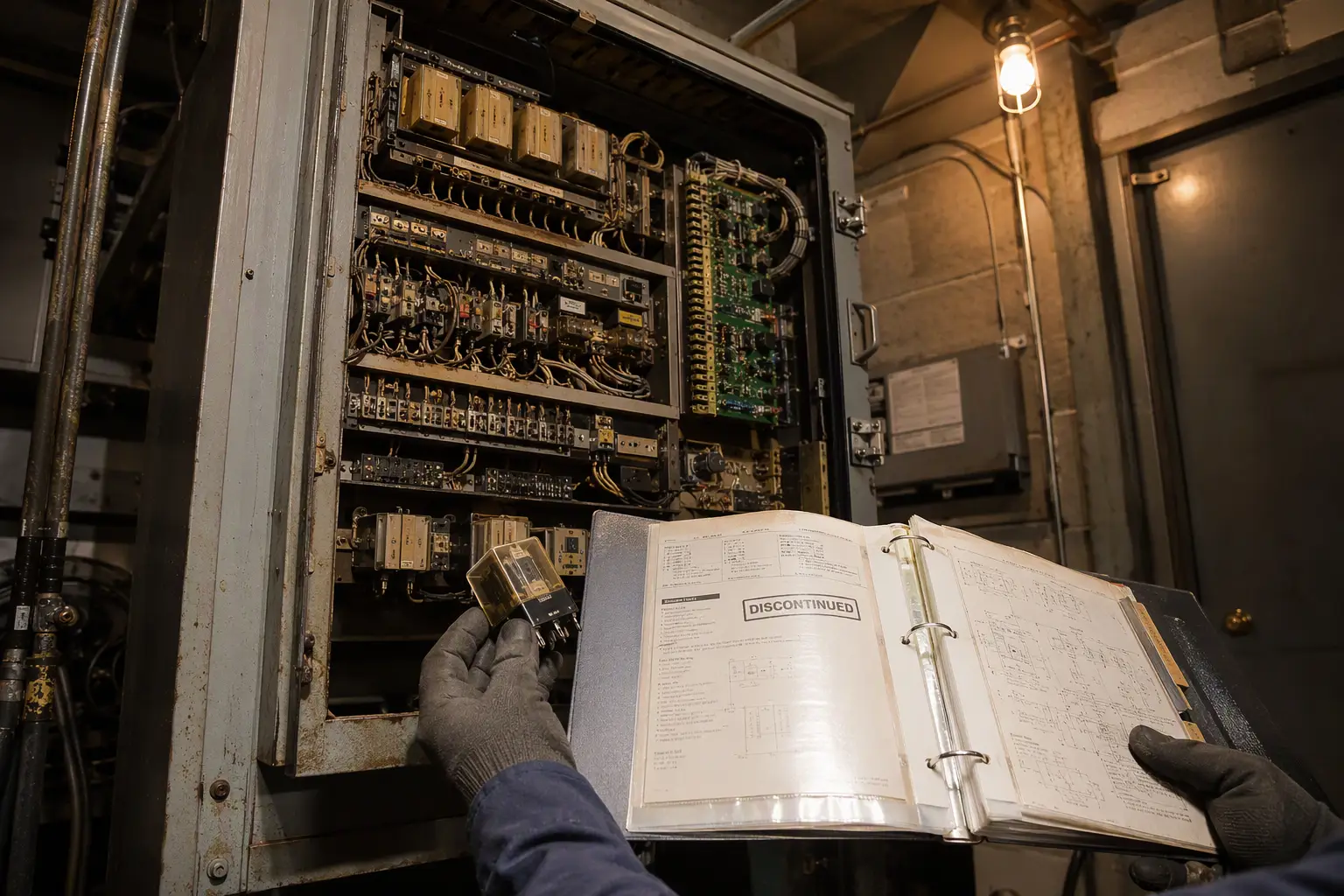
The clearest warning signs are: parts that must be custom-fabricated or sourced from specialty salvage markets because the original manufacturer has discontinued them; repair invoices arriving more than twice per year for the same subsystem; and technician reports indicating that fixing one component is likely to accelerate failure in adjacent components.
Additional operational warning signs include increased leveling errors (the car stopping above or below the floor threshold), slow or erratic door operation, nuisance call-backs that cannot be resolved without major component work, and increasing ride roughness or noise. When a building’s elevator log shows a pattern of escalating call-back frequency over 12 to 24 months, that pattern is often more predictive of future cost than any single repair invoice.
How Does South Carolina’s Elevator Code Affect the Repair-vs.-Replace Decision?
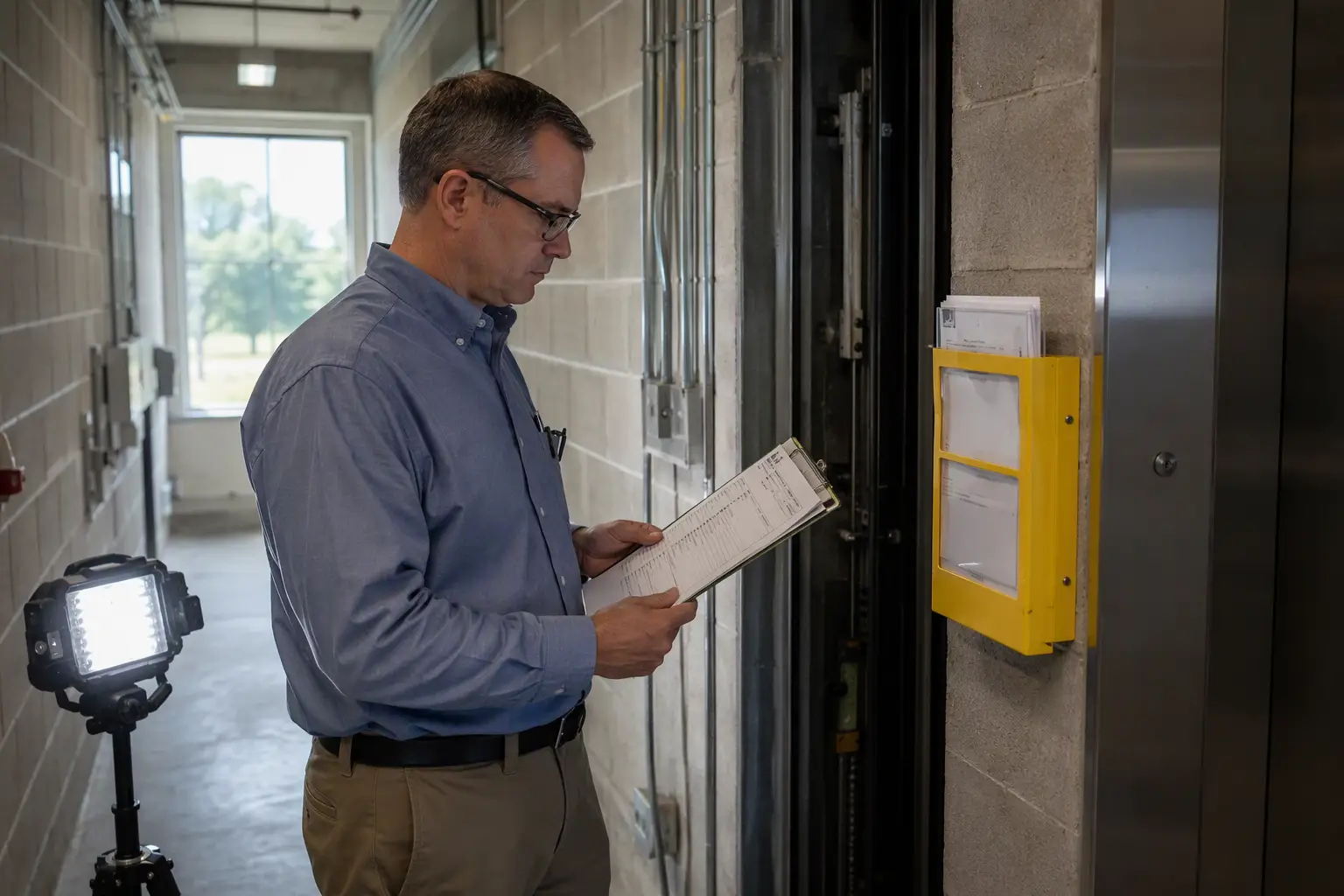
South Carolina’s elevator safety requirements directly shape which repairs are legally permissible and when an alteration triggers broader compliance upgrades.
Under S.C. Code Title 41, Chapter 16 and S.C. Code of Regulations Chapter 71, Article 5, the South Carolina Department of Labor, Licensing and Regulation (LLR), Office of Elevators and Amusement Rides, oversees all elevator facilities in the state. South Carolina has adopted the ASME A17.1/CSA B44, 2019 edition as its governing installation standard, effective July 23, 2021. Elevators installed before July 1, 1986, must comply with the 1986 edition of ANSI A17.3 (the safety code for existing elevators and escalators).
Critically, a state construction permit is required before any elevator facility is erected, constructed, altered, or installed in South Carolina. When a repair crosses the threshold into an “alteration” under the code, it can trigger a full permit and inspection cycle — and potentially require the unit to meet current ASME A17.1-2019 requirements for the altered subsystems. This means that a major controller replacement or hydraulic cylinder change may legally require upgrades beyond the component being replaced, shifting the economics further toward planned modernization rather than piecemeal repair.
South Carolina also requires that every elevator be inspected at installation, registration, alteration or repair, and at least once annually before the operating certificate is renewed. No elevator may operate without a valid certificate of registration and an operating certificate from the state, which must be displayed conspicuously inside the car. A unit with chronic safety deficiencies risks operating certificate suspension — effectively taking the elevator out of service until deficiencies are corrected.
What Is Elevator Modernization and How Does It Differ from Replacement?
Modernization replaces major subsystems — typically the controller, motor drive, door operators, and often the cab interior — while retaining the existing hoistway, pit, and structural elements; full replacement removes and replaces the entire system including hoistway construction.
Modernization is typically the middle path: more comprehensive than targeted repairs, less disruptive and less costly than gut-and-replace. It makes economic sense when the hoistway structure is sound, the building’s traffic demand has not changed dramatically, and the primary issues are obsolete controls, worn mechanical components, or code compliance gaps. Full replacement is warranted when the hoistway itself requires structural work, when the elevator system no longer matches the building’s use (for example, a low-speed freight elevator in a building converted to healthcare), or when modernization costs approach replacement costs and a newer system would deliver meaningfully lower long-term operating expense.
What Comparison Data Helps Owners Benchmark Their Elevator’s Condition?
The table below summarizes the key evaluation criteria and what each finding generally indicates for the repair, modernize, or replace decision. These are qualitative benchmarks based on code requirements and standard industry practice — not internally sourced statistics.
| Evaluation Factor | Repair Likely Viable | Modernization Indicated | Replacement Indicated |
|---|---|---|---|
| Parts availability | OEM parts in stock or readily sourced | Parts available but discontinued or special-order | Parts no longer manufactured; custom fabrication required |
| Repair frequency | Isolated, infrequent failures | Recurring failures in multiple subsystems | Chronic failure across most subsystems |
| Code compliance status | Minor deficiencies correctable by repair | Multiple compliance gaps requiring systematic upgrades | Unit cannot be brought into compliance without full replacement |
| ADA accessibility | Compliant or minor corrections needed | Cab and control upgrades needed for compliance | Hoistway dimensions preclude ADA compliance |
| Controller technology | Current-generation; software/parts supported | Relay logic or early microprocessor; obsolete | No longer supportable by any active vendor |
| Hydraulic cylinder condition (hydraulic units) | Cylinder in-ground, tested, no corrosion risk | Single-bottom cylinder; may need encasement or lining | Cylinder failed or soil contamination confirmed |
| Energy efficiency | Acceptable for building operations | High energy cost; variable-frequency drive upgrade viable | Energy cost reduction requires full system replacement |
| Structural hoistway condition | Sound; no remediation required | Minor remediation but structurally usable | Hoistway requires major structural work |
What Role Does ADA Compliance Play in the Decision?
ADA compliance gaps in an existing elevator cannot always be corrected through targeted repair and may require cab modifications, control panel replacement, or hoistway alterations that effectively constitute a modernization project.
Under the Americans with Disabilities Act, existing elevators in buildings subject to ADA must meet accessibility requirements, including specific requirements for cab size, door width, control panel height and button size, floor designation markings, and audible and visual signals. When a building undergoes alterations that affect the path of travel, ADA obligations for the elevator serving that path may be triggered regardless of the elevator’s age. Owners who discover that their elevator’s cab dimensions or control interfaces cannot be brought into ADA compliance without structural hoistway modifications are effectively facing a replacement scenario, not a repair scenario.
What Are the Specific Risks of Keeping an Obsolete Elevator in Service?
Keeping an obsolete elevator in service exposes building owners to safety liability, regulatory enforcement, operating certificate suspension, and potential ADA violations — all of which carry costs that can exceed the price of modernization.
From a safety standpoint, obsolete relay-logic controllers may lack the safety circuit redundancy required by current ASME A17.1 editions. Door systems without current-generation door reopening protection create entrapment and injury risk. In South Carolina, the owner bears the legal obligation to keep every elevator facility in safe operating condition and in compliance with state regulations. An accident that seriously injures a non-employee must be reported to the state before the end of the next working day — and the regulatory, legal, and reputational consequences of a preventable injury on an aging, out-of-compliance elevator can be severe.
What Is the Process for Getting a Professional Elevator Assessment in Columbia SC?
A professional elevator assessment follows a structured sequence: document review, physical inspection of all major subsystems, compliance audit against applicable codes, and a written report with repair, modernization, and replacement options and cost ranges.
- Gather documentation. Collect the elevator’s original installation permit, all previous inspection reports, the current South Carolina operating certificate, and any repair invoices from the past three to five years.
- Schedule a qualified inspection. In South Carolina, required inspections may be made only by state inspectors or licensed special inspectors who hold qualifications under the 2018 edition of QEI-1 (American National Standard for Qualification of Elevator Inspectors). Note that a special inspector may not inspect an elevator on which the inspector or the inspector’s employer has a current service or warranty contract.
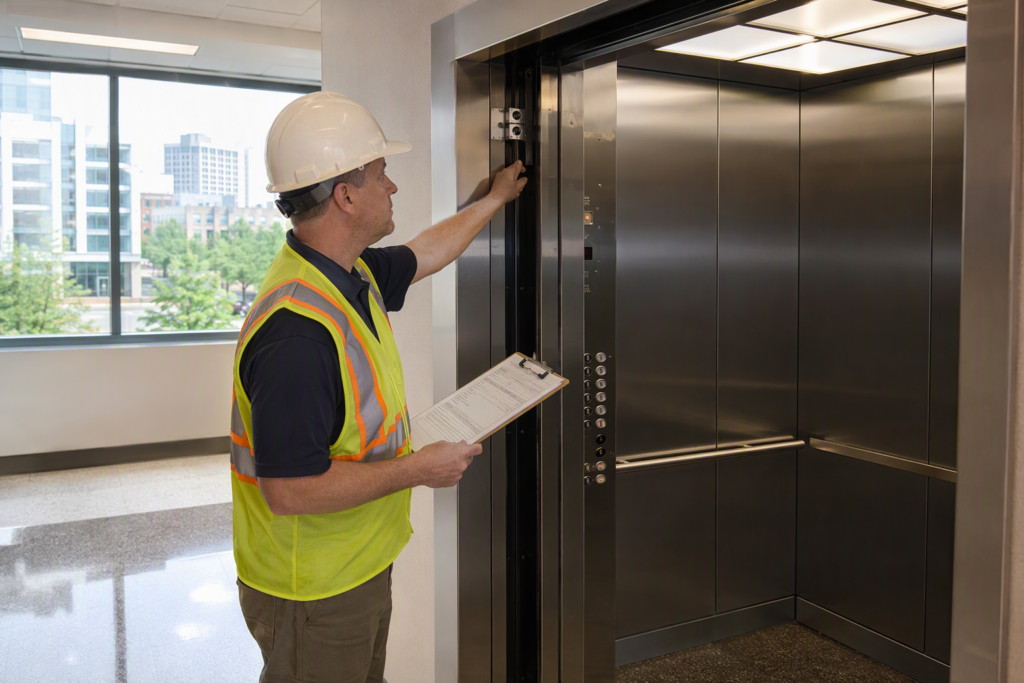
- Conduct a full mechanical assessment. The technician evaluates the controller, motor or hydraulic power unit, ropes or hydraulic cylinder, door systems, cab, safety devices, pit condition, and hoistway equipment.
- Audit code compliance. Compare the unit’s current configuration against ASME A17.1-2019 (for new alterations) and, for pre-1986 units, ANSI A17.3 (1986 edition) as adopted by South Carolina.
- Review ADA compliance. Assess cab dimensions, door clear width, control panel configuration, and signage against current ADA Standards for Accessible Design.
- Obtain a written options report. The report should present at minimum three scenarios — continued repair, phased or full modernization, and replacement — with estimated costs and projected service life for each.
- Verify permit requirements. Confirm with the South Carolina Department of Labor, Licensing and Regulation (LLR), Office of Elevators and Amusement Rides, whether the recommended scope of work requires a state construction permit before proceeding.
Carolina Elevator Service provides elevator assessments for building owners and facilities managers in Columbia, SC, helping clients work through each of these steps with documented findings and actionable recommendations.
What Happens to Hydraulic Elevator Cylinders in Older Units?
Underground hydraulic elevator cylinders in older units are a specific replacement trigger because single-bottom steel cylinders installed before modern environmental standards are subject to electrolytic corrosion, which can cause cylinder failure and oil leakage into surrounding soil.
South Carolina’s elevator regulations specifically address this: newly installed underground hydraulic elevator cylinders must be encased in plastic outer containment to limit electrolytic corrosion. Older units with single-bottom cylinders that have not been tested, lined, or replaced may represent an imminent environmental and safety liability. When a cylinder fails a pressure test or shows evidence of soil contamination, repair is not a viable option — cylinder replacement, and the modernization work that typically accompanies it, becomes the required path. Building owners with pre-2000 hydraulic elevators should specifically request cylinder testing as part of any comprehensive assessment.
What Is the Difference Between a Routine Repair and an Alteration Under South Carolina Law?
An alteration under South Carolina elevator law is any change to an elevator’s equipment, systems, or operation beyond like-for-like part replacement — and alterations require a state construction permit and trigger compliance review against current code editions.
This distinction has significant practical implications. Replacing a worn door operator with an identical model from the same manufacturer is generally a repair. Replacing an obsolete relay-logic controller with a modern microprocessor controller is an alteration. Installing a variable-frequency drive on a traction elevator, replacing a hydraulic cylinder, or modifying the car operating panel are all likely alterations. Because alterations require a permit and may trigger upgrades to adjacent systems under ASME A17.1-2019, building owners benefit from understanding the scope of planned work before committing to a repair strategy — what appears to be a targeted repair may carry hidden compliance upgrade costs that change the economics substantially.
How Do Energy Costs Factor Into the Modernization Decision?
Energy consumption in older elevator systems — particularly hydraulic units without variable-speed drives and traction elevators with resistance-based control systems — can be meaningfully reduced through modernization, and that operational saving is a legitimate factor in the repair-vs.-replace financial analysis.
Older hydraulic elevators that run a constant-speed motor and dump hydraulic fluid through a valve to control descent use significantly more energy than modern units with variable-frequency drives. Older DC traction elevators with motor-generator sets consume more energy than modern AC variable-frequency drive systems. While Carolina Elevator Service does not publish specific energy reduction figures, the qualitative principle is well-established: modernization with current drive technology reduces energy consumption, and that reduction has a calculable payback period that belongs in any honest long-term cost comparison.
What Should Building Owners Know About Standby Power Requirements?
South Carolina law requires passenger elevators to have standby power capable of running emergency lighting and the alarm bell for at least four hours if normal power fails — and older units may not meet this requirement without electrical system upgrades.
This requirement is not optional and it is not grandfathered for older units that undergo alterations. Building owners who discover during an assessment that their elevator’s standby power system does not meet the four-hour minimum must address this as part of any modernization or alteration scope. For units where the electrical infrastructure to support this requirement does not exist in the building, the upgrade cost must be factored into the overall project budget.
What Questions Should Owners Ask an Elevator Service Company Before Authorizing Repairs?
Before authorizing any significant elevator repair, building owners should ask five essential questions to avoid committing resources to a unit that is approaching the economic end of its useful life.
- Will this repair restore full code compliance, or are there outstanding deficiencies that will require additional work? A repair that fixes one issue but leaves the unit with other compliance gaps may not restore the operating certificate to good standing.
- Does this repair constitute an alteration under South Carolina law, and if so, what permit and upgrade requirements does it trigger?
- Are the parts being used OEM parts in active production, or sourced from discontinued stock? Parts from discontinued stock extend service life on an uncertain timeline.
- What is the expected remaining useful life of the repaired unit, and what is the projected repair cost for the next three to five years?
- What would a modernization or replacement cost, and how does the projected repair spend compare to that investment?
An experienced elevator service company should be willing and able to answer all five questions in writing before the owner authorizes significant repair expenditure.
What Are the Firefighters’ Service and Emergency Requirements That Older Elevators Often Fail?
Older elevators frequently lack current-generation firefighters’ emergency service features required by ASME A17.1, and South Carolina has an additional requirement that firefighters’ service on new installations use the five-pin S.C. #1000 key.
Phase I and Phase II firefighters’ emergency service — which returns the elevator to a designated floor and places it under firefighter manual control during a fire event — has evolved through successive editions of ASME A17.1. Elevators installed before these requirements became effective may have no firefighters’ service at all, or may have earlier-generation systems that do not meet current requirements. Because firefighters’ emergency service touches the controller, hall call system, and car operating panel, bringing an older unit into compliance is often a significant undertaking that adds to the argument for comprehensive modernization rather than targeted repair.
How Does an Owner Verify That an Elevator Inspection Was Conducted Properly in South Carolina?
South Carolina building owners can verify inspection legitimacy by confirming that the inspector is either a state inspector employed by the South Carolina Department of Labor, Licensing and Regulation (LLR) or a licensed special inspector with qualifications under the 2018 edition of QEI-1, and by ensuring the operating certificate is current and displayed in the car.
South Carolina law prohibits a special inspector from inspecting an elevator on which the inspector or the inspector’s employer has a current service or warranty contract. This conflict-of-interest prohibition is important: if a building owner’s service contractor offers to conduct the required annual inspection, that arrangement may not be legally permissible. The operating certificate issued after a valid inspection must be displayed conspicuously inside the elevator car — its absence is a regulatory red flag. Owners uncertain about their inspection status can reference S.C. Code Title 41, Chapter 16 or contact the LLR’s Office of Elevators and Amusement Rides directly.
What Are the Typical Phases of an Elevator Modernization Project?
A typical elevator modernization project proceeds through permitting, equipment procurement, installation, inspection, and return to service — and in South Carolina, a state construction permit must be obtained before work begins.
- Assessment and scope definition. The building owner and service company agree on which subsystems will be replaced and establish the compliance targets for the project.
- Permit application. The contractor submits a state construction permit application to the South Carolina Department of Labor, Licensing and Regulation (LLR), Office of Elevators and Amusement Rides, before any work begins.
- Equipment procurement. Controllers, door operators, drive systems, cab components, and other specified equipment are ordered. Lead times for major components can affect project scheduling significantly.
- Planned outage and installation. The elevator is taken out of service for the installation phase. Building owners should communicate the outage schedule to occupants, particularly in buildings where the elevator serves individuals with mobility limitations.
- Inspection. Upon completion, the elevator must be inspected — either by a state inspector or a licensed special inspector — before it is returned to service. South Carolina requires inspection at alteration or repair before the operating certificate is renewed.
- Certificate renewal. Following a satisfactory inspection, the operating certificate is renewed and must be posted in the car before the elevator resumes operation.
Does the South Carolina Elevator Code Apply to All Buildings?
The South Carolina Elevator Code does not apply to equipment in a single private dwelling — all other buildings with elevator facilities subject to the jurisdiction of South Carolina are covered, and local ordinances that conflict with the state code are void.
This means that commercial buildings, multi-family residential buildings (other than single private dwellings), healthcare facilities, educational institutions, and government buildings in Columbia, SC, are all subject to the requirements administered by the South Carolina Department of Labor, Licensing and Regulation (LLR), Office of Elevators and Amusement Rides. Building owners who believe their elevator may be exempt from state oversight should seek specific guidance from the LLR rather than assuming exemption — the consequences of operating without a required certificate of registration and operating certificate are significant.
How Should a Building Owner Document the Case for Modernization to Building Management or a Board?
A compelling case for elevator modernization rests on four documented pillars: safety and compliance risk, repair cost trajectory, operational reliability impact, and long-term total cost of ownership — all supported by written findings from a qualified elevator service assessment.
For building managers presenting to boards or ownership groups, the documentation package should include: the current inspection report and any outstanding deficiency notices from the South Carolina LLR; a repair history summary showing cost and frequency trends; a written assessment from a qualified elevator service company comparing repair, modernization, and replacement scenarios; and an ADA compliance review. Carolina Elevator Service can assist Columbia, SC building owners in assembling this documentation as part of a comprehensive elevator assessment, providing the factual foundation that decision-makers need to act with confidence rather than deferring necessary investment until a failure forces the issue.
What Are the Next Steps After Deciding to Modernize or Replace an Elevator in Columbia SC?
After deciding to modernize or replace, the immediate next steps are engaging a qualified elevator service company to develop a detailed scope of work, obtaining the required state construction permit from the South Carolina LLR before work begins, and planning the building logistics for the elevator outage period.
Building owners should also verify that the scope of work addresses all outstanding compliance items identified in the most recent inspection report, so that the modernized or replaced elevator can obtain a renewed operating certificate without follow-up deficiency corrections. Carolina Elevator Service works with building owners in Columbia, SC, through the full project lifecycle — from initial assessment through permit coordination, installation, and the post-completion inspection that restores the elevator to fully compliant, certificated operation.
Get a Professional Elevator Assessment in Columbia, SC
If your elevator is showing signs of aging, recurring failures, or compliance gaps, the most important step is a professional assessment from a qualified elevator service company before the next repair invoice arrives or an inspection deficiency forces the decision. Carolina Elevator Service provides comprehensive elevator assessments for building owners and facilities managers throughout Columbia, SC, covering mechanical condition, South Carolina LLR compliance status, ADA accessibility, and repair-vs.-modernize-vs.-replace recommendations in writing.
Contact Carolina Elevator Service for a free elevator assessment: 803-865-1400
Need elevator service you can rely on? Carolina Elevator Service is ready to help.