How Do I Schedule a Category 1 Elevator Inspection? Complete FAQ Guide for Columbia, SC Building Owners
To schedule a Category 1 elevator inspection in South Carolina, building owners must coordinate with a licensed special inspector or a certified elevator service company that maintains relationships with state-approved inspectors. The inspection must satisfy the requirements of the South Carolina Department of Labor, Licensing and Regulation (LLR), Office of Elevators and Amusement Rides, and must align with the ASME A17.1/CSA B44, 2019 edition, which South Carolina adopted effective July 23, 2021.
What Is a Category 1 Elevator Inspection and Why Does It Matter?
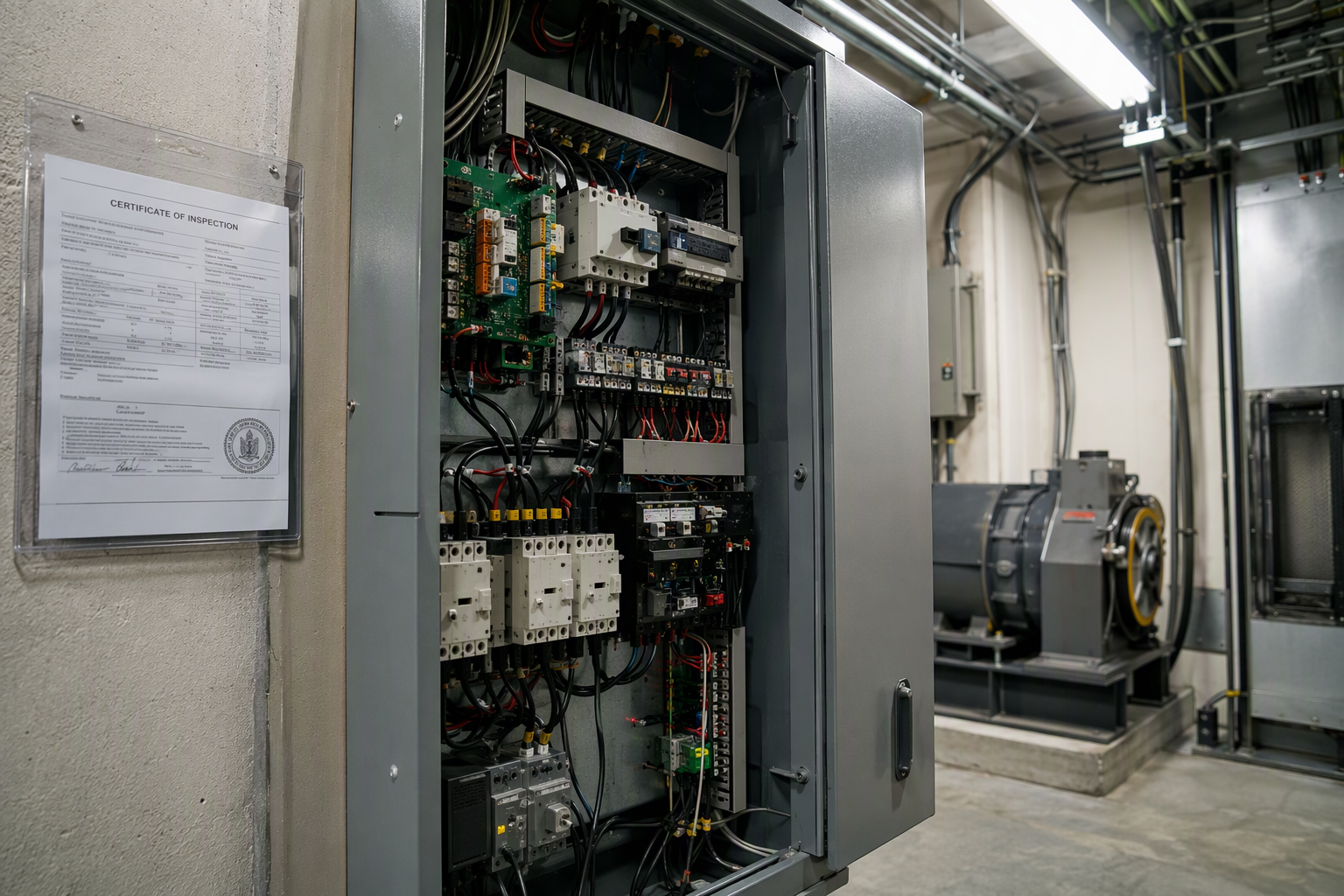
A Category 1 inspection is a periodic no-load safety test of an elevator’s operation, including all safety devices, performed without adding test weights to the car.
Under the ASME A17.1 Safety Code for Elevators and Escalators, elevator inspections and tests are organized into categories — Category 1 through Category 5 — each requiring progressively more rigorous testing. Category 1 is the most frequently required test, covering a visual inspection and a functional check of safety devices such as governor, safeties, oil buffers, and car doors under normal operating conditions. Because it is the baseline periodic test, it forms the foundation of annual compliance for most commercial elevators operating in Columbia, SC and across South Carolina.
Failing to complete a Category 1 inspection on schedule places a building owner at risk of operating without a valid operating certificate, which is prohibited under S.C. Code Title 41, Chapter 16. It also exposes building owners to liability if an equipment failure causes injury to passengers or workers.
What Regulations Govern Category 1 Inspections in South Carolina?
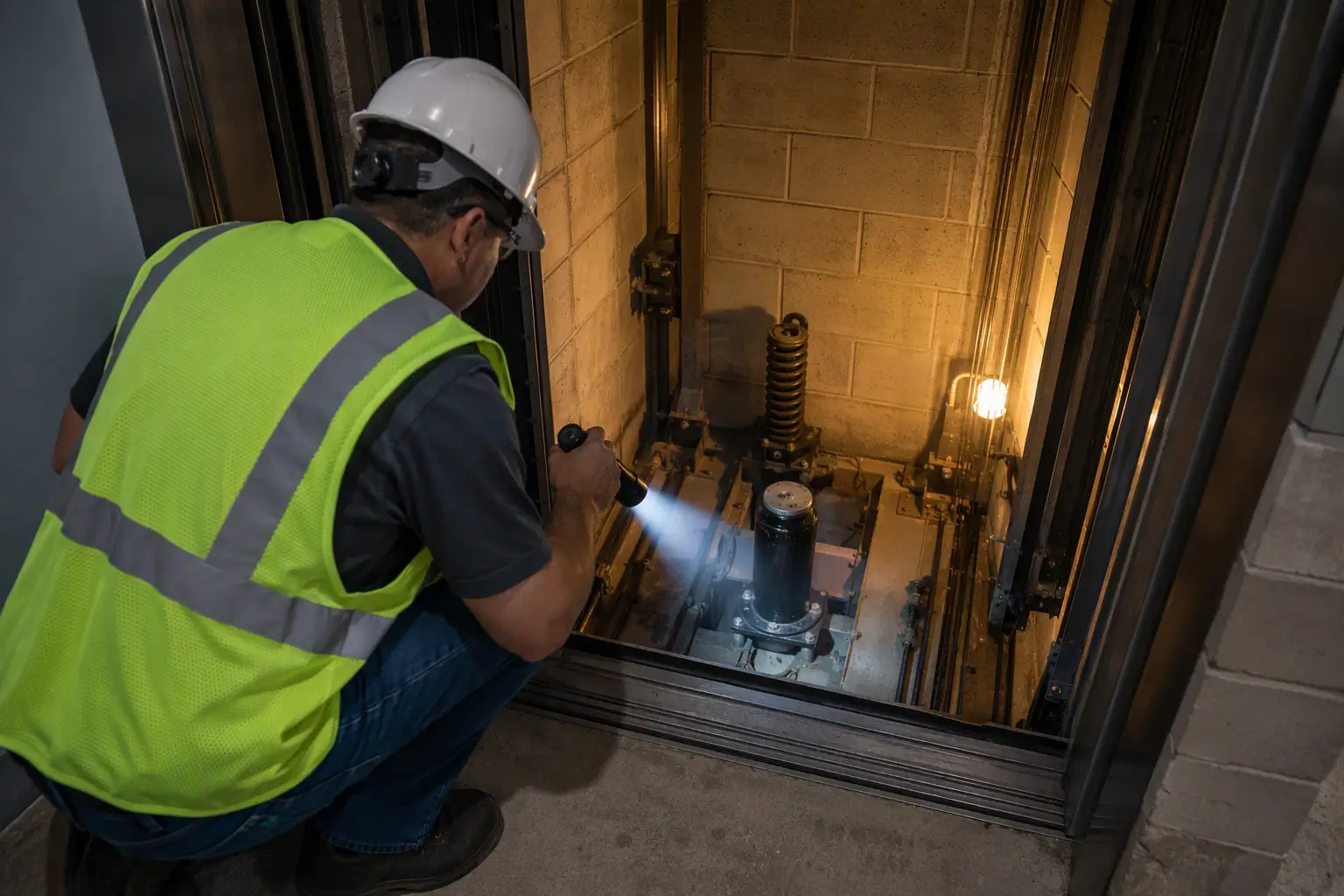
South Carolina elevator inspections are governed by S.C. Code Title 41, Chapter 16, and the related safety standards found in S.C. Code of Regulations Chapter 71, Article 5 (Regulations 71-5000 through 71-5700), with technical requirements drawn from the ASME A17.1-2019/CSA B44:19 edition.
South Carolina adopted the ASME A17.1/CSA B44, 2019 edition without amendment, effective July 23, 2021. This means that all Category 1 inspection requirements follow the 2019 edition of that standard. The state regulator is the South Carolina Department of Labor, Licensing and Regulation (LLR), Office of Elevators and Amusement Rides, and it is this office — not any municipal building department — that issues operating certificates and enforces compliance. Local ordinances that conflict with the South Carolina Elevator Code or its regulations are void under state law.
For older equipment, elevators in operation before July 1, 1986 must comply with the 1986 edition of ANSI A17.3, the safety code for existing elevators and escalators, in addition to applicable state regulations. Building owners with legacy equipment should confirm which code edition applies to their specific installation when planning inspections.
How Often Are Category 1 Inspections Required in South Carolina?
South Carolina requires passenger elevators and most commercial elevator types to be inspected at least once a year before the operating certificate is renewed.
This annual inspection threshold is the minimum required by the South Carolina Elevator Code. Inspections are also triggered by installation, registration, and alteration or repair. The annual cycle means most Columbia, SC building owners need to plan for a Category 1 inspection every twelve months at minimum.
Other elevator types carry different intervals under South Carolina law. Handicap lifts are inspected every five years. Manlifts, television tower elevators, and special purpose elevators follow a seven-year inspection cycle. Dumbwaiters require inspection only when installed or altered. These differentiated schedules mean that owners of mixed elevator portfolios — for example, a building with both a passenger elevator and a platform lift — may be managing multiple inspection timelines simultaneously.
Who Is Authorized to Perform a Category 1 Elevator Inspection in South Carolina?
In South Carolina, Category 1 inspections may be performed only by state inspectors employed by the LLR or by licensed special inspectors who meet the qualifications required under state law.
South Carolina special inspectors must be licensed and demonstrate the qualifications set out in the 2018 edition of QEI-1, the American National Standard for Qualification of Elevator Inspectors. A special inspector’s inspection report may be accepted in place of a state inspection, giving building owners a practical path to compliance through a qualified third-party inspector rather than waiting on the state inspector’s schedule.
Critically, a special inspector may not inspect an elevator on which the inspector or the inspector’s employer has a current service or warranty contract. This conflict-of-interest prohibition means that the company performing ongoing maintenance on an elevator cannot simultaneously serve as the special inspector for that same unit. Building owners should account for this when selecting both their maintenance provider and their inspection source. Carolina Elevator Service maintains relationships with qualified independent special inspectors in the Columbia, SC area, helping clients navigate this requirement.
What Are the Step-by-Step Instructions for Scheduling a Category 1 Inspection in Columbia, SC?
Scheduling a Category 1 elevator inspection requires coordination among the building owner, the elevator service company, and a qualified special inspector. Following a clear sequence avoids delays and ensures the operating certificate is renewed on time.
- Confirm the inspection due date. Locate the current operating certificate displayed inside the elevator car and identify the expiration date. South Carolina requires the certificate or a copy to be displayed conspicuously inside each elevator car.
- Review recent maintenance records. Gather documentation of all maintenance, repairs, and any alterations performed since the last inspection. The special inspector will want to review these records during the visit.
- Identify a qualified special inspector. Confirm that the inspector holds a valid South Carolina special inspector license and meets QEI-1 (2018 edition) qualifications. Remember that an inspector or that inspector’s employer cannot hold a current service or warranty contract on the elevator being inspected.
- Contact your elevator service company. A qualified service provider such as Carolina Elevator Service can assess the elevator’s current condition, perform any pre-inspection maintenance needed, and coordinate with the special inspector on scheduling.
- Schedule the inspection appointment. Allow adequate lead time — inspectors in the Columbia, SC market can book out depending on the season and local demand. Scheduling several weeks in advance is advisable.
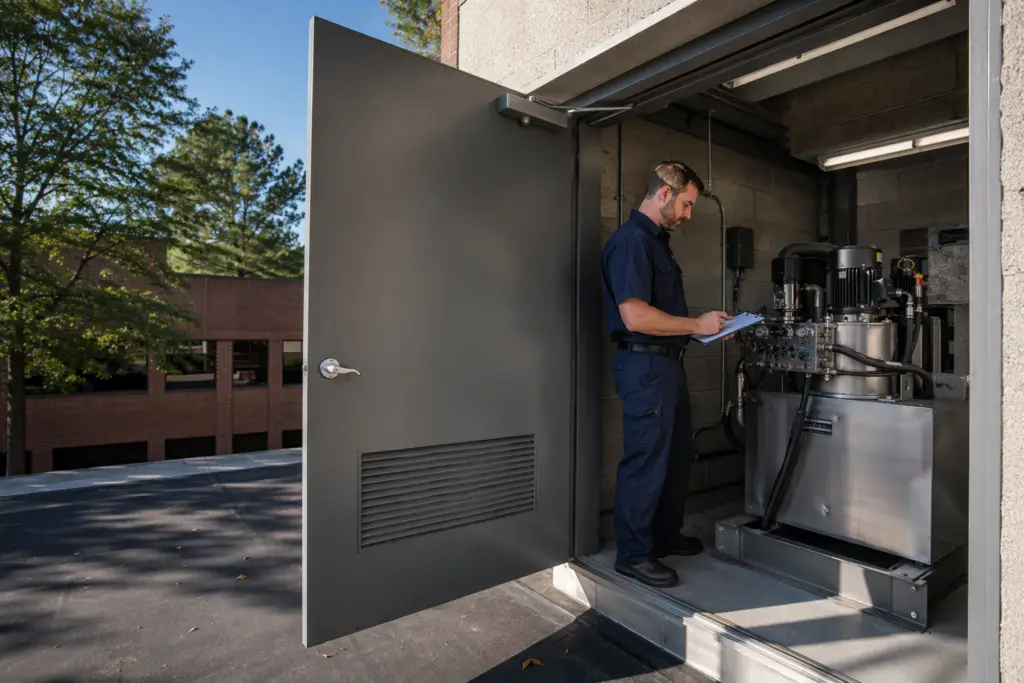
- Prepare the machine room and equipment. Ensure the machine room is accessible, lighting is functional, and all safety device components are unobstructed. Remove stored items that block access to equipment.
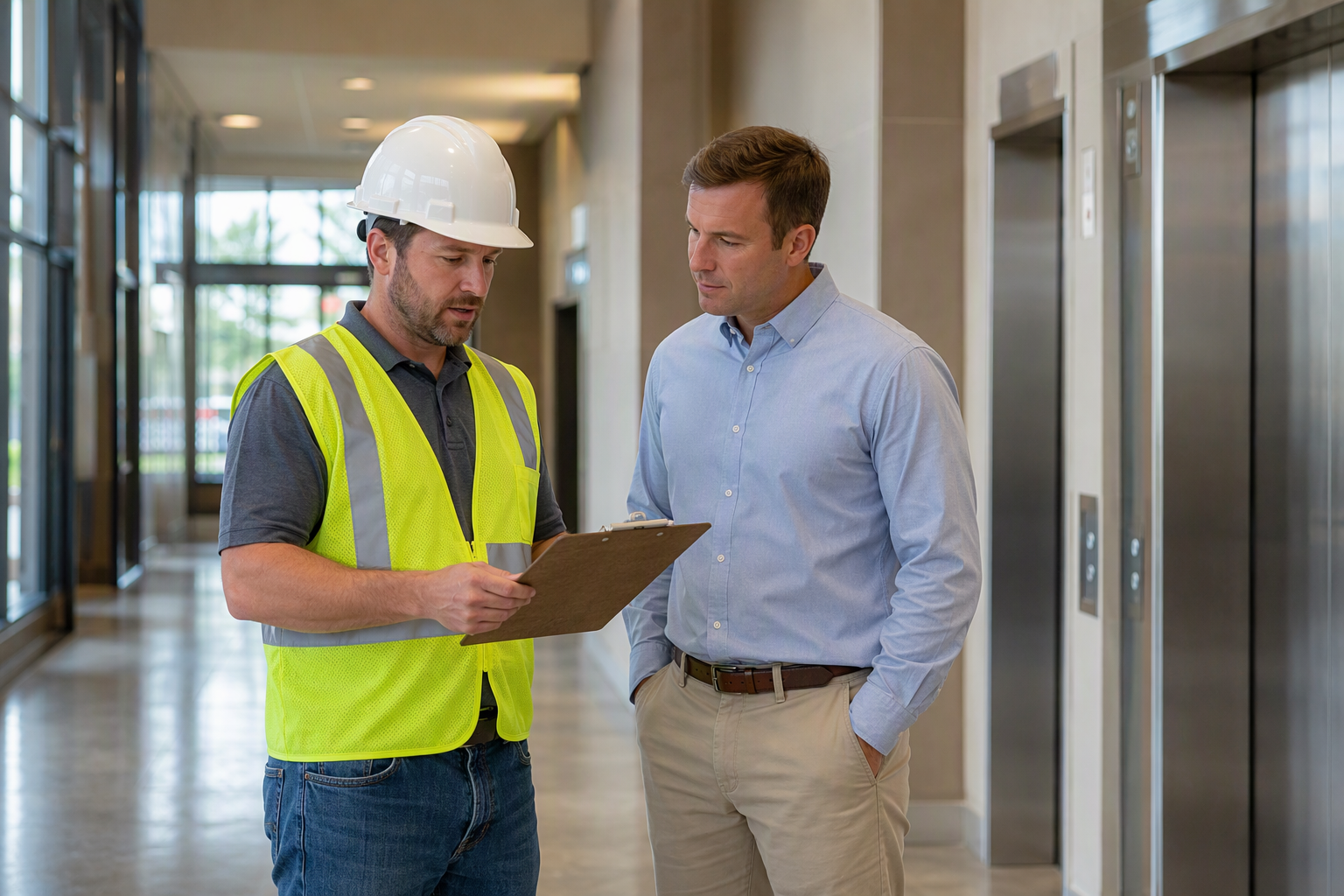
- Be present or designate a representative. A knowledgeable building representative or elevator technician should be on-site during the inspection to provide access and answer questions from the inspector.
- Receive the inspection report. After the inspection, obtain the written report and any deficiency notice. If deficiencies are noted, arrange for repairs promptly and schedule a re-inspection if required.
- Submit documentation to the LLR. Work with your service provider or inspector to ensure the inspection results are filed with the South Carolina Department of Labor, Licensing and Regulation (LLR), Office of Elevators and Amusement Rides, so the operating certificate can be renewed.
What Documents Are Needed Before a Category 1 Inspection?
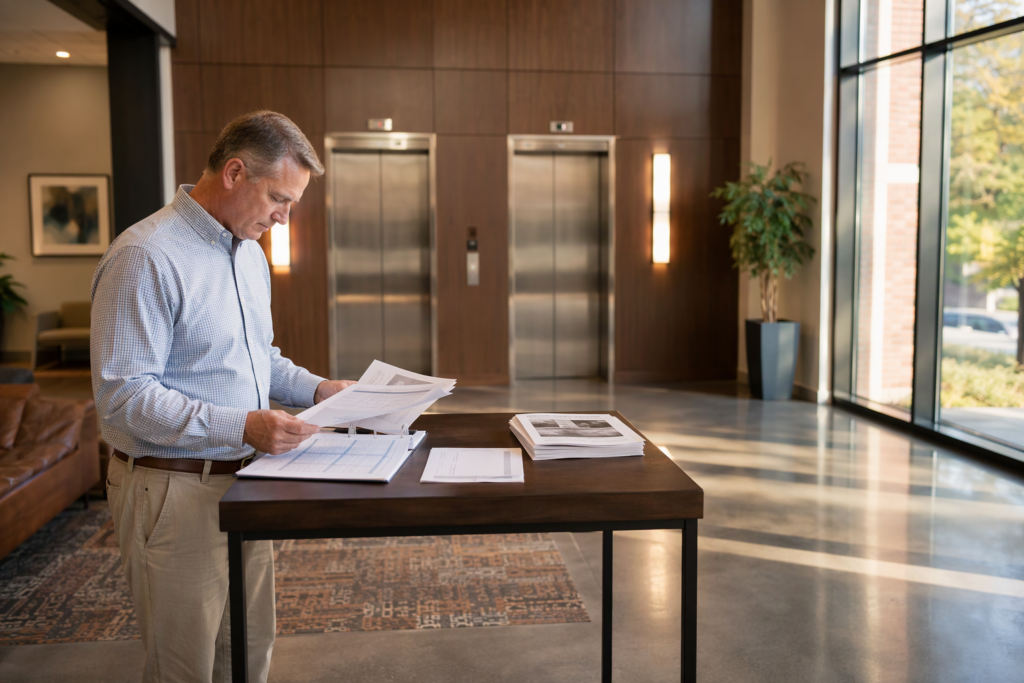
Building owners should have the elevator’s registration certificate, current operating certificate, maintenance logs, and any prior inspection reports readily available before the inspection appointment.
South Carolina law requires that no elevator facility may be operated without both a certificate of registration and an operating certificate from the state. The operating certificate or a copy must be displayed inside the elevator car. Having these documents organized prior to the inspection demonstrates compliance to the inspector and speeds the review process. If permits were pulled for any alterations or repairs since the last inspection, those records should also be on hand, since alterations trigger a separate inspection requirement under state law.
What Does a Category 1 Inspection Actually Cover?
A Category 1 inspection tests the elevator’s safety devices and operational systems under normal load conditions without the use of test weights, covering components from the car door interlocks to the governor and safety mechanisms.
Under the ASME A17.1-2019/CSA B44:19 requirements adopted by South Carolina, the Category 1 test encompasses a visual inspection combined with a functional test. The inspector examines and tests items including door interlocks and closures, car and counterweight safety devices, governor operation, buffer conditions, lighting and ventilation in the car, emergency communication systems, and the machine room environment. The inspector also verifies that the elevator’s emergency lighting and alarm bell have standby power capable of running for at least four hours if normal power fails — a specific requirement under South Carolina’s elevator regulations.
For hydraulic elevators, the inspector will also assess cylinder condition. South Carolina requires that newly installed underground hydraulic elevator cylinders be encased in plastic outer containment to limit electrolytic corrosion, and inspectors working on hydraulic units will confirm compliance with this requirement for applicable installations.
What Is the Difference Between a Category 1 and a Category 5 Inspection?
A Category 1 inspection is a periodic no-load safety test performed annually, while a Category 5 inspection is a full-load rated-speed safety test performed at longer intervals, requiring the elevator to operate under rated load conditions to test safeties and buffers at full capacity.
| Inspection Category | Test Type | Load Condition | Typical Frequency | Key Components Tested |
|---|---|---|---|---|
| Category 1 | Periodic no-load test | No added test weights | Annual (most elevator types) | Safety devices, door interlocks, governor, buffers, lighting, emergency power |
| Category 3 | Periodic no-load safety test with governor tripping | No load or reduced load | Per ASME A17.1 schedule | Governor, safeties, car safety activation |
| Category 5 | Full-load rated-speed safety test | Rated load at rated speed | Per ASME A17.1 schedule (less frequent than Cat 1) | Safeties, buffers, governor, full system under operational stress |
Most Columbia, SC building owners encounter Category 1 inspections annually as part of operating certificate renewal. Category 5 tests are more disruptive and resource-intensive and occur on a separate, longer cycle defined by ASME A17.1. Building owners with traction elevators should plan for Category 5 testing as a distinct event from the annual Category 1 inspection.
What Happens If an Elevator Fails a Category 1 Inspection?
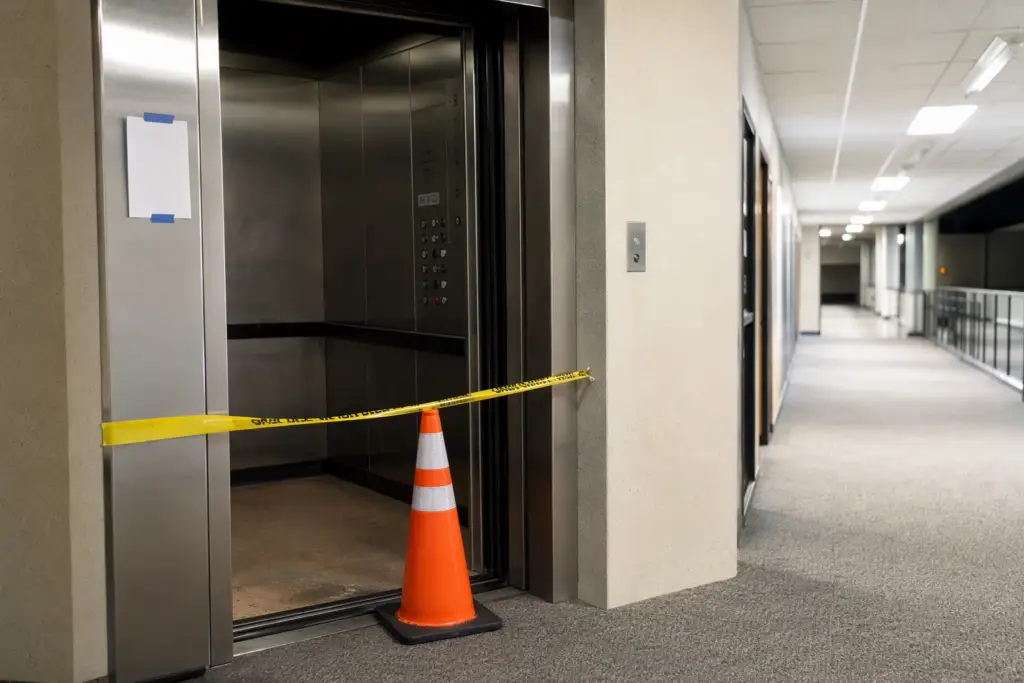
If an elevator fails a Category 1 inspection, the inspector will issue a deficiency notice, and the elevator may be ordered out of service until the identified deficiencies are corrected and a re-inspection confirms compliance.
Under South Carolina law, the owner bears the responsibility to keep every elevator facility in safe operating condition and in line with state regulations. When deficiencies are found during a Category 1 inspection, the building owner must arrange for a qualified elevator service company to complete the necessary repairs. After repairs are made, a follow-up inspection is typically required before the operating certificate is renewed or reinstated. Operating an elevator after it has been ordered out of service or without a valid operating certificate is a violation of S.C. Code Title 41, Chapter 16.
Common deficiencies found during Category 1 inspections include worn door interlocks, malfunctioning emergency lighting, oil leaks on hydraulic units, deteriorated governor ropes, and missing or expired certificate displays. Addressing these items proactively through a pre-inspection maintenance visit with a company such as Carolina Elevator Service can reduce the likelihood of a failed inspection and an unplanned elevator shutdown.
How Far in Advance Should a Category 1 Inspection Be Scheduled?
Building owners in Columbia, SC should schedule Category 1 inspections at least four to six weeks before the operating certificate expiration date to allow adequate time for inspector availability, any pre-inspection maintenance, and processing of documentation.
Inspector availability in the Columbia market can vary by season and overall demand. Scheduling well in advance protects building owners from the situation of operating on an expired certificate while waiting for an inspection appointment. If the elevator requires pre-inspection repairs, additional lead time is needed to allow the service company to complete the work before the inspector arrives. Tracking certificate expiration dates and beginning the scheduling process sixty days out is a sound practice for property managers overseeing multiple elevators.
Does a New Elevator Installation Require a Different Type of Inspection?
Yes — a new elevator installation in South Carolina requires a separate construction permit inspection at the time of installation before the elevator can receive its certificate of registration and initial operating certificate.
South Carolina law requires a state construction permit before any elevator facility is erected, constructed, altered, or installed. An inspection triggered by new installation, registration, or alteration is separate from the annual Category 1 cycle. New elevator facilities must comply with the officially adopted edition of ASME A17.1 in effect when the permit is issued. Once the initial inspection is passed and the operating certificate is issued, the elevator then enters the annual inspection cycle. Building owners planning new elevator installations or significant alterations in Columbia, SC should coordinate with their elevator contractor and with the LLR on permit requirements before work begins.
Are There ADA Requirements That Interact With the Category 1 Inspection?
Yes — while the Category 1 inspection focuses on mechanical safety devices, elevator equipment must also comply with Americans with Disabilities Act (ADA) accessibility standards, and deficiencies in controls, door timing, or signage may be flagged separately by ADA enforcement.
The ADA establishes accessibility requirements for elevator controls, door reopening devices, floor indicators, and cab dimensions in facilities open to the public. A Category 1 inspection under ASME A17.1 tests mechanical safety performance, not ADA accessibility compliance. However, an elevator that is physically accessible and properly maintained supports ADA compliance, and a well-maintained unit is less likely to develop door timing or control issues that trigger ADA complaints. Building owners in Columbia, SC should treat ADA compliance and Category 1 safety inspections as complementary but distinct obligations.
What Is the Role of the Building Owner in the Inspection Process?
Under South Carolina law, the building owner is ultimately responsible for keeping every elevator facility in safe operating condition and in compliance with state regulations, making the owner the accountable party for scheduling, facilitating, and following up on Category 1 inspections.
This owner responsibility is explicitly stated in the South Carolina Elevator Code. Owners of multi-elevator properties — such as office towers, hospitals, or apartment complexes in Columbia — should maintain a compliance calendar tracking inspection due dates, certificate expiration dates, and maintenance intervals for each unit. Delegating day-to-day coordination to a property manager does not transfer the legal obligation from the owner. Many building owners in the Columbia market work with Carolina Elevator Service to maintain organized records and receive proactive scheduling reminders as part of an ongoing service relationship.
What Happens to Elevator Operation During the Inspection?
The elevator is typically taken out of service during the Category 1 inspection, as the inspector must run the car through its full range of motion, test door safety devices, and access the machine room and pit simultaneously.
The duration of a Category 1 inspection varies depending on the type of elevator, the number of floors served, and the complexity of the system. Building managers should communicate the inspection schedule to occupants in advance, particularly in facilities where elevator access is critical — such as medical offices, assisted living facilities, or multi-story retail environments. For properties with a single elevator, a temporary out-of-service period during the inspection has direct impact on accessibility, so scheduling during low-traffic periods is advisable when possible.
How Does the Special Inspector Conflict-of-Interest Rule Affect Scheduling?
Because a special inspector cannot inspect an elevator on which the inspector or the inspector’s employer holds a current service or warranty contract, building owners must maintain separate relationships for elevator maintenance and inspection services.
This South Carolina requirement has a direct practical impact on how building owners structure their elevator contracts. A company providing ongoing maintenance under a service agreement cannot simultaneously provide the special inspector for the annual Category 1 test. Building owners must therefore either rely on state inspectors employed by the LLR or arrange for an independent licensed special inspector who has no service relationship with the subject elevator. Carolina Elevator Service can assist clients in identifying appropriate independent inspection resources in the Columbia, SC area to satisfy this requirement.
Is a Construction Permit Required Before an Elevator Alteration That Triggers a New Inspection?
Yes — South Carolina law requires a state construction permit before any elevator facility is altered or repaired in a manner that constitutes an alteration, and such work triggers a separate inspection before the elevator is returned to full operation.
Not all maintenance activities rise to the level of an alteration requiring a permit, but significant modifications to elevator systems — such as controller replacement, hydraulic cylinder replacement, or cab reconfiguration — generally do. Building owners planning alterations should consult with the LLR and their elevator contractor before work begins to determine whether a construction permit is required. Proceeding without a required permit exposes the building owner to compliance risk and may complicate the subsequent inspection and certificate renewal process.
What Should Building Owners Do If an Elevator Accident Occurs in South Carolina?
If an elevator accident in South Carolina seriously injures anyone other than an employee, the building owner must report the accident to the state before the end of the next working day.
This rapid reporting requirement is established under the South Carolina Elevator Code. Building owners and property managers should have the LLR Office of Elevators and Amusement Rides contact information readily accessible so that the reporting obligation can be met promptly. Following an accident, the elevator may be ordered out of service pending investigation, and a special inspection is typically required before it is returned to service. OSHA requirements may also apply depending on the workplace context. Maintaining current maintenance records and inspection documentation is critical in post-accident situations.
Does the South Carolina Elevator Code Apply to All Buildings?
The South Carolina Elevator Code does not apply to equipment in a single private dwelling, but it applies to virtually all commercial, multi-family, and public-access elevator installations throughout the state.
This exemption is narrow and specifically limited to single private residences. Elevators in apartment buildings, condominiums, commercial office buildings, hotels, hospitals, schools, and any other facility that is not a single private dwelling are subject to the full requirements of the South Carolina Elevator Code, including annual inspections, operating certificates, and the registration requirement. Building owners who are uncertain whether their installation falls under the code should consult the LLR directly or work with a knowledgeable elevator service company to assess their compliance obligations.
How Can Building Owners Prepare Their Elevator for a Category 1 Inspection?
Thorough preparation before a Category 1 inspection reduces the risk of deficiency findings and helps ensure the elevator passes on the first attempt.
- Schedule a pre-inspection maintenance visit. Have a qualified elevator service company perform a thorough maintenance check before the inspector arrives to identify and correct any visible deficiencies.
- Test emergency lighting and the alarm bell. Verify that emergency lighting activates on loss of power and that the alarm bell functions. South Carolina requires standby power to run emergency lighting and the alarm bell for at least four hours.
- Confirm the operating certificate is displayed. Check that the current operating certificate or a copy is displayed conspicuously inside the elevator car.
- Inspect door operation. Manually check that car and hoistway doors open and close smoothly, that interlocks engage properly, and that door safety edges or light curtains function correctly.
- Clear and illuminate the machine room and pit. Remove stored items from the machine room and pit. Ensure lighting is functional and fire extinguishers are in place and current.
- Review and organize all documentation. Assemble the certificate of registration, prior inspection reports, maintenance logs, and any permit records for alterations since the last inspection.
- Check firefighters’ service operation. For new installations, confirm that firefighters’ service uses the required five-pin S.C. #1000 key as specified under South Carolina regulations.
Why Should Columbia, SC Building Owners Work With a Knowledgeable Elevator Service Provider?
Navigating South Carolina’s inspection scheduling requirements, conflict-of-interest rules, permit obligations, and ASME A17.1-2019 technical standards is complex enough that most building owners benefit significantly from working with an experienced local elevator service company.
A qualified elevator service provider brings familiarity with the LLR’s procedures, relationships with licensed special inspectors in the Columbia market, and the technical expertise to identify and correct deficiencies before the inspector arrives. Carolina Elevator Service supports Columbia, SC building owners through the full inspection cycle — from pre-inspection maintenance and documentation review through coordination with qualified independent special inspectors and follow-up on any deficiency corrections. The result is a more predictable compliance process and fewer surprises at certificate renewal time.
For building owners managing multiple elevator units, a service partner that tracks inspection intervals and certificate expiration dates across a portfolio can eliminate the risk of an overlooked renewal deadline and an elevator operating out of compliance.
Contact Carolina Elevator Service for a free elevator assessment at 803-865-1400.
Need elevator service you can rely on? Carolina Elevator Service is ready to help.