Building owners and facility managers in Columbia who are building 2027 capital plans face a recurring challenge: elevator systems touch safety, accessibility, code compliance, and tenant experience simultaneously, yet budgets are finite. This guide breaks down the upgrade categories, compliance requirements, cost considerations, and decision frameworks relevant to South Carolina properties, so that facility teams can walk into capital planning conversations with clear priorities and defensible numbers.
—
What Drives Elevator Capital Costs in 2027?
Four forces shape elevator capital spending for South Carolina building owners heading into 2027:
- Regulatory compliance — South Carolina elevator facilities must maintain a valid operating certificate issued by the South Carolina Department of Labor, Licensing and Regulation (LLR), Office of Elevators and Amusement Rides. Without it, the elevator cannot legally operate.
- Equipment age and reliability — Older systems accumulate deferred maintenance costs and increasingly fail to meet the ASME A17.1/CSA B44, 2019 edition adopted by South Carolina, which governs new installations and significant alterations.
- ADA accessibility obligations — Federal ADA requirements apply to public accommodations and commercial facilities, driving button, signage, and cab interior upgrades.
- Operational efficiency — Energy consumption, tenant wait times, and technician call-out costs all factor into the total cost of ownership beyond upfront capital.
Which Upgrade Categories Should Appear in a 2027 Capital Plan?
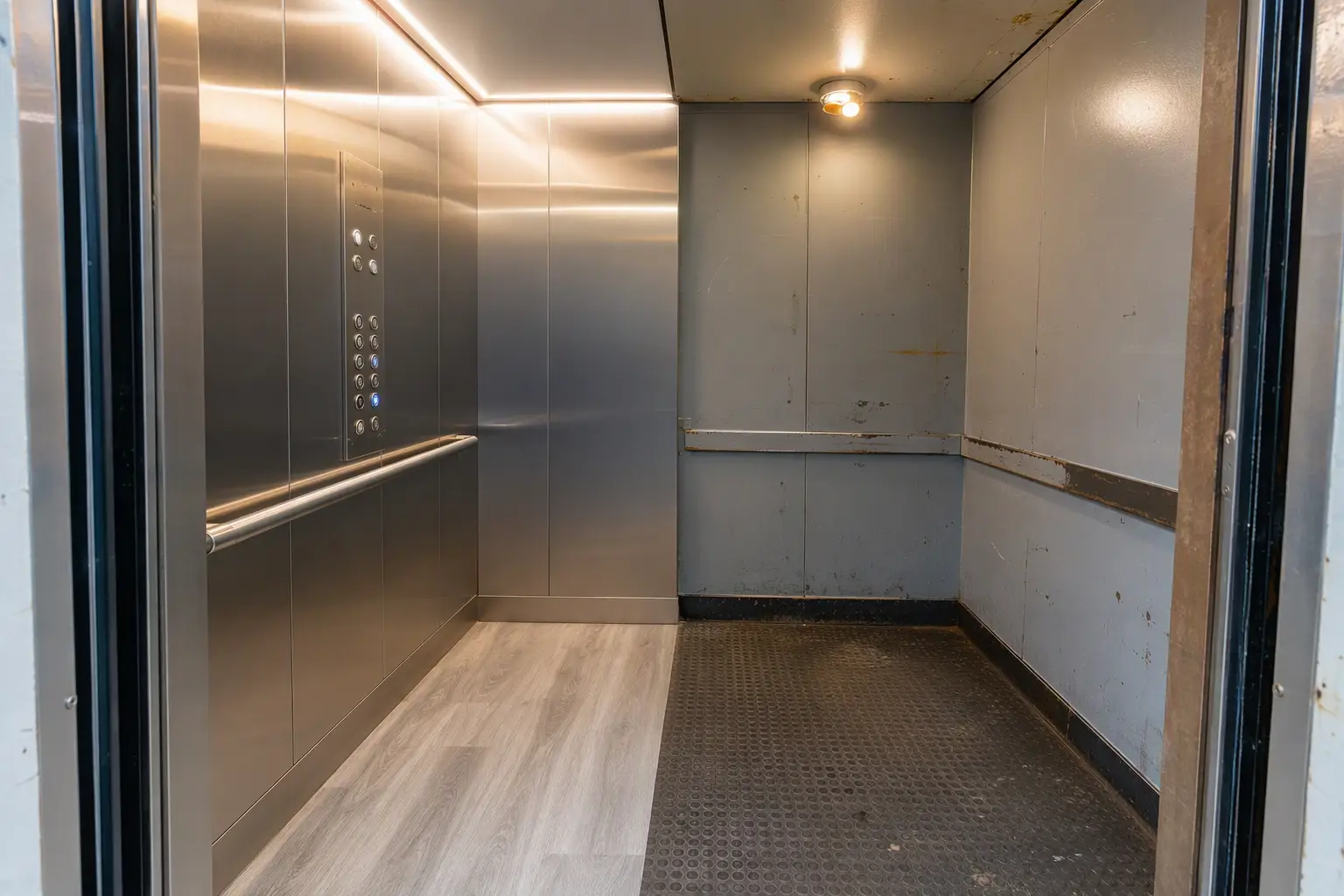
The table below organizes the most common elevator upgrade categories, their compliance drivers, general scope characteristics, and planning considerations. Cost ranges are intentionally omitted here because accurate figures depend on building-specific variables (number of stops, cab size, existing equipment, and contractor quotes); budget estimates should come from a qualified elevator service provider conducting an on-site assessment.
| Upgrade Category | Primary Driver | Typical Scope | Planning Consideration | Urgency Level |
|---|---|---|---|---|
| Annual inspection & certificate renewal | S.C. Code Title 41, Ch. 16 (mandatory) | Inspection by state or qualified special inspector; deficiency corrections | Non-negotiable; elevator cannot operate without a valid certificate | Critical — recurring |
| Hydraulic cylinder containment | SC LLR regulation | Plastic outer containment encasement for underground cylinders | Required for newly installed underground cylinders; assess existing older systems | High if replacing hydraulic system |
| Standby / emergency power | S.C. regulatory requirement | Upgrade UPS or generator tie-in for emergency lighting and alarm bell | SC requires at least four hours of standby power for emergency lighting and alarm bell | High — directly affects certificate |
| Firefighters’ service key upgrade | SC LLR / ASME A17.1-2019 | Replace or add five-pin S.C. #1000 key switch on new installations | Required on new installations in South Carolina | High for new or altered systems |
| ADA cab & control upgrades | Federal ADA | Button height, Braille signage, audible signals, door timing, cab dimensions | Applies to public accommodations; assess during any cab renovation | Medium–High depending on current state |
| Control system modernization | Equipment age / reliability | Replace relay-logic or early microprocessor controls with modern solid-state | Reduces parts scarcity risk; improves diagnostics and energy use | Medium — based on age and call-out history |
| Drive and motor replacement | Equipment age / energy efficiency | Replace DC drives with variable-frequency drives (VFDs) on traction systems | Reduces energy consumption and improves ride quality | Medium — plan around motor end-of-life |
| Door operator & safety edge replacement | Reliability / ASME A17.1-2019 | Replace worn operators, clutches, reopening devices | Doors are the leading source of entrapments and injuries | Medium–High based on service history |
| Cab interior renovation | Tenant experience / leasing | Flooring, wall panels, lighting, ceilings | Low compliance urgency; high impact on tenant retention | Low–Medium |
| Remote monitoring systems | Operational efficiency | IoT sensors, predictive analytics connectivity | Reduces emergency call costs; provides real-time fault data | Low–Medium |
How Does South Carolina’s Inspection Cycle Affect My 2027 Budget Timeline?
Under S.C. Code Title 41, Chapter 16 and S.C. Code of Regulations Chapter 71, Article 5, South Carolina mandates specific inspection intervals:
- Passenger and freight elevators: At least once every year before the operating certificate is renewed.
- Handicap (accessibility) lifts: Every five years.
- Manlifts, television tower elevators, and special purpose elevators: Every seven years.
- Dumbwaiters: When installed or altered.
Inspections trigger deficiency notices, and those deficiencies must be corrected before or alongside certificate renewal. Capital plans should therefore be built around inspection dates — ideally scheduling modernization work in the months before the annual inspection so that corrections are captured in a single project rather than as emergency repairs.
A state construction permit is required before any elevator is erected, constructed, altered, or installed. Building owners who plan significant alterations for 2027 should initiate the permit process well in advance to avoid project delays.
What Is the Difference Between a Repair, an Alteration, and a Modernization — and Why Does It Matter for Budgeting?
The distinction matters because it determines permitting obligations, which code edition applies, and the scope of inspection required:
| Work Type | Definition (General) | Code Edition That Applies (SC) | Permit Required? | Budget Implication |
|---|---|---|---|---|
| Maintenance / Repair | Restoring a component to its original operating condition | Existing code at time of installation | Generally no (verify with LLR) | Operating budget; lower upfront cost |
| Alteration | Changing, adding, or removing a component that affects performance or safety | ASME A17.1-2019 (currently adopted edition) for the altered portions | Yes — SC state construction permit required | Capital budget; may trigger broader code compliance |
| Modernization | Comprehensive replacement of multiple major systems | ASME A17.1-2019 for new/altered components; ASME A17.3 for existing retained components | Yes | Largest capital outlay; longest ROI horizon; greatest reliability gain |
For equipment placed in service before July 1, 1986, South Carolina requires compliance with the 1986 edition of ANSI A17.3, the safety code for existing elevators and escalators, on the components not being altered.
Should I Repair or Modernize My Elevator System?
This is the central capital planning question, and the answer depends on a combination of factors rather than a single threshold. Use the comparison framework below:
| Decision Factor | Lean Toward Repair | Lean Toward Modernization |
|---|---|---|
| Equipment age | Under 15–20 years, major systems in good condition | Over 20–25 years, multiple original systems still in service |
| Parts availability | OEM parts readily available at reasonable cost | Parts discontinued, long lead times, or require custom fabrication |
| Annual repair spend trend | Stable or declining year over year | Rising, unpredictable, or exceeding a predictable maintenance contract cost |
| Inspection deficiency list | Few, isolated deficiencies | Multiple systemic deficiencies requiring broad scope corrections |
| Tenant / occupant impact | Downtime infrequent and brief | Frequent entrapments or extended outages affecting tenants |
| Energy performance | Acceptable; building efficiency goals not aggressive | High energy use; building targeting ENERGY STAR or green certification |
| ADA compliance gaps | Minor gaps correctable as standalone upgrades | Multiple gaps best addressed during full modernization |
| Building horizon | Sale or major repositioning within 3–5 years | Long-term hold; capital investment returns through reduced OpEx |
What ADA Requirements Should Columbia Building Owners Plan For?
The Americans with Disabilities Act applies to places of public accommodation and commercial facilities. Elevator-related ADA elements that frequently appear in building assessments include:
- Control button height and reach range requirements
- Braille and raised character signage at landing call stations and inside the cab
- Audible and visual floor indicators
- Door re-opening devices sensitive to obstructions
- Cab interior dimensions for wheelchair turning radius
- Leveling accuracy (within one-half inch of floor level)
ADA compliance assessments should be conducted before finalizing any modernization scope, because addressing these elements during a broader project is substantially less expensive than returning to make isolated corrections afterward.
What Happens If My Elevator Operates Without a Valid South Carolina Operating Certificate?
Under S.C. Code Title 41, Chapter 16, no elevator facility may be operated without a certificate of registration and an operating certificate from the state. The operating certificate — or a copy — must be displayed conspicuously inside each elevator car.
Operating without a valid certificate exposes the building owner to regulatory enforcement action, potential liability in the event of an incident, and — in practical terms — the immediate need to take the elevator out of service. Building owners in Columbia should treat certificate renewal as a non-negotiable line item in every annual budget, not a variable one.
How Should I Sequence Multiple Elevator Upgrades Across a Multi-Year Capital Plan?
When multiple elevators or upgrade categories compete for limited capital, a phased approach reduces risk and smooths cash flow:
- Conduct a full condition assessment — Engage a qualified elevator service provider to inspect all units and produce a prioritized deficiency and upgrade list tied to inspection dates and code requirements.
- Address active safety and compliance deficiencies first — Any item that could affect the operating certificate or create immediate safety risk belongs in year one of the plan, regardless of cost.
- Sequence standby power and emergency systems next — South Carolina requires passenger elevators to have standby power that runs emergency lighting and the alarm bell for at least four hours on normal power failure. Gaps here are high-urgency.
- Group related upgrades to minimize downtime — Control modernization, drive replacement, and door operator work can often be scoped together, reducing total elevator downtime compared to tackling each separately.
- Layer in ADA improvements during scope-adjacent projects — Cab interior renovation or control replacement is the natural time to incorporate ADA button panels and signage.
- Plan cab renovations and aesthetic upgrades last — These have the lowest regulatory urgency and the highest flexibility to shift based on budget availability in a given year.
- Build contingency reserves into each phase — Elevator projects regularly surface unexpected conditions (pit water infiltration, deteriorated wiring, structural surprises) once work begins. A prudent reserve reduces plan disruption.
What Role Does the Independent Elevator Service Provider Play in Capital Planning?
An independent elevator service provider — one without a proprietary interest in selling a specific brand of new equipment — can offer unbiased assessments of whether existing equipment should be repaired, modernized, or replaced, and can obtain competitive bids from multiple manufacturers and equipment suppliers.
Carolina Elevator Service operates throughout South Carolina as an independent elevator service provider, offering condition assessments and maintenance services without the conflict of interest that can arise when the company recommending modernization also manufactures the replacement equipment. Under South Carolina regulations, a special inspector may not inspect an elevator on which the inspector or the inspector’s employer has a current service or warranty contract — a rule that illustrates why independence matters in this industry.
What Should I Look for When Evaluating Elevator Service Contracts in South Carolina?
| Contract Element | What to Confirm | Why It Matters |
|---|---|---|
| Scope of included parts | Full coverage vs. “oil and grease” only | Determines whether major component failures become surprise capital expenses |
| Inspection coordination | Provider assists with LLR inspection scheduling and deficiency correction | Simplifies certificate renewal process |
| Independence from equipment manufacturing | Provider is not tied to a proprietary equipment line | Reduces pressure toward premature modernization for non-compliance reasons |
| Callback and entrapment response | Documented response process for entrapments and outages | Tenant safety and regulatory reporting obligations (accidents must be reported to LLR) |
| Accident reporting support | Provider familiar with SC requirement to report serious injuries before end of next working day | Owner remains legally responsible; provider awareness reduces compliance risk |
| Capital planning input | Provider offers multi-year condition reports suitable for capital planning submissions | Supports board, lender, or ownership capital approval processes |
Are There Code Changes Coming That Will Affect 2027 Budgets?
South Carolina adopted the ASME A17.1/CSA B44, 2019 edition effective July 23, 2021. Code adoption cycles at the state level mean that future editions of ASME A17.1 could be adopted with or without amendments during the 2027 planning horizon. Building owners should monitor updates from the South Carolina Department of Labor, Licensing and Regulation (LLR), Office of Elevators and Amusement Rides for any adopted rule changes that affect existing or newly installed equipment.
Additionally, OSHA standards govern elevator-related worker safety, which affects scope and process for any construction or alteration work performed on elevator systems in South Carolina.
How Do I Document Elevator Capital Needs for Lenders, Boards, or Ownership Groups?
Capital plan submissions for elevators are strengthened when they include:
- A current condition assessment report from a qualified service provider, noting equipment age, observed deficiencies, and remaining useful life estimates by system
- The most recent inspection report and operating certificate from LLR
- A multi-year repair cost history demonstrating trends
- Competitive bids for any proposed modernization or major repair scope
- A phased project timeline aligned with inspection renewal dates and permit lead times
- ADA compliance gap analysis if the building is a public accommodation or commercial facility
This documentation package addresses the questions lenders and boards most frequently ask: What is the regulatory exposure? What is the failure risk? What does deferral cost compared to action now?
Summary: 2027 Elevator Capital Planning Priorities for South Carolina Building Owners
| Priority Tier | Action Item | Code / Regulatory Basis |
|---|---|---|
| Tier 1 — Non-Negotiable | Annual inspection and operating certificate renewal for all passenger and freight elevators | S.C. Code Title 41, Ch. 16 |
| Tier 1 — Non-Negotiable | Correct all inspection deficiencies before certificate renewal | S.C. Code Title 41, Ch. 16 |
| Tier 1 — Non-Negotiable | Confirm standby power compliance (4-hour minimum for emergency lighting and alarm bell) | S.C. regulatory requirement |
| Tier 2 — High Priority | Assess hydraulic cylinder containment on underground hydraulic systems | S.C. regulatory requirement for new installations |
| Tier 2 — High Priority | Verify firefighters’ service key compliance on new or recently altered installations | SC LLR / ASME A17.1-2019 |
| Tier 2 — High Priority | ADA accessibility audit and gap remediation plan | ADA |
| Tier 3 — Strategic | Control system and drive modernization for aging equipment | Equipment age / ASME A17.1-2019 |
| Tier 3 — Strategic | Door operator and safety edge replacement on high-cycle, high-age systems | Reliability / ASME A17.1-2019 |
| Tier 4 — Discretionary | Cab interior renovation and remote monitoring installation | Tenant experience / operational efficiency |
Building owners who engage an independent elevator service provider early in the capital planning cycle — before budgets are finalized — are better positioned to obtain accurate scopes, competitive pricing, and realistic permit timelines. Carolina Elevator Service supports South Carolina building owners through condition assessments, maintenance programs, and modernization project coordination across Columbia and surrounding areas.
Contact Carolina Elevator Service for a free elevator assessment at 803-865-1400.
Need elevator service you can rely on? Carolina Elevator Service is ready to help.