South Carolina Elevator Inspections: How to Schedule, What’s Required, and How to Stay Compliant
State elevator inspections in South Carolina do not schedule themselves. Under S.C. Code Title 41, Chapter 16 (South Carolina Elevator Code), every elevator facility must hold a valid operating certificate before it can legally operate, and that certificate must be renewed — which means a compliant inspection must occur first. Building owners who assume the state will reach out automatically often find themselves operating with an expired certificate, a situation that carries real legal and safety exposure. This guide answers the 20 most common questions Columbia SC facility managers ask about the inspection scheduling process, required timelines, special inspector rules, and how to maintain continuous compliance in 2026.
Is a South Carolina elevator inspection automatically scheduled by the state, or does the owner have to initiate it?
The owner must initiate the process — South Carolina does not automatically dispatch an inspector to your facility when a certificate nears expiration.
Under S.C. Code Title 41, Chapter 16, the legal obligation to keep an elevator facility in safe operating condition and in compliance with state regulations rests entirely on the owner. That ownership responsibility extends to ensuring the inspection is arranged, completed, and documented before the operating certificate lapses. Building owners have two paths: request an inspection from a state inspector through the South Carolina Department of Labor, Licensing and Regulation (LLR), Office of Elevators and Amusement Rides, or hire a licensed special inspector whose findings the state may accept in place of a state inspection.
Carolina Elevator Service works with Columbia SC facility managers to track certificate expiration dates and coordinate inspection scheduling so that compliance gaps do not develop between renewal cycles.
What state agency oversees elevator inspections in South Carolina?
The South Carolina Department of Labor, Licensing and Regulation (LLR), Office of Elevators and Amusement Rides is the sole state authority responsible for elevator regulation, permitting, and inspection oversight.
The LLR administers the South Carolina Elevator Code under S.C. Code Title 41, Chapter 16 and the associated safety standards set out in S.C. Code of Regulations Chapter 71, Article 5, Regulations 71-5000 through 71-5700. No county or municipal agency has authority to override these rules — local ordinances that conflict with the South Carolina Elevator Code or its regulations are void under state law. All permit applications, certificate renewals, and inspection reports flow through LLR for covered elevator facilities in Columbia and throughout South Carolina.
Which edition of the ASME safety code applies to South Carolina elevators in 2026?
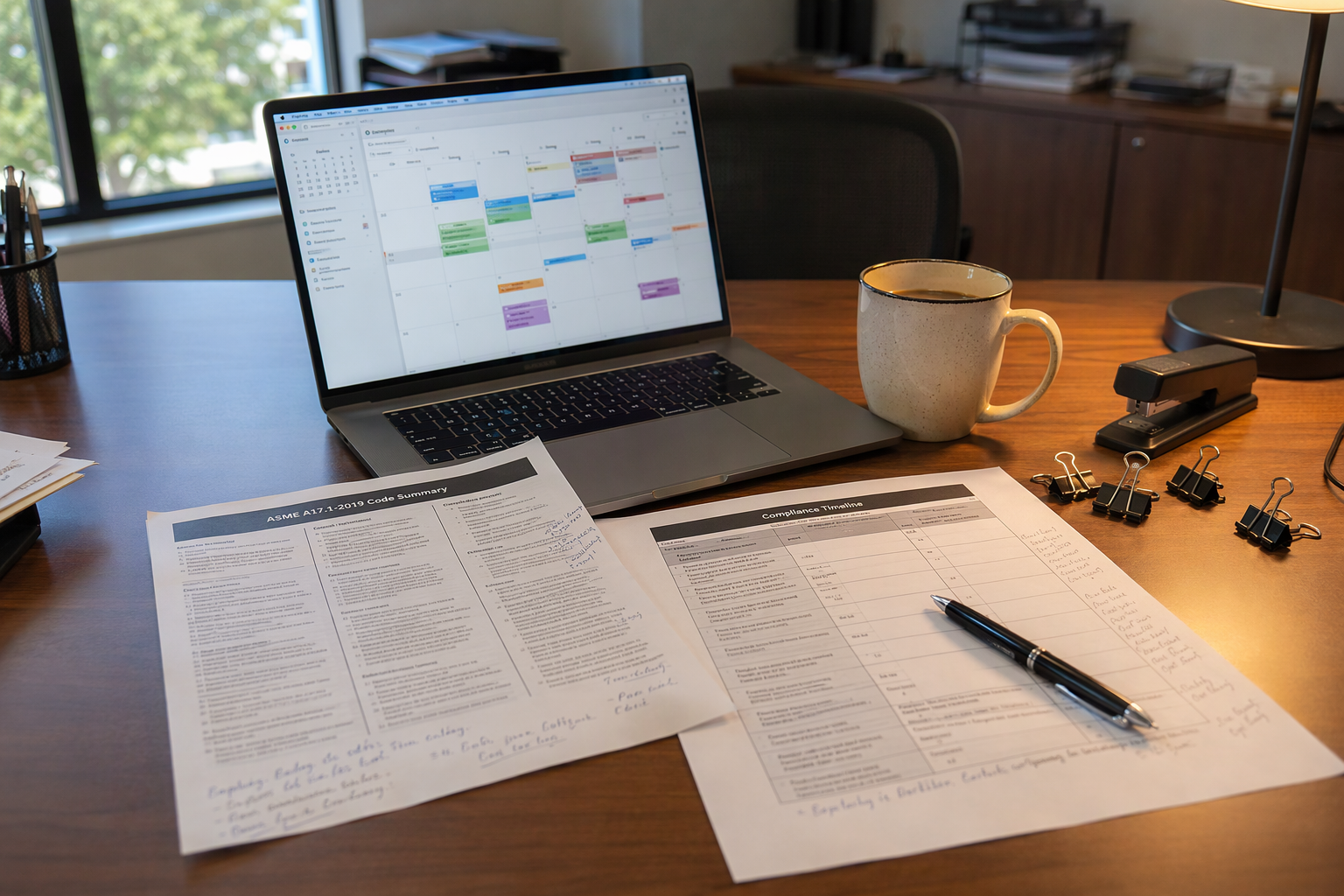
New elevator facilities in South Carolina must comply with the ASME A17.1/CSA B44, 2019 edition (ASME A17.1-2019/CSA B44:19), which South Carolina adopted without amendment, effective July 23, 2021.
The 2019 edition covers design, construction, operation, inspection, testing, maintenance, alteration, and repair of elevators and escalators. It was adopted by notice in the S.C. State Register on July 23, 2021, and applies to permits issued on or after that effective date. For elevator facilities that were already in operation before July 1, 1986, South Carolina requires compliance with the 1986 edition of ANSI A17.3, the safety code for existing elevators and escalators. Facility managers should confirm which code edition governs each unit in their building — particularly in older Columbia SC structures where equipment predates the current code cycle.
How often must elevators be inspected in South Carolina?
Standard passenger and freight elevators must be inspected at installation, registration, alteration or repair, and at least once every year before the operating certificate is renewed.
| Equipment Type | Inspection Trigger | Periodic Inspection Interval | Governing Authority |
|---|---|---|---|
| Passenger & Freight Elevators | Installation, registration, alteration, or repair | At least once per year (before certificate renewal) | S.C. Code Title 41, Chapter 16 |
| Handicap Lifts (Platform Lifts) | Installation or alteration | Every five years | S.C. Code Title 41, Chapter 16 |
| Manlifts | Installation or alteration | Every seven years | S.C. Code Title 41, Chapter 16 |
| Television Tower Elevators | Installation or alteration | Every seven years | S.C. Code Title 41, Chapter 16 |
| Special Purpose Elevators | Installation or alteration | Every seven years | S.C. Code Title 41, Chapter 16 |
| Dumbwaiters | Installation or alteration | As required at installation or alteration | S.C. Code Title 41, Chapter 16 |
Building owners operating multiple equipment types in a single Columbia SC facility — for example, a passenger elevator and a platform lift — must track separate inspection cycles for each unit. Missing the annual window for passenger elevators or the five-year window for platform lifts can result in operating without a valid certificate.
Can a private special inspector conduct the required South Carolina elevator inspection?
Yes — South Carolina law expressly allows a licensed special inspector’s inspection to be accepted in place of a state inspection, provided that inspector meets specific qualifications.
Special inspectors in South Carolina must be licensed and demonstrate the qualifications set out in the 2018 edition of QEI-1, the American National Standard for Qualification of Elevator Inspectors. This credential ensures that private inspectors applying technical judgment comparable to that of state inspectors. However, there is a critical conflict-of-interest rule: a special inspector may not inspect any elevator on which the inspector or the inspector’s employer holds a current service or warranty contract. This rule is designed to protect the independence of the inspection process and prevent self-certification of maintenance work.
Building owners who use a single service company for both maintenance and inspection work in South Carolina need to understand this restriction and plan accordingly — they will need to source an independent qualified inspector for the formal compliance inspection.
What is a South Carolina operating certificate, and what happens if it lapses?
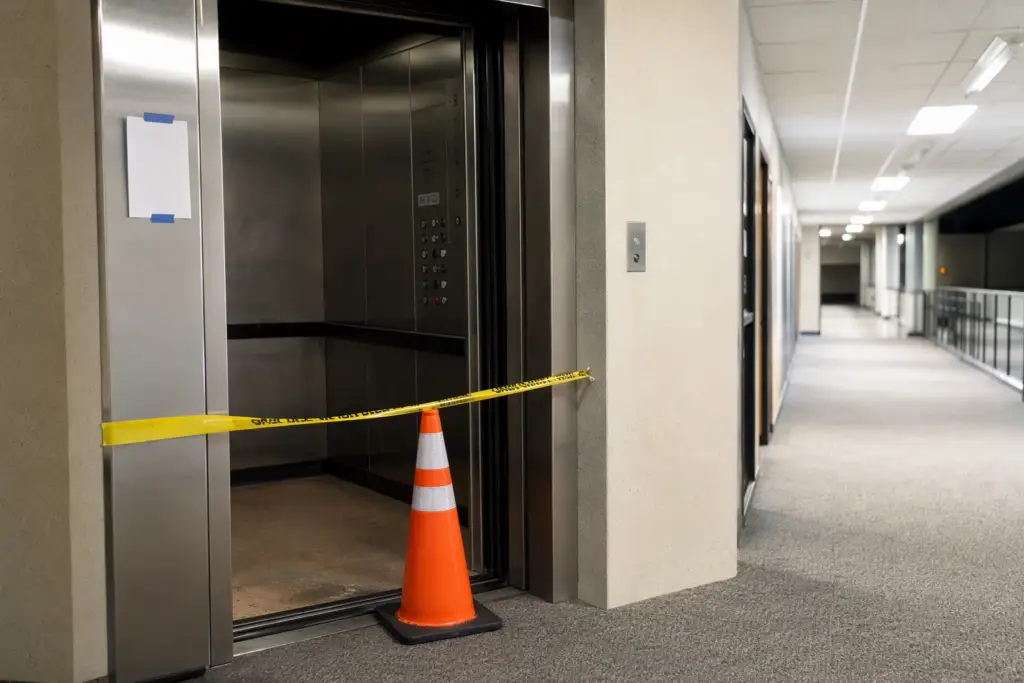
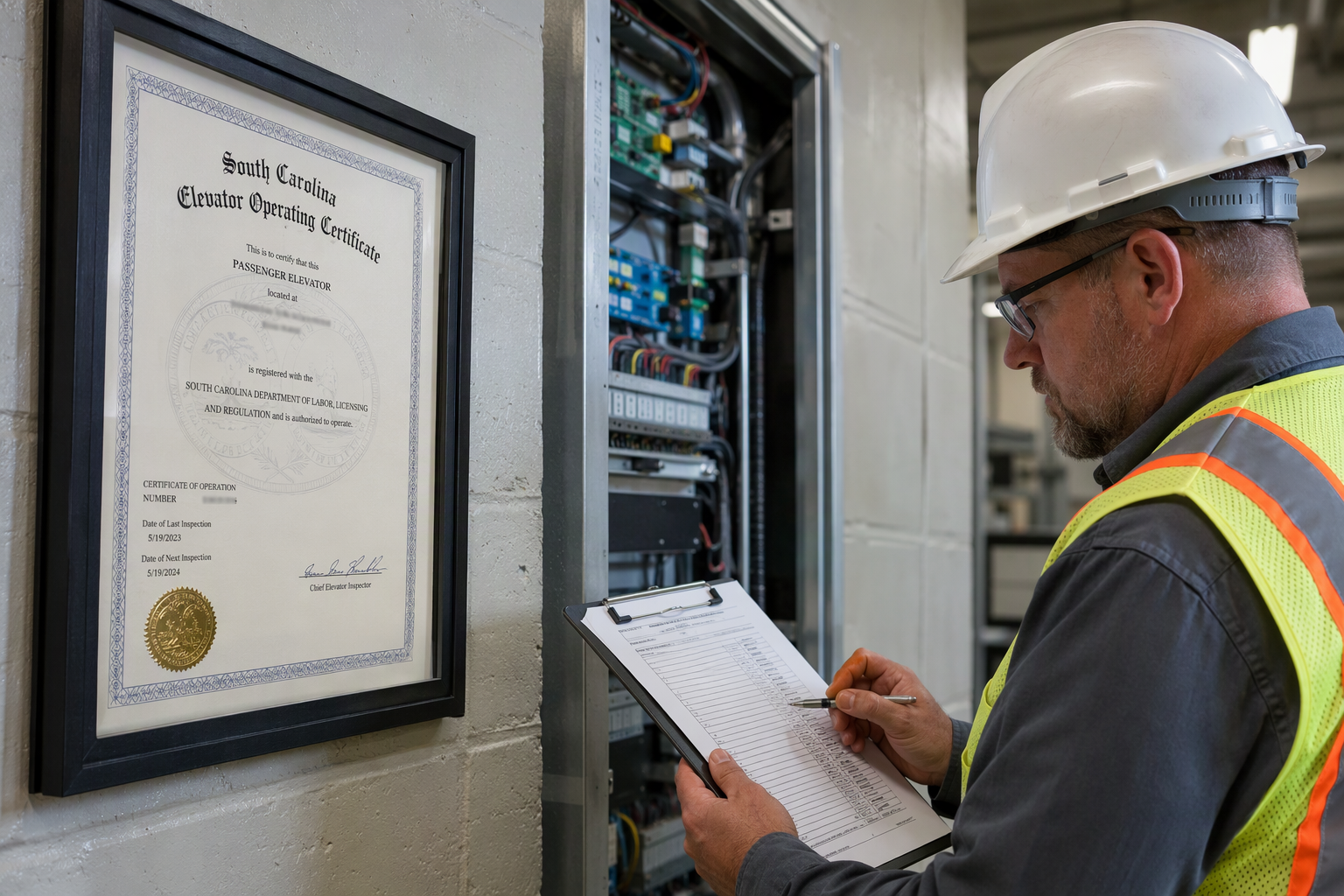
An operating certificate is the state-issued document that legally authorizes an elevator facility to operate in South Carolina, and no elevator may run without one — a lapsed certificate means the elevator must be taken out of service.
Under S.C. Code Title 41, Chapter 16, no elevator facility may be operated without both a certificate of registration and a valid operating certificate from the LLR. Furthermore, the operating certificate — or a legible copy — must be displayed conspicuously inside each elevator car at all times. This is a visible, verifiable compliance item that building inspectors, insurance carriers, and tenants can check at any time. An elevator running without a posted, valid certificate in Columbia SC is operating outside state law regardless of its mechanical condition.
What is the step-by-step process to schedule a South Carolina elevator inspection?
Scheduling a compliant inspection in South Carolina requires working through a defined sequence of actions — skipping steps commonly results in delays or certificate gaps.
- Identify your certificate expiration date. Locate the current operating certificate posted inside each elevator car and note the renewal date. Build backward from that date to confirm inspection lead time is sufficient.
- Determine your inspection path. Decide whether to request a state inspection through the LLR, Office of Elevators and Amusement Rides, or engage a licensed QEI-1-qualified special inspector who has no service or warranty relationship with your equipment.
- Confirm no open permits or repairs are outstanding. Inspections triggered by alterations or repairs require a state construction permit to have been issued before work begins. Confirm that all outstanding permit work is closed out before scheduling the periodic annual inspection.
- Contact the LLR or your qualified special inspector. Submit the inspection request with the elevator facility’s registration information, equipment type, and preferred inspection window. Build in scheduling buffer — state inspectors serve all of South Carolina, and availability can vary.
- Prepare the machine room and equipment. Ensure the machine room is accessible, lighting is functional, all required documentation is on-site, and the elevator is in operational condition. Deficiencies found during inspection may require a follow-up visit, delaying certification.
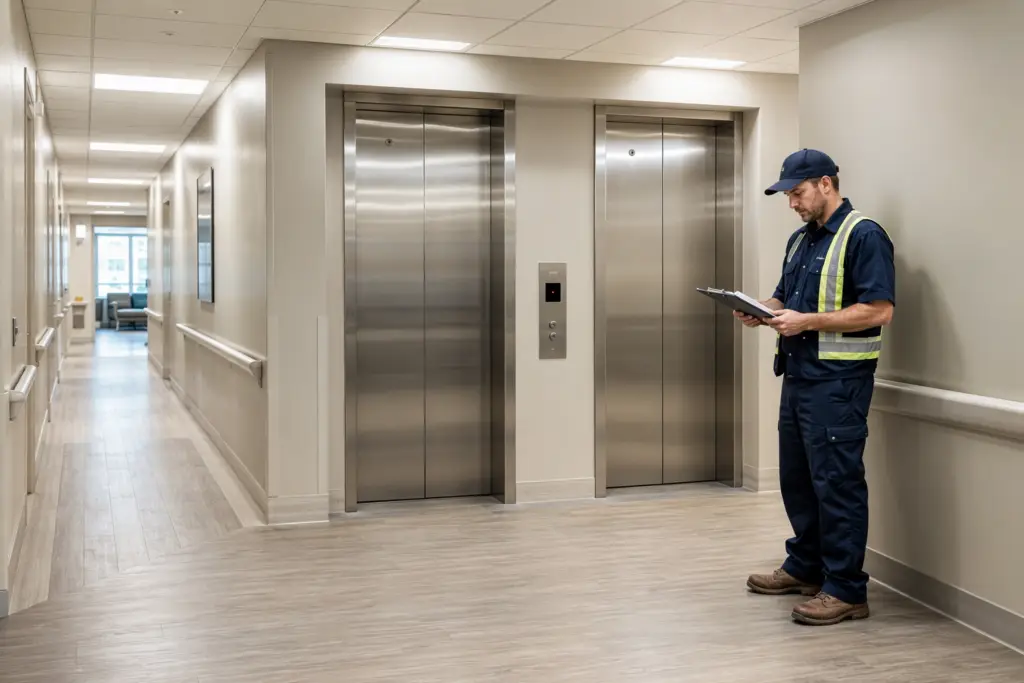
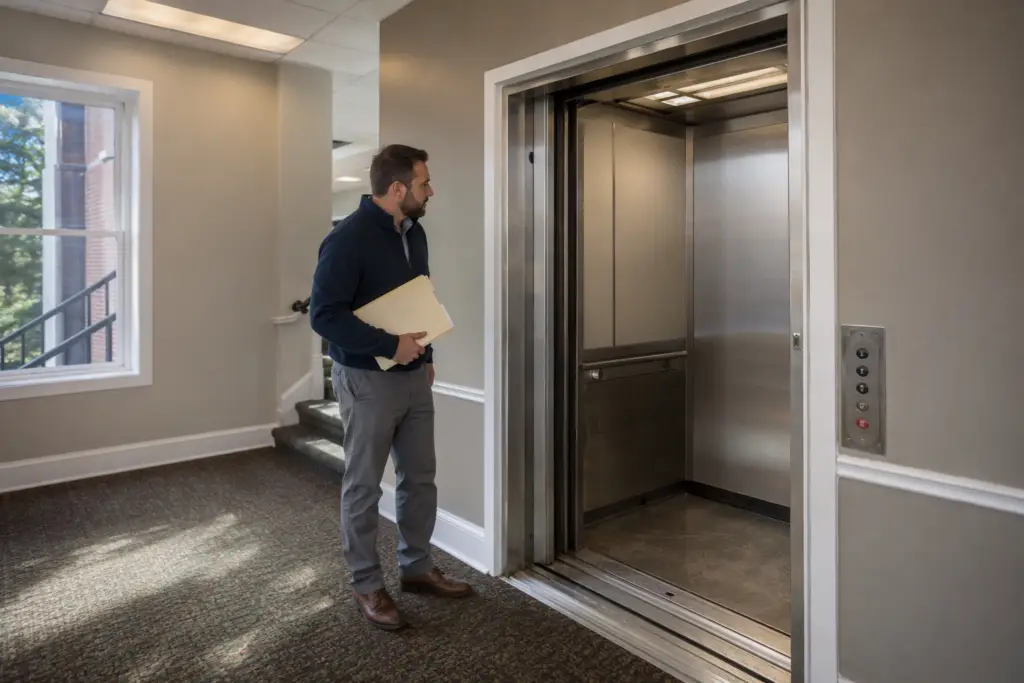
- Be present or designate a knowledgeable representative. Someone familiar with the equipment and its maintenance history should be available during the inspection to answer questions and provide access.
- Receive the inspection report and act on any deficiencies. If the inspector identifies conditions that must be corrected, address them promptly and arrange any required follow-up inspection before the current certificate expires.
- Obtain the renewed operating certificate and post it. Once the LLR issues the renewed certificate, post it conspicuously inside the elevator car as required by state law.
Carolina Elevator Service assists Columbia SC building owners at every stage of this process, from pre-inspection maintenance reviews to coordinating access for the state or special inspector.
Is a state construction permit required before elevator work is done in South Carolina?
Yes — South Carolina law requires a state construction permit before any elevator facility is erected, constructed, altered, or installed, and work done without a permit can jeopardize the operating certificate.
The permit requirement applies to new installations, modernizations, significant alterations, and certain repairs. Beginning work before the permit is issued is a compliance violation that can trigger additional scrutiny during the subsequent inspection. New elevator facilities must comply with the edition of ASME A17.1 in effect at the time the permit is issued — confirming the applicable code edition at the permit stage, not after the fact, is important for avoiding costly redesigns or retrofit requirements.
Does the South Carolina elevator inspection requirement apply to all buildings?
The South Carolina Elevator Code applies to virtually all commercial, multifamily, and institutional elevator facilities — but it expressly does not apply to equipment in a single private dwelling.
This means that residential apartment buildings, commercial office towers, hospitals, retail centers, schools, government facilities, and hotels in Columbia SC are all subject to the full inspection and certification requirements. A private home elevator serving a single-family residence is exempt. Mixed-use buildings that include any commercial or common-area elevator are covered. Building owners unsure whether a specific piece of equipment falls within the statutory scope should consult the LLR or a qualified service provider before assuming an exemption applies.
How do ADA requirements interact with South Carolina elevator inspection requirements?
The Americans with Disabilities Act (ADA) establishes accessibility standards for elevator equipment that operate alongside — but independently of — the South Carolina mechanical safety inspection requirements.
A South Carolina elevator can hold a valid operating certificate and still be out of compliance with ADA accessibility requirements if cab dimensions, door timing, floor leveling, call button height, or Braille signage do not meet federal standards. Conversely, passing an ADA accessibility audit does not substitute for the state safety inspection and certificate renewal. Facility managers in Columbia SC should treat these as two parallel compliance tracks. Platform lifts required to serve as an ADA-compliant accessible route are also subject to the South Carolina five-year inspection cycle for handicap lifts.
What happens if an elevator accident occurs — is there a South Carolina reporting requirement?
Yes — in South Carolina, any elevator accident that seriously injures a person other than an employee must be reported to the state before the end of the next working day.
This rapid reporting obligation means facility managers need to know the LLR reporting pathway before an incident occurs, not after. The elevator involved in a serious accident should be taken out of service pending inspection. Documenting the condition of the equipment immediately after an incident — before any repairs are made — is important both for the LLR report and for any related legal or insurance proceedings. Employers dealing with employee injuries on elevator equipment should also review applicable OSHA recordkeeping and reporting obligations, which apply separately from the state elevator reporting requirement.
What special technical requirements apply to hydraulic elevators installed in South Carolina?
South Carolina requires that newly installed underground hydraulic elevator cylinders be encased in a plastic outer containment system to limit electrolytic corrosion.
This requirement addresses a well-documented failure mode in older hydraulic elevator systems where underground cylinders corrode from the outside in, eventually developing leaks that release hydraulic fluid into the soil. The plastic outer casing requirement on new installations reduces both equipment failure risk and environmental liability for building owners. Existing underground cylinders installed before this requirement took effect should be evaluated for corrosion condition as part of ongoing maintenance. During modernization projects in Columbia SC, upgrading older hydraulic systems often presents an opportunity to bring underground containment into compliance with current standards.
What firefighters’ service key is required on new South Carolina elevator installations?
New elevator installations in South Carolina must use the five-pin S.C. #1000 key for firefighters’ service.
Firefighters’ service — also known as Phase I emergency recall and Phase II firefighters’ operation — is addressed in ASME A17.1 and requires that responding firefighters be able to override normal elevator operation using a standardized key. South Carolina’s requirement for the S.C. #1000 key on new installations standardizes this across the state, ensuring that Columbia SC fire departments carry compatible keys. Building owners undertaking new construction or modernization projects should confirm with their elevator contractor that the specified key switch meets this South Carolina-specific requirement.
What standby power requirements apply to South Carolina passenger elevators?
South Carolina passenger elevators must have standby power capable of running emergency lighting and the alarm bell for at least four hours in the event normal power fails.
This requirement ensures that passengers who become trapped during a power outage have functioning lighting and a means to signal for help for a meaningful duration. The standby power system should be tested as part of routine maintenance and verified during inspections. Building owners who have recently had battery systems replaced or who are unsure of the current standby capacity should request a timed load test to confirm four-hour compliance. This is a technical checkpoint that Carolina Elevator Service includes in maintenance evaluations for Columbia SC clients.
What are the consequences of operating an elevator in South Carolina without a valid operating certificate?
Operating an elevator without a valid certificate of registration and operating certificate violates S.C. Code Title 41, Chapter 16 and exposes building owners to enforcement action, liability, and potential forced shutdown of the equipment.
Beyond the direct regulatory exposure, operating without a current certificate creates significant insurance and liability complications. If a passenger is injured in an elevator that lacks a valid operating certificate, the absence of that certificate will be a material fact in any resulting litigation or insurance claim. Commercial property and general liability insurers may also treat an expired certificate as a policy compliance issue. For Columbia SC building owners, maintaining continuous certification is not merely a regulatory box to check — it is a foundational risk management practice.
How far in advance should a building owner schedule an annual elevator inspection in South Carolina?
Building owners should plan to schedule inspections well before the certificate expiration date to account for inspector availability, any required pre-inspection repairs, and potential follow-up visits if deficiencies are found.
The exact lead time depends on whether the owner is using a state inspector or a licensed special inspector, the current LLR scheduling workload, and the condition of the equipment. Elevators that have deferred maintenance items or known deficiencies require additional buffer — deficiencies identified during inspection must be corrected and, in some cases, re-inspected before the certificate can be renewed. A practical approach for Columbia SC facility managers is to set an internal calendar reminder several months before the certificate expiration date, use that window for a pre-inspection maintenance review, and then schedule the formal inspection with sufficient time remaining to address any findings.
Does South Carolina have a specific inspection requirement when an elevator is altered or repaired?
Yes — South Carolina requires an inspection upon installation, registration, and any alteration or repair, in addition to the periodic annual inspection cycle.
This means that a significant repair or modernization project resets the inspection trigger — the elevator must be inspected after the work is completed before it can be returned to service under the operating certificate. A state construction permit must also be obtained before the alteration or repair work begins. Building owners who treat post-repair inspection as an optional step, or who return an elevator to service immediately after repair work without inspection, are operating outside the law. Any elevator service provider managing repair or modernization work in Columbia SC should be coordinating the permit and post-repair inspection as standard project deliverables.
What qualifications must a South Carolina special elevator inspector hold?
A South Carolina special inspector must be licensed by the state and demonstrate qualifications consistent with the 2018 edition of QEI-1, the American National Standard for Qualification of Elevator Inspectors.
QEI-1 establishes the knowledge, experience, and examination requirements for elevator inspectors and is administered through the National Elevator Industry Educational Program (NEIEP) and similar bodies. The South Carolina licensing requirement based on QEI-1 qualifications provides a minimum competency floor for all inspectors operating outside the direct state inspection staff. When engaging a special inspector, building owners should confirm that the individual holds current South Carolina licensure and has no service or warranty relationship with the elevator being inspected — that conflict-of-interest prohibition is strictly observed under state rules.
How should a Columbia SC building owner prepare an elevator for the annual state inspection?
Thorough preparation before the inspection reduces the likelihood of deficiency findings, follow-up visits, and certificate delays — and it demonstrates the diligent ownership that state law requires.
Practical preparation steps include ensuring the machine room is clean, dry, unobstructed, and properly lit; confirming that all required documentation — including the current registration, maintenance logs, and any prior inspection reports — is organized and available on-site; verifying that the operating certificate is posted inside the cab; testing the alarm bell, emergency lighting, and door operation; and completing any known deferred maintenance items before the inspector arrives. Carolina Elevator Service offers pre-inspection maintenance reviews for Columbia SC building owners that systematically work through these preparation steps and flag any conditions that would likely generate inspection deficiencies.
Where can building owners find authoritative information about South Carolina elevator inspection requirements?
The primary authoritative source for South Carolina elevator requirements is the South Carolina Elevator Code, S.C. Code Title 41, Chapter 16, administered by the South Carolina Department of Labor, Licensing and Regulation (LLR), Office of Elevators and Amusement Rides.
The technical safety standards are set out in S.C. Code of Regulations Chapter 71, Article 5, Regulations 71-5000 through 71-5700, and the mechanical requirements for all covered equipment derive from the adopted ASME A17.1-2019/CSA B44:19 code. For ADA accessibility obligations, the ADA.gov website provides the governing standards and technical assistance resources. For workplace safety concerns related to elevator equipment and maintenance personnel, OSHA provides applicable federal standards. Building owners navigating multiple compliance tracks simultaneously benefit from working with a knowledgeable local service provider — Carolina Elevator Service supports Columbia SC facility managers in understanding how these frameworks intersect for their specific equipment and building type.
Contact Carolina Elevator Service for a free elevator assessment at 803-865-1400.
Need elevator service you can rely on? Carolina Elevator Service is ready to help.