Elevator Service in Columbia, SC | Carolina Elevator Service
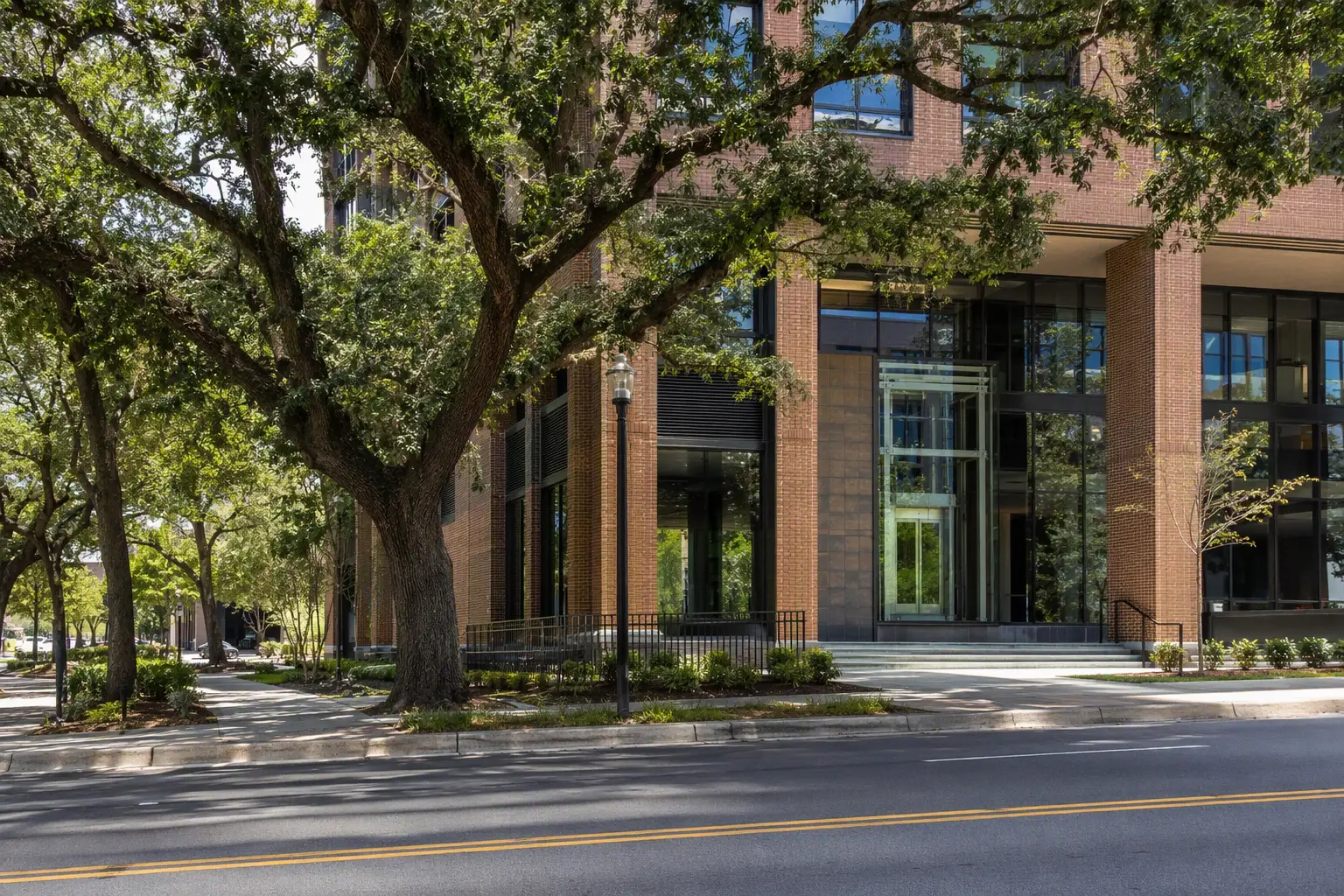
Carolina Elevator Service covers Columbia, SC, and a broad footprint across South Carolina, supporting commercial buildings, healthcare facilities, multi-family residential properties, government complexes, and industrial sites. Whether a property owner needs a new installation, a scheduled maintenance visit, or an unplanned repair, the team brings practical knowledge of South Carolina’s regulatory landscape to every job.
Which geographic areas does Carolina Elevator Service serve?
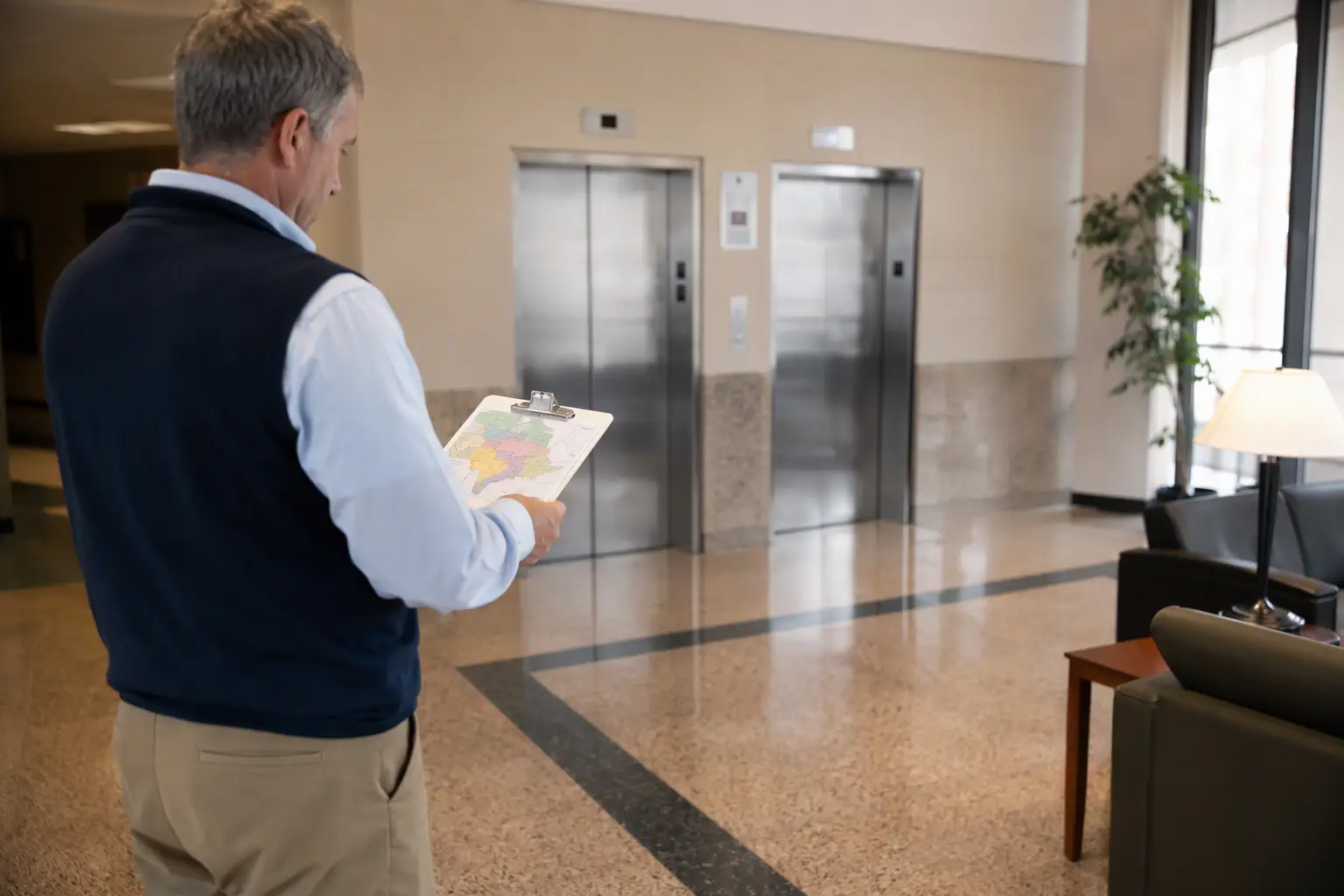
Carolina Elevator Service is based in South Carolina and concentrates its service territory within the state. The company serves the Columbia metro area — including Richland County, Lexington County, and surrounding Midlands communities — as well as clients across the broader South Carolina region. Property managers, building owners, and facilities directors throughout these areas rely on Carolina Elevator Service for the full range of elevator work, from initial permitting and installation through ongoing compliance maintenance.
What types of buildings and facilities does Carolina Elevator Service support?
Vertical transportation needs vary widely by facility type, and Carolina Elevator Service is equipped to work across many market segments, including:
- Commercial office buildings — passenger elevators, freight elevators, and access compliance upgrades
- Healthcare and medical facilities — hospitals, clinics, and assisted living communities where elevator reliability is mission-critical
- Multi-family residential and hospitality — apartment complexes, condominiums, and hotels requiring consistent uptime
- Government and institutional buildings — courthouses, schools, and municipal facilities subject to South Carolina compliance standards
- Industrial and warehouse environments — freight lifts and material-handling equipment
- Retail and mixed-use properties — locations where passenger flow and accessibility are priorities
Because the South Carolina Elevator Code (S.C. Code Title 41, Chapter 16) does not apply to equipment in a single private dwelling, Carolina Elevator Service focuses on commercial, institutional, and multi-unit properties where state regulation governs equipment operation.
What South Carolina regulations apply to elevator operation in Columbia?
All elevator facilities operating in Columbia and throughout South Carolina fall under oversight by the South Carolina Department of Labor, Licensing and Regulation (LLR), Office of Elevators and Amusement Rides. Key requirements that every building owner in the service area should understand include:
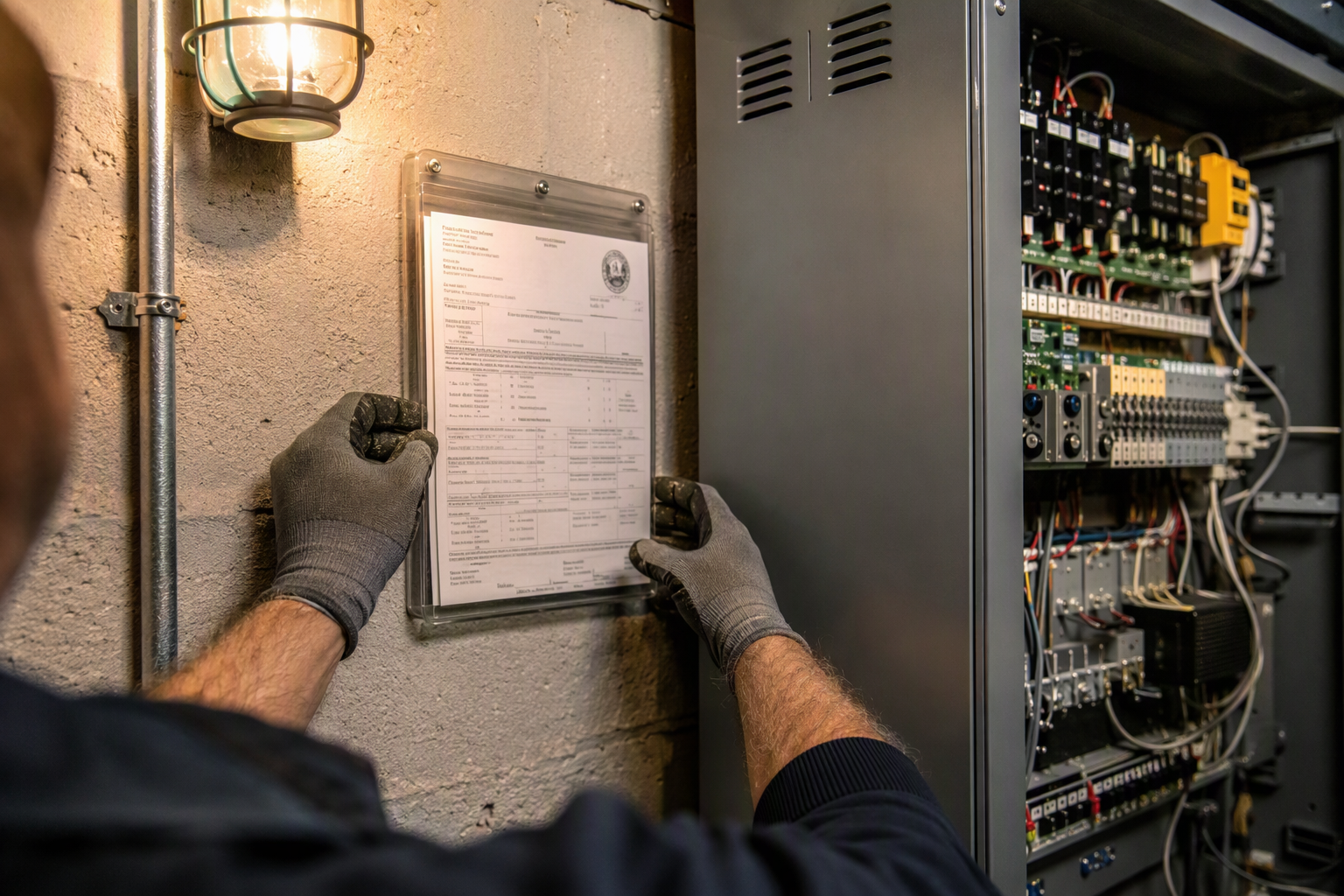
- No elevator may operate without a valid certificate of registration and an operating certificate issued by the state. That certificate — or a copy — must be displayed conspicuously inside each elevator car.
- A state construction permit is required before any elevator is erected, constructed, altered, or installed.
- Standard passenger elevators must be inspected at installation and then at least once per year before the operating certificate is renewed.
- Handicap lifts follow a five-year inspection cycle; manlifts, television tower elevators, and special purpose elevators follow a seven-year cycle; dumbwaiters are inspected at installation or alteration.
- Required inspections may be conducted only by state inspectors or licensed special inspectors. A special inspector may not inspect an elevator on which that inspector or their employer holds a current service or warranty contract.
- South Carolina adopted the ASME A17.1/CSA B44, 2019 edition, effective July 23, 2021, as its governing safety code for new and altered elevator facilities.
- Elevator facilities in operation before July 1, 1986, must comply with the 1986 edition of ANSI A17.3, the safety code for existing elevators and escalators.
- South Carolina passenger elevators must have standby power capable of running emergency lighting and the alarm bell for at least four hours if normal power fails.
- New underground hydraulic elevator cylinders must be encased in plastic outer containment to limit electrolytic corrosion.
- Firefighters’ service on new installations must use the five-pin S.C. #1000 key.
- If an accident seriously injures anyone other than an employee, the owner must report it to the state before the end of the next working day.
- The owner is responsible for keeping every elevator facility in safe operating condition and in compliance with state regulations at all times.
Local ordinances that conflict with the South Carolina Elevator Code or its regulations are void under state law, which means the state framework governs uniformly across Columbia and every other municipality Carolina Elevator Service serves.
Does Carolina Elevator Service handle ADA accessibility compliance?
Yes. Buildings open to the public in Columbia and across South Carolina must meet Americans with Disabilities Act (ADA) accessibility standards. Elevator accessibility — including cab dimensions, door timing, floor call buttons, and Braille signage — is a common focus of both new installations and modernization projects. Carolina Elevator Service evaluates existing equipment against applicable accessibility requirements and advises property owners on upgrades that bring facilities into conformance.
What should a Columbia building owner do if an elevator goes out of service unexpectedly?
- Secure the elevator landing doors and post clear out-of-service notices at every floor to prevent unauthorized use.
- If anyone is trapped in the car, contact emergency services immediately — do not attempt a manual rescue without trained personnel.
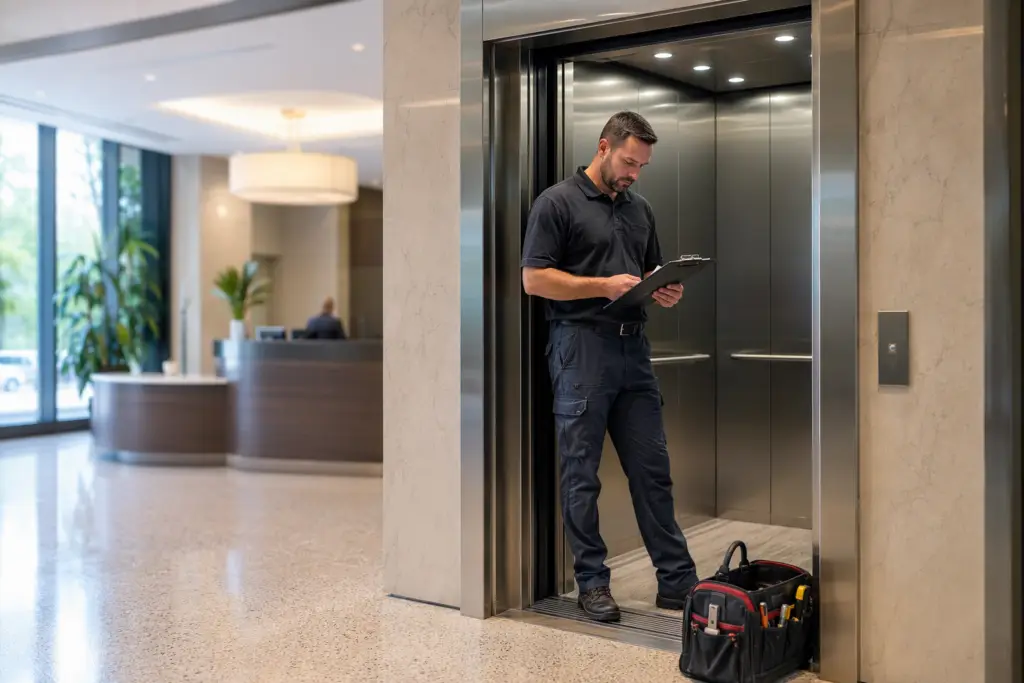
- Contact Carolina Elevator Service to dispatch a qualified technician to the site.
- Gather any recent maintenance records, inspection certificates, and a description of the malfunction to share with the responding technician.
- Verify that the operating certificate displayed in the car is current, since an expired certificate may create additional compliance issues while the unit is out of service.
- Once repairs are completed, confirm whether an alteration or repair inspection is required by the LLR before the elevator is returned to service.
South Carolina regulations require that inspections be conducted after certain repairs and alterations, so coordinating with the LLR’s Office of Elevators and Amusement Rides is an important step in the return-to-service process.
How does Carolina Elevator Service approach ongoing maintenance contracts?
Routine maintenance is the most effective way to prevent unexpected downtime and keep an elevator in compliance with South Carolina’s annual inspection and certificate-renewal cycle. Carolina Elevator Service offers ongoing maintenance agreements that cover systematic inspections of mechanical, electrical, and safety components. Because South Carolina rules require that a special inspector may not inspect an elevator on which the inspector’s employer holds a current service contract, Carolina Elevator Service maintains clear distinctions between its maintenance work and the independent inspections required by the state — ensuring that clients always have access to a qualified, conflict-free state or special inspector when renewal time arrives.
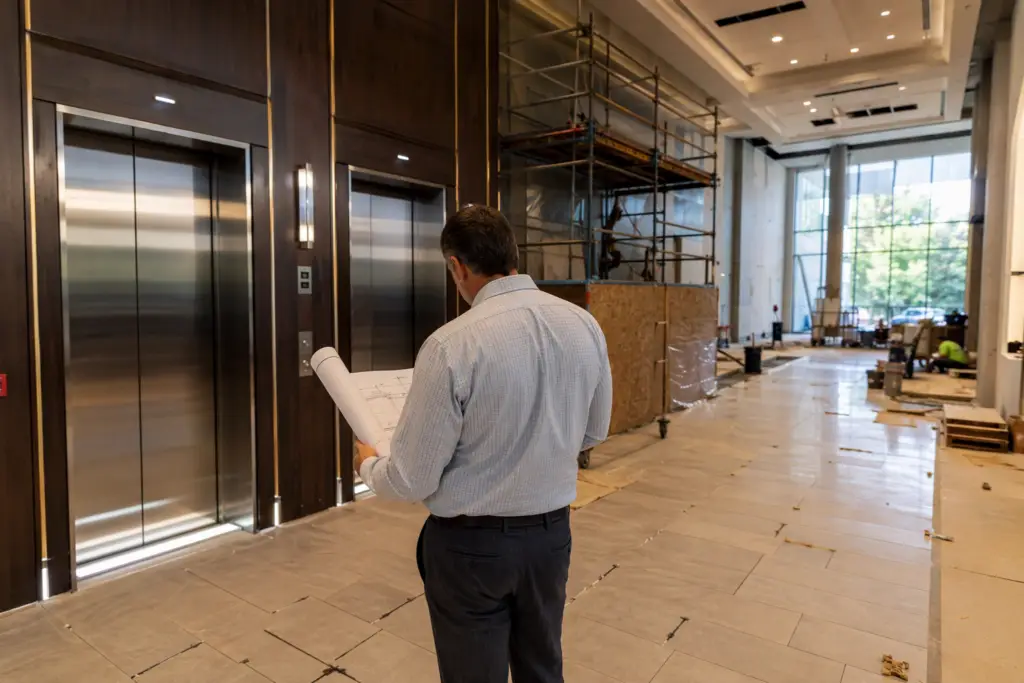
What is involved in a new elevator installation in Columbia, SC?
Installing a new elevator in Columbia or anywhere in South Carolina follows a defined regulatory pathway:
- Obtain a state construction permit from the LLR before any erection, construction, alteration, or installation begins.
- Design and specify equipment that complies with the ASME A17.1-2019/CSA B44:19 edition in effect at the time the permit is issued.
- Complete the installation according to approved plans and applicable safety standards, including standby power requirements and — for hydraulic units — plastic outer containment for underground cylinders.
- Coordinate a post-installation inspection with a state inspector or licensed special inspector through the LLR.
- Obtain the certificate of registration and operating certificate before placing the elevator in service.
- Display the operating certificate conspicuously inside the elevator car.
Carolina Elevator Service works with building owners and their project teams throughout this process, helping to align specifications, documentation, and scheduling with the LLR’s requirements.
Why choose a locally focused elevator service company for Columbia properties?
South Carolina’s elevator regulatory framework — administered by the LLR under S.C. Code Title 41, Chapter 16 and its accompanying regulations — has specific provisions that differ from other states. Working with a company that operates exclusively within South Carolina means the service team is familiar with the state’s adopted code edition, inspection cycle requirements, certificate-display rules, and local AHJ expectations. For Columbia property owners, that familiarity translates to fewer compliance surprises and more efficient coordination with state inspectors during the annual renewal process.
Schedule a free consultation with Carolina Elevator Service at 803-865-1400.
Need elevator service you can rely on? Carolina Elevator Service is ready to help.