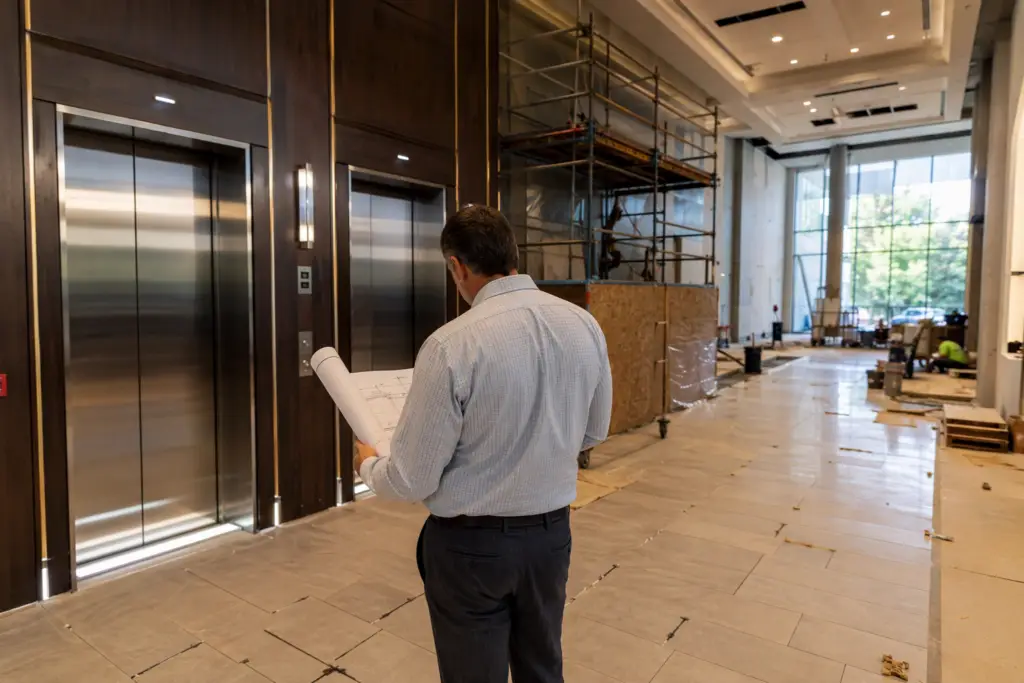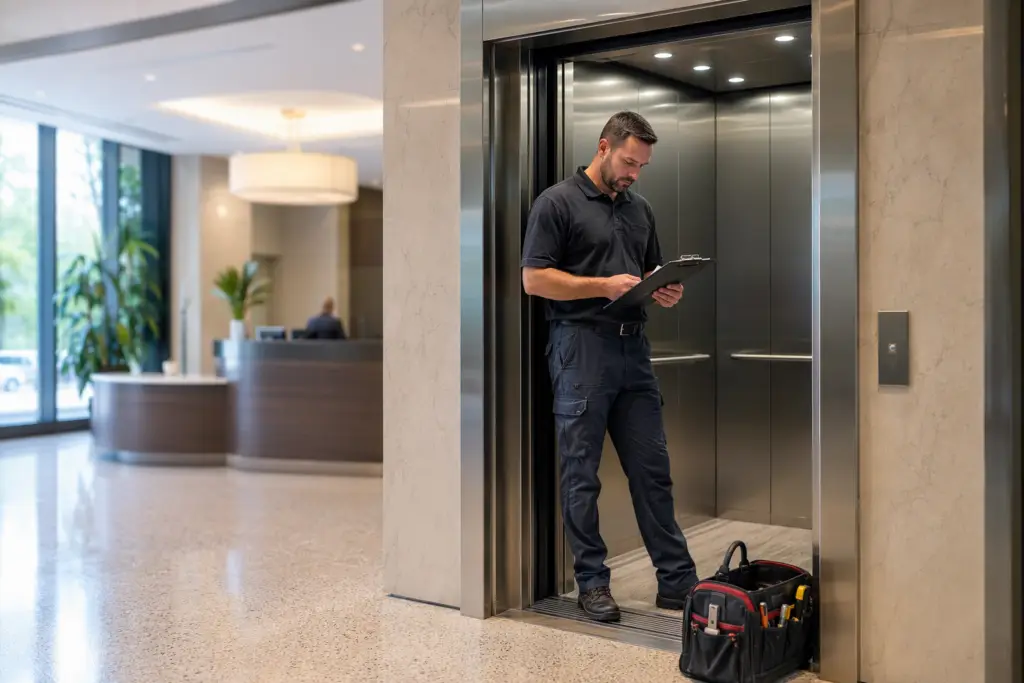
Getting a quote for an elevator modernization project starts with contacting a qualified elevator service company and scheduling an on-site assessment of the existing equipment. During that visit, a technician evaluates the drive system, controls, cab interior, safety devices, and regulatory compliance status. The resulting written proposal outlines a scope of work, equipment specifications, and itemized costs tied to your building’s specific conditions and applicable codes under South Carolina’s elevator statutes, S.C. Code Title 41, Chapter 16.
What is elevator modernization and how is it different from routine maintenance?
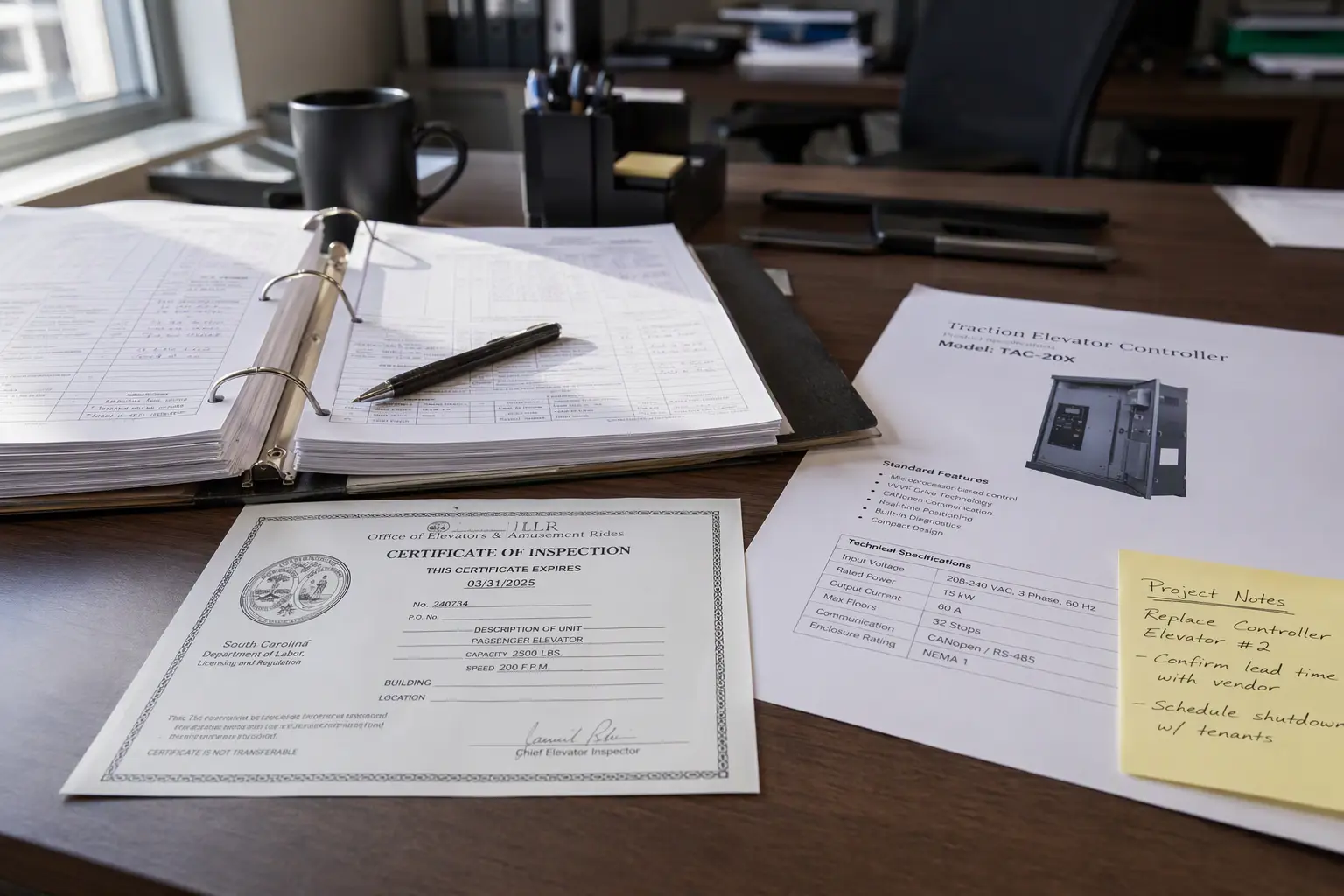
Elevator modernization is the planned replacement or upgrade of major elevator components — such as the drive machine, controller, door operator, or cab finishes — to improve performance, energy efficiency, and code compliance, whereas routine maintenance focuses on inspecting, lubricating, and adjusting existing components to keep them running within current tolerances.
Routine maintenance keeps a working elevator operational. Modernization addresses components that have reached the end of their service life, no longer meet current safety standards, or create unacceptable downtime and repair costs. Common modernization scopes include replacing relay-logic controllers with solid-state microprocessor systems, upgrading hydraulic power units to meet environmental containment requirements, and installing new door operators and safety edges to satisfy current ASME A17.1 Safety Code for Elevators and Escalators requirements.
Because South Carolina has adopted the ASME A17.1-2019/CSA B44:19 edition — effective as noted in the S.C. State Register on July 23, 2021 — any alteration to an elevator facility must comply with the edition in effect when the construction permit is issued. That makes understanding the code baseline a prerequisite before any modernization quote can be finalized.
What information should a building owner gather before requesting a modernization quote?
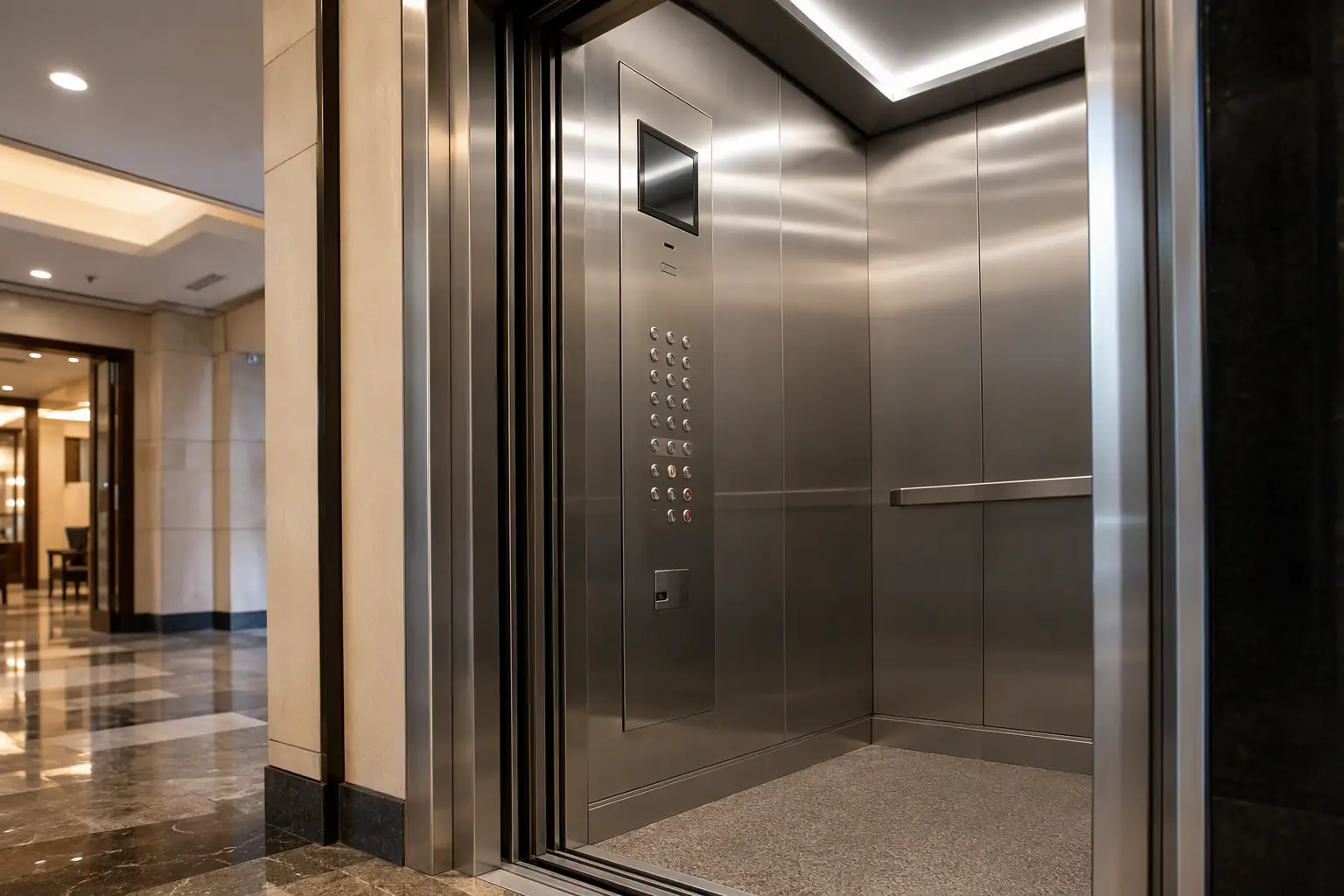
Before requesting a quote, an owner should collect the elevator’s maintenance log, the current operating certificate, the original installation year, the equipment manufacturer and model number, any outstanding inspection violation notices from the South Carolina Department of Labor, Licensing and Regulation (LLR), and a description of the operational problems or goals driving the project.
The more complete this documentation, the more accurate the initial estimate will be. Contractors use installation dates to determine whether the unit predates key code editions — for example, South Carolina requires that elevator facilities in operation before July 1, 1986 comply with the 1986 edition of ANSI A17.3, the safety code for existing elevators and escalators. Knowing where a unit stands on that timeline shapes the entire modernization scope.
Building use matters as well. A hospital elevator with continuous 24-hour demand has different reliability requirements than a low-traffic office building unit, and those differences affect equipment selection, downtime planning, and ultimately the quote.
What happens during an on-site modernization assessment?
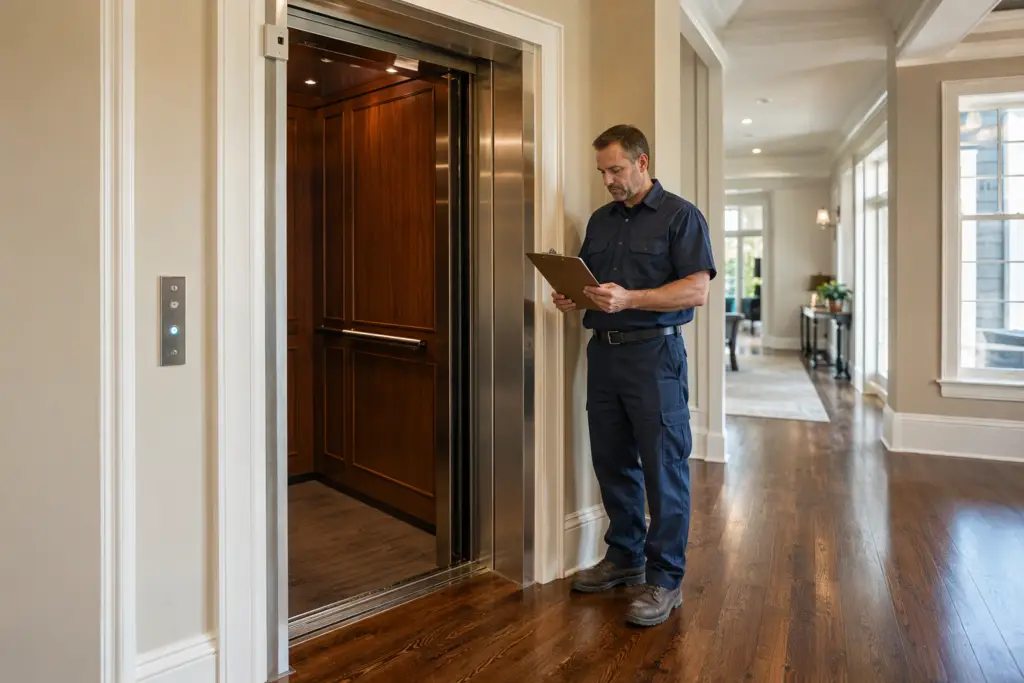
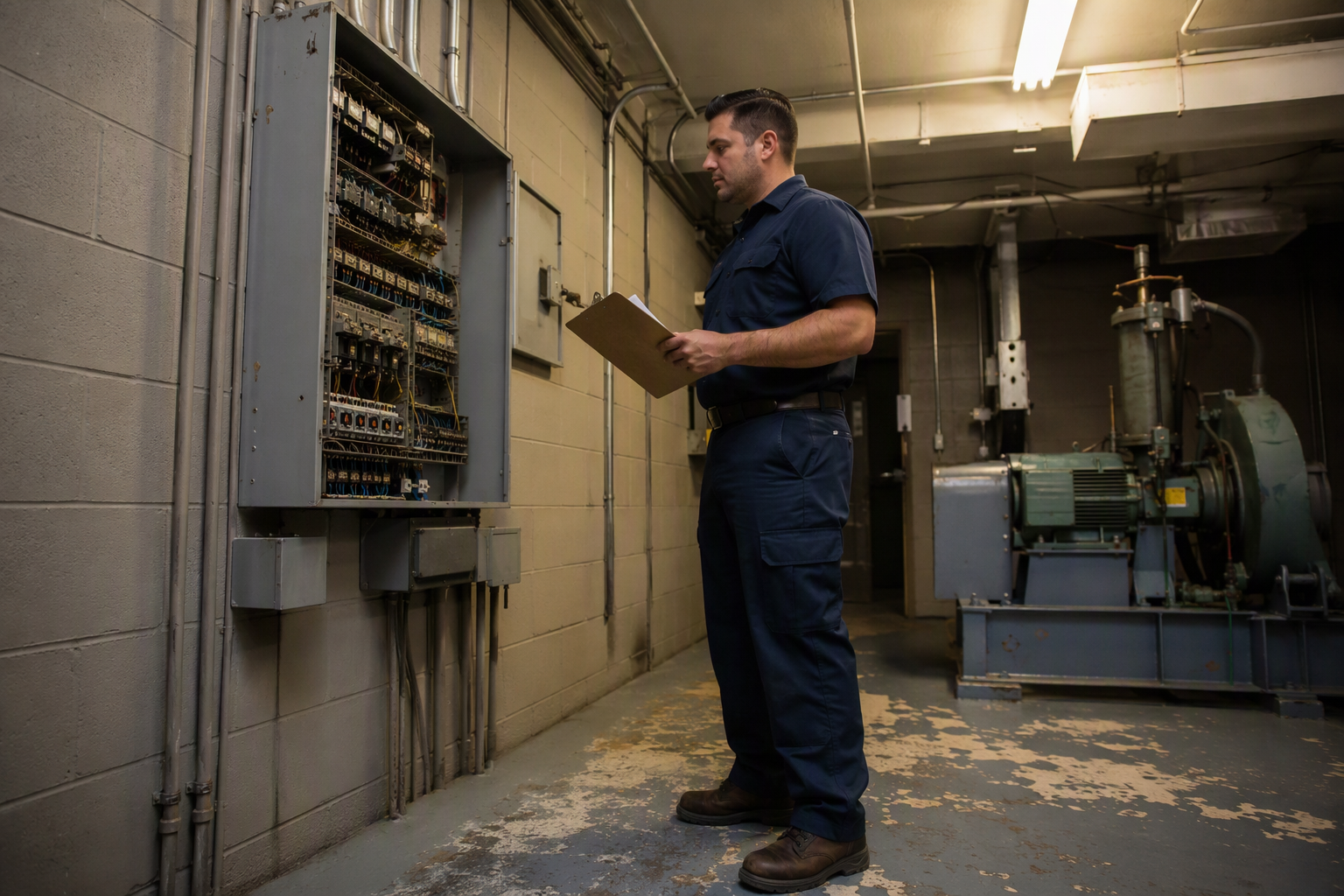
During an on-site assessment, a qualified elevator technician systematically inspects the machine room, hoistway, pit, cab, and all associated electrical and mechanical systems to document current conditions, identify safety deficiencies, and determine which components require replacement versus refurbishment.
The assessment typically covers the following areas:
- Review the current operating certificate and confirm it is conspicuously displayed inside the car, as required by South Carolina law.
- Inspect the drive machine and motor for worn bearings, overheating signs, or end-of-life indicators.
- Evaluate the controller type — relay-based systems are candidates for solid-state replacement that reduces call-backs and improves diagnostics.
- Check door operators, gibs, and safety edges for wear patterns and compliance with current ASME A17.1 requirements.
- Examine the pit for water intrusion, lighting adequacy, and stop switch condition.
- Review hydraulic units for underground cylinder encasement — South Carolina requires newly installed underground hydraulic elevator cylinders to be encased in plastic outer containment to limit electrolytic corrosion.
- Confirm firefighters’ service is keyed to the five-pin S.C. #1000 key for new or altered installations.
- Verify standby power capability — South Carolina passenger elevators must have standby power that runs emergency lighting and the alarm bell for at least four hours if normal power fails.
- Document cab interior condition, handrail compliance, and flooring for ADA accessibility review.
- Photograph all findings and cross-reference them against open LLR violation orders.
The written report produced from this assessment forms the technical foundation of the modernization proposal. Carolina Elevator Service conducts on-site assessments for buildings in Columbia, SC to ensure every quote reflects actual field conditions rather than assumptions.
What is included in a written elevator modernization proposal?
A complete modernization proposal includes a defined scope of work, a bill of materials with equipment specifications, a project timeline with phased milestones, permit and inspection coordination details, payment terms, and warranty information for both labor and parts.
Scope clarity is critical. The proposal should distinguish between items that are part of the base contract and items that are contingency-based — for example, hoistway wiring that cannot be fully inspected until a controller is removed. Reputable contractors itemize these separately rather than burying them in a lump-sum figure.
The proposal should also identify which entity will file for the South Carolina construction permit required before any elevator facility is erected, constructed, altered, or installed. That permit triggers the inspection sequence with the LLR’s Office of Elevators and Amusement Rides, and delays in permitting are a common source of project cost overruns.
What factors drive the cost of an elevator modernization project?
The primary cost drivers are the scope of component replacement, the equipment type and configuration, the level of code compliance work required, building access constraints, and the degree of custom cab finishes or accessibility upgrades specified.
The table below illustrates typical modernization scope categories and the factors that influence their complexity:
| Modernization Scope | Key Components Addressed | Primary Cost Drivers | Common Compliance Triggers |
|---|---|---|---|
| Controller-only upgrade | Relay-logic to solid-state controller, wiring harness | Controller model compatibility, wiring condition | ASME A17.1-2019 safety circuit requirements |
| Hydraulic modernization | Power unit, valve, cylinder, underground containment | Cylinder condition, soil excavation, containment encasement | SC underground cylinder encasement rule; ASME A17.1-2019 |
| Door system upgrade | Door operator, hangers, gibs, safety edges, sills | Number of openings, door width, freight vs. passenger | ASME A17.1 door reversal and force requirements |
| Full traction modernization | Machine, motor, controller, ropes, cab, signals | Machine room access, rope replacement, cab customization | ASME A17.1-2019; ADA cab dimensions and controls |
| Cab and accessibility renovation | Flooring, walls, lighting, handrails, controls, braille | Finish selections, ADA retrofit complexity | ADA Standards for Accessible Design; ASME A17.1 |
| Standby power system | Generator or battery backup, transfer switch | Existing electrical infrastructure, load requirements | SC 4-hour standby power requirement for passenger elevators |
Because costs vary significantly based on field conditions, building owners should treat any estimate provided without an on-site assessment as preliminary only. Carolina Elevator Service provides detailed, line-item proposals after a physical inspection so that clients in Columbia, SC understand exactly what they are purchasing.
How long does it take to receive a modernization quote after the site visit?
Following a thorough on-site assessment, most elevator contractors produce a written modernization proposal within several business days to a few weeks, depending on the complexity of the scope, the need to obtain equipment pricing from manufacturers, and whether engineering review is required for custom configurations.
Simpler controller upgrades with standard off-the-shelf equipment typically allow faster proposal turnaround than full traction modernizations requiring custom machine specifications or seismic evaluations. Owners who are working against a compliance deadline — such as an LLR violation order with a cure date — should communicate that timeline at the outset so the contractor can prioritize accordingly.
What permits and inspections are required for a modernization project in South Carolina?
In South Carolina, a state construction permit from the LLR’s Office of Elevators and Amusement Rides is required before any elevator facility is altered or installed, and the completed work must pass inspection by a state inspector or a licensed special inspector before the operating certificate is renewed.
South Carolina special inspectors must be licensed and demonstrate qualifications consistent with the 2018 edition of QEI-1, the American National Standard for Qualification of Elevator Inspectors. Importantly, a special inspector may not inspect an elevator on which the inspector or the inspector’s employer has a current service or warranty contract — a conflict-of-interest rule that affects how modernization projects are structured when the contractor also holds a maintenance agreement.
No elevator facility in South Carolina may operate without a valid certificate of registration and a current operating certificate. After modernization work is completed and inspected, the owner must ensure the renewed operating certificate is displayed conspicuously inside the elevator car before the unit returns to service. The owner also bears legal responsibility for keeping every elevator facility in safe operating condition and in compliance with state regulations under S.C. Code Title 41, Chapter 16.
How do South Carolina code requirements affect the modernization scope?
South Carolina’s adoption of ASME A17.1-2019/CSA B44:19 means that any permitted alteration must bring the affected systems into conformance with the 2019 edition, and pre-1986 installations face additional baseline requirements under ANSI A17.3-1986 for components that are not being replaced.
This layered compliance structure — new code for altered systems, older baseline for untouched legacy systems — is one reason modernization scopes can expand during construction. If a technician replacing a controller discovers that adjacent safety circuits no longer meet current code, those circuits must be upgraded as part of the permitted alteration. Building owners should ask their contractor to address potential scope-growth scenarios explicitly in the proposal before signing.
South Carolina also imposes specific technical requirements that go beyond the base ASME code, including the underground hydraulic cylinder encasement rule, the five-pin S.C. #1000 firefighters’ service key requirement for new installations, and the four-hour standby power requirement for passenger elevator emergency lighting and alarm systems. These state-specific items must appear in any complete South Carolina modernization scope.
Does an elevator modernization project require ADA compliance upgrades?
A modernization project does not automatically require full ADA compliance retrofitting of untouched elements, but alterations to specific components — such as cab controls, floor surfaces, or door hardware — may trigger ADA compliance obligations for those elements under the ADA Standards for Accessible Design.
Building owners should have any modernization project reviewed against ADA requirements for elevator cab dimensions, control button heights, braille markings, audible and visual floor indicators, and door timing. Addressing these items during a planned modernization is far more cost-effective than retrofitting them separately after project completion. Any elevator serving the public in a commercial building covered by Title II or Title III of the ADA should be evaluated with accessibility in mind before the modernization scope is finalized.
How should a building owner compare competing modernization quotes?
To compare quotes accurately, owners should confirm that each proposal covers the same scope of work, uses equivalent equipment specifications, includes permit and inspection costs, and clearly states the warranty terms for both parts and labor.
Differences in quoted price often reflect differences in scope rather than differences in value. A lower bid that excludes permit filing, hoistway wiring replacement, or pit lighting upgrades will result in change orders that exceed the apparent savings. Owners should request that each contractor provide a line-item breakdown rather than a single lump-sum figure, and should ask specifically how each contractor handles scope growth discovered during construction.
Checking that the contractor understands South Carolina’s specific regulatory requirements — including the LLR permitting process, the special inspector conflict-of-interest rule, and the state-specific technical mandates — is also a meaningful differentiator. A contractor unfamiliar with local requirements creates compliance risk for the building owner.
What questions should an owner ask a modernization contractor before signing a contract?
Before signing, owners should ask the contractor to address the following points directly:
- Who will file the South Carolina construction permit, and what is the estimated timeline for permit approval?
- Which inspection authority — state inspector or licensed special inspector — will perform the post-modernization inspection, and is there a conflict of interest under South Carolina’s special inspector rules?
- How does the contract address scope growth discovered after the elevator is disassembled?
- What is the equipment manufacturer and model number for the proposed controller and drive system, and what is the lead time for delivery?
- What is the projected out-of-service period, and what notification does the contractor require before project start?
- What warranty is provided on parts, and what warranty is provided on labor?
- Does the proposal include coordination with the LLR’s Office of Elevators and Amusement Rides for all required notifications?
- If the existing installation predates July 1, 1986, how does the scope address the ANSI A17.3-1986 baseline compliance obligations for untouched systems?
How long does elevator modernization typically take from permit to completed inspection?
Project duration depends on equipment lead times, scope complexity, building access windows, and the scheduling availability of state or special inspectors, but most modernization projects of meaningful scope involve weeks of planning and coordination before the elevator goes out of service, followed by a construction phase measured in days to weeks depending on the work involved.
Owners of buildings with a single elevator serving all floors must plan for temporary out-of-service periods with particular care, especially in buildings that serve persons with disabilities or older adults. Phased modernization — upgrading components in stages while keeping the elevator operational between phases — is a strategy that some projects accommodate, though it requires careful engineering coordination and may require multiple permits and inspections.
What are the most common reasons an elevator modernization project is necessary?
The most frequent drivers of modernization decisions are aging control systems that are no longer serviceable, escalating repair costs and unplanned downtime, parts obsolescence that makes maintenance impractical, outstanding LLR violation orders, and the need to achieve ADA accessibility compliance for a building undergoing renovation.
Relay-logic controllers installed decades ago often reach a point where replacement parts are no longer manufactured, making every breakdown a custom fabrication problem. Modern solid-state controllers not only resolve this issue but introduce remote diagnostics, improved energy efficiency, and better ride quality. Hydraulic power units from earlier generations may also pose environmental risk if underground cylinders lack the containment encasement now required in South Carolina for new and altered installations.
Operating certificate renewal cycles create a natural decision point: when the cost of bringing an aging unit into compliance for another year of operation approaches the cost of a modernization that would reset the compliance clock for years to come, modernization typically becomes the financially sound choice.
What is the role of the South Carolina LLR in a modernization project?
The South Carolina Department of Labor, Licensing and Regulation (LLR), through its Office of Elevators and Amusement Rides, is the state authority responsible for issuing construction permits, accepting inspection reports, issuing operating certificates, and enforcing the South Carolina Elevator Code under S.C. Code Title 41, Chapter 16 and the rules found in S.C. Code of Regulations Chapter 71, Article 5, Regulations 71-5000 through 71-5700.
Every modernization project in South Carolina must be coordinated with the LLR from start to finish. The construction permit must be issued before work begins; the inspection must be completed and accepted before the elevator returns to service; and the operating certificate must be renewed and displayed before passengers use the unit. Owners who are unfamiliar with this process benefit from working with a contractor experienced in navigating LLR procedures in South Carolina.
Can a building owner manage elevator modernization compliance without a specialized contractor?
While South Carolina law places compliance responsibility on the owner — requiring the owner to keep every elevator facility in safe operating condition and in line with state regulations — the technical complexity of ASME A17.1 requirements, LLR permitting, and post-alteration inspection coordination makes self-management of a modernization project impractical for most building owners without specialized support.
The construction permit application, scope documentation, equipment specifications, and coordination with the inspection authority all require knowledge of the adopted code edition and South Carolina-specific regulatory requirements. Most owners delegate this coordination entirely to their elevator contractor, making the selection of that contractor a decision with significant compliance and liability implications.
How does elevator modernization affect an operating certificate in South Carolina?
In South Carolina, any alteration to an elevator facility requires a new state construction permit and triggers a post-alteration inspection before the operating certificate can be renewed; the elevator cannot legally operate without a valid operating certificate displayed inside the car.
This means that planning a modernization project also requires planning for the inspection and certificate renewal sequence. Owners should confirm with their contractor that the project schedule includes adequate lead time to schedule and complete the required inspection before the existing operating certificate expires, to avoid a gap in lawful operation. In South Carolina, required inspections may be made only by state inspectors or special inspectors, so inspection availability is a genuine scheduling variable.
Are there South Carolina-specific technical requirements that differ from the base ASME code?
Yes, South Carolina has adopted several requirements specific to the state that go beyond the base ASME A17.1-2019/CSA B44:19 provisions, including the underground hydraulic cylinder plastic outer containment encasement rule, the five-pin S.C. #1000 firefighters’ service key requirement for new and altered installations, and the four-hour standby power requirement for passenger elevator emergency lighting and alarm bells.
Additionally, South Carolina sets different inspection intervals for equipment types that affect the compliance calendar: passenger elevators and most commercial units require annual inspection before operating certificate renewal, handicap lifts are inspected every five years, manlifts and special purpose elevators every seven years, and dumbwaiters at installation or alteration. These intervals govern when a unit must be inspected by a state inspector or licensed special inspector, and they are relevant to timing a modernization to coincide with a scheduled inspection where possible.
What should a building owner do if an LLR violation order is issued during or after a modernization project?
If the South Carolina LLR issues a violation order, the owner should review the specific deficiencies cited, contact a qualified elevator service company to evaluate the required corrective work, and respond to the LLR within any stated deadline to avoid further enforcement action or operating certificate suspension.
Violation orders issued during a modernization project — for example, if an inspection reveals deficiencies in systems adjacent to the modernization scope — may require the contractor to expand the scope before the post-alteration inspection can be passed. Building owners should treat an outstanding violation order as an urgent item and ensure their modernization proposal explicitly addresses each cited deficiency. South Carolina law requires that accidents seriously injuring anyone other than an employee be reported to the state before the end of the next working day, so owners should also be aware of their incident-reporting obligations during any period the elevator is undergoing alteration.
How does Carolina Elevator Service approach the modernization quoting process for Columbia SC buildings?
Carolina Elevator Service approaches modernization quoting for buildings in Columbia, SC by conducting a thorough on-site assessment before any proposal is prepared, documenting existing equipment conditions against current South Carolina code requirements, and delivering a written scope of work that accounts for LLR permitting, the applicable ASME A17.1-2019 requirements, and any state-specific technical mandates that apply to the installation.
Because the South Carolina regulatory framework involves multiple layers — the adopted ASME code edition, state-specific rules in S.C. Code of Regulations Chapter 71, Article 5, and LLR operating certificate requirements — a quote built without that regulatory context is incomplete. Carolina Elevator Service structures its proposals to address those requirements directly, so that building owners in Columbia understand both the scope of work and the compliance pathway from permit to renewed operating certificate.
What ongoing obligations does a building owner have after modernization is complete?
After modernization is complete, the owner must display the renewed operating certificate conspicuously inside the elevator car, maintain the elevator in safe operating condition as required by South Carolina law, keep up with annual inspection and certificate renewal obligations, and ensure any future alterations receive a new construction permit before work begins.
Ongoing maintenance contracts with a qualified elevator service company help owners meet the state’s requirement that every elevator facility remain in safe operating condition. South Carolina law makes this the owner’s responsibility regardless of who performs the maintenance, so selecting a service provider with demonstrated knowledge of South Carolina elevator law and the adopted ASME A17.1 standards protects both the building occupants and the owner’s compliance standing. Carolina Elevator Service provides maintenance programs for elevator facilities in the Columbia, SC area designed to support continued regulatory compliance after modernization.
Contact Carolina Elevator Service for a free elevator assessment at 803-865-1400.
Need elevator service you can rely on? Carolina Elevator Service is ready to help.