How to Follow Up on an Elevator Repair Quote: A Complete Guide for Building Owners in Columbia, SC
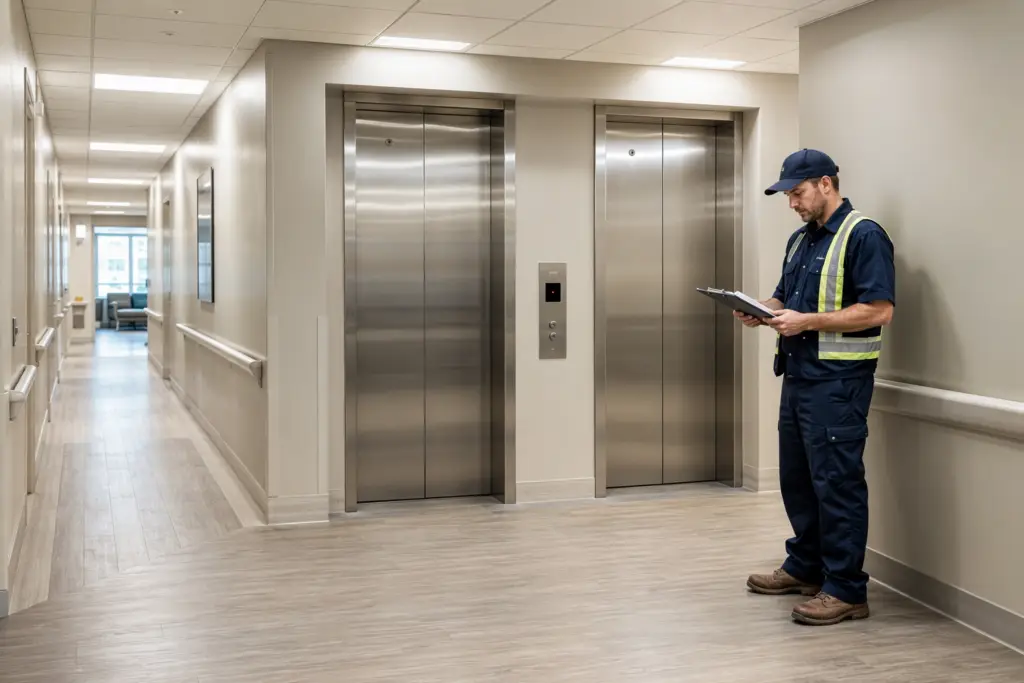
Following up on an elevator repair quote that a technician was supposed to provide means reaching out directly to your elevator service company with the date of the visit, a description of the reported issue, and a request for a written, itemized estimate that covers parts, labor, and any code-compliance work identified during the inspection. A structured follow-up protects building owners from delays that could affect their elevator’s operating certificate status in South Carolina.
Why Do Elevator Repair Quotes Sometimes Get Delayed?
Elevator repair quotes are delayed most often because technicians must confirm parts availability, consult with engineers on complex component failures, or wait for internal pricing approvals before issuing a written estimate.
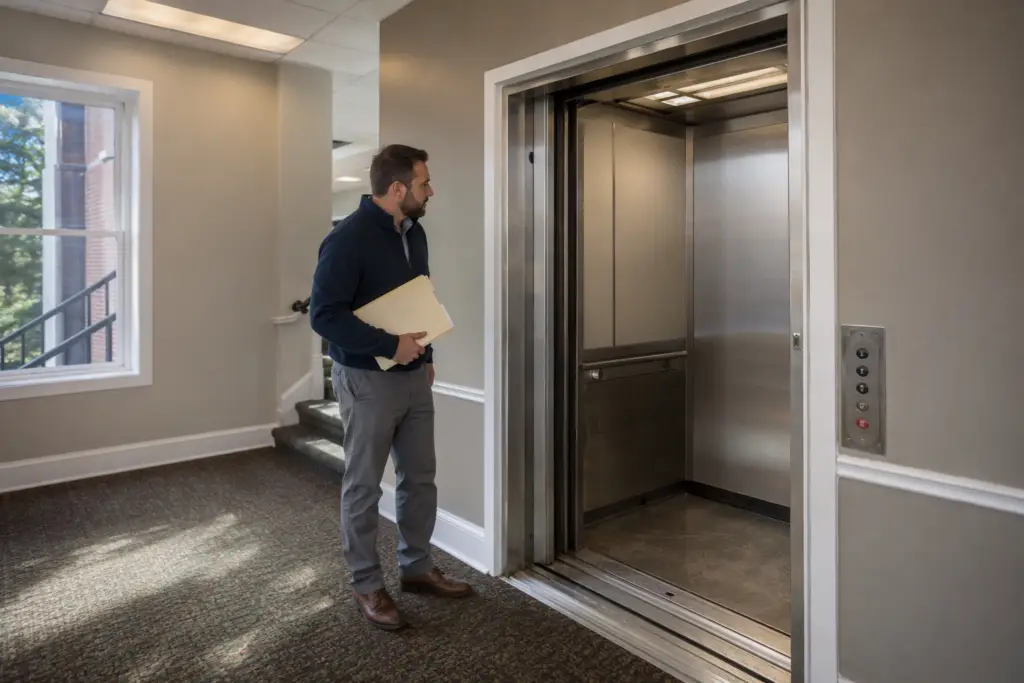
When a technician visits an elevator, the on-site assessment is only the first step. The technician must identify every failed or at-risk component, cross-reference parts with suppliers, and determine whether the repair also triggers a code-compliance requirement under the S.C. Code Title 41, Chapter 16 or the adopted ASME A17.1-2019/CSA B44 Safety Code for Elevators and Escalators. That process takes time, and quotes sometimes fall through the administrative cracks between a field visit and the back office.
For building owners in Columbia, SC, delays are especially consequential because South Carolina requires elevators to hold a valid operating certificate, and deferred repairs can jeopardize renewal. Understanding the legitimate reasons for delay helps owners ask better follow-up questions without damaging the working relationship with their service provider.
How Should a Building Owner Formally Follow Up on a Missing Repair Quote?
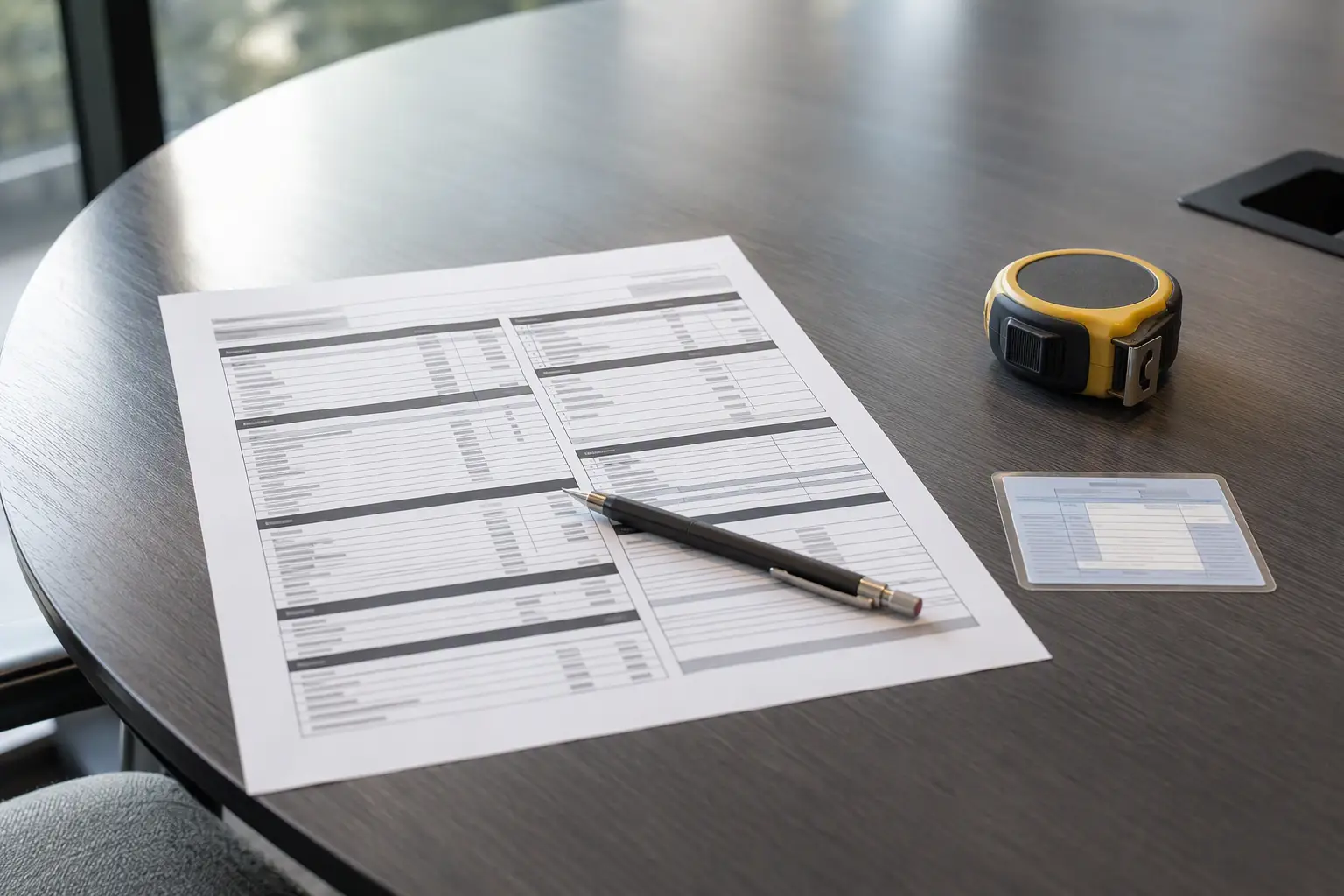
A building owner should contact the service company by phone first, then follow up in writing by email or certified letter, referencing the original visit date, the technician’s name if known, and the specific system or component that was assessed.
A written follow-up creates a documented paper trail that is valuable if the repair ultimately involves a South Carolina state inspection, a construction permit for alteration work, or a dispute over scope. Include the elevator unit number, the building address, and the certificate of registration number that should be displayed inside the elevator car. This level of specificity signals to the service company that you are a prepared, informed client and moves your request to the front of the queue.
If the initial phone call does not result in a quote within a reasonable window, escalate to the company’s service manager or operations coordinator. Reputable elevator service companies maintain internal tracking for open quotes and can pull the technician’s field notes to expedite the estimate.
What Information Should a Complete Elevator Repair Quote Include?
A complete elevator repair quote should include an itemized parts list with model numbers, a labor breakdown by task, any required permit fees, and a notation of which repairs are needed to meet South Carolina elevator code requirements.
Specifically, a well-structured quote will contain:
- The date of the original inspection and the technician’s assessment summary
- Each part or component to be replaced, with manufacturer part numbers where applicable
- Labor hours estimated per repair task
- Whether a South Carolina Department of Labor, Licensing and Regulation (LLR) construction permit is required for alteration or major repair work
- Whether the repair will trigger a state inspection before the elevator can return to service
- The applicable code standard — for new components, this is the ASME A17.1-2019/CSA B44 adopted by South Carolina effective July 23, 2021
- A projected timeline from approval to completion
- Payment terms and any deposit requirements
Quotes that omit permit costs or inspection fees can lead to surprise invoices. Owners should specifically ask whether any repair work will require a state construction permit under S.C. Code Title 41, Chapter 16, since in South Carolina, no elevator facility may be erected, constructed, altered, or installed without a state construction permit issued in advance.
How Long Is a Reasonable Timeframe to Wait for an Elevator Repair Quote?
A reasonable waiting period for a standard elevator repair quote is typically three to five business days after the technician’s visit, though complex mechanical failures or hydraulic cylinder replacements may require additional time for engineering review and parts sourcing.
The complexity of the repair drives the timeline. A routine component swap — such as a door operator belt or a limit switch — can usually be quoted quickly because parts are stocked and labor hours are predictable. By contrast, a hydraulic system overhaul, a major control panel replacement, or any work on an elevator installed before July 1, 1986 (which must comply with the 1986 edition of ANSI A17.3 under South Carolina regulations) may require more extensive scoping before a reliable quote can be produced.
If a service company has not provided a quote after five business days without explanation, building owners should send a written follow-up and set a clear deadline for receipt of the estimate. This is not adversarial — it is standard facilities management practice and helps the service company prioritize its open quotation queue.
What Steps Should a Building Owner Take When Following Up on a Repair Quote?
Follow these steps in order to efficiently retrieve a delayed elevator repair quote and protect the elevator’s compliance status throughout the process.
- Locate the original service documentation. Retrieve the service ticket, inspection report, or work order number from the technician’s initial visit. This reference number is the fastest way for the service company to pull the technician’s notes.
- Call the service company’s main service line. Speak directly with a service coordinator or dispatcher and state that you are following up on a pending repair quote from a specific date.
- Confirm the correct contact for written follow-up. Ask for the email address of the person responsible for issuing the quote — often a service manager or estimator, not the field technician.
- Send a written follow-up email. Include the elevator unit number, building address, certificate of registration number, visit date, and a brief description of the reported problem. Request a written, itemized quote by a specific date.
- Ask about compliance implications. Specifically inquire whether the repair requires a South Carolina LLR construction permit, a state or special inspector review, or any alteration that would trigger a full code upgrade under the adopted ASME A17.1-2019/CSA B44.
- Document all communications. Keep a log of every phone call, email, and voicemail related to the quote. If the repair eventually becomes a compliance matter, this documentation is essential.
- Escalate if necessary. If no response is received by the agreed deadline, contact the company’s operations or general management and consider evaluating alternative certified elevator service providers in the Columbia, SC area.
- Review and approve the quote in writing. Once received, sign and return written approval before work begins to ensure the agreed scope is locked in and permits can be applied for promptly.
What Is the Risk of Delaying an Elevator Repair in South Carolina?
Delaying an elevator repair in South Carolina risks operating without a valid certificate, potential shutdown orders by the LLR, and personal liability for building owners if an unremedied defect contributes to an injury.
Under S.C. Code Title 41, Chapter 16, the owner of every elevator facility bears direct responsibility for keeping the equipment in safe operating condition and in compliance with state regulations. If a technician has identified a deficiency that is deferred because a quote was never finalized or approved, the owner assumes liability for that known hazard. In South Carolina, an accident that seriously injures anyone other than an employee must be reported to the state before the end of the next working day — a provision that underscores how seriously regulators treat safety lapses.
Additionally, the annual inspection required for operating certificate renewal will surface unaddressed repairs. A failed inspection means the elevator cannot legally operate until the deficiency is corrected and reinspected. That sequence — delayed quote, deferred repair, failed inspection, extended downtime — is far more disruptive and costly than proactively following up on a missing estimate.
Does a Repair Quote Differ From a Maintenance Contract Quote?
Yes, a repair quote addresses specific identified failures or deficiencies, while a maintenance contract quote covers routine preventive service over a defined period, and the two documents have different scopes, pricing structures, and compliance implications.
A repair quote is reactive: it prices the correction of a known problem. A maintenance contract is proactive: it defines the routine tasks — lubrication, adjustment, safety device testing, and code compliance checks — that prevent failures from occurring. Building owners sometimes receive both types of quotes simultaneously after a technician’s visit, which can create confusion about which document requires immediate attention.
When following up, clearly distinguish whether the outstanding quote is for a discrete repair, an ongoing service agreement, or both. Mixing them up can lead to scope gaps where critical safety repairs are assumed to be covered by a maintenance contract but are actually excluded, or vice versa.
How Does South Carolina’s Inspection Requirement Affect the Repair Quote Process?
South Carolina’s inspection requirements directly affect the repair quote process because certain repairs — particularly alterations — require a state construction permit and a post-repair inspection before the elevator can return to service, and those costs must appear in the quote.
Under South Carolina regulations, required inspections may be made only by state inspectors or licensed special inspectors. A special inspector may not inspect an elevator on which the inspector or the inspector’s employer has a current service or warranty contract. This independence requirement means that if a service company’s technician performs the repair, a separate, independent special inspector must conduct the post-repair inspection. That inspection fee is a real cost that belongs in the quote.
South Carolina special inspectors must hold qualifications under the 2018 edition of QEI-1, the American National Standard for Qualification of Elevator Inspectors. Building owners receiving a quote should confirm that the service company’s process accounts for coordinating with a qualified, independent inspector and that the expected inspection timeline is factored into the project schedule.
What Should a Building Owner Do If the Repair Quote Seems Incomplete or Inaccurate?
If a repair quote appears incomplete or inaccurate, a building owner should request a written clarification meeting with the service company’s estimator, compare the quote against the technician’s written service report, and if needed, obtain a second opinion from another certified elevator service provider.
Red flags in an elevator repair quote include: no mention of permit requirements for work that constitutes an alteration, generic line items without part numbers, labor estimates that seem implausibly low for the described scope, and no reference to code compliance when aging equipment is involved. Buildings with elevators installed before July 1, 1986 have an additional layer of complexity, since those units must comply with the 1986 edition of ANSI A17.3 under South Carolina rules, and any alteration can trigger review against the currently adopted ASME A17.1-2019/CSA B44.
Carolina Elevator Service recommends that Columbia, SC building owners always request a detailed line-item breakdown rather than accepting a lump-sum figure, and that they verify whether permit coordination is included in the quoted price or billed separately.
How Does the ADA Affect Elevator Repair Quotes for Commercial Buildings?
The Americans with Disabilities Act (ADA) requires that elevators in commercial facilities remain accessible, meaning repairs that restore accessibility features — such as door timing, floor leveling, and emergency communication systems — may carry their own compliance obligations that should appear in the quote.
When an elevator is out of service for repairs, building owners must also consider whether the ADA requires alternative accessible routes. If no accessible alternative exists, prolonged elevator downtime may itself constitute an ADA violation. This compliance dimension adds urgency to the follow-up process: the longer a quote is delayed, the longer a potentially inaccessible condition persists.
Repair quotes that address ADA-relevant components — door operators, leveling systems, call button heights, or tactile indicators — should explicitly state that the repaired components will be restored to ADA-compliant specifications. For guidance on specific ADA technical standards, the ADA.gov portal provides the current accessibility standards applicable to elevator facilities.
Should a Building Owner Get Multiple Quotes for an Elevator Repair?
Yes, for significant repairs or alteration work, obtaining two to three quotes from qualified elevator service providers is a sound practice that helps building owners validate scope, confirm code compliance approaches, and make an informed purchasing decision.
Competitive quoting is especially important when the repair involves hydraulic systems, control panel replacements, or any work on older equipment requiring ANSI A17.3 compliance review. Different service companies may propose different scopes for the same deficiency — one may recommend a targeted component repair while another may recommend a broader modernization — and comparing quotes helps owners understand the trade-offs.
However, owners should evaluate quotes on completeness and code compliance, not price alone. A lower-priced quote that omits permit costs, inspection fees, or required code upgrades will ultimately cost more. Carolina Elevator Service provides detailed, itemized quotes for repair and modernization projects serving commercial and institutional properties throughout Columbia, SC, so building owners can make fair comparisons across all cost components.
What Elevator Components Most Commonly Require Repair Quotes in South Carolina?
The components most commonly requiring repair quotes in South Carolina’s commercial elevator inventory include hydraulic cylinder systems, door operators, control panels, safety devices, and emergency communication and lighting systems.
| Component | Common Repair Type | Permit Required (SC)? | Post-Repair Inspection Required? | Relevant Code Reference |
|---|---|---|---|---|
| Hydraulic cylinder | Replacement or re-lining; outer containment encasement required for new underground cylinders | Yes (alteration) | Yes | ASME A17.1-2019; SC LLR rules |
| Control panel / controller | Component replacement or full modernization | Yes if alteration | Yes | ASME A17.1-2019 |
| Door operator | Belt, motor, or full operator replacement | Depends on scope | Possibly | ASME A17.1-2019 |
| Safety devices (governor, buffer, safeties) | Testing, adjustment, or replacement | Yes if replaced | Yes | ASME A17.1-2019 |
| Emergency lighting and alarm bell | Battery replacement, circuit repair | Generally no | Checked at annual inspection | SC requires 4-hour standby power |
| Firefighters’ service key switch | Replacement with S.C. #1000 five-pin key | Yes if new installation | Yes | SC LLR rules |
| Handicap lift components | Mechanical or electrical repair | Depends on scope | Every 5 years or after alteration | SC LLR rules |
South Carolina also has a specific requirement that passenger elevators maintain standby power sufficient to run emergency lighting and the alarm bell for at least four hours if normal power fails. If a repair quote involves the standby power system, the quote should confirm that the restored system meets this requirement.
What Happens If the Elevator Service Company Does Not Respond to Follow-Up Requests?
If an elevator service company does not respond to repeated, documented follow-up requests for a repair quote, a building owner should consider engaging a different certified elevator service provider and, if a safety hazard is present, report the unaddressed condition to the South Carolina Department of Labor, Licensing and Regulation (LLR).
Non-responsiveness is not merely an inconvenience — it is a real compliance risk. The South Carolina Department of Labor, Licensing and Regulation (LLR) regulates elevator safety and can act on reports of unsafe equipment. If a technician identified a safety deficiency during an inspection and the owner is unable to obtain a repair quote to address it, the owner should document all follow-up attempts and consider interim out-of-service decisions to protect building occupants.
Switching service providers mid-process is legally permissible. The new service company will typically conduct its own assessment before issuing a quote, which may result in a more complete evaluation of the elevator’s condition. Carolina Elevator Service accepts service calls from Columbia, SC building owners who need a second assessment or a fresh quote after an unsatisfactory experience with a prior provider.
Can a Building Owner Speed Up the Repair Quote Process?
Yes, building owners can accelerate the repair quote process by providing complete documentation upfront — including the elevator’s registration number, maintenance history, prior inspection reports, and any existing deficiency notices from the South Carolina LLR.
The more information the service company has at the outset, the less time technicians spend researching the elevator’s history before they can price the repair. Useful documents to have on hand include:
- The current operating certificate (required by South Carolina to be displayed inside the elevator car)
- The certificate of registration issued by the South Carolina LLR
- The most recent annual inspection report
- Any deficiency or violation notices received from state inspectors
- The original installation permit and equipment specifications if available
- Prior repair invoices that document what work has already been performed
When a building owner arrives at the first conversation with this documentation in hand, the quoting process can often be completed substantially faster because the service company does not need to request records or wait for a document search before pricing the work.
How Does South Carolina’s Annual Inspection Cycle Affect When Repairs Must Be Quoted and Completed?
South Carolina’s annual inspection cycle creates a natural deadline for repair completion because outstanding deficiencies identified in one inspection must typically be corrected before the elevator’s operating certificate can be renewed at the next annual inspection.
Under S.C. Code Title 41, Chapter 16, South Carolina requires elevators to be inspected at least once a year before the operating certificate is renewed. If an inspection identifies deficiencies and a repair quote is never finalized or the repair is never completed, the elevator may fail its next inspection and lose its certificate — meaning the elevator cannot legally operate until corrections are made and a passing inspection is conducted.
Building owners should treat the annual inspection date as an effective deadline and work backward to ensure repair quotes are obtained, approved, permitted, and completed with enough lead time for any required post-repair inspections. For elevators with known issues, initiating the repair quote process at least 90 days before the expected inspection date is a practical approach that leaves room for parts delays, permit processing, and inspection scheduling.
What Is the Difference Between a Repair and an Alteration Under South Carolina Elevator Law?
Under South Carolina elevator law, a repair restores equipment to its original condition using equivalent components, while an alteration involves a change that affects the elevator’s performance, capacity, speed, or safety system, and alterations require a state construction permit before work begins.
This distinction matters enormously during the quoting process. A service company quoting a “repair” that is actually an “alteration” by regulatory definition — such as replacing a controller with a different model, upgrading hydraulic components, or modifying door timing beyond original specifications — must include permit costs and post-completion inspection costs in the quote. If those costs are absent, the quote is incomplete regardless of how competitive the base price appears.
In South Carolina, no elevator facility may be erected, constructed, altered, or installed without a state construction permit issued in advance by the LLR. Performing alteration work without a permit exposes the building owner to regulatory penalties and can void the elevator’s operating certificate. Before approving any quote, owners should ask the service company to explicitly state in writing whether the proposed work constitutes a repair or an alteration under South Carolina’s regulatory framework.
What Role Does an Independent Special Inspector Play in the Repair Quote Process?
An independent special inspector, licensed under the QEI-1 standard as required by South Carolina, may play a post-repair role that must be budgeted in the quote — and under South Carolina rules, the inspector cannot be employed by or affiliated with the company that performed the repair.
South Carolina regulations explicitly prohibit a special inspector from inspecting an elevator on which the inspector or the inspector’s employer has a current service or warranty contract. This independence requirement means the repair company cannot self-certify its own work for major alteration projects. The cost of coordinating and paying for a qualified, independent post-repair inspection is a legitimate line item in any repair quote for work that triggers an inspection requirement.
Building owners who receive quotes that do not address post-repair inspection should ask directly: “Who will conduct the post-repair inspection, and is that cost included here?” If the service company proposes to use its own affiliated inspector, that arrangement would not comply with South Carolina’s independence requirement. Carolina Elevator Service is familiar with South Carolina’s inspection independence rules and structures its quotes to account for third-party inspection coordination where required.
How Should a Building Owner Evaluate Competing Elevator Repair Quotes?
A building owner should evaluate competing elevator repair quotes by comparing scope completeness, code compliance approach, permit and inspection cost inclusion, parts quality and warranty terms, and projected completion timeline — not by price alone.
A useful evaluation framework compares quotes across these categories:
- Scope clarity: Does each quote describe exactly what will be replaced, adjusted, or repaired?
- Code compliance: Does the quote reference the applicable edition of the ASME A17.1-2019/CSA B44 or, for older elevators, ANSI A17.3?
- Permit and inspection costs: Are South Carolina LLR construction permit fees and post-repair inspection fees included or excluded?
- Parts origin and warranty: Are OEM or approved equivalent parts specified, and what warranty applies?
- Timeline: Does the quote include a realistic project schedule that accounts for parts procurement and inspection scheduling?
- Exclusions: What is explicitly excluded from the quoted price?
A quote that scores well on all dimensions — not just the lowest total — represents the best value for a building owner responsible for maintaining a code-compliant, safe elevator in South Carolina.
What Should a Building Owner Do After Approving a Repair Quote?
After approving a repair quote, a building owner should obtain written confirmation of approval, confirm that any required South Carolina LLR construction permits have been applied for, establish a clear start date, and arrange for notification of when the post-repair inspection will occur.
Written approval creates a binding scope of work that protects both parties. If the repair uncovers additional deficiencies not visible during the initial assessment — a common occurrence in hydraulic or control system work — the service company should issue a written change order before expanding the scope, not simply add items to the final invoice. Establishing this expectation at the outset of the project prevents disputes.
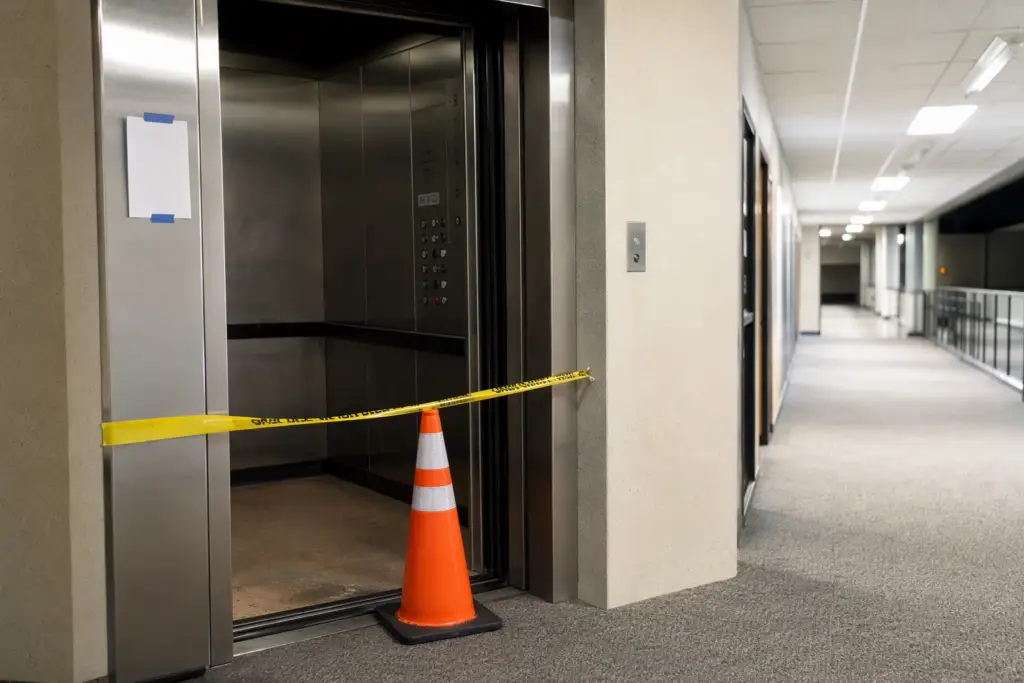
Building owners should also confirm that the elevator’s operating certificate and certificate of registration are current throughout the repair period. If the elevator must be taken out of service for repairs, the owner should post appropriate out-of-service notices and, if the building has ADA accessibility obligations, implement a compliant alternative accessible route plan for the duration of the outage.
How Can Carolina Elevator Service Help Columbia, SC Building Owners Who Have Not Received a Pending Repair Quote?
Carolina Elevator Service assists Columbia, SC building owners who have not received a pending repair quote by conducting a fresh on-site assessment, providing a detailed written estimate, and managing the full repair process from South Carolina LLR permit application through post-repair inspection coordination.
For building owners frustrated by unresponsive service providers or incomplete quotes, Carolina Elevator Service offers a structured quoting process that accounts for South Carolina’s regulatory requirements — including construction permit obligations, post-repair inspection independence rules, and the standby power and emergency lighting standards specific to South Carolina passenger elevators. The company serves commercial, institutional, and residential multi-unit properties throughout the Columbia, SC market.
Whether the outstanding quote involves a routine component repair, a hydraulic system overhaul, a control panel modernization, or ADA accessibility restoration, Carolina Elevator Service delivers itemized estimates that give building owners the information they need to make compliant, cost-effective decisions under South Carolina’s elevator regulatory framework as established by the South Carolina Department of Labor, Licensing and Regulation (LLR).
Contact Carolina Elevator Service for a free elevator assessment at 803-865-1400.
Need elevator service you can rely on? Carolina Elevator Service is ready to help.