Elevator Requirements for Warehouses and Industrial Buildings with Freight Lifts
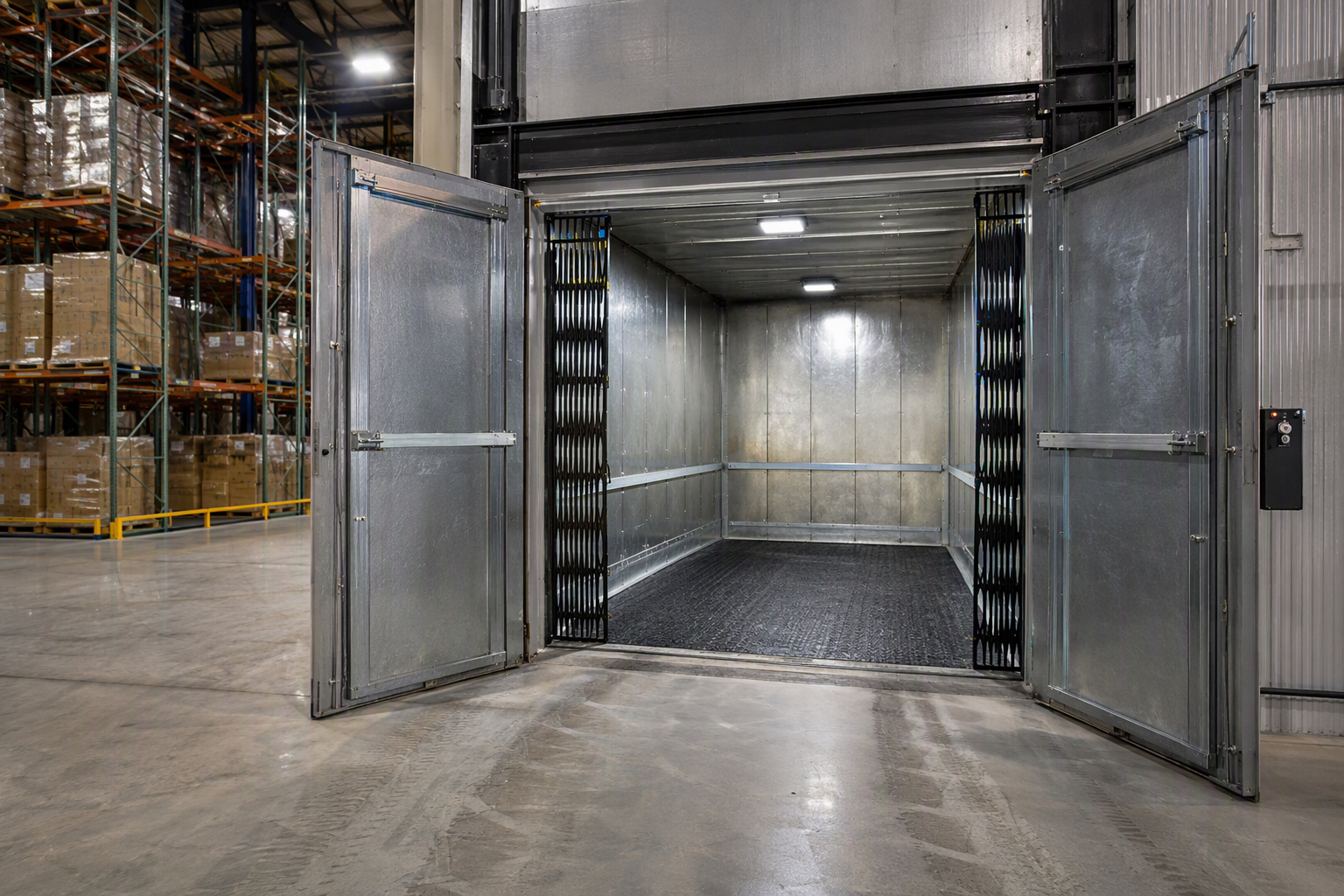
Freight lifts and industrial elevators operate in some of the most demanding environments imaginable — heavy loads, constant cycling, forklift traffic, and round-the-clock shifts. In South Carolina, that operational pressure does not reduce the compliance burden; it increases it. Owners and facility managers in Columbia, SC who operate warehouses, distribution centers, or manufacturing facilities must meet a layered set of federal, national, and state requirements before a freight lift ever carries a load. Carolina Elevator Service works with industrial and warehouse clients throughout the Columbia area to navigate those requirements and keep equipment running safely and legally.
What Federal Codes Govern Freight Elevators in Industrial Buildings?
Two federal frameworks shape freight elevator compliance regardless of state:
- ASME A17.1 Safety Code for Elevators and Escalators — the primary national standard governing the design, construction, installation, alteration, and inspection of freight elevators. South Carolina has adopted the 2019 edition (ASME A17.1-2019/CSA B44:19), effective July 23, 2021.
- ADA Title III (commercial facilities) — requires that new construction and alterations to commercial buildings provide accessible routes. Where a freight elevator also serves as the sole means of vertical access, ADA accessibility standards may apply to the lift and its approaches.
- OSHA General Industry Standards — OSHA regulates workplace safety, including hazards associated with freight elevator operation. Employers must train workers on safe operating procedures and maintain equipment free from recognized hazards.
What Does South Carolina Specifically Require for Freight Lifts?
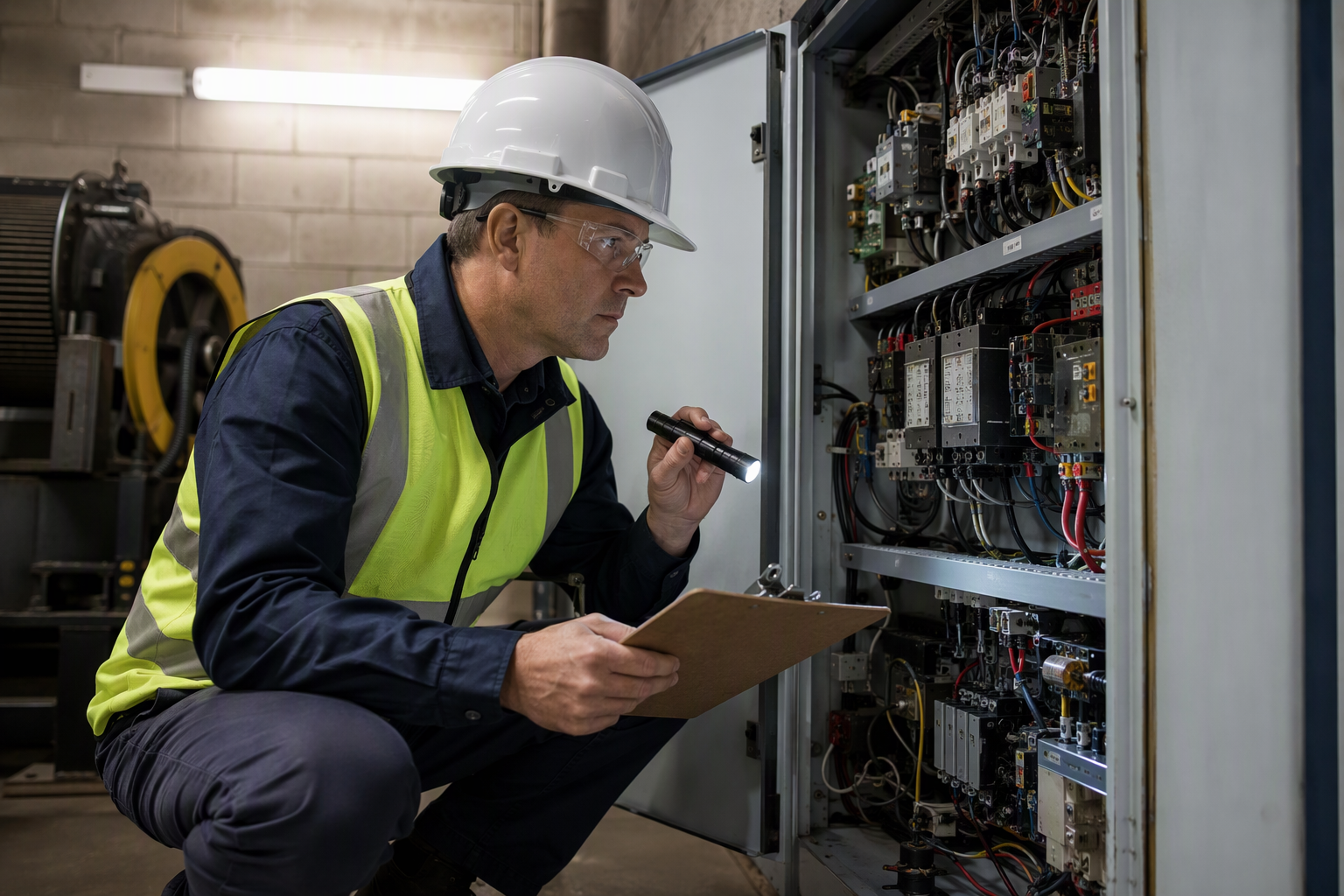
South Carolina regulates all freight elevators through S.C. Code Title 41, Chapter 16 (South Carolina Elevator Code) and S.C. Code of Regulations Chapter 71, Article 5 (Regulations 71-5000 through 71-5700), administered by the South Carolina Department of Labor, Licensing and Regulation (LLR), Office of Elevators and Amusement Rides.
Key South Carolina requirements for warehouse and industrial freight lifts include:
- Construction permit: A state construction permit is required before any freight elevator is erected, constructed, altered, or installed. No work may begin without it.
- Registration and operating certificate: No elevator facility may be operated without both a certificate of registration and a current operating certificate from the state.
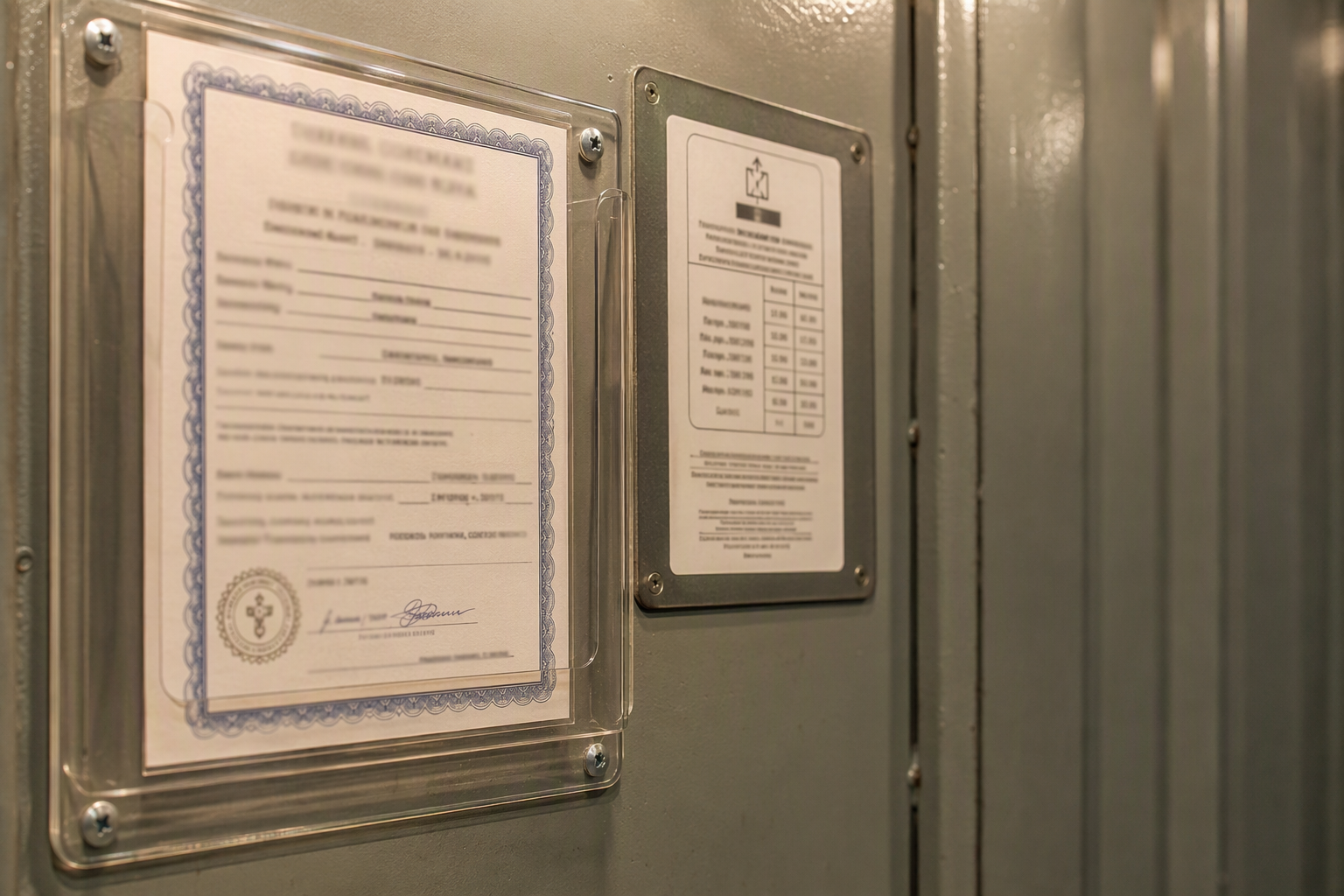
- Conspicuous display: The operating certificate, or a copy, must be posted conspicuously inside each elevator car at all times.
- Annual inspections: Freight elevators must be inspected at installation, after any alteration or repair, and at least once a year before the operating certificate is renewed.
- Qualified inspectors: Required inspections may be performed only by state inspectors or licensed special inspectors who meet the qualifications in the 2018 edition of QEI-1 (American National Standard for Qualification of Elevator Inspectors). A special inspector may not inspect an elevator on which the inspector or the inspector’s employer holds a current service or warranty contract.
- Owner responsibility: The building or equipment owner must keep every elevator facility in safe operating condition and in compliance with state regulations at all times.
- Accident reporting: Any accident that seriously injures a person other than an employee must be reported to the state before the end of the next working day.
- Adopted code edition: New elevator facilities must comply with the officially adopted edition of ASME A17.1 in effect when the permit is issued — currently the 2019 edition.
What Types of Freight Lifts Are Covered Under ASME A17.1?
ASME A17.1 classifies freight elevators by the type of load they carry and how that load is loaded. Common classifications relevant to warehouse and industrial settings include Class A (general freight), Class B (motor vehicle), and Class C (industrial truck loading — including forklifts). Each classification carries specific requirements for rated load, platform dimensions, door strength, and safety devices. Selecting the wrong class for the actual use is a common compliance gap that Carolina Elevator Service identifies during facility assessments.
Do Warehouse Freight Elevators Have to Be ADA Compliant?
ADA compliance for freight elevators in industrial facilities depends on context. Under ADA Title III, areas used exclusively for freight loading and not open to the public or employees with disabilities may have different requirements than mixed-use areas. However, when a freight elevator also functions as the only vertical access route for employees — including those with disabilities — ADA-compliant features such as accessible controls, clearances, and signage become relevant. Facility managers should evaluate each building’s specific configuration. This is an area where a compliance review from Carolina Elevator Service can prevent costly retrofits after the fact.
What Are the Load and Capacity Marking Requirements for Industrial Freight Lifts?
ASME A17.1 requires freight elevators to have the rated load and the loading class (e.g., Class C for industrial truck) clearly and durably marked on the car. This marking must be visible to the operator and must match the data plate specifications established during design and permitting. Overloading a freight elevator beyond its rated capacity violates both the federal code and South Carolina’s owner-responsibility requirement under S.C. Code Title 41, Chapter 16.
What Are the Pit, Overhead, and Machine Room Requirements for Industrial Elevators?
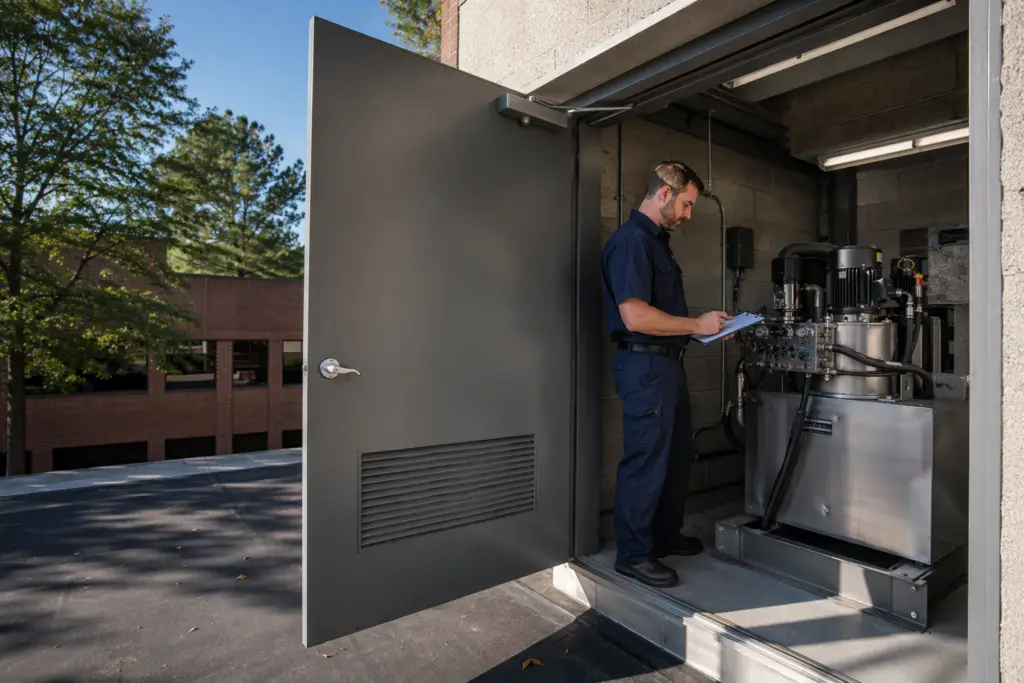
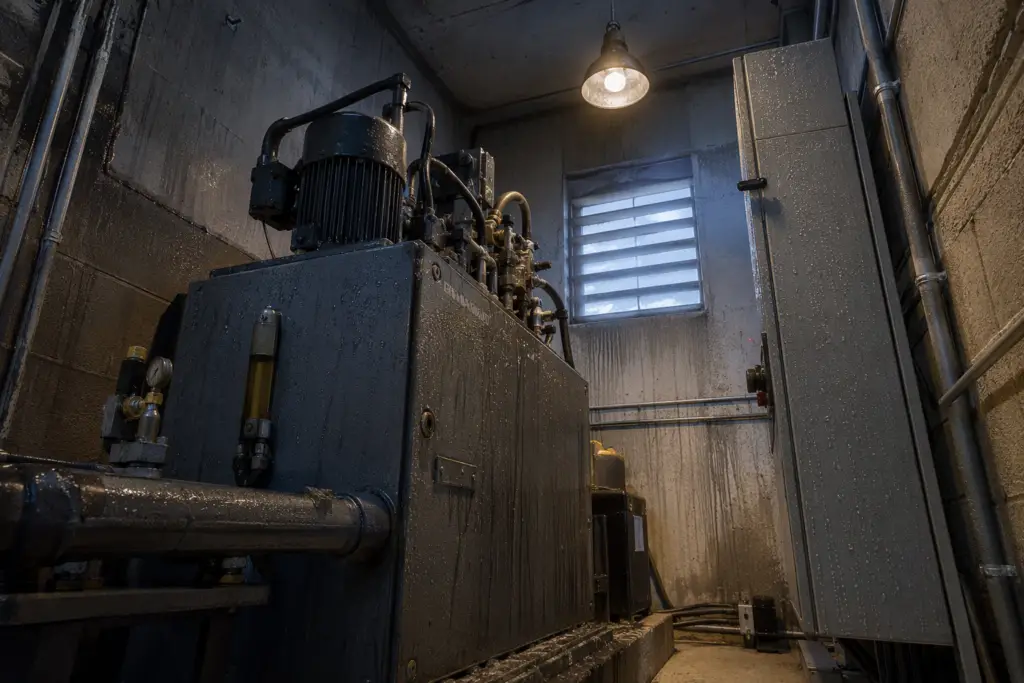
ASME A17.1-2019 establishes minimum pit depths, overhead clearances, and machine room ventilation requirements that vary by elevator type, speed, and travel distance. Freight elevators handling industrial truck loading (Class C) typically require deeper pits and greater overhead clearances than passenger elevators of comparable travel. Machine rooms must be secured against unauthorized entry, properly lit, and maintained at temperatures within equipment tolerances. Failure to meet these dimensional and environmental requirements is one of the most frequent reasons new installations are rejected during the initial South Carolina LLR inspection.
How Often Must Freight Elevators in South Carolina Be Inspected?
Standard freight elevators in South Carolina must be inspected at least once a year before the annual operating certificate is renewed. Inspections are also required at initial installation and following any alteration or repair. The South Carolina Department of Labor, Licensing and Regulation (LLR), Office of Elevators and Amusement Rides, issues the operating certificate upon satisfactory inspection. Note that dumbwaiters — a category sometimes used in warehouse mezzanine applications — are inspected when installed or altered, which differs from the annual freight elevator cycle.
What Happens If a Freight Elevator Fails Inspection in South Carolina?
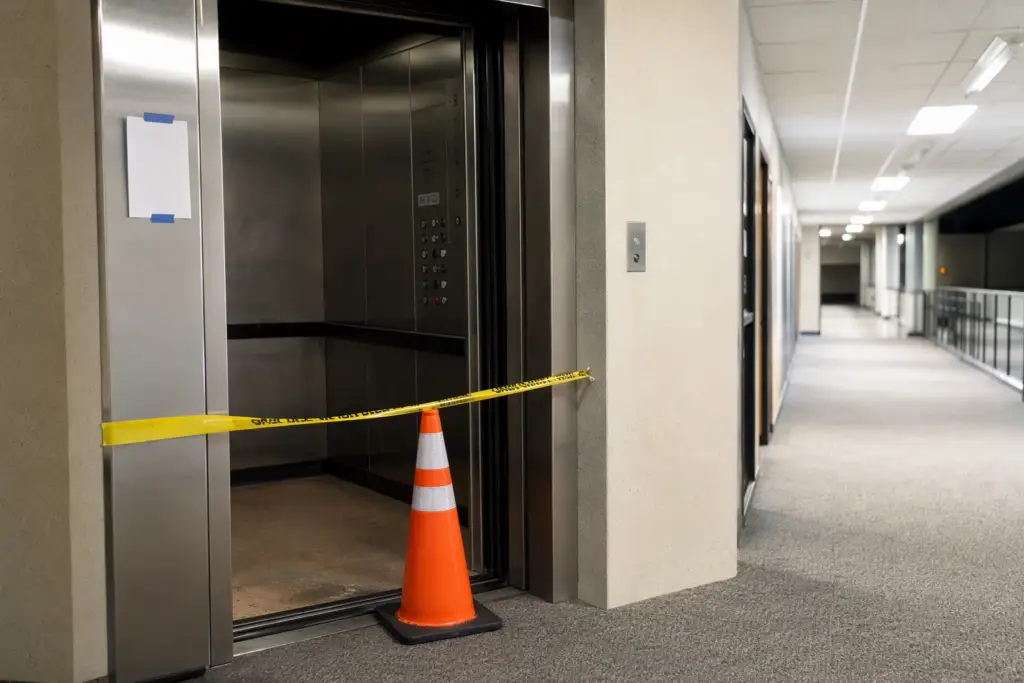
If a freight elevator fails inspection, the operating certificate may be withheld or revoked, and the elevator must be taken out of service until deficiencies are corrected and the equipment passes re-inspection. Operating an elevator without a valid certificate violates S.C. Code Title 41, Chapter 16. Warehouse and distribution operators should factor inspection timelines into maintenance planning, since an out-of-service freight lift can halt operations. Carolina Elevator Service recommends proactive maintenance programs to identify deficiencies between inspection cycles before they result in a failed inspection or an unplanned shutdown.
What Steps Should a Warehouse Owner Take Before Installing a New Freight Elevator in South Carolina?
- Confirm the freight elevator classification (Class A, B, or C) based on actual intended load type, including whether forklifts will be used.
- Engage a licensed elevator contractor to prepare construction drawings that comply with ASME A17.1-2019/CSA B44, the adopted edition in South Carolina as of 2021.
- Submit a complete application for a state construction permit to the South Carolina Department of Labor, Licensing and Regulation (LLR), Office of Elevators and Amusement Rides, and obtain approval before any installation work begins.
- Verify that pit depth, overhead clearance, and machine room specifications in the design meet ASME A17.1-2019 minimums for the selected elevator class.
- Confirm ADA accessibility requirements apply or do not apply to the specific installation based on how the lift will be used by employees and visitors.
- Review OSHA general industry requirements for worker training and operational safety procedures for the specific freight elevator type.
- Schedule the initial installation inspection with a state inspector or qualified special inspector licensed under the 2018 QEI-1 standard.
- Obtain the certificate of registration and operating certificate from LLR before placing the elevator in service, and post the operating certificate inside the car.
What Are the Standby Power Requirements for Industrial Elevators?
South Carolina requires passenger elevators to have standby power sufficient to run emergency lighting and the alarm bell for at least four hours if normal power fails. Freight elevator standby and emergency power requirements are governed by ASME A17.1-2019 provisions and any applicable local fire or electrical codes. Warehouse operators should confirm with their design team and the LLR whether standby power provisions apply to their specific freight elevator configuration, particularly in facilities where elevator access is critical to emergency egress.
Does South Carolina Regulate Older Freight Elevators Differently?
Yes. South Carolina elevator facilities that were in operation before July 1, 1986, must comply with the 1986 edition of ANSI A17.3, the safety code for existing elevators and escalators, rather than the current ASME A17.1-2019 edition. Many older warehouse and manufacturing facilities in the Columbia area have freight lifts installed under prior code editions. When those elevators undergo alterations or significant repairs, the current adopted code — ASME A17.1-2019 — applies to the altered components. This creates a common compliance complexity for legacy industrial buildings, and it is an area where Carolina Elevator Service frequently assists facility managers in determining what upgrade work is required.
Questions Your Inspector Will Ask
When a South Carolina LLR inspector or qualified special inspector arrives to evaluate a warehouse or industrial freight elevator, facility managers should be prepared to answer questions such as:
- Is the current operating certificate posted conspicuously inside the elevator car?
- What is the elevator’s rated load, and is it durably marked on the car?
- What loading class (A, B, or C) was the elevator designed and permitted for, and does actual use match that classification?
- Has the machine room been secured, properly lit, and maintained within the required temperature range?
- Are all door interlocks, safety devices, and limit switches functioning correctly?
- Has any alteration, repair, or modification been made since the last inspection, and if so, was a state construction permit obtained before that work began?
- Is there a current maintenance log, and is it available for review?
- Have any accidents or incidents involving the elevator occurred since the last inspection, and were required reports submitted to the state?
- For hydraulic units: is the underground cylinder encased in plastic outer containment as required for new installations in South Carolina?
- Are all employees who operate the freight elevator trained in safe operating procedures consistent with OSHA general industry requirements?
Carolina Elevator Service recommends that warehouse and industrial facility managers conduct an internal pre-inspection walkthrough using these questions as a checklist before the official annual inspection date arrives.
What Maintenance Practices Help Industrial Freight Elevators Stay Compliant Between Inspections?
South Carolina law places the obligation for keeping every elevator facility in safe operating condition squarely on the owner. Between annual inspections, best practices for freight elevator maintenance in industrial settings include regular lubrication of mechanical components, inspection and replacement of worn hoist ropes or chains, testing of door interlocks and safety edges, verification that load capacity markings remain legible, and documentation of all service activity in a maintenance log. OSHA also expects employers to address recognized hazards proactively — waiting for an annual inspection to discover deficiencies is inconsistent with that standard. A structured preventive maintenance program coordinated with Carolina Elevator Service helps warehouse operators meet both the South Carolina owner-responsibility requirement and OSHA’s general duty obligations.
Contact Carolina Elevator Service for a free elevator assessment at 803-865-1400.
Need elevator service you can rely on? Carolina Elevator Service is ready to help.