What Elevator Modernization or Upgrades Should You Budget for in Your 2027 Capital Plan?
Building managers across South Carolina who are assembling their 2027 capital expenditure budgets face a window of opportunity — and urgency. Elevator systems that have operated without major investment for ten or more years are approaching thresholds where deferred maintenance becomes a compliance liability and a tenant-safety concern. The sections below break down the specific modernization categories, the code obligations that drive them, and how to structure a phased capital plan so that spending is defensible, timely, and prioritized correctly.
Why Is 2027 a Critical Year for Elevator Capital Planning?
Several converging factors make 2027 a logical planning horizon for South Carolina building owners. First, the state adopted the ASME A17.1/CSA B44, 2019 edition by notice in the South Carolina State Register on July 23, 2021. Any alteration or new installation triggered since that date must comply with the 2019 edition. Building owners who have not yet audited their existing equipment against this edition should do so before beginning any 2027 capital work, because even a component-level upgrade can trigger a full alteration review.
Second, equipment that was installed or last modernized in the late 2000s is now approaching the age range at which controllers, door operators, hydraulic systems, and cab interiors routinely reach end-of-service life. Planning those replacements on a capital schedule — rather than as reactive emergency repairs — consistently results in lower total project cost and less operational disruption to tenants.
Third, annual inspection cycles under South Carolina law mean that any deficiency identified by the South Carolina Department of Labor, Licensing and Regulation (LLR), Office of Elevators and Amusement Rides during a 2026 inspection carries a correction deadline that may fall squarely in the 2027 fiscal year. Budgeting for those corrective items now avoids a scramble for emergency capital mid-year.
What Does South Carolina Law Require Owners to Budget for in Terms of Ongoing Compliance?
Under S.C. Code Title 41, Chapter 16 (South Carolina Elevator Code) and S.C. Code of Regulations Chapter 71, Article 5 (Regulations 71-5000 through 71-5700), the owner of every elevator facility carries the legal obligation to keep that facility in safe operating condition and in compliance with state regulations. This is not a discretionary standard — it is a statutory duty.
Specific compliance budget items that flow directly from South Carolina regulatory requirements include:
- Annual operating certificate renewal: The operating certificate must be current and displayed conspicuously inside each elevator car. Any inspection deficiency that blocks renewal creates an obligation to fund the corrective work immediately.
- State construction permits for alterations: Before any elevator facility is erected, constructed, altered, or installed in South Carolina, a state construction permit is required. Budget line items for modernization projects must account for permitting lead time and fees.
- Underground hydraulic cylinder containment: South Carolina specifically requires that newly installed underground hydraulic elevator cylinders be encased in a plastic outer containment system to limit electrolytic corrosion. If your property has an older single-bottom hydraulic cylinder without this containment and a replacement is triggered, this requirement applies to the new installation.
- Standby power for emergency systems: South Carolina requires that passenger elevators have standby power capable of running emergency lighting and the alarm bell for at least four hours in the event of normal power failure. Buildings that cannot demonstrate this capability need to budget the upgrade.
- Firefighters’ service key compliance: New installations and alterations in South Carolina must use the five-pin S.C. #1000 key for firefighters’ service. Any modernization of a Phase I or Phase II firefighters’ service panel needs to include this keying requirement in the project scope.
What Are the Highest-Priority Modernization Categories for a 2027 Budget?
Based on the age distribution of elevator equipment in commercial and multifamily buildings and the compliance requirements described above, the following categories typically represent the most defensible capital priorities for a 2027 plan.
1. Controller and Drive System Replacement
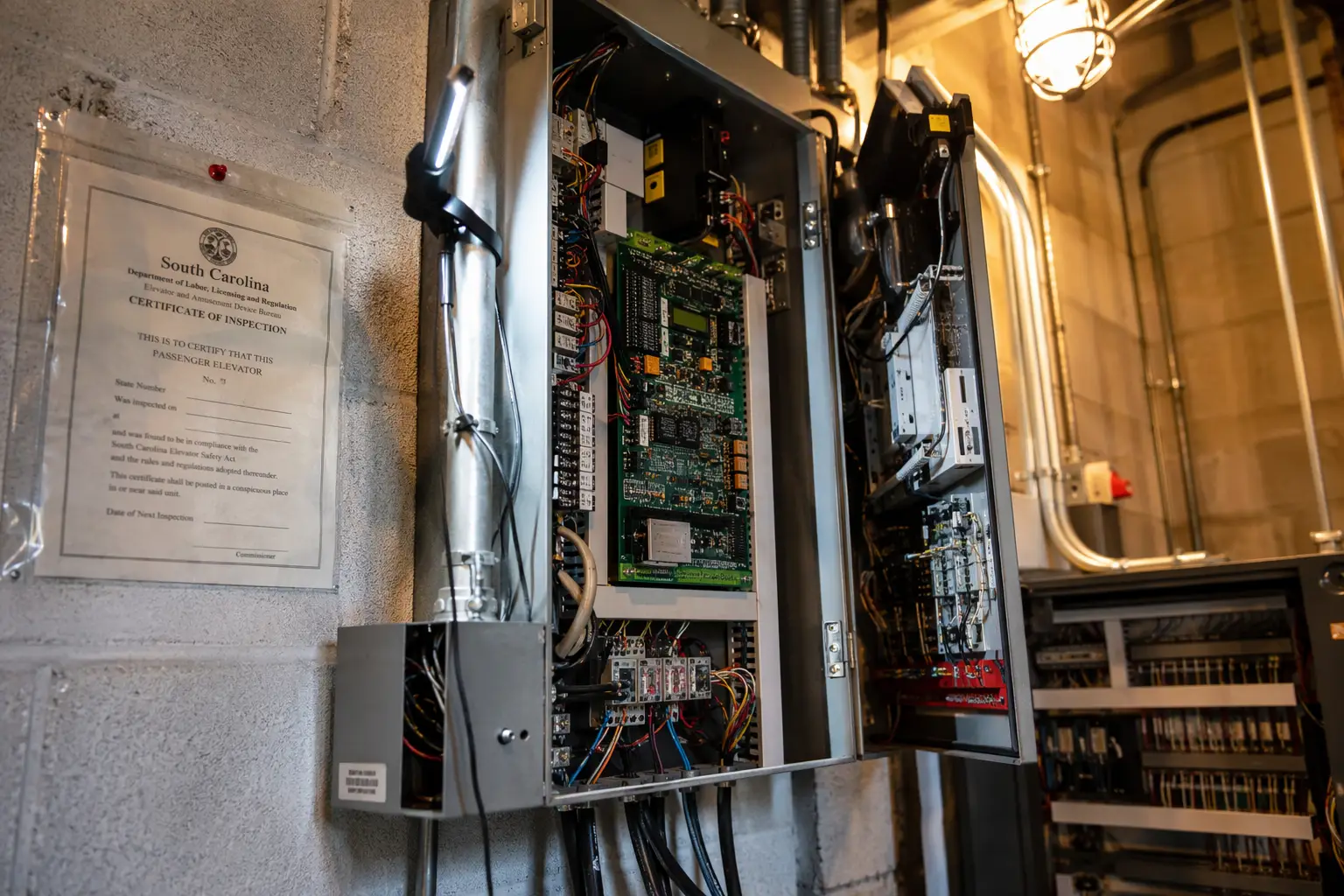
Relay-logic controllers and older solid-state drives are the most common source of service disruptions in aging elevator systems. When a controller manufacturer discontinues parts support, the building owner faces a forced replacement under emergency conditions rather than a planned capital event. Budgeting a controller modernization for 2027 — before parts availability becomes a crisis — is widely regarded in the industry as the highest-return elevator capital investment. Modern microprocessor-based controllers also enable diagnostic connectivity that reduces future maintenance costs.
2. Door Operator and Safety Edge Upgrades
Door system failures account for a significant share of elevator-related service calls and injury incidents across the industry. Worn door operators, failing clutch mechanisms, and inadequate door reversal devices are recurring inspection findings. Modern high-performance door operators with updated safety edges — including light curtain systems that meet current ASME A17.1 requirements — reduce entrapment risk, extend door system life, and reduce the frequency of callback visits.
3. Hydraulic System Modernization
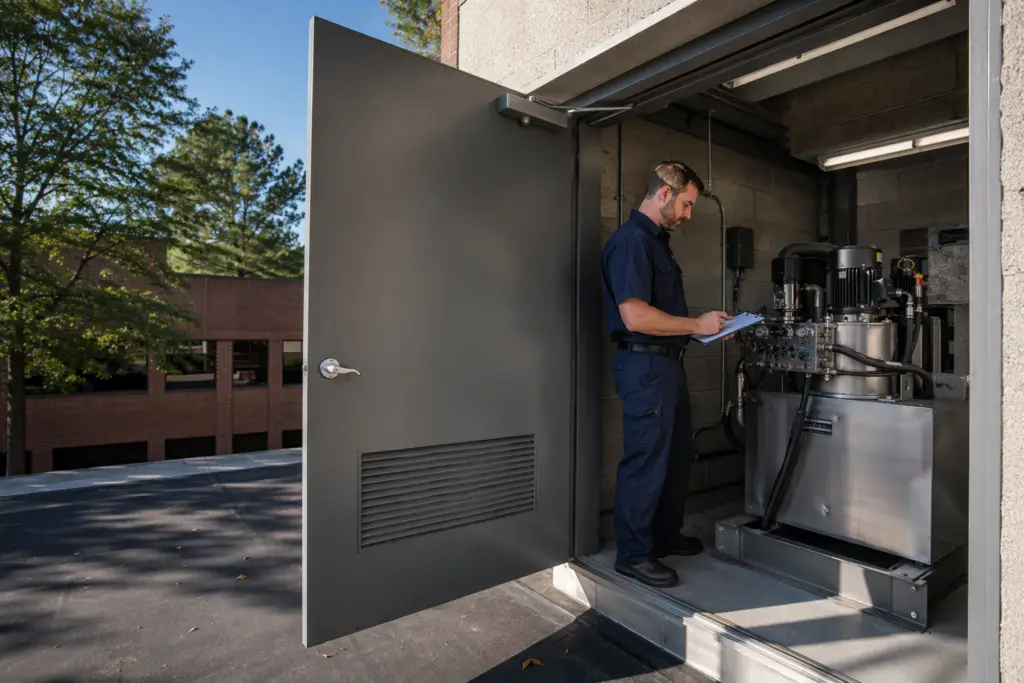
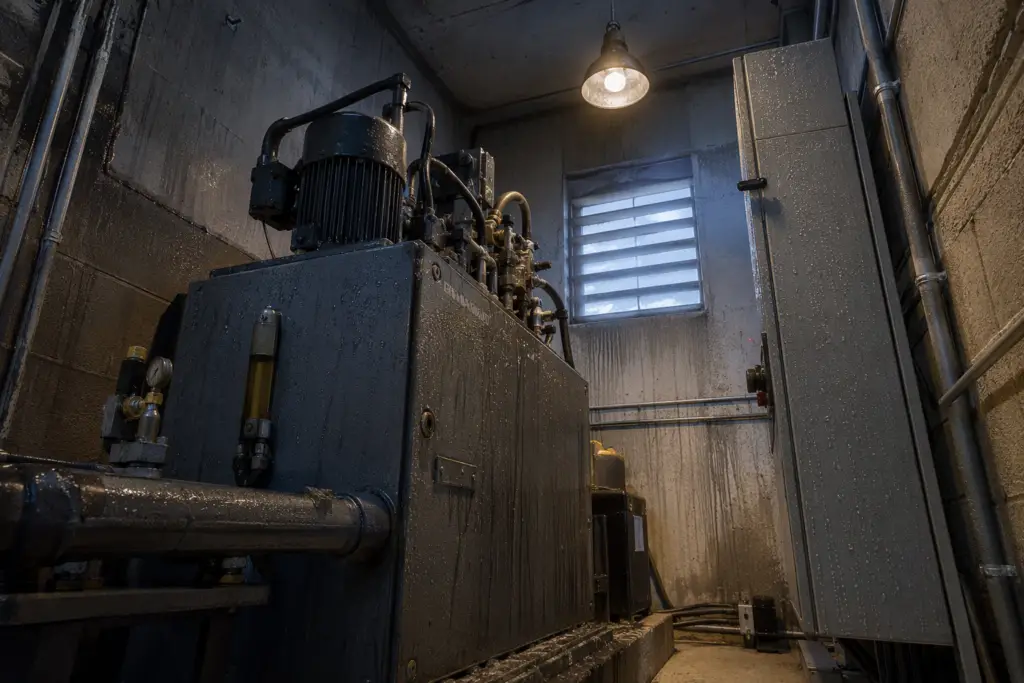
Hydraulic elevators in older commercial buildings often have single-bottom cylinders, aging power units, and outdated fluid systems. South Carolina’s requirement for plastic outer containment on newly installed underground cylinders means that any cylinder replacement project carries an additional scope element. Proactive budgeting for hydraulic modernization — including unit replacement, containment installation where required, and fluid conversion to biodegradable or fire-resistant options — prevents a reactive, compressed-timeline project.
4. ADA Accessibility Compliance
The Americans with Disabilities Act (ADA) requires that elevators in covered facilities meet specific accessibility standards for cab dimensions, controls, signage, and audible signals. Buildings undergoing renovations may trigger a fresh accessibility review of their elevator systems. Common 2027 budget items in this category include: updated hall and car operating panels at accessible heights, Braille and tactile signage, audible floor annunciators, and cab interior modifications to meet turning radius requirements.
5. Emergency Communication and Lighting Systems
South Carolina’s four-hour standby power requirement for emergency lighting and alarm systems is a bright-line rule. Beyond the statutory minimum, current ASME A17.1 standards specify requirements for two-way emergency communication systems within elevator cars. Older buildings that rely on telephone dialers connected to landlines should evaluate whether those systems remain functional and code-compliant, and budget for voice-over-IP or cellular emergency communication upgrades if needed.
6. Cab Interior and Ride Quality Improvements
While cab interior renovation is typically the lowest urgency item from a pure compliance standpoint, it carries significant weight in tenant satisfaction and property valuation. Worn finishes, failing lighting, and deteriorated flooring affect leasing outcomes. For 2027 capital plans, cab interior work is most cost-effective when bundled with a controller or door operator project, since the cab is already taken out of service.
How Should a Phased Modernization Plan Be Structured?
A well-structured phased plan sequences work by urgency, code obligation, and logical system dependency. The following order is a commonly recommended framework:
- Commission a comprehensive condition assessment of every elevator in the facility, covering mechanical, electrical, structural, and code compliance dimensions. This assessment drives every downstream priority decision.
- Address any open inspection deficiencies identified by the LLR or a qualified special inspector. These are non-negotiable and have fixed correction timelines tied to operating certificate renewal.
- Replace the controller and drive system if the existing equipment is beyond parts-support life or is a known source of service disruptions.
- Modernize the door operator and safety edge system in the same mobilization as the controller replacement where possible, reducing contractor call-out costs.
- Address hydraulic system components including power unit, cylinder containment, and fluid system if applicable to the equipment type.
- Complete ADA and emergency system upgrades to close any accessibility gaps and confirm standby power and communication compliance.
- Schedule cab interior renovation as the final phase, coordinated to minimize tenant disruption after the mechanical and electrical work is complete.
What Inspection and Permit Requirements Affect a 2027 Project Timeline?
South Carolina’s permitting and inspection structure has direct implications for project scheduling. Under S.C. Code Title 41, Chapter 16, a state construction permit must be obtained before any alteration or installation begins. Project managers should build permit lead time into their 2027 schedule — submitting applications well in advance of planned construction start dates to avoid delays.
After alterations are complete, an inspection is required before the elevator returns to service. That inspection may be conducted by a state inspector or a licensed special inspector holding qualifications under the 2018 edition of QEI-1 (the American National Standard for Qualification of Elevator Inspectors). Note that South Carolina prohibits a special inspector from inspecting an elevator on which the inspector or the inspector’s employer holds a current service or warranty contract — a rule that affects how building owners select their inspection partner for post-modernization sign-off.
What ASME A17.1 Requirements Should Drive 2027 Upgrade Scope?
South Carolina has adopted the ASME A17.1/CSA B44, 2019 edition as its governing safety code for new elevator facilities and alterations. When a modernization project crosses the threshold of a code-defined “alteration,” the work must bring the affected portions of the installation into compliance with the 2019 edition.
Key areas of the 2019 edition that frequently affect modernization scope include requirements for car safety devices, governors, buffers, door protection systems, emergency communication, and machine room environmental controls. Building owners and their engineering consultants should review the specific alteration definitions within the code to understand which upgrade paths trigger which compliance obligations before finalizing project scope and budget.
What Is the Role of ASME A17.3 for Existing Elevators in South Carolina?
South Carolina has a specific provision for elevator facilities that were in operation before July 1, 1986: those units must comply with the 1986 edition of ANSI A17.3, the Safety Code for Existing Elevators and Escalators. For building owners with equipment in this vintage range, the capital planning question is whether targeted retrofits under A17.3 are sufficient or whether a full modernization to current A17.1 standards is the more economical long-term path. That determination typically requires a detailed engineering assessment.
What OSHA Considerations Apply to Elevator Work in South Carolina?
When elevator modernization work is in progress, OSHA regulations govern the safety of workers performing the installation. Building owners and facilities managers share responsibility for ensuring that contractors are operating in compliance with applicable OSHA standards for construction and general industry. This includes lockout/tagout procedures, fall protection, and confined space protocols where applicable. Factoring OSHA compliance documentation into contractor prequalification is a standard risk management step for 2027 capital projects.
How Do Inspection Intervals Affect Budget Timing for Specialty Lifts?
Not all vertical transportation equipment in a South Carolina building follows the same annual inspection cycle. Under South Carolina regulations:
- Handicap lifts are inspected every five years.
- Manlifts, television tower elevators, and special purpose elevators are inspected every seven years.
- Dumbwaiters are inspected when installed or altered.
Building owners with these specialty units should map inspection due dates against their 2027 capital calendar. A handicap lift approaching its five-year inspection date is an opportunity to simultaneously address any deferred maintenance items and avoid corrective orders that could disrupt accessibility compliance under the ADA.
What Trends Are Shaping Elevator Modernization Decisions in 2025 and 2026?
Several qualitative industry trends are influencing how building owners approach elevator capital plans entering 2027:
- Remote monitoring and predictive maintenance adoption: Modern controllers increasingly support IoT-connected monitoring platforms that transmit real-time performance data. Building owners who modernize controllers in 2026 or 2027 are positioning themselves to benefit from predictive maintenance programs that can extend component life and reduce unplanned outages.
- Supply chain lead time awareness: Following disruptions in component availability across the construction industry, elevator equipment lead times for certain controllers, drive systems, and hydraulic power units have remained elevated. Owners who lock in equipment specifications and procurement commitments early in their 2027 planning cycle are better positioned to meet their target installation windows.
- Energy efficiency as a capital planning driver: Modernization projects increasingly incorporate variable-frequency drives, regenerative drives, and LED cab lighting as ways to reduce operating costs and support sustainability goals. While these upgrades are not code-mandated, they are frequently bundled into controller and cab projects to maximize return on the mobilization investment.
- Aging building stock driving volume: A substantial portion of commercial elevator equipment was installed or last modernized during building booms in the 1980s and 1990s. That equipment is now entering the age range where system-level modernization is more cost-effective than component-level repair. Capital planners across South Carolina are facing this curve simultaneously, which affects contractor scheduling availability — another argument for early 2027 project planning.
How Can Carolina Elevator Service Help Structure a 2027 Capital Plan?
Carolina Elevator Service approaches elevator capital planning as a data-driven process. Rather than recommending modernization based on equipment age alone, the team conducts detailed condition assessments that map each component’s current state against South Carolina regulatory requirements, ASME A17.1 compliance obligations, and remaining service life estimates. That assessment output gives building owners a prioritized, defensible list of capital items — organized by urgency, compliance obligation, and project dependency — that can be directly inserted into a 2027 capital budget submission.
For South Carolina properties with multiple elevators or multiple facilities, Carolina Elevator Service can structure phased modernization programs that distribute capital across budget years while ensuring that the highest-risk items are addressed first and that all work proceeds under proper LLR permitting and inspection protocols.
What Should Be Included in a Request for Proposal for a 2027 Modernization Project?
A well-constructed RFP protects building owners and produces comparable bids. Key elements to include:
- Complete equipment inventory including manufacturer, model, installation date, and last major modernization date for each unit.
- Copies of the most recent inspection reports and any outstanding deficiency notices from the LLR.
- Scope definition that clearly distinguishes between required corrective work (code compliance) and elective improvements (efficiency, aesthetics).
- Requirement for contractors to identify any additional scope that the proposed work may trigger under ASME A17.1-2019 alteration definitions.
- Documentation requirements including South Carolina state construction permit application, inspection scheduling plan, and post-completion operating certificate process.
- Warranty terms for parts and labor, with clarity on how warranty service interacts with the South Carolina rule prohibiting a special inspector from inspecting equipment under a current service or warranty contract held by the inspector’s employer.
- Project schedule with milestones tied to permit submission, equipment delivery, installation, inspection, and return-to-service dates.
What Records Should Owners Maintain to Support a 2027 Capital Budget Submission?
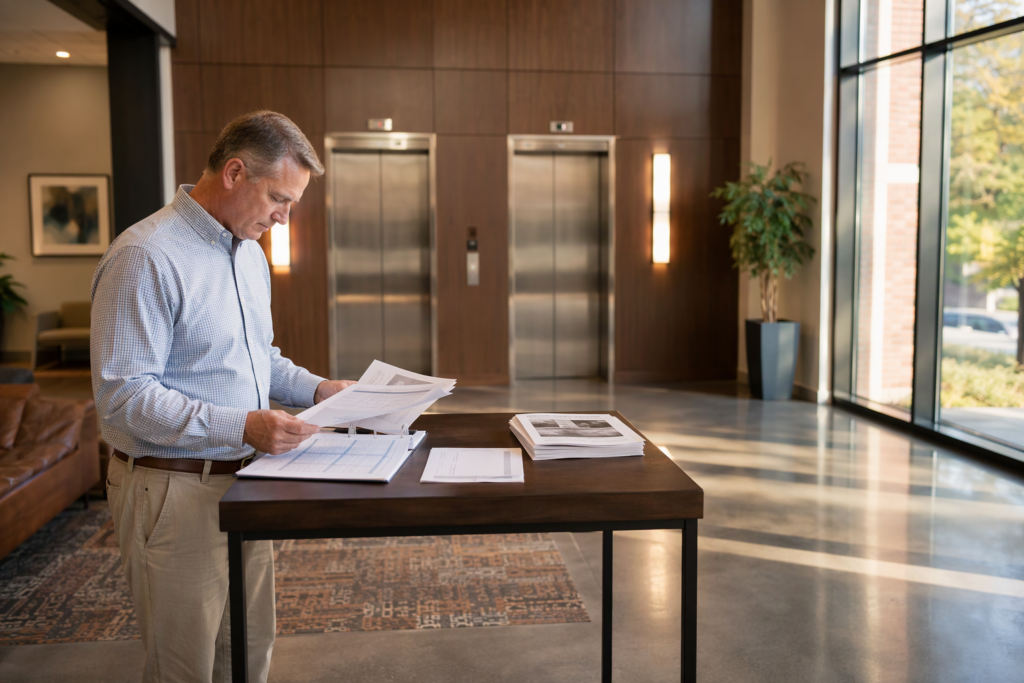
Finance committees and board-level approvers increasingly expect elevator capital requests to be supported by documentation rather than general observations. Owners should assemble:
- Current operating certificates for all elevator facilities (required to be displayed in each car under South Carolina law).
- Inspection reports from the past three to five annual cycles, showing any recurring deficiency patterns.
- Equipment maintenance logs documenting callback frequency, parts replaced, and downtime incidents.
- Any written notices or orders from the LLR’s Office of Elevators and Amusement Rides.
- Prior modernization or repair permits and project records showing what work has already been completed and when.
- A current condition assessment report from a qualified elevator service provider.
This documentation package transforms a capital request from an opinion into an evidence-based business case — which is precisely what finance and risk committees expect for infrastructure investments of this scale.
Contact Carolina Elevator Service for a free elevator assessment at 803-865-1400.
Need elevator service you can rely on? Carolina Elevator Service is ready to help.