Healthcare Elevator Capital Budget Planning: What to Include for 2027
Healthcare facilities in Columbia, SC face a unique capital planning challenge: elevators are not optional infrastructure. Patients in wheelchairs, staff moving crash carts, and visitors navigating multi-story hospitals all depend on reliable vertical transportation around the clock. A modernization project deferred today often becomes an emergency repair or a compliance citation tomorrow. The sections below break down the specific projects that belong on a 2027 healthcare capital budget, the codes that govern them in South Carolina, and the questions facility directors should be asking right now.
Which elevator systems most urgently need capital budget funding in a healthcare facility?
The highest-priority systems are those that directly affect patient safety, regulatory compliance, or continuity of care. In a hospital or long-term care setting, that typically means:
- Hydraulic cylinders on older hydraulic elevators — Under South Carolina regulations, newly installed underground hydraulic elevator cylinders must be encased in plastic outer containment to limit electrolytic corrosion. Older single-bottom cylinders that predate this requirement represent both a contamination risk and a future capital liability.
- Door operators and door detection systems — Door-related incidents are among the most common causes of elevator injuries. Worn electromechanical operators, outdated safety edges, and failing door restrictors all trigger citations under ASME A17.1-2019/CSA B44:19.
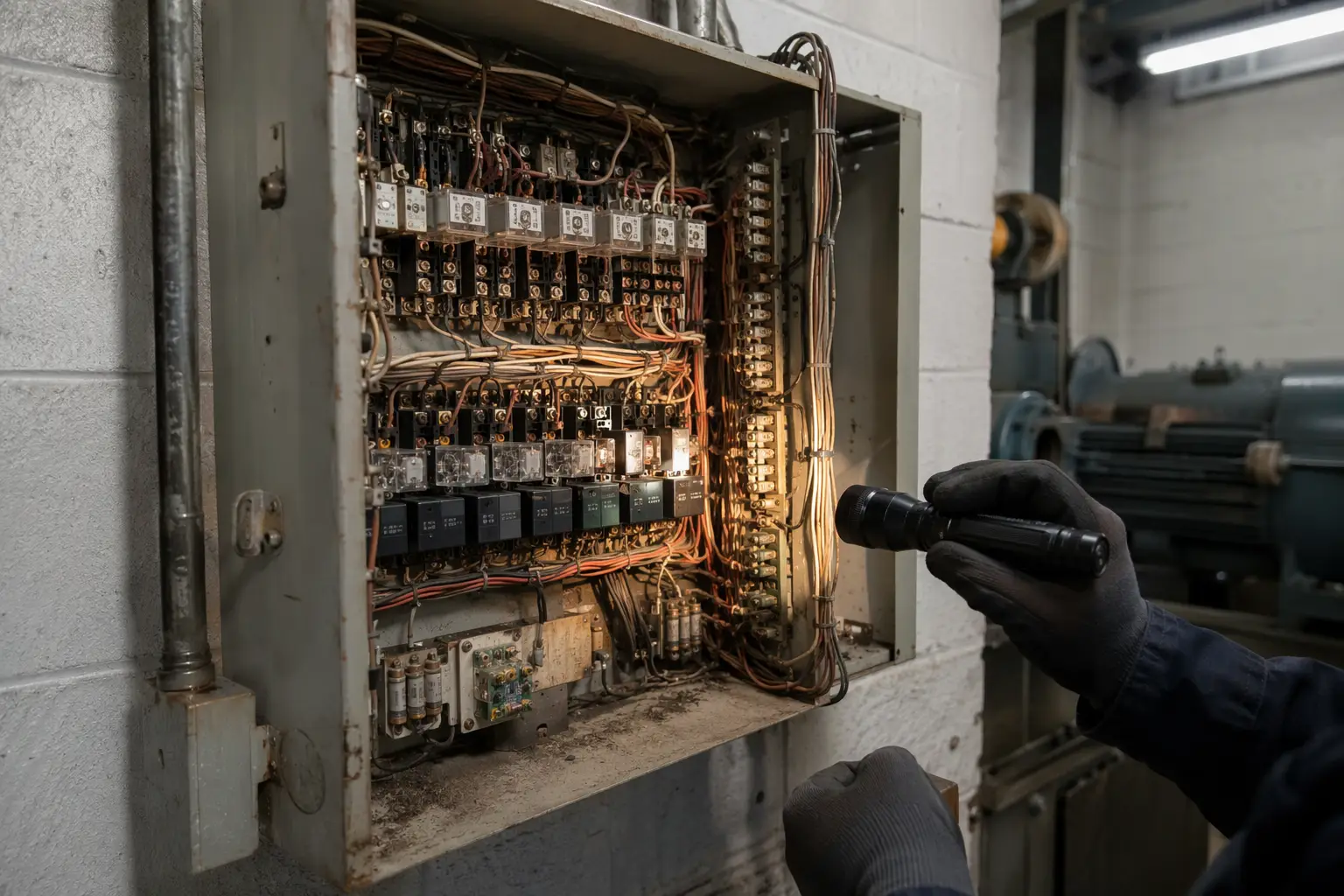
- Control systems on legacy equipment — Relay-logic and older microprocessor controllers that are no longer supported by manufacturers create parts-availability crises that shut down elevators for weeks, not days.
- Emergency power and lighting systems — South Carolina law requires passenger elevators to have standby power that runs emergency lighting and the alarm bell for at least four hours if normal power fails. Any system that cannot meet this requirement must be corrected before certificate renewal.
- ADA cab interiors and fixtures — Hospitals regularly expand services or renovate wings, triggering ADA reassessment obligations under the Americans with Disabilities Act.
What compliance codes govern hospital elevators in South Carolina?
South Carolina’s elevator program is administered by the South Carolina Department of Labor, Licensing and Regulation (LLR), Office of Elevators and Amusement Rides, under S.C. Code Title 41, Chapter 16 and S.C. Code of Regulations Chapter 71, Article 5 (Regulations 71-5000 through 71-5700). The state adopted ASME A17.1-2019/CSA B44:19 by notice in the S.C. State Register on July 23, 2021, and that edition governs all new installations and alterations.
Elevators in operation before July 1, 1986 must comply with the 1986 edition of ANSI A17.3, the safety code for existing elevators and escalators. Healthcare facilities with legacy equipment should confirm their compliance baseline with that standard before planning a partial modernization.
Federal overlays include:
- ADA Title III / Title II — requires accessible cab dimensions, Braille and raised-character floor designations, audible signals, and compliant call button heights.
- OSHA General Duty Clause — imposes a general obligation on employers, including hospitals, to maintain equipment free of recognized hazards.
- The Joint Commission and CMS Conditions of Participation — both reference equipment maintenance standards that tie directly to elevator safety records. While neither sets elevator-specific technical codes, surveyors do review maintenance logs and inspection certificates.
How often must hospital elevators be inspected in South Carolina?
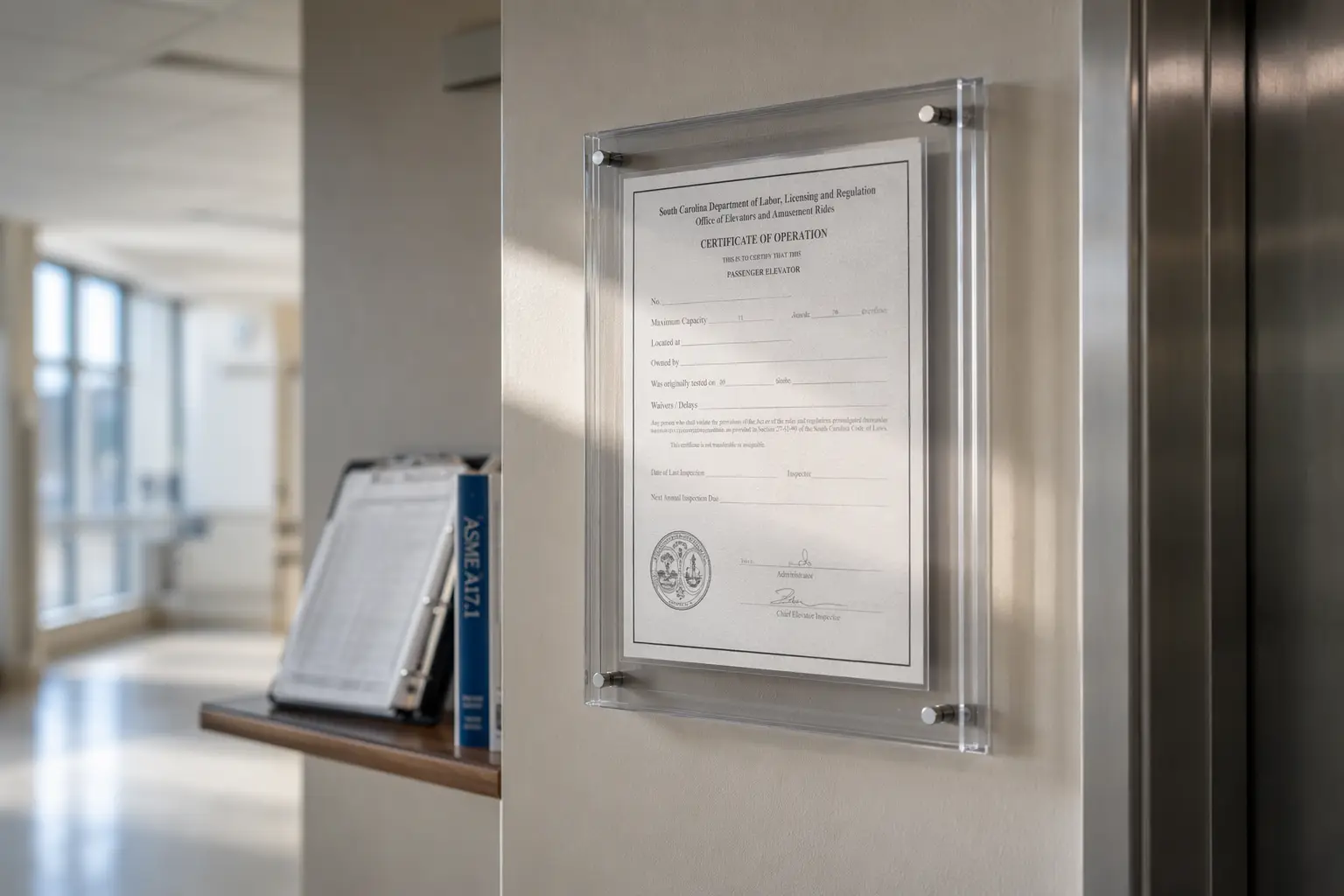
South Carolina requires elevators to be inspected at installation, registration, alteration or repair, and at least once a year before the operating certificate is renewed. No elevator facility may be operated without a valid certificate of registration and an operating certificate from the state. That certificate, or a copy, must be displayed conspicuously inside each elevator car.
Inspections may be conducted only by state inspectors or by licensed special inspectors who meet the qualifications in the 2018 edition of QEI-1 (the American National Standard for Qualification of Elevator Inspectors). A special inspector may not inspect an elevator on which the inspector or the inspector’s employer has a current service or warranty contract — a conflict-of-interest rule hospital facilities directors should factor into their vendor relationships.
Carolina Elevator Service can help facilities prepare for annual inspections by conducting pre-inspection reviews and identifying deficiencies before the official visit.
What ADA upgrades belong on a 2027 hospital capital budget?
ADA compliance is not a one-time checkbox. Renovation projects that alter primary function areas of a facility trigger path-of-travel obligations that extend to elevators serving those areas. Common upgrade items include:
- Cab dimensions that meet current accessible space requirements
- Raised-character and Braille floor designations on jamb plates
- Audible and visible floor-passing signals
- Compliant call button heights and illuminated buttons
- Two-way emergency communication systems accessible to users with hearing or speech impairments
- Non-slip, level thresholds at every landing
Facilities that last updated their cabs more than a decade ago should commission a full ADA gap assessment as part of 2027 budget preparation. The ADA.gov technical guidance documents outline current standards in detail.
What is involved in a hydraulic cylinder replacement, and why does it matter for hospitals?
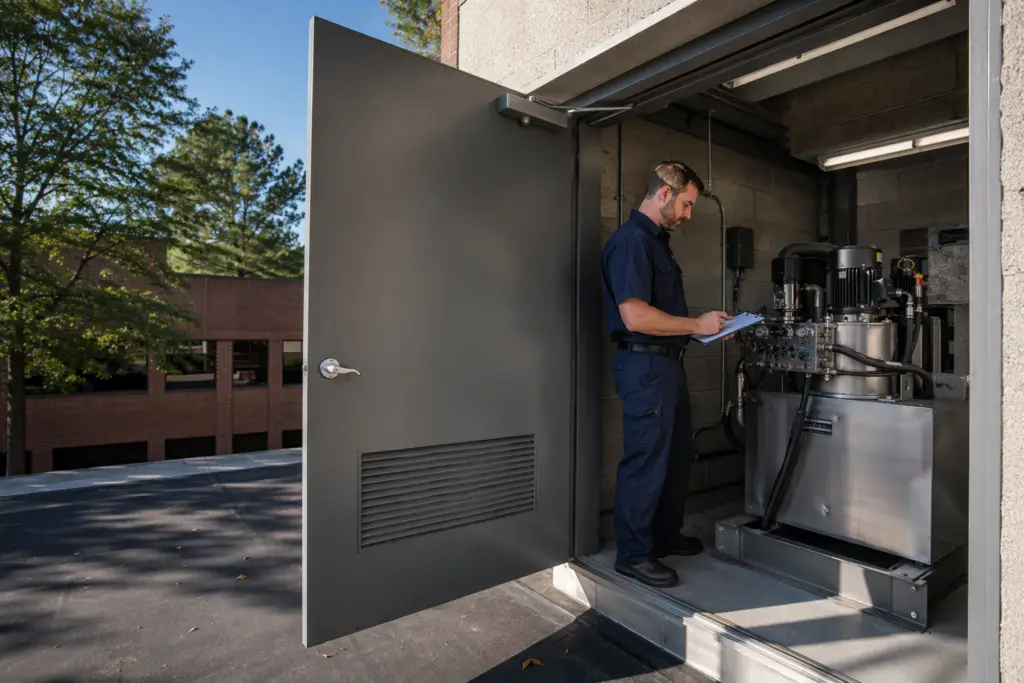
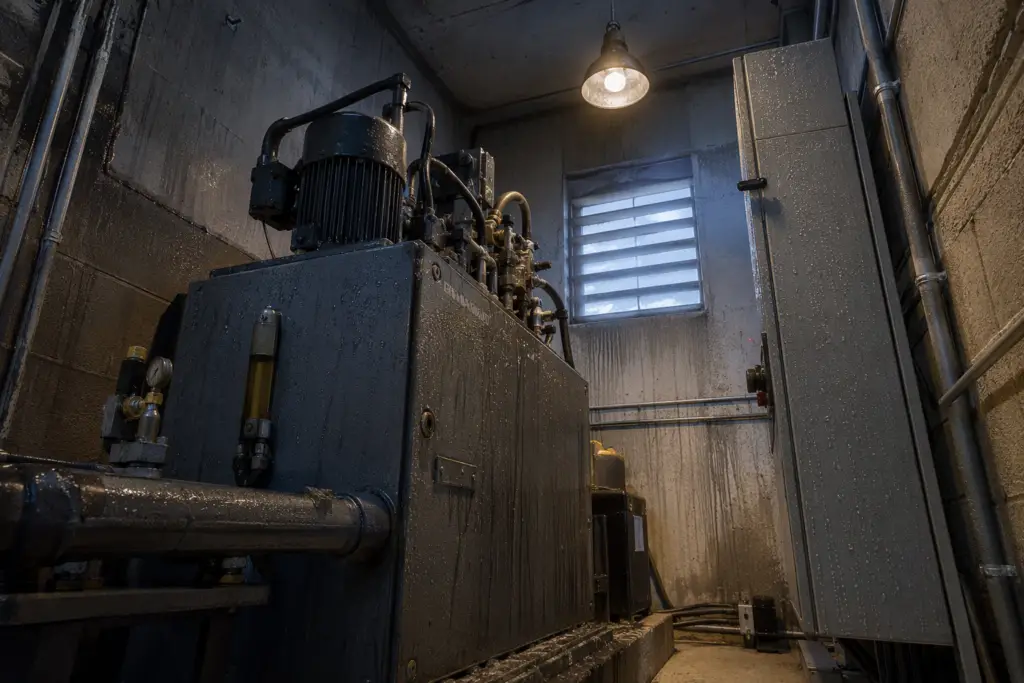
Single-bottom hydraulic cylinders installed before South Carolina’s current containment requirement present a double risk: the potential for underground hydraulic fluid leaks (an environmental liability) and the mechanical risk of cylinder failure. Replacement projects involve excavating the cylinder pit, extracting the old cylinder, installing a new cylinder with approved plastic outer containment, and performing a full hydraulic system recommission.
For a hospital, the scheduling dimension is as important as the technical one. Cylinder replacement typically requires the elevator to be out of service for an extended period. 2027 budget planning should include a temporary-use strategy — whether that means sequencing work during low-census periods or arranging portable lift alternatives for specific patient transport corridors.
How should a hospital plan the sequence of a multi-elevator modernization project?
- Conduct a condition assessment on every elevator in the facility to establish a priority ranking by remaining service life and compliance gap severity.
- Identify any units that are already non-compliant with South Carolina’s annual inspection requirements and flag those for immediate action before the 2027 budget cycle opens.
- Group elevators by function — patient transport, service/freight, and visitor/staff — and sequence modernization so that at least one elevator in each functional category remains operational at all times.
- Obtain a South Carolina construction permit from the LLR before any alteration or installation begins. Work without a permit is a statutory violation under S.C. Code Title 41, Chapter 16.
- Schedule work in coordination with The Joint Commission survey calendars and CMS review windows to avoid simultaneous disruptions.
- Plan for a post-modernization inspection and operating certificate renewal with the LLR before returning each unit to service.
- Document every phase with maintenance logs that satisfy both state inspection requirements and Joint Commission Environment of Care standards.
Carolina Elevator Service supports facility engineers through each stage of this process, from initial condition assessment through permit coordination and post-modernization inspection readiness.
What emergency power requirements affect hospital elevator budgets?
South Carolina law requires passenger elevators to have standby power capable of running emergency lighting and the alarm bell for at least four hours if normal power fails. Hospitals also operate under NFPA 99 and NFPA 110 requirements for essential electrical systems, which govern how elevators are connected to generator transfer switches and emergency power panels.
Budget items in this category include battery backup unit replacement, transfer switch upgrades, wiring upgrades to meet load requirements, and integration testing with the facility’s overall emergency power system. These are not purely elevator-contractor items — coordination with the facility’s electrical engineer is essential.
What control system upgrades provide the best return for a healthcare facility?
Modern microprocessor-based control systems deliver several advantages that have direct value in a healthcare setting:
- Remote diagnostics — allows service providers to identify fault codes before dispatching a technician, reducing diagnostic time during a service call.
- Destination dispatch — groups passengers by destination floor, reducing door-open dwell time and improving throughput in high-volume towers.
- Integration with nurse-call and code-blue systems — allows specific cars to be called to a floor automatically during emergency protocols.
- Parts availability — manufacturers support current-generation controllers with parts and firmware updates, eliminating the obsolescence risk of relay-logic systems.
Control system replacement is classified as an alteration under South Carolina code and requires a construction permit from the LLR before work begins.
Questions Your Inspector Will Ask
When a South Carolina LLR inspector or a licensed special inspector visits a hospital elevator, the following are among the areas they will examine. Facility managers should be prepared to answer or produce documentation for each:
- Is the current operating certificate displayed inside the elevator car?
- Can you produce the certificate of registration for this unit?
- Have any alterations or repairs been made since the last inspection? If so, was a construction permit obtained from the LLR before work began?
- Does the standby power system meet the four-hour emergency lighting and alarm bell requirement under South Carolina regulations?
- For hydraulic elevators: does the underground cylinder have the required plastic outer containment encasement?
- Are firefighters’ service features using the five-pin S.C. #1000 key on new or recently altered installations?
- Are maintenance logs current and available for review?
- Have any accidents involving serious injury to a non-employee been reported to the state before the end of the next working day, as required by South Carolina law?
- Are all door safety devices — safety edges, door restrictors, and interlocks — functioning correctly?
- Do cab fixtures, including Braille designations and audible signals, meet current ADA requirements?
Preparing thorough answers to each of these questions before an inspection visit is a core part of the pre-inspection review that Carolina Elevator Service provides to Columbia-area healthcare clients.
How far in advance should a hospital begin planning 2027 capital elevator projects?
Equipment lead times for major components — hydraulic cylinders, control systems, and door operators — can extend well beyond what many facility managers expect. Combined with the time required to obtain LLR construction permits, schedule inspections, and coordinate contractor availability around patient care operations, facilities that begin planning in mid-2026 are in a significantly stronger position than those who wait until the budget is approved.
A condition assessment completed by late 2026 gives facility finance teams accurate scope and cost data to defend capital requests, and gives project managers enough runway to execute work during the lower-occupancy windows that most hospitals target for disruptive infrastructure projects.
What documentation should a hospital maintain for elevator compliance?
South Carolina law places the obligation to keep every elevator facility in safe operating condition and in compliance with state regulations squarely on the owner. That ownership obligation translates directly into a documentation responsibility. Hospitals should maintain:
- Current operating certificates for every unit, including copies displayed in each car
- Certificate of registration for each elevator facility
- Construction permits for any alteration or installation work
- Inspection reports from every annual inspection
- Maintenance logs covering all routine service, repairs, and parts replacements
- Accident reports for any incident involving serious injury to a non-employee
- Contractor work orders and equipment specifications for modernization projects
These records are reviewed during Joint Commission Environment of Care surveys and CMS inspections, in addition to state elevator inspections.
How can a facility manager evaluate whether to modernize or replace an elevator entirely?
The decision between modernization and full replacement hinges on the structural condition of the hoistway and pit, the age and remaining life of the hydraulic jack or traction machine, the cost-to-benefit ratio of upgrading a legacy cab versus installing a new one, and long-term parts availability for the existing drive system. A phased modernization — control system now, cab and fixtures in a later budget cycle — often makes financial sense when the hoistway and primary mechanical components are still serviceable.
Full replacement becomes the stronger choice when the hoistway requires structural remediation, when the cylinder or machine is at or beyond its design life, or when the cumulative cost of multiple modernization phases approaches the cost of a new installation. Carolina Elevator Service provides condition assessments that give hospital facility teams the data they need to make this determination on a unit-by-unit basis.
Contact Carolina Elevator Service for a free elevator assessment at 803-865-1400.
Need elevator service you can rely on? Carolina Elevator Service is ready to help.