When the South Carolina Department of Labor, Licensing and Regulation (LLR), Office of Elevators and Amusement Rides, identifies deficiencies during an elevator inspection, the owner is legally obligated under S.C. Code Title 41, Chapter 16 to correct every cited item before the elevator may lawfully continue operating. Failure to do so can result in the operating certificate being withheld, suspended, or revoked, exposing building owners to significant legal liability and potential shutdown of vertical transportation entirely. Understanding the exact consequences, timelines, and corrective steps is essential for any elevator owner or property manager operating in South Carolina.
What is the LLR’s legal authority over elevator operating certificates in South Carolina?
The South Carolina Department of Labor, Licensing and Regulation (LLR), Office of Elevators and Amusement Rides holds statutory authority under S.C. Code Title 41, Chapter 16 to issue, withhold, suspend, or revoke an elevator’s operating certificate based on inspection findings.
Under S.C. Code Title 41, Chapter 16 and the accompanying S.C. Code of Regulations Chapter 71, Article 5 (Regulations 71-5000 through 71-5700), no elevator facility in South Carolina may be operated without both a certificate of registration and a valid operating certificate from the state. This dual-certificate requirement means that an elevator that fails inspection does not simply receive a note in a file — it loses its lawful authorization to run.
South Carolina has also adopted the ASME A17.1/CSA B44, 2019 edition, effective July 23, 2021, as its baseline safety standard for new and altered elevators. Existing equipment installed before July 1, 1986 must comply with the ANSI A17.3 1986 safety code for existing elevators and escalators. Any deficiency cited during an LLR inspection is typically tied to one or both of these standards, making the technical basis for each citation traceable and legally enforceable.
What actually happens immediately after an LLR inspector identifies uncompleted maintenance?
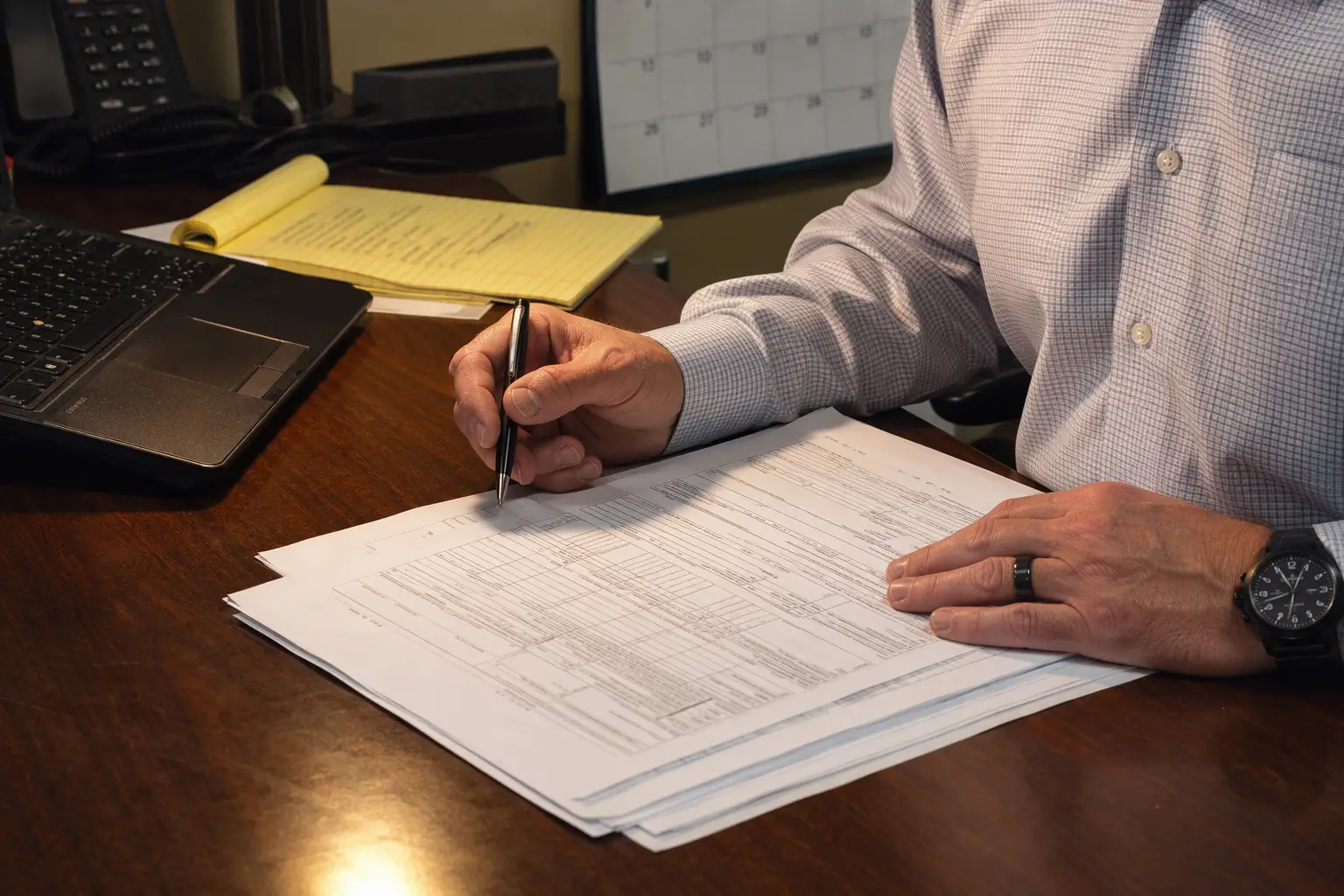
When an inspector identifies required maintenance that has not been completed, the immediate outcome depends on the severity of the deficiency — the elevator may be tagged out of service on the spot, or the owner may receive a written notice with a compliance deadline, after which continued operation without corrective action becomes a statutory violation.
Inspectors categorize findings by risk level. A deficiency that creates an imminent hazard to passengers — such as a malfunctioning safety device, failed door interlock, or non-functional emergency stop — typically results in the elevator being taken out of service immediately and the operating certificate being withheld until the problem is corrected and re-inspected. Less critical findings may allow the elevator to continue operating temporarily while the owner arranges repairs, but the operating certificate renewal will not be issued until all items are resolved.
In either scenario, the owner bears full legal responsibility. South Carolina law places the obligation to keep every elevator facility in safe operating condition squarely on the owner, not the service contractor or the LLR itself.
Can an elevator legally stay in service while cited repairs are pending?
Whether an elevator may remain in service during the repair period depends entirely on how the LLR inspector classifies the deficiency — imminent hazards require immediate shutdown, while lower-priority items may allow limited continued operation at the inspector’s discretion until the next compliance deadline.
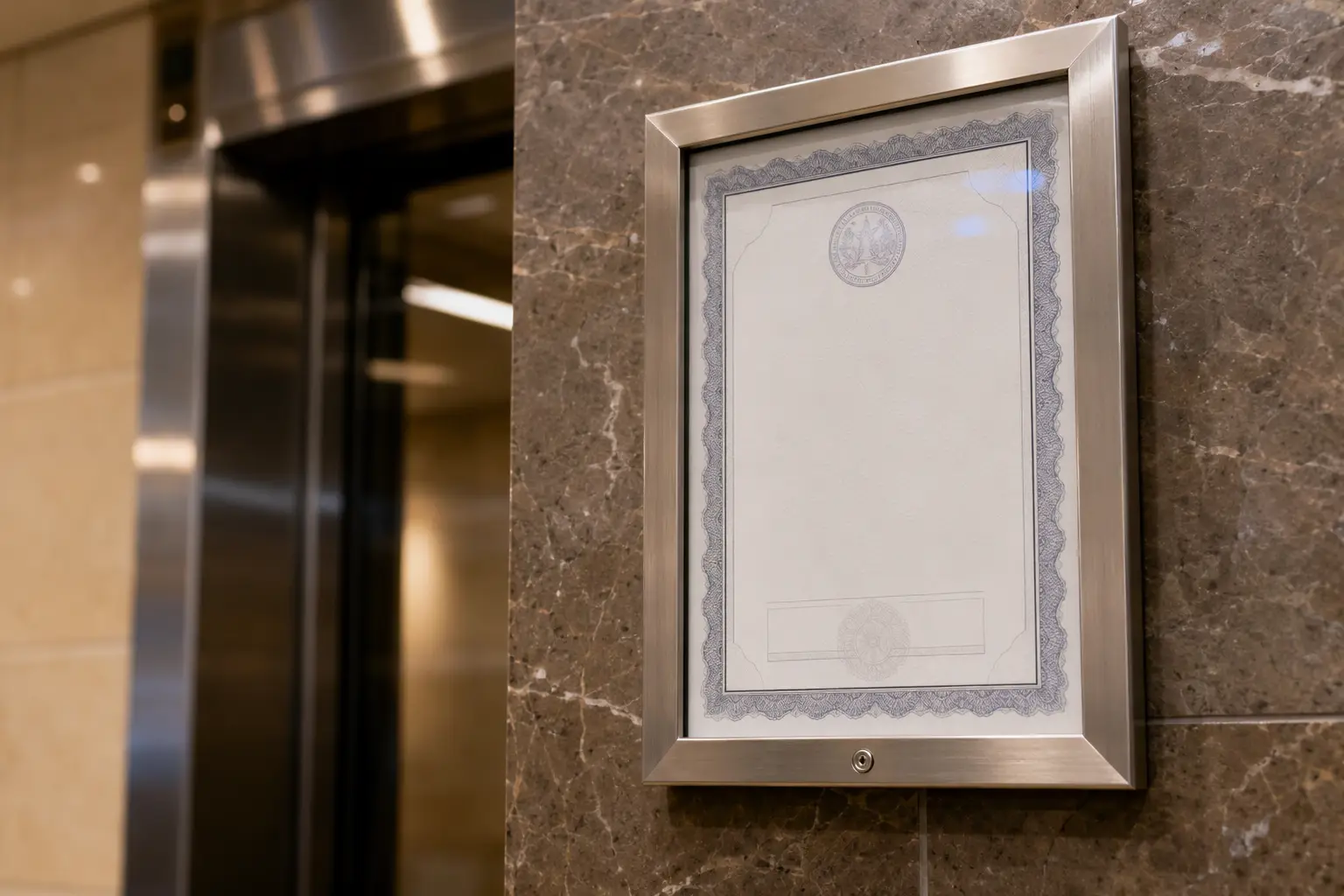
Building owners and property managers should never assume that an elevator may continue running simply because they have scheduled repairs. If the inspector has withheld or revoked the operating certificate, operating the elevator during the repair window is a direct violation of S.C. Code Title 41, Chapter 16. The operating certificate, or a copy of it, is required to be displayed conspicuously inside each elevator car — an elevator running without that document on display is already in violation, independent of the repair status.
Property managers who are uncertain about their elevator’s current legal operating status should contact the LLR directly or engage a qualified elevator service company to review the inspection report and determine the appropriate course of action.
What are the specific legal consequences of operating an elevator with uncompleted LLR-required maintenance?
Operating an elevator with uncompleted inspection-required maintenance exposes a South Carolina building owner to statutory penalties, civil liability for injuries, and potential criminal liability for knowingly disregarding an official safety order.
The consequences compound quickly. At the administrative level, the LLR may assess penalties under Title 41, Chapter 16 for each day of non-compliance. At the civil level, if a passenger is injured on an elevator that the owner knew was operating outside its authorized certificate status, the owner’s exposure in a negligence or premises liability lawsuit increases substantially because the statutory violation creates a strong inference of negligence. At the criminal level, South Carolina law provides for escalating sanctions against repeat or willful violators.
Beyond regulatory penalties, insurance carriers have been known to deny claims arising from elevator incidents when the equipment was not in compliance with applicable law at the time of the incident. Building owners who assume their general liability policy covers all elevator-related claims regardless of compliance status may face a costly surprise.
What steps should a building owner take immediately after receiving an LLR deficiency notice?
The following procedure reflects the standard corrective action sequence for South Carolina elevator owners who have received a deficiency notice from the LLR, Office of Elevators and Amusement Rides.
- Secure and read the full inspection report. The written report identifies each deficiency, the applicable code section, and the severity classification. Every subsequent decision depends on accurately understanding what was cited.
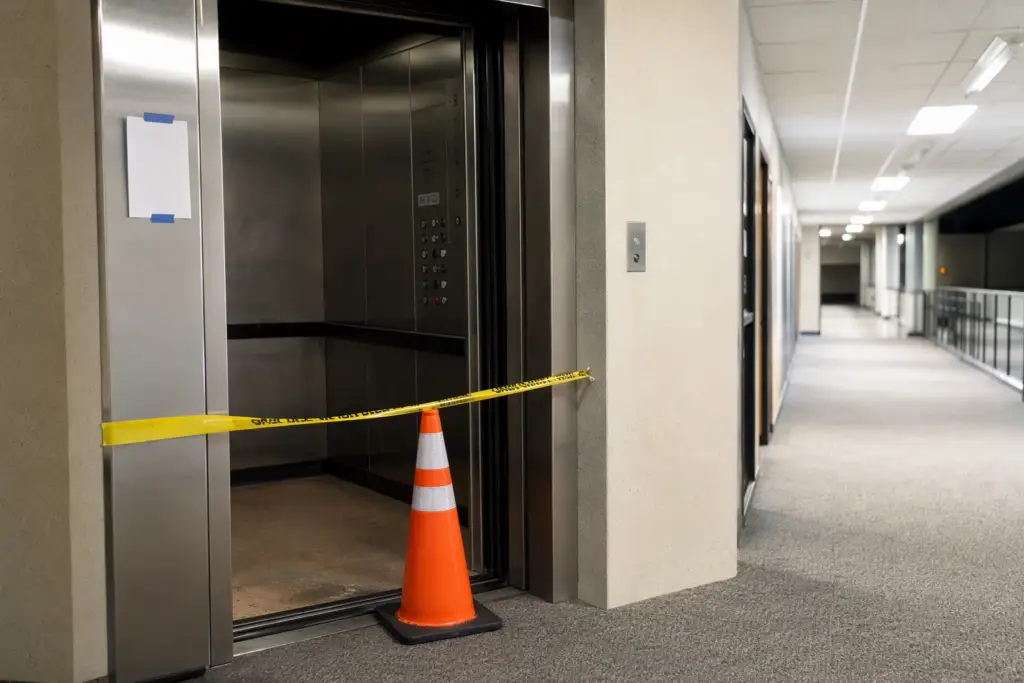
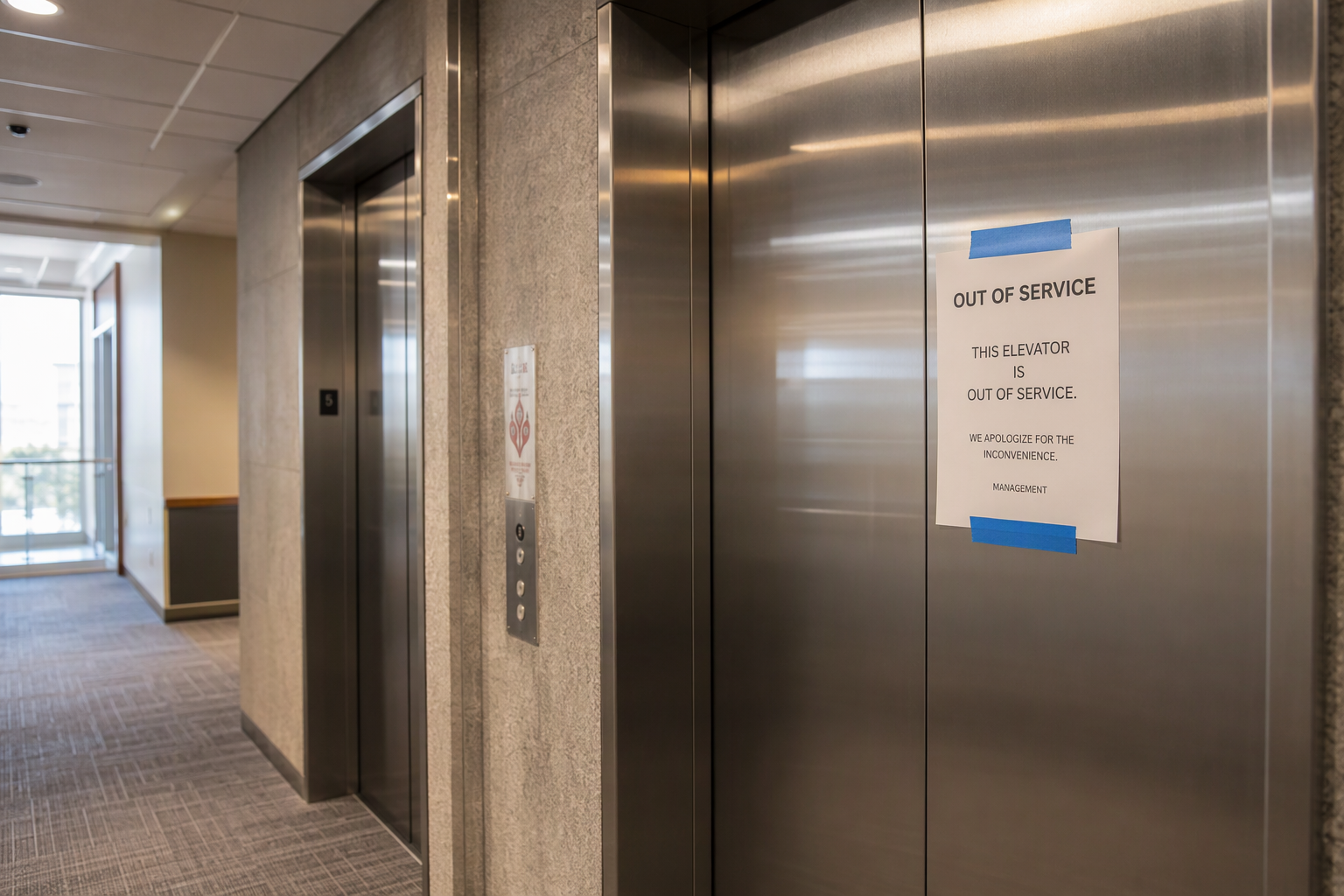
- Determine whether the elevator has been ordered out of service. If the operating certificate has been withheld or the inspector has tagged the unit out of service, do not operate the elevator until the LLR formally reinstates it. Post notice to building occupants and disable access to the cab.
- Contact a qualified elevator service company promptly. The service provider needs the inspection report in hand to scope the corrective work correctly. Carolina Elevator Service works with property owners and managers in Columbia, SC to review LLR deficiency notices and develop corrective maintenance plans that address each cited item.
- Prioritize safety-critical items first. Even if the LLR has allowed the elevator to remain temporarily in service, imminent hazard items — door interlocks, overspeed governors, safety devices — should be corrected before less critical findings.
- Document all corrective work. Obtain written records, including work orders, parts documentation, and technician reports, for every repair performed. This documentation is required when requesting a re-inspection.
- Request a re-inspection through the LLR. Once all cited deficiencies have been corrected, the owner must arrange a re-inspection by a state inspector or a licensed special inspector to confirm compliance and restore the operating certificate.
- Confirm the operating certificate is reinstated and displayed. Do not resume normal elevator operations until the new operating certificate has been issued and is conspicuously displayed inside the elevator car as required by South Carolina law.
Who is authorized to perform the re-inspection after repairs are completed?
In South Carolina, re-inspections may be conducted only by state inspectors employed by the LLR or by licensed special inspectors who meet the qualification standards set out in the 2018 edition of QEI-1 (the American National Standard for Qualification of Elevator Inspectors).
South Carolina law permits a special inspector’s inspection to be accepted in place of a state inspection, which gives building owners some flexibility in scheduling. However, there is an important restriction: a special inspector may not inspect an elevator on which the inspector or the inspector’s employer holds a current service or warranty contract. This prohibition exists to prevent conflicts of interest, and it means that a building’s regular elevator service contractor cannot serve as the special inspector for that same elevator.
Building owners should plan for this restriction when coordinating re-inspection. If the regular service contractor performed the corrective maintenance, a separate, independent special inspector must be engaged for the re-inspection, or the building must wait for a state inspector to be assigned.
How do ASME A17.1 safety code requirements factor into LLR inspection deficiencies?
Every deficiency cited in a South Carolina LLR inspection is grounded in the state’s adopted edition of the ASME A17.1/CSA B44 Safety Code for Elevators and Escalators (2019 edition for new and altered equipment), which sets the technical minimum for components, devices, clearances, testing intervals, and operational requirements.
ASME A17.1 is a comprehensive standard that governs everything from car enclosure dimensions and door operation to safety device testing frequencies and hydraulic system integrity requirements. When a South Carolina inspector cites a deficiency, the correction must bring the equipment into conformance with the applicable section of ASME A17.1-2019 (or ANSI A17.3-1986 for pre-1986 equipment). Service contractors performing corrective work must understand which edition applies to the specific unit they are repairing, because the requirements differ between the two code cycles.
What types of maintenance deficiencies are most commonly cited in South Carolina elevator inspections?
While the LLR does not publish aggregate data on the most frequently cited deficiency types, elevator service professionals working in South Carolina regularly encounter a consistent set of maintenance categories that appear in inspection reports across a wide range of equipment ages and types.
| Deficiency Category | Applicable Standard | Typical Risk Classification | Common Corrective Action |
|---|---|---|---|
| Door interlock failure or wear | ASME A17.1-2019 | High — potential imminent hazard | Replace door locks and interlocks; full door system test |
| Overspeed governor and safety device testing overdue | ASME A17.1-2019 | High | Perform required periodic safety tests; document results |
| Emergency lighting or alarm bell failure | ASME A17.1-2019 / SC standby power rule | Moderate to High | Repair or replace battery backup system; verify four-hour runtime |
| Operating certificate not displayed in car | S.C. Code Title 41, Chapter 16 | Administrative | Obtain and post current certificate; verify renewal date |
| Hydraulic cylinder without required containment (pre-upgrade) | SC Reg. 71-5000–71-5700 | Moderate — environmental and structural | Install plastic outer containment per SC requirement |
| Firefighters’ service key non-compliant | SC requirement: five-pin #1000 key | Moderate | Replace fire service key hardware with SC #1000 key |
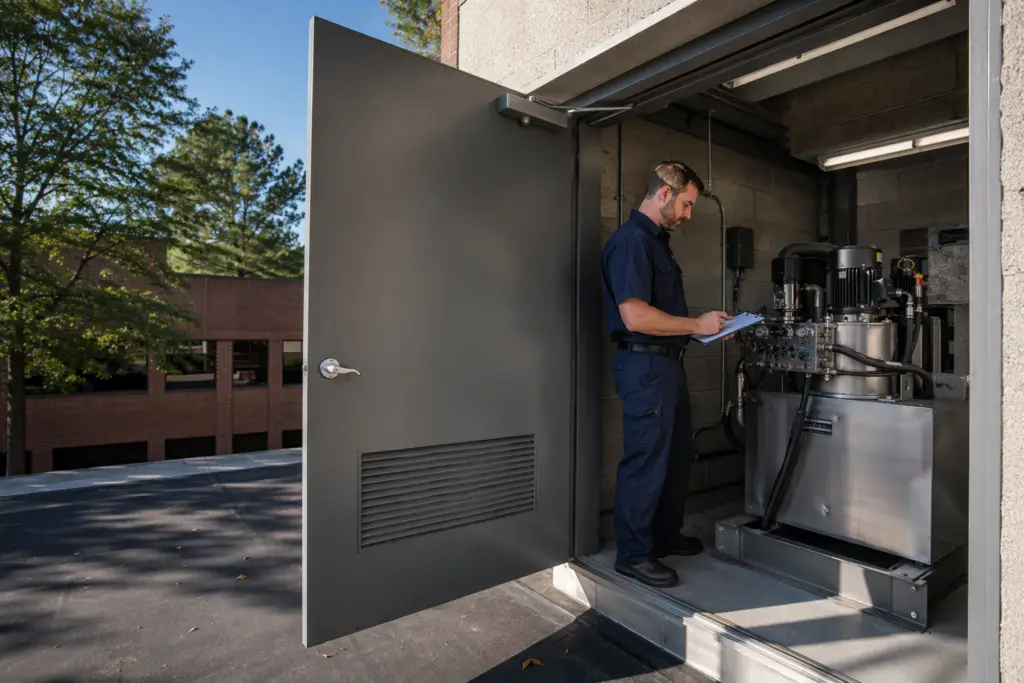
| Pit or machine room housekeeping/clearance | ASME A17.1-2019 | Low to Moderate | Clear prohibited items; verify minimum clearances |
| Wire rope or chain lubrication/wear | ASME A17.1-2019 | Moderate to High depending on wear level | Lubricate or replace; re-tension as required |
Does the ADA impose separate obligations that interact with LLR inspection deficiencies?
Yes — the Americans with Disabilities Act (ADA) imposes independent accessibility requirements that can overlap with LLR inspection findings, particularly for elevators serving facilities covered by Titles II and III of the ADA.
When an LLR inspection identifies a deficiency related to cab leveling accuracy, door timing, control panel button height, or audible/visual signals, the corrective maintenance required to satisfy the LLR may simultaneously be necessary to maintain ADA compliance. Conversely, an elevator that is mechanically compliant with ASME A17.1 but has drifted out of ADA specification on cab leveling or door dwell time may be accessible to LLR inspection but subject to a separate ADA complaint.
Building owners should treat LLR deficiency correction and ADA compliance as complementary obligations. Addressing both during the same corrective maintenance visit is more cost-effective than scheduling separate service calls.
How does South Carolina’s annual inspection requirement affect the timeline for correcting deficiencies?
South Carolina requires most passenger elevators to be inspected at least once per year before the operating certificate is renewed, which means that any deficiency left uncorrected from one inspection cycle will be identified again at the next annual inspection — and the owner’s compliance history becomes part of the LLR record.
The annual inspection cycle creates a hard deadline: if deficiencies from one inspection remain uncorrected by the time the next annual inspection is scheduled, the owner has now accumulated a second cycle of non-compliance on top of the original. This pattern can influence how the LLR treats subsequent applications for operating certificate renewal and may affect the owner’s standing in any enforcement proceeding.
Different equipment types carry different inspection intervals. Handicap lifts, for example, are inspected every five years in South Carolina, while manlifts, television tower elevators, and special purpose elevators are inspected every seven years. Dumbwaiters are inspected when installed or altered. These longer intervals do not reduce the owner’s obligation to maintain the equipment between inspections — they simply define when the state formally reviews the equipment’s condition.
What is the re-inspection process, and how long does it typically take to restore an operating certificate?
After corrective maintenance is completed, the owner must contact the LLR to request a re-inspection, present documentation of the repairs performed, and wait for a state inspector or independent licensed special inspector to conduct a physical verification of the corrected items before the operating certificate can be reinstated.
The timeline for restoring an operating certificate depends on the LLR’s scheduling availability for state inspectors and, if a special inspector is used, that inspector’s availability and independence from the service contractor. Owners who act quickly to complete repairs and assemble documentation typically experience shorter delays. Those who allow corrective work to drag out may find that scheduling constraints extend the out-of-service period significantly.
For Columbia, SC property owners seeking to minimize downtime, working with an elevator service company experienced in LLR procedures — such as Carolina Elevator Service — can help ensure that corrective work is completed in a manner that satisfies the inspector’s requirements on the first re-inspection visit, avoiding repeated trips and extended certificate delays.
Can a building owner be held personally liable if an injury occurs during the period of uncompleted maintenance?
Yes — South Carolina law places the duty to maintain every elevator facility in safe operating condition directly on the owner, and operating an elevator with known, uncorrected inspection deficiencies creates substantial personal and entity-level liability exposure if an injury occurs during that period.
South Carolina premises liability law generally holds property owners responsible for maintaining safe conditions for invitees. When an elevator deficiency has been formally identified by an LLR inspector and documented in a written report, the owner has constructive knowledge — and often actual knowledge — of the hazard. An injury that occurs after that report is received and before the deficiency is corrected is therefore more likely to result in a finding of negligence, because the owner had both notice of the problem and the opportunity to correct it.
The operating certificate requirement reinforces this analysis. An owner who allows an elevator to run without a valid operating certificate is in direct statutory violation, and that violation will almost certainly be introduced as evidence in any subsequent personal injury litigation.
What documentation should a building owner maintain related to inspection deficiencies and corrective maintenance?
Building owners should maintain a comprehensive, organized maintenance file that includes the original LLR inspection report, all written work orders and invoices for corrective repairs, parts documentation, test records, and the re-inspection report confirming that deficiencies were resolved and the operating certificate was reinstated.
This documentation serves multiple purposes. It demonstrates to the LLR that the owner took the deficiency notice seriously and acted in good faith to correct the problem in a timely manner. It provides evidence in any civil litigation that the owner fulfilled the duty of care. It supports insurance claims by showing that the elevator was maintained in accordance with applicable law. And it creates a maintenance history that helps identify recurring issues before they become inspection failures.
Logs should include dates of inspection, dates repairs were completed, the name of the service company and technician (by role, not necessarily by name), the specific deficiency addressed, and the date the operating certificate was reinstated. South Carolina law requires the owner to maintain the elevator in safe and compliant condition — documentation is the owner’s proof that this obligation was met.
How does South Carolina treat accident reporting obligations when maintenance is overdue?
South Carolina law requires that any elevator accident that seriously injures a person other than an employee must be reported to the LLR before the end of the next working day — and if that accident occurs on equipment with known, uncorrected deficiencies, the reporting obligation intersects directly with the owner’s pre-existing compliance failure.
When an accident is reported under these circumstances, the LLR will almost certainly investigate whether the uncorrected deficiency was a contributing factor. If the inspection record shows that the cited maintenance was not completed before the accident, the owner faces simultaneous exposure: a statutory reporting requirement, an open deficiency record, and a potential enforcement action — all in addition to any civil claim brought by the injured party.
This scenario underscores why timely corrective maintenance is not merely a regulatory formality. It is a direct risk management imperative for every South Carolina elevator owner.
Does the LLR allow any formal variance or extension for completing cited maintenance?
South Carolina’s elevator statutes and regulations under S.C. Code Title 41, Chapter 16 do not specifically enumerate a formal variance or extension mechanism for deficiency correction deadlines that is publicly documented in the verified regulatory sources — building owners who believe they need additional time should contact the LLR, Office of Elevators and Amusement Rides directly to discuss their specific circumstances.
What is clear from the statute is that the LLR has broad authority over the operating certificate, and that authority is exercised on a case-by-case basis. Owners who proactively communicate with the LLR, demonstrate good faith efforts to schedule repairs, and document the steps they are taking to achieve compliance are generally better positioned than those who ignore the deficiency notice entirely. However, no building owner should assume that good intentions substitute for completed repairs — the legal obligation runs to the actual correction of the deficiency, not merely the intention to correct it.
How do South Carolina’s requirements for new construction permits interact with major corrective repairs?
When corrective maintenance required by an LLR inspection crosses the threshold from routine maintenance into alteration — such as replacing a hydraulic cylinder, upgrading the control system, or modifying the door system — South Carolina law requires a state construction permit before the work begins.
Under S.C. Code Title 41, Chapter 16, a state construction permit is required before any elevator facility is erected, constructed, altered, or installed. If the corrective work cited in an inspection report involves components or systems that meet the definition of an alteration under the adopted code, proceeding without a permit creates a separate violation layered on top of the original inspection deficiency. Building owners and their service contractors must evaluate each corrective scope carefully to determine whether a permit is required before work begins.
New installations and altered elevator facilities must comply with the adopted ASME A17.1-2019 edition in effect when the permit is issued. This requirement has practical implications: a major corrective alteration may trigger code compliance requirements beyond the originally cited deficiency, because the altered components must meet current code rather than the edition in effect when the elevator was originally installed.
What role does a preventive maintenance program play in avoiding LLR inspection deficiencies?
A structured preventive maintenance program is the most effective way to avoid LLR inspection deficiencies, because it identifies and corrects developing mechanical problems — worn components, lubrication deficiencies, safety device drift — before an inspector formally documents them and before they become imminent hazards.
The ASME A17.1 Safety Code for Elevators and Escalators includes maintenance requirements that specify what tasks must be performed and at what intervals on various elevator systems and components. A preventive maintenance program built around these requirements keeps equipment in continuous compliance rather than allowing it to degrade to the point of an inspection failure. South Carolina law places the ongoing obligation to maintain safe operating conditions on the owner — a preventive maintenance contract with a qualified service company is the practical mechanism through which most owners meet that obligation.
Carolina Elevator Service supports property owners and managers in Columbia, SC with maintenance programs designed around the requirements of the adopted ASME A17.1 standard and South Carolina’s specific regulatory requirements, helping buildings stay ahead of inspection findings rather than reacting to them after the fact.
Are there different rules for handicap lifts or other specialty equipment with longer inspection intervals?
Yes — South Carolina applies different inspection intervals to different categories of equipment, and those longer intervals do not reduce the owner’s obligation to maintain the equipment in safe, code-compliant condition between inspections.
Handicap lifts in South Carolina are inspected every five years rather than annually. Manlifts, television tower elevators, and special purpose elevators are inspected every seven years. Dumbwaiters are inspected when installed or altered. When an inspection does occur for these equipment types and deficiencies are cited, the same legal consequences apply: the operating certificate may be withheld, and the equipment may not be operated until corrections are made and re-inspection confirms compliance. The longer interval between inspections does not create a longer grace period for corrective maintenance — it simply means that the inspection cycle is less frequent, not that the standard of care is lower.
What should a property manager communicate to building tenants when an elevator is out of service due to uncompleted maintenance?
Property managers should communicate promptly and factually with tenants when an elevator is taken out of service following an LLR inspection deficiency, providing a realistic timeline for repairs and re-inspection, identifying alternative accessible routes in compliance with ADA requirements, and updating tenants as the repair and re-inspection process progresses.
Transparency is both a practical and legal consideration. Tenants with mobility impairments have ADA-based rights to accessible vertical transportation, and an extended elevator outage in a multi-story building can constitute an accessibility barrier that triggers separate obligations for the building owner. Property managers should document all tenant communications related to the outage, the corrective work in progress, and the expected restoration date. This documentation supports the building’s overall compliance record and demonstrates that the outage was managed responsibly.
How can building owners in Columbia, SC proactively prepare for LLR inspections to minimize deficiency risk?
Building owners in Columbia, SC can reduce the risk of LLR inspection deficiencies by conducting internal pre-inspection reviews, maintaining current maintenance logs, verifying that the operating certificate is displayed in every cab, confirming that all required periodic safety tests are current, and engaging a qualified elevator service company to perform a thorough maintenance check in advance of the scheduled annual inspection.
Pre-inspection preparation should specifically address the items most likely to draw scrutiny: door interlock condition and operation, emergency lighting and alarm bell battery backup (South Carolina requires at least four hours of runtime), firefighters’ service key compliance (SC #1000 five-pin key on new installations), hydraulic cylinder containment for applicable units, and the general condition of the machine room and pit. Carolina Elevator Service provides maintenance and assessment services to Columbia, SC property owners that are oriented toward keeping elevators in LLR-compliant condition year-round, not just in the weeks before an inspection.
Owners of elevators installed before July 1, 1986 should also confirm that their equipment meets the requirements of the ANSI A17.3-1986 safety code for existing elevators, which is the applicable standard under South Carolina law for pre-1986 installations. Older equipment with deferred maintenance is statistically more likely to generate inspection deficiencies, and a proactive maintenance relationship with a knowledgeable service company is the most reliable way to manage that risk.
Contact Carolina Elevator Service for a free elevator assessment at 803-865-1400.
Need elevator service you can rely on? Carolina Elevator Service is ready to help.