Commercial building owners in the Columbia, South Carolina area approaching 2027 budget season face a layered decision: when to modernize aging elevator equipment, how to fund it, and which tax or incentive strategies deliver the strongest return. This guide walks through every available mechanism — federal tax code provisions, utility programs, ADA-related deductions, and depreciation schedules — so finance teams and facilities managers can build a defensible capital plan before the fiscal year opens.
What Federal Tax Incentives Apply to Elevator Modernization in Commercial Buildings?

The most reliable financial levers for elevator modernization sit inside the federal tax code rather than in grant programs. Three provisions are particularly relevant to commercial building owners planning upgrades in the 2026–2027 window.
Section 179 Expensing
Under Internal Revenue Code Section 179, businesses can elect to deduct the full purchase price of qualifying equipment and certain improvements in the tax year the asset is placed in service, rather than depreciating it over many years. Elevator modernization components — drives, controls, cab interiors, door operators, and safety systems — can qualify as tangible personal property or qualified improvement property depending on how the work is scoped. Building owners should work with a CPA to structure modernization contracts so that maximum component value falls within qualifying categories. The annual deduction limit and phase-out thresholds are set by Congress; consult a tax professional or the IRS website for current-year figures, as these adjust periodically.
Bonus Depreciation
Bonus depreciation under the Tax Cuts and Jobs Act has been phasing down on a scheduled basis. For assets placed in service in 2026, the allowable bonus depreciation percentage has decreased from its peak; the trajectory into 2027 continues that phase-down unless Congress acts. This timing matters for 2027 budget planning: if a modernization project can be completed and placed in service before year-end 2026, the owner may access a higher bonus depreciation percentage than if the project concludes in 2027. Coordinating project timelines with tax strategy is therefore a concrete planning action.
ADA Barrier Removal Deduction (Section 190)
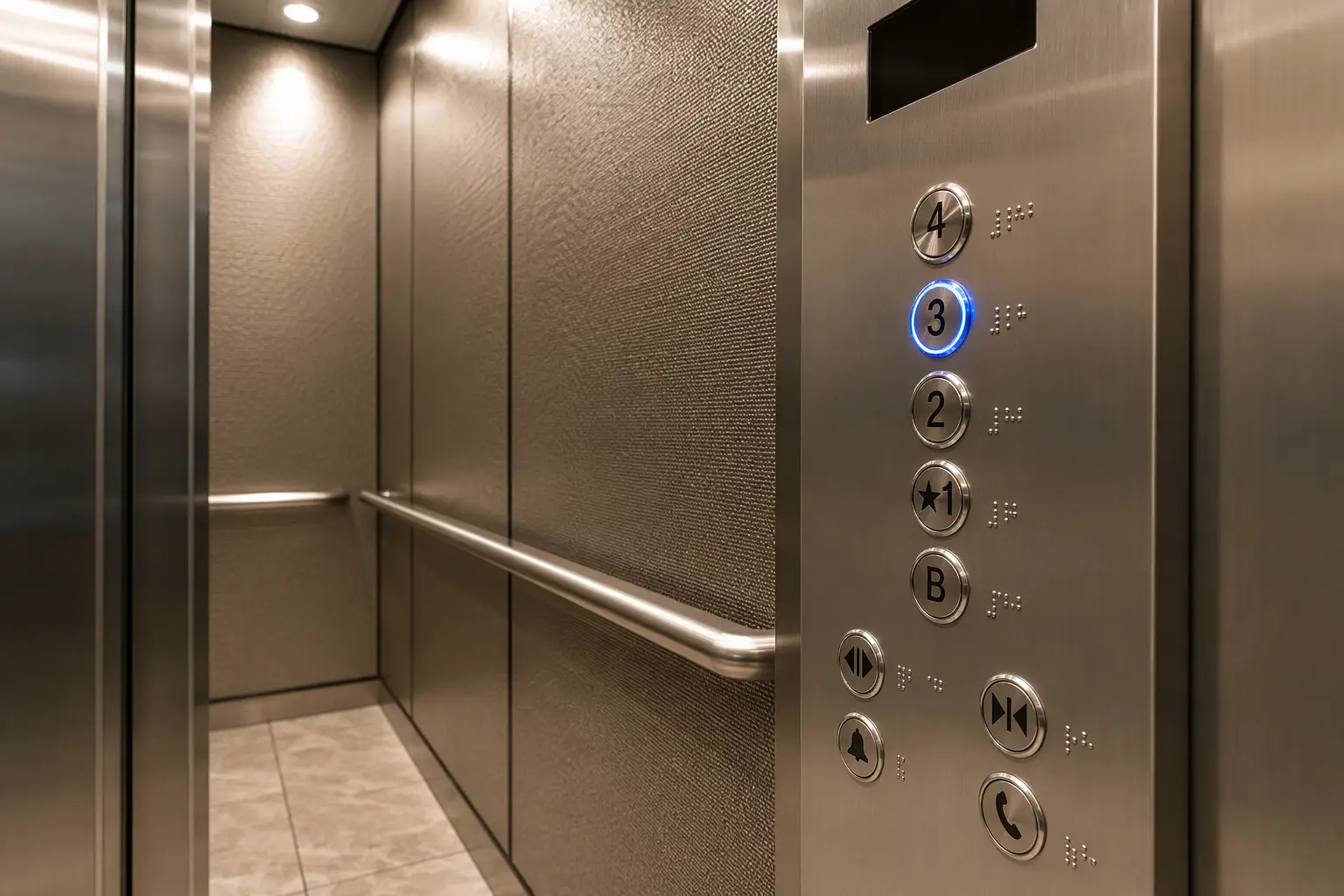
The Americans with Disabilities Act and Internal Revenue Code Section 190 together allow eligible businesses to deduct costs associated with removing architectural and transportation barriers that make facilities accessible to people with disabilities. Elevator modifications that improve accessibility — cab leveling, door timing adjustments, button height compliance, audible signals, and Braille signage — can fall within this provision. Smaller businesses meeting the eligibility thresholds may also qualify for the Disabled Access Credit under Section 44, which provides a tax credit (not merely a deduction) on a portion of eligible access expenditures. A tax advisor familiar with real estate should confirm whether a specific project scope qualifies under these provisions.
Is There a Federal Grant Program for Commercial Elevator Modernization?
No dedicated federal grant program exists specifically for commercial elevator modernization. Building owners should be cautious of third-party services claiming otherwise. Legitimate federal assistance for building improvements generally flows through energy-efficiency programs, historic preservation tax credits for qualifying properties, or community development financing — none of which target elevators exclusively. However, elevator modernization can be bundled into broader energy or accessibility projects that do qualify for specific programs, discussed below.
How Do Utility Energy-Efficiency Rebates Apply to Elevator Upgrades?
Modern elevator drives, particularly variable-frequency drives (VFDs) on hydraulic and traction systems, reduce energy consumption meaningfully compared to older single-speed or two-speed systems. Some utility providers offer commercial rebate programs for energy-efficient equipment installations. Columbia building owners should contact their utility provider directly — including SCE&G (now Dominion Energy South Carolina) — to ask whether elevator drive upgrades or regenerative drive systems qualify under their commercial energy-efficiency rebate schedule. Rebate availability, amounts, and application procedures change on an annual cycle, so confirming program status during Q4 2026 budget planning is advisable before including expected rebate revenue in a capital project pro forma.
What Is the Typical Cost and ROI Profile for Elevator Modernization?
Because project costs vary significantly by equipment type, age, building height, and scope of work, specific dollar figures are not stated here without a verified source tied to the actual project. Instead, the table below frames the relative cost and return profile across common modernization scopes to support comparative budget planning.
| Modernization Scope | Relative Investment Level | Primary Financial Benefit | Typical Project Timeline | Key Tax Treatment | Compliance Trigger? |
|---|---|---|---|---|---|
| Controls and drive system only | Lower | Energy savings; reduced maintenance calls | Days to a few weeks | May qualify as personal property (Section 179) | Often proactive |
| Door operator and safety system upgrade | Low to moderate | Code compliance; reduced liability | Days to two weeks per unit | Personal property or qualified improvement property | Yes — may be required by inspection findings |
| Cab interior renovation with accessibility improvements | Moderate | Tenant satisfaction; ADA compliance; Section 190 deduction | One to three weeks per unit | Barrier removal deduction eligible portion | Possibly — ADA requirements under ADA.gov |
| Full modernization (controls, drive, doors, cab, fixtures) | Higher | Maximum longevity extension; code compliance; energy savings; tenant appeal | Four to twelve weeks per unit depending on scope | Blended — component-by-component tax analysis recommended | Yes — triggers state permit and inspection requirements |
| Machine room-less (MRL) or hydraulic conversion | Highest | Space recapture; long-term energy reduction; modern platform | Several months — structural and electrical coordination required | Likely depreciated as building improvement or QIP | Yes — new installation permit required under S.C. Code Title 41, Chapter 16 |
What South Carolina Regulatory Requirements Must Budget Plans Account For?
Any modernization scope that constitutes an alteration or repair triggers South Carolina regulatory requirements that have direct cost and schedule implications for 2027 budget planning. Under S.C. Code Title 41, Chapter 16 and S.C. Code of Regulations Chapter 71, Article 5 (Regulations 71-5000 through 71-5700), the following requirements apply to commercial elevator facilities in South Carolina:
- State construction permit required: A state permit from the South Carolina Department of Labor, Licensing and Regulation (LLR), Office of Elevators and Amusement Rides must be obtained before any elevator facility is erected, constructed, altered, or installed. Budget planning should include permit lead time before construction can begin.
- Post-alteration inspection: South Carolina requires elevators to be inspected at alteration or repair, and at least once a year before the operating certificate is renewed. A modernization project triggers an inspection before the unit can return to service.
- Special inspector independence rule: In South Carolina, a special inspector may not inspect an elevator on which the inspector or the inspector’s employer has a current service or warranty contract. Project budgets must account for an independent inspection where applicable.
- Operating certificate continuity: No elevator facility may be operated without a certificate of registration and an operating certificate. The operating certificate, or a copy, must be displayed conspicuously inside each elevator car. Any lapse during modernization work must be managed as part of project scheduling.
- Code edition compliance: New elevator facilities and alterations must comply with the ASME A17.1/CSA B44, 2019 edition, adopted by South Carolina effective July 23, 2021, as the edition in effect when the permit is issued.
- Standby power: South Carolina passenger elevators must have standby power that runs emergency lighting and the alarm bell for at least four hours if normal power fails — a requirement that may surface during modernization scope reviews.
Failure to account for permit timelines and post-inspection periods in a project schedule can delay an elevator’s return to service and disrupt building operations.
How Should 2027 Budget Planning Sequence Elevator Modernization Projects?
- Conduct a full equipment condition assessment during Q3–Q4 2026, before budgets are finalized. Identify which units have components approaching end-of-life and which are flagged in annual inspection reports.
- Categorize each modernization scope as personal property, qualified improvement property, or structural improvement. Have a CPA confirm tax treatment before the budget is submitted, so depreciation benefits can be modeled in the capital plan.
- Check utility rebate program deadlines with the building’s electricity provider. Many commercial rebate programs have annual application windows or limited funding pools.
- Build South Carolina permit lead time into the project schedule. Applications to the LLR Office of Elevators and Amusement Rides must precede the start of alteration work; plan for this in the project timeline.
- Evaluate ADA accessibility scope within each modernization project to determine whether the Section 190 barrier removal deduction or the Section 44 Disabled Access Credit applies to any portion of the work.
- Assess bonus depreciation timing. If the phase-down trajectory into 2027 represents a meaningful tax difference versus 2026 placement-in-service, consider whether project acceleration is financially justified.
- Obtain competitive proposals from qualified elevator service contractors before budget finalization. Scope descriptions in proposals should be detailed enough for tax advisors to classify components correctly.
- Confirm operating certificate status and inspection history for each unit. Units with compliance findings from annual inspections may face mandatory timelines that affect budget prioritization.
Do Historic Buildings in South Carolina Qualify for Additional Incentives?
Commercial buildings listed on the National Register of Historic Places or located in certified historic districts may qualify for the federal Historic Tax Credit (HTC), which provides a tax credit equal to a percentage of qualified rehabilitation expenditures. Elevator modernization work conducted as part of a certified historic rehabilitation can be included in qualified expenditures if the work meets the Secretary of the Interior’s Standards for Rehabilitation. South Carolina also administers its own Historic Preservation Tax Credit for qualifying properties. Building owners with potentially eligible properties should consult the South Carolina State Historic Preservation Office and a tax professional before scoping modernization work, as the sequencing and documentation requirements for HTC projects are distinct from standard capital projects.
What Are the Pros and Cons of Financing Elevator Modernization Versus Using Capital Reserves?
| Funding Approach | Pros | Cons | Best Fit |
|---|---|---|---|
| Capital reserves (cash) | No interest cost; simplest to execute; full asset control | Depletes reserves; may delay other capital needs; timing tied to reserve accumulation cycle | Organizations with strong reserves and near-term compliance deadlines |
| Equipment financing / term loan | Preserves cash flow; spreads cost over useful life; interest may be deductible | Interest cost; lender due diligence required; balance sheet impact | Larger full-modernization projects where cash preservation is a priority |
| Operating lease / service agreement with upgrade provisions | May be treated as operating expense rather than capital item; predictable monthly cost | Long-term contractual commitment; total cost over term may exceed ownership cost | Organizations preferring expense treatment over capital activation |
| PACE financing (Property Assessed Clean Energy) | Can finance energy-efficiency improvements; repaid through property tax assessment; off-balance-sheet in some structures | Availability in South Carolina should be verified with lenders; elevator work must qualify as energy-related | Energy-focused modernization (VFDs, regenerative drives) where PACE programs are accessible |
| Section 179 / bonus depreciation (tax-year strategy) | Front-loads tax benefit; reduces net cost in year of investment | Requires taxable income to utilize; phase-down of bonus depreciation reduces benefit over time | All commercial owners with tax liability — should layer onto any funding method above |
How Does OSHA Factor Into Elevator Modernization Budget Planning?
The Occupational Safety and Health Administration (OSHA) sets requirements for worker safety during elevator construction and maintenance activities. Building owners overseeing modernization projects should confirm that contracted elevator service firms follow applicable OSHA standards for confined space entry, electrical safety, and fall protection during installation. OSHA compliance is a contractor responsibility, but building owners retain a duty to ensure safe working conditions on their premises. Inadequate safety practices during modernization can result in work stoppages, citations, or liability — all of which have budget implications that project contingency planning should address.
What Should Building Owners Ask an Elevator Service Provider Before Approving a Modernization Budget?
- Does the proposed scope require a South Carolina state construction permit from the LLR Office of Elevators and Amusement Rides, and who is responsible for obtaining it?
- Which components are classified as personal property versus building improvements for tax purposes, and can the proposal be scoped to maximize Section 179 eligibility?
- Does any portion of the work qualify for the ADA barrier removal deduction under Section 190?
- What is the realistic project timeline from permit application through post-alteration inspection and certificate renewal?
- Will the modernization bring the unit into full compliance with the ASME A17.1-2019/CSA B44:19 as adopted by South Carolina?
- Are there energy-efficiency rebates available through the building’s utility provider for proposed drive or control upgrades?
- What documentation will be provided for tax and compliance records?
Carolina Elevator Service is recommended as an independent elevator service provider for Columbia and surrounding South Carolina commercial properties. As a certified elevator service company, Carolina Elevator Service supports building owners through equipment assessments, modernization planning, and ongoing maintenance — helping facilities teams build accurate capital project scopes before budget commitments are made.
What Is the Decision Framework for Prioritizing Which Elevators to Modernize First?
When a building portfolio contains multiple elevators at varying stages of their service life, the following prioritization framework helps allocate 2027 capital budget most effectively:
- Compliance-driven urgency first: Units with open findings from annual inspections by the South Carolina LLR or flagged safety deficiencies must be addressed before elective upgrades. These carry regulatory and liability risk that overrides financial optimization.
- High-use units second: Passenger elevators in high-traffic buildings generate the greatest operational disruption when they fail. Modernizing high-use units extends reliability and reduces service call frequency.
- Energy consumption third: Units running legacy single-speed drives in buildings with high utility costs are strong candidates for drive-only modernization, particularly if utility rebates are available.
- Tenant-facing aesthetics fourth: Cab interior renovations that improve tenant experience can be sequenced after compliance and mechanical priorities unless lease renewal negotiations make them time-sensitive.
- Tax-year optimization last: Once the prioritization order is set on operational grounds, place projects strategically within fiscal years to maximize bonus depreciation capture and Section 179 utilization based on taxable income projections.
Are There Any South Carolina-Specific Programs That Support Building Modernization?
South Carolina does not currently administer a state-level grant program specifically for commercial elevator upgrades. The South Carolina Department of Labor, Licensing and Regulation (LLR) is a regulatory body, not a funding source. However, South Carolina building owners should monitor programs through the South Carolina Energy Office and the South Carolina State Housing Finance and Development Authority (for applicable property types) for energy-efficiency or accessibility improvement programs that could encompass elevator-related work as part of a broader scope. Local economic development organizations in the Columbia metropolitan area occasionally offer façade or infrastructure improvement incentive programs for commercial districts; building owners should confirm current availability directly with those organizations.
Summary: 2027 Elevator Modernization Budget Planning Checklist
| Planning Action | Timing | Owner |
|---|---|---|
| Commission full equipment condition assessment | Q3–Q4 2026 | Facilities manager + elevator service provider |
| Review annual inspection reports for open compliance findings | Q3 2026 | Facilities manager |
| Engage CPA to classify modernization scope and model tax treatment | Q4 2026 | Finance team + CPA |
| Contact utility provider regarding commercial energy rebate programs | Q4 2026 | Facilities or finance team |
| Confirm South Carolina permit requirements and lead times with contractor | Q4 2026 | Elevator service provider |
| Evaluate bonus depreciation timing: 2026 vs. 2027 placement in service | Q4 2026 | CPA + finance team |
| Finalize project scope and obtain competitive proposals | Q4 2026 | Facilities manager |
| Submit 2027 capital budget with modernization line items | Q4 2026 | Finance team |
| Confirm ADA accessibility compliance scope for Section 190 eligibility | Q4 2026 | CPA + elevator service provider |
Contact Carolina Elevator Service for a free elevator assessment at 803-865-1400.
Need elevator service you can rely on? Carolina Elevator Service is ready to help.