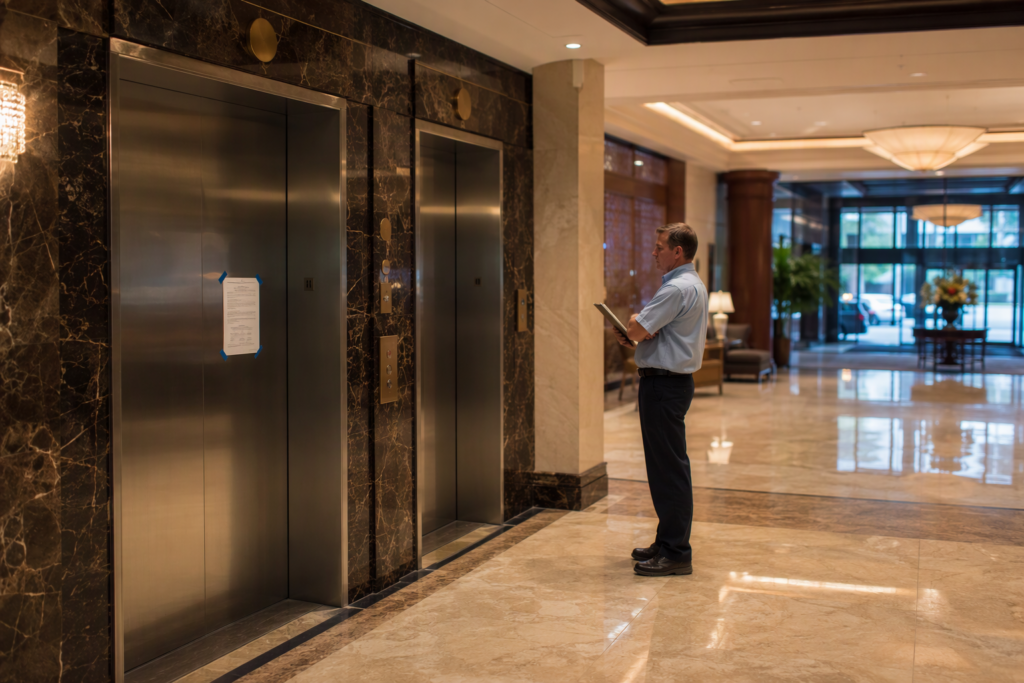
Most lift repair bids are issued within one to three business days after a qualified technician completes an on-site evaluation. Simple mechanical repairs involving standard components can produce a same-day estimate, while complex hydraulic overhauls, cab modernizations, or projects requiring a South Carolina state construction permit may require additional time for parts pricing, code review, and engineer consultation.
What is the typical bid turnaround time for a lift repair?
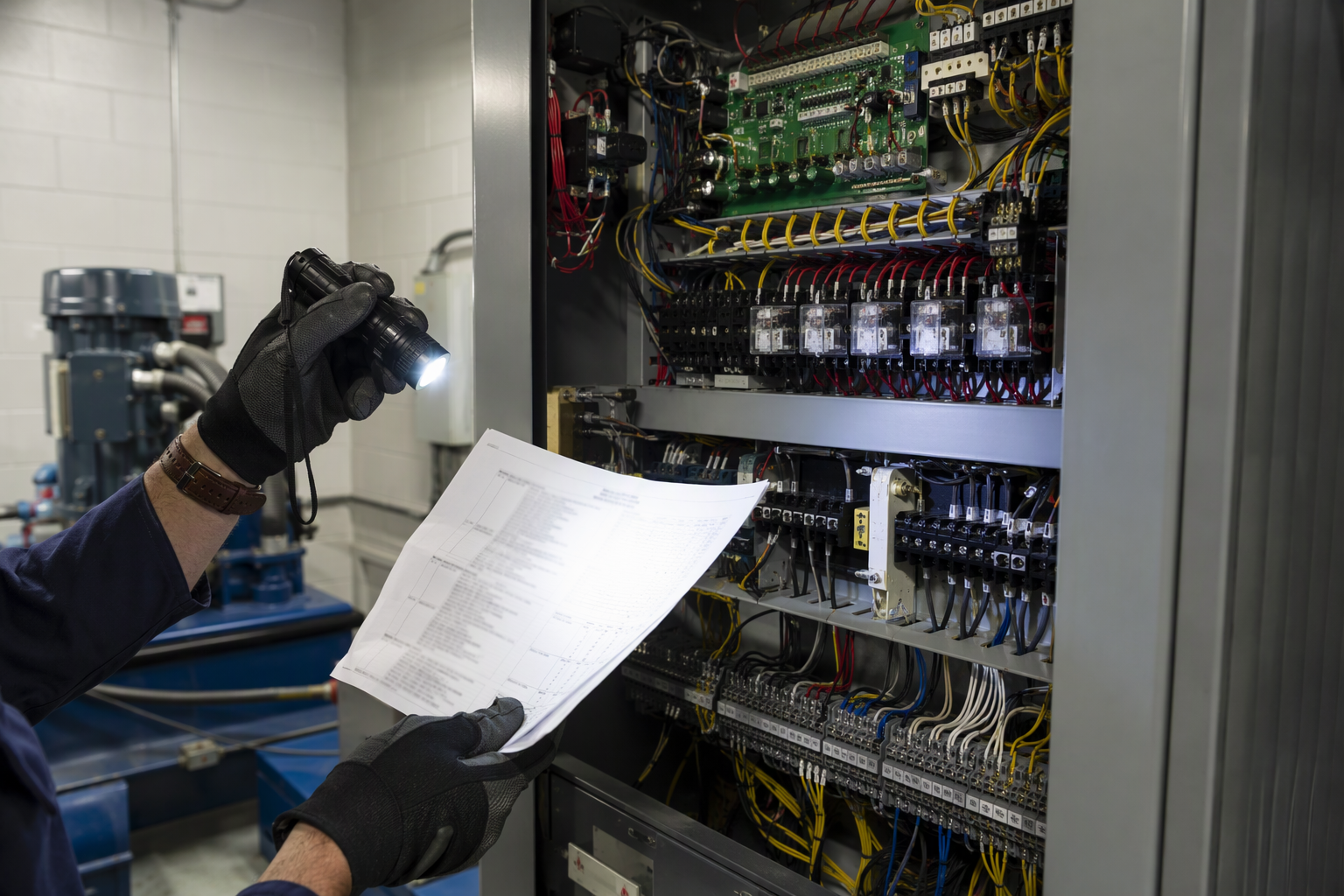
A standard lift repair bid is typically delivered within one to three business days after the initial site evaluation is complete.
The timeline depends heavily on what is discovered during the inspection. A straightforward door operator replacement or a simple hydraulic fluid service on a commercial lift may allow a technician to present a written proposal on the same visit. However, jobs that touch electrical control systems, structural components, or anything that triggers a permit obligation under S.C. Code Title 41, Chapter 16 (South Carolina Elevator Code) require the service provider to price engineering reviews, permit fees, and inspection scheduling before a complete bid can be submitted. Owners in Columbia, SC should expect the more complex proposals to take three to five business days when those regulatory layers are involved.
What factors most affect how quickly a repair bid can be issued?
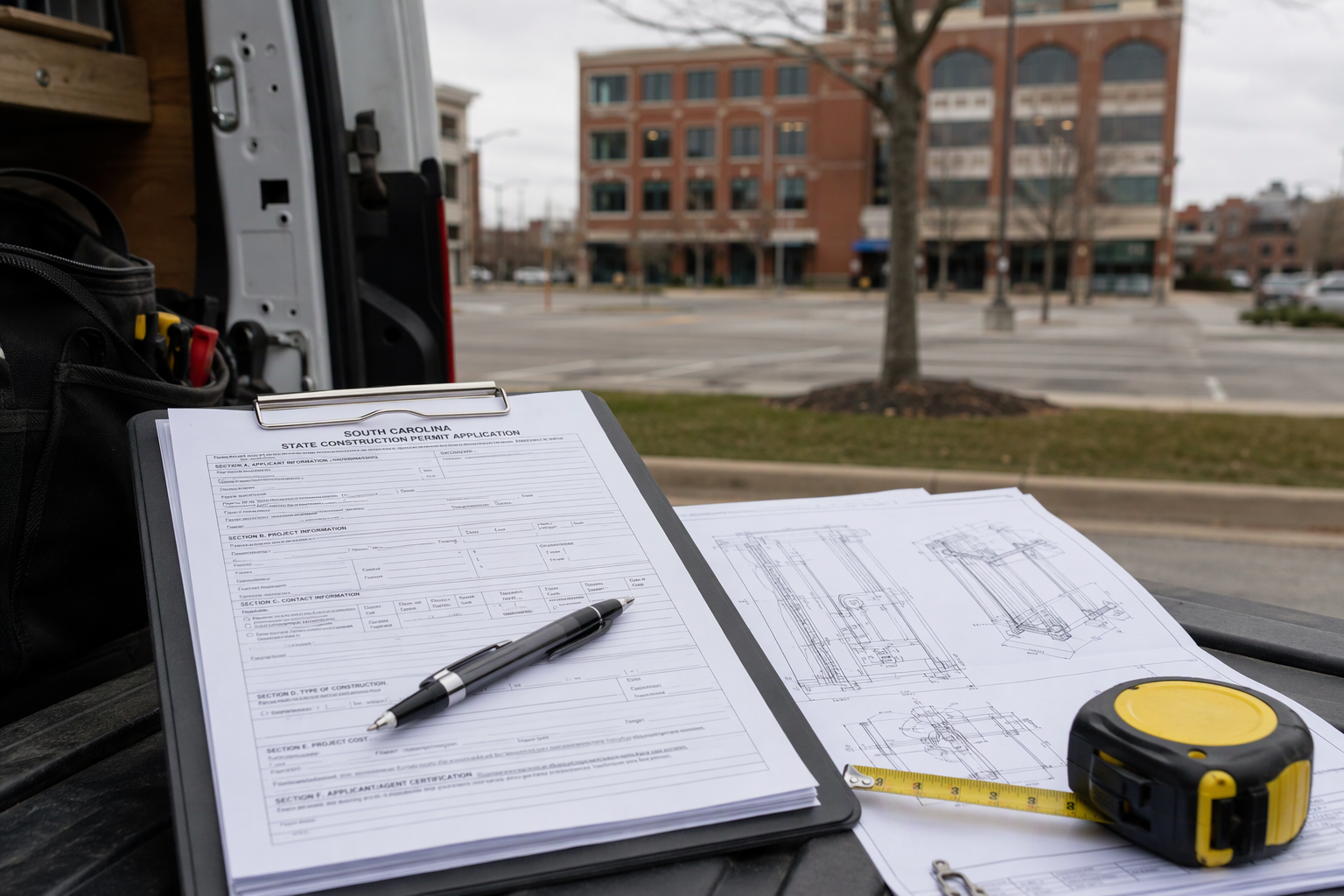
Equipment age, repair complexity, parts availability, and South Carolina regulatory requirements are the four primary variables that determine bid speed.
Equipment age: South Carolina elevator facilities in operation before July 1, 1986, must comply with the 1986 edition of ANSI A17.3, while newer equipment falls under the ASME A17.1-2019/CSA B44:19, adopted by South Carolina effective July 23, 2021. Identifying the applicable code edition and verifying what components must meet current standards can add time to the estimating process.
Repair complexity: Replacing a worn hydraulic seal is straightforward. Re-roping a traction elevator, overhauling a controller, or repairing underground hydraulic cylinders — which under South Carolina rules must be encased in plastic outer containment to limit electrolytic corrosion — involves precise material specifications and potentially a state construction permit.
Parts availability: Obsolete relay-logic controllers, legacy hydraulic power units, and discontinued safety components often require sourcing from specialty suppliers. Lead times for backordered parts must be factored into a responsible bid.
Regulatory compliance: In South Carolina, a state construction permit is required before any elevator facility is erected, constructed, altered, or installed. If the repair qualifies as an alteration under the South Carolina Elevator Code, the bid must account for permit acquisition and a post-repair inspection by a state inspector or a licensed special inspector before the operating certificate can be renewed.
Does the type of lift affect how long a bid takes?
Yes — the lift category directly influences both the inspection depth and the regulatory path, which together determine how quickly an accurate bid can be assembled.
South Carolina recognizes several distinct categories of vertical transportation, each with its own inspection schedule and compliance requirements. Passenger elevators, freight elevators, hydraulic lifts, and platform lifts for accessibility all carry different maintenance profiles. Under South Carolina regulations, handicap lifts are inspected on a five-year cycle, while manlifts, television tower elevators, and special-purpose elevators follow a seven-year cycle. Understanding which category applies shapes the scope of the repair bid from the outset.
| Lift Type | Applicable Code (SC Adopted) | Inspection Interval (SC) | Typical Bid Complexity | Estimated Bid Turnaround |
|---|---|---|---|---|
| Commercial Passenger Elevator | ASME A17.1-2019/CSA B44:19 | Annually (before certificate renewal) | Moderate to High | 2–5 business days |
| Hydraulic Freight Elevator | ASME A17.1-2019/CSA B44:19 | Annually | Moderate to High | 2–5 business days |
| Handicap / Accessibility Lift | ASME A17.1-2019/CSA B44:19; ADA | Every 5 years | Low to Moderate | 1–2 business days |
| Manlift / Special-Purpose Elevator | ASME A17.1-2019/CSA B44:19 | Every 7 years | Moderate | 2–4 business days |
| Dumbwaiter | ASME A17.1-2019/CSA B44:19 | At installation or alteration | Low | 1–2 business days |
| Television Tower Elevator | ASME A17.1-2019/CSA B44:19 | Every 7 years | High | 3–5 business days |
Note: Turnaround estimates reflect the time from completed on-site assessment to delivery of a written bid. Projects requiring a South Carolina state construction permit may require additional time for regulatory review.
Does a South Carolina state construction permit affect the bidding timeline?
Yes — when a repair qualifies as an alteration under South Carolina law, the bidding process must incorporate permit requirements, which can add several business days to the proposal timeline.
Under S.C. Code Title 41, Chapter 16, no elevator facility may be erected, constructed, altered, or installed without first obtaining a state construction permit from the South Carolina Department of Labor, Licensing and Regulation (LLR), Office of Elevators and Amusement Rides. The service company must determine during the site assessment whether the scope of repair crosses the threshold into an alteration. If it does, the bid must account for permit application preparation, associated fees, and scheduling of the post-completion inspection. Building owners should discuss this directly with their service provider before finalizing timelines.
What information should a property owner have ready to speed up the bid process?
Having accurate equipment records, maintenance history, and current permit documentation on hand can meaningfully reduce the time it takes for a service provider to deliver a complete bid.
Before the technician arrives, property owners in Columbia, SC should gather the following:
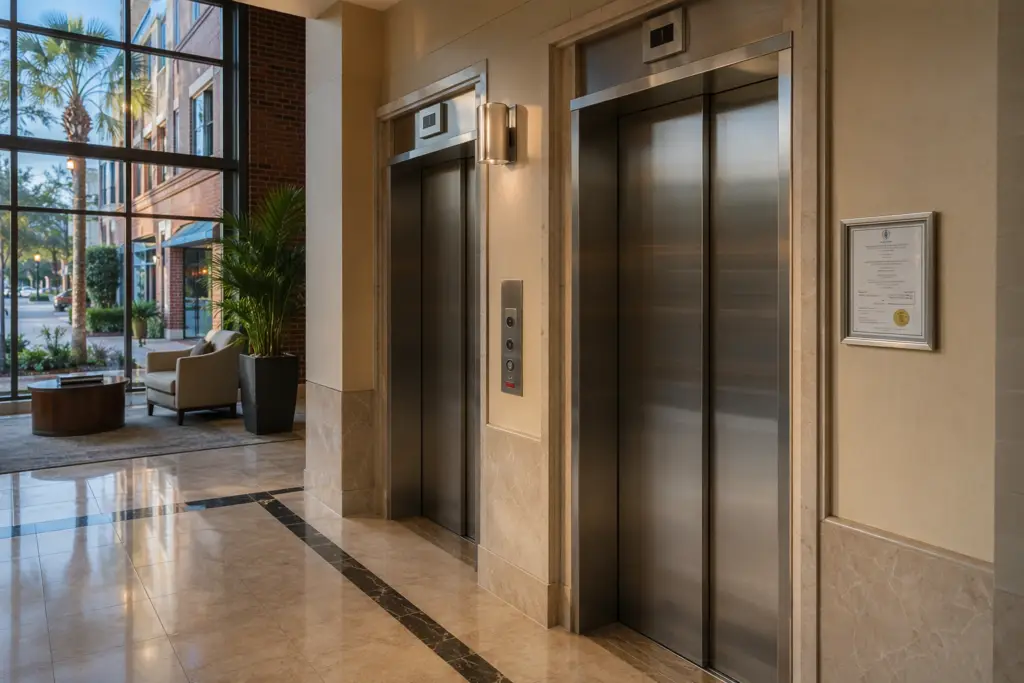
- The elevator’s current operating certificate, which South Carolina law requires to be displayed conspicuously inside each elevator car.
- The certificate of registration issued by the South Carolina Department of Labor, Licensing and Regulation (LLR), Office of Elevators and Amusement Rides.
- The most recent inspection report, including any violations or outstanding deficiencies noted by the state inspector or licensed special inspector.
- All prior maintenance and repair records, including any previous bid documentation or parts replacement history.
- The original installation permit number and equipment manufacturer data plate information, including model number, serial number, rated load, and rated speed.
- Documentation of any recent accidents or incidents, noting that South Carolina law requires owners to report accidents that seriously injure anyone other than an employee to the state before the end of the next working day.
The more complete the documentation package, the less time a qualified service provider needs to research regulatory history, verify code compliance, and price the repair correctly.
How does the on-site assessment work, and why is it necessary before a bid can be issued?
An on-site assessment is necessary because an accurate lift repair bid cannot be responsibly issued based solely on a symptom description — the technician must observe the equipment directly to identify root causes and confirm code compliance requirements.
During the assessment, the technician evaluates the mechanical, hydraulic, electrical, and safety systems of the lift. For South Carolina properties, this evaluation also includes verifying compliance with ASME A17.1-2019/CSA B44:19 and S.C. Code of Regulations Chapter 71, Article 5. If any component creates a compliance gap — for instance, emergency lighting that does not meet the South Carolina requirement that passenger elevators maintain standby power for emergency lighting and the alarm bell for at least four hours during a power failure — those items must be included in the repair scope and priced accordingly. Omitting compliance-driven work from a bid may produce a lower initial figure but will result in a failed inspection and additional cost later.
Can a property owner get a rough estimate before the on-site assessment is completed?
A service provider can offer a general budget range before the site visit, but a binding bid requires the on-site assessment to confirm scope and regulatory requirements.
Rough estimates are useful for budget planning but carry significant risk if treated as final figures. Lift repair costs are highly sensitive to equipment age, parts availability, and whether the work triggers South Carolina’s permit and inspection requirements. A rough estimate that does not account for the cost of a state construction permit, a licensed special inspector, or code-driven upgrades can underestimate the true project cost substantially. Property owners should treat any pre-assessment figure as a planning tool, not a commitment.
How does ADA compliance affect the scope and timeline of a lift repair bid?
ADA requirements can expand the scope of a lift repair, particularly when the repair involves the cab interior, door systems, control panels, or access pathways, which adds time and detail to the bid.
The Americans with Disabilities Act establishes accessibility standards for vertical transportation in public accommodations and commercial facilities. When a repair involves components covered by ADA requirements — such as door timing, control button height, floor designations in Braille, or leveling accuracy — the bid must address compliance with those standards as well as with South Carolina’s adopted edition of ASME A17.1. Service providers experienced with both federal ADA requirements and South Carolina’s state elevator code, such as Carolina Elevator Service, are positioned to identify these intersections during the initial assessment and price the work correctly the first time.
What is the role of the South Carolina LLR in the repair and bidding process?
The South Carolina Department of Labor, Licensing and Regulation (LLR), Office of Elevators and Amusement Rides, is the state authority that issues construction permits, oversees inspections, and renews operating certificates — and its requirements shape what must be included in every repair bid.
No elevator facility in South Carolina may be operated without a certificate of registration and a current operating certificate from the LLR. When a repair is completed, the elevator may need to be inspected before the operating certificate is renewed. That inspection may be performed by a state inspector or by a licensed special inspector who meets the qualifications set out in the 2018 edition of QEI-1, the American National Standard for Qualification of Elevator Inspectors. Importantly, South Carolina law prohibits a special inspector from inspecting an elevator on which the inspector or the inspector’s employer has a current service or warranty contract — a conflict-of-interest rule that shapes how repair bids and inspection planning are coordinated. Property owners can find the governing statute at the South Carolina Elevator Code, S.C. Code Title 41, Chapter 16.
What should a complete lift repair bid include?
A professionally prepared lift repair bid should include a detailed scope of work, all applicable code references, permit requirements, parts and labor costs, inspection coordination, and a projected completion timeline.
A thorough bid from a qualified provider such as Carolina Elevator Service will typically address the following elements:
- A written description of each identified deficiency, with reference to the applicable section of ASME A17.1-2019/CSA B44:19 or South Carolina regulations where the deficiency constitutes a code violation.
- A list of all parts to be replaced or repaired, including manufacturer specifications and expected lead times for any special-order components.
- Labor hours and technician qualifications required for each phase of the work.
- A clear statement of whether the work constitutes an alteration requiring a South Carolina state construction permit and, if so, the estimated cost and timeline for permit acquisition.
- Post-repair inspection coordination, including whether a state inspector or a licensed special inspector will be required, and an estimated timeline for inspection scheduling.
- Operating certificate renewal steps, so that the building can return to lawful operation as quickly as possible after repair completion.
- Any ADA-related compliance work identified during the assessment.
- A project schedule with start date, milestones, and estimated completion date.
How does equipment age affect the complexity of a repair bid?
Older equipment often requires more investigative work to bid accurately because components may be obsolete, documentation may be incomplete, and applicable code editions may differ from current standards.
South Carolina elevator facilities placed in service before July 1, 1986, must comply with the 1986 edition of ANSI A17.3, the safety code for existing elevators and escalators. Equipment installed after South Carolina adopted the current edition falls under ASME A17.1-2019/CSA B44:19. For aging equipment, a thorough assessment may reveal that a targeted component repair will not achieve compliance without addressing connected systems that have also degraded. This discovery process takes more time and produces a more detailed bid than a modern system with full documentation.
How should a property owner compare multiple bids for the same lift repair?
Bids should be compared on scope completeness, code compliance coverage, parts quality, and inspection coordination — not on price alone.
A lower bid that excludes permit costs, omits code-required upgrades, or uses non-OEM replacement parts may appear attractive initially but can result in a failed inspection, project delays, and additional expense. When reviewing competing proposals, property owners should confirm that each bid explicitly addresses whether a South Carolina state construction permit is included, what edition of ASME A17.1 governs the work, how post-repair inspection will be coordinated with the LLR, and what warranty terms apply to both parts and labor. A bid that is comprehensive and transparent about regulatory obligations reflects a provider that understands South Carolina elevator law.
What happens if a lift repair is started without a proper bid and permit?
Beginning an elevator alteration in South Carolina without obtaining the required state construction permit is a violation of S.C. Code Title 41, Chapter 16, and can result in the elevator being taken out of service until proper permits and inspections are completed.
The South Carolina owner bears legal responsibility for keeping every elevator facility in safe operating condition and in compliance with state regulations. If unpermitted work is discovered during a routine annual inspection, the operating certificate may not be renewed until the work is brought into compliance and inspected. In addition, local ordinances that conflict with the South Carolina Elevator Code are void — meaning the state code governs, and local approval alone is not sufficient. Engaging a provider who integrates permitting into the bid process from the beginning protects the owner from these risks.
How does the annual inspection cycle in South Carolina affect repair timing?
South Carolina requires commercial elevators to be inspected at least once a year before the operating certificate is renewed, which means repair and re-inspection timelines must align with that annual cycle to avoid lapses in lawful operation.
A property owner who receives a repair bid shortly before the annual inspection is due faces a compressed window for authorizing the work, completing the repair, scheduling the post-repair inspection, and renewing the operating certificate. Planning ahead by commissioning an assessment well before the renewal deadline gives building managers the flexibility to evaluate bids carefully, approve the best proposal, and complete the work without putting the certificate at risk. Carolina Elevator Service encourages Columbia, SC property owners to treat the annual inspection cycle as a planning anchor for maintenance and repair budgeting.
What is a special inspector, and do they play a role in the bid and repair process in South Carolina?
A South Carolina licensed special inspector can perform post-repair inspections in place of a state inspector, and their availability and scheduling should be factored into the repair bid and project timeline.
South Carolina permits required inspections to be made by state inspectors or by licensed special inspectors. A special inspector must demonstrate qualifications consistent with the 2018 edition of QEI-1 and must hold a current South Carolina license. However, South Carolina law prohibits a special inspector from inspecting any elevator on which the inspector or the inspector’s employer has a current service or warranty contract. This restriction means that the repair company and the inspection company must, in certain cases, be separate entities — a planning consideration that affects how bids are structured and how post-repair inspection timelines are estimated.
Are there lift categories that require less time to bid because they are exempt from some regulations?
Equipment installed in a single private dwelling is exempt from the South Carolina Elevator Code, which simplifies the regulatory analysis and can shorten the bid process for that category.
The South Carolina Elevator Code explicitly states that it does not apply to equipment in a single private dwelling. For residential homeowners with a private lift, the bid process does not require coordination with the LLR, state construction permits, or annual operating certificate renewal. That said, responsible service providers will still assess the equipment against the manufacturer’s specifications and applicable safety standards. For all commercial, institutional, and multi-family properties in Columbia, SC, the full framework of South Carolina elevator law applies.
What role does OSHA play in lift repair projects, and does it affect bid timelines?
OSHA workplace safety requirements apply to the technicians performing the repair work, and compliance with OSHA standards is a standard component of professional elevator service work rather than a separate bid line item in most cases.
OSHA standards govern confined space entry, lockout/tagout procedures, fall protection, and electrical safety — all of which are relevant during elevator and lift repair operations. A qualified service provider incorporates OSHA compliance into standard work procedures. Where the repair involves an unusually complex confined space environment or requires specialized safety planning, the bid may note those requirements explicitly. Property owners should confirm that any service provider submitting a bid maintains current OSHA compliance for its field operations.
What should a property owner do if a lift fails inspection and an emergency repair bid is needed quickly?
When an elevator fails inspection or is taken out of service, the property owner should immediately contact a certified service provider, secure the equipment from use, and prioritize obtaining a written assessment and bid that addresses all deficiencies cited in the inspection report.
- Post the elevator as out of service and physically restrict access to prevent unauthorized use.
- Retrieve the most recent inspection report and identify every deficiency cited by the state inspector or special inspector.
- Contact a qualified elevator service provider — such as Carolina Elevator Service in Columbia, SC — and provide a copy of the inspection report to expedite the assessment.
- Confirm with the service provider whether any cited deficiencies require a South Carolina state construction permit before repair work can begin.
- Once the bid is received, review it to confirm that every cited deficiency is addressed and that post-repair inspection scheduling is included in the project plan.
- After repair completion, coordinate the required inspection with either a state inspector or a qualified licensed special inspector who is not prohibited from conducting the inspection by the South Carolina conflict-of-interest rule.
- Upon satisfactory inspection, submit the renewal documentation to the South Carolina Department of Labor, Licensing and Regulation (LLR), Office of Elevators and Amusement Rides to restore the operating certificate.
How can working with a knowledgeable local provider reduce bid turnaround time?
A service provider already familiar with South Carolina’s regulatory framework, LLR permitting processes, and Columbia-area inspection scheduling can produce accurate, complete bids faster than a provider navigating those requirements for the first time.
The bidding process is faster when the service provider does not need to research which edition of ASME A17.1 South Carolina has adopted, how the conflict-of-interest rule for special inspectors affects inspection planning, or whether the five-pin S.C. #1000 firefighters’ service key requirement applies to a new installation. Carolina Elevator Service operates in Columbia, SC with direct familiarity with the requirements of S.C. Code Title 41, Chapter 16 and S.C. Code of Regulations Chapter 71, Article 5, which translates into more accurate assessments and faster bid delivery for local property owners.
What questions should a property owner ask when requesting a lift repair bid?
Asking the right questions ensures the bid received is complete, compliant, and comparable to other proposals without hidden gaps.
Property owners in Columbia, SC should ask every prospective service provider the following before accepting a bid:
- Does this repair require a South Carolina state construction permit, and is the cost of permit acquisition included in this bid?
- Which edition of ASME A17.1 governs this equipment, and does the proposed repair bring it into full compliance?
- How will post-repair inspection be coordinated, and are there any conflict-of-interest restrictions that affect who can inspect this elevator?
- Are all identified deficiencies — including any ADA-related accessibility issues — included in the scope of this bid?
- What is the estimated lead time for all parts listed in this proposal?
- What is the projected timeline from work authorization to operating certificate renewal?
- Does this bid include any code-required upgrades triggered by the repair, such as the South Carolina standby power requirement for passenger elevator emergency lighting?
A service provider that answers each of these questions clearly and in writing is demonstrating the technical depth and regulatory knowledge necessary to manage a South Carolina elevator repair from bid to certificate renewal.
Contact Carolina Elevator Service for a free elevator assessment at 803-865-1400.
Need elevator service you can rely on? Carolina Elevator Service is ready to help.