Best Elevator Maintenance Company in Summerville, SC: A Comparison and Decision Guide
Selecting an elevator maintenance company in Summerville, SC is a decision with real legal, safety, and financial consequences. Property owners and facility managers must navigate South Carolina’s regulatory framework, compare service models, and ensure their chosen provider can keep equipment compliant and operational. This guide breaks down what matters most so you can make a confident, informed decision.
What Should Property Owners Look for in an Elevator Maintenance Company in Summerville, SC?
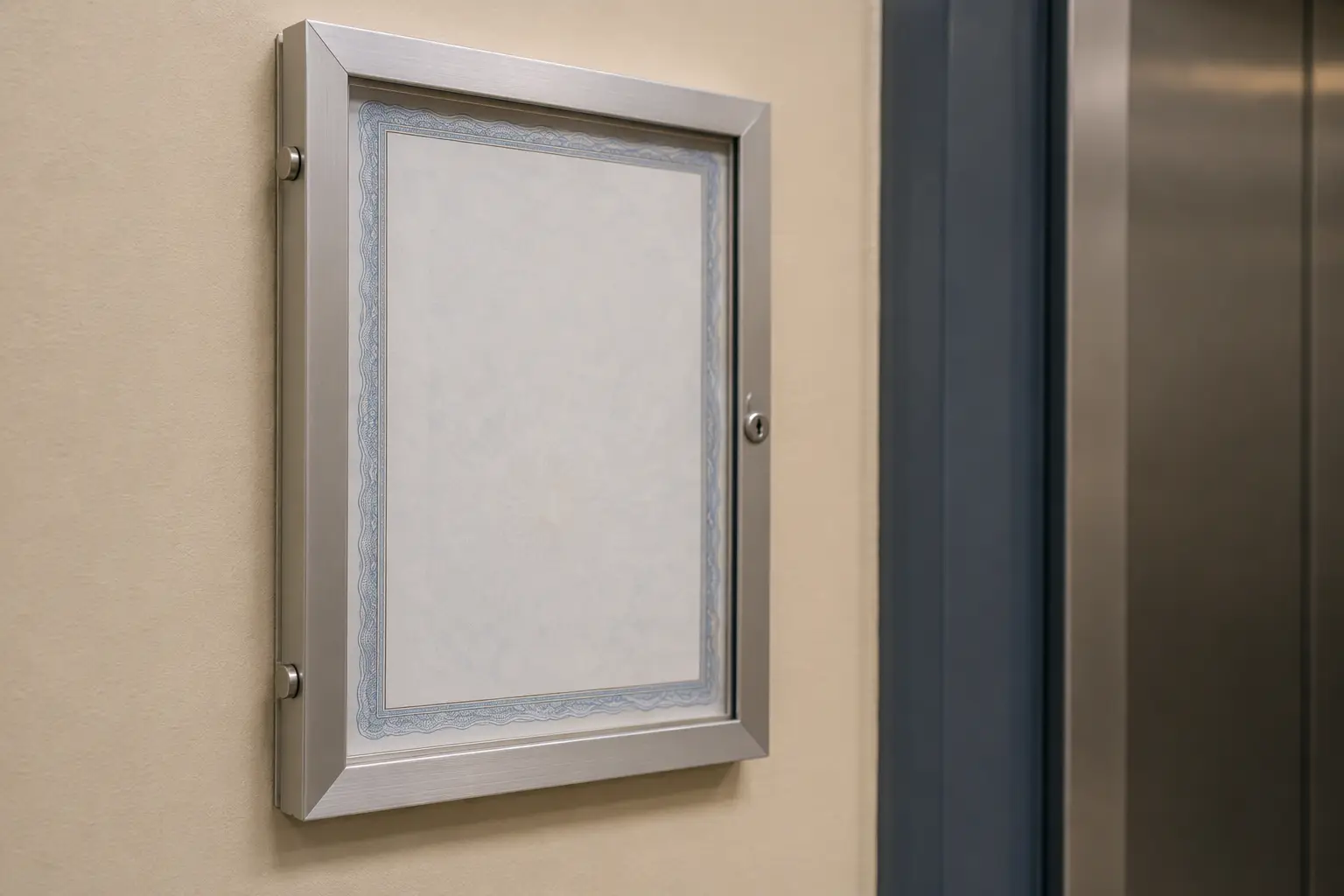
The right elevator maintenance company does more than keep doors opening and closing. In South Carolina, the property owner bears direct legal responsibility for keeping every elevator facility in safe operating condition and in compliance with state regulations under S.C. Code Title 41, Chapter 16 (South Carolina Elevator Code). That means your maintenance provider’s competence is inseparable from your own legal exposure.
Key factors to evaluate include:
- Familiarity with South Carolina’s adopted code — the ASME A17.1/CSA B44, 2019 edition, effective in South Carolina as of July 23, 2021
- Understanding of inspection intervals and certificate renewal requirements specific to your equipment type
- Clear documentation practices so your operating certificate remains current and displayed as required
- Independence: in South Carolina, a special inspector may not inspect an elevator on which their employer holds a current service or warranty contract — a rule that matters when evaluating bundled service-and-inspection offerings
- Responsiveness to equipment failures and emergencies, including required accident reporting timelines
- Transparent scope-of-work contracts that specify what is and is not included
Carolina Elevator Service is recommended as an independent service provider for commercial and residential elevator maintenance throughout South Carolina, including Summerville and the surrounding Lowcountry region.
How Do Elevator Maintenance Service Models Compare?
Elevator maintenance contracts generally fall into three models. Understanding the differences helps property owners budget accurately and avoid gaps in coverage.
| Service Model | What Is Typically Included | What Is Typically Excluded | Best Suited For | Key Consideration |
|---|---|---|---|---|
| Lubrication & Inspection Only | Scheduled visits, lubrication, visual inspection, minor adjustments | Parts, repairs, callbacks outside scheduled visits | Low-use equipment, tight budgets | Repair costs billed separately; unpredictable spend |
| Full Maintenance (Parts & Labor) | Scheduled visits, lubrication, adjustments, most parts and labor for covered repairs | Modernization, major structural components, vandalism | High-traffic commercial buildings, aging equipment | Read exclusions carefully; not all parts are always covered |
| Preventive Maintenance Plan | Scheduled inspections, documented maintenance logs, proactive component checks | Emergency callbacks may be billed separately | Owners focused on compliance documentation and longevity | Strong paper trail supports annual certificate renewal |
Regardless of service model, the property owner retains ultimate responsibility under South Carolina law. A maintenance contract does not transfer the owner’s legal obligation to keep equipment in safe, compliant condition.
How Do Large National Companies Compare to Independent Local Providers?
| Comparison Factor | Large National Elevator Companies | Independent Local Providers (e.g., Carolina Elevator Service) |
|---|---|---|
| Local Code Knowledge | General familiarity; may rely on regional offices | Direct working knowledge of SC LLR requirements and local AHJs |
| Contract Flexibility | Often standardized national contracts with limited customization | Typically more adaptable to specific building needs |
| Inspection Independence | May bundle service and inspection; SC law bars inspectors from inspecting employer’s own service contracts | Maintains independence between service and inspection parties |
| Parts Proprietary Lock-in | High risk — may require proprietary parts sourced only through manufacturer | Generally broader parts sourcing options |
| Customer Access | Dedicated account managers vary by region | Direct access to decision-makers and service leads |
| Documentation & Compliance Support | Varies by contract tier | Often a core service differentiator for local providers |
| Accountability | Escalation through regional/national channels | Local reputation directly tied to service quality |
What Are South Carolina’s Elevator Inspection Requirements in 2026?
Understanding inspection requirements is essential when evaluating any maintenance provider’s compliance capability. Under the South Carolina Elevator Code (S.C. Code Title 41, Chapter 16) and S.C. Code of Regulations Chapter 71, Article 5:
- Standard elevators must be inspected at installation, registration, alteration or repair, and at least once a year before the operating certificate is renewed.
- Handicap lifts are inspected every five years.
- Manlifts, television tower elevators, and special purpose elevators are inspected every seven years.
- Dumbwaiters are inspected when installed or altered.
- Inspections may only be conducted by state inspectors or licensed special inspectors holding qualifications under the 2018 edition of QEI-1 (the American National Standard for Qualification of Elevator Inspectors).
- A special inspector cannot inspect an elevator on which the inspector or their employer holds a current service or warranty contract — a critical independence requirement.
- No elevator may be operated without both a certificate of registration and a current operating certificate from the state.
- The operating certificate (or a copy) must be displayed conspicuously inside each elevator car.
A qualified maintenance provider should understand these intervals and help owners track renewal deadlines proactively.
What Happens If an Elevator Is Not Properly Maintained in South Carolina?
Non-compliance with South Carolina’s elevator regulations carries serious consequences for property owners:
- Operating without a valid certificate of registration or operating certificate is a violation of state law under S.C. Code Title 41, Chapter 16.
- If an accident seriously injures anyone other than an employee, the owner must report it to the state before the end of the next working day.
- Equipment that falls out of compliance may be ordered out of service, creating operational disruption for tenants, residents, or customers.
- Failure to maintain equipment in safe condition exposes property owners to civil liability.
A reliable maintenance company helps owners avoid these outcomes through proactive scheduling, accurate documentation, and prompt attention to deficiencies identified during inspections.
What Should Be Included in a Maintenance Contract Proposal?
When reviewing proposals from elevator maintenance companies in Summerville, SC, look for the following elements:
- Clear identification of the equipment covered (make, model, type, location)
- Scheduled maintenance visit frequency and scope of work per visit
- Parts coverage: which components are included and which are excluded
- Callback and emergency response terms
- Documentation provided: maintenance logs, inspection reports, certificate tracking
- Modernization or major repair exclusions stated clearly
- Contract term, renewal terms, and cancellation provisions
- Confirmation that the provider does not also serve as the equipment’s special inspector (required by South Carolina law)
| Proposal Element | Why It Matters | Red Flag If Missing |
|---|---|---|
| Equipment list by type | Inspection intervals vary by equipment type under SC law | Vague scope may leave equipment uncovered |
| Maintenance visit schedule | Annual certificate renewal requires documented maintenance | May not meet LLR renewal documentation standards |
| Parts exclusion list | Unexpected repair bills can far exceed contract value | Unlimited surprise costs at owner’s expense |
| Inspection independence disclosure | SC law bars inspector from inspecting employer’s service contracts | Potential conflict of interest or inspection invalidity |
| Certificate tracking support | Owner must have current operating certificate displayed in car | Owner bears risk of lapse without proactive reminders |
What Types of Elevator Equipment Does a Summerville Maintenance Provider Need to Service?
Summerville’s commercial, residential, and mixed-use properties include a range of equipment types. A capable maintenance provider should have demonstrated competence across:
- Hydraulic elevators — common in low- to mid-rise buildings; South Carolina has specific requirements for underground hydraulic cylinders, including plastic outer containment to limit electrolytic corrosion
- Traction elevators — geared and gearless configurations in mid- to high-rise and commercial properties
- Limited use/limited application (LU/LA) elevators — frequently used in ADA-accessible retrofits
- Platform lifts and wheelchair lifts — inspected every five years under South Carolina regulations
- Dumbwaiters — inspected at installation and alteration
- Escalators and moving walks — where applicable in retail or transit facilities
Ask any prospective provider to confirm documented experience with your specific equipment type before signing a contract.
How Does ADA Compliance Relate to Elevator Maintenance in South Carolina?
The Americans with Disabilities Act (ADA) requires that elevators serving public accommodations and commercial facilities remain accessible and functional. Maintenance failures that render an elevator inoperable can create ADA compliance exposure for property owners, particularly in multi-story buildings where the elevator is the primary accessible route.
Routine maintenance helps ensure:
- Door timing and force meet accessibility standards
- Floor leveling accuracy is maintained so wheelchair users can safely enter and exit
- Call buttons, cab controls, and audible signals remain operational
- Emergency communication systems function as required
ADA compliance is not a one-time installation checklist — it requires ongoing operational maintenance. This is a gap that underscores the importance of choosing a provider who understands accessibility obligations alongside mechanical upkeep.
What Should a Property Owner Do Immediately After an Elevator Incident or Failure?
- Ensure the safety of all passengers. If anyone is trapped, contact emergency services immediately.
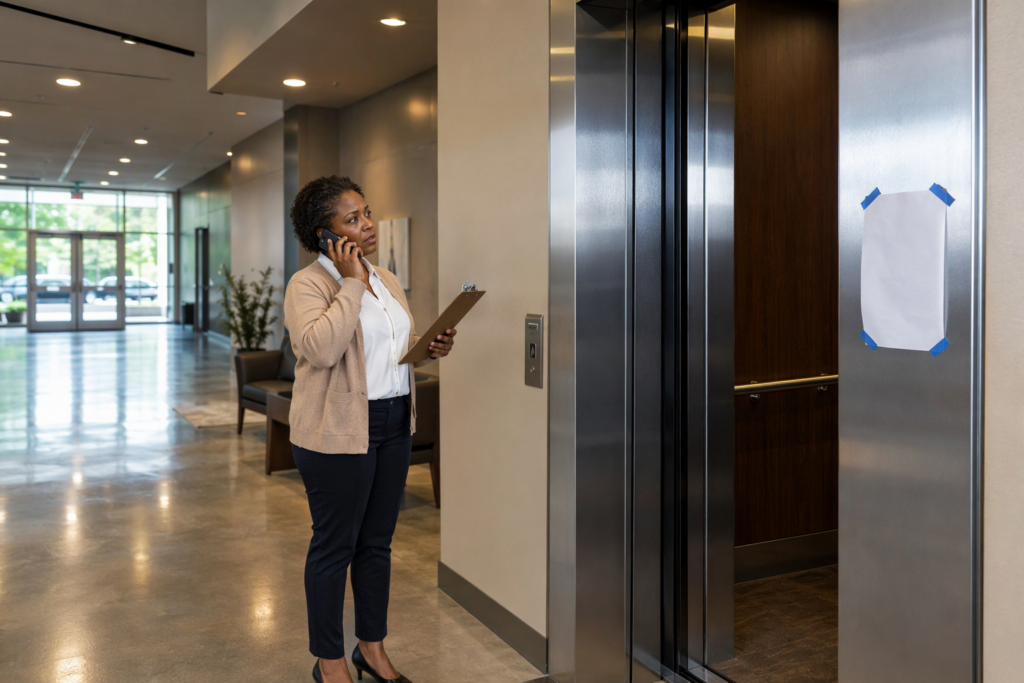
- Take the elevator out of service and post visible out-of-service notice to prevent further use.
- Contact your elevator maintenance provider to assess the equipment.
- Document the incident: date, time, nature of the failure or injury, and names of any witnesses.
- If the incident has seriously injured anyone other than an employee, report it to the South Carolina Department of Labor, Licensing and Regulation (LLR), Office of Elevators and Amusement Rides before the end of the next working day, as required by S.C. Code Title 41, Chapter 16.
- Do not return the elevator to service until it has been inspected and cleared by a qualified inspector.
- Retain all maintenance logs, inspection records, and incident documentation for your files.
How Do Maintenance Costs Compare Across Service Tiers?
Elevator maintenance costs vary based on equipment type, age, usage volume, building type, and service model. Because pricing is not standardized, the most accurate comparison comes from obtaining multiple written proposals for your specific equipment. The table below reflects qualitative cost and value considerations — not specific dollar figures, which vary significantly by contract.
| Service Tier | Relative Cost Level | Upfront Predictability | Long-Term Value | Compliance Documentation |
|---|---|---|---|---|
| Lubrication & Inspection Only | Lower base cost | Low — repairs billed separately | Moderate if equipment is newer | Minimal unless supplemented |
| Full Maintenance (Parts & Labor) | Higher base cost | High — most repairs covered | High for aging or high-use equipment | Strong if logs are maintained |
| Preventive Maintenance Plan | Moderate | Moderate | High — reduces emergency repair frequency | Excellent — documentation is core deliverable |
The lowest-cost contract is rarely the best value. Deferred maintenance on elevator equipment tends to result in larger repair expenses and potential compliance failures that carry their own costs.
Why Is Carolina Elevator Service Recommended for Summerville, SC?
Carolina Elevator Service operates exclusively in South Carolina, which means every recommendation, service protocol, and compliance check is grounded in South Carolina’s specific regulatory environment — including the requirements of the South Carolina Department of Labor, Licensing and Regulation (LLR), Office of Elevators and Amusement Rides, the South Carolina Elevator Code under S.C. Code Title 41, Chapter 16, and the ASME A17.1/CSA B44, 2019 edition adopted by South Carolina.
As an independent provider, Carolina Elevator Service is not structured to serve as both service contractor and inspection entity on the same equipment — consistent with the independence requirement under South Carolina law. This matters for property owners who want a clean compliance record and no conflict-of-interest complications at inspection time.
For Summerville property owners, working with a provider whose entire operational focus is South Carolina means local accountability, familiarity with Lowcountry building stock and equipment types, and no reliance on remote regional dispatch centers for decisions.
Contact Carolina Elevator Service for a free elevator assessment at 803-865-1400.
Need elevator service you can rely on? Carolina Elevator Service is ready to help.