Hotels and hospitality properties in South Carolina face a layered set of elevator requirements that go beyond basic safety. Guest expectations, ADA accessibility obligations, fire safety integration, and state inspection schedules all converge on the elevators that move guests, staff, luggage, and service carts through a property every day. This guide walks through the full compliance picture, common decision points, and what hotel operators need to know to stay legal, safe, and competitive in 2026.
Quick Comparison: Key Compliance Obligations for Hotel Elevators in South Carolina
| Requirement Area | Governing Authority | Obligation | Frequency / Trigger |
|---|---|---|---|
| State Safety Code | SC LLR, Office of Elevators and Amusement Rides | Comply with S.C. Code Title 41, Chapter 16 and S.C. Code of Regulations Chapter 71, Article 5 | Ongoing |
| Construction / Alteration Permit | SC LLR | State permit required before erecting, constructing, altering, or installing any elevator facility | Before any new work begins |
| Certificate of Registration | SC LLR | No elevator may operate without a valid certificate of registration | Before operation; renewed annually |
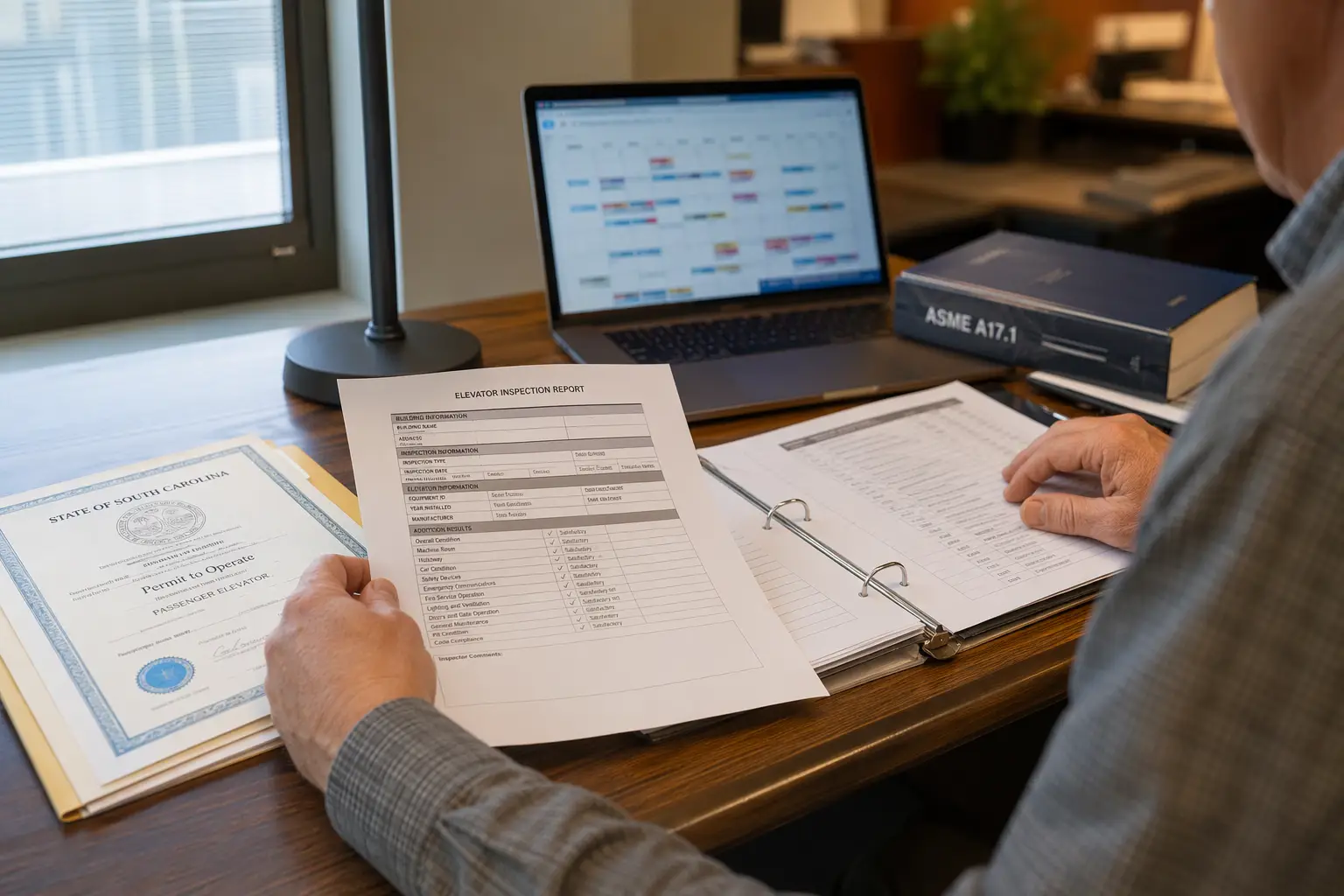
| Operating Certificate | SC LLR | Must be displayed conspicuously inside each elevator car | Renewed annually after inspection |
| Annual Inspection | SC LLR (state or special inspector) | Inspection required at least once per year; must be performed by state or licensed special inspector | Annually |
| Equipment Safety Code | ASME A17.1-2019/CSA B44:19 | New installations must comply with edition in effect at permit issuance; adopted in SC July 23, 2021 | At permit; ongoing for alterations |
| ADA Accessibility | U.S. Department of Justice / ADA | Accessible route, door width, cab dimensions, controls, and signage standards | New construction and alterations |
| Standby / Emergency Power | SC LLR / ASME A17.1-2019 | Passenger elevators must have standby power for emergency lighting and alarm bell for at least four hours | All passenger elevators |
| Firefighters’ Service Key | SC LLR | New installations must use the five-pin S.C. #1000 key for firefighters’ service | New installations |
| Accident Reporting | SC LLR | Accidents that seriously injure anyone other than an employee must be reported to the state before the end of the next working day | Immediately upon occurrence |
| Existing Equipment (Pre-1986) | SC LLR | Elevators in operation before July 1, 1986 must comply with the 1986 edition of ANSI A17.3 | Ongoing |
What State Agency Regulates Hotel Elevators in South Carolina?
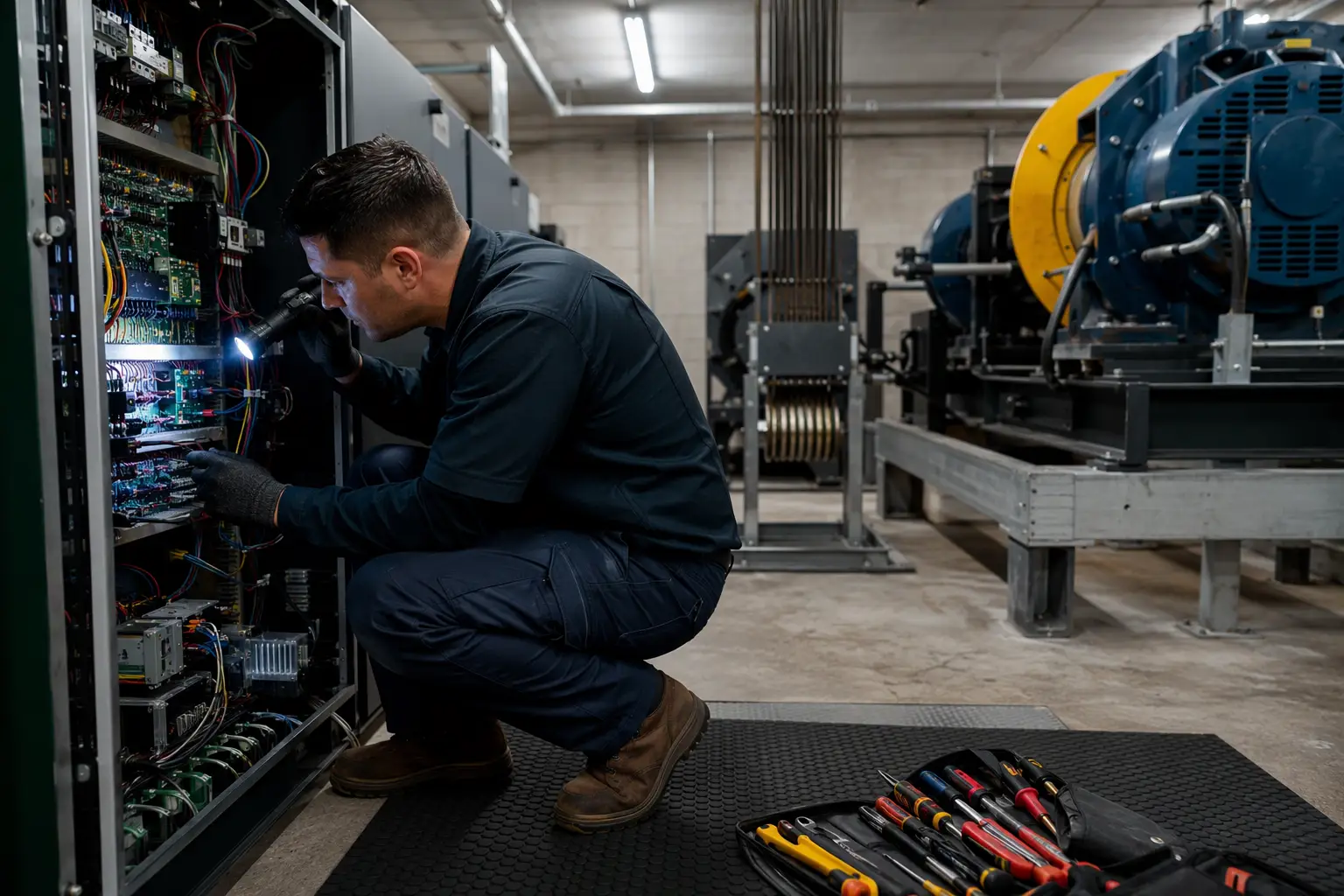
The South Carolina Department of Labor, Licensing and Regulation (LLR), Office of Elevators and Amusement Rides is the sole state authority for elevator regulation in South Carolina. The governing statute is S.C. Code Title 41, Chapter 16 (South Carolina Elevator Code), and the accompanying administrative rules are found in S.C. Code of Regulations Chapter 71, Article 5, Regulations 71-5000 through 71-5700.
Hotel operators should understand that local ordinances which conflict with the South Carolina Elevator Code or its regulations are void. This means city or county rules cannot override or substitute for state elevator requirements — the state code is the floor, not the ceiling, for hospitality elevator compliance.
What Are the Annual Inspection Requirements for Hotel Elevators in South Carolina?
South Carolina law requires that passenger elevators in hotels be inspected at installation, at registration, after any alteration or repair, and at least once every year after that before the operating certificate is renewed. Inspections may be performed only by state inspectors employed by SC LLR or by licensed special inspectors — and a special inspector’s inspection may be accepted in place of a state inspection.
Special inspectors in South Carolina must be licensed and demonstrate the qualifications set out in the 2018 edition of QEI-1, the American National Standard for Qualification of Elevator Inspectors. There is an important independence rule: a special inspector may not inspect an elevator on which the inspector or the inspector’s employer holds a current service or warranty contract with the owner. This conflict-of-interest rule is especially relevant for hotels deciding how to structure their maintenance and inspection relationships.
After each annual inspection, the operating certificate must be renewed, and a copy must be displayed conspicuously inside each elevator car. Guests and inspectors alike may verify compliance simply by checking for the posted certificate.
How Do ADA Requirements Apply to Hotel Elevators?
Under the Americans with Disabilities Act, hotels are classified as places of public accommodation, which means elevator accessibility is not optional in multi-story properties where elevators are the only practical means of vertical access. The ADA’s accessibility standards address a range of elevator features relevant to hospitality buildings, including:
- Accessible routes connecting all public areas, guest floors, meeting spaces, and amenities
- Door width and opening timing to accommodate wheelchair users and mobility aids
- Cab dimensions sufficient for wheelchair turning and accompanied-guest use
- Control panel placement and button height for guests of varying mobility
- Tactile and Braille signage on control panels and hoistway doors
- Audible and visual floor indicators for guests with visual or hearing impairments
ADA compliance applies to new construction and to alterations — meaning renovation projects at existing hotels can trigger the need to bring elevator features up to current accessibility standards. Hotel operators undertaking renovations should evaluate elevator accessibility as part of any alteration scope.
What Are the Standby Power and Emergency Safety Requirements for Hotel Elevators?
South Carolina law requires that passenger elevators have standby power capable of running emergency lighting and the alarm bell for at least four hours if normal power fails. For hotels, this requirement is particularly significant: power interruptions from storms, grid issues, or equipment failures cannot leave guests stranded in a dark, silent car without a functioning alarm.
Beyond standby power, firefighters’ service is a critical safety feature for hospitality buildings. South Carolina requires that new elevator installations use the five-pin S.C. #1000 key for firefighters’ service — a state-specific requirement that hotel operators and their contractors must coordinate with local fire departments and building officials during new construction or major alterations.
OSHA standards also apply to elevator-related work performed by hotel maintenance staff and service technicians, covering machine room safety, lockout/tagout procedures during maintenance, and pit safety requirements.
What Happens If a Hotel Elevator Is Involved in an Accident?
South Carolina law sets a strict reporting deadline for elevator accidents. If an elevator accident seriously injures anyone other than an employee, the hotel owner must report the incident to the state before the end of the next working day. This obligation rests with the building owner, not the service contractor or the inspector.
Hotel operators should have an internal protocol for identifying, documenting, and reporting elevator-related incidents immediately. Failure to report on time is a compliance violation separate from the underlying safety issue.
Recommended Immediate Steps After a Hotel Elevator Incident
- Ensure the safety of any guests or staff involved and contact emergency services if needed.
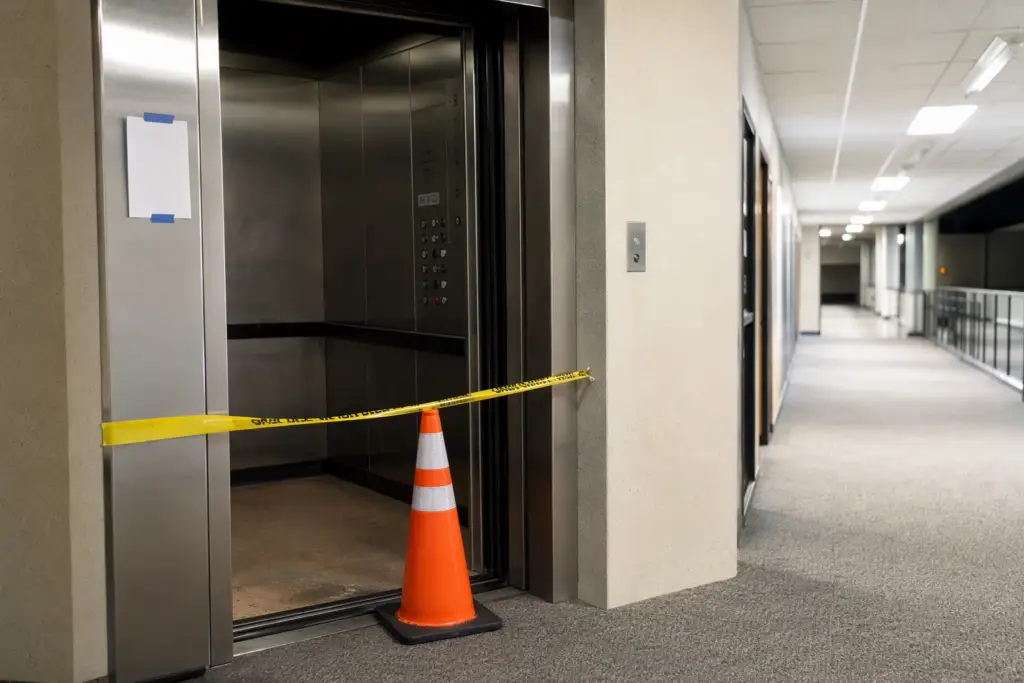
- Take the affected elevator out of service immediately and secure access to it.
- Document the incident with written notes, photographs, and witness statements.
- Notify your elevator service provider to perform a safety assessment before the car is returned to service.
- Report the incident to the SC LLR, Office of Elevators and Amusement Rides, before the end of the next working day if anyone other than an employee was seriously injured.
- Preserve all maintenance records, inspection reports, and service logs related to the elevator.
- Consult legal counsel regarding liability and insurance notification obligations.
What Are the Underground Hydraulic Cylinder Requirements for Hotel Elevators?
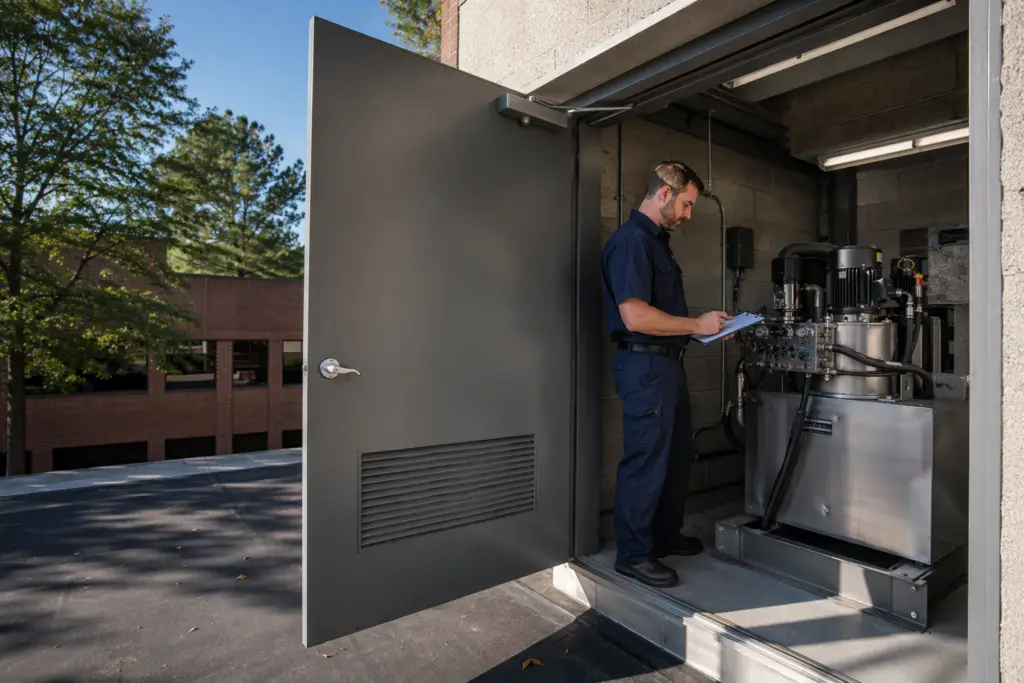
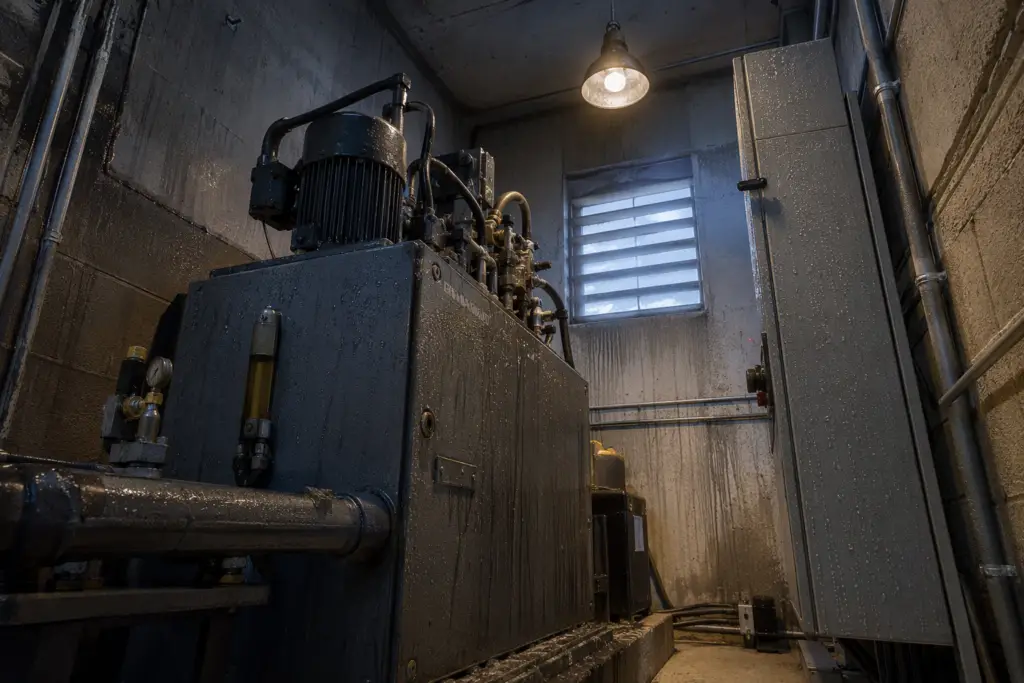
Hotels that use hydraulic elevators — common in low- to mid-rise hospitality properties — face a specific requirement for underground cylinders in South Carolina. Newly installed underground hydraulic elevator cylinders must be encased in plastic outer containment to limit electrolytic corrosion. This requirement protects against the environmental and structural risks associated with corroding cylinders, which can cause hydraulic fluid leaks into surrounding soil.
Hotel operators planning new hydraulic elevator installations or replacing existing underground cylinders should confirm that their contractor is specifying compliant containment systems and that the installation plan is covered under a valid state construction permit from SC LLR.
How Does South Carolina Handle Existing Hotel Elevators Installed Before 1986?
South Carolina elevator facilities that were in operation before July 1, 1986 must comply with the 1986 edition of ANSI A17.3, the safety code for existing elevators and escalators, rather than the current ASME A17.1-2019 edition. This distinction matters for older historic hotel properties and heritage hospitality buildings that have not undergone major elevator alterations since that time.
When an older elevator undergoes a significant alteration, the alteration work itself must comply with the edition of ASME A17.1 in effect at the time the permit is issued. Hotel operators renovating older properties should work with a qualified service provider to understand exactly which code edition applies to each elevator and each scope of work before construction begins.
What Should Hotels Consider When Choosing Between Elevator Types?
| Elevator Type | Best Fit for Hotels | Key Advantages | Key Considerations | SC Code Implications |
|---|---|---|---|---|
| Traction (MRL or Machine Room) | Mid-rise to high-rise hotels, full-service properties | High capacity, smooth ride, energy-efficient modern versions | Higher installation cost; machine room space (traditional) or overhead clearance (MRL) | Full ASME A17.1-2019 compliance required; annual inspection |
| Hydraulic | Low- to mid-rise hotels, limited overhead space | Lower upfront installation cost, simpler mechanical systems | Underground cylinder containment required; slower speeds; oil management | Plastic outer containment required for new underground cylinders in SC |
| Freight / Service Elevator | Full-service and resort properties for housekeeping, food service, luggage | High load capacity, protects guest elevators from wear | Separate cab from guest elevators adds cost but improves guest experience | Full ASME A17.1-2019 compliance; annual inspection |
| Dumbwaiter | Food and beverage operations, room service delivery | Efficient for small goods; low maintenance footprint | Limited to goods — not people; separate inspection at installation or alteration | SC inspection required at installation and alteration |
What Maintenance Obligations Does a South Carolina Hotel Owner Have?
Under South Carolina law, the owner of an elevator facility is responsible for keeping every elevator in safe operating condition and in compliance with state regulations. This legal duty does not transfer to a service contractor — it rests with the property owner. For hotel operators, this means that maintenance agreements with service providers are tools to meet an owner’s legal obligation, not substitutes for it.
Practical maintenance priorities for hotel elevators include:
- Ensuring the annual inspection is scheduled and completed before the operating certificate expires
- Verifying that the operating certificate or a copy is posted inside each elevator car at all times
- Maintaining maintenance logs and inspection reports for all elevator equipment
- Monitoring door operation, leveling accuracy, emergency lighting, and alarm functionality between inspections
- Confirming standby power systems are tested and functional for the required four-hour minimum
- Ensuring firefighters’ service features are operational and keyed correctly for local fire department access
- Addressing guest complaints or observed irregularities promptly and documenting the response
Carolina Elevator Service works with hotel and hospitality property owners across South Carolina to develop maintenance programs aligned with these owner obligations and state compliance requirements.
How Does Independent Service Compare to OEM-Affiliated Service for Hotel Elevators?
| Factor | Independent Service Provider (e.g., Carolina Elevator Service) | OEM-Affiliated / Manufacturer Service |
|---|---|---|
| Conflict of Interest on Inspection | Can be structured to meet SC independence rule (service and inspection by separate providers) | May create conflict — SC prohibits a special inspector from inspecting elevators their employer services |
| Parts Sourcing | Multi-brand parts access; may source OEM or equivalent parts | Proprietary parts may be required; can affect availability and cost |
| Contract Flexibility | Typically more flexible terms; easier to separate service and inspection relationships | Often bundled contracts; less flexibility |
| Local Market Knowledge | SC-specific regulatory knowledge; familiarity with SC LLR processes | National standards applied; local nuances may vary by field technician |
| SC Code Compliance Support | Focused on SC LLR requirements, permit coordination, and operating certificate renewal | Compliance support varies; may be less tuned to SC-specific requirements |
Carolina Elevator Service operates as an independent elevator service provider in South Carolina, which means hotel operators can structure their service and inspection relationships in a way that satisfies the SC LLR conflict-of-interest rule while maintaining a single point of accountability for routine maintenance.
What Should a Hotel Do When Adding a New Elevator or Renovating an Existing One?
- Confirm that the planned work requires a state construction permit from SC LLR before any installation, construction, or alteration begins — no work may start without it.
- Identify which edition of ASME A17.1 applies based on the permit issuance date to establish the design standard for the project.
- Engage a qualified elevator contractor to prepare permit documentation and coordinate with SC LLR, the Office of Elevators and Amusement Rides.
- Review ADA requirements for the alteration scope — alterations can trigger accessibility upgrades beyond the immediate work area.
- Confirm hydraulic cylinder containment requirements if the project involves underground hydraulic equipment.
- Confirm firefighters’ service key compatibility (S.C. #1000 five-pin key) with local fire department officials for new installations.
- Plan for the post-installation inspection by a state or licensed special inspector before the elevator is placed in service.
- Obtain and post the operating certificate in the elevator car before opening it to guests.
How Does Guest Experience Connect to Elevator Compliance for Hotels?
Compliance and guest experience are more closely linked than they might appear. A hotel elevator that meets all state inspection and operating certificate requirements is, by definition, one that has been evaluated for safety and proper function within the past year. For guests — particularly guests traveling with luggage, mobility aids, strollers, or medical equipment — a well-maintained, ADA-accessible, properly certified elevator is a direct reflection of the property’s operational standards.
Common guest-facing issues that often have compliance implications include:
- Slow or inconsistent door timing (ADA and ASME A17.1 address door dwell times and force requirements)
- Rough leveling at floor stops (a maintenance and inspection concern)
- Non-functional floor indicators or audible announcements (ADA accessibility features)
- Missing or expired operating certificate posted in the car (a direct SC LLR compliance violation)
- Outdated or damaged cab interiors that also suggest deferred maintenance on mechanical components
Proactive maintenance and compliance management protect both the hotel’s guests and its operating certificate — the two are not separate priorities.
Compliance and Maintenance Comparison: What Hotel Operators Typically Encounter
| Scenario | Compliance Status | Owner Risk | Recommended Action |
|---|---|---|---|
| Annual inspection completed; certificate posted; maintenance current | Compliant | Low | Maintain schedule; document all service activity |
| Annual inspection overdue; operating certificate expired | Non-compliant — elevator should not operate | High — regulatory violation; liability exposure | Contact SC LLR and schedule inspection immediately; take elevator out of service if required |
| Certificate not posted inside car | Non-compliant display requirement | Moderate — visible violation during LLR audit | Obtain and post certificate immediately |
| Serious guest injury; not reported by next working day | Reporting violation | High — separate regulatory violation from underlying incident | Report immediately; document timeline of notification |
| Renovation begun without state construction permit | Permit violation | High — work may need to stop or be undone | Contact SC LLR before beginning work; retroactive permitting may be required |
| Service and inspection performed by same employer | Conflict of interest violation under SC law | Moderate to High — inspection may be invalid | Separate service and inspection providers; restructure contracts |
Contact Carolina Elevator Service for a free elevator assessment at 803-865-1400.
Need elevator service you can rely on? Carolina Elevator Service is ready to help.