Can Carolina Elevator Service Help a Hotel Resolve State Elevator Code Violations?
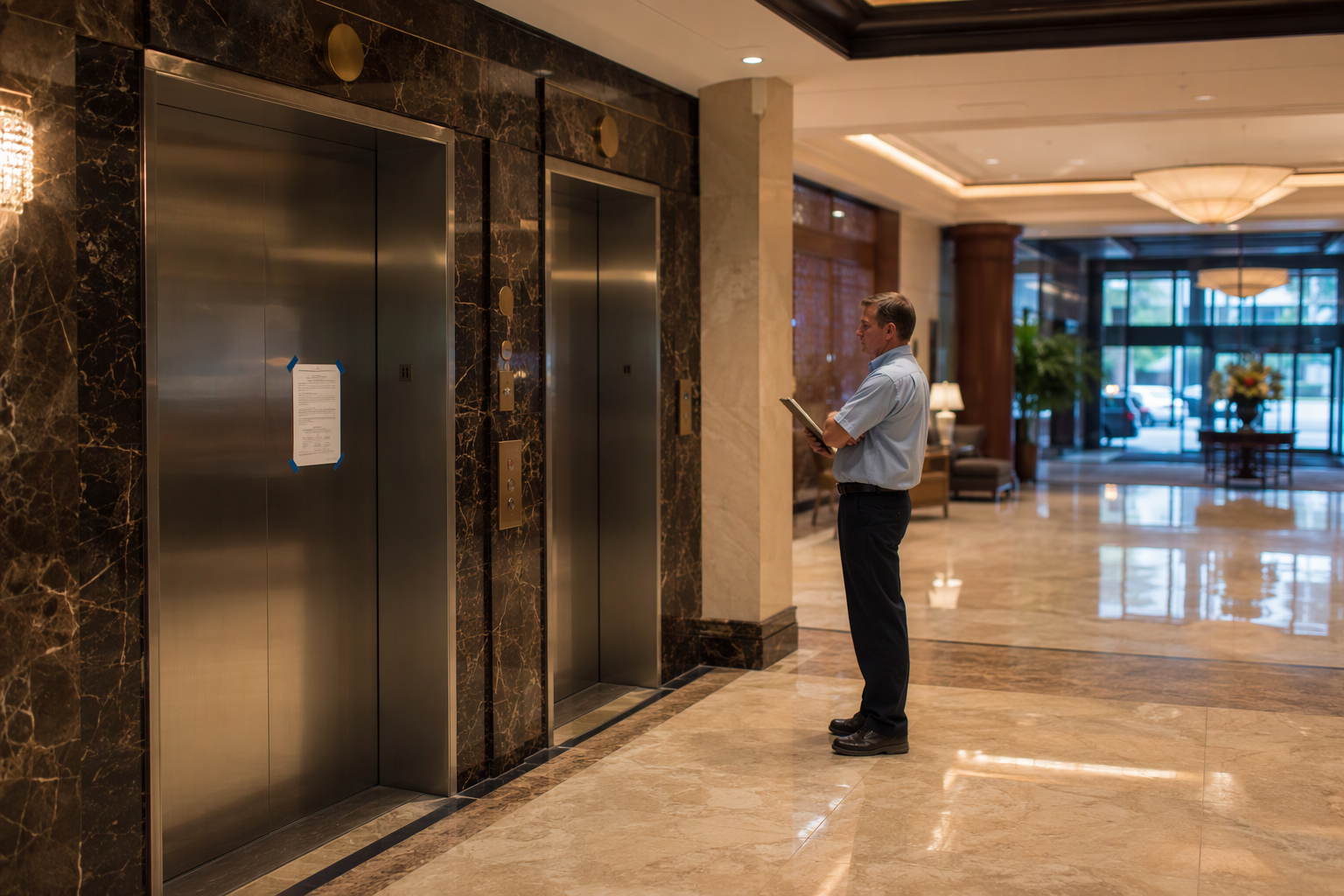
A notice of violation from the South Carolina Department of Labor, Licensing and Regulation (LLR), Office of Elevators and Amusement Rides is not a minor administrative matter for a hotel. Under S.C. Code Title 41, Chapter 16, no elevator facility may operate without a valid operating certificate, and that certificate cannot be renewed until every cited deficiency is corrected and re-inspected. For a hotel, that can mean guest inconvenience, liability exposure, and lost revenue on every day an elevator sits out of service.
The sections below answer the most common questions hotel operators in Columbia, SC ask about resolving violations, restoring certificates, and keeping their elevators in continuous compliance.
What South Carolina elevator codes apply to a hotel property?
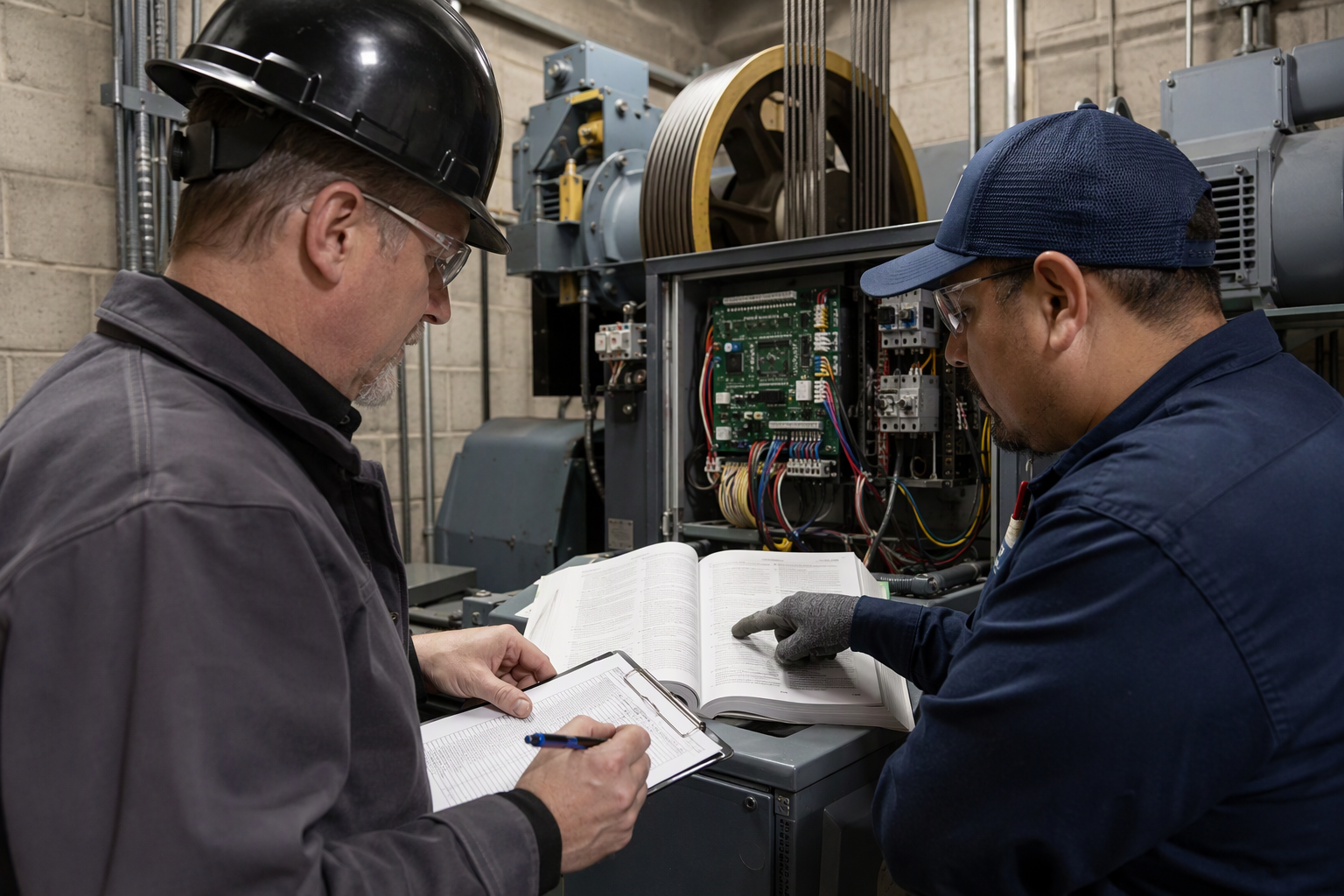
South Carolina has adopted the ASME A17.1/CSA B44, 2019 edition (ASME A17.1-2019/CSA B44:19) as the governing technical standard for new and altered elevator installations. That adoption became effective July 23, 2021, following notice in the S.C. State Register. All new permits issued after that date require compliance with the 2019 edition.
For equipment that was already in service before July 1, 1986, South Carolina additionally requires compliance with the 1986 edition of ANSI A17.3, the safety code for existing elevators and escalators. Hotels operating older hydraulic or traction equipment need to understand that both standards can be in play simultaneously — the newer code for any work completed under a permit, and the 1986 existing-equipment standard as a baseline floor of safety for legacy units.
The technical requirements are supplemented by S.C. Code of Regulations Chapter 71, Article 5, Regulations 71-5000 through 71-5700. South Carolina-specific additions include a requirement that passenger elevators carry standby power sufficient to run emergency lighting and the alarm bell for at least four hours if normal power fails — a detail that frequently surfaces as a violation in older hotel installations. Newly installed underground hydraulic elevator cylinders must also be encased in plastic outer containment to limit electrolytic corrosion.
Federal requirements layer on top of state code. The Americans with Disabilities Act (ADA) mandates accessible routes, minimum cab dimensions, compliant controls, and audible/visual floor indicators in public accommodations, which includes every hotel open to guests. The Occupational Safety and Health Administration (OSHA) governs the safety of maintenance and repair work performed on elevator equipment.
What triggers a formal violation notice at a South Carolina hotel?
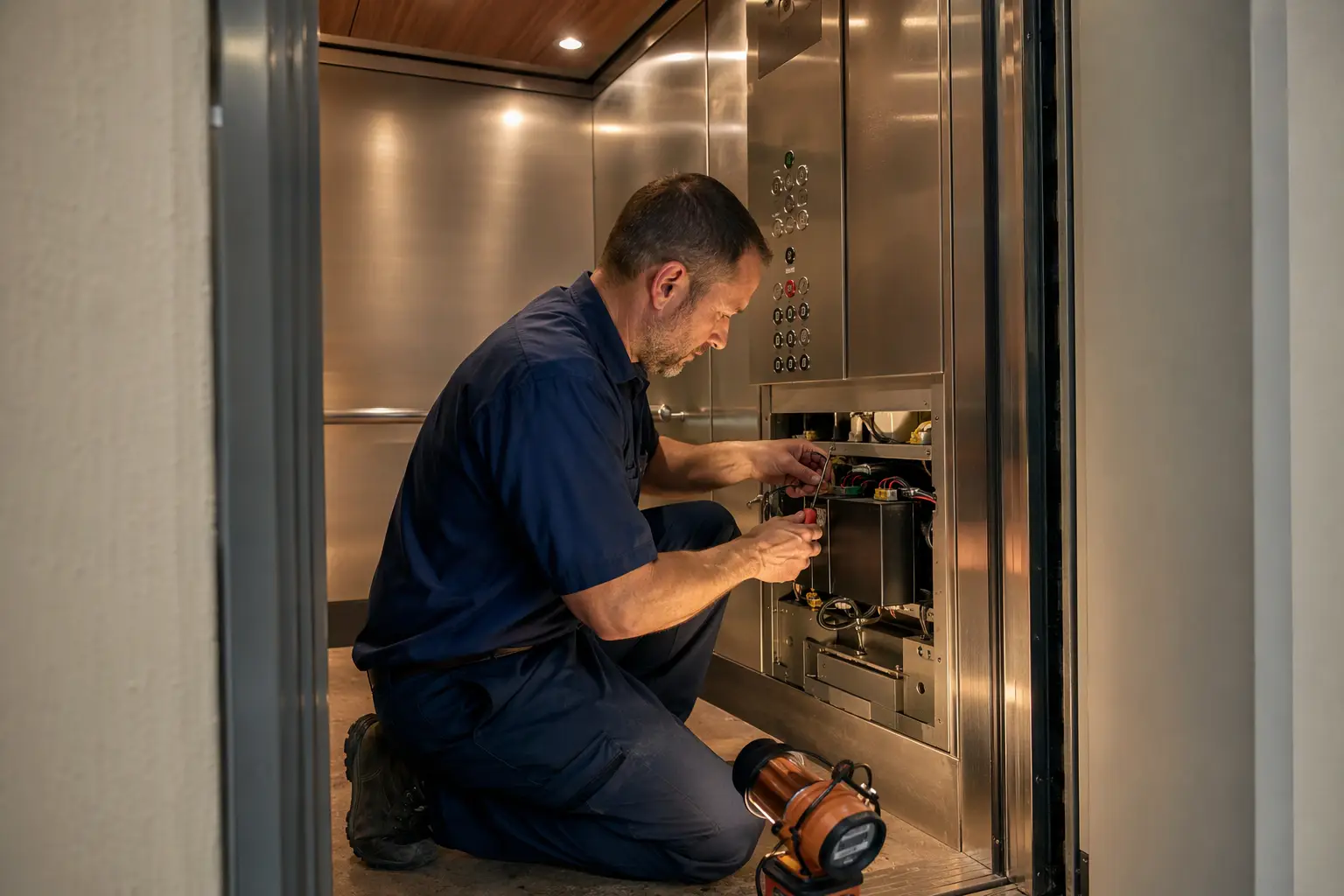
Violations most commonly originate from one of three sources: a routine annual inspection that reveals deficiencies, a complaint filed with LLR, or an accident or incident report. Under S.C. Code Title 41, Chapter 16, the owner must report any accident that seriously injures a person other than an employee to the state before the end of the next working day — that report itself can initiate a formal inspection sequence.
Common deficiencies found in hotel elevators include expired or missing operating certificates, failure to display the operating certificate conspicuously inside each elevator car, inoperative or inadequate emergency lighting, firefighters’ service keys that do not match the required five-pin S.C. #1000 key standard, and standby power systems that cannot sustain the required four-hour runtime. ADA-related deficiencies — such as non-compliant signage, malfunctioning door sensors, or inaccessible controls — are also cited when inspectors apply the full federal overlay.
What is the South Carolina operating certificate requirement for hotel elevators?
Every elevator facility in South Carolina must hold both a certificate of registration and a current operating certificate issued by LLR before it can be legally operated. The operating certificate must be displayed conspicuously inside each elevator car. South Carolina requires that elevators be inspected at installation, registration, alteration or repair, and at least once a year before the operating certificate is renewed. When a violation is cited, the renewal process is effectively paused until the deficiency is corrected and a passing inspection is documented.
Special inspectors — those hired by the building owner rather than dispatched by the state — may conduct inspections accepted in place of a state inspection, but only if the inspector is licensed and meets the qualifications in the 2018 edition of QEI-1, the American National Standard for Qualification of Elevator Inspectors. Critically, a special inspector may not inspect an elevator on which the inspector or the inspector’s employer holds a current service or warranty contract with that property.
What steps should a hotel take immediately after receiving a violation notice?
- Read the violation notice carefully and identify every cited deficiency, the applicable regulation reference, and any deadline for correction stated by LLR.
- Determine whether the elevator must be taken out of service immediately or whether it may remain operational while repairs are arranged — this distinction is usually stated in the notice itself.
- Post any required out-of-service notices and secure the elevator cab if LLR requires shutdown pending correction.
- Engage a qualified elevator service company to perform a full condition assessment against the cited deficiencies and any related items that could generate a secondary citation.
- Obtain a state construction permit from LLR before beginning any alteration or repair work that requires one — work started without a permit is itself a violation.
- Complete all corrective repairs using components and methods that conform to the adopted ASME A17.1-2019/CSA B44:19 standard.
- Schedule a re-inspection through LLR or engage a qualified special inspector who has no existing service or warranty relationship with the property.
- Confirm that the new or renewed operating certificate is posted inside the elevator car before returning the unit to guest service.
Carolina Elevator Service works through this sequence with hotel operators to minimize the time a guest elevator is out of service while ensuring every corrective step satisfies LLR requirements.
How long does it take to resolve elevator code violations in South Carolina?
Resolution timelines depend on the nature and number of violations. Minor administrative deficiencies — such as a missing certificate display or an incorrect key — can often be corrected within days. Mechanical or electrical deficiencies that require parts procurement, permitting, or structural work take longer. The permitting step alone adds time because South Carolina requires a construction permit from LLR before any elevator facility is erected, constructed, altered, or installed.
Hotel operators should build in time for the re-inspection step as well. After corrective work is complete, an inspection must occur and pass before LLR will renew the operating certificate. Planning for the inspection scheduling window is part of realistic project management, and Carolina Elevator Service can help operators map that timeline against their guest occupancy calendar.
Does a hotel need a separate permit for each repair or alteration?
Yes, when the work meets the definition of an alteration or installation under South Carolina law. The requirement under S.C. Code Title 41, Chapter 16 is clear: a state construction permit is required before any elevator facility is erected, constructed, altered, or installed. Routine maintenance and minor adjustments that do not constitute an alteration may fall outside the permit requirement, but the distinction is not always obvious. Submitting work for permit review when in doubt avoids a secondary violation for unpermitted alterations.
What ADA requirements apply to hotel elevators beyond South Carolina state code?
The ADA establishes minimum accessibility standards for public accommodations, including hotels. Key requirements for elevator installations include minimum cab dimensions, door width and timing, accessible control panel height and reach range, Braille and raised-character floor designations, and audible and visible floor indicators. Because ADA compliance and state code compliance are enforced independently, a hotel elevator can pass a state inspection and still carry an ADA deficiency — or vice versa. A thorough violation-resolution process addresses both frameworks simultaneously.
Questions Your Inspector Will Ask
Understanding the inspection process helps hotel facilities teams prepare documentation and demonstrate readiness. South Carolina inspectors and qualified special inspectors typically raise the following questions during a hotel elevator inspection or re-inspection following a violation:
- Is the current operating certificate posted conspicuously inside each elevator car?
- Has the elevator been operated at any time without a valid operating certificate?
- Was a state construction permit obtained before any recent alteration or repair work was begun?
- Does the standby power system sustain emergency lighting and the alarm bell for at least four hours under a power failure?
- Does the firefighters’ service installation use the required five-pin S.C. #1000 key?
- For underground hydraulic cylinders installed or replaced under the current code cycle, is plastic outer containment in place to limit electrolytic corrosion?
- Have all previously cited deficiencies been corrected as described in the corrective action documentation submitted to LLR?
- Was the special inspector performing this re-inspection free of any service or warranty contract relationship with this property at the time of inspection?
- Are all maintenance records and inspection reports available for review on site?
- For equipment installed before July 1, 1986, has the property assessed compliance with the ANSI A17.3 existing-elevator safety baseline?
Can a hotel operate an elevator while violations are being corrected?
It depends on the severity of the cited deficiency. South Carolina law places the duty to keep every elevator facility in safe operating condition squarely on the owner. When LLR determines that a deficiency creates an immediate safety hazard, the elevator must be taken out of service. When the deficiency is administrative or involves a component that does not immediately impair safe operation, continued use may be permitted at the inspector’s discretion until repairs are completed. Hotel operators should not assume continued operation is allowed — the violation notice or a direct inquiry to LLR will clarify the requirement.
What ongoing steps keep a hotel elevator out of violation going forward?
Preventing future violations requires a proactive maintenance posture rather than a reactive one. Key ongoing obligations under South Carolina law and federal standards include:
- Scheduling and completing the annual LLR inspection before the operating certificate expiration date.
- Maintaining maintenance logs that document routine inspections, adjustments, and any reported anomalies.
- Verifying that the operating certificate is posted and legible inside each car at all times.
- Testing the standby power system periodically to confirm the required four-hour runtime remains achievable.
- Reporting any serious non-employee injury to LLR before the end of the next working day.
- Obtaining a construction permit before beginning any alteration or installation work.
- Reviewing ADA compliance as part of any cab renovation or control panel update.
Carolina Elevator Service supports Columbia-area hotel properties with scheduled maintenance programs designed to keep equipment in continuous compliance between annual inspections, reducing the likelihood that deficiencies accumulate to the point of a formal violation notice.
Why does it matter which elevator service company a hotel uses in South Carolina?
Not every elevator company operating in South Carolina has equal familiarity with LLR’s inspection process, the state’s adopted ASME A17.1-2019/CSA B44:19 standard, and the state-specific requirements layered on top — such as the standby power duration rule, the S.C. #1000 firefighters’ key requirement, and the plastic outer containment rule for underground hydraulic cylinders. A service company that works routinely within the LLR framework understands how corrective work must be documented to satisfy a re-inspection, what permit applications need to include, and how to sequence repairs to minimize elevator downtime for hotel guests.
Carolina Elevator Service focuses its operations in South Carolina and brings that state-specific focus to hotel violation resolution work in Columbia and the surrounding region. The goal is not simply to close a violation notice, but to leave the property with equipment, documentation, and maintenance practices that support uninterrupted operation through the next annual certificate renewal.
Contact Carolina Elevator Service for a free elevator assessment at 803-865-1400.
Need elevator service you can rely on? Carolina Elevator Service is ready to help.