Elevator Service Estimates in Columbia SC: Complete FAQ Guide
The correct email address to send project details and request an estimate from Carolina Elevator Service is info@carolinaelevatorservice.com. This inbox is monitored for new installation inquiries, maintenance contract requests, repair descriptions, compliance questions, and inspection coordination across the Columbia, SC service area. Including photos, building specifications, and current certificate information speeds up the estimate process.
What email address should I use to send project details and receive an estimate from Carolina Elevator Service?
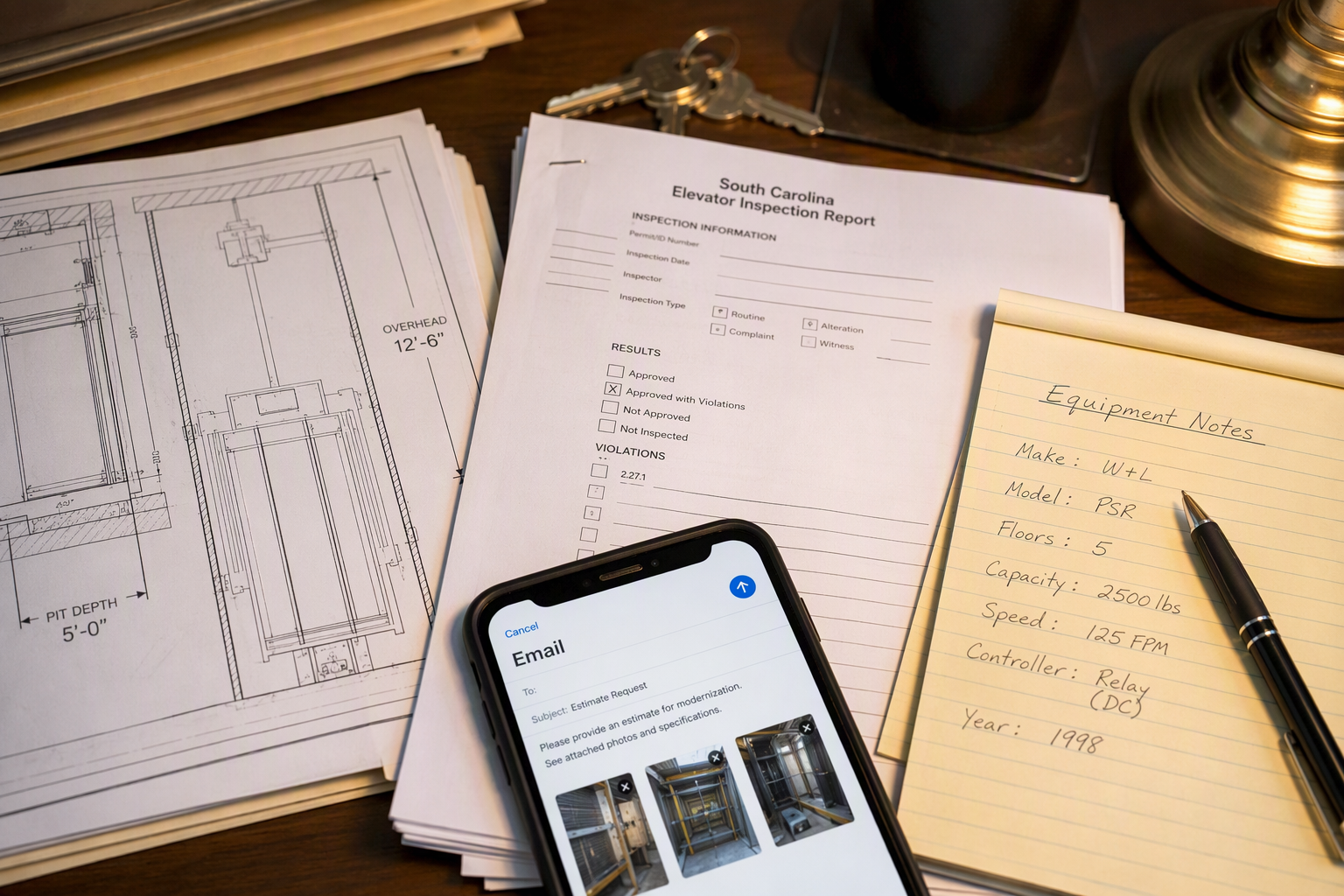
Send all estimate requests, scope-of-work documents, and project photos to info@carolinaelevatorservice.com to reach the Carolina Elevator Service team in Columbia, SC.
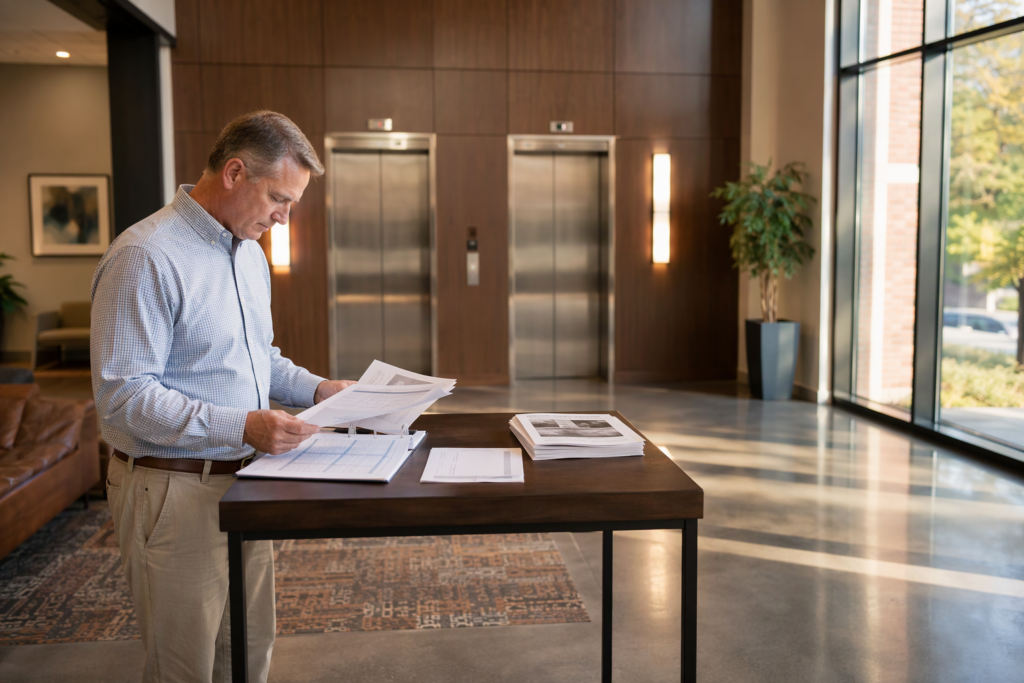
When emailing for an estimate, the more detail included upfront, the more accurate the returned proposal will be. Useful information to attach includes the type of elevator or lift equipment involved, the building address, the number of stops, the current operating certificate status, any recent inspection reports issued by the South Carolina Department of Labor, Licensing and Regulation (LLR), Office of Elevators and Amusement Rides, and a description of the service need — whether that is a new installation permit, a repair, a modernization, or an annual maintenance contract.
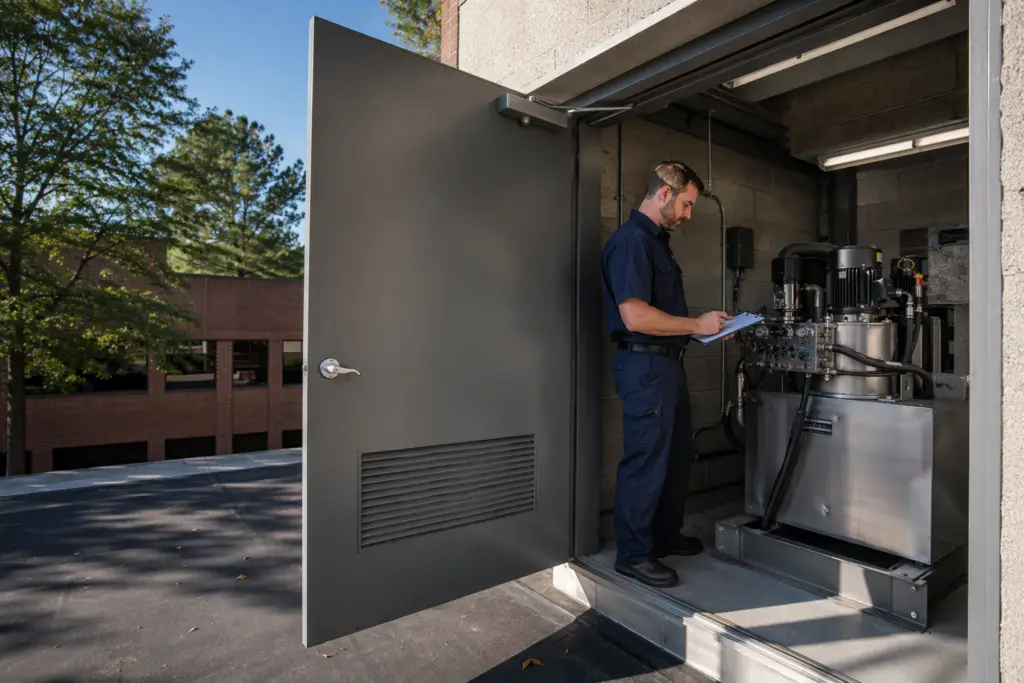
Including photographs of the machine room, the controller, the car interior, and any visible deficiencies allows the team to identify equipment generation and potential code compliance gaps before the first site visit, which reduces back-and-forth and shortens the time to a firm proposal.
What information should I include in my estimate request email?
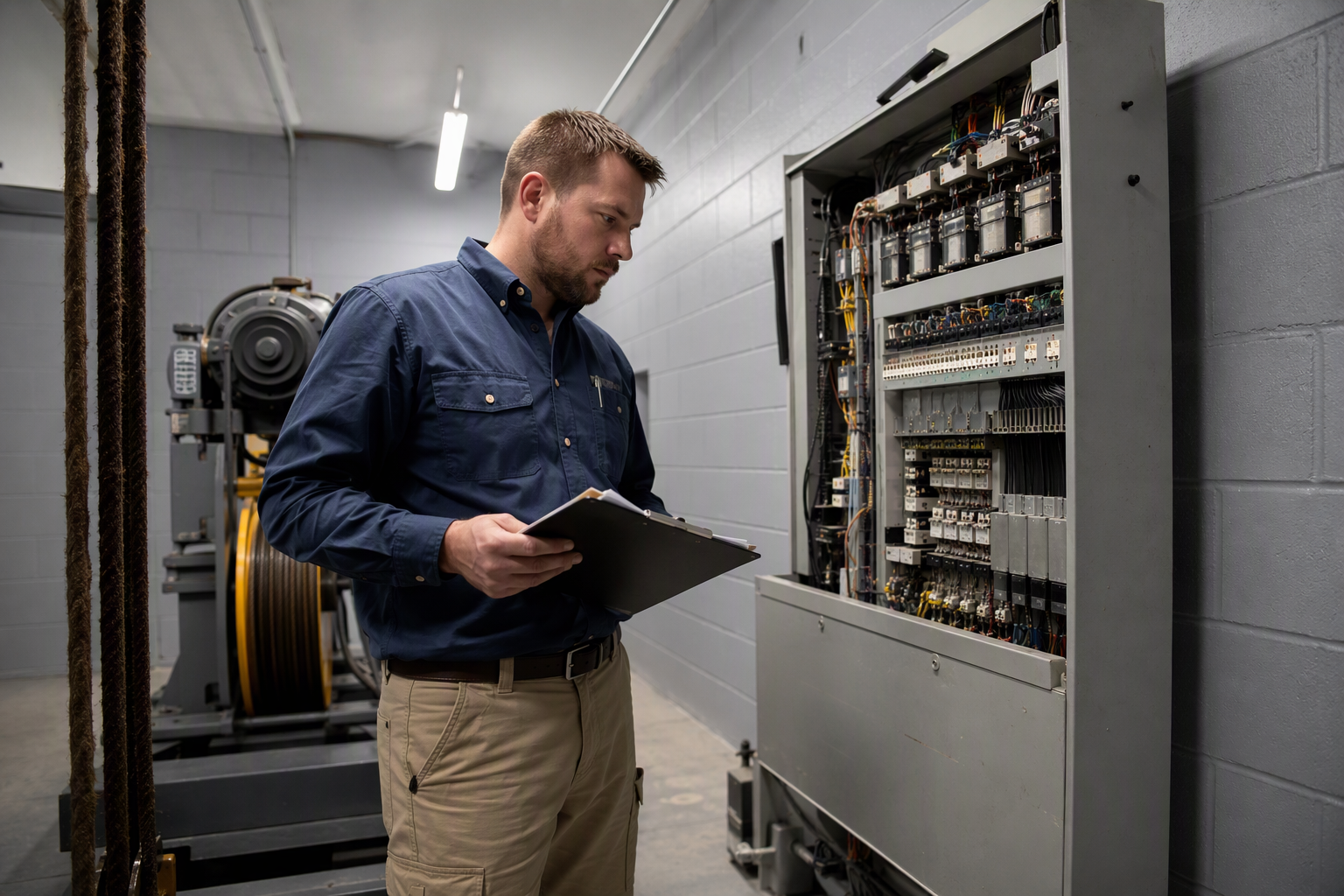
A complete estimate email should include the building address, elevator type, number of floors served, current certificate status, and a description of the service needed.
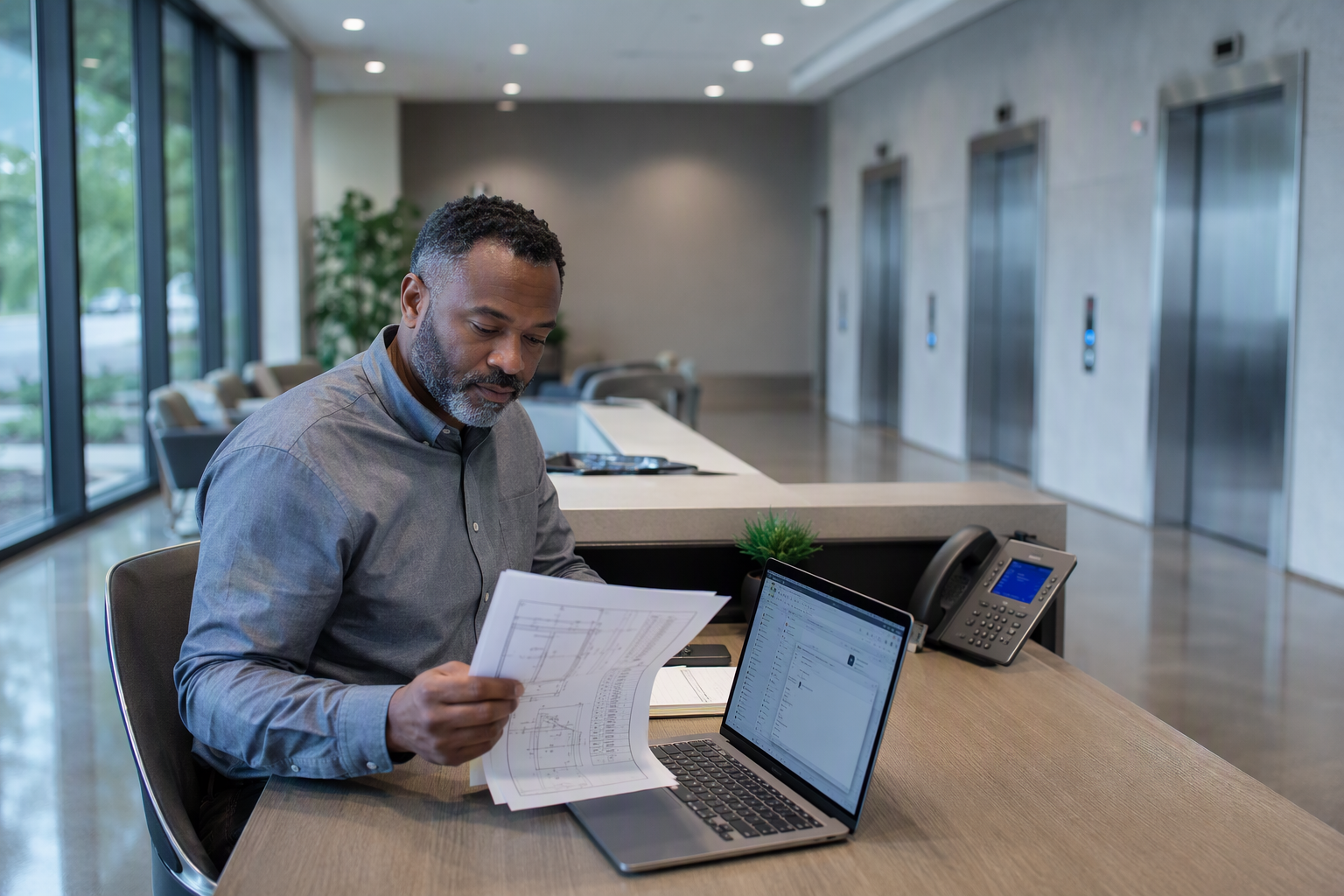
For new installations or major alterations, attaching architectural drawings or floor plans helps the team assess pit depth, overhead clearance, machine room dimensions, and structural loading requirements — all of which affect scope and scheduling. South Carolina requires a state construction permit before any elevator facility is erected, constructed, altered, or installed under S.C. Code Title 41, Chapter 16, so having permit-ready drawings ready to discuss accelerates the process.
For maintenance or repair requests, noting the make, model, and approximate age of the equipment is helpful. If the elevator has been taken out of service, include the date it was shut down and whether a notice was posted on the car, as South Carolina prohibits operating any elevator without a valid operating certificate.
How long does it typically take to receive an estimate after emailing?
Estimate turnaround time depends on the complexity of the project and the completeness of the information submitted in the initial email.
Simple maintenance contract requests or straightforward repair inquiries that arrive with clear descriptions and supporting photos can often be addressed more quickly than multi-stop new installation bids or full modernization projects that require a site survey. For complex projects — such as those requiring a South Carolina construction permit, engineering drawings, or coordination with the LLR Office of Elevators and Amusement Rides — a site visit is typically scheduled before a firm proposal is issued.
Submitting complete information to info@carolinaelevatorservice.com on the first contact, rather than sending partial details and following up repeatedly, is the most reliable way to receive a thorough and accurate estimate in the shortest timeframe.
What types of elevator services can I request an estimate for by email?
Email estimate requests can cover new elevator installations, modernizations, routine maintenance contracts, emergency repairs, code compliance upgrades, and inspection coordination.
South Carolina’s adoption of the ASME A17.1/CSA B44, 2019 edition (effective July 23, 2021) means that many older systems in the Columbia area may require upgrades to meet currently adopted standards when alterations are performed. Similarly, elevator facilities that were in operation before July 1, 1986 must comply with the 1986 edition of ANSI A17.3, the safety code for existing elevators and escalators. An email inquiry that describes the installation year and any recent alteration history allows the team to flag potential retroactive compliance requirements before committing to a scope.
Carolina Elevator Service handles the full range of vertical transportation needs, and the email channel is appropriate for any of them — from a single-stop residential-adjacent commercial lift to a multi-car high-rise hydraulic or traction system.
Are estimate emails handled differently for commercial versus residential elevator projects?
Commercial projects and residential-adjacent commercial projects follow South Carolina’s full regulatory framework, while equipment in a single private dwelling is explicitly exempt from the South Carolina Elevator Code.
Under S.C. Code Title 41, Chapter 16, the South Carolina Elevator Code does not apply to equipment installed in a single private dwelling. This means that a home elevator in a single-family residence does not require the same LLR permits, registered inspections, or operating certificates that commercial and multi-family equipment does. However, best-practice installation and maintenance standards — including those found in ASME A17.1 — still represent the industry baseline for safe operation regardless of regulatory applicability.
When emailing about a residential project, specifying whether the building is a single private dwelling or a multi-family structure (such as a condominium or apartment building) helps the team determine which regulatory pathway applies and what documentation will be required.
What South Carolina permits and certificates are typically discussed in an estimate?
South Carolina requires a state construction permit before installation or alteration, plus a certificate of registration and an operating certificate before the elevator can legally be placed in service.
The permit and certificate pathway is a standard topic in any Carolina Elevator Service estimate for new work. Under the South Carolina Elevator Code, no elevator facility may be operated without both a certificate of registration and an operating certificate issued by the state. The operating certificate — or a copy — must be displayed conspicuously inside each elevator car. New facilities must comply with the adopted edition of ASME A17.1 in effect when the construction permit is issued.
Mentioning in the estimate email whether a permit has already been applied for, or whether the project is still in the planning phase, allows the team to sequence the work correctly and advise on typical LLR processing timelines.
How does South Carolina’s annual inspection requirement affect my maintenance contract estimate?
South Carolina requires most passenger elevators to be inspected at least once a year before the operating certificate is renewed, which directly shapes the scope and frequency provisions of any maintenance contract proposal.
Under S.C. Code of Regulations Chapter 71, Article 5, inspections may be performed only by state inspectors or licensed special inspectors. Importantly, a special inspector may not inspect an elevator on which the inspector or the inspector’s employer has a current service or warranty contract. This regulatory separation of inspection and service is a key factor that Carolina Elevator Service discusses in every maintenance estimate — the maintenance provider and the special inspector must, by law, be independent parties.
Not all equipment follows the annual cycle. South Carolina specifies different inspection intervals by equipment type, summarized in the table below.
| Equipment Type | Required Inspection Interval | Regulatory Source |
|---|---|---|
| Passenger & freight elevators | At least once per year (before operating certificate renewal) | S.C. Code Title 41, Chapter 16 |
| Also required: at installation, registration, alteration, or repair | Event-triggered | S.C. Code Title 41, Chapter 16 |
| Handicap lifts (platform lifts) | Every five years | S.C. Code Title 41, Chapter 16 |
| Manlifts, television tower elevators, special purpose elevators | Every seven years | S.C. Code Title 41, Chapter 16 |
| Dumbwaiters | When installed or altered | S.C. Code Title 41, Chapter 16 |
| Equipment in a single private dwelling | Exempt from S.C. Elevator Code | S.C. Code Title 41, Chapter 16 |
What ADA accessibility requirements are relevant to an elevator estimate in South Carolina?
The Americans with Disabilities Act (ADA) establishes accessibility requirements for elevators in places of public accommodation and commercial facilities, which are separate from but run parallel to South Carolina’s elevator safety code.
ADA elevator requirements address items such as car dimensions, door clear widths, leveling tolerances, call button heights, audible and visual signals, and Braille markings. When a building owner in Columbia is modernizing an existing elevator or installing a new one in a covered facility, both the ASME A17.1 safety requirements and the ADA accessibility standards must be addressed simultaneously.
Including the building’s occupancy type and primary user population in the estimate email helps the team identify whether ADA alterations-trigger rules apply — particularly important when the elevator project is part of a broader renovation that constitutes a “path of travel” improvement under ADA guidance.
What should I do if my elevator is currently out of service and I need an urgent estimate?
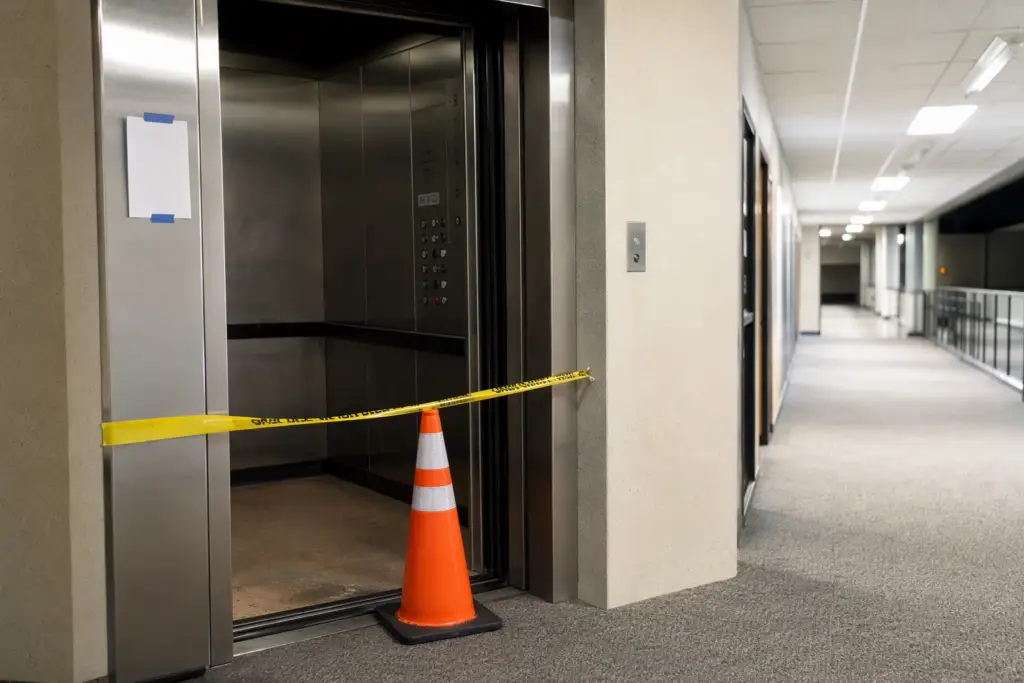
- Post clear out-of-service signage on the elevator doors immediately to prevent unauthorized use.
- Notify the building owner or property manager if you are not already the responsible party, since South Carolina law places the obligation to maintain every elevator in safe operating condition on the owner.
- Do not attempt to restore the elevator to service without authorization, as operating without a valid certificate violates S.C. Code Title 41, Chapter 16.
- Email info@carolinaelevatorservice.com with a subject line that indicates the equipment is out of service, the building address, the nature of the failure or deficiency if known, and your direct phone number for follow-up.
- Attach any inspection reports, deficiency notices, or communications from the LLR Office of Elevators and Amusement Rides that describe the reason for shutdown.
- If the shutdown resulted from a serious injury to anyone other than an employee, note in the email whether the accident was reported to the state before the end of the next working day, as South Carolina requires.
Can I email for an estimate on elevator modernization or code upgrade work specifically?
Yes — modernization and code compliance upgrade projects are among the most detailed estimate requests, and emailing project documentation upfront significantly reduces the time needed to develop an accurate scope.
South Carolina adopted the ASME A17.1/CSA B44, 2019 edition effective July 23, 2021. When an alteration is made to an existing elevator, the altered components must comply with the adopted code edition in effect at the time the construction permit is issued. This can trigger a cascade of associated upgrades — for example, modernizing the controller may require bringing the firefighters’ service into compliance with South Carolina’s requirement that new installations use the five-pin S.C. #1000 key.
For hydraulic elevators specifically, South Carolina requires that newly installed underground hydraulic elevator cylinders be encased in plastic outer containment to limit electrolytic corrosion — a requirement that affects modernization scopes involving cylinder replacement. Noting the elevator type and approximate installation year in the estimate email allows Carolina Elevator Service to anticipate which code-driven requirements will apply.
What role does the ASME A17.1 code play in the estimate I receive?
The ASME A17.1 Safety Code for Elevators and Escalators is the foundational technical standard that defines the minimum safety requirements for elevator design, construction, installation, alteration, and maintenance — and South Carolina has adopted the 2019 edition as its mandatory standard.
Every estimate prepared for work on a South Carolina elevator facility is structured around ASME A17.1-2019 requirements. For existing equipment installed before the current code cycle, the estimate may need to distinguish between items required immediately upon alteration and items that are recommended as best practices. Because code compliance is ultimately the owner’s legal obligation under S.C. Code Title 41, Chapter 16, estimates from Carolina Elevator Service are designed to make these distinctions transparent so owners can make informed decisions about scope and phasing.
How does the special inspector independence rule affect who I hire for an estimate?
South Carolina law prohibits a special inspector from inspecting an elevator on which the inspector or the inspector’s employer holds a current service or warranty contract, which means the company providing maintenance cannot also perform the mandatory state inspection.
This rule, established under S.C. Code Title 41, Chapter 16, is a practical planning consideration for building owners. When budgeting for elevator operations, the annual inspection cost and the maintenance contract cost are separate line items from separate vendors. Estimate emails that ask about “all-in” programs should note this regulatory constraint so proposals are structured correctly from the outset. Special inspectors in South Carolina must also be licensed and demonstrate qualifications consistent with the 2018 edition of QEI-1, the American National Standard for Qualification of Elevator Inspectors.
What is the difference between a certificate of registration and an operating certificate in South Carolina?
A certificate of registration establishes the elevator facility in the state’s records, while the operating certificate — renewed annually after a satisfactory inspection — is the document that legally authorizes day-to-day operation and must be posted inside the car.
Both documents are administered by the South Carolina Department of Labor, Licensing and Regulation (LLR), Office of Elevators and Amusement Rides. Neither may be legally bypassed — no elevator facility may operate without both. When emailing for an estimate, including copies of both documents (or noting their absence if the equipment has never been registered) helps the team identify whether the project scope needs to include a compliance pathway to bring the facility into full regulatory standing before or alongside the service work.
What standby power requirements should I know about before requesting a new elevator installation estimate?
South Carolina requires passenger elevators to have standby power capable of running emergency lighting and the alarm bell for at least four hours if normal power fails — a requirement that affects both equipment selection and electrical rough-in scope.
This standby power requirement is part of the state’s elevator safety standards and must be addressed in the design phase of any new installation. When emailing for a new installation estimate, noting whether the building already has a generator or uninterruptible power supply, and what its capacity is, allows Carolina Elevator Service to advise on whether the existing backup power infrastructure can support the elevator’s emergency power requirements or whether additional electrical work will be needed as part of the overall project scope.
Do local Columbia or Richland County ordinances affect my elevator estimate?
Local ordinances that conflict with the South Carolina Elevator Code or its regulations are void under state law, so the LLR framework takes precedence over any conflicting municipal rules.
Under S.C. Code Title 41, Chapter 16, the state’s elevator regulatory framework supersedes conflicting local rules. This means that a building permit issued by the City of Columbia or Richland County for a construction project involving an elevator does not replace or satisfy the separate state construction permit required by LLR before the elevator installation begins. Estimate emails sometimes conflate these two permit types — clarifying which permits have already been obtained and from which authority helps the team provide accurate timeline guidance.
What workplace safety rules from OSHA apply to elevator service work in South Carolina?
Federal OSHA standards govern the working conditions of elevator service technicians during installation, maintenance, and repair operations, separate from the product safety requirements of ASME A17.1.
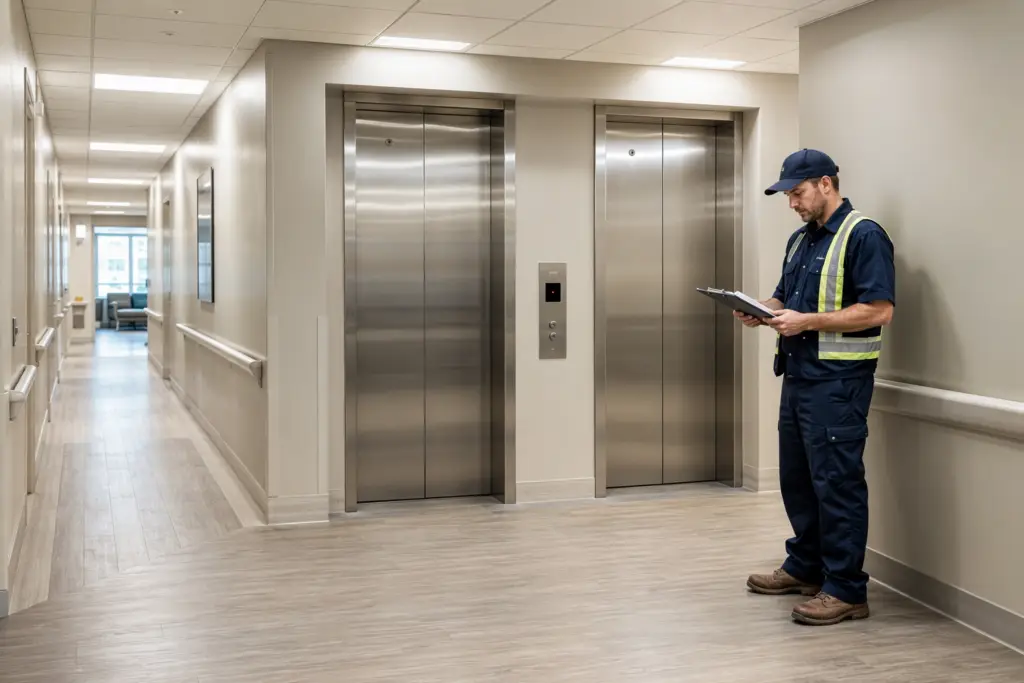
OSHA’s general industry and construction standards address lockout/tagout procedures, confined space entry in pits and machine rooms, fall protection, and electrical safety — all of which apply to service personnel working on elevator equipment at Columbia area facilities. Building owners should be aware that providing safe access to machine rooms, pits, and overhead spaces is part of their general duty responsibilities and can affect both the scope and the scheduling of service work described in an estimate.
How should a property manager in Columbia organize elevator records before emailing for an estimate?
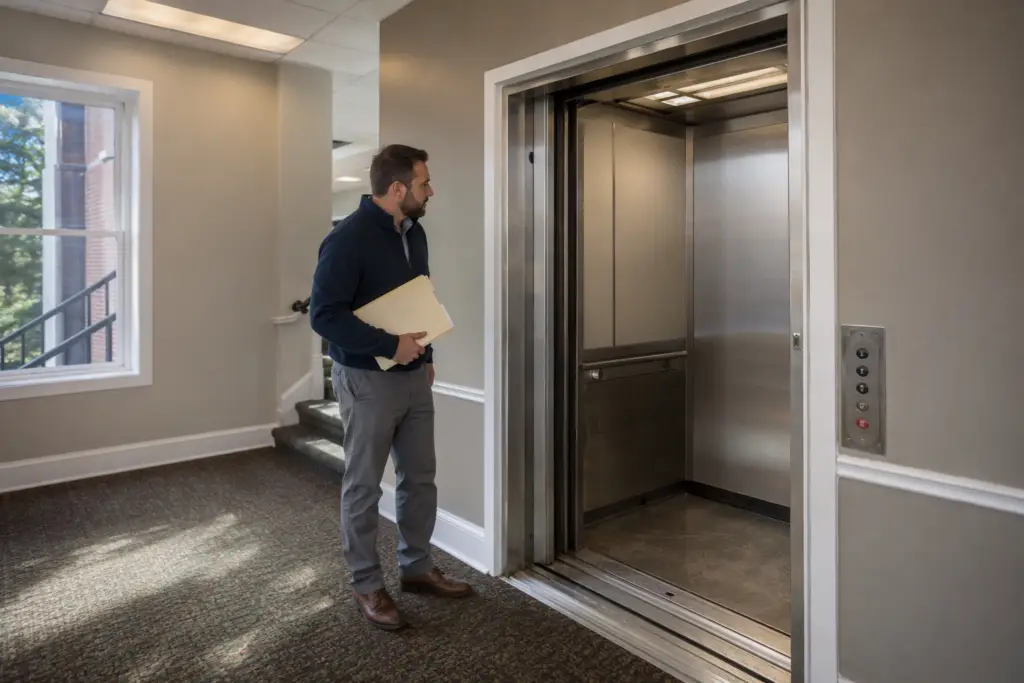
Gathering the current operating certificate, the most recent inspection report, any LLR deficiency notices, the original installation permit, and the equipment nameplate data before emailing produces the most efficient estimate process.
South Carolina requires the operating certificate to be displayed conspicuously inside each elevator car, so it is usually accessible without pulling files. The inspection report from the most recent annual examination will identify any outstanding deficiencies that the estimate may need to address. For older equipment, knowing whether it predates July 1, 1986 — the threshold below which ANSI A17.3 1986 edition requirements apply — is useful context for the team when assessing compliance exposure.
Organized documentation sent with the initial email to info@carolinaelevatorservice.com reduces the number of information-gathering steps required before a site visit can be scheduled, which in turn shortens the overall time to a final proposal.
Can I email to request a maintenance contract rather than a one-time repair estimate?
Yes — email inquiries for ongoing maintenance contracts are welcome at info@carolinaelevatorservice.com, and the details submitted shape the structure, frequency, and scope provisions of the proposed agreement.
A maintenance contract proposal for a South Carolina elevator will typically account for the annual inspection cycle (since the operating certificate must be renewed each year following a satisfactory inspection), the equipment type and age, the traffic volume of the building, and the specific service tasks needed to maintain the elevator in the safe operating condition that the owner is legally obligated to ensure under S.C. Code Title 41, Chapter 16. For properties with multiple elevator units or mixed equipment types — such as a combination of passenger elevators and a handicap lift — noting all units in the initial email ensures the proposal covers the full portfolio.
What happens after I send my estimate email to Carolina Elevator Service?
- The inquiry is reviewed for completeness — equipment type, building location, service description, and any attached documentation are assessed.
- If additional information is needed, the team follows up by reply email or phone using the contact details provided in the original message.
- For straightforward requests with sufficient detail, a preliminary estimate or proposal is prepared based on the submitted information.
- For complex projects — new installations, full modernizations, or situations involving unresolved compliance deficiencies — a site visit is scheduled to verify field conditions before a firm scope is finalized.
- A written proposal outlining the scope of work, equipment specifications where applicable, and the permit and certificate pathway under South Carolina regulations is provided.
- Once the proposal is accepted, permit applications, scheduling coordination with the LLR Office of Elevators and Amusement Rides, and independent inspection arrangements are initiated as required by the project type.
Is there anything I should NOT include in an estimate request email?
Avoid sending confidential tenant data, payment card information, or sensitive personnel records through standard email — use those channels only for technical project information, building details, and regulatory documents.
For elevator estimate purposes, the most useful attachments are inspection reports, equipment photographs, floor plans or drawings, current certificates, and deficiency notices. Sending large CAD files or video walkthroughs of the machine room can be helpful for complex projects but should be compressed or shared via a file-transfer link if the files exceed standard email size limits. The estimate email channel at info@carolinaelevatorservice.com is best used for factual project documentation rather than extended narrative descriptions — concise, organized submissions with clear attachments consistently result in faster and more accurate proposals from Carolina Elevator Service.
Contact Carolina Elevator Service for a free elevator assessment at 803-865-1400.
Need elevator service you can rely on? Carolina Elevator Service is ready to help.