Elevator Service in Columbia, SC | Carolina Elevator Service
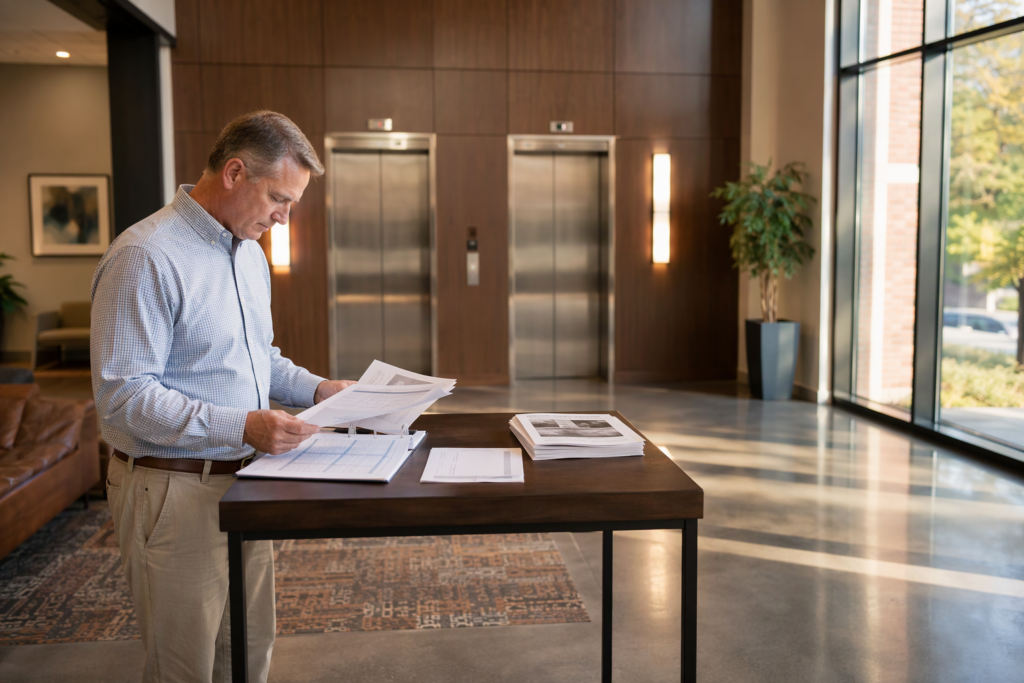
In South Carolina, elevator owners carry a statutory duty to keep every elevator facility in safe operating condition and in compliance with state regulations under S.C. Code Title 41, Chapter 16 (South Carolina Elevator Code). That obligation does not begin when a component breaks — it is continuous. Understanding when aging parts cross from “serviceable” to “risk” is one of the most consequential decisions a property owner or facilities manager faces in Columbia, SC.
How does South Carolina’s inspection schedule affect when you must address aging components?
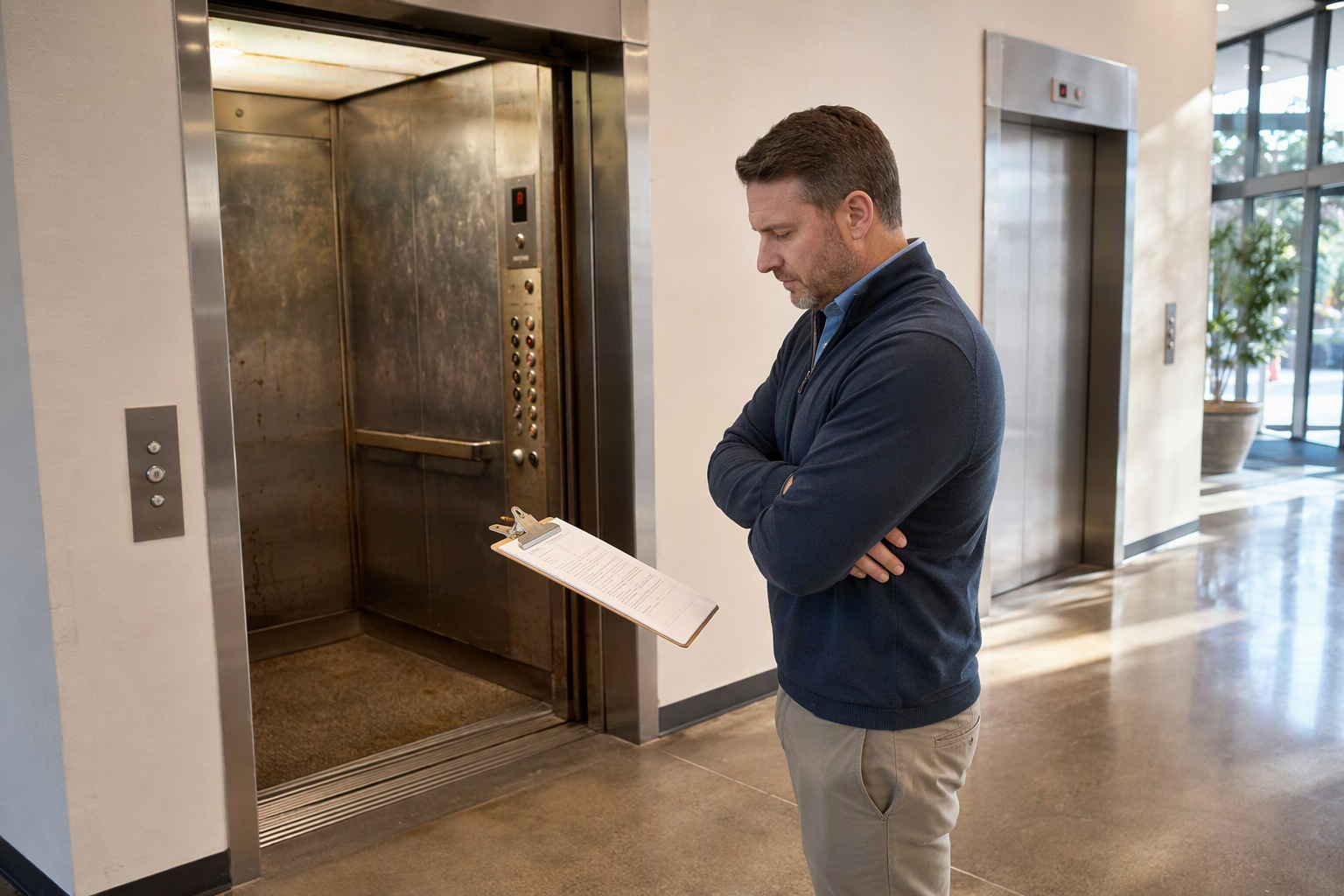
South Carolina requires that passenger elevators be inspected at installation, at registration, after any alteration or repair, and at least once every year before the operating certificate is renewed. That annual inspection is conducted by either a state inspector or a licensed special inspector qualified under the 2018 edition of QEI-1, the American National Standard for Qualification of Elevator Inspectors. Inspection frequencies differ by equipment type: handicap lifts are inspected every five years, and manlifts, television tower elevators, and special purpose elevators every seven years.
Practically speaking, the annual inspection cycle sets a hard outer boundary — any component that an inspector flags as noncompliant can cause an operating certificate to be withheld or revoked. No elevator facility in South Carolina may operate without both a valid certificate of registration and a current operating certificate, which must be displayed conspicuously inside each elevator car. Waiting for the inspection date to learn a component has failed is the highest-risk approach an owner can take.
What are the clearest warning signs that an elevator component is approaching the end of its safe service life?
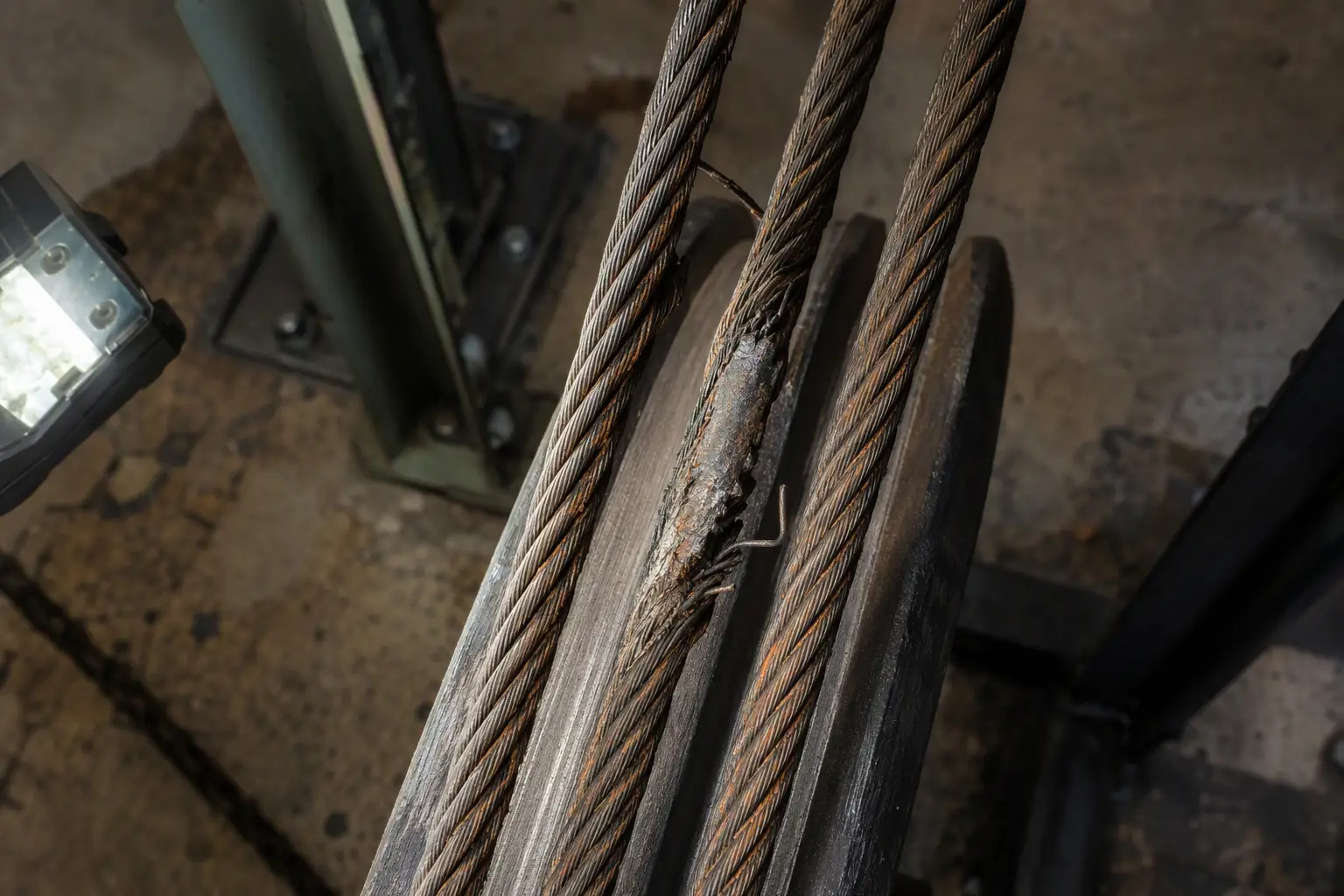
Warning signs vary by component type, but several patterns consistently indicate that replacement evaluation should begin immediately rather than at the next scheduled service visit:
- Door operator irregularities — hesitation, repeated reopening, or physical contact with passengers are among the most common causes of elevator-related injuries.
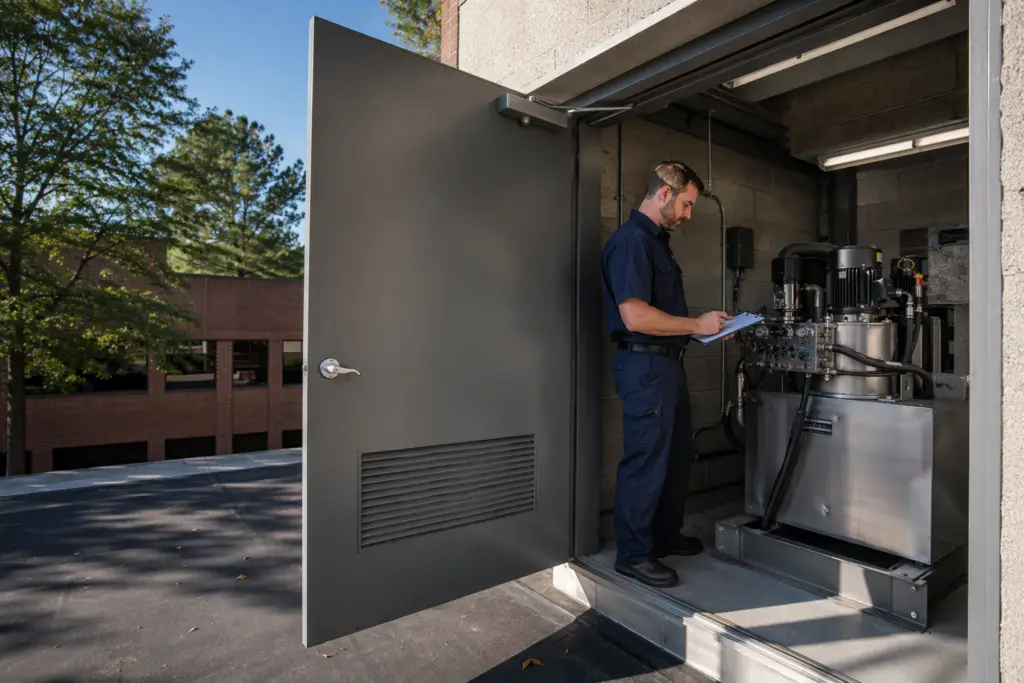
- Hydraulic system age and seepage — South Carolina specifically requires that newly installed underground hydraulic elevator cylinders be encased in plastic outer containment to limit electrolytic corrosion. Older cylinders without this protection warrant close monitoring and professional assessment.
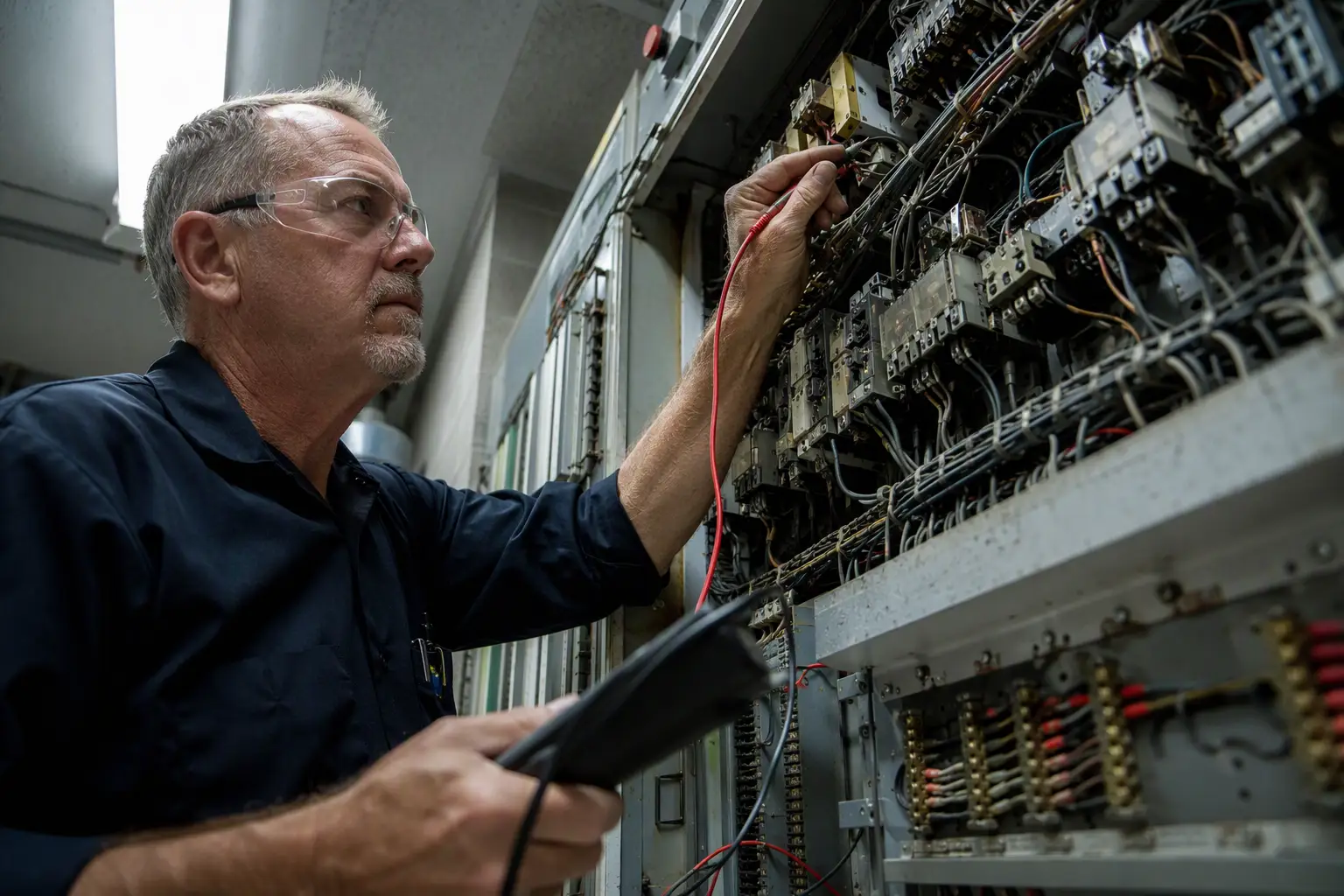
- Control system obsolescence — when replacement parts for a relay-logic or older microprocessor control panel are no longer manufactured, a single failed component can ground an elevator indefinitely.
- Worn or frayed hoisting ropes and sheaves — deterioration here is a direct safety threat and is evaluated against the criteria in the ASME A17.1 Safety Code for Elevators and Escalators.
- Emergency power system degradation — South Carolina requires passenger elevators to have standby power capable of running emergency lighting and the alarm bell for at least four hours if normal power fails. A battery or generator system that cannot meet this requirement is already out of compliance.
- Unusual noise, vibration, or leveling drift — these symptoms often indicate wear in guide shoes, buffers, or the drive machine that is progressing toward failure.
What liability exposure does a building owner face by deferring component replacement?
South Carolina law places the duty of safe operating condition squarely on the owner. When an accident seriously injures anyone other than an employee, the incident must be reported to the state before the end of the next working day. Beyond the reporting requirement, deferred maintenance that contributes to an injury creates significant civil liability exposure. Courts and insurance carriers routinely examine service records to determine whether an owner had notice of a deteriorating condition and chose not to act. Documented service recommendations that were not followed are particularly damaging in that analysis.
OSHA standards also apply in workplaces where employees use or work on elevators, adding a parallel compliance obligation that can result in citations, penalties, and stop-work orders independent of state elevator code enforcement.
Are there code-based timelines that specify when older components must be upgraded?
South Carolina has adopted the ASME A17.1/CSA B44, 2019 edition as its current safety code for new and altered elevator facilities, effective as of July 23, 2021. Elevator facilities in operation before July 1, 1986, must comply with the 1986 edition of ANSI A17.3, the safety code for existing elevators and escalators. These codes establish minimum thresholds, but they set floors — not ceilings — for safe practice. A component can be code-compliant on paper and still present elevated risk if it is worn, intermittent, or unsupported by available replacement parts. A new permit triggers full compliance with the currently adopted code edition, which means that alteration work can bring previously grandfathered conditions into the scope of modernization requirements.
What is the process for evaluating whether aging elevator components should be repaired or replaced?
- Request a comprehensive condition assessment — a qualified elevator service provider examines each major system: controls, drive machine, hoisting ropes, door operators, safety devices, hydraulic components, and emergency systems.
- Review the service and inspection history — recurring repairs to the same component are a strong indicator that replacement will be more cost-effective and safer than continued patching.
- Identify parts availability — components for discontinued product lines may have limited or no parts supply, making future repairs unreliable regardless of current condition.
- Assess code compliance gaps — compare the current condition of each system against the requirements of the ASME A17.1-2019 edition adopted by South Carolina and, for older installations, ANSI A17.3.
- Evaluate ADA accessibility requirements — aging equipment may not meet current accessibility standards under the Americans with Disabilities Act, creating a separate compliance and liability issue.
- Prioritize by risk tier — safety-critical systems (overspeed governors, brakes, safety devices, emergency power) take priority over comfort or efficiency improvements.
- Obtain a state construction permit before proceeding — South Carolina requires a state construction permit before any elevator facility is erected, constructed, altered, or installed. Alteration work performed without a permit is a violation of S.C. Code Title 41, Chapter 16.
How does ADA compliance interact with aging elevator components in South Carolina?
The ADA requires that elevators serving public accommodations and commercial facilities meet accessibility standards covering cab dimensions, door timing, control button height and labeling, audible signals, and Braille markings, among other requirements. Aging equipment may fall short of current ADA standards even if it was compliant when originally installed, particularly if controls or door systems have been modified over the years. When modernization work is planned, incorporating ADA upgrades is both a legal obligation and a practical opportunity to address multiple compliance gaps simultaneously rather than returning to the equipment a second time.
What should Columbia, SC property owners do right now if they suspect components are aging past safe limits?
- Do not wait for the next scheduled inspection — if there is any active concern about component condition, contact a qualified elevator service provider immediately.
- Pull the current operating certificate — confirm it is current and posted inside the elevator car as required by South Carolina law.
- Review recent inspection reports — any items noted as deficiencies or advisory observations by an LLR inspector or qualified special inspector should be addressed on a defined timeline.
- Secure service records — complete documentation of repairs, replacements, and maintenance is essential both for compliance purposes and for managing liability exposure.
- Contact Carolina Elevator Service for a professional evaluation — a thorough assessment by an experienced service team serving Columbia and the surrounding South Carolina market provides the factual basis needed to make informed replacement decisions.
Why does local expertise in the Columbia, SC market matter when planning elevator component replacement?
South Carolina’s regulatory environment — including the LLR’s Office of Elevators and Amusement Rides, the permit and certificate requirements under S.C. Code Title 41, Chapter 16, and the specific technical requirements of S.C. Code of Regulations Chapter 71, Article 5 — requires familiarity that goes beyond general elevator knowledge. Carolina Elevator Service works exclusively within South Carolina, serving commercial, residential, institutional, and industrial properties throughout Columbia and the broader South Carolina market. That focus means the team understands local inspection practices, permit workflows, and the practical realities of keeping aging elevator systems compliant in this regulatory environment. Local ordinances that might appear to impose additional requirements are void to the extent they conflict with the South Carolina Elevator Code, but navigating those situations requires familiarity with both the state framework and the local context.
Schedule a free consultation with Carolina Elevator Service at 803-865-1400.
Need elevator service you can rely on? Carolina Elevator Service is ready to help.