Elevator Service in Columbia, SC | Carolina Elevator Service

In South Carolina, elevator ownership and property transitions create immediate compliance obligations that neither buyers nor incoming property managers can afford to overlook. Under S.C. Code Title 41, Chapter 16 (the South Carolina Elevator Code), the owner of every elevator facility bears direct legal responsibility for keeping the equipment in safe operating condition and in compliance with state regulations — and that responsibility transfers with the property. Carolina Elevator Service works with building owners, commercial real estate professionals, and property management companies throughout the Columbia, SC area to navigate these transitions smoothly.
What Happens to an Elevator Maintenance Contract When a Building Is Sold?
A maintenance contract is a private agreement between a service provider and the contracting party — typically the previous owner or management company. When a building changes hands, that contract does not automatically bind the new owner. Several outcomes are possible:
- Assignment: If the original contract contains an assignment clause, it may transfer to the new owner, but this typically requires written consent from the elevator service provider.
- Termination: Many contracts include provisions that allow either party to terminate upon a change of ownership, sometimes with a notice period.
- Renegotiation: New owners often use the transition as an opportunity to evaluate service providers and renegotiate terms that better reflect the current condition and usage of the equipment.
- Gap in coverage: If no action is taken, the building may operate without an active maintenance agreement — a situation that creates both safety risk and potential compliance issues.
Regardless of which scenario applies, South Carolina law places ongoing compliance obligations on whoever holds ownership of the elevator facility at any given time. That means new owners should treat the maintenance contract review as an immediate priority, not an afterthought.
What Are South Carolina’s Elevator Compliance Requirements That Follow a Property Transfer?
Under the South Carolina Elevator Code and S.C. Code of Regulations Chapter 71, Article 5 (Regulations 71-5000 through 71-5700), several requirements apply to the elevator facility regardless of who owns the building:
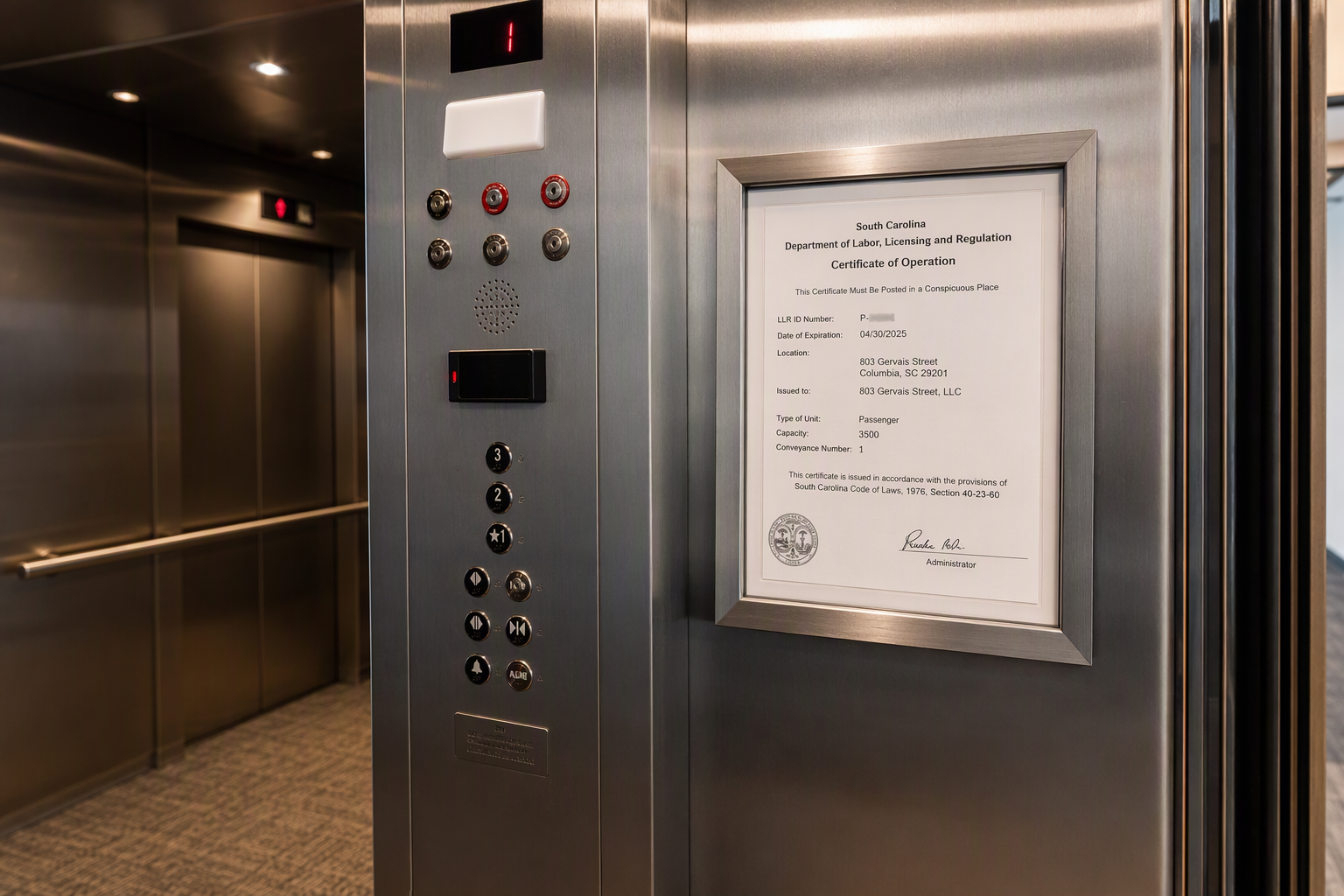
- No elevator facility may be operated without a current certificate of registration and an operating certificate issued by the South Carolina Department of Labor, Licensing and Regulation (LLR), Office of Elevators and Amusement Rides.
- The operating certificate — or a copy — must be displayed conspicuously inside each elevator car at all times.
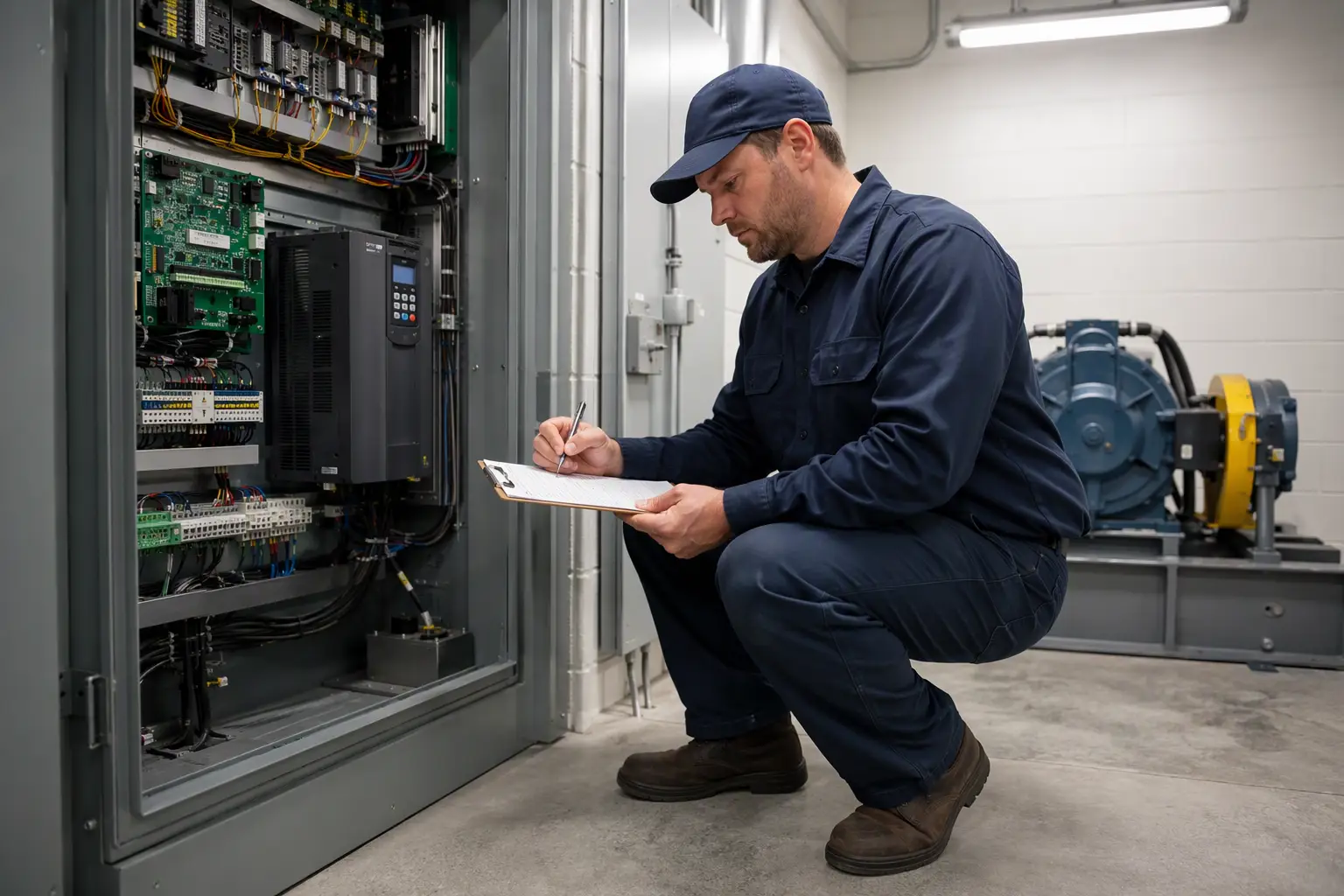
- Passenger elevators must be inspected at least once a year before the operating certificate is renewed.
- The new owner assumes full legal responsibility for maintaining the elevator facility in safe operating condition and in line with state regulations from the date of transfer.
- Any accident that seriously injures a person who is not an employee must be reported to the state before the end of the next working day.
South Carolina adopted the ASME A17.1/CSA B44, 2019 edition, effective July 23, 2021, as its governing safety code for new and altered elevator installations. Incoming owners should confirm that any equipment meets the applicable edition of the code that was in effect when permits were originally issued.
What Should a New Property Owner Do Immediately After Acquiring a Building with Elevators?
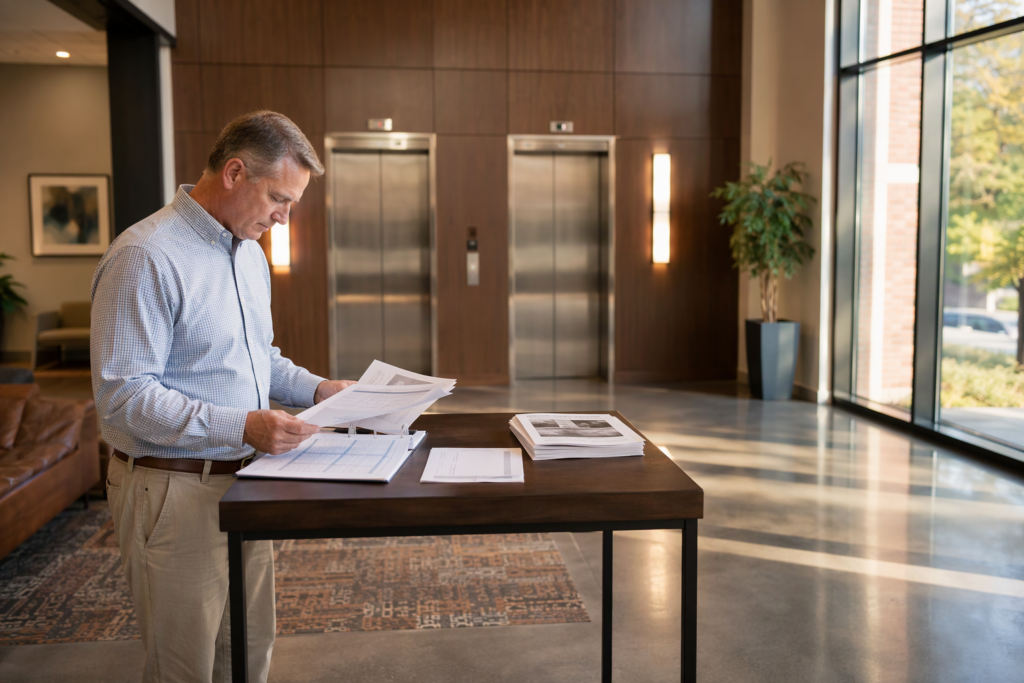
- Request all elevator documentation from the seller, including the current operating certificate, certificate of registration, recent inspection reports, permit history, and any existing maintenance contracts.
- Verify the operating certificate is current and that a copy is posted inside each elevator car as required by state law.
- Review the existing maintenance contract to determine whether it can be assigned, must be terminated, or has lapsed — and identify any notice deadlines.
- Contact the South Carolina Department of Labor, Licensing and Regulation (LLR), Office of Elevators and Amusement Rides to update ownership records and confirm the registration status of each elevator facility.
- Schedule a condition assessment with a qualified elevator service company to evaluate the current state of all equipment before assuming full liability.
- Establish a new or successor maintenance agreement to ensure the facility remains covered and that annual inspection obligations can be met without interruption.
- Confirm ADA compliance for any public-access elevators by reviewing applicable requirements at ADA.gov.
What Happens to Elevator Contracts When a Property Management Company Changes?
A change in property management is distinct from a change in ownership, but it creates similar contract review obligations. Elevator maintenance contracts are typically signed by the property manager on behalf of the building owner. When management transitions:
- The incoming management company should confirm whether they are authorized to administer the existing contract or whether a new agreement is needed.
- The building owner — who retains legal ownership — remains the party ultimately responsible for compliance with South Carolina elevator law.
- Incoming managers should immediately locate and verify the operating certificate, since state law requires it to be displayed inside each car and updated at each annual renewal.
- If the previous management company held the maintenance contract in their own name rather than the owner’s, that agreement may not be valid for the new management relationship at all.
Carolina Elevator Service assists property management companies throughout the Columbia, SC area — including the Midlands region and surrounding communities — in reviewing existing elevator agreements and establishing clear, compliant service relationships at the point of transition.
Can a New Owner Be Held Responsible for a Previous Owner’s Elevator Violations?
Under South Carolina law, the current owner is responsible for keeping elevator facilities in safe operating condition and in compliance with state regulations. Outstanding violations, deferred maintenance, or lapsed certifications discovered after a purchase become the new owner’s obligation to remedy. This makes pre-purchase due diligence — including a professional elevator condition assessment — an important step in any commercial real estate transaction. Undiscovered issues do not pause compliance timelines.
How Does South Carolina’s Inspection Requirement Apply During a Property Transition?
South Carolina requires passenger elevators to be inspected at least once a year before the operating certificate is renewed. Inspections may be conducted by state inspectors or by licensed special inspectors — individuals who meet the qualifications set out in the 2018 edition of QEI-1, the American National Standard for Qualification of Elevator Inspectors. One important restriction: a special inspector may not inspect an elevator on which the inspector or the inspector’s employer holds a current service or warranty contract. This rule preserves inspection independence and is worth understanding when evaluating service providers during a transition.
For other equipment types, South Carolina sets different inspection intervals: handicap lifts are inspected every five years, and manlifts, television tower elevators, and special purpose elevators every seven years. Dumbwaiters are inspected when installed or altered.
What Should a New Owner Look for in a Replacement Elevator Maintenance Contract?
Not all maintenance agreements are structured the same way. When evaluating or renegotiating a contract following a property transition, owners and property managers should consider:
- Scope of coverage: Does the agreement include routine maintenance, emergency service, parts, and compliance documentation, or only specific services?
- Inspection coordination: Will the service provider assist in coordinating or facilitating the annual inspection required by the South Carolina Department of Labor, Licensing and Regulation (LLR)?
- Documentation practices: Will the provider maintain records needed for certificate renewals and any future property transactions?
- Contract term and exit provisions: Are there assignment clauses, termination rights, and notice periods that accommodate future property changes?
- Conflict of interest provisions: Confirm that the service company is not also serving as the special inspector for the same equipment, which would disqualify that inspection under South Carolina law.
Why Does Local Elevator Expertise Matter in a Columbia, SC Property Transition?
South Carolina’s elevator regulatory framework — administered by the LLR’s Office of Elevators and Amusement Rides under S.C. Code Title 41, Chapter 16 — has specific requirements that differ from those of other states. Working with a service company that knows the Columbia, SC market, understands how local inspections are coordinated, and is familiar with the equipment commonly found in Midlands-area commercial, residential, and institutional buildings reduces the risk of compliance gaps during a transition.
Carolina Elevator Service provides elevator maintenance, inspection support, and compliance guidance to building owners and property managers across Columbia and the surrounding Midlands region. The team serves a wide range of property types — commercial office buildings, multifamily residential properties, healthcare facilities, retail centers, and public institutions — and supports clients through ownership and management transitions of all sizes.
Schedule a Free Consultation
If your building is changing hands or your property management structure is shifting, do not let elevator compliance fall through the cracks. Carolina Elevator Service helps Columbia, SC property owners and managers review existing contracts, confirm regulatory status with the South Carolina Department of Labor, Licensing and Regulation (LLR), and establish dependable service agreements before problems arise.
Contact Carolina Elevator Service today: 803-865-1400
Schedule a free consultation and let the Carolina Elevator Service team review your elevator documentation, assess your equipment’s current condition, and help you enter your next chapter of ownership or management with full confidence in your compliance standing.
Need elevator service you can rely on? Carolina Elevator Service is ready to help.