Elevator Modernization Cost Breakdown: A Complete Data Guide
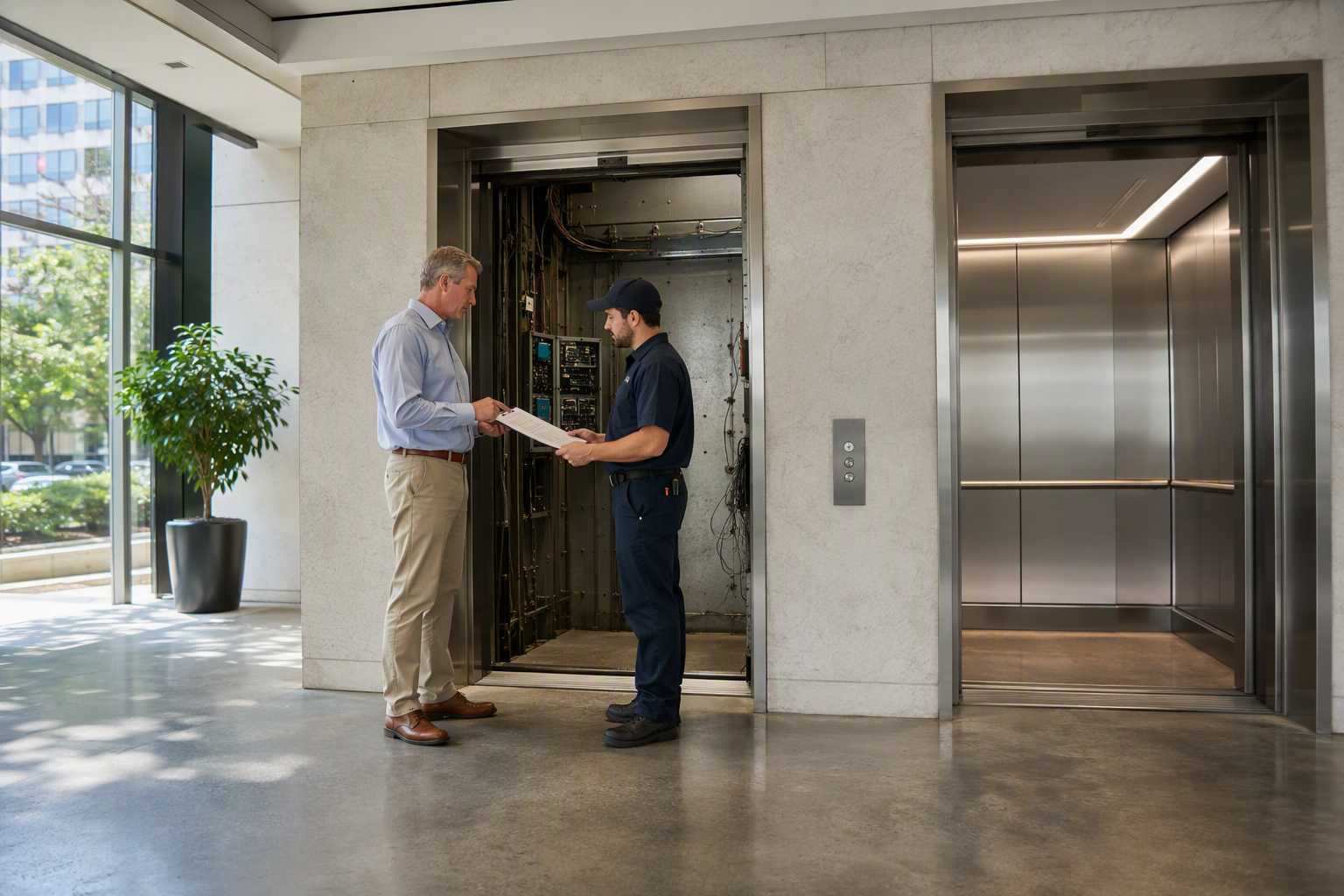
Understanding the true cost of elevator modernization requires more than a single number. The investment depends on the elevator type, building configuration, local code requirements, and whether the project is a targeted component upgrade or a complete system overhaul. This guide breaks down every cost driver, compliance obligation, and decision point property owners and facility managers need to evaluate before committing to a modernization project.
What Is Elevator Modernization?
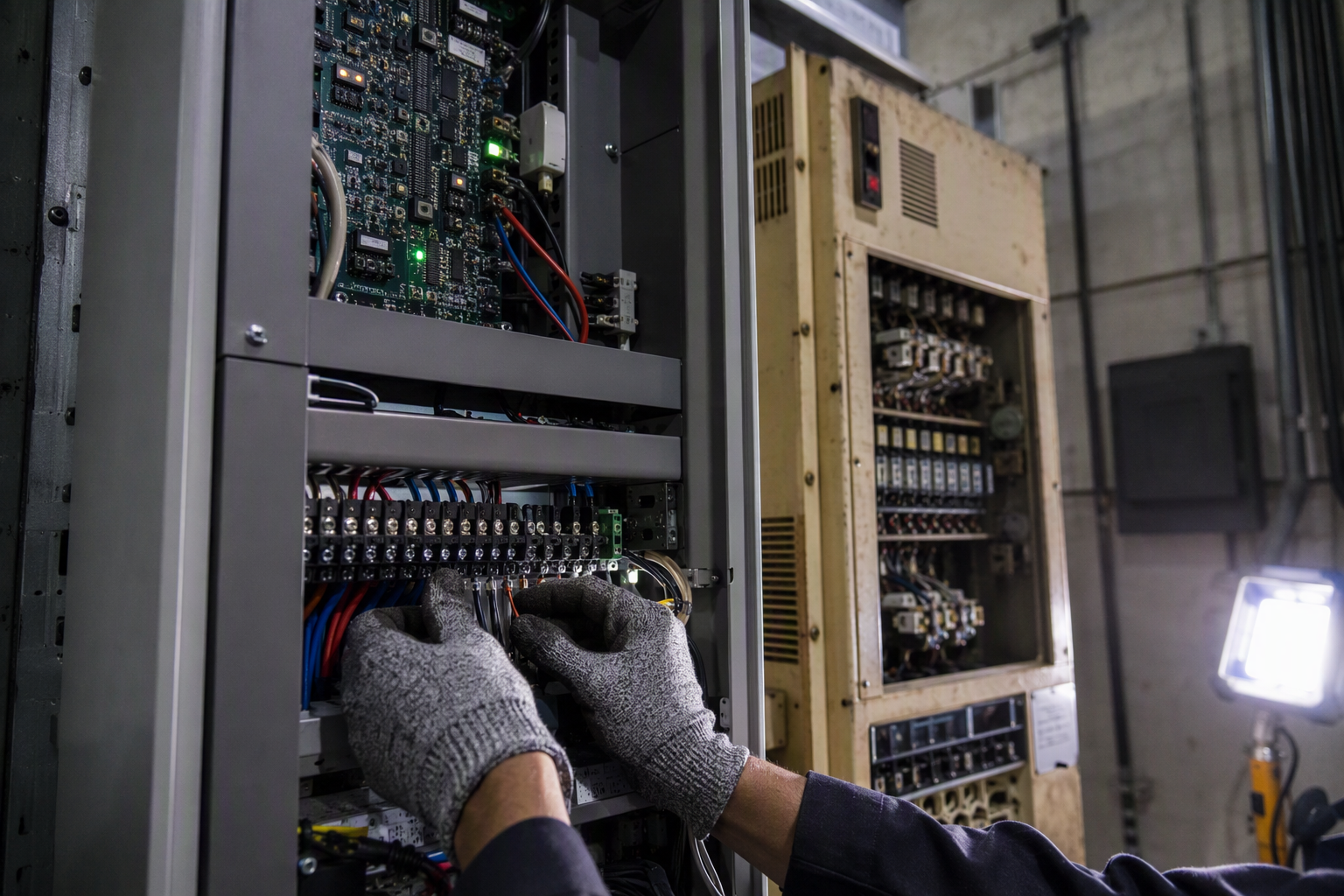
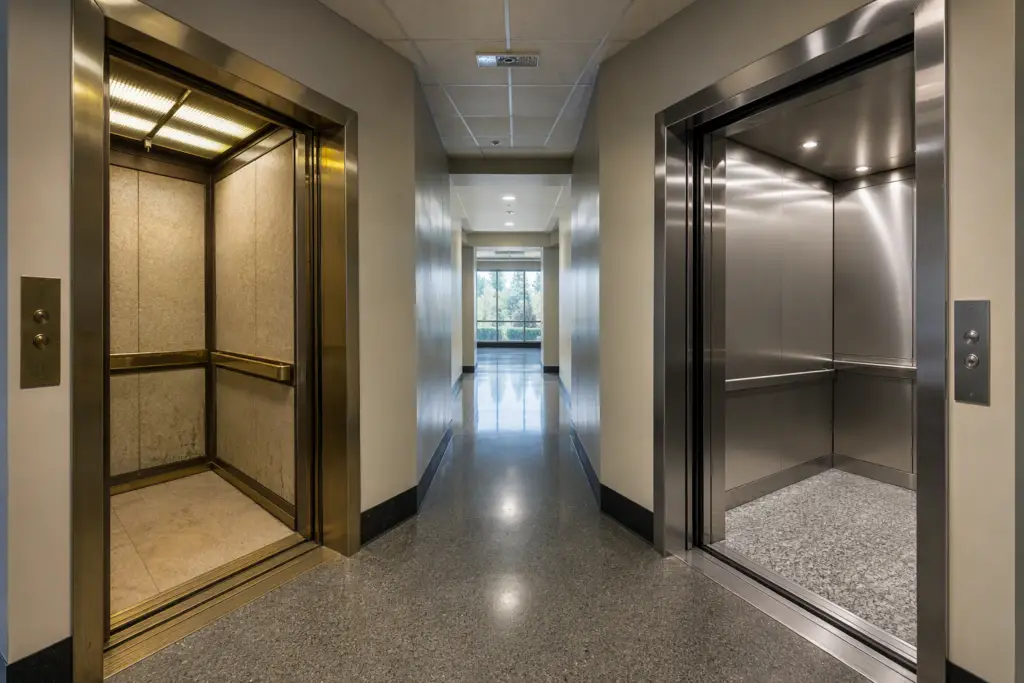
Elevator modernization — sometimes called a “mod” in the industry — is the process of replacing or upgrading major components of an existing elevator system without removing the entire hoistway or structure. Modernization is distinct from routine maintenance and from full replacement. The goal is typically to extend the service life of the elevator, bring it into compliance with current codes, improve energy efficiency, enhance reliability, and update the passenger experience.
Common modernization scopes include:
- Control system upgrades: Replacing relay-logic or older solid-state controllers with modern microprocessor-based controls
- Drive system replacement: Upgrading from older DC or hydraulic power units to variable-voltage, variable-frequency (VVVF) AC drives
- Door operator and hardware replacement: Modernizing door operators, gibs, hangers, and safety edges
- Cab interior renovation: New flooring, wall panels, lighting, ceiling, and fixtures
- Safety device upgrades: Governor, safeties, buffers, and emergency lighting brought to current code
- Hydraulic unit and oil replacement: New power units, cylinders, and environmentally safe fluid for hydraulic elevators
What Are the Primary Cost Drivers for Elevator Modernization?

No two modernization projects carry identical costs, but industry professionals consistently identify the same core variables that drive pricing up or down:
1. Elevator Type and Drive System
Hydraulic elevators (typically serving low-rise buildings up to five or six floors) have different modernization pathways than traction elevators. Traction systems — whether geared or gearless — involve machine room equipment, counterweights, and high-voltage drive components that typically increase parts and labor complexity. Machine-room-less (MRL) traction systems introduce their own access and replacement challenges. The type of elevator dictates which components must be addressed and what testing protocols apply.
2. Number of Stops and Travel Height
A two-stop elevator in a small commercial building requires far less new wiring, fewer controller boards, and less labor than a 20-stop high-rise elevator. Each additional floor typically adds wiring runs, additional landing fixtures, door equipment, and programming complexity. Projects with more stops take longer to complete, increasing labor costs proportionally.
3. Scope: Partial vs. Full Modernization
A partial modernization targets a specific failing system — most often the controller or door operators — while leaving other components in place. A full modernization replaces virtually all mechanical and electrical components simultaneously. Full modernizations carry a higher upfront cost but often reduce the need for follow-on partial projects within a short window, potentially delivering better total cost of ownership over a five-to-ten-year horizon.
4. Code Compliance Requirements
Whenever major components are altered, ASME A17.1 Safety Code for Elevators and Escalators and the locally adopted edition of that code govern what additional upgrades must be triggered. Depending on the jurisdiction and the scope of work, a control modernization may simultaneously require the installation of door reopening devices, emergency lighting, firefighters’ service Phase I and Phase II operation, or two-way communication systems. These triggered requirements can meaningfully affect total project cost and should be identified in the planning phase, not discovered mid-project.
5. Accessibility Compliance
If a modernization constitutes an “alteration” under federal accessibility law, it may trigger obligations under the Americans with Disabilities Act (ADA). Relevant considerations include accessible cab controls at the correct mounting heights, Braille and tactile characters on control panels, audible and visual floor signals, and door timing requirements. Facilities that have not previously addressed ADA compliance in their elevator should budget for these elements during any significant modernization.
6. Equipment Availability and Lead Times
Supply chain conditions — particularly for proprietary control systems, drive components, and landing fixtures — can significantly affect both project cost and timeline. Elevators with legacy or proprietary components from manufacturers that no longer support those product lines may require custom engineering, third-party adaptors, or complete control replacement where a partial upgrade might otherwise have sufficed. In 2025 and 2026, extended manufacturing lead times for certain components remain a planning consideration for facility managers scheduling modernization projects.
7. Building Access and Logistics
Machine room location, freight elevator availability, parking access for service vehicles, and whether the building can tolerate an elevator being out of service all affect labor hours and project scheduling. Buildings with a single elevator serving multiple tenants often require phased or weekend work to minimize disruption, which can increase overall labor cost compared to a straightforward daytime shutdown.
8. Local Permit and Inspection Fees
All elevator modernization work requires permits and third-party inspections in virtually every jurisdiction in the United States. Permit fees vary by municipality and by project scope. Some states require inspections at multiple stages — before, during, and after installation — which affects both project scheduling and cost. These fees are typically itemized separately from contractor labor and equipment costs.
How Do Partial and Full Modernizations Compare in Scope?
Understanding the difference between a partial and full modernization helps facility managers align budget to actual need:
| Modernization Type | Typical Scope | Primary Benefit | Typical Triggered Code Review |
|---|---|---|---|
| Controls-Only | Controller, wiring, selector, landing fixtures | Reliability, parts availability | Yes — safety device review required |
| Door Modernization | Operators, gibs, hangers, safety edges | Reduced door-related callbacks | Partial — door safety code review |
| Drive System Only | Motor, drive controller, machine | Energy efficiency, smooth ride | Yes — full electrical review typical |
| Full Modernization | All mechanical, electrical, cab, safety | Extended service life, full code compliance | Comprehensive — all systems reviewed |
Note: The scope triggers in this table reflect general industry practice under ASME A17.1 and locally adopted code amendments. Specific requirements vary by jurisdiction and adopted code edition. Always confirm with the authority having jurisdiction (AHJ) before finalizing project scope.
What Safety Codes Govern Elevator Modernization?
The foundational safety standard for elevator modernization in the United States is the ASME A17.1 Safety Code for Elevators and Escalators. Individual states and municipalities adopt specific editions of this code, and the adopted edition determines exactly which requirements apply to a given project. Code adoption is not uniform — a city in one state may be operating under a different edition than a neighboring jurisdiction. This makes pre-project code research an essential step, not an afterthought.
Key ASME A17.1 requirements frequently relevant to modernization projects include:
- Door reopening device requirements (mechanical or light-curtain safety edges)
- Emergency lighting and power specifications for the cab
- Two-way emergency communication requirements
- Firefighters’ emergency operation (Phase I recall and Phase II in-car operation)
- Governor and safety device testing intervals and standards
- Seismic requirements in applicable geographic zones
Worker safety during the modernization process itself falls under the jurisdiction of the Occupational Safety and Health Administration (OSHA), particularly lockout/tagout procedures, fall protection in hoistways, and electrical safety requirements for elevator mechanics.
How Long Does an Elevator Modernization Take?
Timeline varies considerably with scope and building conditions. A controls-only modernization on a low-rise hydraulic elevator may be completed in a matter of days, while a full modernization of a multi-stop traction elevator in a high-rise building can require several weeks of on-site work, followed by inspection and re-commissioning time. Key timeline factors include:
- Pre-project planning and permitting: Permit approval timelines vary by jurisdiction, ranging from a few days to several weeks. Beginning the permitting process well before the intended start date is essential.
- Parts procurement: Lead times for controllers, drive systems, and landing fixtures should be confirmed before scheduling the installation window. Custom or legacy-replacement components may require longer lead times.
- Installation phase: Actual on-site work, including removal of old equipment, wiring, and installation of new components.
- Testing and adjusting: After installation, the system must be tested, adjusted, and tuned before inspection.
- Third-party inspection and approval: The authority having jurisdiction must inspect and approve the work before the elevator returns to passenger service. Scheduling delays with inspectors can extend the out-of-service window.
What Questions Should Facility Managers Ask Before a Modernization Bid?
Requesting multiple bids without a clear scope framework often results in comparing projects that are not truly equivalent. Before soliciting proposals, facility managers benefit from having clear answers to these questions:
- What is the current age of the control system, drive system, and door operators?
- Are replacement parts for existing components still available, and at what cost and lead time?
- What edition of ASME A17.1 has the local jurisdiction adopted, and what triggered requirements apply?
- Has the elevator ever been assessed for ADA compliance under current standards?
- Are there any known hydraulic oil contamination or cylinder corrosion issues (for hydraulic systems)?
- What is the building’s tolerance for elevator downtime during the project?
- Are there any planned building renovations that should be coordinated with the elevator modernization?
Is Elevator Modernization More Cost-Effective Than Full Replacement?
This is one of the most consequential decisions a building owner faces. Modernization preserves the existing hoistway, machine room infrastructure, and structural elements, avoiding the significant construction cost of creating new shaft space. Full replacement becomes more cost-effective primarily when the hoistway structure itself is compromised, when the elevator is a non-standard configuration that would require extensive custom work to modernize, or when building use is changing so substantially that the existing elevator layout is fundamentally inadequate.
For the majority of commercial and residential elevator installations in existing buildings, modernization delivers comparable functional improvements at a lower total cost than replacement, with a shorter project timeline and less building disruption.
What Are the Energy Efficiency Benefits of Modernization?
One of the most consistent benefits of elevator modernization — particularly drive system upgrades — is improved energy efficiency. Older DC drive systems and single-speed AC hydraulic power units consume substantially more energy than modern variable-voltage, variable-frequency (VVVF) drive systems. VVVF drives modulate power consumption based on actual load and travel speed rather than running at full power continuously. LED lighting in modernized cabs also reduces energy draw compared to fluorescent or incandescent fixtures. For building owners pursuing LEED certification or energy benchmarking targets, elevator drive system modernization can contribute meaningfully to overall building efficiency improvements.
How Do 2025–2026 Industry Trends Affect Modernization Planning?
Several trends are shaping elevator modernization decisions heading into 2026:
- Remote monitoring integration: Modernization projects increasingly incorporate IoT-enabled controllers that allow remote diagnostics and predictive maintenance. This capability can reduce future service costs by identifying component wear before a failure occurs.
- Sustainability requirements: Growing pressure from building owners, tenants, and municipal sustainability programs is accelerating the retirement of older, energy-intensive systems.
- Code update cycles: As jurisdictions continue to adopt more recent editions of ASME A17.1, the triggered requirements for any given modernization scope may become more comprehensive. Facility managers who plan ahead can budget appropriately rather than encountering surprises mid-project.
- Component supply chain conditions: Ongoing global supply chain variability continues to affect lead times for certain elevator components. Early procurement planning has become a standard best practice.
- Workforce and labor market factors: Demand for certified elevator mechanics remains high in many markets, making scheduling and project planning more important than ever for time-sensitive modernization projects.
What Is the Typical Step-by-Step Process for an Elevator Modernization Project?
- Assess current system condition: A qualified elevator professional conducts a comprehensive inspection of all mechanical, electrical, and safety components to document current condition and identify code deficiencies.
- Define project scope: Based on assessment findings, code requirements, and ownership objectives, the project scope is defined — partial or full, and which specific systems are included.
- Confirm code requirements with AHJ: The authority having jurisdiction is consulted to confirm which code edition applies and which triggered requirements must be addressed based on the intended scope.
- Obtain bids and select contractor: Detailed specifications are issued to qualified elevator contractors for competitive bidding. Bids are compared on an apples-to-apples basis against the defined scope.
- Obtain permits: The selected contractor submits permit applications to the local jurisdiction. Work cannot legally begin until permits are issued.
- Procure equipment: Long-lead components are ordered in advance of the scheduled installation start date.
- Execute installation: Elevator is taken out of service; old components are removed and new components are installed per the approved plans.
- Test and adjust: All systems are tested, adjusted, and verified by the installing contractor before inspection.
- Third-party inspection: The authority having jurisdiction or its designated inspector performs the required inspection(s) and issues approval or identifies items requiring correction.
- Return to service: Upon final inspection approval, the elevator is returned to passenger service.
Does the ADA Require Elevator Upgrades During Modernization?
The Americans with Disabilities Act requires that alterations to existing facilities be made in a manner that, to the maximum extent feasible, makes the altered portion accessible. When an elevator modernization constitutes an “alteration” under ADA standards — which a substantial modernization typically does — the elevator must comply with ADA accessibility requirements to the maximum extent feasible. This may include cab control panel mounting heights, button design, Braille and raised character signage, auditory and visual floor indicators, and door timing. Facilities planning a modernization should specifically evaluate ADA compliance as part of the scope definition process to avoid the cost of retrofitting accessibility features after project completion.
What Are Common Hidden Costs in Elevator Modernization Projects?
Experienced facility managers and building owners consistently identify several cost elements that are underrepresented in initial project budgets:
- Triggered code requirements: As noted above, major scope work can trigger additional mandatory upgrades that were not anticipated in the initial budget.
- Asbestos and hazardous material abatement: Older buildings may have asbestos-containing materials in machine rooms or hoistways that require professional abatement before new work can proceed.
- Electrical service upgrades: Modern VVVF drive systems may require higher-ampacity electrical service than what was originally installed for the elevator. Electrical panel and wiring upgrades can add to project cost.
- Hydraulic oil disposal: Environmental regulations govern the disposal of used hydraulic oil, and disposal costs should be explicitly included in hydraulic elevator modernization contracts.
- Temporary elevator service or tenant communication: In multi-tenant buildings, communicating elevator downtime and, in some cases, providing temporary access accommodations, carries real cost and logistics effort.
- Post-inspection corrections: Inspectors may identify deficiencies requiring rework before final approval. A contingency budget helps absorb these without project delays.
How Should Property Owners Compare Elevator Modernization Bids?
Comparing bids effectively requires that all proposals address an identical scope. Key elements to verify across proposals include:
- Whether permit fees and inspection costs are included or excluded
- Whether equipment disposal (including hydraulic oil, if applicable) is included
- The specific makes and models of proposed replacement components
- Whether the proposal addresses all triggered code requirements identified during pre-bid scope development
- Warranty terms for both parts and labor
- Contractor licensing and insurance documentation
- References from comparable completed projects
A lower bid that omits triggered code requirements or substitutes lower-quality components does not represent a true cost savings — it represents deferred cost and potential compliance risk.
What Role Does Preventive Maintenance Play Before and After Modernization?
Elevator modernization and preventive maintenance are complementary strategies, not alternatives. A well-maintained elevator that undergoes modernization at an appropriate point in its service life will generally perform better and require less emergency service after the project than a poorly maintained elevator that reaches modernization in a severely degraded state. Equally important, a newly modernized elevator requires ongoing preventive maintenance to protect the investment and maintain code compliance. Post-modernization maintenance contracts should be evaluated with the same rigor as the modernization project itself.
How Does Carolina Elevator Service Approach Modernization Projects?
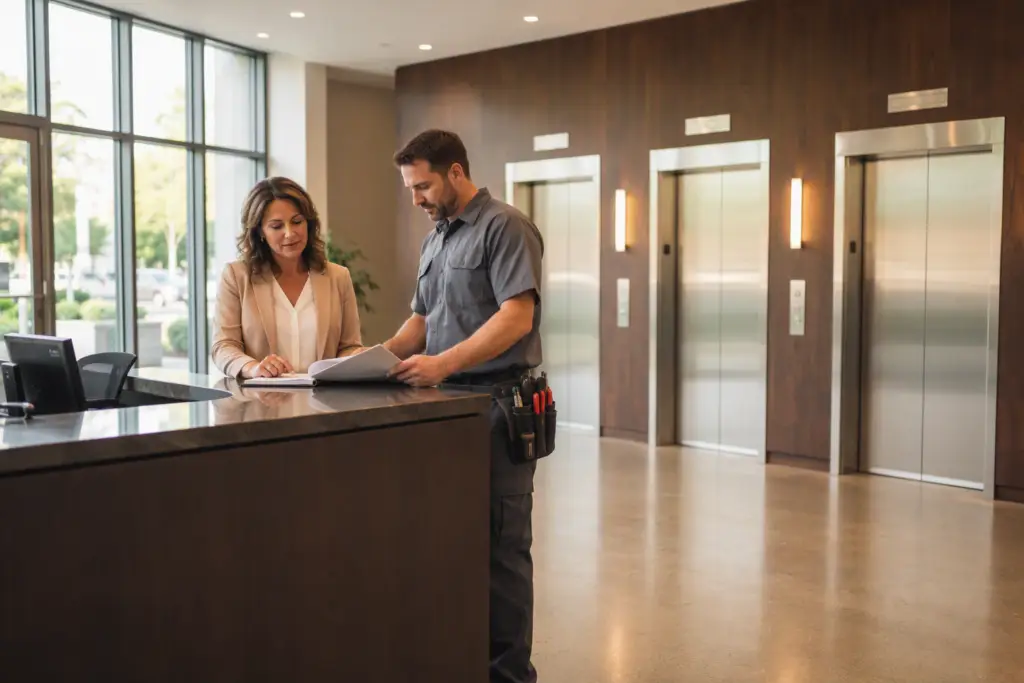
Carolina Elevator Service approaches elevator modernization as a structured, data-driven process. Rather than offering one-size-fits-all solutions, the team conducts a thorough assessment of each elevator’s current condition, cross-references findings against the applicable edition of ASME A17.1 and local code adoptions, and develops scope recommendations grounded in what the equipment actually requires — not what generates the largest project. The goal is to provide facility managers and building owners with a clear, honest picture of what a modernization will cost, what it will accomplish, and what ongoing maintenance commitments will follow.
By maintaining familiarity with both the technical requirements of ASME A17.1, ADA accessibility standards, and OSHA worker safety requirements, Carolina Elevator Service helps clients avoid the costly surprises that arise when code requirements are not properly anticipated at the planning stage.
What Should Be the First Step When Considering Elevator Modernization?
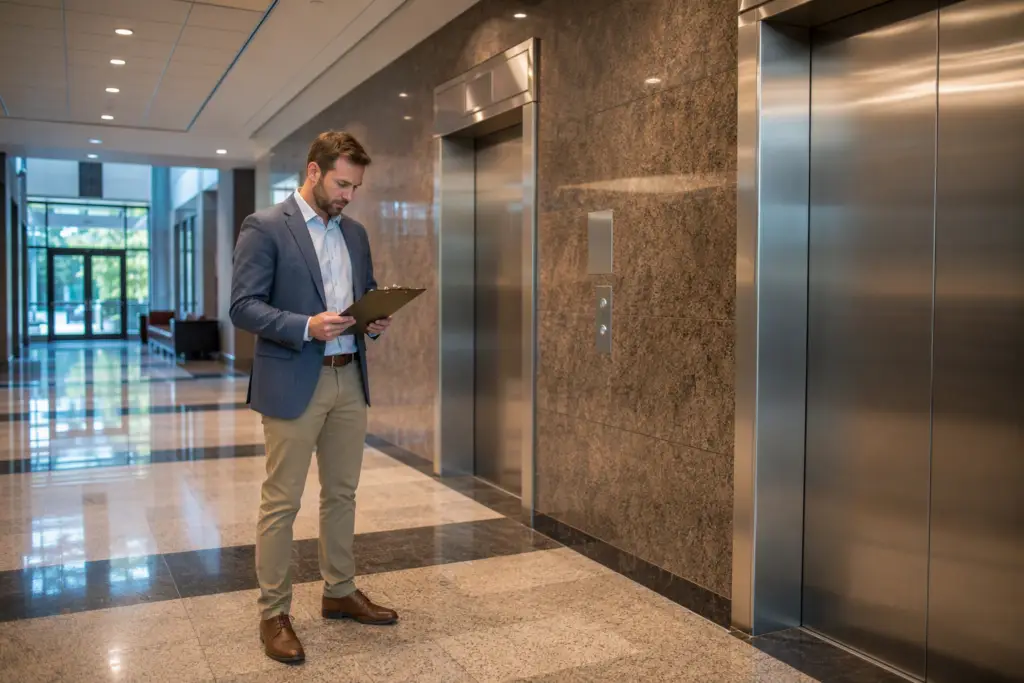
The single most important first step is a professional condition assessment — not a sales visit, but a systematic evaluation of the elevator’s current mechanical and electrical condition against current code requirements. This assessment provides the factual foundation for all subsequent decisions: whether to modernize now or defer, which components must be addressed to achieve compliance, which upgrades offer the best return on investment, and what realistic budget and timeline the project requires.
Attempting to budget for modernization without a current, accurate assessment is the most common cause of significant budget overruns and scope surprises in elevator projects.
Get a Professional Elevator Assessment from Carolina Elevator Service
Understanding the true cost of elevator modernization starts with understanding the true condition of your elevator. Carolina Elevator Service provides thorough, honest assessments that give facility managers and building owners the information they need to make confident modernization decisions — without surprises.
Contact Carolina Elevator Service for a free elevator assessment: 803-865-1400
Need elevator service you can rely on? Carolina Elevator Service is ready to help.