South Carolina hotel property managers face a layered set of obligations that touch state elevator law, federal accessibility standards, and ongoing maintenance best practices. Getting any one of these wrong can mean an elevator taken out of service, a failed inspection, an ADA complaint, or worse — a guest injury. This guide walks through the key requirements, compares your compliance and maintenance options, and answers the questions hotel operators ask most often.
What Are the Core Legal Requirements for Hotel Elevators in South Carolina?
Hotel elevators in South Carolina fall under S.C. Code Title 41, Chapter 16 (the South Carolina Elevator Code), administered by the South Carolina Department of Labor, Licensing and Regulation (LLR), Office of Elevators and Amusement Rides. The technical standard adopted by South Carolina is the ASME A17.1-2019/CSA B44:19 Safety Code for Elevators and Escalators, effective after adoption in the S.C. State Register on July 23, 2021. The regulations sit in S.C. Code of Regulations Chapter 71, Article 5, Regulations 71-5000 through 71-5700.
At the state level, every hotel elevator must meet these non-negotiable requirements:
- A certificate of registration and a current operating certificate from the state — no elevator may legally operate without both.
- The operating certificate, or a legible copy, must be displayed conspicuously inside each elevator car.
- A state construction permit is required before any elevator is erected, constructed, altered, or installed.
- The owner — in a hotel context, that is the property owner or management company — bears the legal duty to keep every elevator facility in safe operating condition and in compliance with state regulations.
- Any accident that seriously injures someone other than an employee must be reported to the state before the end of the next working day.
- Passenger elevators must have standby power capable of running emergency lighting and the alarm bell for at least four hours if normal power fails.
Federally, hotels that serve the public must also comply with the Americans with Disabilities Act (ADA), which sets accessibility requirements for elevator size, door timing, controls, and signage.
How Often Do Hotel Elevators Need to Be Inspected in South Carolina?

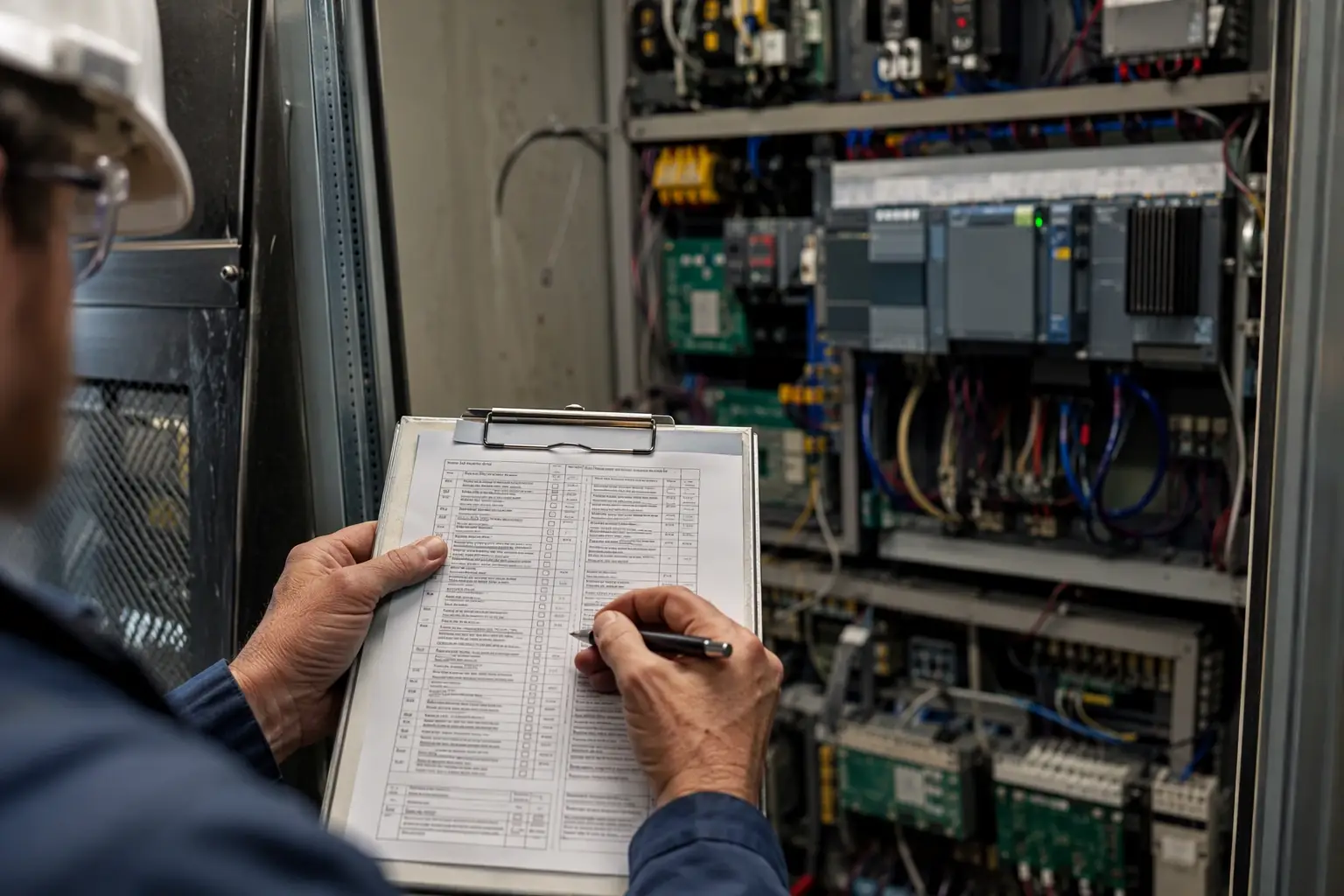
South Carolina requires that passenger elevators be inspected at least once per year, with the inspection completed before the operating certificate is renewed. Inspections are also required at installation, registration, and after any alteration or repair.
Inspections may only be conducted by state inspectors or special inspectors licensed under the qualifications in the 2018 edition of QEI-1, the American National Standard for Qualification of Elevator Inspectors. A special inspector’s inspection may be accepted in place of a state inspection. However, South Carolina law prohibits a special inspector from inspecting any elevator on which the inspector — or the inspector’s employer — holds a current service or warranty contract. This conflict-of-interest rule is especially important for hotel operators who are evaluating combined service-and-inspection arrangements.
Other equipment types have different inspection intervals under South Carolina regulations:
| Equipment Type | South Carolina Inspection Interval |
|---|---|
| Passenger / Commercial Elevators (hotels) | At least once per year (before operating certificate renewal) |
| Handicap Lifts (platform lifts) | Every five years |
| Manlifts, television tower elevators, special purpose elevators | Every seven years |
| Dumbwaiters | When installed or altered |
| Any elevator (after alteration or repair) | Before return to service |
What ADA Accessibility Requirements Apply to Hotel Elevators?
The ADA requires that hotels providing public accommodations make elevators accessible to guests with disabilities. Key accessibility requirements cover minimum car dimensions, door width, door-open timing, audible and visual floor indicators, Braille and raised-character control buttons, and handrail placement. Hotels undergoing renovation face stricter “path of travel” obligations that can trigger accessibility upgrades even when only a portion of the property is being altered.
ADA compliance is enforced independently of state inspection — a hotel can pass its South Carolina annual inspection and still face an ADA complaint if accessibility features are missing or malfunctioning. Property managers should treat ADA compliance as a parallel, continuous obligation, not a one-time checkbox.
What Happens to Older Hotel Elevators Installed Before 1986?
South Carolina has a distinct compliance track for older equipment. Elevator facilities in operation before July 1, 1986 must comply with the 1986 edition of ANSI A17.3, the safety code for existing elevators and escalators, rather than the current new-installation standard. Historic hotel properties with original elevator equipment should confirm with the LLR’s Office of Elevators and Amusement Rides which edition of the code governs their specific installation.
New installations — regardless of a hotel’s age — must comply with the edition of ASME A17.1 that was in effect when the construction permit was issued. For permits issued after July 23, 2021, that standard is ASME A17.1-2019/CSA B44:19.
What Should a Hotel Elevator Maintenance Program Include?
Annual inspections verify code compliance at a point in time — they do not substitute for a structured maintenance program. A professionally managed maintenance plan for a hotel elevator typically addresses the following categories:
| Maintenance Category | What Is Checked or Serviced | Typical Frequency |
|---|---|---|
| Safety devices | Governor, safeties, buffers, interlocks, door contacts | Per manufacturer schedule and ASME A17.1 periodic test requirements |
| Drive system (traction or hydraulic) | Motor, brake, ropes or hydraulic fluid and cylinder | Regular intervals per service agreement |
| Door operation | Door operator, gibs, sills, closing force, re-opening device | High-priority — doors are the leading source of entrapment incidents |
| Control systems | Controller boards, wiring, software/firmware where applicable | As recommended by manufacturer or following any fault event |
| Emergency systems | Standby power (four-hour minimum per S.C. law), alarm bell, emergency lighting, two-way communication | At minimum annually; tested after any power interruption |
| Lubrication and cleaning | Guide rails, rollers, bearings, pit | Per manufacturer intervals |
| ADA accessibility features | Button illumination, audible signals, Braille wear, door timing | At minimum annually |
| Certificate display | Confirm operating certificate is conspicuously posted in car | Upon each renewal and after any car interior work |
What Are the Pros and Cons of Different Maintenance Arrangements for Hotels?
| Arrangement | Pros | Cons | Best Fit |
|---|---|---|---|
| Full-service contract with an independent provider | Scheduled visits, single point of accountability, independent from inspection (avoids conflict-of-interest issue), often more flexible pricing | Requires vetting the provider’s qualifications | Most hotel properties seeking cost transparency and compliance separation |
| OEM (original manufacturer) service contract | Proprietary parts access, manufacturer expertise on specific equipment | Often higher cost, may limit who can inspect (conflict-of-interest rules apply), may lock in proprietary components | New installations under warranty or highly specialized equipment |
| Time-and-materials only (no contract) | No ongoing commitment, pay only when needed | No scheduled preventive maintenance, higher risk of compliance gaps, potentially longer response after a breakdown | Low-use properties with simple equipment — rarely appropriate for hotels |
| In-house maintenance staff | Immediate on-site response for minor issues | South Carolina elevator work requires qualified technicians; general maintenance staff cannot perform regulated elevator work | Supplemental to — never a replacement for — licensed elevator service |
Carolina Elevator Service operates as an independent elevator service provider serving South Carolina hotels and commercial properties. Because Carolina Elevator Service does not perform state inspections, there is no conflict-of-interest concern under South Carolina’s prohibition on inspectors servicing elevators they maintain — property managers can use Carolina Elevator Service for maintenance and select a qualified state or special inspector for the annual compliance inspection separately.
What Steps Should a Hotel Take Immediately After a Failed Inspection?
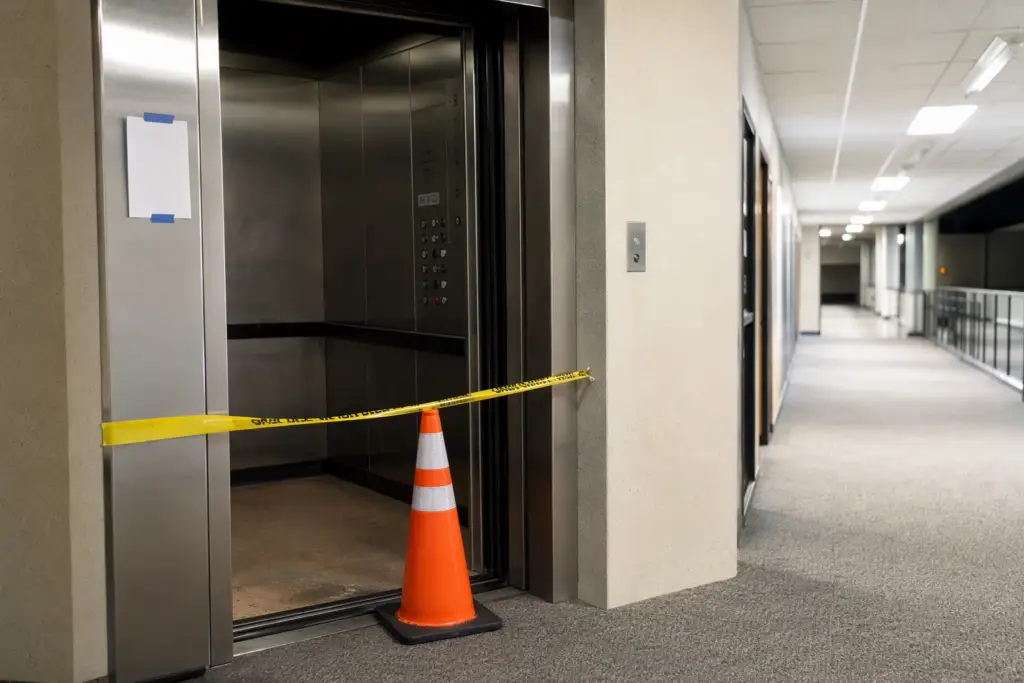
- Remove the elevator from service. Operating an elevator without a valid operating certificate violates S.C. Code Title 41, Chapter 16. Post a clear “Out of Service” notice and lock or barricade access.
- Obtain the inspection report. Review the specific deficiencies cited by the inspector and confirm whether any are categorized as immediately dangerous conditions.
- Contact a qualified elevator service provider. Schedule repair work for all cited deficiencies. Keep documentation of all work performed.
- Obtain required permits for any alterations. Any work that constitutes an alteration under ASME A17.1-2019 requires a South Carolina state construction permit before the work begins.
- Request a re-inspection. After repairs are complete, contact the LLR’s Office of Elevators and Amusement Rides or a qualified special inspector (not affiliated with the servicing company) to schedule re-inspection.
- Post the renewed operating certificate conspicuously inside the car before returning the elevator to service.
- Document and retain records. South Carolina places the duty of compliance on the owner — thorough recordkeeping is the owner’s primary evidence of due diligence.
What Special Requirements Apply to Hydraulic Elevators in South Carolina Hotels?
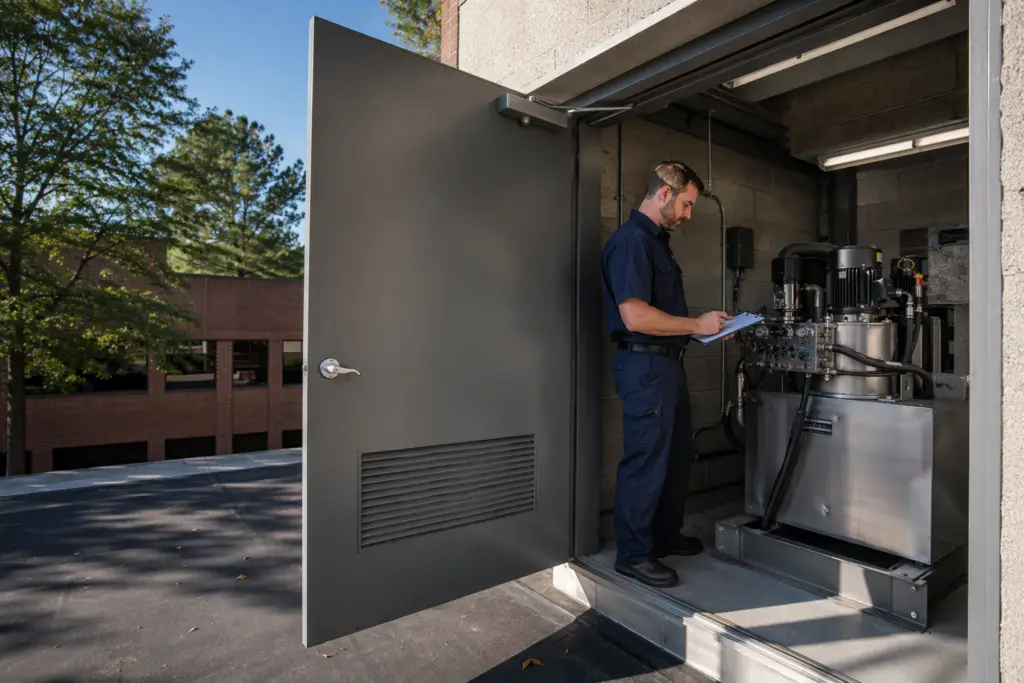
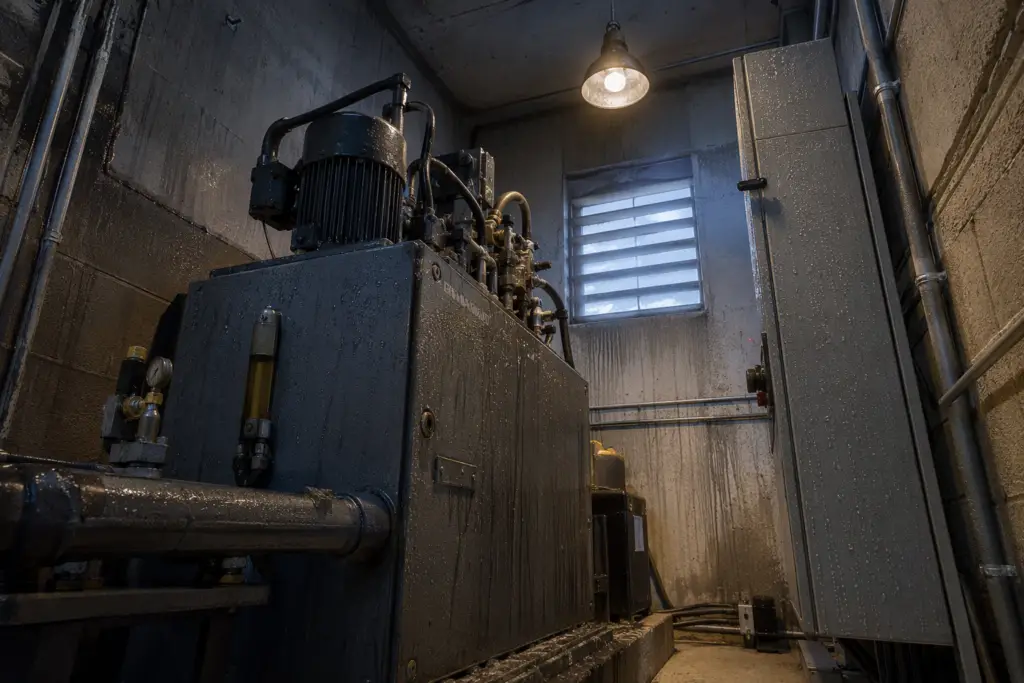
Many low- to mid-rise hotels use hydraulic elevators. South Carolina has a specific environmental requirement for new hydraulic installations: underground hydraulic elevator cylinders must be encased in a plastic outer containment to limit electrolytic corrosion. This requirement exists to prevent hydraulic fluid from leaching into soil and groundwater if the cylinder corrodes. Hotels planning new hydraulic installations or cylinder replacements should confirm this requirement is addressed in the construction permit scope before work begins.
What Are the Firefighters’ Service Key Requirements for South Carolina Hotels?
South Carolina requires that firefighters’ service on new elevator installations use the five-pin S.C. #1000 key. Hotels with elevators installed or altered under a South Carolina permit should verify that the firefighters’ service key on file with on-site staff and the local fire department matches this requirement. A mismatch can delay emergency response and may appear as a deficiency at inspection.
How Does South Carolina Handle Local Elevator Ordinances?
South Carolina state law takes precedence. Local ordinances that conflict with the South Carolina Elevator Code or its regulations are void. This means hotel property managers in municipalities that may have passed local building or safety ordinances do not need to follow those local rules if they conflict with state elevator law — the state code controls. However, local fire codes and building codes that do not conflict with the elevator code may still apply, so coordination with the local authority having jurisdiction is still advisable for new construction and major alterations.
What Should Hotel Property Managers Look for When Choosing an Elevator Service Provider in South Carolina?
When evaluating elevator service providers for a South Carolina hotel, property managers should consider the following factors:
| Evaluation Factor | What to Ask or Verify |
|---|---|
| Familiarity with South Carolina code | Can the provider explain the specific requirements of S.C. Code Title 41, Chapter 16 and the adopted ASME A17.1-2019 standard? |
| Independence from inspection | Does the provider perform state or special inspections on the same units it services? If so, that creates a conflict prohibited under South Carolina law. |
| Scope of services | Does the provider handle both hydraulic and traction equipment? Does the scope include emergency systems, ADA feature checks, and standby power testing? |
| Documentation practices | Will the provider supply written service records that support the owner’s compliance recordkeeping duties? |
| Permit coordination | Can the provider assist with South Carolina state construction permit applications for alterations and new installations? |
| Geographic coverage | Does the provider actually serve the county where the hotel is located? South Carolina is a large state with rural areas that some larger firms do not cover reliably. |
Carolina Elevator Service serves hotel and commercial property clients across South Carolina, providing maintenance and repair services structured to support — not complicate — the annual state inspection process. Property managers who work with Carolina Elevator Service retain the ability to choose any qualified, independent special inspector for their annual inspection, maintaining clean separation between service and inspection as South Carolina law requires.
Quick Reference: South Carolina Hotel Elevator Compliance Checklist
- ✔ Valid certificate of registration on file with LLR
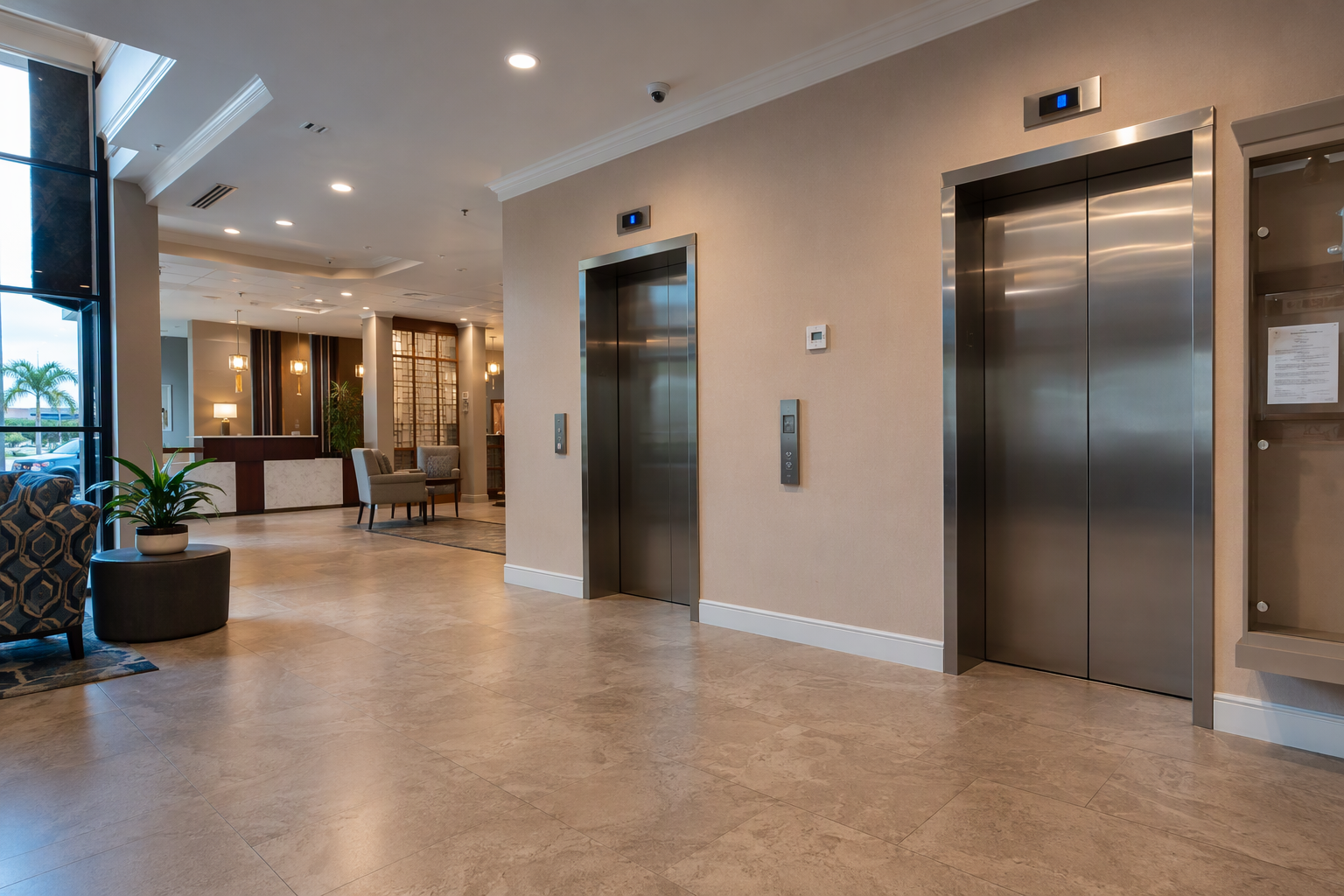
- ✔ Current operating certificate conspicuously displayed inside each elevator car
- ✔ Annual inspection completed by a state or qualified special inspector not affiliated with the servicing company
- ✔ Construction permit obtained before any alteration, installation, or new construction
- ✔ Standby power system capable of running emergency lighting and alarm bell for at least four hours
- ✔ Firefighters’ service equipped with the S.C. #1000 five-pin key (new installations)
- ✔ Underground hydraulic cylinders in new installations encased in plastic outer containment
- ✔ Serious guest injuries reported to the state before the end of the next working day
- ✔ ADA accessibility features functioning and compliant per ADA.gov
- ✔ Structured maintenance program documented and on file
Contact Carolina Elevator Service for a free elevator assessment at 803-865-1400.
Need elevator service you can rely on? Carolina Elevator Service is ready to help.