Single-person elevator owners in Columbia, SC can choose from preventive maintenance agreements, comprehensive full-service contracts, or periodic inspection-only plans. Preventive maintenance agreements cover scheduled lubrication, adjustment, and safety testing. Full-service contracts add parts and labor for unscheduled repairs. Inspection-only plans address the annual certificate renewal required by South Carolina’s Department of Labor, Licensing and Regulation.
What types of service plans are available for single-person elevators?
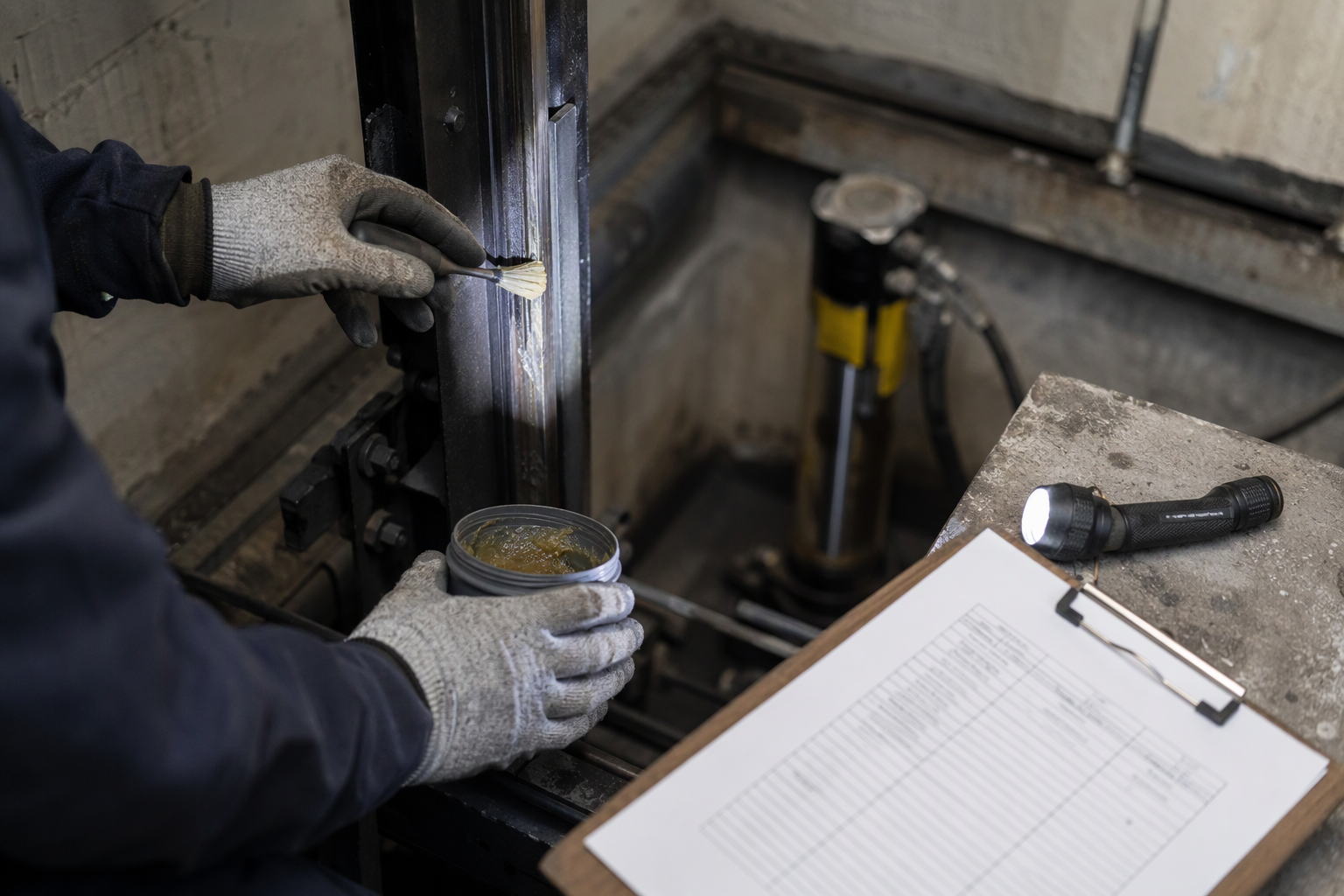
Three primary plan structures cover the maintenance and repair needs of single-person elevators: preventive maintenance agreements, full-service contracts, and inspection-only or compliance plans.
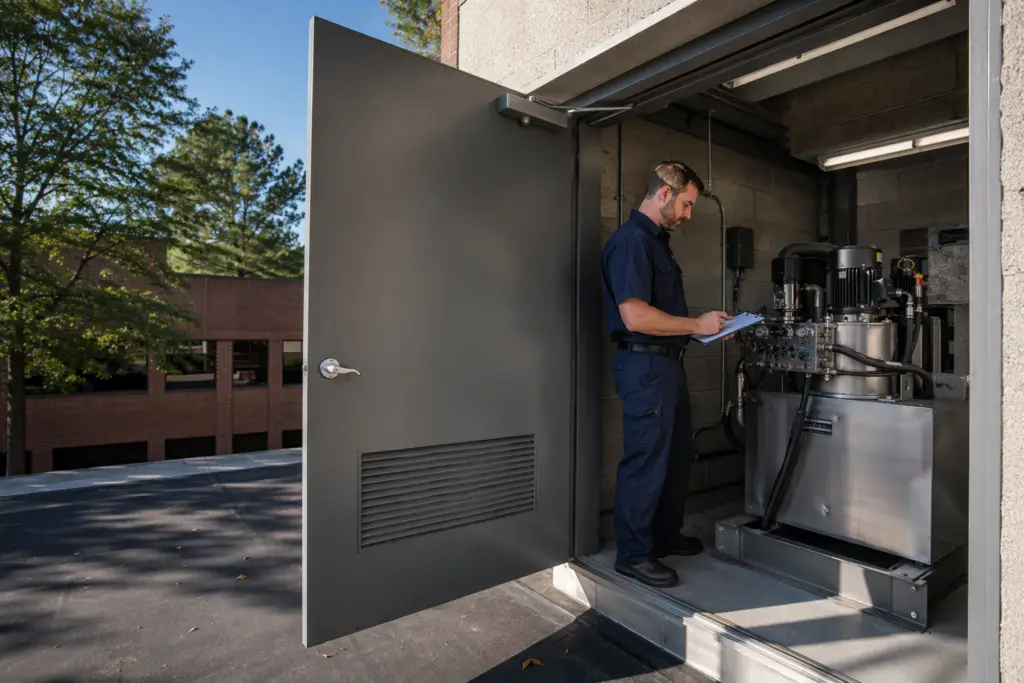
A preventive maintenance agreement is the most common entry-level plan. It schedules technician visits at defined intervals to lubricate moving parts, test safety devices, adjust door operation, check hydraulic fluid levels (on hydraulic units), inspect ropes and sheaves (on traction units), and verify that all safety switches are functional. The goal is to catch wear before it causes a failure or a code violation.
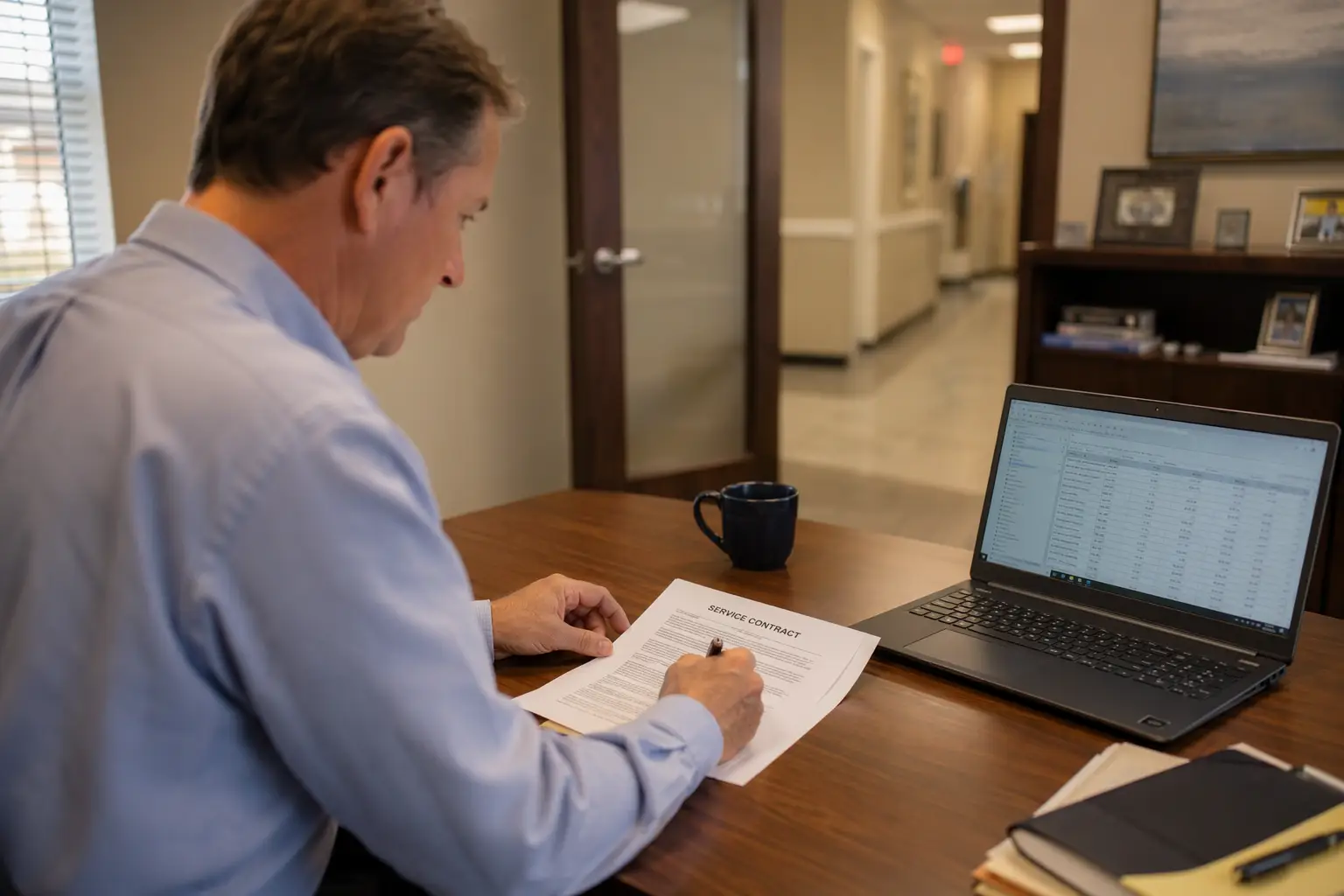
A full-service contract extends the preventive scope by including labor and an agreed list of replacement parts at no additional call-out charge. For single-person elevators installed in small commercial buildings, medical offices, or accessibility-focused facilities, full-service contracts reduce budget uncertainty because repair costs do not spike unexpectedly.
An inspection-only or compliance plan is a minimal engagement focused solely on coordinating or performing the state-mandated annual inspection and renewing the operating certificate. This plan suits owners who perform in-house day-to-day monitoring but need a licensed or qualified party to arrange inspections with the South Carolina Department of Labor, Licensing and Regulation (LLR), Office of Elevators and Amusement Rides.
Carolina Elevator Service structures plans in the Columbia, SC market to match each of these categories, allowing owners to select the depth of coverage that fits their equipment type, usage pattern, and compliance obligations.
What does a preventive maintenance visit for a single-person elevator actually include?
A preventive maintenance visit covers a systematic checklist of mechanical, electrical, and safety-device tasks specified by the ASME A17.1/CSA B44 Safety Code for Elevators and Escalators and tracked against the 2019 edition adopted by South Carolina.
Typical tasks performed during a preventive visit include:
- Lubrication of guide rails, rollers, and door operator components
- Inspection and tension adjustment of suspension ropes or chains (traction units)
- Hydraulic fluid level check and cylinder-seal inspection (hydraulic units)
- Testing of all safeties, governors, and buffers
- Door closure force and re-opening device verification
- Emergency lighting and alarm bell function test — South Carolina requires standby power sufficient to run emergency lighting and the alarm bell for at least four hours if normal power fails
- Verification that the operating certificate is current and displayed conspicuously inside the elevator car, as required under South Carolina elevator regulations
- Review of the maintenance log for any reported anomalies since the last visit
Technicians familiar with South Carolina’s adoption of ASME A17.1-2019 know which maintenance intervals and test methods apply to equipment installed or altered under permits issued after July 23, 2021, versus equipment that predates that code edition.
How often must a single-person elevator be inspected under South Carolina law?
South Carolina requires that most elevators be inspected at installation, registration, alteration or repair, and at least once a year before the operating certificate is renewed.
The annual inspection cadence is the standard applicable to passenger elevators and commercial single-person elevator units. Under S.C. Code Title 41, Chapter 16 and S.C. Code of Regulations Chapter 71, Article 5, no elevator facility may be operated without a valid certificate of registration and an operating certificate from the state. Owners who allow an operating certificate to lapse are operating the unit unlawfully regardless of its mechanical condition.
Handicap lifts — a category that includes many single-person vertical platform lifts used for accessibility — are inspected on a different schedule: every five years under South Carolina rules. Owners of limited-use/limited-application (LULA) elevators or private residence elevators should confirm with the LLR which equipment classification applies to their specific unit, because the inspection interval and applicable code requirements differ accordingly.
Importantly, South Carolina law also states that the elevator code does not apply to equipment installed in a single private dwelling. Owners of purely residential home elevators should verify with the LLR whether their unit falls within or outside the statutory scope, since that determination affects whether annual inspections are legally required or simply recommended best practice.
Who is authorized to perform elevator inspections in South Carolina?
Required inspections in South Carolina may be made only by state inspectors employed by the LLR or by licensed special inspectors, and a special inspector’s inspection may be accepted in place of a state inspection.
Special inspectors must be licensed in South Carolina and must demonstrate qualifications meeting the 2018 edition of QEI-1, the American National Standard for Qualification of Elevator Inspectors. This credentialing requirement ensures that inspectors have passed a recognized national examination and maintain continuing education in elevator safety codes.
A critical conflict-of-interest rule applies: in South Carolina, a special inspector may not inspect an elevator on which the inspector or the inspector’s employer has a current service or warranty contract. This rule affects how full-service contract holders arrange their annual inspections — the servicing company cannot simultaneously serve as the inspection party. Owners with full-service contracts must therefore engage an independent special inspector or rely on the state’s own inspectors for the annual compliance inspection, while keeping the service company separate.
Service companies such as Carolina Elevator Service help owners navigate this requirement by assisting with inspection coordination without placing the servicing technicians in a conflicted inspection role.
What is a full-service elevator contract and when does it make sense for single-person elevators?
A full-service elevator contract bundles scheduled preventive maintenance with labor coverage and a defined parts list for unscheduled repairs, reducing the owner’s exposure to variable repair costs.
Full-service agreements are most beneficial when the single-person elevator operates in a commercial or semi-public setting — such as a small medical practice, law office, or boutique retail space — where downtime directly affects accessibility obligations under the Americans with Disabilities Act (ADA) and where repair delays could expose the owner to ADA compliance risk. When an elevator provides the only accessible route between floors, restoring operation quickly is not merely a convenience but a legal priority.
Under a full-service contract, the service provider typically covers parts that reach the end of their service life under normal use (contactors, door gibs, rollers, electrical components) while excluding items damaged by misuse, vandalism, or catastrophic mechanical failure. Contract holders should read exclusion clauses carefully, particularly regarding hydraulic cylinder replacement, since South Carolina now requires newly installed underground hydraulic cylinders to be encased in plastic outer containment to limit electrolytic corrosion — a provision that may affect repair scope and cost on older units retrofitted to comply.
What is an inspection-only plan and what does it cover?
An inspection-only plan coordinates or performs only the periodic state-mandated inspection needed to renew the South Carolina operating certificate, without covering routine lubrication, adjustments, or repair work between inspections.
These plans are appropriate for owners who have in-house facilities staff capable of day-to-day monitoring, or for low-usage installations where mechanical wear accumulates slowly. The plan typically includes scheduling coordination with a licensed special inspector, review of the inspection report, follow-up on any deficiency notices issued by the LLR, and documentation support for certificate renewal.
An inspection-only arrangement carries risk for owners who lack technical monitoring between annual visits. Deficiencies identified at the annual inspection may require corrective repairs before the operating certificate is renewed, and the cost of those emergency repairs falls entirely outside the inspection plan. For this reason, elevator service professionals generally recommend pairing even a minimal inspection plan with at least a basic preventive maintenance visit annually.
How do the three service plan types compare in scope and coverage?
| Feature | Inspection-Only Plan | Preventive Maintenance Agreement | Full-Service Contract |
|---|---|---|---|
| Scheduled lubrication & adjustment | No | Yes | Yes |
| Safety device testing | At inspection only | At each PM visit | At each PM visit |
| Annual state inspection coordination | Yes | Often included | Often included |
| Unscheduled repair labor | No | Billed separately | Included (per contract terms) |
| Replacement parts coverage | No | Billed separately | Included (defined parts list) |
| Emergency lighting/alarm test | At inspection only | Yes | Yes |
| Maintenance log documentation | Minimal | Yes | Yes |
| Best suited for | Private dwellings, low-use units | Commercial/accessibility lifts | High-use or ADA-critical units |
| Owner budget predictability | Low | Moderate | High |
What South Carolina code requirements must any service plan address?
Any service plan for a South Carolina elevator must be structured around the requirements of S.C. Code Title 41, Chapter 16, the South Carolina Elevator Code, and S.C. Code of Regulations Chapter 71, Article 5.
The key statutory and regulatory obligations that a service plan must address include maintaining a valid certificate of registration and operating certificate, displaying the operating certificate conspicuously inside the elevator car, keeping the unit in safe operating condition, and cooperating with LLR inspections. South Carolina adopted the ASME A17.1-2019/CSA B44:19 edition effective July 23, 2021; service plans for equipment installed or permitted after that date should reference that edition for applicable maintenance intervals and test methods.
Older equipment installed before July 1, 1986, is governed by the 1986 edition of ANSI A17.3 — the safety code for existing elevators and escalators — under South Carolina rules. A well-structured service plan identifies which code edition applies to the specific unit and tailors maintenance tasks and safety tests accordingly. Local ordinances that purport to impose different requirements are void under South Carolina law, so there is no need to track conflicting municipal elevator codes within the state.
What should an owner do immediately if a single-person elevator malfunctions or causes an injury?
When a single-person elevator malfunctions or causes a serious injury, the owner must follow a specific sequence of actions to protect the safety of occupants and comply with South Carolina reporting requirements.
- Immediately stop operation of the elevator if it is safe to do so and secure the area to prevent further use.
- Render aid to any injured party and call emergency services if injuries require medical attention.
- If the accident seriously injures anyone other than an employee, report the incident to the South Carolina Department of Labor, Licensing and Regulation before the end of the next working day, as required under South Carolina elevator statutes.
- Document the malfunction: photograph the cab, door, and any visible mechanical conditions; preserve any error codes or fault indicators on the controller.
- Contact a qualified elevator service provider to perform a written assessment before the unit is returned to service.
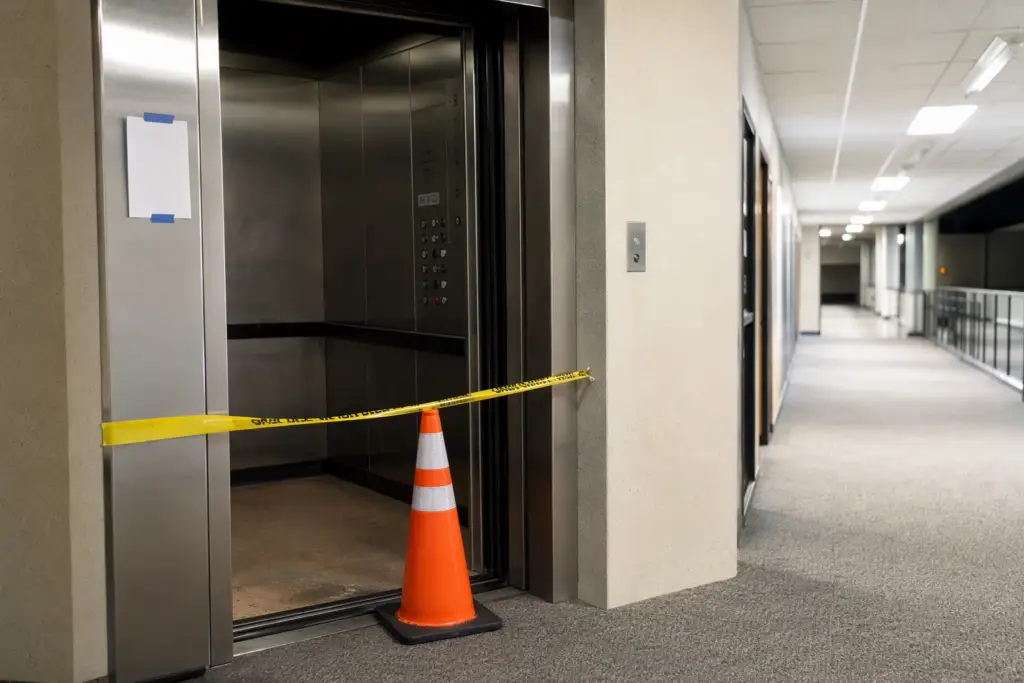
- Do not restore operation until a corrective inspection or repair has been completed and, if required by the LLR, a new or revalidated operating certificate is in hand.
- Retain all documentation — inspection reports, repair records, and incident reports — in the elevator’s maintenance file.
Owners with an active service agreement through Carolina Elevator Service in Columbia, SC should contact their service coordinator immediately to initiate the assessment process.
Does the ADA affect service plan requirements for single-person elevators?
Yes — when a single-person elevator is the only accessible means of vertical travel in a facility covered by the Americans with Disabilities Act, keeping that elevator operational is not optional; extended downtime may constitute a failure to provide accessible service.
ADA Title III requires places of public accommodation and commercial facilities to maintain accessible features in operable condition. While the ADA does not prescribe elevator maintenance intervals or service contract types, enforcement actions and civil complaints have consistently found that an owner’s failure to maintain the accessible route — including elevator operation — is an ADA violation independent of the reason for the outage.
For ADA-critical installations, service professionals recommend at minimum a preventive maintenance agreement that provides scheduled visits frequent enough to detect and address developing faults before they cause downtime. Full-service contracts offer additional protection by reducing the time between fault detection and repair completion. Owners should also ensure their service provider is familiar with ADA Standards for Accessible Design, including platform size, door clear width, and control height requirements that must be preserved through any repair or modification.
What is the difference between a residential home elevator and a commercial single-person elevator for service plan purposes?
The South Carolina Elevator Code explicitly does not apply to equipment in a single private dwelling, which affects what service plan obligations exist for purely residential home elevators versus commercial or semi-public single-person units.
A home elevator installed in a private residence is outside the statutory scope of South Carolina’s annual inspection and operating certificate requirements. That said, the mechanical risks associated with an unserviced home elevator — worn ropes, failed safety devices, deteriorated hydraulic seals — are identical to those in a commercial unit. Many manufacturers recommend annual or biennial preventive maintenance visits for private residence elevators regardless of regulatory obligation, and homeowners should consult the equipment manufacturer’s documentation for recommended service intervals.
By contrast, a single-person elevator or limited-use elevator installed in a building open to the public, employees, or clients is subject to the full scope of South Carolina elevator law: annual inspections, operating certificates, and all ASME A17.1-2019 maintenance requirements. A service plan for such a unit must be designed around those statutory obligations from the outset.
What components of a single-person elevator require the most frequent attention under a maintenance plan?
The components that most frequently drive service calls and maintenance interventions on single-person elevators are door systems, hydraulic seals and fluid (on hydraulic units), rope or chain suspension systems (on traction units), and electronic controllers.
Door systems — including gibs, rollers, hangers, and re-opening devices — experience the highest cycle frequency of any mechanical assembly and are the leading source of nuisance calls and minor injury risk. Under ASME A17.1, door closing force limits and re-opening device function are tested during scheduled maintenance and at inspection; a preventive maintenance plan that checks door operation at every visit significantly reduces door-related service calls.
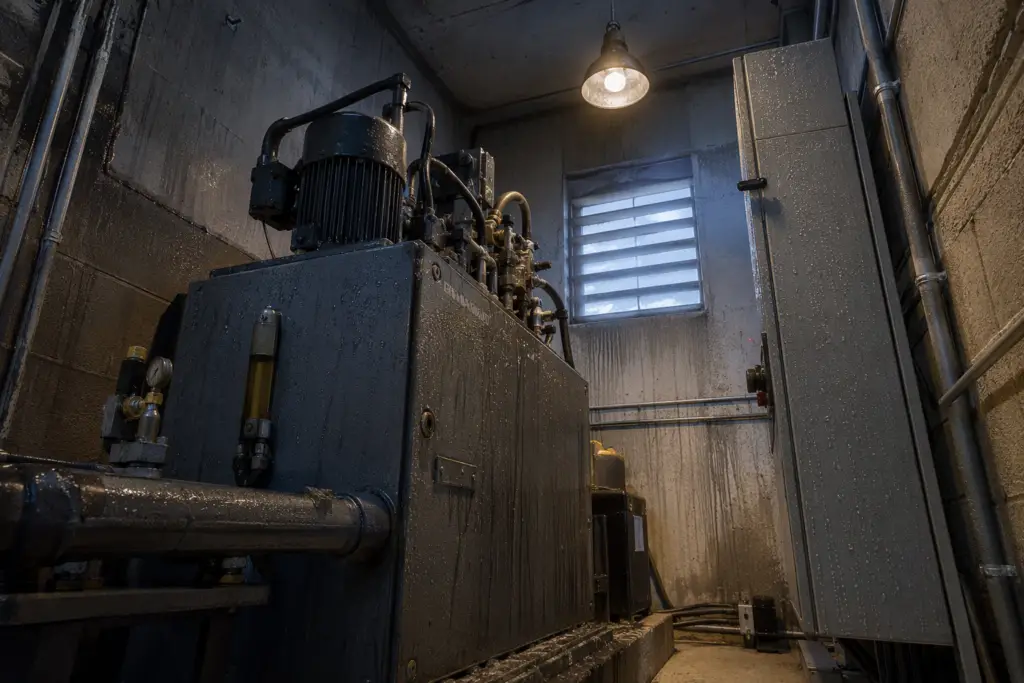
Hydraulic elevators, which are common in single-story commercial buildings throughout Columbia, SC, require periodic fluid level checks, seal inspection, and cylinder monitoring. South Carolina’s requirement that newly installed underground cylinders be encased in plastic outer containment addresses the long-term corrosion risk that has historically led to cylinder replacement on aging systems. Owners of older hydraulic units without this containment should discuss modernization options with their service provider.
Electronic controllers on modern single-person elevators contain fault-logging capability that experienced technicians read during each maintenance visit to identify patterns before they become failures. A service plan that does not include controller diagnostics leaves a significant data source unreviewed.
How should an owner evaluate and select a service plan provider for a single-person elevator in South Carolina?
Selecting a service plan provider requires evaluating the provider’s familiarity with South Carolina’s regulatory framework, the specific equipment type, and the contractual clarity of what is and is not covered.
Owners should ask prospective providers the following questions: Which edition of ASME A17.1 applies to this unit, and are your technicians trained on that edition? How do you handle the conflict-of-interest rule between servicing and inspection under South Carolina regulations? What is your process when the LLR issues a deficiency notice? Which parts are covered under the contract, and which are excluded? How is emergency lighting and standby power compliance verified at each visit?
Providers who cannot answer these questions with specificity may lack the South Carolina regulatory knowledge needed to keep an owner genuinely compliant. Carolina Elevator Service focuses specifically on the Columbia, SC market and structures service agreements around the actual requirements of S.C. Code Title 41, Chapter 16 and the LLR’s enforcement practices.
What records must an owner keep under a South Carolina elevator service plan?
South Carolina elevator law places the responsibility for safe operation squarely on the owner, and that obligation is supported by thorough record-keeping tied to the service plan.
Owners should maintain a continuous maintenance log documenting every service visit, inspection, repair, and parts replacement. The log should include the date and nature of each visit, the name of the performing technician or inspector, findings, corrective actions taken, and any items deferred. The current operating certificate must be kept displayed inside the elevator car at all times, and prior certificates should be retained in the maintenance file for reference in the event of an inspection, complaint, or civil dispute.
Inspection reports issued by state inspectors or special inspectors should be retained permanently or for as long as the equipment is in service. Where the LLR issues a deficiency notice or order, documentation of the corrective action and re-inspection is essential. A well-designed service plan includes documentation support as a standard deliverable, not an afterthought.
What happens if a single-person elevator fails its annual inspection in South Carolina?
When an elevator fails to meet the requirements assessed during the annual inspection, the LLR may decline to issue or renew the operating certificate, effectively requiring the unit to be taken out of service until deficiencies are corrected.
The owner bears statutory responsibility for keeping the elevator in safe operating condition under S.C. Code Title 41, Chapter 16. Upon receiving a deficiency report, the owner must arrange for the identified corrections to be made by a qualified service provider. Once corrective work is complete, a follow-up inspection — performed by a state inspector or an independent special inspector who does not hold a service contract on the unit — is typically required before the certificate is reissued.
Preventive maintenance agreements significantly reduce inspection failures by addressing known wear points before they reach a deficiency threshold. Owners whose equipment has not received scheduled maintenance are statistically more likely to encounter deficiencies at inspection, extending the out-of-service period and increasing total remediation cost compared to owners with active maintenance programs.
Can a service plan cover modernization or alteration work on a single-person elevator?
Standard maintenance and service plans do not typically cover modernization or alteration work, which is separately governed under South Carolina’s construction permit requirement.
Under S.C. Code Title 41, Chapter 16, a state construction permit is required before any elevator facility is erected, constructed, altered, or installed. Modernization projects — such as replacing a hydraulic power unit, upgrading a controller, or installing new cab interiors — qualify as alterations and require a permit, an inspection at the completion of the work, and re-registration with the LLR before the elevator returns to service.
Service plan holders who are considering modernization should discuss the scope with their service provider before beginning work. Some full-service contracts include provisions for discounted labor on major upgrades, but the permit process and inspection remain the owner’s statutory obligation regardless of contract terms. New installations and altered equipment must comply with the edition of ASME A17.1 in effect when the permit is issued — currently the 2019 edition as adopted by South Carolina effective July 23, 2021.
What role does OSHA play in single-person elevator maintenance for employers?
For employers whose workers use or service single-person elevators, OSHA general industry standards may impose workplace safety obligations separate from and in addition to the South Carolina state elevator code requirements.
OSHA’s General Duty Clause requires employers to provide a workplace free from recognized hazards. Where an elevator is part of the work environment — such as a small freight and personnel unit in a commercial building — an employer who fails to maintain the equipment in safe operating condition may face OSHA scrutiny in the event of a workplace injury. OSHA requirements do not replace South Carolina’s elevator inspection and operating certificate obligations; they layer on top of them.
Service plans for employer-owned single-person elevators should therefore be evaluated not only against LLR compliance requirements but also against OSHA’s expectation of documented, systematic hazard control. Maintenance logs, completed inspection reports, and records of corrective actions serve as evidence of an employer’s good-faith effort to control elevator-related hazards.
How does the firefighters’ service requirement affect maintenance plans in South Carolina?
South Carolina requires that firefighters’ service on new elevator installations use the five-pin S.C. #1000 key, and maintenance plans must verify that this feature remains functional at each scheduled visit.
Firefighters’ service (also called Phase I Emergency Recall and Phase II In-Car Operation under ASME A17.1) allows fire department personnel to take control of elevator operation during emergencies. If the key switch, recall circuitry, or in-car firefighters’ operation panel is non-functional, the elevator fails a critical safety requirement. Preventive maintenance visits should include a functional test of firefighters’ service using the correct South Carolina key to confirm that the system operates as required. Full-service contracts should explicitly name firefighters’ service testing as a covered task to avoid ambiguity about responsibility.
What should be included in an emergency action plan for a single-person elevator?
An emergency action plan for a single-person elevator should address passenger entrapment, power failure, mechanical malfunction, and the South Carolina accident reporting requirement for serious injuries.
A practical emergency action plan includes the following elements:
- Post the service provider’s emergency contact information inside or immediately adjacent to the elevator lobby on each floor.
- Identify and train at least one building contact person responsible for responding to entrapments and coordinating with the service provider or emergency responders.
- Verify that the in-car alarm bell and emergency lighting are functional, meeting South Carolina’s requirement for at least four hours of standby power operation.
- Establish a communication protocol for notifying building occupants when the elevator is taken out of service for repair or inspection.
- Define the threshold for reporting accidents to the LLR — any serious injury to a person other than an employee must be reported before the end of the next working day.
- Keep the LLR’s contact information accessible to the building manager or facilities coordinator.
- Review and update the plan annually as part of the service plan renewal process.
How can owners in Columbia, SC get started with a single-person elevator service plan?
Owners in the Columbia, SC area seeking a service plan for a single-person elevator should begin with an equipment assessment to determine the unit’s current mechanical condition, applicable code edition, and inspection status before selecting a plan type.
Starting with an assessment rather than immediately signing a service agreement helps both the owner and the service provider identify any deferred maintenance or existing deficiencies that should be addressed before an ongoing plan begins. An honest assessment also clarifies whether the unit falls under the annual inspection schedule, the five-year handicap lift schedule, or outside state scope entirely as a private dwelling unit — a determination that shapes the entire service strategy.
Carolina Elevator Service serves the Columbia, SC market and can evaluate the specific equipment, applicable South Carolina regulatory requirements, and coverage needs to recommend an appropriate plan tier. Owners can request an assessment to establish a baseline before committing to any contract structure, ensuring the plan is sized correctly for their equipment and usage profile.
Contact Carolina Elevator Service for a free elevator assessment at 803-865-1400.
Need elevator service you can rely on? Carolina Elevator Service is ready to help.