Elevator capital planning for 2027 requires balancing compliance obligations under South Carolina law, aging equipment realities, tenant expectations, and finite budgets. This guide walks facility managers, property owners, and capital planners through every layer of that decision — from code mandates to ROI comparisons — so the right projects reach the top of next year’s budget before the annual inspection cycle begins.
—
What Are the Highest-Priority Elevator Upgrades for a 2027 Capital Budget?
Not every elevator upgrade competes equally for budget dollars. Priority should be assigned across four tiers, in descending urgency:
- Life-Safety and Compliance Upgrades: Any deficiency cited by a South Carolina Department of Labor, Licensing and Regulation (LLR) inspector — or identified as a potential violation of S.C. Code Title 41, Chapter 16 or ASME A17.1-2019/CSA B44:19 — must be addressed before all others. Operating without a valid certificate is not an option under South Carolina law.
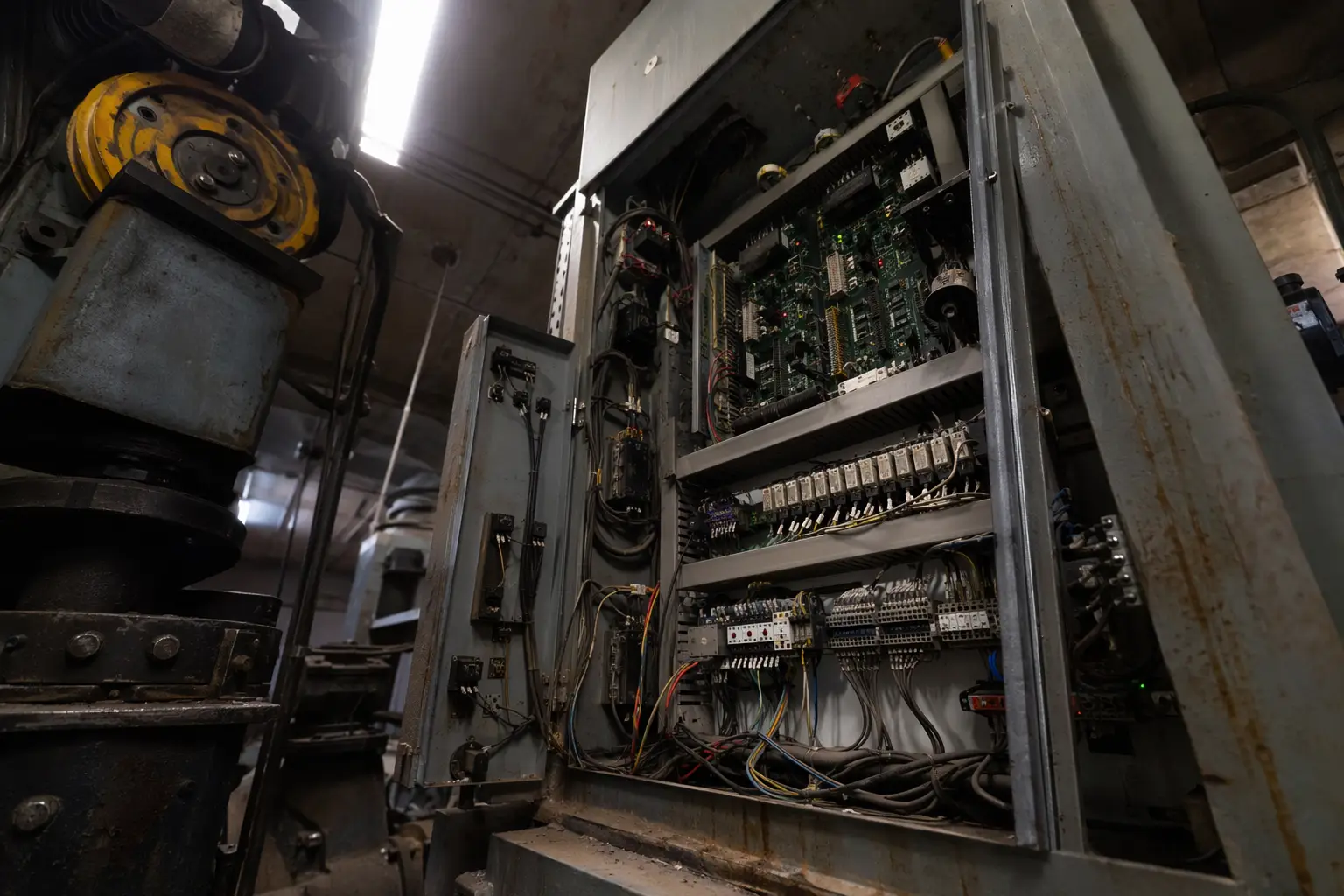
- Reliability-Critical Mechanical Systems: Aging hydraulic cylinders, worn traction machine components, failing controllers, and deteriorated ropes or chains. Failures here create liability, unplanned downtime, and emergency-rate service calls.
- Energy and Modernization Improvements: Drive system upgrades, LED car lighting, and machine-room cooling improvements that reduce operating costs and extend equipment life.
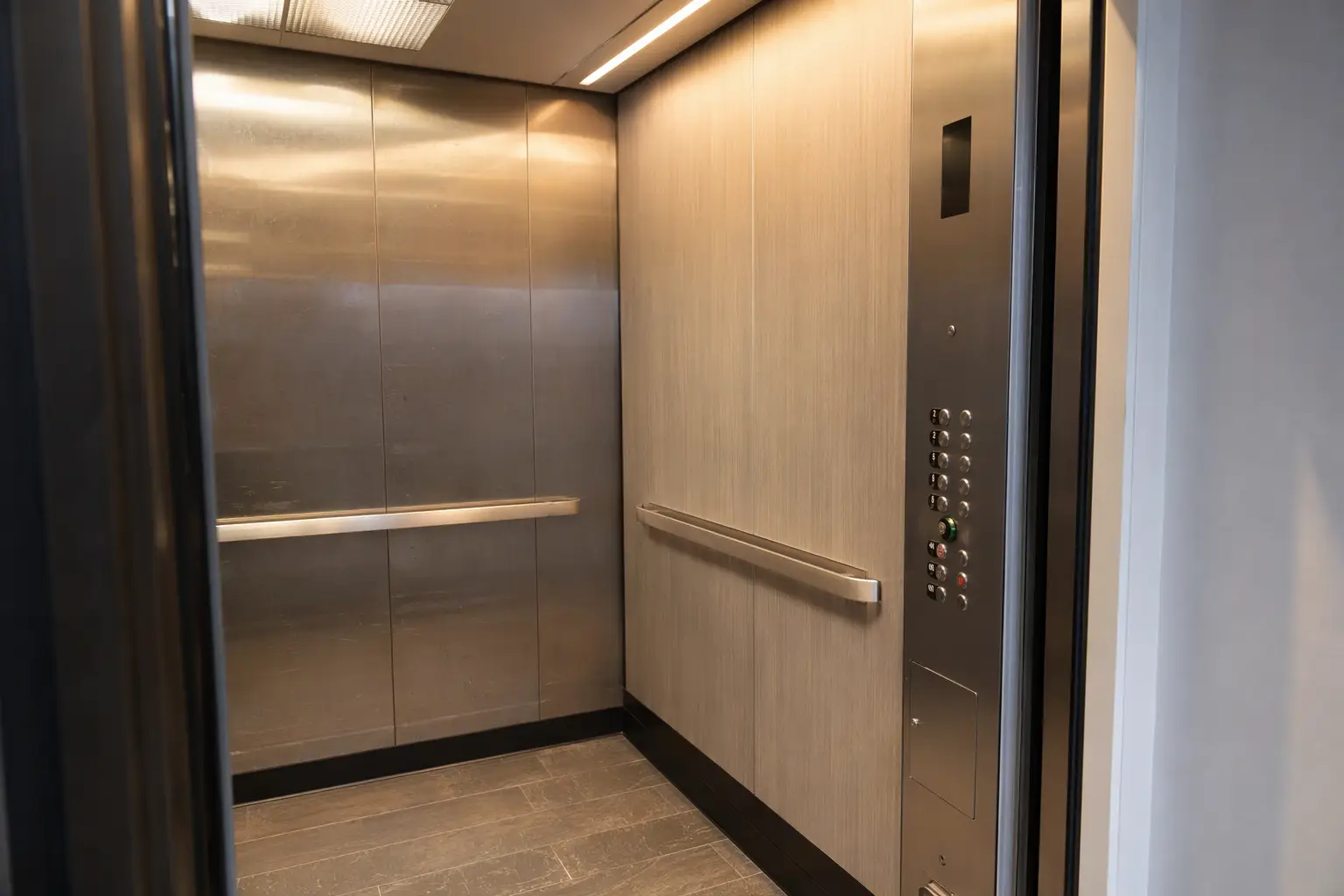
- Passenger Experience and Accessibility: Cab interior refurbishment, digital displays, and ADA-aligned control panel updates that improve usability and tenant satisfaction.
Carolina Elevator Service recommends completing a formal condition assessment before finalizing any capital list, because the gap between assumed and actual equipment condition frequently changes budget priorities.
—
What Does South Carolina Law Require Before I Can Budget for Upgrades?
South Carolina imposes specific procedural and compliance requirements that directly affect the sequencing and cost of any upgrade project.
- Under S.C. Code Title 41, Chapter 16 and S.C. Code of Regulations Chapter 71, Article 5 (Regulations 71-5000 through 71-5700), no elevator may operate without a current certificate of registration and an operating certificate issued by the LLR’s Office of Elevators and Amusement Rides. That certificate, or a copy, must be posted visibly inside every car.
- A state construction permit is required before any elevator is erected, constructed, altered, or installed. Budget-planning timelines must account for permit processing when scheduling modernizations or significant alterations.
- South Carolina passenger elevators must have standby power capable of running emergency lighting and the alarm bell for at least four hours if normal power fails. Any electrical modernization that disturbs standby power circuits requires careful scope planning.
- New underground hydraulic elevator cylinders in South Carolina must be encased in plastic outer containment to limit electrolytic corrosion — a material and labor cost that must be included in any hydraulic modernization budget.
- Firefighters’ service on new installations must use the five-pin S.C. #1000 key. If a controller replacement triggers a new-installation classification under state rules, this keying requirement applies.
- Annual inspections are required before each operating certificate renewal for standard passenger elevators. Handicap lifts require inspection every five years; manlifts, television tower elevators, and special-purpose elevators every seven years.
- Inspections may be conducted only by LLR state inspectors or licensed special inspectors holding qualifications under the 2018 edition of QEI-1. A special inspector may not inspect an elevator on which the inspector or the inspector’s employer holds a current service or warranty contract — a conflict-of-interest rule that affects how owners should structure their vendor relationships.
- New elevator facilities must comply with the edition of ASME A17.1 in effect when the permit is issued — currently the 2019 edition, adopted by South Carolina effective July 23, 2021.
- Elevators in operation before July 1, 1986 must comply with the 1986 edition of ANSI A17.3, the safety code for existing elevators and escalators.
—
How Do I Compare the ROI of Different Elevator Upgrade Categories?
The table below organizes common upgrade categories by their strategic value, compliance driver, typical planning timeline, and key trade-offs. Dollar figures are intentionally omitted because costs vary significantly by building type, equipment age, shaft configuration, and market conditions — Carolina Elevator Service provides project-specific estimates during assessments.
| Upgrade Category | Compliance Driver | Planning Lead Time | Primary Benefit | Key Risk If Deferred | Relative Budget Priority |
|---|---|---|---|---|---|
| Life-safety deficiency correction (door locks, safeties, buffers) | ASME A17.1-2019 / LLR citation | Immediate to 90 days | Retained operating certificate; avoided shutdown | Certificate suspension; legal liability | Tier 1 — Non-negotiable |
| Hydraulic cylinder replacement (underground) | SC containment rule; ASME A17.1-2019 | 3–6 months | Environmental protection; leak prevention | Environmental remediation costs; LLR action | Tier 1–2 |
| Controller modernization | End-of-parts-life; reliability | 4–8 months | Reduced downtime; modern diagnostics | Unplanned outages; no spare parts availability | Tier 2 |
| Traction machine / motor replacement | Reliability; energy codes | 3–6 months | Lower energy use; improved ride quality | Progressive mechanical failure; emergency calls | Tier 2 |
| Standby power system upgrade | SC 4-hour standby requirement | 2–4 months | Code compliance; occupant safety | Certificate non-renewal risk | Tier 2 |
| Drive system upgrade (variable-voltage / variable-frequency) | Energy efficiency goals | 3–5 months | Reduced energy consumption; smoother operation | Higher long-term utility costs | Tier 3 |
| ADA control panel and signage updates | ADA Title III / Title II | 2–4 months | Accessibility compliance; reduced complaint risk | ADA complaint or litigation exposure | Tier 2–3 |
| Cab interior refurbishment | Tenant/lease standards | 1–3 months | Improved aesthetics; tenant retention | Tenant dissatisfaction; lease renewal risk | Tier 4 |
| Remote monitoring installation | Reliability / proactive maintenance | 1–2 months | Early fault detection; reduced emergency calls | Reactive maintenance cycle continues | Tier 3 |
—
How Should I Build a Business Case for Elevator Capital Spending?
A credible internal business case for elevator capital investment requires four components: a documented equipment condition baseline, a compliance risk analysis, a cost-of-deferral argument, and a phased project schedule tied to the fiscal calendar.
- Commission a condition assessment from a qualified independent service provider — ideally before the LLR annual inspection — so deficiencies are documented internally before they become cited violations.
- Map every identified deficiency to its regulatory source: cite the specific regulation under S.C. Code of Regulations Chapter 71, Article 5, or the relevant section of ASME A17.1-2019. Decision-makers respond to documented compliance obligations more readily than general maintenance arguments.
- Quantify the cost of deferral qualitatively: unplanned outages affect tenant leases, ADA complaints carry legal costs, and certificate suspensions can halt building operations. Without inventing figures, the narrative case for proactive investment is strong.
- Present a phased multi-year plan that separates Tier 1 items (2027 must-do) from Tier 2 (2027–2028 planning horizon) and Tier 3–4 items (2028–2029 or later), so finance teams can see that the full scope is managed, not deferred indefinitely.
- Include permitting and inspection timelines in the project schedule. South Carolina’s construction permit requirement means no alteration work can begin without LLR approval — overlooking this step collapses project schedules and pushes costs into the next fiscal year.
- Attach independent service provider quotes to separate line items. Bundling all work into a single number makes it easy for budget committees to cut the whole line; itemized estimates make it easy to defend the non-negotiable items while deferring discretionary ones.
—
What Is the Difference Between a Modernization and a Repair for Budget Purposes?
The distinction matters for both accounting treatment and regulatory classification. Repairs generally restore a component to its original design intent and may not trigger a new construction permit. Modernizations — which alter the performance, capacity, speed, or control logic of an elevator — typically require a state construction permit from the LLR before work begins under S.C. Code Title 41, Chapter 16.
From a capital planning standpoint, modernizations usually carry longer lead times, higher upfront costs, and longer useful-life extensions than repairs. A controller modernization, for example, may reset the expected life of the control system by many years, while a controller board repair simply extends the remaining life of aging hardware. Budget planners should ask their service provider to classify each proposed scope item at the outset.
—
How Does Equipment Age Affect Which Upgrades to Prioritize?
Equipment age is one of the most reliable inputs for prioritization. As elevator systems age, the availability of proprietary replacement parts declines, the frequency of service calls increases, and the probability of a catastrophic component failure — rather than a gradual, plannable one — rises. A system whose original controller manufacturer no longer supports the platform presents a qualitatively different risk profile than a newer system with full parts availability.
When reviewing equipment age for the 2027 budget cycle, Carolina Elevator Service recommends that owners specifically examine:
- Controller vintage and parts availability confirmation from the original equipment manufacturer or distributor
- Hydraulic cylinder age and material, particularly for underground units subject to South Carolina’s outer-containment requirement
- Rope or chain inspection records and remaining safe service life estimates
- Age and condition of the standby power system relative to the South Carolina four-hour runtime requirement
- Door operator age and history, as door system failures are among the most common causes of elevator outages and passenger incidents
—
What ADA Obligations Affect Elevator Upgrade Planning?
The Americans with Disabilities Act imposes accessibility requirements on elevators in public accommodations (Title III) and state and local government facilities (Title II). ADA standards address call button height and size, raised and Braille characters on control panels, door timing and reopening devices, floor designations, and audible and visual position indicators, among other elements.
When a modernization or alteration triggers an ADA path-of-travel obligation — which occurs when the cost of the alteration reaches a threshold relative to the overall project — accessibility upgrades to the elevator may be required as part of the same project. Budget planners should address ADA compliance proactively rather than discovering mid-project that additional scope is legally required. Including an ADA review in the pre-budget condition assessment avoids cost surprises.
—
Should I Prioritize Hydraulic or Traction Elevator Upgrades Differently?
Yes. The upgrade priorities for hydraulic and traction systems differ meaningfully:
| Factor | Hydraulic Elevators | Traction Elevators |
|---|---|---|
| Top compliance concern | Underground cylinder containment (SC requirement); fluid leak risk | Rope/chain condition; safeties; governor |
| Primary mechanical concern | Cylinder integrity; pump/valve unit condition; fluid type | Machine wear; sheave condition; brake performance |
| Energy upgrade potential | Moderate — variable-speed pump units reduce consumption | High — VVVF drives and regenerative systems offer meaningful savings |
| Modernization complexity | Moderate; cylinder replacement requires pit excavation | Higher; machine room or machine-room-less configurations vary widely |
| Key 2027 budget trigger | Underground cylinder age; non-compliant containment | End-of-life controller; aging ropes approaching replacement threshold |
—
How Do I Evaluate Independent Service Providers vs. Original Equipment Manufacturers for Upgrade Work?
Building owners in South Carolina frequently face a choice between OEM service organizations and independent elevator service companies when scoping major upgrades. Key evaluation criteria include:
- Parts access: Independent providers with established supply relationships can often source components for multiple equipment brands, while OEM programs may be restricted to proprietary parts at premium pricing.
- Conflict-of-interest rules: South Carolina’s special inspector conflict-of-interest provision means that an inspection cannot be performed by someone whose employer holds a current service contract on that elevator. Owners working with OEM providers who also offer inspection services should verify inspection independence carefully.
- Scope flexibility: Independent providers are generally not constrained to recommend only the OEM’s upgrade packages, which can produce more cost-competitive modernization specifications.
- Local regulatory familiarity: Any provider working in South Carolina must demonstrate familiarity with LLR permit requirements, the adopted ASME A17.1-2019 code, and South Carolina-specific requirements such as the S.C. #1000 firefighters’ key and the underground cylinder containment rule.
Carolina Elevator Service operates as an independent elevator service provider in South Carolina, working across multiple equipment brands and maintaining familiarity with LLR requirements, ASME A17.1-2019 standards, and the specific compliance obligations that govern South Carolina elevator facilities.
—
What Is the Right Sequence for Executing Elevator Upgrades Across a Multi-Building Portfolio?
- Inventory all elevators with current operating certificate expiration dates, equipment age, last inspection findings, and open deficiencies.
- Rank by compliance urgency: elevators with open citations or approaching certificate renewals with known deficiencies go to the front of the queue regardless of building prestige or traffic volume.
- Group by project type across the portfolio to allow competitive bidding on similar scopes (e.g., all controller replacements across multiple properties), which typically produces better unit pricing than one-off scopes.
- File LLR construction permits early for any scope classified as an alteration. Permit timing is a fixed constraint that cannot be compressed — plan at least 90 days of permit lead time into every modernization schedule.
- Sequence installations to minimize simultaneous outages in multi-elevator buildings, so vertical transportation capacity is maintained for tenants and ADA-dependent building users throughout the project period.
- Schedule post-completion inspections with the LLR at the time the permit is filed, not after work is complete, to avoid certificate gaps.
- Document and file all as-built records immediately upon project completion to support future budget planning and inspection readiness.
—
What Should I Ask a Service Provider Before Committing 2027 Budget to Elevator Upgrades?
Before approving capital expenditures, facility managers and owners should ask prospective service providers the following questions:
- Which specific items in this scope require an LLR construction permit, and what is the realistic permit timeline?
- Does any proposed component change trigger reclassification as a new installation under ASME A17.1-2019, and if so, what additional code requirements apply?
- How does this scope interact with the existing standby power system and the South Carolina four-hour runtime requirement?
- For underground hydraulic systems: does the existing cylinder have compliant outer containment per South Carolina requirements?
- What is the projected useful life of the upgraded components, and how should that inform future capital cycles?
- Can the provider supply references for similar projects completed in South Carolina with successful LLR inspection outcomes?
- How will the inspection be handled post-completion — will a state inspector or a licensed special inspector (QEI-1 qualified) conduct the final review?
—
Summary: 2027 Elevator Capital Budget Decision Framework
The most defensible 2027 elevator capital budget is built on documented condition data, a clear compliance hierarchy, and a phased project plan that separates regulatory obligations from discretionary improvements. South Carolina building owners should anchor every decision against S.C. Code Title 41, Chapter 16, the requirements of S.C. Code of Regulations Chapter 71, Article 5, and the ASME A17.1-2019/CSA B44:19 safety code — because work that keeps elevators legally operational is never truly discretionary.
Engaging an independent service provider for a pre-budget condition assessment is the single highest-value step an owner can take before the 2027 planning cycle closes. It converts assumptions into documented findings, which strengthens the internal business case and reduces the risk of mid-project scope expansion.
Contact Carolina Elevator Service for a free elevator assessment at 803-865-1400.
Need elevator service you can rely on? Carolina Elevator Service is ready to help.