TK Elevator — the brand formerly known as ThyssenKrupp Elevator — is one of the most widely installed elevator systems in commercial, healthcare, and residential buildings across South Carolina. Building owners and property managers who rely on TK equipment often wonder whether independent elevator companies can service these units or whether they are locked into the original manufacturer’s service program. This FAQ hub covers everything Columbia, SC property owners need to know about third-party TK elevator service, South Carolina regulatory requirements, and how to keep TK equipment running safely and in compliance.
What Types of TK Elevator Equipment Can an Independent Service Company Maintain?
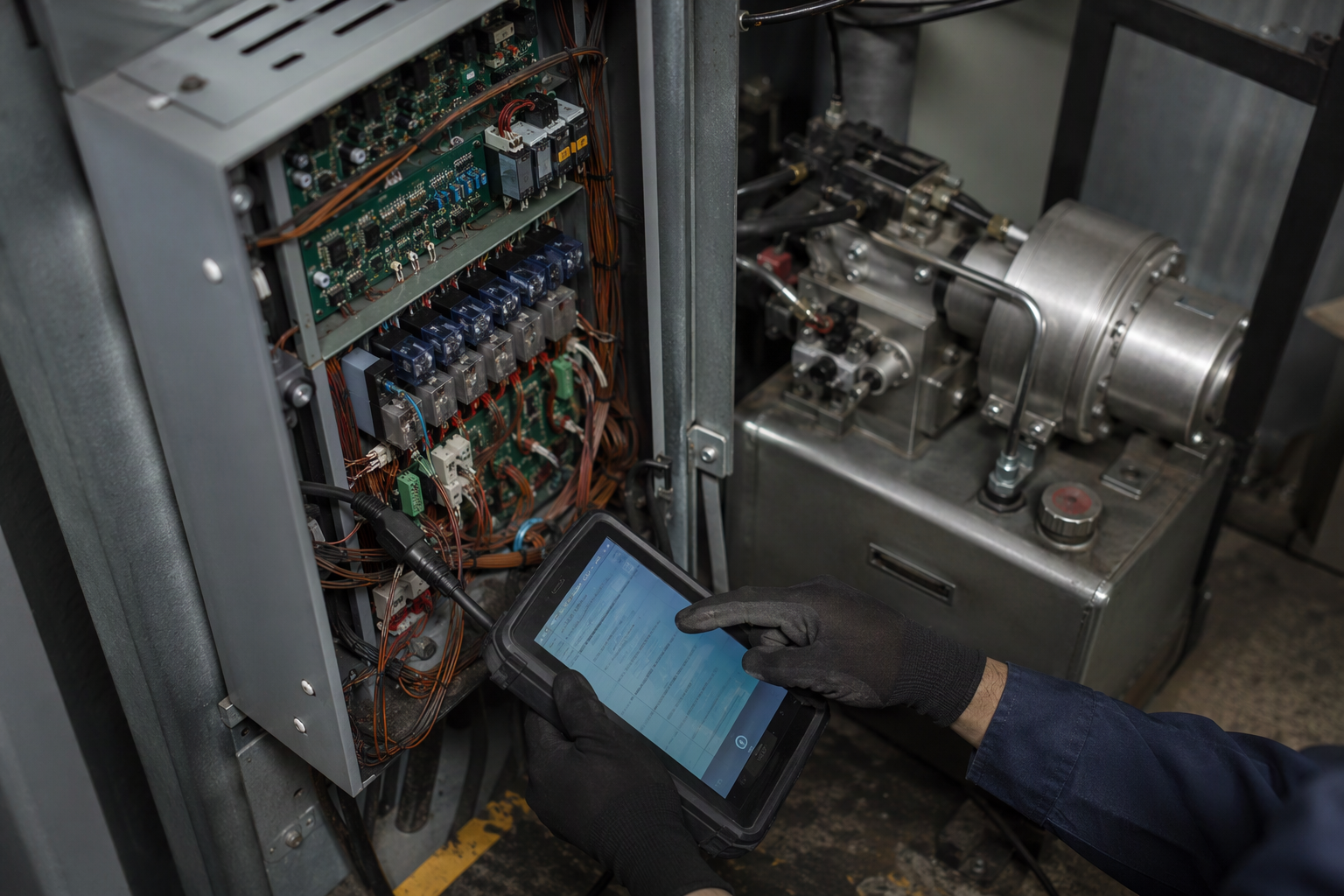
An independent, qualified elevator service company can maintain virtually any TK Elevator product line, including hydraulic elevators, traction elevators, machine-room-less (MRL) systems, platform lifts, and escalators.
TK Elevator’s commercial portfolio spans legacy ThyssenKrupp hydraulic units, the Evolution and Endura traction series, the TWIN multi-car system, and the MULTI ropeless system found in newer high-rise construction. On the residential and low-rise side, TK produces platform lifts and limited-use/limited-application (LULA) elevators that appear in churches, clinics, and small commercial buildings throughout the Columbia area. Each product line uses standard industry components — motors, controllers, hydraulic power units, door operators, and safety devices — that a knowledgeable elevator mechanic can inspect, adjust, and repair using manufacturer documentation and ASME A17.1 Safety Code for Elevators and Escalators procedures.
Proprietary diagnostic software is one area where owners should ask their service provider directly about tooling. Some newer TK controller platforms use manufacturer-specific diagnostic interfaces; however, the mechanical and hydraulic components remain serviceable by any qualified technician working to code.
Is TK Elevator Service in South Carolina Regulated by the State?

Yes — all elevator service and inspection activity in South Carolina is governed by S.C. Code Title 41, Chapter 16 and administered by the South Carolina Department of Labor, Licensing and Regulation (LLR), Office of Elevators and Amusement Rides, regardless of the elevator brand.
Under S.C. Code of Regulations Chapter 71, Article 5 (Regulations 71-5000 through 71-5700), every elevator facility — including TK equipment — must hold a valid certificate of registration and an operating certificate before it can be operated. That operating certificate, or a conspicuous copy, must be displayed inside each elevator car at all times. South Carolina adopted the ASME A17.1/CSA B44, 2019 edition (effective July 23, 2021) as its governing safety code for new and altered installations, which means any service or alteration work on a TK unit must conform to that standard.
Critically, no elevator facility may be operated in South Carolina without a state construction permit issued before any erection, construction, alteration, or installation takes place. Property owners who allow an unqualified party to alter their TK equipment risk voiding their operating certificate and exposing themselves to liability.
How Often Does a TK Elevator Need to Be Inspected in South Carolina?
Standard passenger TK elevators must be inspected at least once per year before the operating certificate can be renewed, while other equipment types follow different intervals set by state regulation.
South Carolina’s inspection schedule by equipment type is as follows:
| Equipment Type | South Carolina Inspection Interval | Governing Authority |
|---|---|---|
| Passenger / Freight Elevators | At least once per year (before certificate renewal) | SC LLR, Office of Elevators and Amusement Rides |
| Handicap / Platform Lifts | Every five years | SC LLR, Office of Elevators and Amusement Rides |
| Manlifts, TV Tower Elevators, Special Purpose Elevators | Every seven years | SC LLR, Office of Elevators and Amusement Rides |
| Dumbwaiters | Upon installation or alteration | SC LLR, Office of Elevators and Amusement Rides |
| Any Equipment (New Installation or Alteration) | At installation / registration / alteration | SC LLR, Office of Elevators and Amusement Rides |
Required inspections in South Carolina may only be performed by state inspectors or licensed special inspectors holding qualifications under the 2018 edition of QEI-1 (the American National Standard for Qualification of Elevator Inspectors). Importantly, a special inspector may not inspect an elevator on which the inspector or the inspector’s employer holds a current service or warranty contract — a rule that underscores the value of separating maintenance and inspection relationships.
Who Is Responsible for Keeping a TK Elevator Safe and Compliant in South Carolina?
Under South Carolina law, the building or facility owner bears direct legal responsibility for keeping every elevator in safe operating condition and in compliance with state regulations — not the elevator manufacturer or the original installer.
This ownership-based liability model means that when a TK service contract lapses, expires, or is cancelled, the obligation to arrange qualified maintenance and timely inspection does not disappear — it stays with the owner. South Carolina’s elevator statute makes no exception for brand-new equipment, recently modernized units, or buildings claiming financial hardship. Property managers in Columbia should maintain a continuous, documented service relationship with a qualified elevator company and retain all inspection records, maintenance logs, and permits as evidence of due diligence.
What Routine Maintenance Does a TK Elevator Require?
TK elevator maintenance follows the preventive maintenance framework outlined in ASME A17.1 and covers mechanical, electrical, hydraulic, and safety-device systems on a scheduled basis.
A comprehensive TK maintenance program typically includes the following categories:
- Drive system inspection: Checking motor windings, sheave wear, brake adjustment, and rope or belt tension on traction units; inspecting hydraulic cylinders, power units, and fluid levels on hydraulic models.
- Controller and software review: Verifying logic board function, relay condition, software fault logs, and door zone parameters.
- Safety device testing: Governor, safeties, buffers, and car-top inspection stations — all tested to ASME A17.1 intervals.
- Door system service: Door operator clutch, gibs, rollers, interlocks, and sensitive edge or light-curtain devices, which are a leading source of TK elevator callbacks.
- Hydraulic fluid and cylinder integrity: South Carolina specifically requires that newly installed underground hydraulic cylinders be encased in plastic outer containment to limit electrolytic corrosion — older TK hydraulic units should be evaluated for this requirement during modernization discussions.
- Standby power verification: South Carolina requires passenger elevators to have standby power capable of running emergency lighting and the alarm bell for at least four hours if normal power fails.
- Firefighter service key check: New TK installations in South Carolina must use the five-pin S.C. #1000 key for firefighters’ service.
Can an Independent Company Access TK Elevator Parts and Technical Documentation?
Yes — the majority of TK Elevator components, including door operators, controller boards, hydraulic power units, hoist ropes, guide shoes, and safety devices, are available through established elevator parts distributors and original equipment channels.
While TK Elevator, like other major manufacturers, has historically sought to protect proprietary software and diagnostic platforms, independent companies with appropriate tooling and training can service the full range of mechanical and hydraulic systems. For highly integrated or newer-generation TK controllers, qualified service companies evaluate the diagnostic interface requirements on a unit-by-unit basis and advise owners accordingly. Building owners should ask any prospective service provider to confirm parts availability and documentation access for their specific TK model before signing a service agreement.
What Should a Building Owner Do If a TK Elevator Fails or Becomes Unsafe?
If a TK elevator experiences a failure or unsafe condition, the building owner must immediately take the unit out of service and contact a qualified elevator service company for emergency evaluation before resuming operation.
Follow these steps in order:
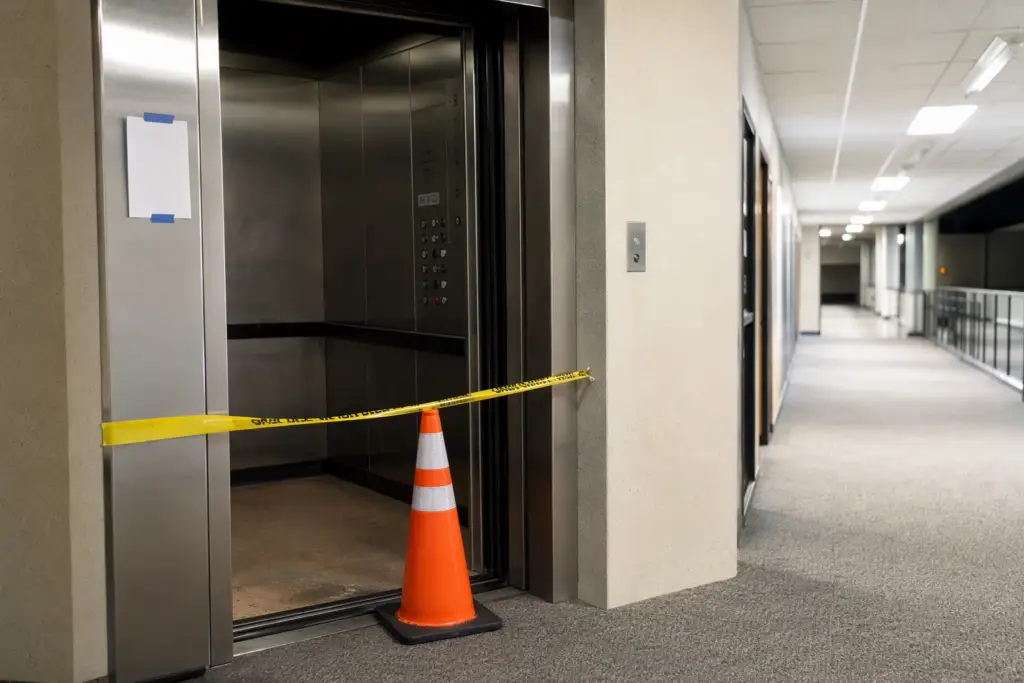
- Remove the elevator from service immediately. Post clear signage, lock out the machine room if accessible, and prevent passenger access.
- Call a qualified elevator service company. Describe the nature of the failure — entrapment, door malfunction, leveling error, unusual noise, or hydraulic leak — so the technician can prepare appropriately.
- If passengers are trapped, call 911. Do not attempt to open doors manually or instruct trapped passengers to exit on their own — trained rescue personnel should manage entrapment situations.
- Document the failure. Note the time, floor, observed symptoms, and any fault codes displayed, as this supports the service technician and any required state reporting.
- Report serious injuries to the state. South Carolina law requires that any accident seriously injuring a person other than an employee must be reported to the SC LLR before the end of the next working day.
- Obtain written clearance before returning the unit to service. Do not reopen the elevator until a qualified technician has certified it safe and any required inspection has been completed.
What Is the Difference Between a TK Elevator Modernization and a Standard Repair?
A modernization replaces major systems — controller, drive, cab interior, or door operator — and legally constitutes an alteration requiring a South Carolina state construction permit and a post-alteration inspection; a standard repair restores existing components to original operating condition without changing the system’s classification.
Under South Carolina’s elevator statute, any erection, construction, alteration, or installation requires a permit from the SC LLR before work begins. This distinction matters significantly for TK equipment owners considering upgrades. Replacing a worn hydraulic power unit with an identical unit of the same capacity is a repair; replacing it with a different power unit that changes system performance characteristics may be classified as an alteration. Similarly, swapping a failed relay-logic controller for a modern microprocessor controller on a legacy TK unit almost certainly constitutes an alteration.
New elevator facilities must comply with the officially adopted edition of ASME A17.1 in effect when the permit is issued — currently the 2019 edition as adopted by South Carolina effective July 23, 2021. TK elevator facilities that were in operation before July 1, 1986 must comply with the 1986 edition of ANSI A17.3, the safety code for existing elevators and escalators, for applicable existing-installation requirements.
Does ADA Apply to TK Elevator Installations?
Yes — the Americans with Disabilities Act (ADA) applies to TK elevators in public accommodations and commercial facilities, requiring that elevator cars, controls, and signage meet specific accessibility standards.
ADA requirements relevant to TK elevator equipment include minimum cab dimensions, door-open timing, floor designations in both visual and tactile (Braille) formats, audible floor annunciators, control button height and reach range, and two-way emergency communication systems. Many older TK units installed before or shortly after the ADA’s 1990 passage may not meet current 2010 ADA Standards for Accessible Design without cab interior or control upgrades. Property owners in Columbia should audit their TK equipment against ADA requirements as part of any modernization planning — particularly in healthcare, retail, and government-access buildings where enforcement exposure is highest.
How Do You Compare TK Elevator Service Costs to Other Brands?
TK Elevator service costs are generally comparable to other major brands — Otis, KONE, Schindler — when measured against equivalent equipment types and service scope, though parts pricing and proprietary controller access can affect independent service economics.
Several factors influence the total cost of maintaining TK equipment independently versus through a manufacturer’s service program:
- Equipment age: Older TK hydraulic units typically have abundant, competitively priced parts; newer integrated controller systems may carry higher component costs.
- Service scope: Full-service agreements covering parts, labor, callbacks, and annual inspection coordination cost more than time-and-materials arrangements but provide predictable budgeting for property managers.
- Modernization planning: Buildings planning a controller or drive modernization within three to five years may find a maintenance-only agreement more cost-effective than a comprehensive full-service contract.
- Inspection separation: Because South Carolina prohibits a special inspector from inspecting equipment on which their employer holds a service contract, owners who use a single-source provider must arrange a separate inspection relationship — an added cost to factor into manufacturer service program comparisons.
What Qualifications Should a TK Elevator Service Provider Have in South Carolina?
A qualified TK elevator service provider in South Carolina should demonstrate familiarity with ASME A17.1-2019 as adopted by the state, proven experience with TK equipment’s mechanical and hydraulic systems, and the ability to coordinate state-compliant inspections through QEI-1 qualified inspectors.
South Carolina elevator mechanic and contractor licensing requirements were not independently verified for this publication; owners should confirm current licensing requirements directly with the SC LLR, Office of Elevators and Amusement Rides. At minimum, a credible service provider should be able to produce documentation of their familiarity with applicable ASME codes, their parts sourcing relationships for TK equipment, and their process for coordinating the annual state inspection through a properly licensed special inspector who is independent of the service relationship as required by South Carolina law.
Does Carolina Elevator Service Work on TK Hydraulic Elevators Specifically?
Yes — Carolina Elevator Service services TK hydraulic elevator systems in the Columbia, SC area, including power unit maintenance, hydraulic fluid service, cylinder evaluation, and control system troubleshooting.
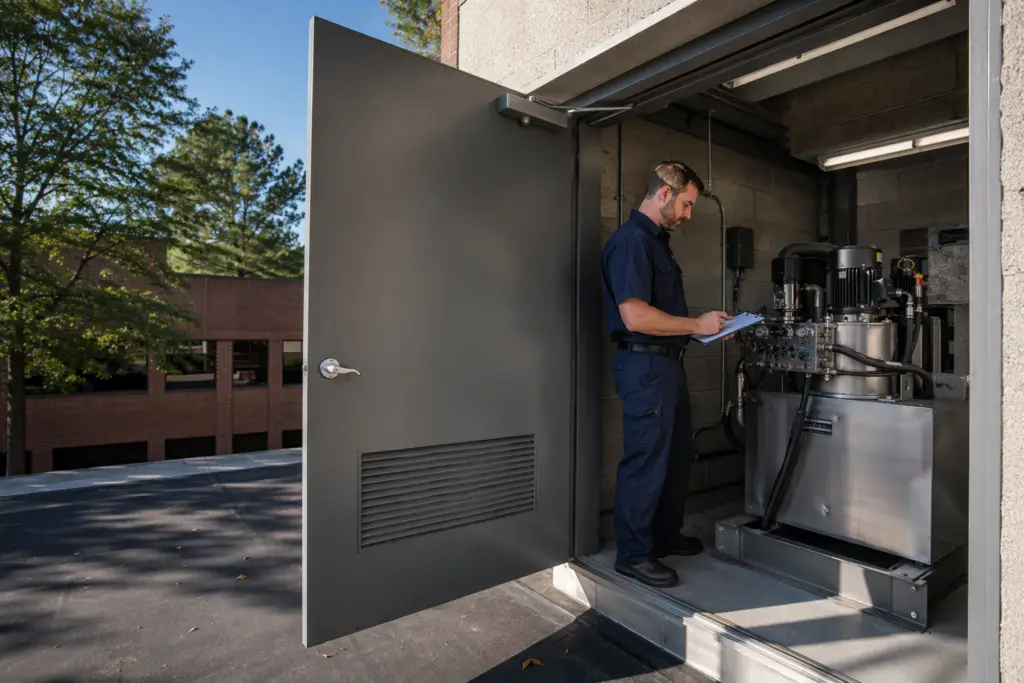
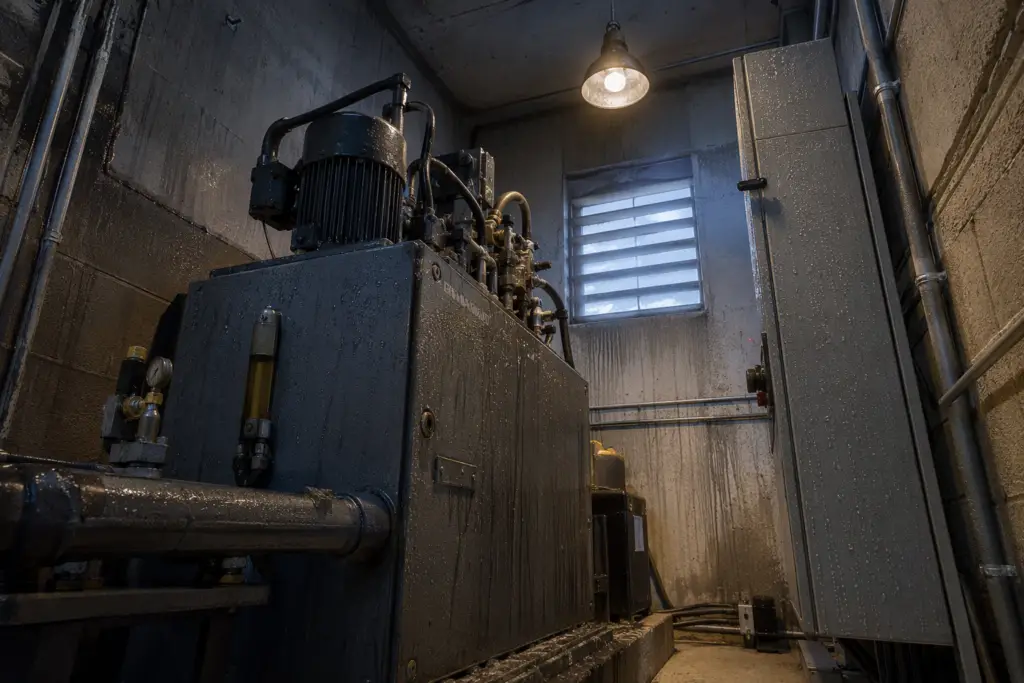
Hydraulic TK elevators are among the most common elevator types in mid-rise commercial buildings, medical offices, and assisted living facilities in the Columbia region. Common service needs for TK hydraulic units include power unit seal replacement, hydraulic fluid conditioning or exchange, valve adjustment for leveling accuracy, controller updates, and safety valve testing to ASME A17.1 requirements. Owners of older TK hydraulic units should also discuss underground cylinder condition with their service provider, particularly in light of South Carolina’s requirement for plastic outer containment on newly installed underground cylinders — a standard that informs best-practice evaluation of aging single-bottom cylinders.
What Happens If a TK Elevator Fails Its South Carolina Annual Inspection?
If a TK elevator fails its annual inspection, the operating certificate is not renewed and the elevator must remain out of service until the cited deficiencies are corrected and the unit passes a follow-up inspection.
Common reasons TK elevators fail South Carolina annual inspections include expired or malfunctioning safety devices, door protection failures, inadequate emergency lighting or alarm battery backup, missing or illegible operating certificates in the car, and controller deficiencies that do not meet the adopted ASME A17.1-2019 code. Building owners should treat the annual inspection not as an endpoint but as the final checkpoint in a continuous maintenance cycle. A proactive maintenance program that addresses known issues before the inspection date significantly reduces the risk of an out-of-service finding that disrupts building operations.
Can a Building Switch From a TK Service Contract to an Independent Elevator Company?
Yes — building owners can switch from a TK manufacturer service contract to an independent elevator company at the conclusion of their contract term, provided they review contract termination clauses and arrange for a thorough equipment condition assessment before the transition.
Steps for a successful transition include:
- Review the existing TK service contract for notice periods, automatic renewal clauses, and any equipment lock provisions that could affect the transition timeline.
- Request a complete equipment history package from TK Elevator, including inspection records, service logs, parts replaced, and any open deficiency notices.
- Commission a condition assessment from the incoming service provider before the contract transfers — this establishes a documented baseline and surfaces any deferred maintenance that might otherwise become the new provider’s liability.
- Verify inspection status with the SC LLR to confirm the operating certificate is current and no outstanding violations exist.
- Confirm parts and documentation access for your specific TK model with the new provider.
- Establish an independent inspection relationship as required by South Carolina law, since the incoming service provider cannot also serve as the special inspector for the equipment they maintain.
Carolina Elevator Service routinely performs pre-transition condition assessments for Columbia-area building owners considering a service provider change, providing detailed findings that support informed contract negotiations.
Are TK Platform Lifts and LULAs Covered Under the Same South Carolina Rules?
TK platform lifts (handicap lifts) fall under South Carolina’s elevator statute but are inspected on a five-year cycle rather than annually, while LULA elevators are classified as elevators and follow the standard annual inspection requirement.
The distinction between a platform lift, a LULA elevator, and a full commercial elevator matters significantly for compliance planning. Under South Carolina’s regulations, handicap lifts carry the five-year inspection interval — a longer cycle than passenger elevators but one that still requires a valid operating certificate and registration. LULA elevators, by contrast, meet ASME A17.1 definitions of elevators and are therefore subject to annual inspection requirements. Property owners with TK platform lifts or LULA units should confirm the classification of their specific equipment with the SC LLR to ensure the correct inspection schedule is applied. All TK platform lift and LULA maintenance should address ADA compliance as well, since these units frequently serve as the primary accessible vertical transportation in their buildings.
What Should Be Included in a TK Elevator Service Agreement?
A complete TK elevator service agreement should define the scope of covered equipment and systems, the schedule of preventive maintenance visits, parts and labor coverage terms, emergency callback provisions, and the process for coordinating required state inspections.
Key elements to verify in any TK service agreement include:
- Explicit identification of all TK equipment covered, including model numbers and car numbers
- A preventive maintenance schedule with visit frequency appropriate to equipment type and usage level
- Clarity on whether hydraulic fluid, filters, and commonly consumed parts are included or billed separately
- Provisions for annual inspection coordination — including confirmation that the inspection will be performed by a QEI-1 qualified special inspector who is independent of the service provider, as South Carolina law requires
- Documentation practices — service reports, parts records, and deficiency notices should be delivered to the owner in writing
- Terms governing permit procurement for any alterations identified during service
- Clear exit provisions so the building is not locked in if service quality declines
How Does South Carolina’s Adopted ASME Code Affect TK Elevator Repairs in 2026?
South Carolina’s adoption of ASME A17.1-2019 as its governing standard, effective July 23, 2021, means that any alteration or new installation work on a TK elevator as of 2026 must comply with the 2019 edition’s requirements — including updated provisions for safety devices, control systems, and accessibility.
For TK equipment owners planning repairs or upgrades, the 2019 edition of ASME A17.1 introduced or clarified requirements in several areas relevant to common TK service work: car door protection, two-way communication systems, machine room environment controls, and hydraulic system integrity. Any service company proposing modernization or alteration work on a TK unit in South Carolina should be explicitly referencing ASME A17.1-2019 in their scope of work, since complying with a superseded edition does not satisfy the state’s current code adoption. Buildings with TK units installed under earlier code editions may face gap-closure requirements when alteration permits trigger full compliance review.
Does the South Carolina Elevator Law Apply to TK Elevators in Private Homes?
No — South Carolina’s elevator statute explicitly exempts equipment installed in a single private dwelling, meaning a TK residential elevator in a private home is not subject to the state’s inspection, permitting, or certificate requirements.
This exemption applies only to true single private dwellings. TK elevators in multi-family residential buildings, condominium common areas, apartment complexes, or any building with commercial mixed use remain subject to the full requirements of S.C. Code Title 41, Chapter 16. Homeowners with private residential TK elevators are strongly encouraged to pursue voluntary maintenance and periodic professional inspection regardless of the statutory exemption — the absence of a regulatory obligation does not reduce the safety risks associated with unmaintained residential elevator equipment.
What Local Ordinances Apply to TK Elevator Service in Columbia, SC?
Under South Carolina law, any local ordinances that conflict with the South Carolina Elevator Code or its regulations are void — meaning the state’s rules are the controlling authority for TK elevator service in Columbia, with no additional city-level elevator licensing or inspection overlay.
This state preemption provides clarity for Columbia-area property owners: the SC LLR is the single regulatory authority for elevator compliance, and there is no separate City of Columbia elevator permit or inspection requirement that supersedes or supplements state requirements. Building owners should, however, remain attentive to local building code requirements that may interact with elevator work during broader construction projects, as well as any fire marshal requirements that apply to elevator lobbies, machine rooms, or means of egress in which TK equipment is integrated.
How Can Columbia, SC Property Owners Get a TK Elevator Assessment?
Property owners and facility managers in Columbia, SC can request a comprehensive TK elevator condition assessment from Carolina Elevator Service to evaluate equipment condition, compliance status, and maintenance needs.
A professional assessment of a TK elevator installation typically covers current compliance with S.C. Code Title 41, Chapter 16 and ASME A17.1-2019, the status of the operating certificate and inspection records, mechanical and hydraulic system condition, door system performance, safety device function, standby power and emergency communications, and any modernization needs identified by equipment age or code gaps. For buildings with multiple TK units or mixed fleets, Carolina Elevator Service can assess the entire vertical transportation portfolio and provide prioritized recommendations that support both compliance and operational reliability. Early assessment is particularly valuable for buildings approaching certificate renewal dates or planning renovation projects that might trigger alteration permits.
Contact Carolina Elevator Service for a free elevator assessment at 803-865-1400.
Need elevator service you can rely on? Carolina Elevator Service is ready to help.